Munich Shopping Guide: Luxury to Markets
Complete guide to shopping in Munich. Luxury boutiques on Maximilianstraße, Viktualienmarkt food market, vintage flea markets, dirndl & lederhosen shops, and tax-free shopping tips for tourists.
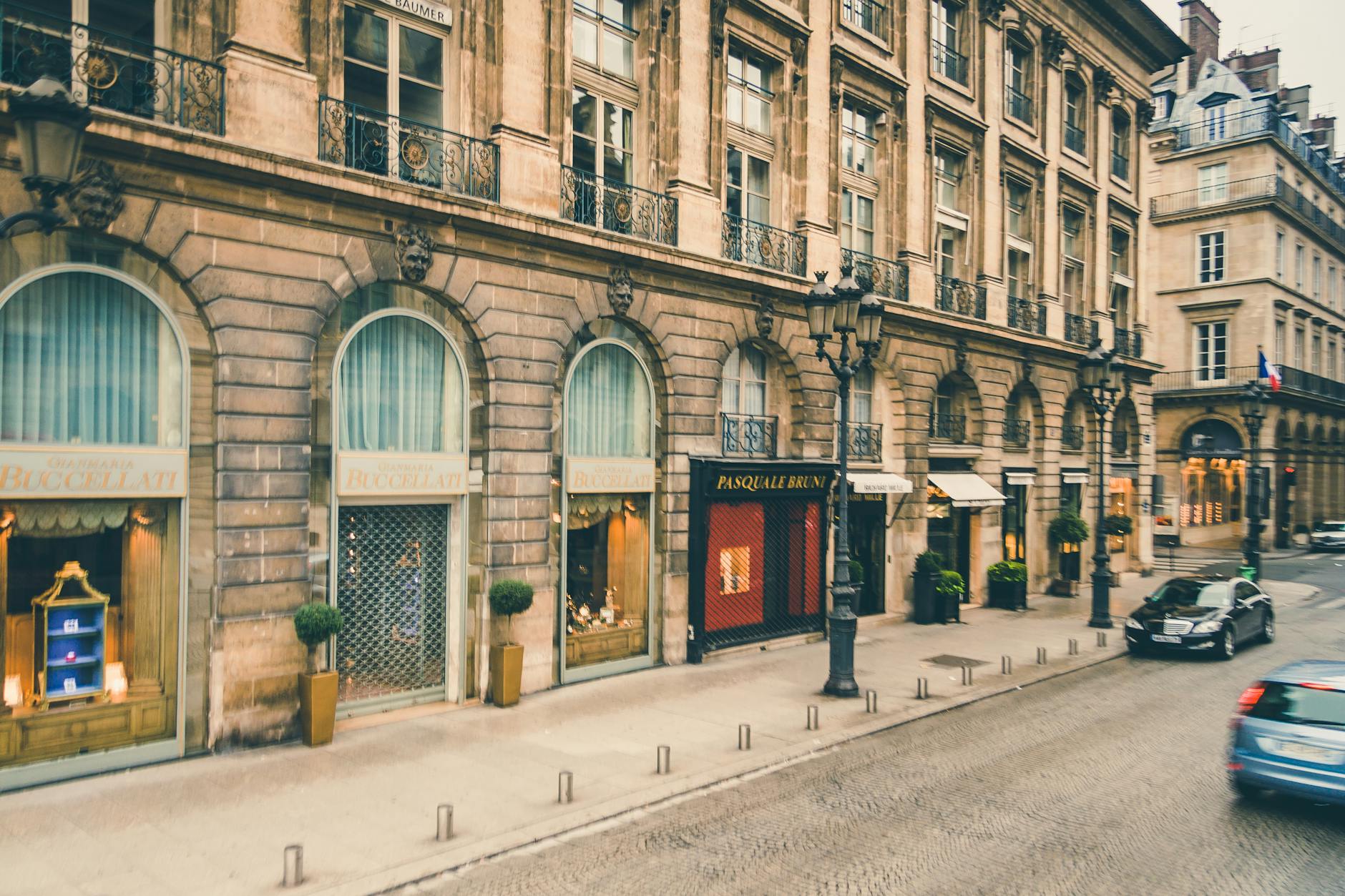
Shopping in Munich is a richly layered experience that extends far beyond typical tourist souvenir shops. From the glittering designer boutiques of Maximilianstraße — one of Europe’s most exclusive shopping streets — to the centuries-old stalls of the Viktualienmarkt, the bohemian vintage shops of Glockenbachviertel, and the treasure-filled flea markets of the Olympic Park, Munich caters to every shopping style and budget. This comprehensive guide takes you through every major shopping district, reveals where to find authentic Bavarian souvenirs and traditional Trachten clothing, and shares practical tips on tax-free shopping for international visitors.
Where to Shop in Munich at a Glance
Munich’s shopping is sorted as much by district as by category, and the gap between two areas a fifteen-minute walk apart can be enormous — Maximilianstraße sells five-figure watches; the Glockenbachviertel three streets south sells screen-printed tote bags made round the corner. Use this table to point yourself at the right quarter before you wear out your feet on the wrong one. The price columns assume typical shopper spending, not the absolute floor or ceiling.
| District / Street | Best for | Price level | Vibe |
|---|---|---|---|
| Maximilianstraße | Designer flagships, fine jewelry, watches | €€€€ | Grand, formal, see-and-be-seen |
| Kaufingerstraße / Neuhauser Straße | High-street chains, shoes, electronics | €€ | Busy, mainstream, all-ages |
| Theatinerstraße & Fünf Höfe | Premium fashion, design, galleries | €€€ | Polished but walkable |
| Sendlinger Straße & Hofstatt | German labels, shoes, concept stores | €€–€€€ | Stylish, less crowded |
| Glockenbachviertel | Concept stores, sustainable fashion, design | €€–€€€ | Creative, independent, queer-friendly |
| Gärtnerplatz | Indie boutiques, jewelry, ceramics | €€–€€€ | Pretty, relaxed, neighborhood feel |
| Schwabing (Hohenzollernstr.) | Books, homeware, boutiques, vintage | €€ | Bohemian, café-lined, leisurely |
| Maxvorstadt (Türkenstraße) | Antiques, vintage, student finds | €–€€ | Arty, academic, secondhand |
| Haidhausen & the Au | Auer Dult crockery, antiques, local shops | €–€€ | Villagey, low-key, residential |
| Viktualienmarkt & Elisabethmarkt | Food, flowers, kitchenware, deli gifts | €€ | Open-air, sensory, traditional |
Maximilianstraße: Luxury Shopping
Maximilianstraße is Munich’s — and Bavaria’s — most prestigious shopping address. This 1-kilometer boulevard, one of four royal avenues commissioned by King Maximilian II in the mid-19th century, stretches from the National Theater at Max-Joseph-Platz eastward toward the Bavarian State Parliament. The street’s neoclassical architecture provides a suitably grand backdrop for the world’s most exclusive brands.
The international designer flagship stores here read like a fashion industry directory: Gucci, Louis Vuitton, Cartier, Valentino, Dolce & Gabbana, Bulgari, Chanel, Prada, Hermès, and Dior all maintain prominent boutiques along the boulevard. Between the global luxury brands, you’ll find high-end German and Austrian fashion houses including Escada (which was founded in Munich), Loden-Frey (traditional Bavarian luxury clothing since 1842), and elegant jewelry stores that have served Munich’s elite for generations.
Even if your budget doesn’t extend to designer fashion, Maximilianstraße is worth visiting for the architecture alone and the experience of window shopping along one of Europe’s most beautiful commercial streets. The side streets branching off the main boulevard — particularly Residenzstraße and Perusastraße — offer equally upscale but slightly more approachable boutiques and galleries.
Theatinerstraße, running from Marienplatz to Odeonsplatz, is another elegant pedestrianized shopping street that bridges the gap between Maximilianstraße luxury and more mainstream retail. Here you’ll find premium brands like Max Mara and Bogner alongside perfumeries, leather goods shops, and high-quality jewelers.
Kaufingerstraße and the Main Shopping Zone
The pedestrian zone stretching from Marienplatz westward to Karlsplatz (Stachus) along Kaufingerstraße and Neuhauser Straße forms one of Germany’s busiest and most productive retail zones. This is where Munich comes for mainstream shopping — an approximately 700-meter stretch packed with international fashion chains, sportswear brands, electronics stores, and department stores that see foot traffic rivaling any shopping destination in Europe.
Oberpollinger is Munich’s premier department store, occupying a grand building on Neuhauser Straße. Spanning multiple floors, it offers a curated mix of luxury and premium brands across fashion, cosmetics, home goods, and gourmet food. The rooftop restaurant provides excellent views over the Frauenkirche and the old town rooftops. Think of it as Munich’s answer to Selfridges or KaDeWe.
Fünf Höfe (Five Courtyards), located between Theatinerstraße and Kardinal-Faulhaber-Straße, is Munich’s most architecturally striking shopping center. Designed by Swiss architects Herzog & de Meuron (of Tate Modern fame), the complex threads through five interconnected courtyards in a series of historic and contemporary buildings. The tenant mix leans upscale — art galleries, design boutiques, and specialty shops alongside cafés and restaurants.
Sendlinger Straße, running south from Marienplatz, offers a slightly more eclectic mix than Kaufingerstraße — independent German fashion labels, shoe stores, and specialty shops sit alongside mainstream chains. The beautiful Asamkirche church on this street is one of Munich’s architectural gems and worth a detour during any shopping excursion.
Best Munich Souvenirs and Where to Find Them
Finding authentic Munich souvenirs requires looking beyond the tourist shops clustered around Marienplatz. While those shops have their place for quick purchases, the best keepsakes come from specialty stores, markets, and artisan workshops that take pride in quality and authenticity.
Beer steins (Maßkrüge): The traditional ceramic or glass beer stein is Munich’s most iconic souvenir. Quality ranges enormously — cheap painted steins from tourist shops start around €10, while handmade, hand-painted steins from specialists can cost €50-200+. For authentic pieces, visit the stalls at the Viktualienmarkt or specialty shops like Souvenirs Flohr near Marienplatz, which stocks everything from affordable options to limited-edition collector pieces.
Bavarian food products: Gourmet food makes excellent souvenirs — Weißwurst mustard (süßer Senf), Dallmayr coffee and chocolates, artisan Lebkuchen (gingerbread), organic honey from Bavarian producers, and specialty cheeses from the Viktualienmarkt all travel well and are genuinely appreciated by recipients.
Other authentic choices: Hand-painted Bavarian ceramics, wooden carvings from Oberammergau, Nymphenburg porcelain (from the historic manufacturer founded in 1747 — their shop at Odeonsplatz is worth a visit even just to browse), cuckoo clocks, beeswax candles, and high-quality reproductions of Munich landmarks.
In winter the markets change the calculus entirely — Munich Christmas market gifts covers the handmade ornaments, wooden crafts and edible souvenirs worth queuing for.
Vintage Shopping and Flea Markets
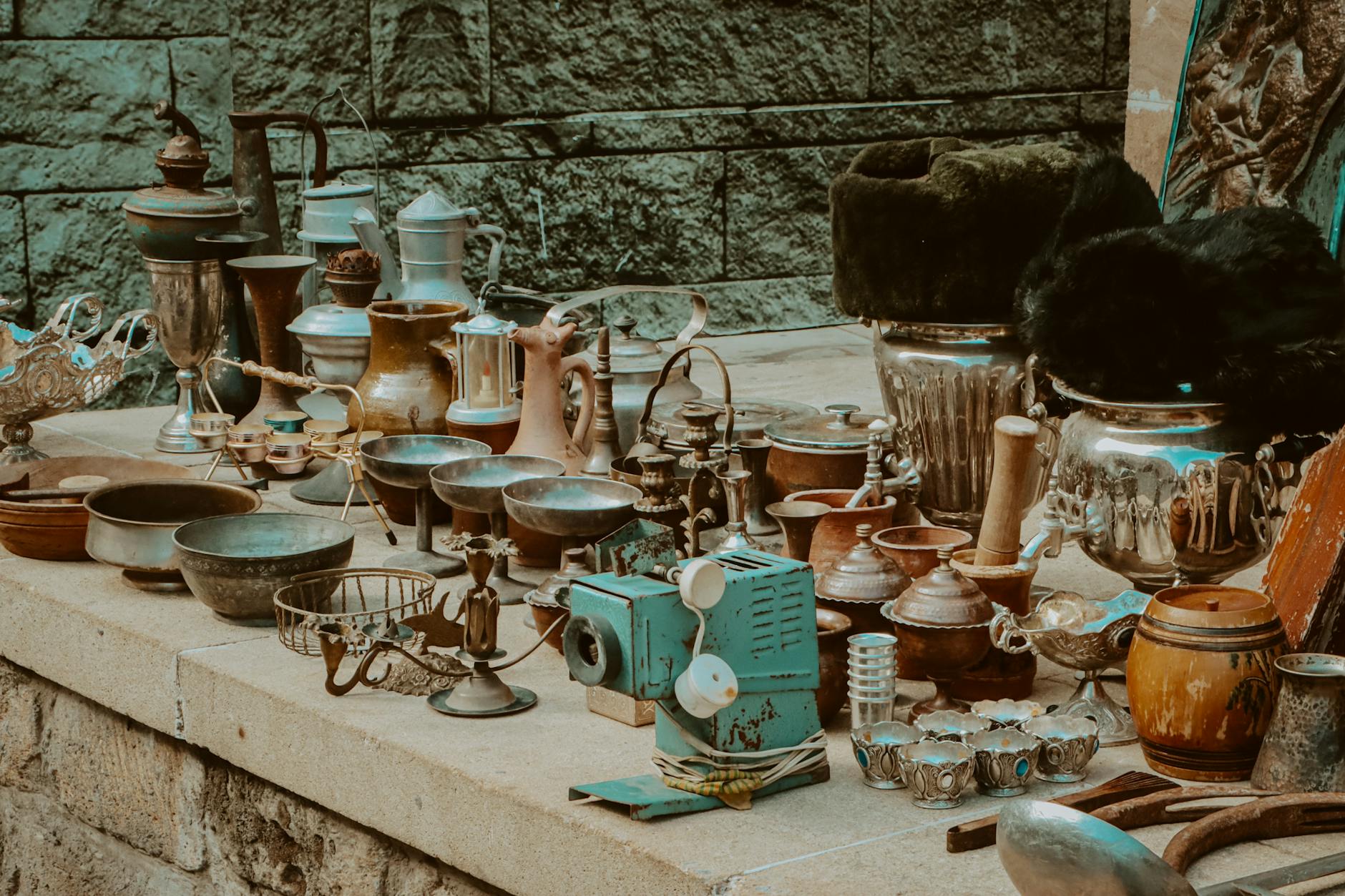
Munich’s flea market and vintage scene offers some of the city’s most rewarding shopping experiences — whether you’re hunting for antiques, retro fashion, or quirky one-of-a-kind finds.
Olympiapark Flea Market: Held every Friday and Saturday from 7am to 4pm near the Olympic Stadium, this is Munich’s most established regular flea market. Hundreds of sellers spread their wares across a large area, offering everything from antique furniture and vintage clothing to vinyl records, old cameras, Bavarian folk art, and assorted curiosities imported from across Europe. Arrive early for the best finds — serious dealers start browsing at dawn.
Riesenflohmarkt (Giant Flea Market): Held annually in April on the Theresienwiese (Oktoberfest grounds), this is Munich’s largest flea market event. For over 30 years, thousands of buyers and sellers have gathered for this massive one-day extravaganza that draws collectors and bargain-hunters from across southern Germany and Austria.
Vintage clothing: Glockenbachviertel and Schwabing are the best neighborhoods for vintage fashion shopping. Stores like Vintage Love and Pick & Weight (where you pay by the kilogram) offer curated selections of retro clothing from the 1960s through 1990s. Türkenstraße in Maxvorstadt also has a cluster of vintage and secondhand shops popular with the student crowd.
Antiques: The area north of the university in Maxvorstadt — particularly Türkenstraße, Theresienstraße, and Barerstraße — has the highest concentration of antique dealers in Munich. Specialties range from Bavarian folk art and traditional furniture to fine art, porcelain, and decorative objects.
Where to Buy Dirndl and Lederhosen
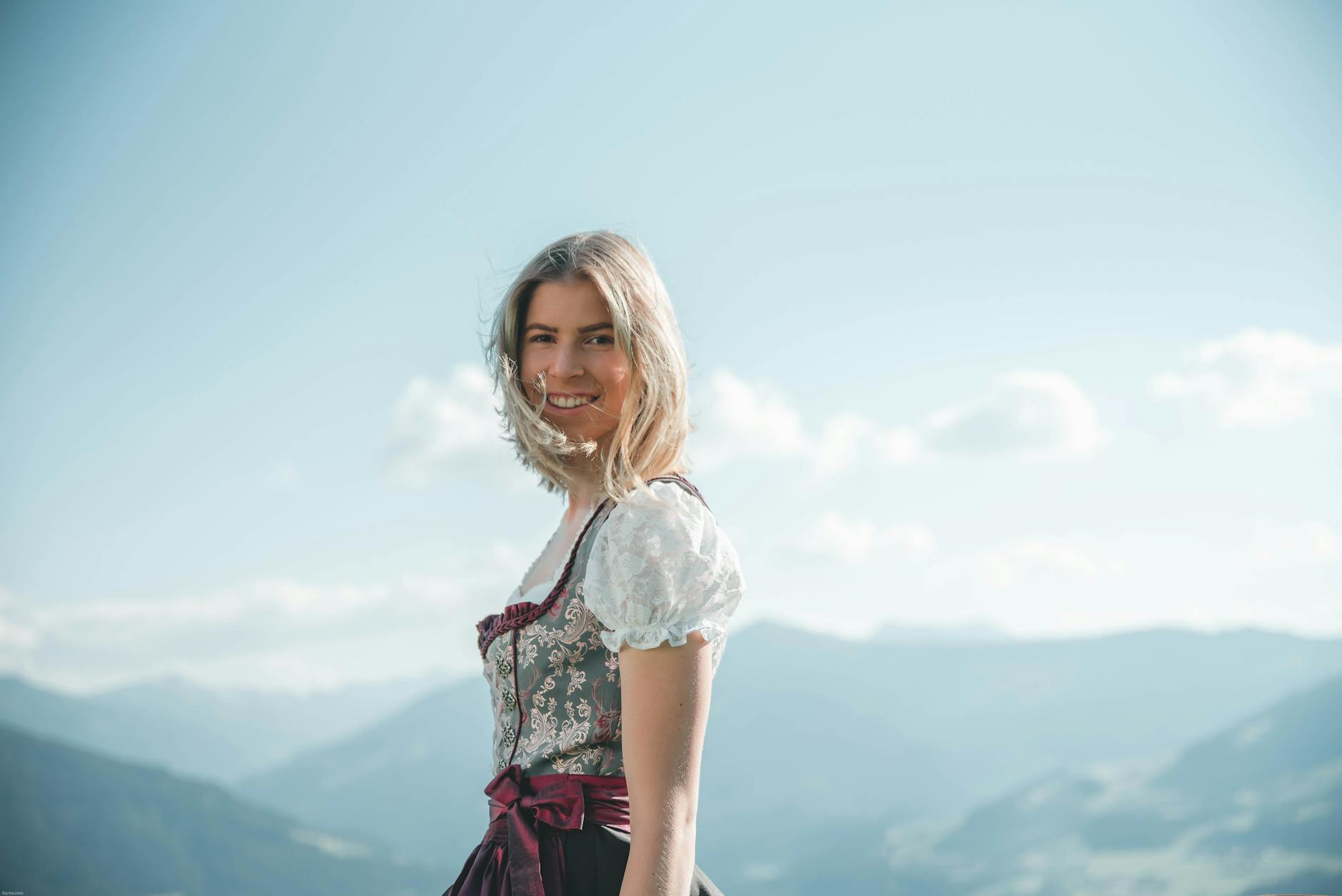
Buying traditional Bavarian clothing — Dirndl for women and Lederhosen for men — is one of the most rewarding shopping experiences in Munich, whether you’re preparing for Oktoberfest or simply want an authentic Bavarian keepsake. The quality and price range varies enormously, from affordable costume-quality pieces to handmade heirloom garments that can last generations.
High-end Trachten: Loden-Frey (Maffeistraße, near Marienplatz) has been Munich’s premier traditional clothing store since 1842. Their Dirndl and Lederhosen selection represents the finest craftsmanship — beautifully tailored pieces that Munich’s high society wears to Oktoberfest and other events. Expect to pay €300-1,000+ for a quality Dirndl and €200-800+ for genuine leather Lederhosen. The staff here are experts who will help you find the perfect fit and explain the significance of different styles.
Mid-range options: Angermaier (Rosental, near Viktualienmarkt) is extremely popular for good-quality Trachten at more accessible prices. They carry a wide range of styles and sizes for both men and women, with Dirndl starting around €100 and Lederhosen from €150. During the weeks before Oktoberfest, their stores are bustling with locals and tourists alike.
Budget and secondhand: For affordable options, the shops along Tal street (between Marienplatz and Isartor) carry both new budget-friendly Trachten and pre-owned pieces. Secondhand Dirndl and Lederhosen in good condition can also be found at the Olympiapark flea market and vintage shops in Schwabing and Glockenbachviertel. Online platforms like Kleiderkreisel (Vinted) are popular among Munich locals for buying and selling used Trachten.
Rental options: If you only need Trachten for a specific event, rental services offer a cost-effective alternative. Several shops near the Theresienwiese rent out quality Dirndl and Lederhosen for the duration of Oktoberfest, with prices starting around €50-80 for a weekend rental.
Our dedicated Tracht shopping guide compares the specialist houses, department store floors and second-hand options by price and quality.
Food Shopping: Delis and Specialty Stores
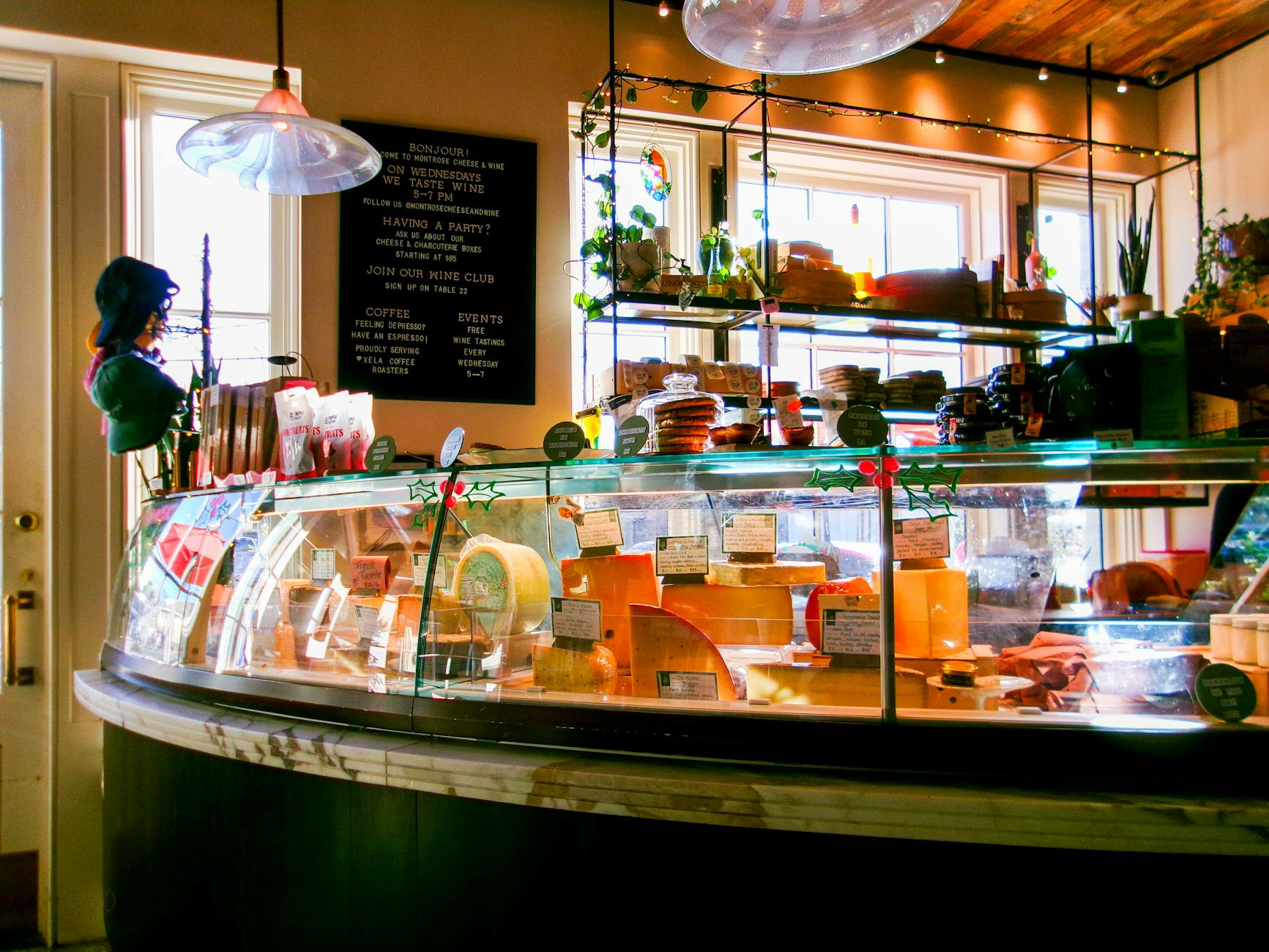
Munich’s food shopping scene is a culinary adventure in itself. From historic delicatessens to bustling market halls and specialty importers, the city offers exceptional opportunities to taste and take home the finest Bavarian and international food products.
Dallmayr (Dienerstraße, near Marienplatz) is Munich’s — and arguably Germany’s — most famous delicatessen. Founded in 1700, this luxury food emporium spans multiple floors and departments, each more tempting than the last. The ground floor showcases artisan chocolates, premium coffees (Dallmayr’s signature product), imported teas, preserved fruits, and an astounding selection of cured meats and cheeses. The fish counter displays fresh seafood from around the world, and the wine department stocks bottles from every major wine region. Even if you don’t buy anything, walking through Dallmayr is a sensory experience worth seeking out.
Viktualienmarkt: Munich’s legendary open-air food market, operating since 1807, remains the city’s premier destination for fresh, high-quality food shopping. Over 100 permanent stalls sell everything from seasonal Bavarian produce and artisan cheeses to exotic spices, fresh flowers, and specialty products. The market is particularly renowned for its cheese vendors, butchers (try the Leberkäse — a Bavarian meat loaf served hot in a bread roll), and wild mushroom sellers in autumn. The central beer garden is the perfect place to rest between shopping rounds.
Eataly Munich (Schrannenhalle, adjacent to Viktualienmarkt) brings the Italian mega-market concept to Munich with an impressive selection of Italian cheeses, cured meats, pastas, olive oils, and wines, plus several in-house restaurants and bakeries.
Other specialty stores: Käfer (Prinzregentenstraße) is another legendary Munich delicatessen, known particularly for its catering services and gourmet shop. The Elisabethmarkt in Schwabing is a smaller, more local alternative to the Viktualienmarkt with excellent produce and a charming neighborhood atmosphere.
Munich food shopping maps the delis, cheese counters, specialty markets and gourmet halls worth crossing town for.
Independent Boutiques and Design Shopping
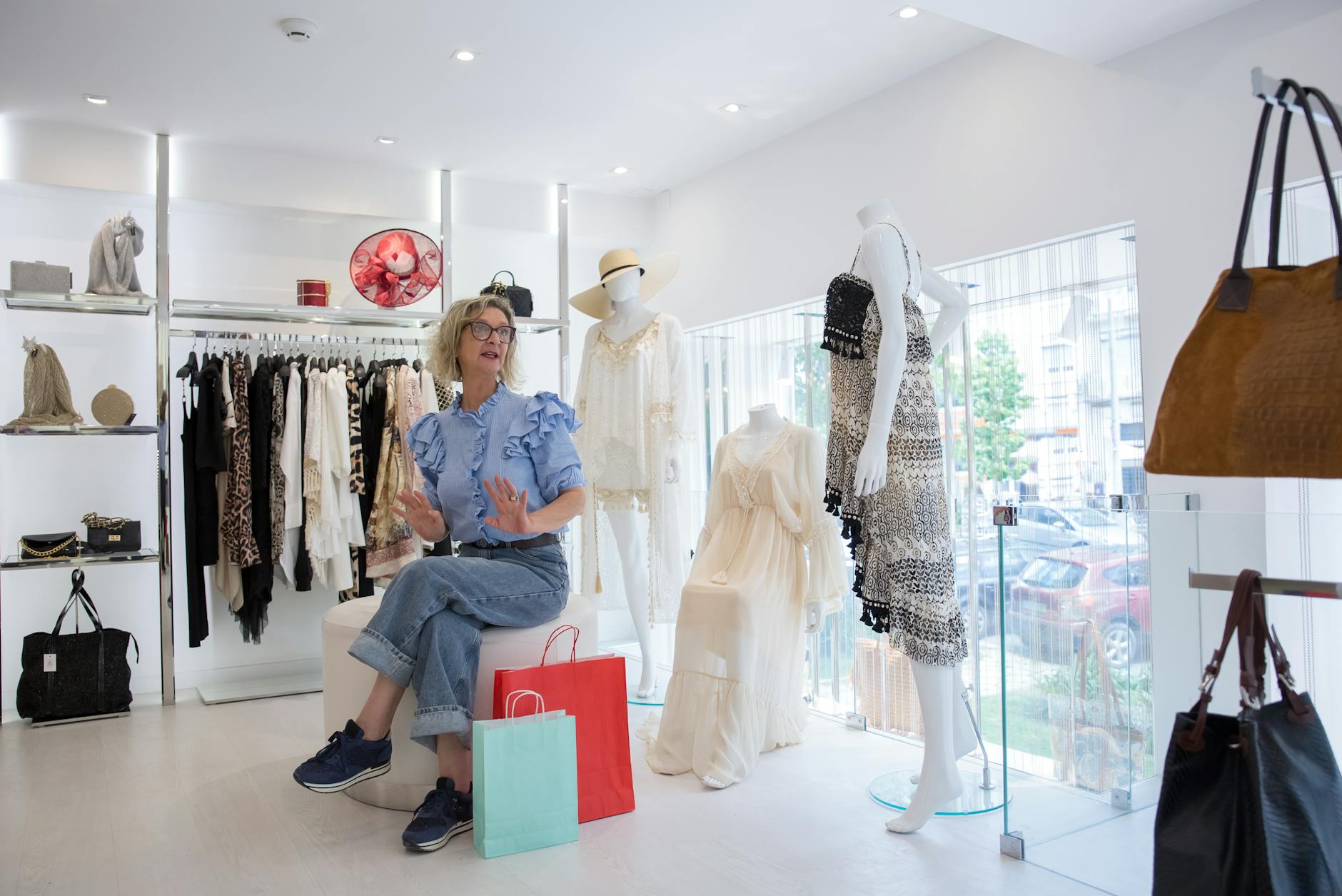
For shoppers seeking unique, locally designed items rather than global brands, Munich’s independent boutique scene is thriving across several neighborhoods. Glockenbachviertel is the epicenter, with Fraunhoferstraße and Hans-Sachs-Straße lined with independent fashion designers, concept stores, handmade jewelry studios, and sustainable fashion brands. The neighborhood’s creative, progressive spirit is reflected in shops that prioritize originality and craftsmanship over mass production.
Hohenzollernstraße in Schwabing is another excellent independent shopping street, with a curated mix of bookshops, fashion boutiques, home design stores, and specialty shops that reflect the neighborhood’s cultured, slightly bohemian character. The Werksviertel-Mitte near Ostbahnhof has also emerged as a creative shopping destination, with design studios, art galleries, and pop-up shops operating from converted industrial spaces.
For design-focused shopping, look for local Munich brands that have gained international recognition: Bree (leather goods), MCM (luxury fashion, founded in Munich in 1976), and numerous smaller labels that showcase at the annual Munich Fabric Start trade fair. The Hofstatt shopping center on Sendlinger Straße also houses several independent design brands alongside larger retailers.
Tax-Free Shopping for International Visitors
If you’re visiting from outside the European Union, tax-free shopping can save you a significant amount on larger purchases. Germany’s standard VAT rate is 19% (7% on food and books), and non-EU residents can reclaim most of this tax on qualifying purchases.
How it works: When making a purchase of €50 or more at a participating store, ask for a Tax Free form (most major stores and many smaller ones participate through services like Global Blue or Planet Tax Free). The store staff will fill out the form with your purchase details. Keep the goods unused and in their original packaging. At Munich Airport (or your last EU departure point), present the goods, receipts, and completed forms to the customs office (Zoll) for stamping before checking in your luggage. Then submit the stamped forms at the tax refund counter for your refund — available as cash, credit card refund, or bank transfer.
Practical tips: Bring your passport when shopping — some stores require it to issue the tax-free form. Allow extra time at the airport for the customs process, especially during busy travel periods. Not all purchases qualify — food, beverages, and services are generally excluded. The actual refund amount is typically 10-14% of the purchase price (the service provider takes a commission from the full 19% VAT). For expensive purchases like designer fashion or jewelry, the savings can be substantial — up to several hundred euros on a single item.
Tip for budget travelers: Even if individual purchases don’t reach the €50 threshold, some stores allow you to combine multiple purchases made on the same day on a single tax-free form. Ask at the register before paying.
The complete VAT refund guide walks through the paperwork, the airport customs desk and how much you actually get back.
Practical Shopping Tips for Munich
A few practical details will help you make the most of your Munich shopping experience.
Opening hours: German shopping hours are regulated by law. Most stores open Monday through Saturday from 10am to 8pm (some department stores until 9pm). Shops are closed on Sundays and public holidays, with the exception of a few special “open Sundays” (verkaufsoffener Sonntag) throughout the year. The Viktualienmarkt operates Monday through Saturday from approximately 8am to 6pm (some stalls close earlier). Plan accordingly — Sunday in Munich is genuinely a day of rest for retail.
Payment: While Munich is becoming more card-friendly, Germany remains more cash-oriented than many visitors expect. Smaller shops, market stalls, and some traditional stores may only accept cash (nur Bargeld). Larger stores, department stores, and chain retailers all accept major credit and debit cards. Having some cash on hand — particularly for market shopping — is advisable. See our currency and money guide for more details on ATMs and exchange rates.
Sale seasons: The two major sale periods in Germany are the Winterschlussverkauf (winter sales, starting in late January) and the Sommerschlussverkauf (summer sales, starting in late July). Discounts of 30-70% are common during these periods, making them excellent times for bargain-hunting on quality German and international brands.
Bags and packaging: German stores charge for plastic bags (typically €0.10-0.50), so bring your own reusable bag for market shopping and general retail. Many Germans carry a fabric tote as standard — it’s both practical and environmentally conscious, fitting perfectly with Munich’s strong sustainability culture.
Shopping by Neighborhood: A District-by-District Map
The Altstadt gets the headlines, but Munich’s most characterful shopping happens once you walk out of the pedestrian zone and into the residential quarters where the shopkeepers know their regulars by name. Here is how the city’s retail personality changes street by street, and how to read it like a local rather than trailing the same crowd from Marienplatz to Karlsplatz and back.
Glockenbachviertel and Gärtnerplatz: Concept Stores and Slow Fashion
South of the Sendlinger Tor, the Glockenbachviertel is where Munich keeps its creative independents. The shopping clusters along Reichenbachstraße, Klenzestraße, Hans-Sachs-Straße and Buttermelcherstraße: concept stores that mix small-label fashion with ceramics and stationery, ateliers selling jewelry made on a bench at the back, and a thick seam of sustainable and secondhand boutiques that reflect the quarter’s anti-fast-fashion streak. It bleeds straight into Gärtnerplatz, the leafy circular plaza ringed by cafés where a Saturday-morning browse feels closer to Lisbon than to a German big city. This is slow, deliberate shopping — go to find one well-made thing, not to fill bags. Plan a coffee stop into the route, because half the pleasure here is the sitting between shops.
Insider tip: Most Glockenbach independents open late — often 11am or noon — and a few keep their own idiosyncratic hours, so this is an afternoon district, not a morning one. Stack it with brunch and you have the perfect lazy Saturday.
Schwabing and the Elisabethmarkt: Books, Homeware and Bohemia
North of the university, Schwabing wears its old bohemian reputation lightly these days, but it remains the city’s best browsing district. Hohenzollernstraße is the spine — bookshops, homeware and lighting stores, fashion boutiques and the odd record shop strung between pavement cafés — while the streets around Münchner Freiheit and Wedekindplatz hide smaller fashion and design outfits. The neighborhood’s anchor is the Elisabethmarkt, Munich’s second-oldest permanent market after the Viktualienmarkt, recently rebuilt with new pavilions: come for cheese, flowers, deli goods and well-chosen kitchenware, and stay for the small-square atmosphere the bigger market downtown has long since traded for tourist numbers. Türkenstraße, technically over the line in Maxvorstadt, runs a parallel student-friendly mix of vintage, secondhand and antiquarian bookshops well worth the short detour.
Haidhausen and the Au: Antiques, Crockery and Village Calm
Across the Isar on the east bank, Haidhausen and the neighboring district of the Au are Munich at its most villagey. This is not a place for flagship stores — it is a place for antique dealers, framers, small interiors shops, secondhand boutiques and the kind of independent retailers that have vanished from pricier central streets. The big draw is the Auer Dult on Mariahilfplatz, a traditional fair held three times a year that doubles as arguably the largest crockery and tableware market in Europe (more on that below). Even between Dults, the streets around Weißenburger Platz and Wiener Platz — the latter with its permanent market stalls and the Hofbräukeller beer garden — reward an unhurried wander. Come here when the Altstadt feels too polished and you want to see where Münchners actually live and shop.
The Altstadt Beyond the Pedestrian Zone
Even inside the old town, there is more than the Kaufingerstraße conveyor belt. Lehel, the quiet quarter between the Altstadt and the Isar, holds galleries, antiquarian dealers and design shops on streets like Liebigstraße and around St. Anna. The lanes branching off the main drag — Hofstatt, the Rindermarkt, Burgstraße and the quieter end of the Tal toward Isartor — mix independent German labels and specialty stores with the chains. And the cluster of streets around the Hofbräuhaus, touristy as it is, remains the most efficient place to buy beer steins, pretzels-on-a-keyring and the full spectrum of Munich souvenirs in one short loop. The trick in the Altstadt is simply to turn off the obvious axis and explore one street back.
Markets Worth Shopping (Not Just Eating)
Most visitors treat Munich’s markets as places to eat a Leberkäse and move on. That is a missed opportunity, because several of them are genuine shopping destinations — for crockery, antiques, flowers, kitchenware and the sort of gifts that survive the flight home better than a half-eaten pretzel. Here is where to point your wallet rather than just your appetite.
Auer Dult: Munich’s Three Great Trinket Fairs
The Auer Dult is the city’s best-kept shopping secret and the reason locals make the trip across the Isar to Mariahilfplatz. It runs three times a year, each lasting nine days: the Maidult in late April and early May, the Jakobidult in late July and early August, and the Kirchweihdult in mid-to-late October. Spread across some 22,000 square meters with around 250 stalls, it is widely called the largest tableware and crockery market in Europe — wall after wall of plates, pots, glasses, replacement cups for that heirloom service, plus household goods, fabrics, herbs, antiques, secondhand books and a small old-fashioned funfair for the children. Prices are refreshingly down-to-earth, the haggling is gentle, and a hand-painted bowl or a stack of vintage glasses makes a far more personal Munich souvenir than anything sold near Marienplatz. Entry is free; bring cash and a sturdy bag.
Insider tip: The Dult sits a short walk from Haidhausen, so build it into an east-bank afternoon — fair first, then a beer at the Hofbräukeller or a stroll along the Isar. Dates shift slightly each year, so confirm them on the official city tourism site before you plan around them.
Viktualienmarkt: What to Buy Beyond Lunch
Yes, the Viktualienmarkt is where you eat — but its 100-odd stalls are also a serious larder for edible gifts that travel. Think jars of Bavarian honey and mustard, vacuum-sealed cured meats and hard cheeses, dried porcini for the cook back home, loose-leaf herbs and spices weighed out by the gram, and the flower stalls that ring the square. There is non-food here too: traditional Bavarian crafts, beeswax candles, hand-thrown ceramics and the better class of beer stein, sold by people who actually know the maker. Treat it as a delicatessen and a craft market as much as a food court, and you will leave with presents rather than just a full stomach. For the deeper story of the regional specialties on sale, our guide to traditional Bavarian food is the natural companion.
Elisabethmarkt and the Neighborhood Markets
For market shopping without the tour groups, the smaller permanent markets win every time. The Elisabethmarkt in Schwabing, freshly rebuilt, pairs first-rate produce and deli stalls with kitchenware and flowers in a calm neighborhood setting. The Wiener Markt on Wiener Platz in Haidhausen and the Pasinger Viktualienmarkt out west do the same job for their districts. None of these is a tourist attraction, which is exactly the point: the stallholders have time to talk, the quality is high, and you see how Munich actually feeds and furnishes itself. They keep standard retail hours — roughly Monday to Saturday, daytime — and like all the markets, they shut on Sundays.
Christmas Markets for Genuine Gifts
From late November the calculus changes entirely, because the Munich Christmas markets turn the whole city center into a temporary craft bazaar. Skip the imported tinsel at the busiest Marienplatz stalls and head for the artisan markets — the Schwabinger Weihnachtsmarkt at Münchner Freiheit and the medieval market on Wittelsbacherplatz — where you will find hand-blown glass ornaments, carved wood, woolens, candles and ceramics from actual makers. For a few weeks it is the single best gift-shopping window of the Munich year, with Glühwein thrown in. Just remember it is strictly seasonal: by late December the stalls come down and the city reverts to its year-round shops.
Department Stores and Shopping Malls: The Full Map
Oberpollinger and the Fünf Höfe get their due elsewhere on this page, but they are not the whole story. Munich has two grand old department stores planted right on Marienplatz, and a ring of large covered malls around the edge of the city for when the weather turns or you simply want everything under one roof. Here is the rest of the map.
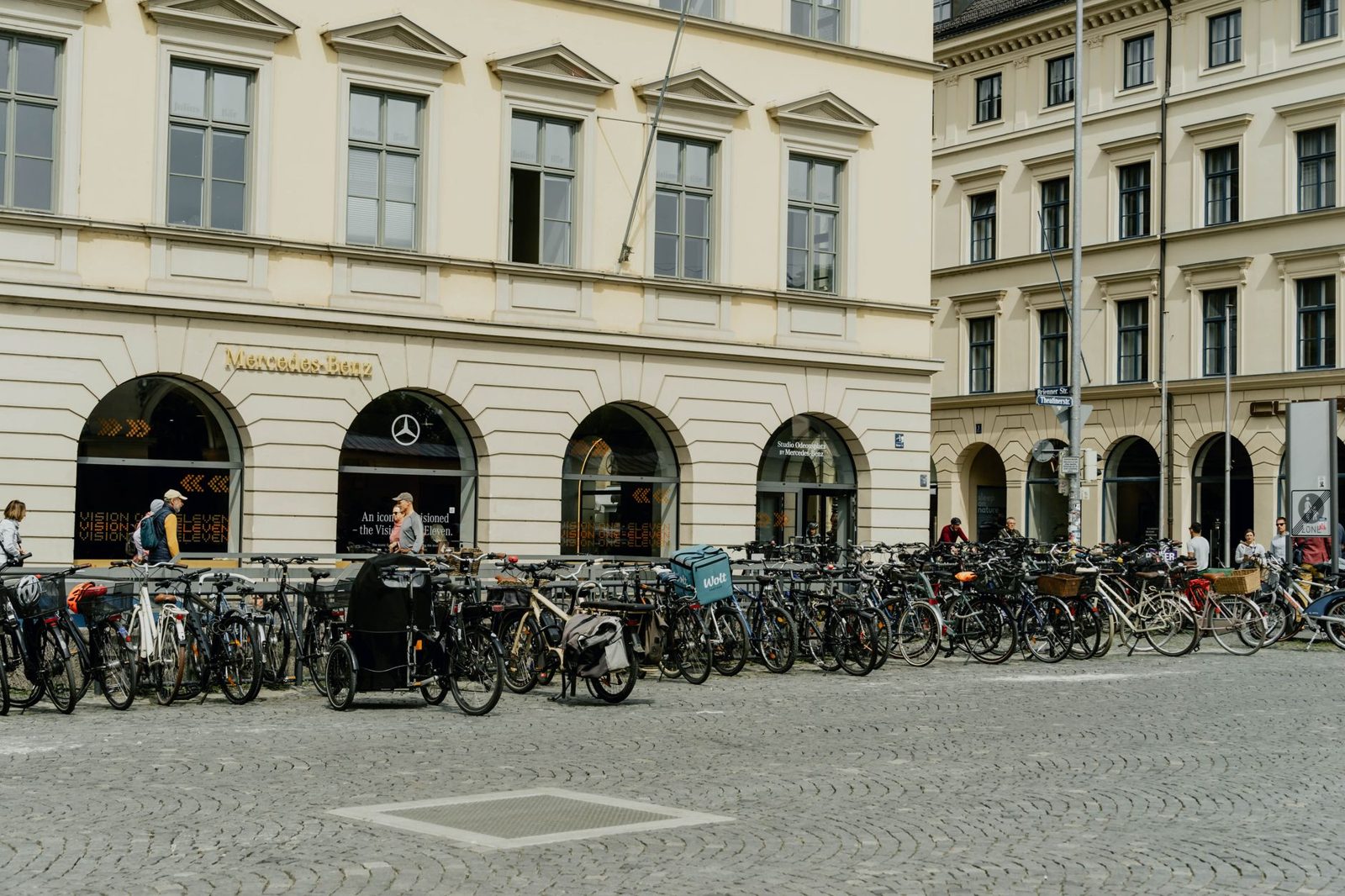
Ludwig Beck and Galeria: The Marienplatz Grandes Dames
Ludwig Beck, on the corner of Marienplatz since 1861, styles itself the “Kaufhaus der Sinne” — the department store of the senses — and it earns the name. Six floors carry fashion, an exceptional cosmetics hall on the ground floor, and two cult departments worth seeking out even if you buy nothing: a haberdashery floor with arguably Europe’s largest selection of buttons, ribbons and trimmings, and a music department holding well over 100,000 classical, jazz and world titles — a genuine rarity in the streaming age. It is the most distinctive department store in the city and an attraction in its own right.
A few doors away, Galeria (the former Kaufhof) is the everyday workhorse: seven floors covering fashion, toys, electronics, housewares and luggage, with a Galeria Gourmet food hall in the basement that is a tidy stop for edible gifts and travel snacks. It lacks Ludwig Beck’s personality but covers the practical gaps — an umbrella, a forgotten charger, a last-minute present — without leaving the square.
The Big Malls: Riem, OEZ, Pasing and Beyond
Munich’s serious mall shopping sits out on the U-Bahn and S-Bahn ring, which makes it easy to reach and easy to skip if you would rather stay central. The Riem Arcaden in the eastern Messestadt district is the flagship — roughly 120 shops across three levels and 60,000 square meters, with restaurants and even a small beer garden, sitting right by the trade-fair grounds (U2 to Messestadt-West). To the northwest, the Olympia-Einkaufszentrum (OEZ) near the Olympic Park packs around 110 shops and food markets onto two levels (U1/U3 to Olympia-Einkaufszentrum), Munich’s original big mall and still one of its busiest. Out west, the Pasing Arcaden is built straight onto Pasing station, making it the most convenient of the lot if you are arriving by train or heading for a day trip out of the city.
Closer to the center, the Hofstatt on Sendlinger Straße and the Stachus Passagen beneath Karlsplatz fill the gap between a department store and a full mall — useful, weatherproof, and handy for the chains. None of these is the reason you came to Munich, but on a grey afternoon, or with restless teenagers and a long list, a mall on the ring beats trudging between scattered shops in the rain. Pair them with a transit day pass — our guide to getting around Munich covers the cheapest ticket for the hop out and back.
The full department store and mall guide covers Oberpollinger, Ludwig Beck, Galeria and the out-of-centre malls, with floor plans and opening hours.
When to Shop: Opening Hours, Sunday Closing and Sale Seasons
Few things catch first-time visitors out like Munich’s shopping calendar. Germany regulates when stores may open through the Ladenschlussgesetz (the Shop Closing Act), and Bavaria runs one of the stricter versions. Get the rhythm right and you will never find yourself standing in front of a shuttered store on a sunny Sunday wondering where everyone went — because in Munich, they went home.
The Basic Hours — and Why Sundays Are Dead
Under the Bavarian rules in force since August 2025, shops may open Monday through Saturday until 8pm, and most central stores and department stores use close to the full span — roughly 10am to 8pm, with the big names on Kaufingerstraße and Marienplatz often running 9:30am to 8pm. On Sundays and public holidays, retail closes completely. This is not a quirk you can shop around: clothing shops, department stores, malls and markets all go dark. The exceptions are narrow but useful — bakeries open Sunday mornings, shops inside the main train station (Hauptbahnhof) and the airport trade on Sundays, petrol-station kiosks stay open, and a new wave of unstaffed mini-markets under 150 square meters can run on Sundays too. Plan errands for Saturday, and treat Sunday as a day for museums, parks, beer gardens and the things our things to do in Munich guide is full of.
Insider tip: Pharmacies (Apotheken) also close on Sundays, but a rotating “emergency” pharmacy (Notdienst) is always open somewhere in the city — the duty roster is posted on every pharmacy door. Stock up on anything you might need for the weekend by Saturday afternoon.
The Rare Open Sundays and Late-Night Shopping
Munich permits just a handful of exceptions to the Sunday rule, and they are worth knowing if your trip lines up. The city allows only three “verkaufsoffene Sonntage” (open Sundays) a year: Carnival Sunday (Faschingssonntag), the first Sunday of Oktoberfest, and German Unity Day on 3 October — and even then only in certain areas and with a restricted range of goods. Separately, from 2026 the city has approved up to four city-wide “shopping nights” (Einkaufsnächte) on weekday evenings when participating shops can stay open as late as midnight, plus the long-standing tradition of stores choosing their own occasional late Thursday or pre-holiday evenings. If you want the buzz of evening shopping, a Thursday is your best regular bet; otherwise, time a visit to coincide with one of those rare open Sundays.
Sale Seasons: When Prices Actually Drop
Germany’s two traditional clearance seasons still shape the bargain calendar even though the old fixed-date rules have relaxed. The Winterschlussverkauf (winter sale) gets going in late January and runs into February; the Sommerschlussverkauf (summer sale) lands from late July into August. These are when you will see 30 to 70 percent off across German and international labels, and they are the smart windows for anyone shopping seriously for clothing or shoes. Layer on the international sale events — Black Friday and Cyber Monday in late November, and the pre-Christmas push in December — and you have four good discount stretches a year. Outside those, prices are generally fixed and haggling is not a thing in regular shops (markets and flea markets are the exception, where a polite offer is expected). If you are watching every euro, our Munich on a budget guide pairs well with timing a visit to the sales.
Frequently Asked Questions
Are shops open on Sundays in Munich?
No. Under Bavaria’s Shop Closing Act, regular shops, department stores, malls and markets in Munich all close on Sundays and public holidays. The only exceptions are bakeries (Sunday mornings), stores inside the Hauptbahnhof and the airport, petrol-station kiosks, some unstaffed mini-markets, and three special “open Sundays” a year — Carnival Sunday, the first Sunday of Oktoberfest, and German Unity Day on 3 October. Do your shopping Monday to Saturday and save Sunday for sightseeing.
What is the best shopping street in Munich?
It depends on your budget. For high-street chains and the biggest crowds, it is the Kaufingerstraße–Neuhauser Straße pedestrian zone between Marienplatz and Karlsplatz. For luxury, it is Maximilianstraße, one of Europe’s most exclusive boulevards. For independent and creative shopping, head to the Glockenbachviertel or Schwabing’s Hohenzollernstraße. Most visitors do a loop of the central pedestrian zone first, then branch into whichever neighborhood matches their taste.
Where can I buy an authentic dirndl or lederhosen in Munich?
For heirloom quality, Loden-Frey near Marienplatz has dressed Munich since 1842; for excellent mid-range Trachten, Angermaier by the Viktualienmarkt is the local favorite, with dirndl from around €100. Budget and secondhand options cluster along the Tal and at the Olympiapark flea market, and rental shops near the Theresienwiese kit you out for Oktoberfest from roughly €50 to €80 a weekend. Avoid the cheapest costume-shop versions if you want something that looks the part — a proper dirndl is cut and worn very differently.
How does the tax-free refund process work?
If you live outside the EU and spend €50 or more in a participating shop, ask for a Tax Free form and bring your passport. Keep the goods unused, then at Munich Airport (or your final EU exit point) get the form stamped by customs (Zoll) before checking your bags, and claim your refund at the refund counter by cash, card or transfer. Expect to get back roughly 10 to 14 percent of the price after the service fee — well worth it on designer fashion or jewelry, less so on small buys. Allow extra airport time, as the customs queue can be slow.
What are the best souvenirs to buy in Munich?
The classics earn their reputation: a quality beer stein (€50–200 for a handmade one), Bavarian mustard and Lebkuchen, Dallmayr coffee or chocolates, Nymphenburg porcelain, and a piece of Trachten. For something more personal, hunt the markets — hand-painted crockery from the Auer Dult, deli goods and honey from the Viktualienmarkt, or a handmade craft from a Christmas-market or Schwabing stall. Skip the mass-produced trinkets near the Hofbräuhaus unless you only want a quick fridge magnet.
Is Munich expensive for shopping?
It can be, but it does not have to be. Maximilianstraße and the luxury boutiques are genuinely top-end, and Munich’s overall price level runs above the German average. But the high-street chains cost the same as anywhere in Germany, the flea markets and the Auer Dult are cheap, and the January and July sales bring deep discounts. Time your visit to a sale season, lean on the markets for gifts, and Munich is no pricier than any major Western European city. Our budget guide has more on keeping costs down.
Can I pay by card, or do I need cash?
Carry both. Department stores, malls and chain shops all take major cards, but Germany remains more cash-oriented than many visitors expect, and market stalls, flea markets and some small independent or traditional shops are cash-only (look for a “nur Bargeld” sign). For market shopping, the Auer Dult and the Christmas markets especially, bring small notes and coins. There are ATMs throughout the center, but avoid the standalone non-bank machines in tourist areas, which charge poor rates and high fees.
When are the sales in Munich?
The two big clearance seasons are the Winterschlussverkauf, which starts in late January, and the Sommerschlussverkauf, from late July — both bring 30 to 70 percent off across fashion and footwear. Black Friday and Cyber Monday in late November and the pre-Christmas weeks add two more discount windows. Outside these periods, prices in regular shops are fixed; only at markets and flea markets is a little friendly haggling expected.
Further Official Resources
For the latest shopping events, seasonal markets, and store information, consult these authoritative sources:
muenchen.de Shopping Guide — The city’s official portal with detailed shopping district profiles, market calendars, and store directories.
Munich Tourism Flea Market Guide — Official listing of all flea markets with dates, locations, opening hours, and practical visitor information.
Viktualienmarkt on Wikipedia — Historical background and cultural context for Munich’s most famous market, including its evolution since 1807.