Munich Christmas Market Gifts: Best Souvenirs to Buy
Munich Christmas gifts — hand-painted ornaments, Erzgebirge nutcrackers, Lebkuchen tins and the best souvenirs to take home.
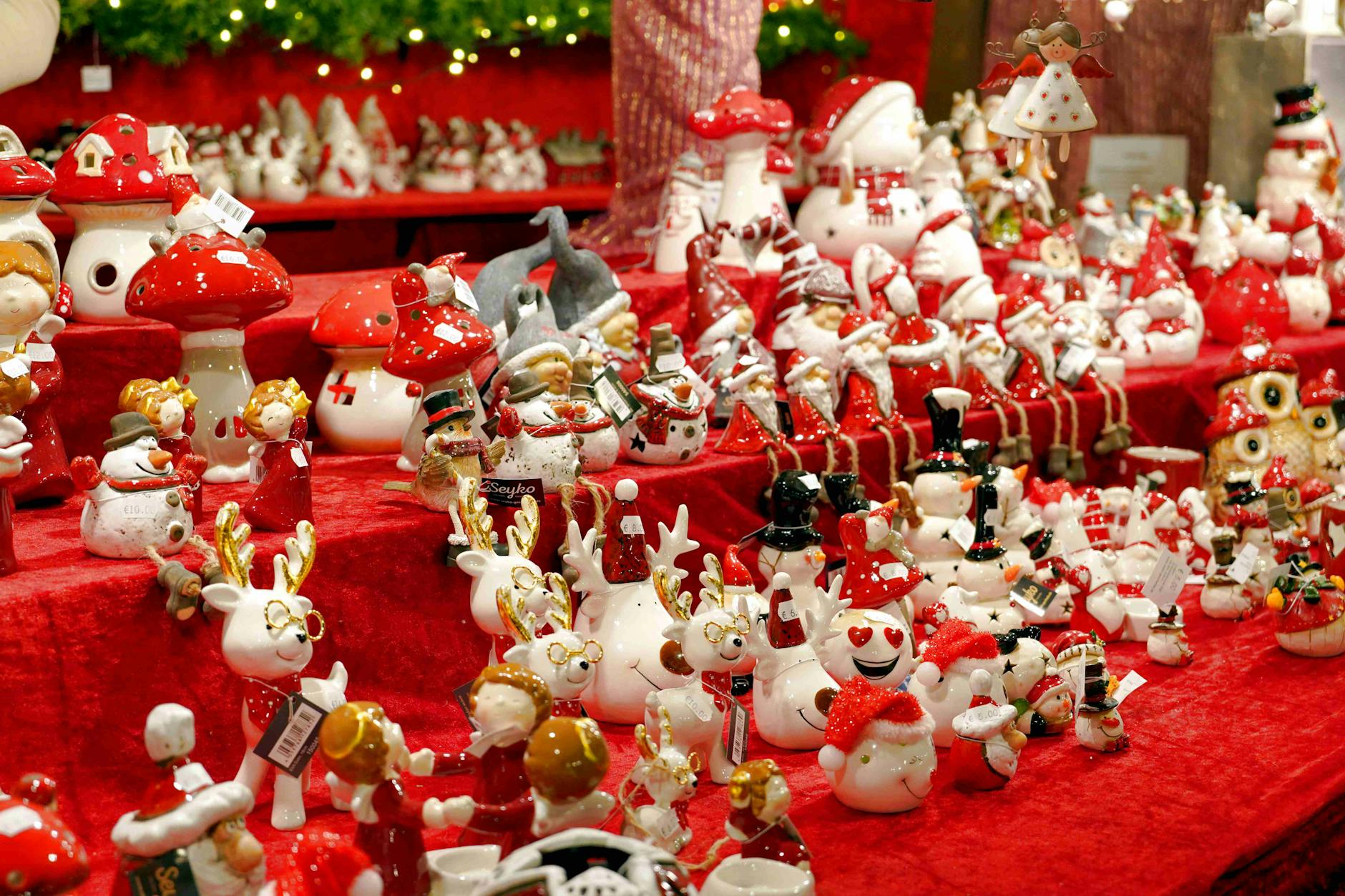
Munich Christmas gifts are some of the best Christmas-season souvenirs you can bring back from any European city. Munich’s markets specialize in genuinely traditional crafts — hand-painted glass ornaments from Lauscha, Erzgebirge wooden nutcrackers, smoking incense figures (Räuchermännchen), Christmas pyramids, Nürnberger Lebkuchen tins, hand-poured beeswax candles, and a hundred smaller handmade items that elevate the Christmas tree at home for decades. This guide explains what to buy, where to find it, what to pay, and how to get fragile pieces home safely.
The Best Munich Christmas Market Gifts at a Glance
| Gift | Origin | Price Range | Best Market |
|---|---|---|---|
| Hand-painted glass ornaments | Lauscha, Thuringia | €8–€30 each | Marienplatz, Käthe Wohlfahrt |
| Erzgebirge nutcracker | Saxony | €40–€350 | Marienplatz, Mittelaltermarkt |
| Räuchermännchen (smoker) | Erzgebirge, Saxony | €20–€120 | Marienplatz, Schwabing |
| Christmas pyramid | Erzgebirge | €60–€600 | Mittelaltermarkt, Käthe Wohlfahrt |
| Nürnberger Lebkuchen tin | Nuremberg | €15–€35 | Every market |
| Beeswax candles | Local artisans | €5–€25 | Schwabing, Wiener Platz |
| Felt slippers / hat | Bavarian Alps | €25–€80 | Tollwood, Wiener Platz |
| Hand-knitted scarves and mittens | Bavarian artisans | €18–€60 | Schwabing, Pasing |
| Wooden Christmas tree decorations | Erzgebirge | €4–€25 each | Every market |
| Glühwein mug (collectible) | Annual market issue | €3–€5 Pfand kept | Every market |
Hand-Painted Glass Ornaments: The Quintessential Gift
Hand-blown glass tree ornaments from Lauscha, a small town in Thuringia, are the gold standard of European Christmas decoration. The technique dates to the 1840s when Lauscha glassblowers began producing glass replicas of the apples and walnuts traditionally hung on Christmas trees. Today the tradition is preserved by a handful of family workshops; their ornaments are imported to every serious German Christmas market. Authentic pieces are mouth-blown and hand-painted, with hand-applied silver lining inside the glass. Look for:
- Made in Germany sticker — not just ‘made in Europe’
- Mouth-blown (mundgeblasen) on the label
- Hand-painted (handbemalt) on the label
- Slight irregularities in the silver lining — perfect uniformity often means machine-made
- Slightly heavier weight than mass-produced ornaments
- Price typically €8 to €30 per piece for top-quality work; under €5 is mass-produced
The best selection in Munich is at the Käthe Wohlfahrt store on Herrngasse (a satellite of the famous Rothenburg flagship) and at the Marienplatz Christmas Market’s permanent ornament stalls. Smaller markets (Schwabing, Wiener Platz, the Mittelaltermarkt) carry strong selections at slightly lower prices but with smaller variety. Plan €30 to €80 for a starter set of 4 to 6 ornaments; serious collectors spend €200 or more on a single visit.
Erzgebirge Nutcrackers: The Iconic Wooden Figures
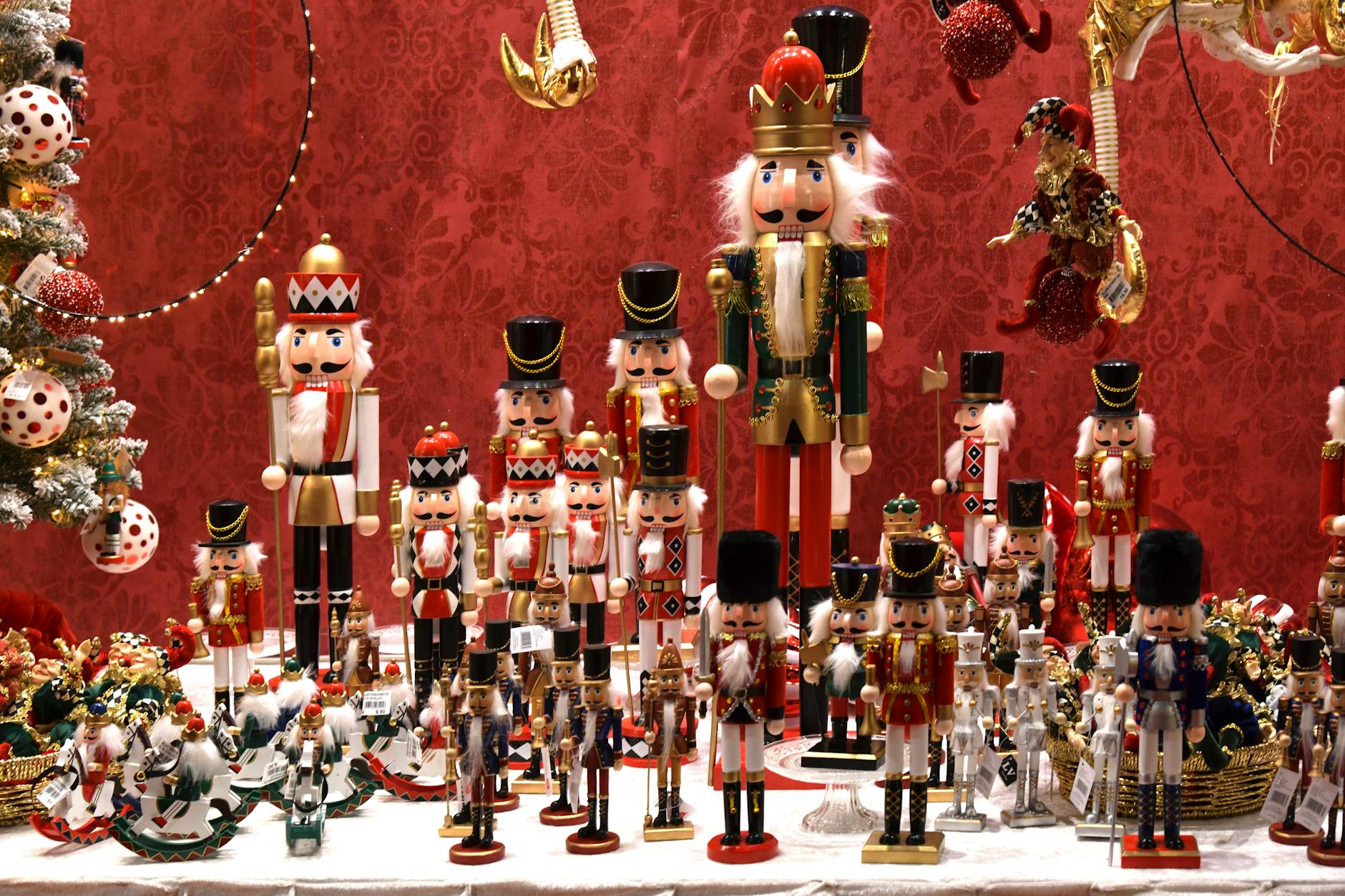
Nutcrackers (Nussknacker) originate in the Erzgebirge (Ore Mountains) of Saxony, where the technique was developed in the late 17th century by mining-town artisans looking for winter work. The classic king/soldier nutcracker dates from the 1870s. Authentic Erzgebirge pieces are made of beech and linden wood, hand-painted, and signed by their maker. Major manufacturers to look for: Steinbach, Wendt & Kühn, Christian Ulbricht, and KWO (Knochenmacher Werkstatt Olbernhau).
- Small (15–20 cm) hand-painted nutcracker: €40 to €80
- Standard (25–30 cm) classic king or soldier: €80 to €180
- Large (40+ cm) or limited edition: €200 to €600
- Functional (actually nuts-crackers, not decorative): occasionally €30 to €60
- Be wary of imported imitations: ‘Made in China’ is the common red flag
Erzgebirge pieces are heirloom investments and typically appreciate slowly in value. Many German families have collections passed down across three generations. The best Munich selection is at Käthe Wohlfahrt on Herrngasse and at the Mittelaltermarkt (Medieval Market) on Wittelsbacher Platz, which specializes in artisan rather than mass-market pieces.
Räuchermännchen: The Smoking Incense Figures
These small wooden figures — typically peasants, hunters, or chimney sweeps with comically large bellies — are made hollow inside to hold a small cone of incense (Räucherkerzen). Light the cone, place it in the figure, and reassemble; the smoke rises up from the figure’s pipe or mouth. A working Räuchermännchen makes one of the most charming Christmas gifts you can bring home. Like nutcrackers, they originate in the Erzgebirge.
- Small figures (15 cm): €20 to €40
- Standard (20–25 cm): €40 to €80
- Detailed handmade (30+ cm or themed): €80 to €200
- Räucherkerzen incense cones come separately, €3 to €5 per pack of 24
- Classic scents: fir, frankincense, gingerbread, vanilla, sandalwood
Christmas Pyramids: The Folk Engineering Marvel

Christmas pyramids (Weihnachtspyramide) are wooden multi-level structures with candles at the base; rising heat from the candles spins a fan-like top that rotates the figures below. The folk engineering is genuinely clever — they need no batteries, only candle heat. Sizes range from tiny tabletop pieces (€60 to €120) to floor-standing 1.5-metre pyramids that anchor a Christmas living room (€400 to €1,500). Pyramids are made in the Erzgebirge by the same workshops that produce nutcrackers, but the carving is more intricate and the price reflects it.
Edible Christmas Gifts
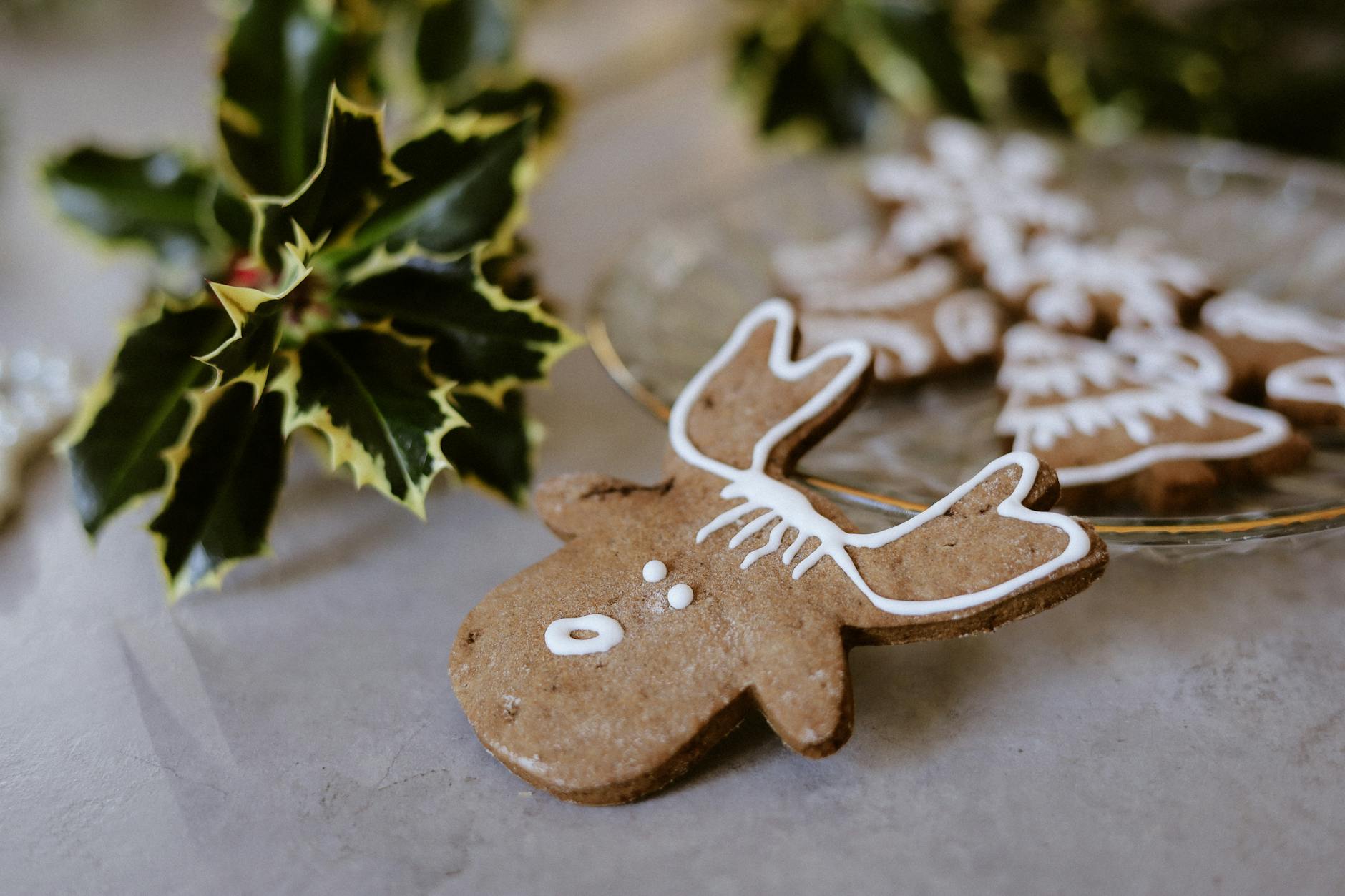
If you don’t want to risk fragile ornaments in luggage, edible gifts are the easy alternative. Most travel well in carry-on or checked luggage.
- Nürnberger Lebkuchen tin — €15 to €35 for 8 to 12 pieces in collectible tin. Keep for 6 months unopened.
- Dresdner Christstollen — €15 to €25 for a 750g loaf. Tastes better after 2 weeks of aging.
- Stollen Konfekt — Mini Stollen bites, €8 to €15 per bag.
- Pfefferkuchen / Spekulatius — Spice cookies in decorative bags, €5 to €10.
- Bavarian honey — Forest, chestnut, or alpine flower; €8 to €15.
- Marzipan from Lübeck or Niederegger — Boxed pieces from €12.
- Schwarzwälder Kirschwasser (Black Forest cherry brandy) — €25 to €45 per bottle.
- Glühwein mix kit — Spice packets to make your own at home, €8 to €15.
- Chocolates from Dallmayr or Käfer — Munich’s own deli houses, €15 to €35.
- Bavarian mustards and pickled vegetables — From Viktualienmarkt stalls, €5 to €15.
Where to Shop at Munich’s Markets
Marienplatz Christkindlmarkt
The biggest market and the most comprehensive single-stop shopping. Expect 150+ stalls; ornament stalls, Lebkuchen stalls, and craft stalls dominate. Prices are slightly higher than smaller markets but the selection is unmatched.
Käthe Wohlfahrt Year-Round Store
The flagship Christmas store on Herrngasse near Marienplatz is open year-round and carries the most polished selection of Erzgebirge nutcrackers, Räuchermännchen, and Lauscha ornaments in the city. Higher prices than the markets but the largest variety, expert staff who speak English, and international shipping if you don’t want to carry purchases.
Mittelaltermarkt (Wittelsbacherplatz)
The medieval-themed market specializes in artisan crafts: hand-thrown pottery, leather goods, hand-blown glass beyond Christmas ornaments, beeswax candles, and the most unusual finds. Stallholders wear period costume. Generally lower prices than Marienplatz.
Wiener Platz Christmas Market
Haidhausen’s neighborhood market is smaller, less crowded, and 10 to 15 percent cheaper than central markets. The same craft categories appear but with a more local clientele. Worth a visit for the Sankt-Nikolaus Day (6 December) festivities.
Schwabing Christmas Market (Münchner Freiheit)
Calmer, with stronger emphasis on artisan crafts and a younger demographic. Strong selection of small artisan jewelry, hand-knitted goods, and locally made candles.
Tollwood Winter Festival (Theresienwiese)
The alternative festival market with strong organic and international focus. Best for sustainable and fair-trade gifts, world-cuisine food gifts, and craft items from beyond Bavaria.
How to Get Fragile Gifts Home Safely
- Bubble wrap and tape — Available from Dallmayr, Manufactum, or most market sellers for €1 to €3.
- Pack ornaments individually: each one wrapped, then placed in a shoebox-sized hard container.
- Use shoes or clothing as buffers: shoes around the box, soft clothing tucking gaps.
- Carry-on whenever possible: airline mishandling is the biggest risk.
- Hand-carry the heaviest single piece (a large Erzgebirge nutcracker, a Christmas pyramid): wrap it in clothing and put it in your day bag.
- Buy a duty-free liquid bag at the airport for small bottles of mustards, Glühwein syrup, or schnapps — these must go in checked luggage unless under 100 ml.
- Käthe Wohlfahrt and major brands ship internationally: pricier but a relief for large purchases. Order Erzgebirge pieces over €200 by post.
- Photograph items before packing: useful for insurance claims if luggage is mishandled.
What to Avoid
- Cheap polyester ornaments labelled ‘Made in Bavaria’ — Most are imported and merely packaged in Germany.
- Generic snow globes — Available at any souvenir shop; little tradition.
- Pre-packaged ‘gift sets’ at Marienplatz — Often overpriced; assemble your own from individual stalls.
- Identical ‘authentic’ wooden Christmas trees — Many are imported imitations; look for the Erzgebirge or maker stamp.
- Glühwein-flavored chocolates from non-specialist stalls — Usually mediocre; stick to traditional Lebkuchen.
- Plastic ‘nutcrackers’ — Painted as wood but obviously hollow. Check the weight.
A Half-Day Christmas Shopping Itinerary
- 10:00 — Open at Käthe Wohlfahrt on Herrngasse to see the comprehensive selection and price benchmarks.
- 11:00 — Walk to Marienplatz Christkindlmarkt for ornaments and Lebkuchen.
- 12:30 — Lunch at the Augustinerkeller or Bratwurstherzl.
- 14:00 — Mittelaltermarkt at Wittelsbacherplatz for artisan pieces.
- 15:30 — Coffee and cake at Café Luitpold on Brienner Straße.
- 16:00 — Tram or walk to Wiener Platz Christmas Market for last-minute small finds and local prices.
- 18:00 — Glühwein at the Wiener Platz beer garden as you wrap up.
Outside December, the Munich shopping guide covers the department stores, boutiques and markets that sell the same crafts year-round.
Beyond Ornaments: Other Excellent Munich Christmas Gifts
Bavarian Beer-Related Gifts
Munich is the world’s beer capital, and beer-themed Christmas gifts are easy to find and travel well. Look for: traditional one-liter Maß steins with painted lids (€25 to €80; quality varies — check the maker’s mark on the underside), engraved coasters from one of the big six breweries (€8 to €15 per set), beer-flavored chocolate (€4 to €8 per bar), Bavarian beer cookbooks (€15 to €30), and German beer atlases or histories in English translation. The Hofbräuhaus, Augustiner, and Paulaner shops on Platzl all carry official merchandise.
Bavarian Textiles
Loden fabric — the dense Bavarian boiled-wool — makes excellent gifts in scarf or cap form. Lodenfrey on Maffeistraße sells loden scarves from €40 to €120 and hats from €60 to €150. The fabric is genuinely Bavarian and warms beautifully through Northern European and Northeast US winters. Bavarian wool blankets in red-and-white check (€60 to €180) are another lasting buy.
Music and Books
Ludwig Beck on Marienplatz has Munich’s best classical music selection on its top floor, with strong holdings in Bach, Wagner, and Mozart connections to the city. Hugendubel near Marienplatz has Christmas-themed German cookbooks and Bavarian travel photography books. Words’worth Books in Maxvorstadt carries English-language titles on Bavarian culture and Christmas tradition.
Hand-Carved Religious Figures (Crèche / Krippe)
Bavarian Catholic tradition produces some of the world’s finest nativity figures, hand-carved in Oberammergau and surrounding Alpine villages. Single figures (Mary, Joseph, individual sheep) cost €30 to €120; complete starter sets €200 to €500; collector-quality sets reach €2,000+. The Käthe Wohlfahrt store stocks the best selection in Munich; for truly serious pieces, take the train to Oberammergau (90 minutes south).
Munich Christmas Gift Budget Guide
| Budget | What You Can Take Home |
|---|---|
| €20 to €40 | 1 Lauscha ornament + 1 tin of Lebkuchen + Räucherkerzen incense cones |
| €50 to €100 | A small starter set: 3 ornaments + Lebkuchen + a small Räuchermännchen |
| €100 to €200 | Substantial gift haul: 6+ ornaments + Stollen + a small nutcracker + edibles |
| €200 to €500 | Heirloom investment: 1 Erzgebirge nutcracker + ornament set + Christmas pyramid base |
| €500 to €1000+ | Larger Christmas pyramid + complete nativity set + ornament collection + edibles |
Authentication: How to Spot Real Erzgebirge
- Look for the maker’s seal on the base — Steinbach, Wendt & Kühn, Ulbricht, KWO are reputable.
- Hand-painted faces show small inconsistencies — perfectly identical faces signal mass production.
- Linden and beech wood are the traditional materials — beware of generic ‘wood’ descriptions.
- German label with ‘Hergestellt im Erzgebirge’ is the gold standard.
- Hand-turned (gedreht) vs lathe-cut: the former is more valuable.
- Reasonable weight — Erzgebirge wood is dense; light pieces are likely cheaper imports.
- Receipts with the manufacturer’s name are useful for insurance and resale.
Gifts for Specific Recipients
Gifts for Hosts and Hostesses
A bottle of Bavarian schnapps (Williams pear or Marillen apricot at €25 to €40), a tin of Nürnberger Lebkuchen, or a half-bottle of Glühwein concentrate make universally welcome host gifts. For more substantial gestures, consider a set of Augustiner glass mugs from the brewery shop (€18 to €25) or a Bavarian honey selection from Viktualienmarkt.
Gifts for Kids
Small Erzgebirge wooden toys: angels, sheep, miniature nutcrackers (€10 to €30 each). Hand-knitted mittens or hats from Schwabing or Wiener Platz markets (€18 to €35). A Käthe Kruse doll if you’re going premium (€80 to €200). Edible options include Lebkuchenherzen with the child’s name iced on them (€8 to €15) and Stollen Konfekt mini-bites in colorful tins.
Gifts for Coworkers (Group)
Tins of Nürnberger Lebkuchen (€20 to €35 for a 24-piece tin) divide easily across a team. Bavarian gingerbread mini-hearts in a basket (€15 to €25 per dozen) are another approach. Schwarzwald cherry chocolates (€15 to €25 per box) keep well for travel.
Gifts for Yourself
Christmas pyramids and Räuchermännchen, both made of warm-toned wood and built for repeated annual use, are the smartest self-gifts. A starter set of 4 to 6 Lauscha ornaments (€60 to €120) becomes the foundation of a Christmas tree that gets better every year. A loden coat or jacket from Lodenfrey (€200 to €600) is a more substantial self-investment that lasts a decade or more.
Tips for Shipping Christmas Gifts Internationally
If you bought more than will fit in your suitcase, German postal shipping is affordable and reliable. Deutsche Post’s DHL Paket International ships up to 31.5 kg packages worldwide; rates run €25 to €60 depending on destination weight. Hermes is the cheaper alternative for inside-EU shipping. Most shops will pack and ship for you for a small fee (€5 to €15) if you ask. Major Christmas vendors like Käthe Wohlfahrt have established international shipping operations that handle insurance and customs paperwork; expect €40 to €120 for a substantial overseas shipment.
- Customs declarations are required for shipments outside the EU.
- For US shipments: under $800 declared value is duty-free; above that, expect import duties at the destination.
- For Canada and UK shipments: lower duty-free thresholds apply; check current rules.
- Insurance: pay the small extra fee — fragile ornaments are at real risk in transit.
- Tracking: standard with DHL Paket International.
- Allow 7 to 21 days for delivery depending on destination.
Glühwein Mug Collecting as a Souvenir Strategy
Some of the best Christmas market ‘gifts’ don’t cost more than the Pfand deposit. Each Munich Christmas market issues its own Glühwein mug each year, stamped with the year and the market name, sometimes themed (the Marienplatz mug typically shows the Old Town Hall in winter snow; the Mittelaltermarkt mug shows medieval iconography). At €3 to €5 Pfand, these are the cheapest authentic Munich Christmas souvenirs. Visit several markets on a single trip, keep one mug from each, and you have a small collection of dated annual editions to gift or to keep as a personal memory. Wash gently before packing; many of the printed designs are not dishwasher-safe.
What if I’m traveling with hand luggage only?
Lebkuchen tins, hand-knit accessories, Loden scarves, and small Räuchermännchen all fit comfortably in carry-on. Larger pieces — full-size nutcrackers, Christmas pyramids — should ship internationally or get hand-carried in a tote bag instead of stuffed into a backpack. Glass ornaments travel safely in hand luggage when individually wrapped in clothing and placed in a hard-sided container.
Can I find LGBTQ-friendly Christmas gifts in Munich?
Yes. The Pink Christmas Market in the Glockenbachviertel (runs early December) carries unique queer-themed ornaments, hand-printed cards, and craft items not found at the traditional markets. The proceeds often support local LGBTQ+ charities. A meaningful place to shop if you want a gift with a story.
Frequently Asked Questions
When are the Munich Christmas markets open in 2026?
The Christkindlmarkt at Marienplatz runs from Friday 27 November to Wednesday 23 December 2026. Most other Munich Christmas markets follow similar dates; the Tollwood Winter Festival extends to 31 December. Daily hours typically 11:00 to 21:00 weekdays, 10:00 to 22:00 weekends.
Are credit cards accepted at Munich Christmas markets?
Increasingly yes, but inconsistently. Bring €100 to €200 in small bills for a serious shopping day. Larger Käthe Wohlfahrt-style stores all take cards; small stalls may not.
Can I get tax-free shopping refunds on Christmas market purchases?
Yes — non-EU residents can claim VAT back on purchases over €50.01 per single receipt. Ask each vendor for a Tax Free form; in practice many small stalls cannot process them, so consolidating purchases into one larger receipt at Käthe Wohlfahrt is easier. Validate the form at Munich Airport customs on departure.
What if I’m short on time?
The Käthe Wohlfahrt flagship store on Herrngasse alone gives you 80 percent of the experience. One hour there and a bag full of authentic Erzgebirge wood, Lauscha glass, and Nürnberger Lebkuchen will satisfy most gift lists.
What’s the single best souvenir from Munich’s Christmas markets?
A hand-painted Lauscha glass ornament. Lightweight, packable, lasting, and an instant Christmas-tree centerpiece for years to come. Authentic pieces start at €10 — affordable enough for a casual purchase but with real provenance.
Can I buy Christmas market gifts year-round in Munich?
Yes — the Käthe Wohlfahrt store on Herrngasse operates year-round, as does the smaller Christmas Boutique on Marienplatz. Outside the market season, you’ll have less variety but the same authentic suppliers and slightly lower prices on certain items.
Are there any ethical or sustainability concerns?
Most authentic Erzgebirge and Lauscha workshops are small family operations with transparent supply chains. Mass-produced Christmas decor from Eastern Europe or Asia is often the issue — check the maker’s seal and avoid generic ‘Made in EU’ labels. The Tollwood Winter Festival specifically promotes Fair Trade and organic suppliers.
Plan Your Munich Trip
- Munich Christmas Markets Guide — the master overview
- Marienplatz Christmas Market — flagship market deep dive
- Christmas Market Food and Drinks — what to eat and drink
- Best Munich Souvenirs — year-round gift ideas
- Munich in Winter — full month planning