Traditional Bavarian Food: What to Eat
The complete 2026 guide to traditional Bavarian food — 25 must-try dishes from Weißwurst breakfast and Schweinshaxe pork knuckle to Käsespätzle, Knödel and Apfelstrudel. With where to eat each one in Munich.
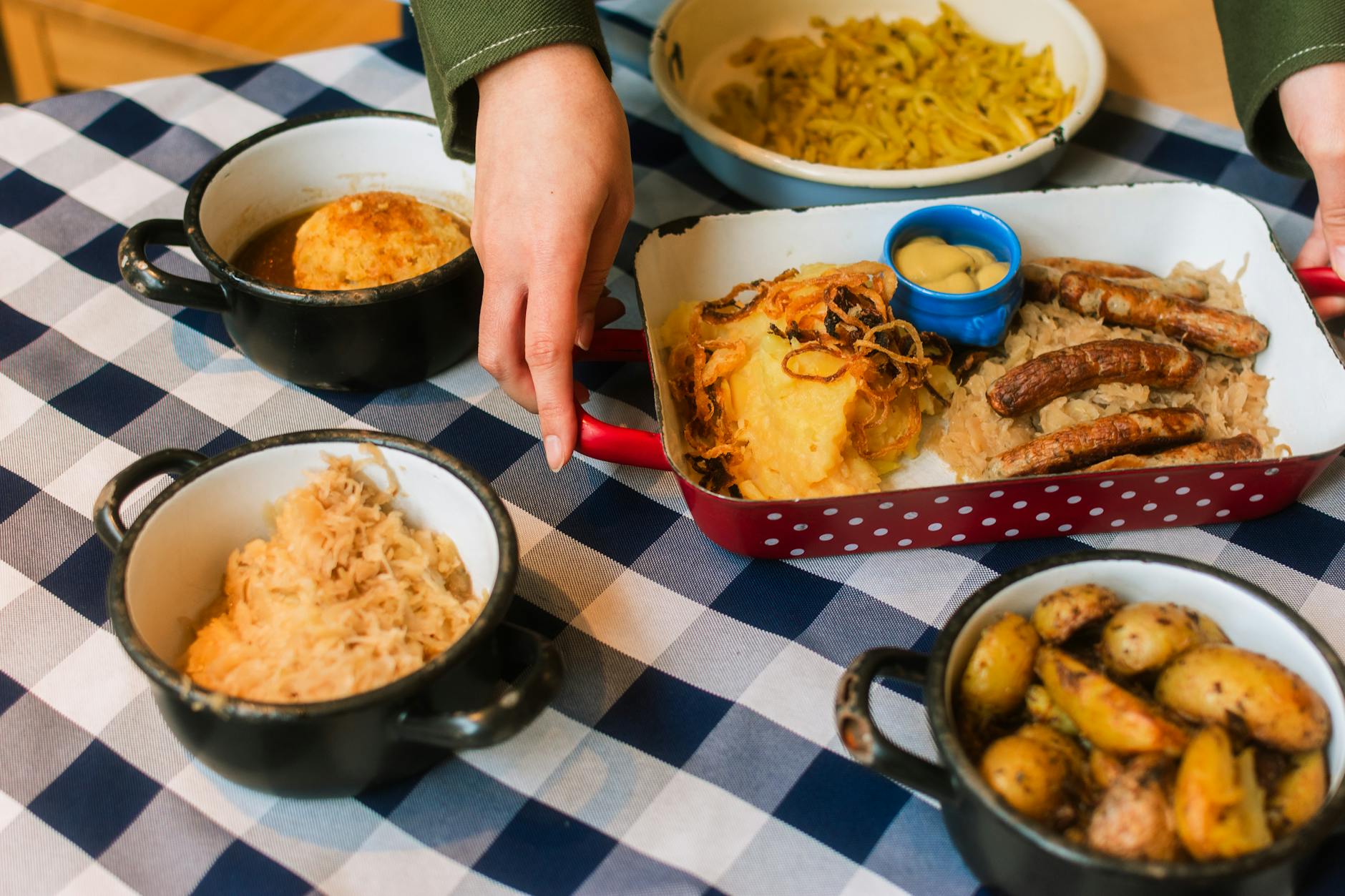
Traditional Bavarian food is built on hearty, no-nonsense ingredients: pork in many forms, hand-rolled dumplings, sourdough pretzels, slow-roasted whole chickens, sweet mustard, and locally brewed beer. The cuisine grew out of medieval monastic kitchens, alpine farm tradition, and 19th-century beer-hall culture — and most of it pairs perfectly with the local lager. This complete Bavarian food guide for 2026 covers 25 must-try dishes, from the famous Weißwurst breakfast and Schweinshaxe pork knuckle to lesser-known specialties like Saure Lüngerl, with where to eat them in Munich and what each one actually tastes like.
25 Must-Try Bavarian Dishes at a Glance
| Dish | Type | What It Is | Best Place |
|---|---|---|---|
| Weißwurst | Sausage | Veal-and-pork white sausage | Wirtshaus, before noon |
| Schweinshaxe | Main | Roast pork knuckle with crispy skin | Hofbräuhaus, Augustiner |
| Schweinsbraten | Main | Roast pork in dark beer gravy | Any Wirtshaus |
| Hähnchen / Hendl | Main | Half rotisserie chicken | Beer gardens |
| Knödel | Side | Bread or potato dumplings | Wirtshaus in der Au |
| Brez’n | Snack | Soft sourdough pretzel | Bakeries, beer gardens |
| Obatzda | Spread | Camembert spread with paprika | Beer gardens |
| Leberkäs | Snack | Bavarian “meatloaf” | Bakery counters, market stalls |
| Spätzle | Side | Egg-noodle dumplings | Wirtshaus |
| Käsespätzle | Main | Cheese-noodle dish | Wirtshaus, vegetarian |
| Sauerkraut | Side | Fermented cabbage | Universal accompaniment |
| Kartoffelsalat | Side | Bavarian potato salad (warm, vinegar) | Universal accompaniment |
| Bayrische Brezensuppe | Soup | Pretzel soup | Wirtshaus, autumn |
| Leberknödelsuppe | Soup | Liver-dumpling broth | Wirtshaus |
| Steckerlfisch | Fish | Whole mackerel grilled on a stick | Beer gardens, Oktoberfest |
| Currywurst | Snack | Sausage with curry ketchup | Imbiss stands |
| Bratwurst Semmel | Snack | Sausage in a roll | Beer gardens, markets |
| Saure Lüngerl mit Knödel | Specialty | Sour-creamed lung with dumpling | Old-school Wirtshaus |
| Ochsenbraten | Main | Whole-roasted ox | Oktoberfest Ochsenbraterei |
| Apfelstrudel | Dessert | Apple strudel with vanilla sauce | Cafés, Wirtshaus |
| Kaiserschmarrn | Dessert | Shredded sweet pancake | Cafés, Oktoberfest |
| Topfenstrudel | Dessert | Sweet quark strudel | Cafés |
| Lebkuchen | Sweet | Spiced gingerbread | Christmas markets |
| Maß | Drink | 1-liter beer | Beer gardens, beer halls |
| Weißbier | Drink | Wheat beer | Beer gardens |
The Bavarian Breakfast: Weißwurst Tradition
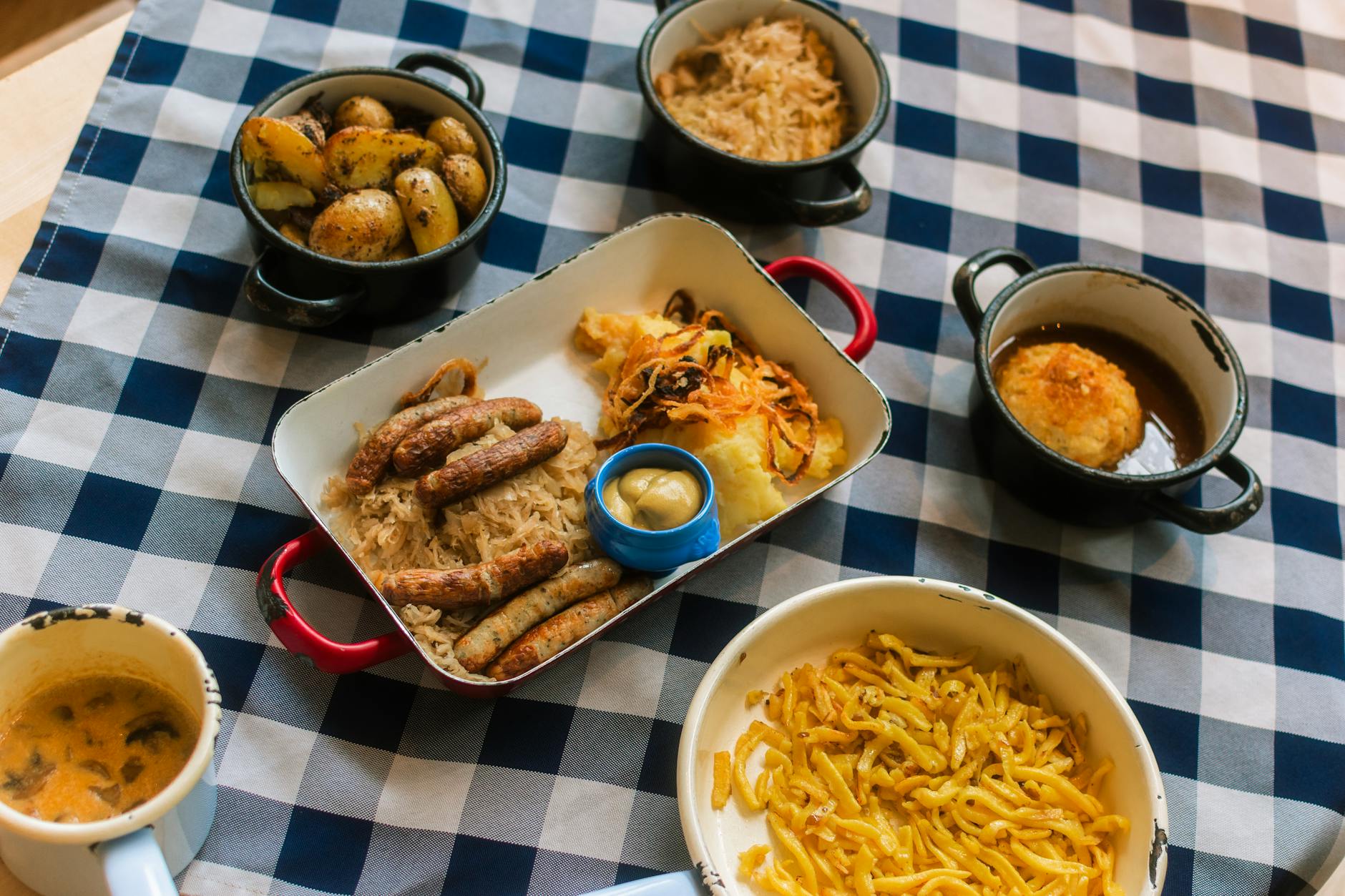
The most famous Bavarian breakfast — and one of the few foods with a strict serving rule — is Weißwurst. Invented in Munich on February 22, 1857 (legend has it, by accident, when a butcher ran out of sheep casings and used pork casings for veal sausages), the white sausage is made of finely minced veal and pork bacon flavored with parsley, lemon zest, ginger, and cardamom.
The classic Weißwurstfrühstück:
- Two Weißwürste, gently warmed in hot water (never boiled — they would burst)
- Süßer Senf — Bavarian sweet mustard, slightly grainy, never the yellow American kind
- A fresh Brez’n (sourdough pretzel) torn by hand
- A Weißbier (wheat beer) — yes, with breakfast
The eating method: Most Bavarians slice the sausage open lengthwise, peel the casing off with a knife and fork, and eat the inside (the casing is technically edible but stiff). A more old-school method is zuzeln: bite into one end and suck the contents out. Choose your style based on the company.
The 12:00 rule: By tradition, Weißwurst is eaten only before noon — the saying is that they must “not hear the church bells of midday.” This dates to the pre-refrigeration era when fresh Weißwurst made in the morning had to be eaten before going off. Modern restaurants serve them all day, but if you want the authentic experience, order them before 12:00.
Where to Try Weißwurst
- Hofbräuhaus — touristy but classic; €5.80 for 2
- Augustiner-Großgaststätte on Neuhauser Straße — locals’ choice
- Zum Dürnbräu on Marienplatz — small, traditional
- Schneider Bräuhaus on Tal — possibly the best Weißwurst in Munich
- Wirtshaus in der Au across the Isar — known more for dumplings but Weißwurst is excellent here too
Main Course Classics
Schweinshaxe — Pork Knuckle
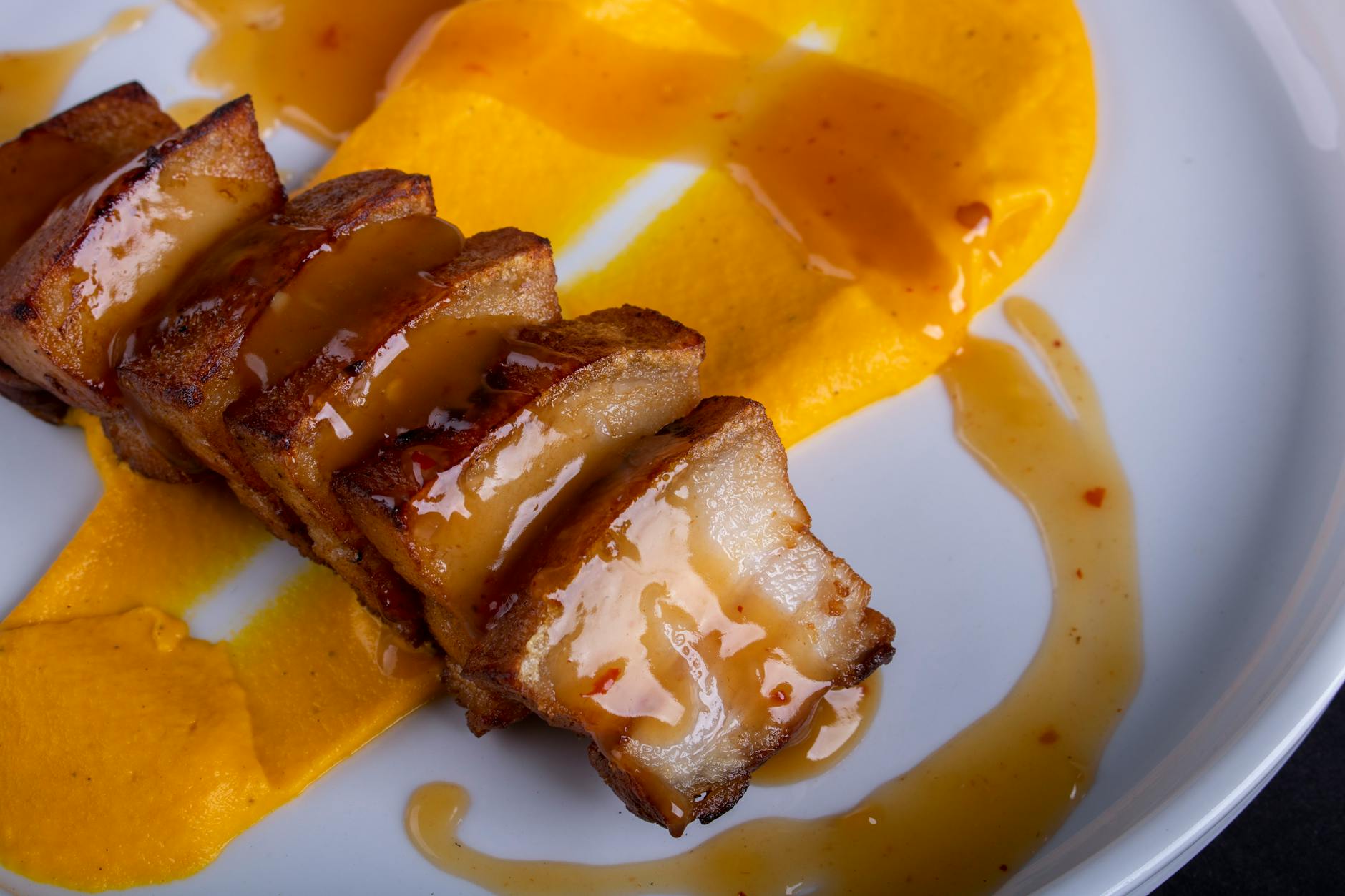
The king of Bavarian main courses. Schweinshaxe is the lower part of the pork leg, slow-roasted for 4–6 hours until the inside is fork-tender and the outside is glass-shatteringly crispy. Served with sauerkraut and either Knödel (dumplings) or Bayrische Kartoffelsalat (warm vinegar-dressed potato salad). Weighs 800g–1.2 kg per person — bring an appetite. Best at: Hofbräuhaus, Augustiner, Haxnbauer, Hofbräukeller.
Schweinsbraten — Roast Pork
The everyday cousin of Schweinshaxe — slow-roasted pork shoulder or back, sliced and served in a rich dark-beer gravy with Knödel and red cabbage (Blaukraut). Less dramatic than Schweinshaxe but often more flavorful. Universal Bavarian Sunday lunch dish.
Hähnchen (Hendl) — Half Roast Chicken
Particularly famous from the beer gardens and Oktoberfest tents. A whole rotisserie-roasted chicken halved on the plate, paprika-rubbed crispy skin, served with bread or fries. €13–€18 in beer gardens. The gold standard is at Hofbräuhaus, Hirschgarten, and the Oktoberfest tents.
Käsespätzle — Bavarian Mac & Cheese
Hand-rolled Spätzle (egg-noodle dumplings) baked with grated Emmental and Bergkäse, topped with crispy fried onions. The vegetarian Bavarian classic — most beer halls serve it as their main meatless option. €13–€16. Try at Wirtshaus in der Au or any traditional Wirtshaus.
Knödel: The Bavarian Dumpling Family
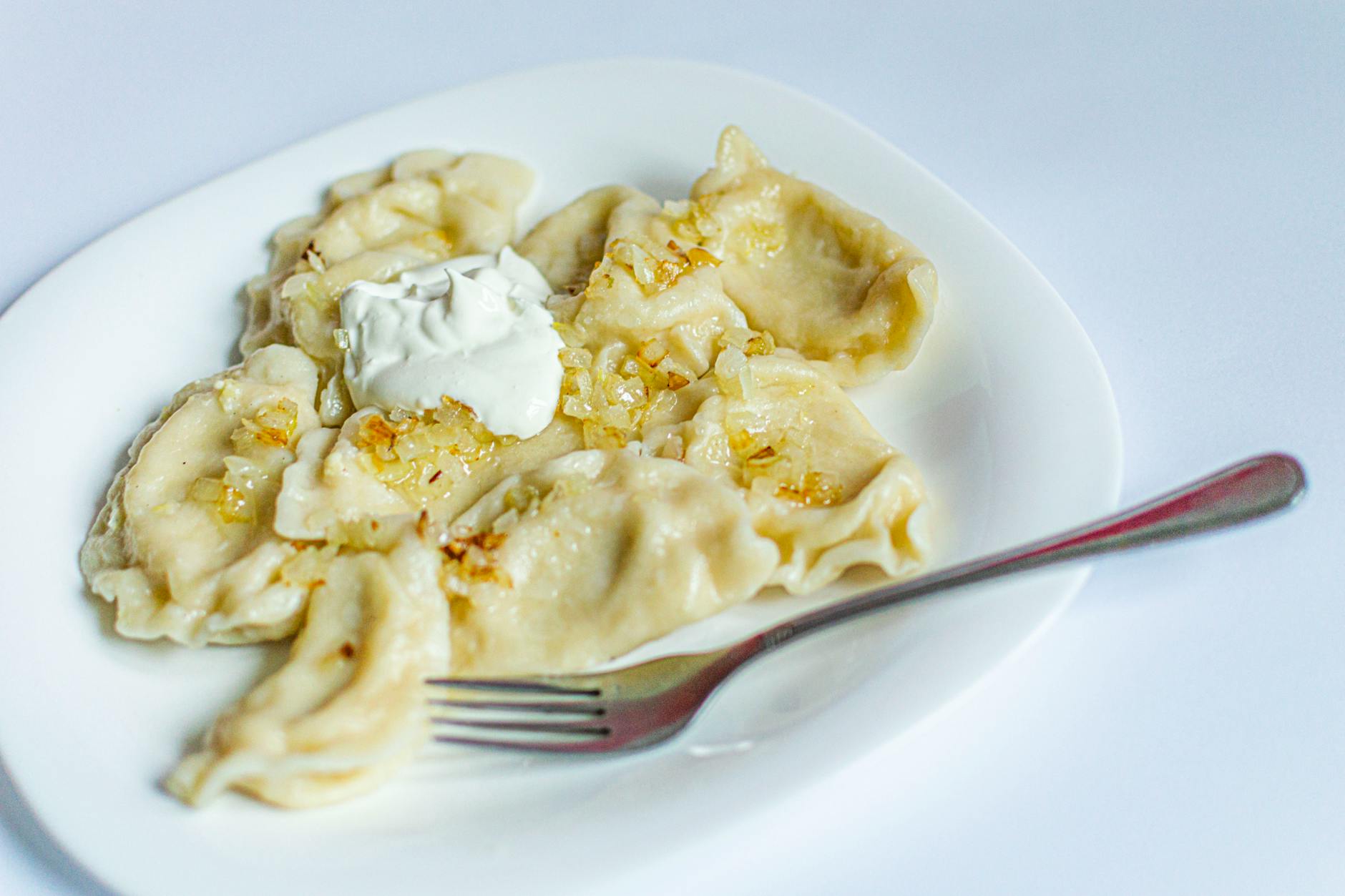
Knödel are Bavaria’s most distinctive side dish — fist-sized dumplings made from a base of stale bread, mashed potato, or grated potato, often accompanied by herbs and onions. Common varieties:
- Semmelknödel — bread dumplings; the everyday accompaniment to Schweinsbraten
- Kartoffelknödel — potato dumplings; chewier, denser
- Leberknödel — liver dumplings; usually served in a clear beef broth (Leberknödelsuppe)
- Brezenknödel — pretzel dumplings; richer, slightly salty
- Speckknödel — bacon dumplings; from the Tyrolean Alps
- Zwetschgenknödel — sweet plum dumplings; a dessert
Best place: Wirtshaus in der Au across the Isar serves 18 different varieties on its menu — the dedicated dumpling restaurant in Munich.
Soups, Snacks, and Smaller Dishes
Leberkäs
Bavarian “meatloaf” — a finely ground baked loaf of beef and pork (despite the name, no liver, no cheese). Served sliced as a snack with sweet mustard, or stuffed in a Semmel (bread roll) as Leberkäs Semmel, the Bavarian fast-food classic. €4–€6 at any bakery counter or market stall. The Viktualienmarkt has Munich’s best.
Brez’n — Bavarian Pretzel
The hand-rolled sourdough pretzel is a Bavarian staple eaten as a snack, with breakfast, alongside Weißwurst, or as a beer-garden side. €1.50–€3. Look for the dark-brown crust (real Brez’n are coated in lye before baking, never just baking soda) and a chewy interior. Best at small bakeries, especially Riegerbäck or Wimmer.
Obatzda
A creamy spread made from ripened Camembert, butter, paprika, caraway, and beer. Served on bread or pretzels in beer gardens. €5–€8. The classic beer-garden snack.
Currywurst
Technically Berlin’s invention but universally available in Munich. Sliced bratwurst topped with curry-ketchup sauce, served with fries or Semmel. €5–€8 at Imbiss stands. Try Bratwursthäusl on Marienplatz.
Steckerlfisch
Whole mackerel skewered on a wooden stick and grilled over an open flame, brushed with garlic-herb oil. €15–€22. The signature beer-garden fish dish. Best at Augustiner-Keller, the Chinese Tower beer garden, or Fischer-Vroni at Oktoberfest.
Saure Lüngerl
An old-school Bavarian specialty: thinly sliced beef or veal lung in a vinegar-cream sauce, served with Knödel. Polarizing in flavor — funky, rich, sour — and increasingly rare on menus. Worth trying once at an old-school Wirtshaus like Schneider Bräuhaus.
Bavarian Sweets and Desserts
Apfelstrudel
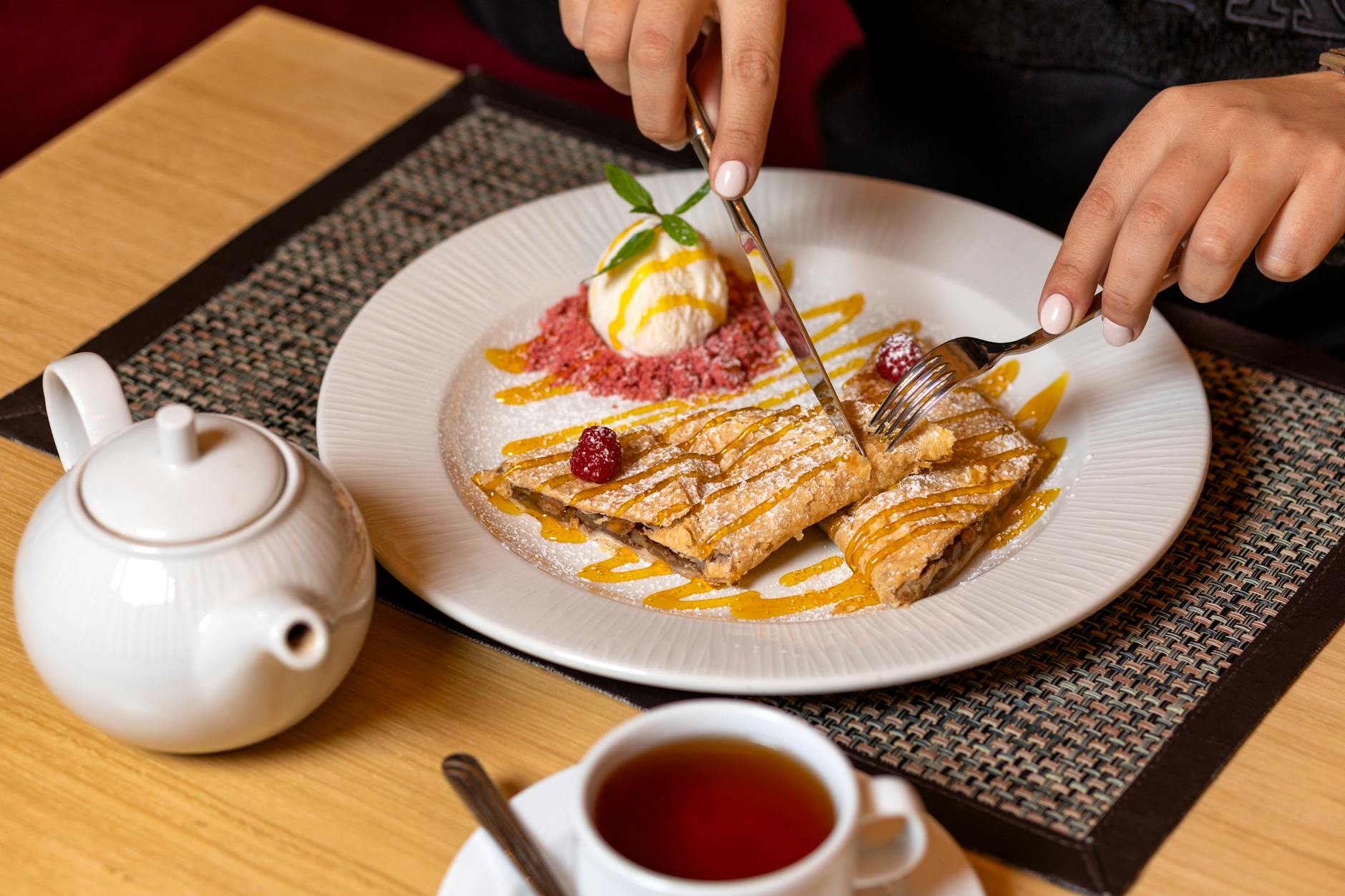
The famous Austrian-Bavarian apple strudel — paper-thin pastry wrapped around spiced apples, raisins, and cinnamon, served warm with vanilla sauce or whipped cream. €7–€10. At any Wirtshaus or Café Tambosi, Café Frischhut, or Café Luitpold for Viennese-style.
Kaiserschmarrn
Sweet pancake torn into fluffy chunks, dusted with powdered sugar, served with stewed plums or apple sauce. Originally an Austrian imperial dish (named after Emperor Franz Joseph) but adopted into Bavarian cuisine. €11–€14. Try at Café Kaiserschmarrn (Oktoberfest, dedicated to it) or any Wirtshaus.
Topfenstrudel
The lesser-known cousin of Apfelstrudel — quark (fresh white cheese) and raisins in pastry, served warm with vanilla sauce. Lighter than Apfelstrudel; the connoisseur’s choice. €7–€9.
Schmalznudel / Auszogene
A Bavarian doughnut — thin in the middle, puffy on the edges, dusted with powdered sugar. €3–€4. Café Frischhut on Prälat-Zistl-Straße has been Munich’s best since 1973.
Lebkuchen
Spiced soft gingerbread, often heart-shaped with iced messages. Year-round, but most associated with Christmas markets — see our Christmas market guide. €5–€15.
Drinks Beyond Beer
- Weißbier (Hefeweizen) — wheat beer; cloudy, banana-and-clove notes; classic Bavarian style
- Spezi — cola + orange soda; the universal Bavarian non-alcoholic drink
- Apfelschorle — apple juice + sparkling water; ubiquitous, refreshing
- Almdudler — Austrian herbal soda; gaining traction in Munich
- Glühwein — mulled wine, Christmas markets only
- Schnapps and herbal liqueurs — Williamsbirne (pear), Marillenschnaps (apricot), Underberg (digestive bitter); served as Verdauerli after a heavy meal
- Bavarian wine — yes, Franconia (north of Munich) makes excellent dry Silvaner; lesser known internationally
Where to Eat Traditional Bavarian Food in Munich
Classic Beer Halls
- Hofbräuhaus — touristy but unmistakable
- Augustiner-Großgaststätte on Neuhauser Straße — locals’ favorite
- Schneider Bräuhaus on Tal — Schneider Weisse on tap, classic menu
- Spatenhaus an der Oper — refined Bavarian on Maximilianstraße
Beer Gardens (April–October)
All beer gardens serve a full Bavarian menu — see our best beer gardens guide. Particularly good for food: Augustiner-Keller, Hirschgarten, Taxisgarten, and Paulaner am Nockherberg.
Traditional Wirtshäuser
- Wirtshaus in der Au — 18 varieties of Knödel; cult favorite
- Haxnbauer on Münzstraße — pork-knuckle specialist
- Zum Dürnbräu on Tal — quiet old-school
- Andechser am Dom — by the Frauenkirche; Andechser Klosterbräu beer
- Donisl on Weinstraße — recently renovated classic
- Zum Spöckmeier on Rosenstraße — locals’ choice for Schweinsbraten
Markets for DIY Bavarian
The Viktualienmarkt — see our things to do guide — sells everything you need to assemble your own Bavarian picnic: Leberkäs, Brez’n, Obatzda, Wurst, Bavarian beer. €15 buys a full picnic for two.
If you would rather have someone else pick the stops, our guide to the best Munich food tours compares the tasting walks worth booking.
Bavarian Food Etiquette
- Order beer, not water in beer halls — water sometimes costs more than beer, ironically
- Tap water (Leitungswasser) isn’t routinely served — ask explicitly if you want it free
- Tipping: round up 10% on the bill
- Toast: “Prost!” + look the other person in the eye for the entire toast
- The Stammtisch — the regulars’ table — is marked with a brass sign; do not sit there unless invited
- Pay at the table: ask for the Rechnung (“Die Rechnung, bitte”)
- Don’t expect free bread — pretzels and bread baskets cost €1.50–€4
- Children are welcome in beer halls; many beer gardens have play areas — see our family travel guide
- Vegetarian options exist (Käsespätzle, Obatzda, Knödel side, Apfelstrudel) but the cuisine is very meat-heavy by default
A Sample Bavarian Food Day
- 09:30 breakfast — Weißwurst Frühstück at Schneider Bräuhaus or Augustiner
- 11:00 mid-morning snack — fresh Brez’n with butter at Riegerbäck
- 13:00 lunch — Schweinsbraten with Knödel and Blaukraut at Zum Spöckmeier
- 15:30 coffee — Apfelstrudel at Café Tambosi on Odeonsplatz
- 18:00 aperitif — Halbe of Augustiner Helles + Obatzda at the Viktualienmarkt beer garden
- 20:00 dinner — Schweinshaxe at Hofbräuhaus or Haxnbauer
- 22:00 nightcap — small Williamsbirne (pear schnapps) digestif
Bavarian Food Through the Seasons
Munich’s kitchen runs on a calendar, and knowing which month you’re in tells you what to order. The dishes above — and across our wider Munich food and beer guide — are available year-round, but a handful of Bavarian specialities appear only when their season does, and they’re often the best thing on the menu.
Spring belongs to Spargel. From late April until Johanni — St John’s Day on 24 June, the traditional last day of the harvest — Munich goes quietly mad for white asparagus, much of it grown in the sandy fields around Schrobenhausen an hour to the north. The classic plate is fat pale spears under melted butter or hollandaise with boiled potatoes and a slice of ham, and “Spargelkarte” (asparagus menu) signs appear in restaurant windows across the city. Wild garlic — Bärlauch — turns up in soups and dumplings during the same weeks.
Summer is beer-garden food. Once the chestnut trees leaf out, the menu moves outdoors: Steckerlfisch, a whole mackerel salted, skewered on a stick and grilled over coals; Pfifferlinge, the golden chanterelles, in a cream sauce poured over Semmelknödel or Spätzle; and the cold spread of Obatzda, Radi and pretzels you’re actually allowed to bring yourself to a traditional Munich beer garden. This is the lightest the Bavarian table gets all year.
Autumn is the heartland. Oktoberfest fills late September with roast Hendl and Schweinshaxe — appetites covered in our complete Oktoberfest guide — and once the tents come down, game season (Wild) brings venison and wild boar in dark, juniper-scented gravies. The set piece is the Martinigans, the St Martin’s goose roasted around 11 November and again through Advent with red cabbage and bread dumplings. Watch too for Zwetschgendatschi, the sheet-pan plum cake that arrives the moment the plums ripen.
Winter has two distinct acts. The Christmas markets run their own eating economy — Glühwein, roast chestnuts (Maroni), Lebkuchen and grilled sausages, all detailed in our guide to Christmas market food and drink. Then, deep in Lent, comes Starkbierzeit, the “strong beer season,” when monastic doppelbocks like Paulaner’s Salvator are tapped at the Nockherberg and kitchens turn out their heaviest Schweinsbraten and Knödel to anchor a beer brewed to nearly twice the everyday strength. Fasching — carnival — leaves a trail of jam-filled Krapfen doughnuts behind it through February.
How to Read a Bavarian Menu
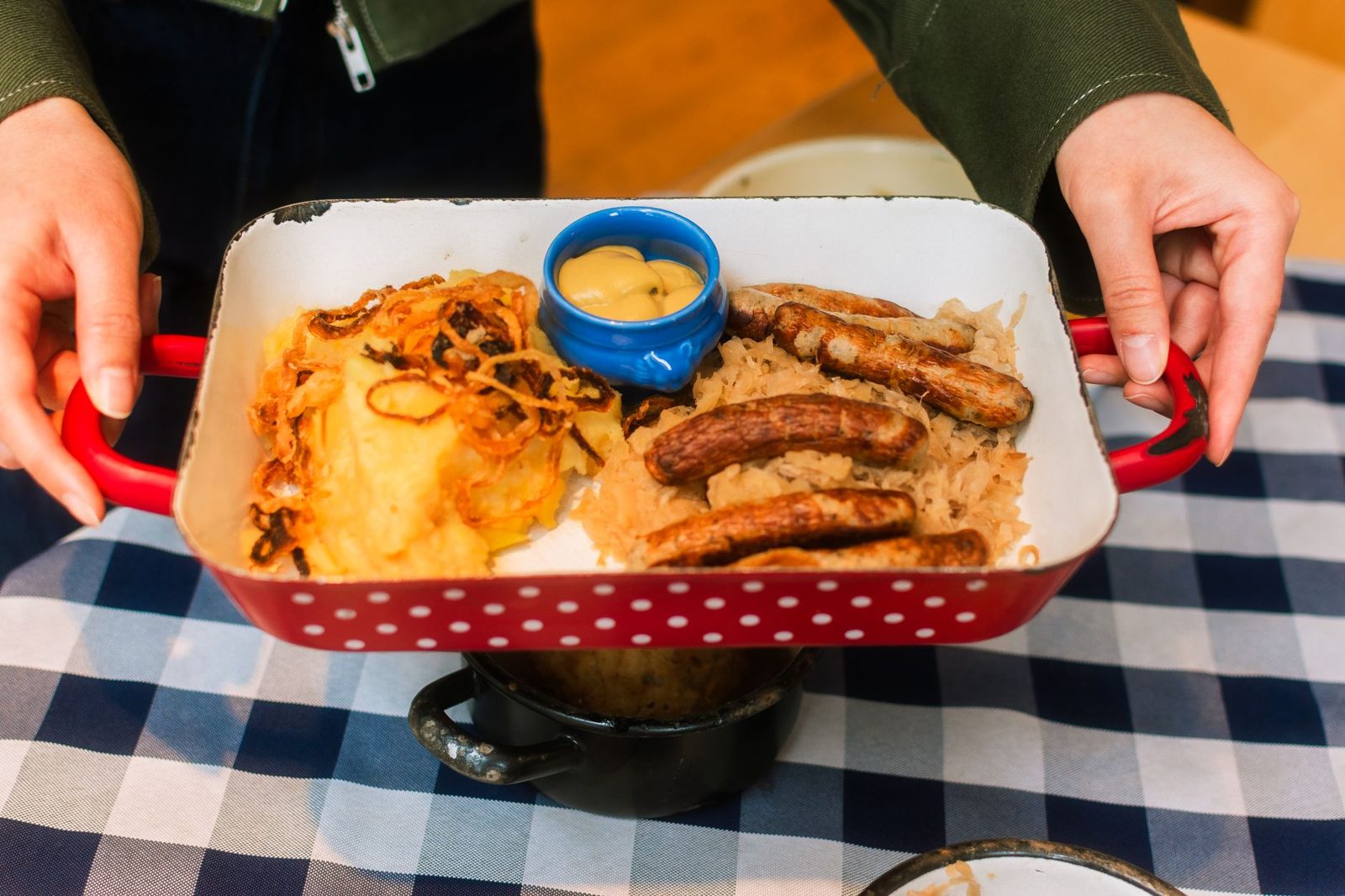
Even confident German speakers can hit a wall in a Munich Wirtshaus, because the menu is half written in dialect. A Bavarian carte is its own small language — here are the words that do the most work, so you can order without resorting to pointing.
| Menu term | What it means | Good to know |
|---|---|---|
| Brotzeit | “Bread time” — a cold snack platter | Cold cuts, cheese and pretzel; eaten any time, classically mid-morning or evening |
| Schmankerl | A regional delicacy or treat | A menu’s “Schmankerl” are its local highlights |
| Maß / Halbe | A one-litre / half-litre mug of beer | Maß is pronounced “mass”; order a Halbe if a litre feels brave |
| Semmel | A crusty bread roll | What the rest of Germany calls a Brötchen |
| Radi | White radish, spiral-cut and salted | A beer-garden staple; the salt draws out the bite |
| Knödel | A dumpling | Semmelknödel (bread) or Kartoffelknödel (potato) |
| Obatzda | A spiced soft-cheese spread | Camembert, butter, paprika and onion; scoop it with pretzel |
| Schweinshaxe / Surhaxe | Pork knuckle, roasted / cured and boiled | Roasted means crackling; cured-and-boiled is paler and tangy |
| Reiberdatschi | Fried potato pancakes | Sold at markets with apple sauce, sweet or savoury |
| Kraut / Blaukraut | Sauerkraut / red cabbage | The default vegetables beside almost any roast |
| deftig | Hearty, savoury, filling | The single most honest word on a Bavarian menu |
Insider tip: the greeting matters as much as the vocabulary. “Grüß Gott” on the way in and “Servus” among friends will warm a Bavarian server far faster than textbook “Guten Tag,” and “Zahlen, bitte” is how you ask for the bill. For where to put it all to use, our roundups of Munich’s best restaurants and the city’s historic beer halls and breweries sort the tourist traps from the genuine article.
Eating Bavarian Without the Meat
Bavarian cooking has a reputation as a carnivore’s republic, and the reputation isn’t wrong — but a vegetarian will eat very well here, far better than even a decade ago. The trick is knowing which dishes are meat-free by design rather than by special request.
The hero is Käsespätzle: short egg noodles layered with mountain cheese and a fistful of fried onions, baked until the edges crisp. It’s on almost every menu, filling enough to stand as a main, and the closest thing Bavaria has to a national comfort dish. After that, Obatzda with a pretzel, a generous gemischter Salat, and Reiberdatschi with apple sauce will carry you a long way. Semmelknödel are usually meat-free in themselves, but they’re often served swimming in a meat gravy — ask for them with Schwammerlsauce, the creamy mushroom sauce, or with chanterelles in season, and you’ve got a proper plate rather than a side.
Pudding is almost all fair game: Kaiserschmarrn (shredded, caramelised pancake with stewed plums), Apfelstrudel, Dampfnudel (a steamed sweet dumpling under vanilla sauce) and the fairground Auszogne are all vegetarian. One real caution: coeliacs should tread carefully, because Knödel, Spätzle, strudel pastry and the beer itself are all wheat or barley — a few modern kitchens now flag gluten-free options, but the traditional Wirtshaus is not built around them. And double-check the Kartoffelsalat: Munich dresses its potato salad with broth and vinegar rather than mayonnaise, and it occasionally hides bacon, so a quick “ohne Speck?” settles the matter. For wallet-friendly meat-free meals, our guide to cheap eats in Munich points to the falafel counters, Viktualienmarkt stalls and student canteens that fill the gaps, and the edible end of our best Munich souvenirs guide covers the sweet mustard and Lebkuchen worth carrying home.
Most of these dishes are available in one place. Our Viktualienmarkt guide maps the stalls where you can eat your way through the whole list in an afternoon.
Frequently Asked Questions
What is the most famous Bavarian dish?
Weißwurst for breakfast and Schweinshaxe for dinner are Munich’s two most internationally famous Bavarian dishes. Knödel (dumplings) and Brez’n (pretzels) accompany almost every meal.
Is Bavarian food the same as German food?
No — Bavarian cuisine is one of several distinct German regional cuisines. It’s heavier on pork, beer, dumplings, and sweet mustard than northern German food, which leans more toward fish, herring, and rye bread.
Can vegetarians eat traditional Bavarian food?
It’s challenging — most Bavarian classics are meat-based. Reliable vegetarian options at any Wirtshaus: Käsespätzle (cheese egg-noodles), Obatzda (cheese spread), Brezensuppe (pretzel soup, sometimes with vegetable broth), and most desserts. Vegan options are very limited at traditional venues; modern Munich restaurants serve vegan menus separately.
What time should I eat Weißwurst?
Traditionally before noon — the saying is they must “not hear the church bells of midday.” Modern restaurants serve them all day, but if you want the authentic experience, eat them before 12:00.
How much does a traditional Bavarian meal cost?
Casual Wirtshaus dinner: €18–€28 for a main + drink. Classic beer hall: €25–€38 with beer. Gourmet Bavarian: €45–€65. See our Munich trip cost guide for full budgeting.
What pairs best with Bavarian food?
Helles lager with most savory dishes (Schweinshaxe, Schweinsbraten); Weißbier with Weißwurst breakfast; dunkles (dark beer) with rich pork; Apfelschorle for non-alcoholic; Williamsbirne or Marillenschnaps as digestif.
Plan Your Munich Food Trip
This Bavarian food guide is part of our deeper Munich food and beer guide. For specific venues, see our best beer gardens guide. For Oktoberfest food, our Oktoberfest tent guide covers tent menus. For broader trip planning, see our things to do guide and trip planner.