Best Beer Gardens in Munich
The 15 best beer gardens in Munich for 2026 — from the iconic Chinese Tower and Augustiner-Keller to the world-largest Hirschgarten, riverside Flaucher, and live-jazz Waldwirtschaft. With opening hours, brewery details, and how to use a Bavarian beer garden like a local.
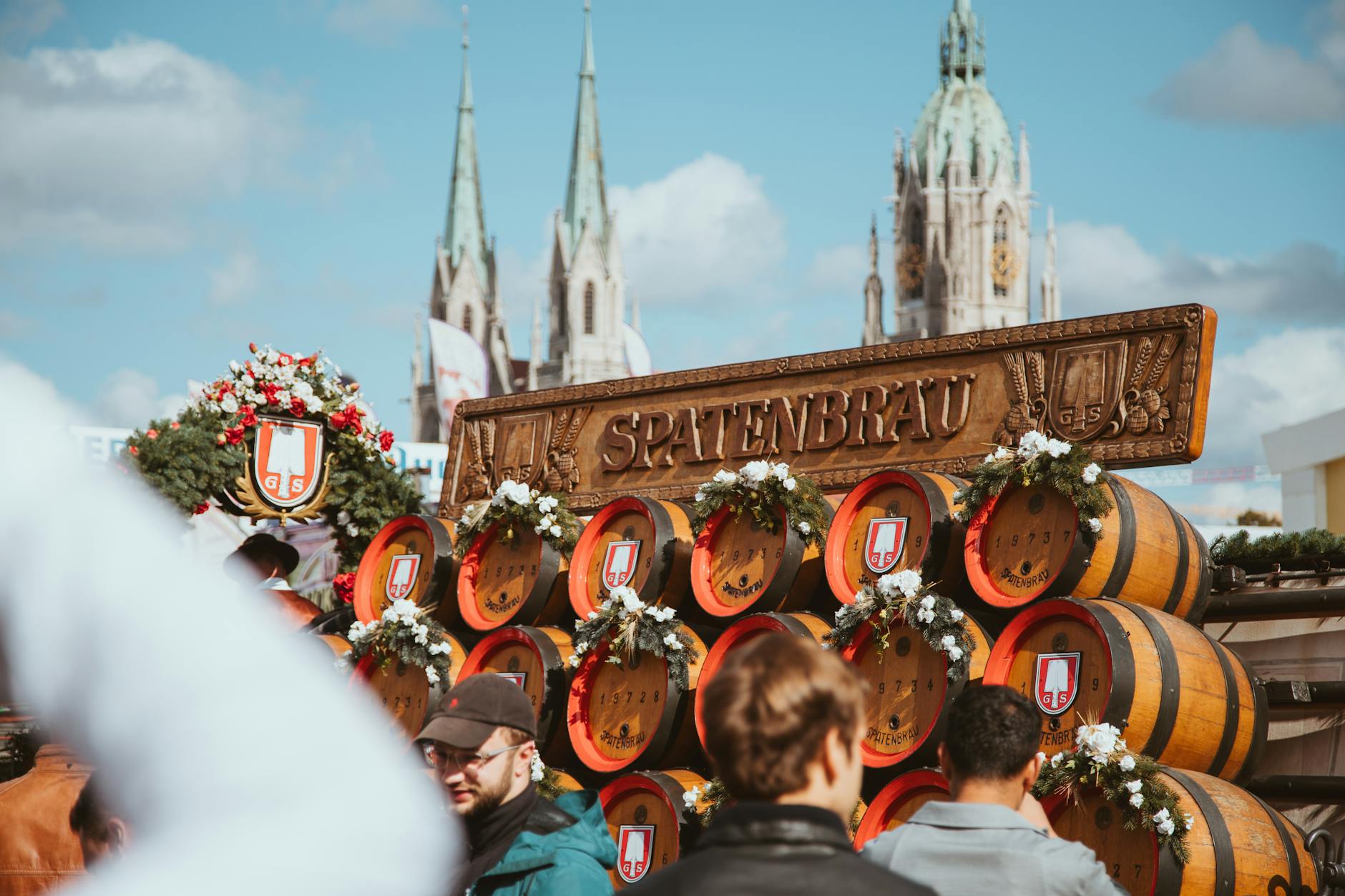
Munich’s beer gardens (Biergärten) are not tourist attractions — they are the city’s living rooms. From May to October, hundreds of thousands of Münchners spend evenings, lunches, weekends, and entire summer days under the chestnut trees with a Maß of helles in hand. There are roughly 180 beer gardens in greater Munich, but only a handful sit at the absolute top tier — the ones every visitor should know about. This guide covers the 15 best beer gardens in Munich for 2026, from the tourist-favorite Chinese Tower to local secrets along the Isar — with what to order, how the table system works, opening hours, and the all-important rule about bringing your own picnic.
What Makes a “Real” Bavarian Beer Garden?
Munich’s beer gardens have a legal definition that goes back to the 1812 Royal Beer Garden Decree: a true Biergarten serves beer outside under shade trees (traditionally chestnuts, planted in the 19th century to keep underground beer cellars cool), provides shared wooden tables, and — crucially — permits guests to bring their own food. This last rule is what separates a Biergarten from a beer hall or restaurant. You can show up with a picnic basket of pretzels, radishes, cheese, charcuterie, and Obatzda; the only requirement is that you order beer (or another drink) from the venue itself.
Practically, every beer garden has two zones: a self-service section where you carry your own stein from the counter, with shared tables and the picnic-allowed rule; and a served section with tablecloths, a waiter, a longer menu, and (usually) no outside food. The self-service side is cheaper, more local, and where you’ll have the most fun.
Munich’s 15 Best Beer Gardens for 2026
1. Chinesischer Turm — The Iconic Choice
In the southern English Garden, the Chinesischer Turm beer garden surrounds a 25-meter Chinese-style pagoda first built in 1789 (the current tower is a 1952 reconstruction). With 7,000 seats, it is the second-largest beer garden in Munich and the city’s most-visited. A brass band plays from the upper tower platform on summer afternoons. The beer is Hofbräu (1 Maß ≈ €11.50). Self-service food includes half-chickens, pork knuckles, Steckerlfisch (grilled mackerel), giant pretzels, and Obatzda. It’s busy and touristy but undeniably atmospheric — and bring-your-own-food is in full effect.
- Capacity: 7,000 seats
- Brewery: Hofbräu
- Hours: April–October, 10:00–23:00 daily
- Get there: U3/U6 to Giselastraße, 10-min walk; or bus 54 to Chinesischer Turm
2. Augustiner-Keller — Munich’s Oldest
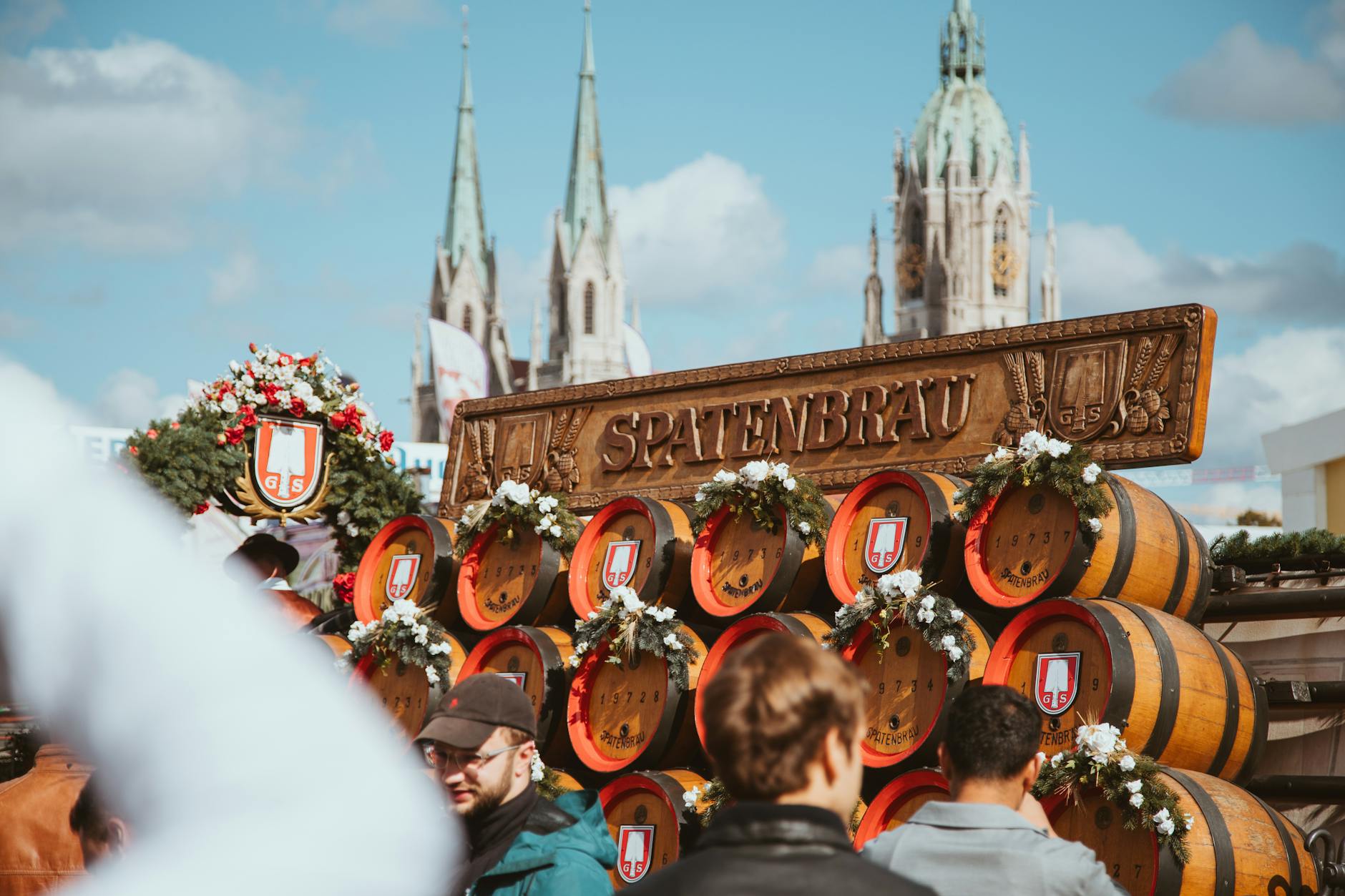
Operating in this location since 1812, Augustiner-Keller is the city’s oldest continuous beer garden. 5,000 seats spread across a courtyard shaded by 100 mature chestnut trees, just three minutes’ walk from the Hauptbahnhof. The beer — Augustiner Edelstoff, served from wooden barrels, not pressurized — is widely considered the best in Munich, and locals who care about their helles will rank it above all the other big breweries. Food highlights: the legendary roast pork (Schweinsbraten) and the sourdough Brez’n. The atmosphere is more local than the Chinesischer Turm despite the central location.
- Capacity: 5,000 seats
- Brewery: Augustiner
- Hours: Daily 10:00–24:00; beer garden weather-dependent
- Get there: S-Bahn or U-Bahn to Hauptbahnhof, 3-min walk
3. Königlicher Hirschgarten — The Largest in the World
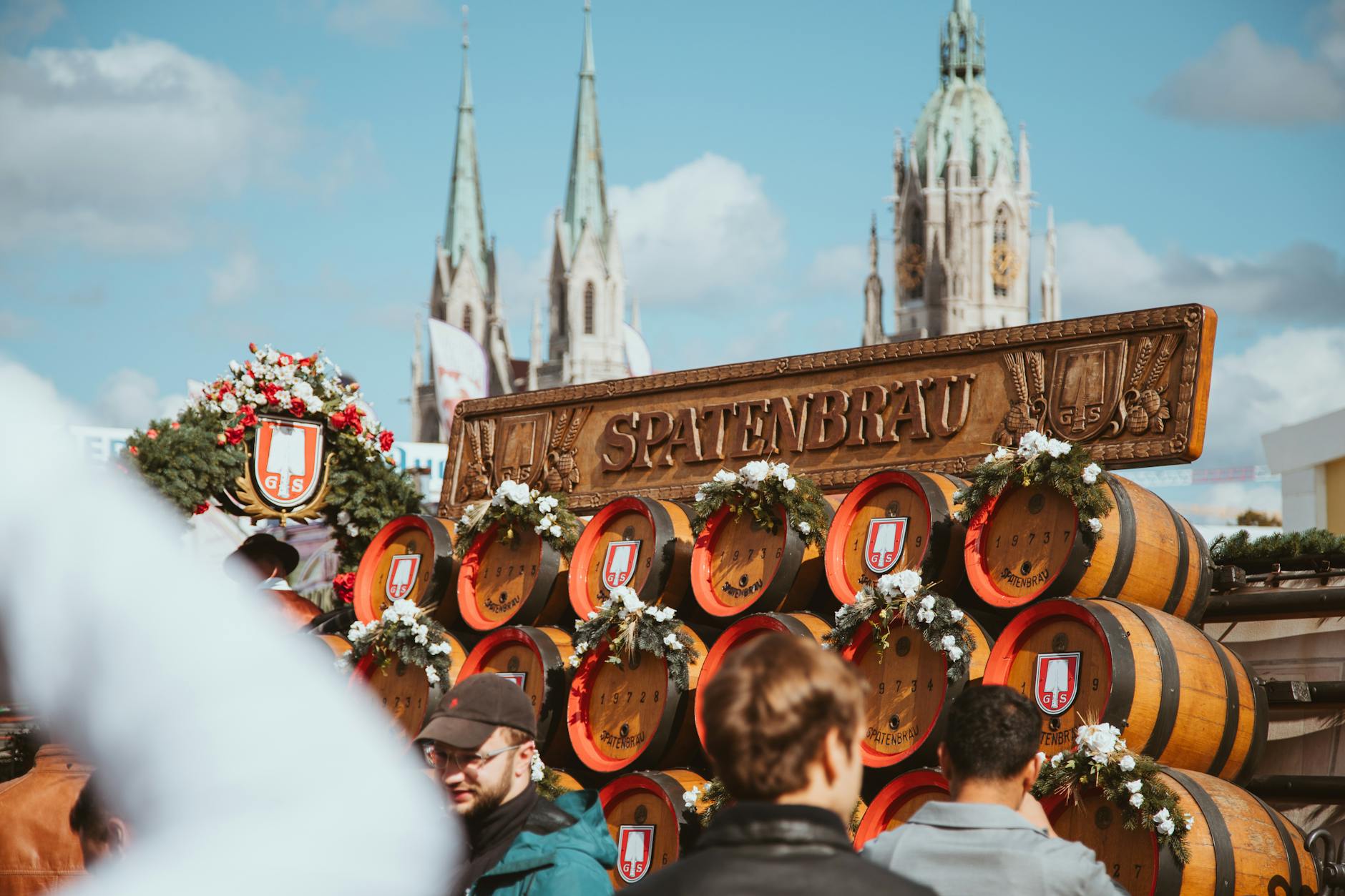
With 8,000 seats, the Königlicher Hirschgarten (“Royal Deer Garden”) is officially the largest beer garden in the world. It is also one of Munich’s most pleasant — a former royal hunting park west of the city center that still has a small enclosed deer park, lots of green lawn for kids, and the relaxed atmosphere of a place where Münchners actually outnumber tourists. The beer is Augustiner. Sundays here are the city’s quintessential family-and-friends gathering.
- Capacity: 8,000 seats (largest in the world)
- Brewery: Augustiner
- Hours: Daily 11:30–24:00; closed in deep winter
- Get there: S-Bahn S3/S4/S6/S8 to Laim, 8-min walk; or tram 17 to Romanplatz
4. Viktualienmarkt Beer Garden — Central and Rotating
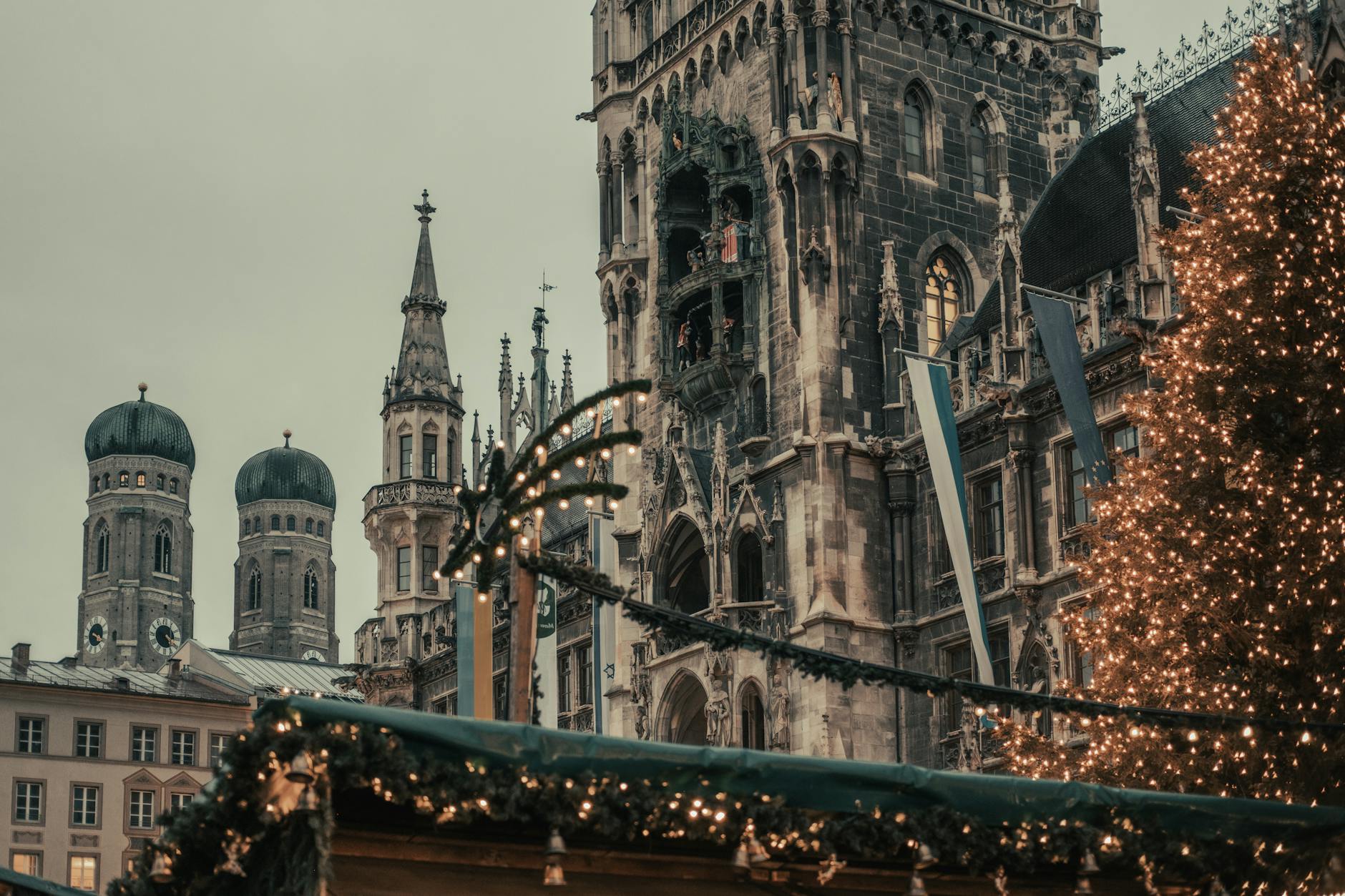
Right on Munich’s central food market, the small Viktualienmarkt beer garden (~700 seats) has a unique tradition: it rotates the beer it serves between the city’s six big breweries (Augustiner, Hofbräu, Löwenbräu, Paulaner, Spaten, Hacker-Pschorr) every two weeks during the warm months. A digital sign tells you which is on tap. Food comes from the surrounding market stalls — the bring-your-own rule applies enthusiastically. The atmosphere mixes office workers on lunch break, market vendors finishing their day, and tourists fresh from Marienplatz.
- Capacity: ~700 seats
- Brewery: Rotating among Munich’s big six
- Hours: Mon–Sat 09:00–22:00; closed Sundays (the market is closed)
- Get there: 2-min walk from Marienplatz
5. Seehaus im Englischen Garten — Lakeside Romance
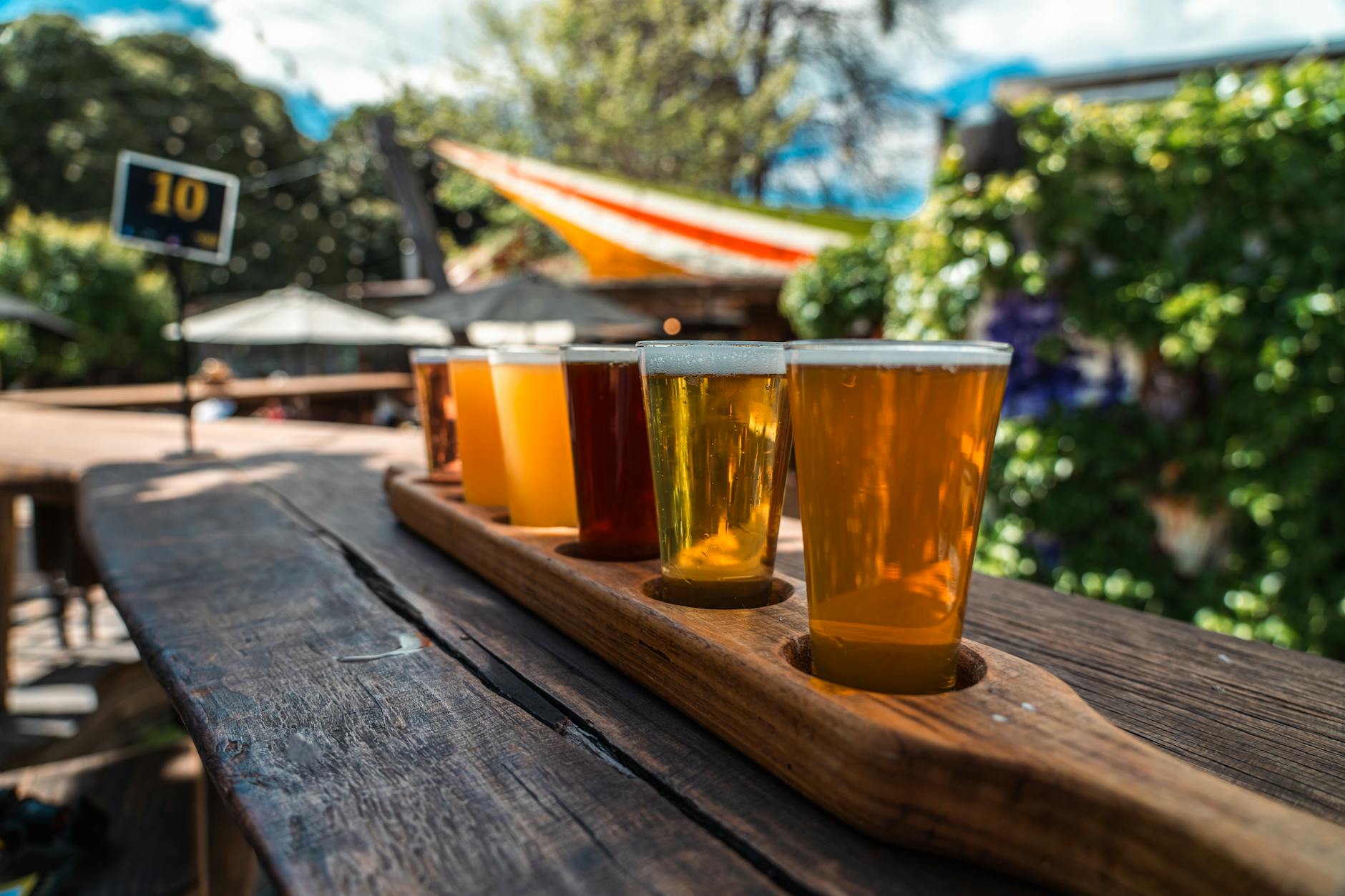
In the heart of the English Garden, the Seehaus sits directly on the Kleinhesseloher See — a small artificial lake created in 1803. The beer garden seats 2,500 with views across the water; rowing-boat rental is right next door. It’s the most picturesque beer garden in Munich, especially at sunset. The beer is Paulaner. Self-service and full-service sections coexist; arrive before 17:00 on summer Saturdays for guaranteed seats.
- Capacity: 2,500 seats
- Brewery: Paulaner
- Hours: April–October, 11:00–23:00
- Get there: U-Bahn 3/6 to Münchner Freiheit, 12-min walk through the English Garden
6. Paulaner am Nockherberg — On the Hill
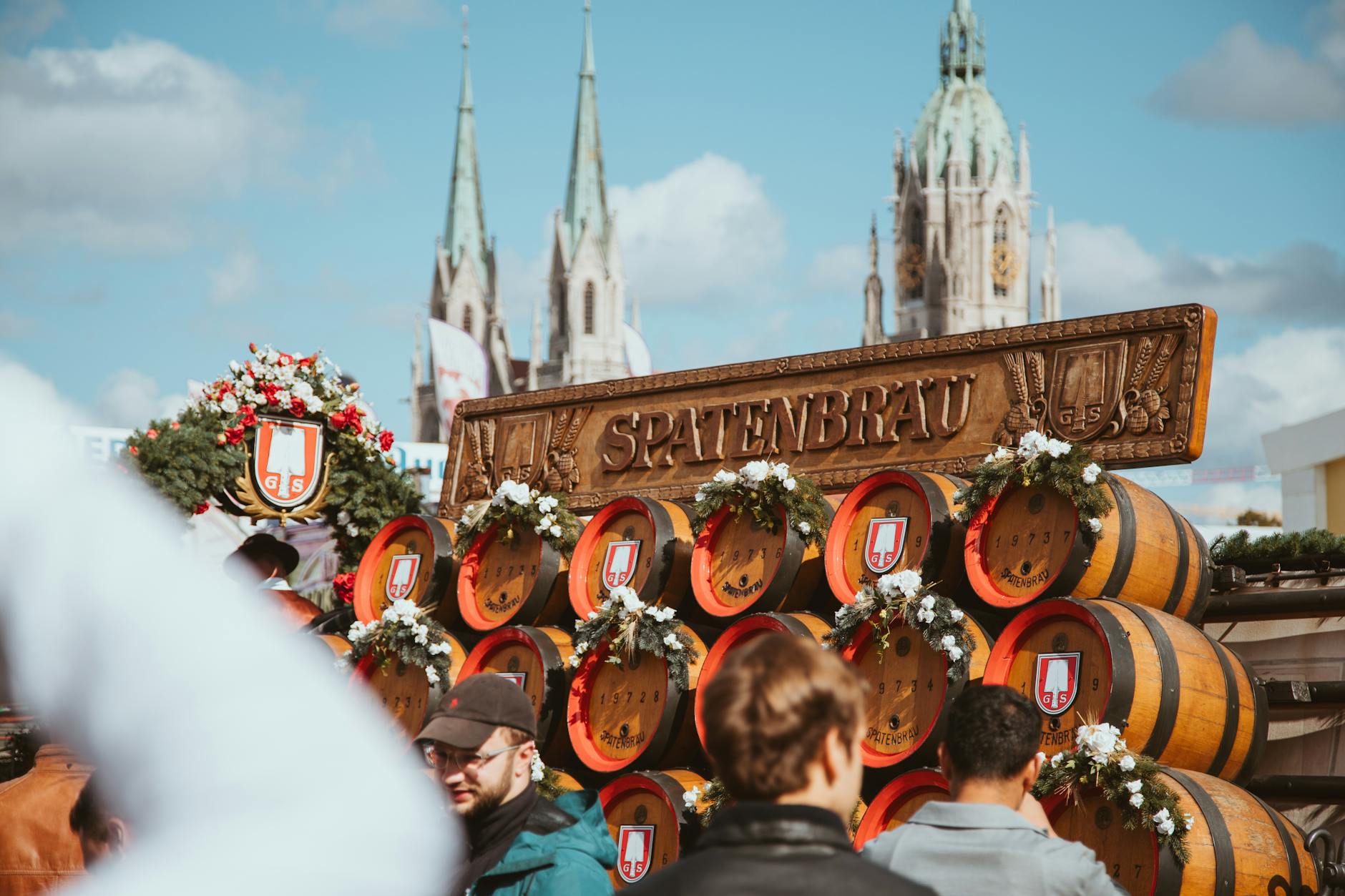
Up the bluff above the Au, Paulaner am Nockherberg is the home base of the Paulaner brewery and host of the famous Starkbierfest (“Strong Beer Festival”) in March each year. The beer garden has 2,500 seats with sweeping views over the eastern city, plus a generous play area for kids. The Paulaner Salvator Doppelbock — a deeply malty 7.9% beer originally brewed by monks for Lent — is the house specialty.
- Capacity: 2,500 seats
- Brewery: Paulaner
- Hours: Daily 10:00–24:00
- Get there: Tram 25 to Schweigerstraße or U-Bahn 1/2 to Kolumbusplatz
7. Flaucher — Riverside Locals’ Favorite
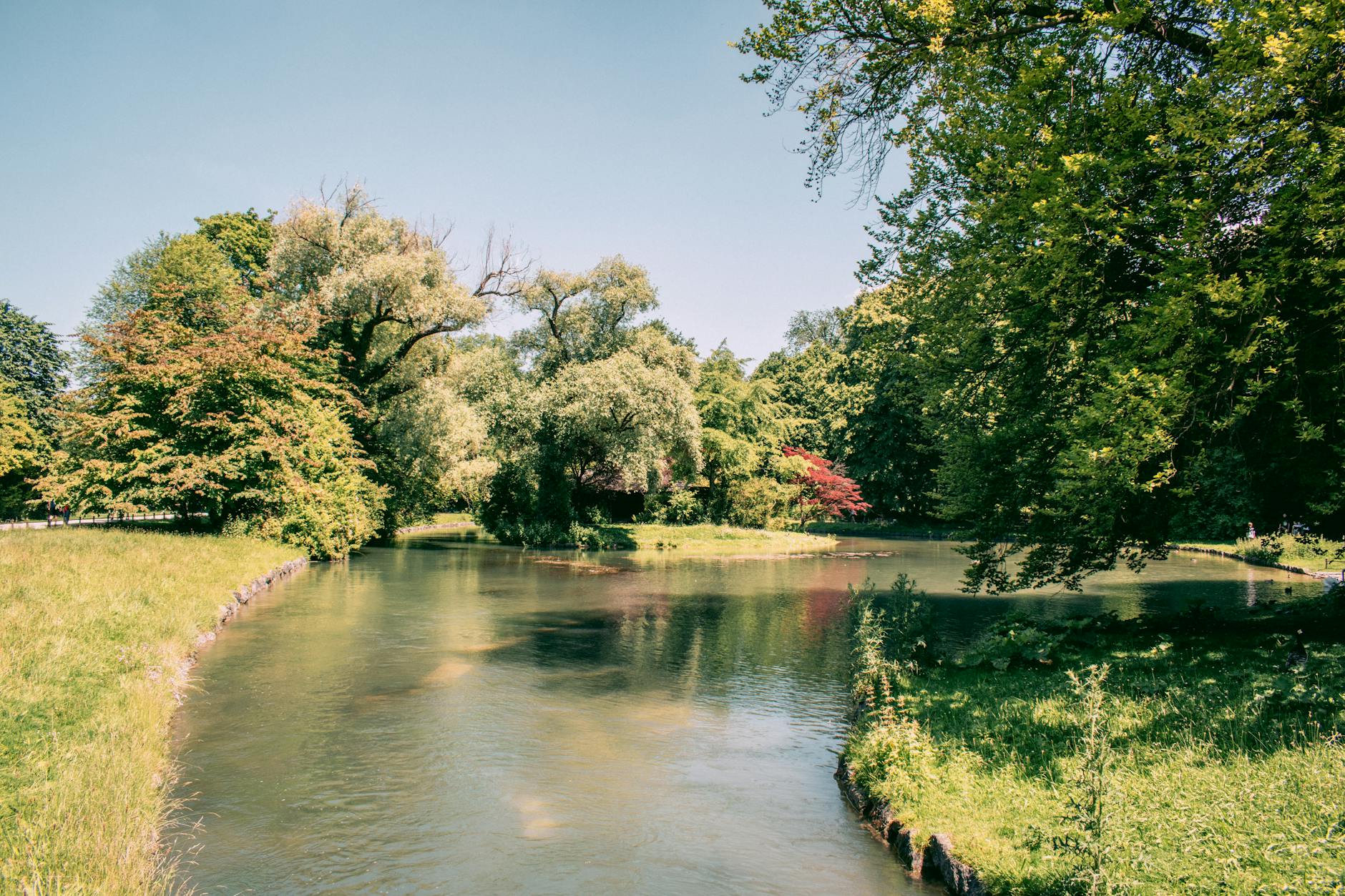
South of the city center, the Flaucher sits on a small island in the Isar river itself. The 1,500-seat beer garden has Hacker-Pschorr on tap and is essentially a Münchner-only secret — almost no tourists make it this far south. In summer, the surrounding gravel banks become an enormous swimming and barbecue zone for locals; you can swim in the Isar (officially clean enough for bathing since 2000) and walk to your beer garden in your swimsuit. There’s no more authentic Munich Sunday than this.
- Capacity: 1,500 seats
- Brewery: Hacker-Pschorr
- Hours: April–October, 10:00–22:00
- Get there: U-Bahn 3 to Brudermühlstraße, 15-min walk along the Isar
8. Waldwirtschaft (WaWi) — Jazz on the Isar Bluff
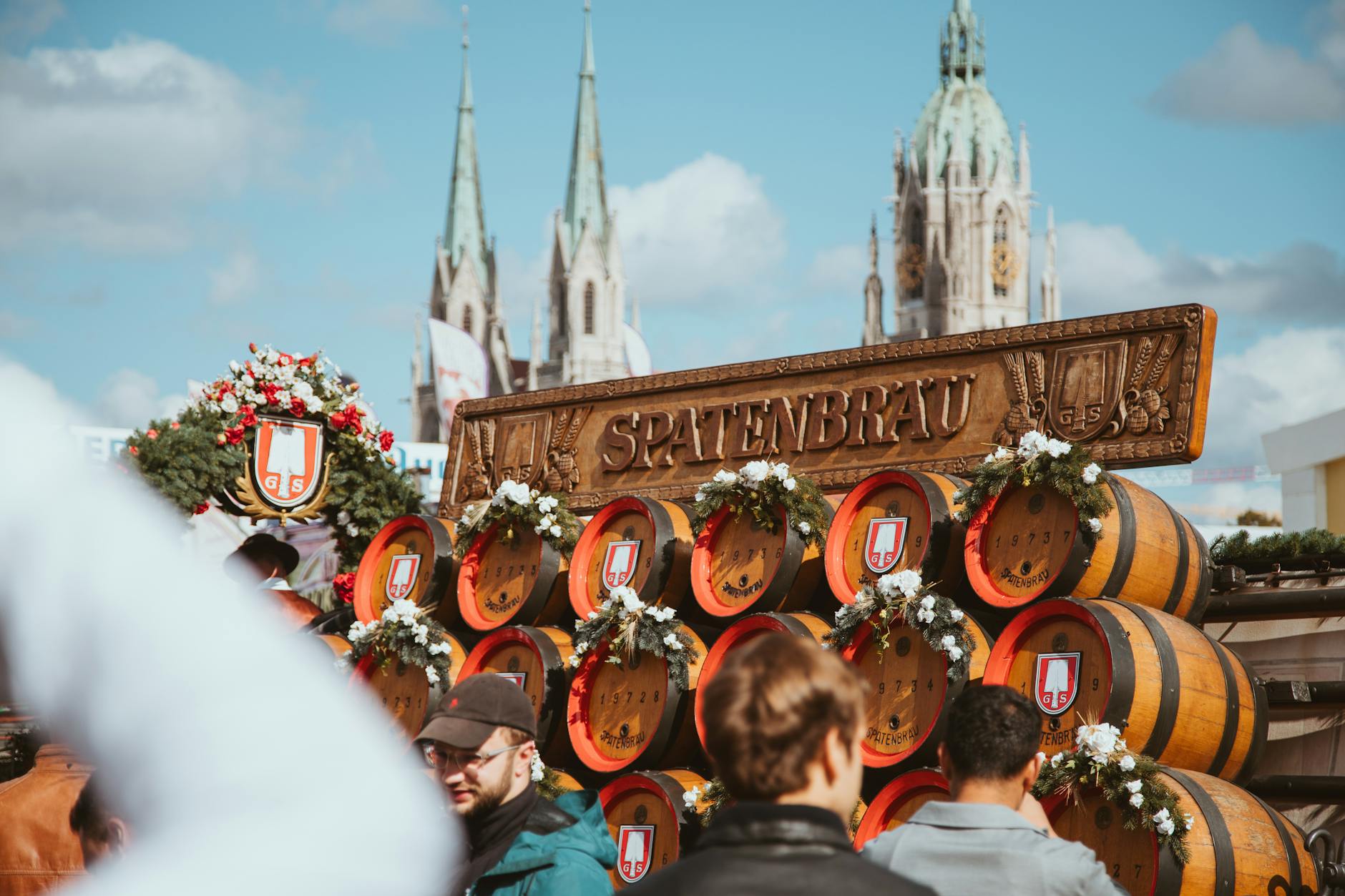
Perched on the wooded bluff above the Isar in Großhesselohe (south of the city), the Waldwirtschaft — known to Münchners as “WaWi” — is famous for its outstanding live jazz, swing, and Dixieland programming, every day in summer from 5 p.m. until close. 2,000 seats under towering chestnuts, Spaten on tap, and a half-hour S-Bahn ride that already feels like a day trip. The view across the wooded Isar valley toward the Bavarian Alps on a clear day is worth the trip alone.
- Capacity: 2,000 seats
- Brewery: Spaten
- Hours: April–October, 11:00–23:00 (live music daily 17:00–23:00)
- Get there: S-Bahn S7 to Großhesselohe Isartalbahnhof, 5-min uphill walk
9. Taxisgarten — The Village-Square Feel
Tucked into a residential block in Neuhausen, the Taxisgarten (1,500 seats) feels like a country-village green dropped into the middle of Munich. It’s a strong local favorite — you’ll see neighborhood families, work-after parties, and dog walkers, all under enormous chestnut trees. The food is reliably good (the half-chicken is famous), the beer is Augustiner, and the atmosphere is unhurried.
- Capacity: 1,500 seats
- Brewery: Augustiner
- Hours: April–October, 11:00–24:00
- Get there: U-Bahn 1/7 to Rotkreuzplatz, 5-min walk
10. Hofbräukeller am Wiener Platz
Don’t confuse this with the central Hofbräuhaus — the Hofbräukeller sits 5 km east in Haidhausen on Wiener Platz, and is in many ways the more atmospheric of the two. 1,800 seats around a covered pavilion, Hofbräu beer (of course), and a cellar restaurant for cooler weather. It’s where Hitler attended his first political meeting in 1919 — a fact the staff will not raise but is part of the historical record. Today it’s a thoroughly normal, friendly Bavarian beer garden.
11. Löwenbräukeller
On Stiglmaierplatz, the Löwenbräukeller beer garden (~1,000 seats) is one of the most central. The grand 19th-century brewery building has a classic restaurant inside and a self-service beer garden in the courtyard. Löwenbräu Original on tap. Convenient stop if you’re walking between the Hauptbahnhof and Königsplatz.
12. Park-Café Beer Garden
Hidden inside the Alter Botanischer Garten just north of the Hauptbahnhof, the Park-Café beer garden has 1,500 seats under century-old plane trees. The clientele skews young and local, and the kitchen is more international than most beer gardens (vegetarian options abound). Late-night DJ sets in summer make this a lively crossover spot between beer garden and bar. Late closing 02:00 is unusual for Munich.
13. Aumeister
At the far northern end of the English Garden, Aumeister is the beer garden Münchners head to when they want a longer bike ride or walk to earn their beer. 2,500 seats under big trees, Hofbräu beer, and a spectacular ride/walk through the wilder northern half of the English Garden to reach it (~45 minutes from the city center on foot). Sunday afternoons here have a wonderful slow rhythm.
14. Forstwirtschaft Theresienwiese / Wirtshaus in der Au
Two smaller venues worth knowing: the Wirtshaus in der Au across the Isar in the Au is famous for its dumplings (the menu lists 18 varieties) and has a friendly courtyard beer garden of 200 seats — Augustiner on tap. Bavariapark, behind the Bavaria statue at the Theresienwiese, is a shaded oasis with views toward the Alps and is open year-round.
15. Zum Flaucher / Hinterbrühl / Menterschwaige
The deeper-Isar-valley trifecta: Hinterbrühl on a small Isar island serves Spaten and is reachable only by walking or biking; Menterschwaige in Harlaching has 1,400 seats with regular live folk music; and the seasonal Sankt Emmeran’s Mühle in Oberföhring is one of Munich’s prettiest summer-only gardens. All three reward a longer trip out from the center.
How to Use a Munich Beer Garden Like a Local
Self-Service vs. Served Sections
Look at the table cloths. White tablecloths = full service: a waiter will come, the menu is longer, and you cannot bring your own food. No tablecloth = self-service: walk to the counter, hand over your cleaned beer stein from home or rent one, order a Maß, pay (cash is fastest), pick up your food separately, and find any open seat at any open table. The self-service side is the cultural heart of the beer garden experience.
Bring Your Own Food (the Brotzeit Rule)
On the self-service side, you may bring any food. The classic is a Brotzeit picnic: a hunk of bread, butter, sliced radishes (the long white “Bierradi”), Obatzda (a soft cheese spread), Leberkäse (Bavarian meatloaf), Wurstsalat, sliced sausages, mustard, and gherkins. You can buy all of this at the Viktualienmarkt or any Edeka or Rewe supermarket and walk in with a basket. Münchners often pack tablecloths, candles, and full sets of cutlery.
How to Sit at a Shared Table
Walk up, ask politely “Ist hier noch frei?” (Is this still free?), and if yes, sit down. Don’t expect a private table — beer gardens are communal and you may end up making new friends. Don’t sit on a Stammtisch (regulars’ table, marked with a metal sign) unless you are invited.
Ordering Beer
- Eine Maß, bitte = a 1-liter glass stein (~€11–€13)
- Eine Halbe = half-liter (~€5–€6)
- Helles = the standard pale lager — order this if unsure
- Weißbier / Weizen = wheat beer, served in a tall vase glass
- Radler = beer mixed 50/50 with lemonade — refreshing on hot days
- Russ = Weißbier mixed with lemonade — same logic, wheat version
- Spezi = cola + orange soda; non-alcoholic but iconic
Tipping
Round up about 10% on the served side. On the self-service side, no tip is expected (you carried your own beer).
Weather and Seasons
Most Munich beer gardens are open April or May through October, weather permitting. A handful (Augustiner-Keller, Park-Café, Wirtshaus in der Au) operate covered courtyards year-round. Rain shuts most beer gardens down within minutes; if a Saturday forecast is uncertain, check the venue’s website before traveling out.
Quick-Compare: Munich’s Top Beer Gardens
| Beer Garden | Seats | Brewery | Best For | Easy Reach? |
|---|---|---|---|---|
| Chinesischer Turm | 7,000 | Hofbräu | First-timers, classic atmosphere | Yes (English Garden) |
| Augustiner-Keller | 5,000 | Augustiner | Beer-quality purists | Yes (Hauptbahnhof) |
| Hirschgarten | 8,000 | Augustiner | Sunday with locals, kids | Easy (S-Bahn Laim) |
| Viktualienmarkt | 700 | Rotating | Quick central stop | Yes (Marienplatz) |
| Seehaus | 2,500 | Paulaner | Most romantic | Yes (English Garden) |
| Paulaner am Nockherberg | 2,500 | Paulaner | Skyline view, families | Yes (tram) |
| Flaucher | 1,500 | Hacker-Pschorr | Riverside locals’ day | Moderate (15-min walk) |
| Waldwirtschaft | 2,000 | Spaten | Live jazz, valley view | Easy (S7) |
| Taxisgarten | 1,500 | Augustiner | Neighborhood feel | Yes (Rotkreuzplatz) |
| Hofbräukeller | 1,800 | Hofbräu | East-side after sightseeing | Yes (Max-Weber-Platz) |
Frequently Asked Questions
Which is the best beer garden in Munich?
There’s no single answer. Augustiner-Keller for the highest beer quality and oldest tradition; Chinesischer Turm for the iconic experience; Hirschgarten for the most local Sunday energy; Seehaus for the most romantic setting. First-time visitors should pick one Augustiner-tap garden and one English Garden venue.
Can you bring your own food to a Munich beer garden?
Yes — at the self-service section of any traditional beer garden. The 1812 Royal Beer Garden Decree codifies this right, and Münchners exercise it heavily. The only requirement is that you order beer (or another drink) from the venue. The served section under tablecloths usually does not allow outside food.
When are Munich’s beer gardens open?
Most operate from April or May through October, daily 10:00–23:00 (some until 24:00). A few — Augustiner-Keller, Park-Café, Hofbräukeller — have indoor halls or heated courtyards that operate year-round.
How much does a beer cost in a Munich beer garden in 2026?
A 1-liter Maß runs €10.80–€13.20 in 2026 depending on the venue (Augustiner is typically €0.50–€1.00 cheaper than Hofbräu). A half-liter Halbe is €5.00–€6.50. Note that Oktoberfest tent prices are higher (€15+ in 2026).
Are kids allowed in Munich beer gardens?
Yes, completely. Most beer gardens have play areas (Hirschgarten, Paulaner am Nockherberg, and Taxisgarten are particularly good); families form a meaningful share of the crowd. By law, beer gardens must close at 23:00 unless they have a specific late-night license.
Do I need to reserve a table?
On the self-service side, no — you simply find an open seat at a shared table. On the full-service side (white tablecloths), reservations are advisable on weekends and especially during Oktoberfest week. Most large gardens take phone or online reservations.
Which is better — Munich beer halls or beer gardens?
They serve different purposes. Beer halls (Hofbräuhaus, Augustiner-Großgaststätte) are indoor, year-round, and great for evening atmosphere with live oompah music. Beer gardens are outdoor, summer-focused, and more relaxed — the place where you’d spend an entire afternoon. In summer, do both.
What to Order at a Beer Garden Beyond the Beer
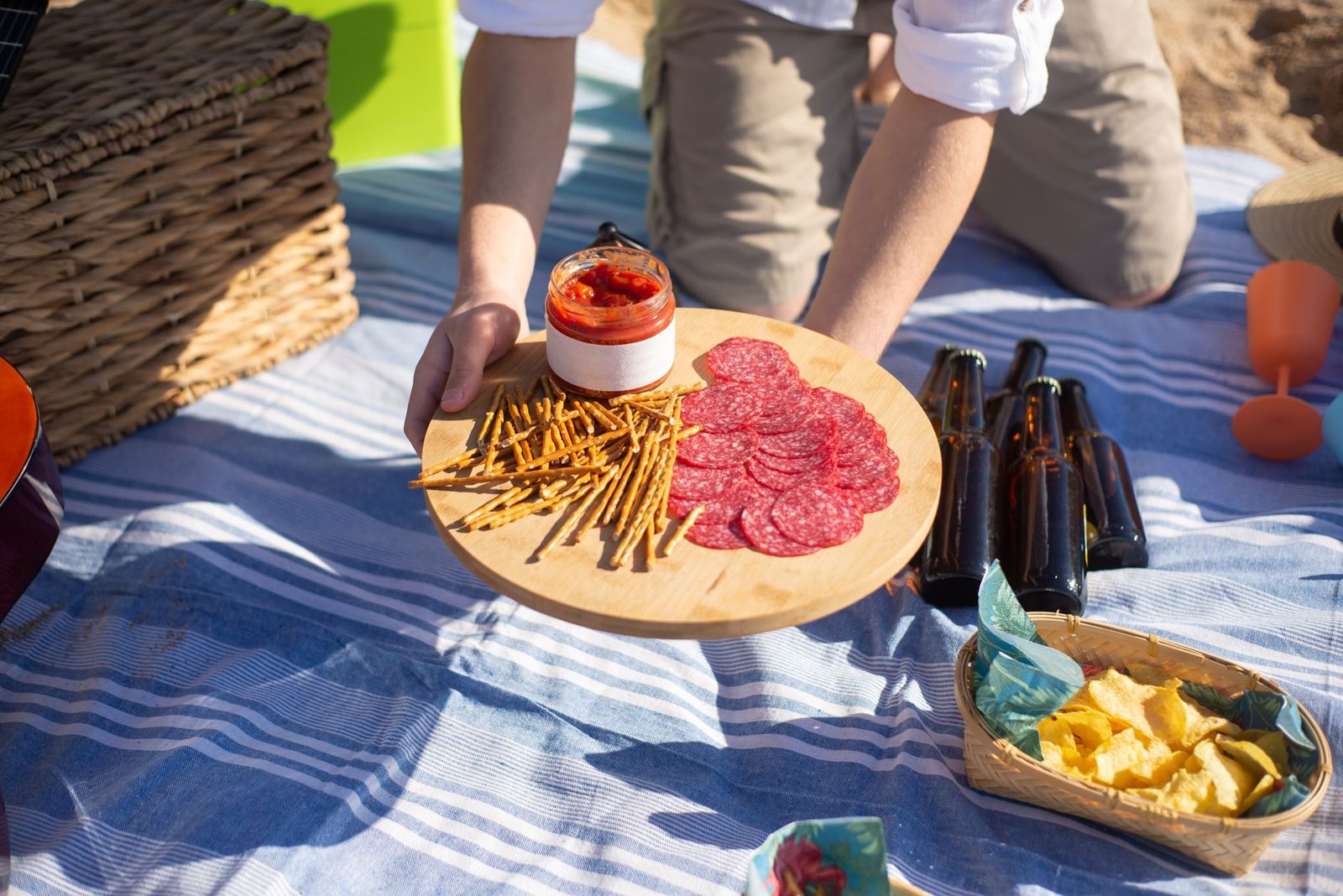
A Mass of Helles is only half the ritual. The food stalls at the self-service end of a Munich beer garden are where you build a proper Brotzeit, and knowing the names saves you from pointing helplessly at a steamed-up glass cabinet. The undisputed king is the halbes Hendl — a crackling-skinned rotisserie half-chicken, around €11–13, eaten with your hands and a pretzel. At the bigger riverside gardens like Hirschgarten and Aumeister you will also smell Steckerlfisch, a whole mackerel splayed on a stick and grilled over coals (€12–15); it is messy, smoky, and worth the napkins.
For lighter grazing, order Obatzda — a Camembert-and-butter spread loosened with paprika and onion, about €6–8 with a Brezn — or a plate of Radi, a white radish spiralled into a ribbon and salted until it weeps (the salt makes you thirsty, which is precisely the point). Big eaters go for Schweinshaxe, the lacquered roast pork knuckle (€16–19), or a slab of Leberkäs in a roll. Most of this is the same canon you will meet across our guide to traditional Bavarian food, just served on a paper plate instead of porcelain. Insider tip: remember the unwritten rule covered earlier — at unclothed self-service tables you may spread out a picnic you brought yourself, so many locals buy only the chicken and the beer and bring their own radishes and rye bread from the market. If you would rather someone carry it to you, the table-service (Bedienung) section has waiters, a menu closer to a sit-down restaurant, and prices to match. On a tight budget, the gardens remain some of the best cheap eats in Munich if you stick to a Hendl and tap water for the kids.
Which Beer Garden Suits Your Group?
Munich has 100-odd beer gardens, but the right one depends entirely on who is at your table. A first date under the lanterns at Seehaus is a different evening from wrangling four kids at Hirschgarten, and a stag group descending on the Chinesischer Turm wants neither. Use this as a shortcut to the fifteen profiled above.
| You’re with… | Best picks | Why |
|---|---|---|
| Young kids | Hirschgarten, Aumeister, Flaucher | Big playgrounds, fenced lawns, real deer at Hirschgarten |
| A date | Seehaus, Waldwirtschaft | Lakeside tables and live jazz on the Isar bluff |
| A big, loud group | Chinesischer Turm, Augustiner-Keller | Thousands of seats, brass band, room to be rowdy |
| Short on time, central | Viktualienmarkt, Hofbräukeller | Walkable from Marienplatz, no tram ride needed |
| Chasing the locals’ feel | Taxisgarten, Menterschwaige | Residential, low-key, mostly Müncheners |
Families should know that nearly every beer garden here doubles as a park playground — the lawns at Hirschgarten and the riverside meadows at Flaucher are detailed further in our roundups of Munich’s parks and gardens and Munich with kids, and several sit beside the family restaurants worth a rainy-day backup. If the forecast collapses, the same brewery usually runs an indoor beer hall or Keller nearby where the benches and the litre mugs simply move under a roof — the after-dark version of this scene is covered in our beer halls in the evening guide.
For the green south of the city and its neighbourhood beer gardens, see Sendling and Westpark.
More Munich Food and Beer Reading
This guide is part of our deeper Munich food and beer guide. For more on the dining scene, the famous breweries, the Hofbräuhaus, and Bavarian specialties, head there next. To plan around a visit, see our things to do guide, our neighborhoods guide, and our overall trip planner. If you’re traveling during Oktoberfest, our Oktoberfest guide covers the world’s largest beer event.