Munich Neighborhoods: Where Locals Live & Play
Discover Munich's best neighborhoods district by district. From the historic Altstadt to bohemian Schwabing, trendy Glockenbachviertel, and village-like Haidhausen — find where locals live, eat, and play.
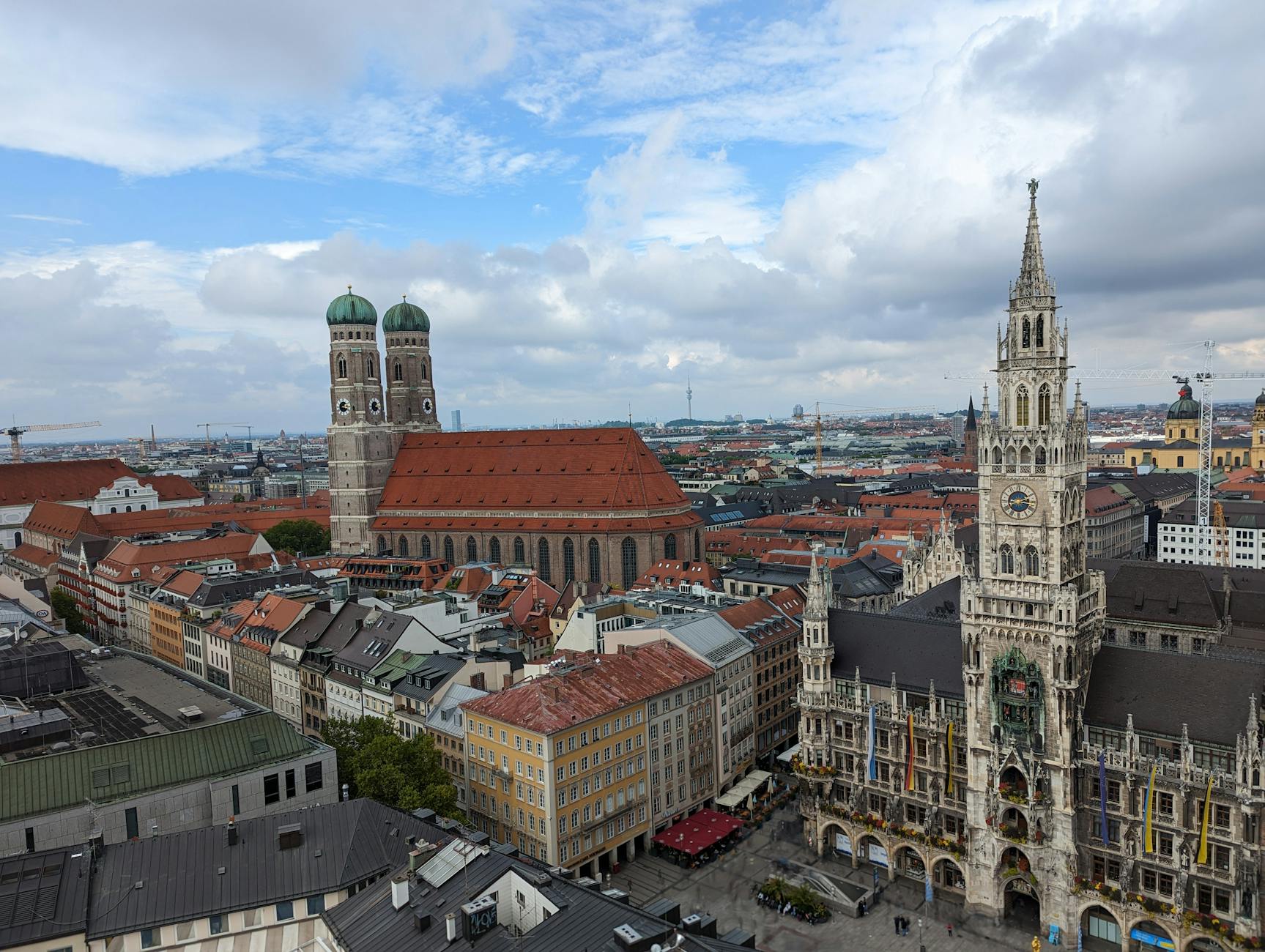
Munich neighborhoods each tell a different story — from the medieval lanes of the Altstadt to the bohemian cafés of Schwabing and the trendy boutiques of Glockenbachviertel. Understanding Munich’s distinct districts is the key to unlocking an authentic experience beyond the typical tourist trail. Whether you’re seeking world-class museums, riverside relaxation, vibrant nightlife, or quiet village charm, there’s a Munich neighborhood perfectly suited to your travel style. This comprehensive district-by-district guide reveals where locals actually live, eat, and play — so you can explore Munich like a true insider.
Munich Neighborhoods at a Glance
Munich’s districts are not interchangeable, and picking the right one shapes your whole trip. Before the deep dives below, here is the shorthand version — what each neighborhood feels like, who it suits, and whether it makes a sensible base for sleeping rather than just visiting. Use it to narrow your shortlist, then read the full profile for the area that catches your eye.
| Neighborhood | Vibe | Best for | Good base to stay? |
|---|---|---|---|
| Altstadt-Lehel | Historic, central, polished | First-timers, sightseeing on foot | Yes — most convenient, priciest |
| Schwabing | Bohemian, leafy, café-led | Park lovers, longer stays, families | Yes — relaxed and well-connected |
| Glockenbachviertel | Trendy, queer-friendly, lively | Nightlife, foodies, younger travelers | Yes — buzzy, walk to the centre |
| Haidhausen | Village-like, quiet, residential | Couples, families, slow mornings | Yes — calm but close in |
| Maxvorstadt | Studenty, intellectual, museum-dense | Art lovers, budget dining | Yes — central and good value |
| Au-Isarvorstadt | Riverside, mixed, easygoing | Outdoor types, craft-beer fans | Yes — handy for the Isar |
| Sendling & Westpark | Working-class, green, local | Budget travelers, park days | Workable — cheaper, short ride in |
| Olympic Quarter | Modern, sporty, spacious | Families, car fans, concert-goers | Better as a day trip than a base |
| Neuhausen-Nymphenburg | Refined, palatial, residential | Couples, palace and park visits | Workable — quiet and pretty |
| Bogenhausen | Elegant, moneyed, villa-lined | A peaceful, upscale stay | Workable — leafy but further out |
Understanding Munich’s District Layout
Munich is officially divided into 25 boroughs (Stadtbezirke), but visitors will find that roughly eight to ten core neighborhoods hold the greatest appeal. The city radiates outward from the medieval Altstadt at its center, with each surrounding district carrying its own distinct personality, architecture, and cultural identity. The Isar River runs north to south through the eastern half of the city, creating a natural division between the western core districts and the more residential eastern neighborhoods like Haidhausen and Au.
Munich’s excellent public transport system — comprising U-Bahn (subway), S-Bahn (suburban rail), trams, and buses — makes hopping between neighborhoods effortless. Most of the central districts are also highly walkable, with many connected by pleasant tree-lined streets, riverside paths, or park corridors. The Mittlerer Ring road roughly marks the boundary between the inner-city neighborhoods and the outer suburbs, and nearly everything a tourist needs lies within this ring.
Each Munich neighborhood has developed its character over centuries. Some were independent villages that were absorbed as Munich grew, and they’ve retained that village atmosphere. Others were purpose-built in specific eras and reflect the architectural and social trends of their time. Understanding these histories adds depth to your exploration and helps you appreciate why a stroll from Maxvorstadt to Schwabing feels like crossing an invisible cultural border.
Altstadt-Lehel: Munich’s Historic Heart
The Altstadt-Lehel district is where Munich began and where most first-time visitors spend the majority of their time. Altstadt literally means “Old Town,” and this compact area within the former medieval city walls contains an extraordinary density of historic landmarks, churches, museums, and cultural institutions. Marienplatz sits at its center — the main square dominated by the magnificent neo-Gothic Neues Rathaus (New Town Hall) with its famous Glockenspiel that performs daily at 11am and noon.
Walking through the Altstadt, you’ll encounter the twin-towered Frauenkirche (Cathedral of Our Lady), Munich’s most iconic silhouette and an official city landmark since the 15th century. The Viktualienmarkt, just south of Marienplatz, has been Munich’s premier open-air food market since 1807. Here, more than 100 traders spread across 18,591 square metres sell everything from artisan cheeses and fresh-baked bread to exotic spices, seasonal produce, and traditional Bavarian specialties. The market’s central beer garden is a beloved gathering spot where locals and tourists mingle over a Maß of beer.
Lehel, the eastern extension of the Altstadt, is one of Munich’s most elegant residential areas. Tree-lined streets, stately 19th-century apartment buildings, and proximity to the English Garden make it a quietly prestigious address. The Haus der Kunst contemporary art museum and the Bayerisches Nationalmuseum (Bavarian National Museum) anchor Lehel’s cultural offerings. For visitors, Lehel provides a more peaceful base than the bustling Altstadt while remaining within easy walking distance of all the major sights.
What to see and do: Marienplatz and the Glockenspiel, Frauenkirche, Viktualienmarkt, Residenz Palace, Hofbräuhaus, St. Peter’s Church (Alter Peter) with its tower viewpoint, Dallmayr delicatessen, Theatinerkirche, and the luxury shopping along Maximilianstraße.
Best for: First-time visitors, history enthusiasts, luxury shoppers, and anyone wanting to be at the geographic center of Munich’s attractions.
Schwabing: The Bohemian Quarter

Schwabing is arguably Munich’s most famous neighborhood beyond the Altstadt, and for good reason. In the early 1900s, this was the epicenter of Munich’s artistic and intellectual life. Wassily Kandinsky, Paul Klee, Thomas Mann, Rainer Maria Rilke, and even Vladimir Lenin all lived and worked here at various times. That creative spirit has endured through the decades, and while Schwabing has inevitably gentrified, it retains a distinctly cultured, slightly irreverent atmosphere that sets it apart from Munich’s more conservative districts.
Leopoldstraße is Schwabing’s main artery — a wide, tree-lined boulevard stretching from the Siegestor (Victory Gate) northward, lined with cafés, restaurants, galleries, and boutiques. On warm evenings, the sidewalk terraces fill with people-watchers, students, and creative types nursing espressos or craft cocktails. The street comes alive during events like the annual Streetlife Festival, when it’s closed to traffic and transformed into a massive open-air celebration.
Schwabing’s greatest natural asset is its direct access to the Englischer Garten (English Garden), one of the world’s largest urban parks at 375 hectares — larger than Central Park in New York. The park stretches along Schwabing’s eastern edge and offers everything from peaceful meadows and forest paths to beer gardens (the Chinesischer Turm beer garden seats 7,000), a Japanese tea house, and the famous Eisbach wave where surfers ride a standing wave year-round. Living in or visiting Schwabing means the park is essentially your backyard.
Away from Leopoldstraße, Schwabing’s side streets reveal a more intimate character. Hohenzollernstraße is a local favorite for independent bookshops, vintage clothing stores, and cozy brunch spots. Elisabethmarkt, a small permanent market, offers a quieter alternative to the Viktualienmarkt with excellent produce, flowers, and a charming beer garden. The area around Münchner Freiheit square buzzes with energy, particularly around the many restaurants and the ornate Jugendstil (Art Nouveau) buildings that line the surrounding streets.
What to see and do: Leopoldstraße café culture, English Garden (Eisbach surfing, Chinesischer Turm beer garden, Monopteros temple), Elisabethmarkt, Siegestor, Münchner Freiheit, cabaret theaters, Art Nouveau architecture walking tours.
Best for: Culture seekers, park lovers, café enthusiasts, families, and anyone who wants a vibrant but residential Munich experience.
Glockenbachviertel: Munich’s Trendiest Neighborhood
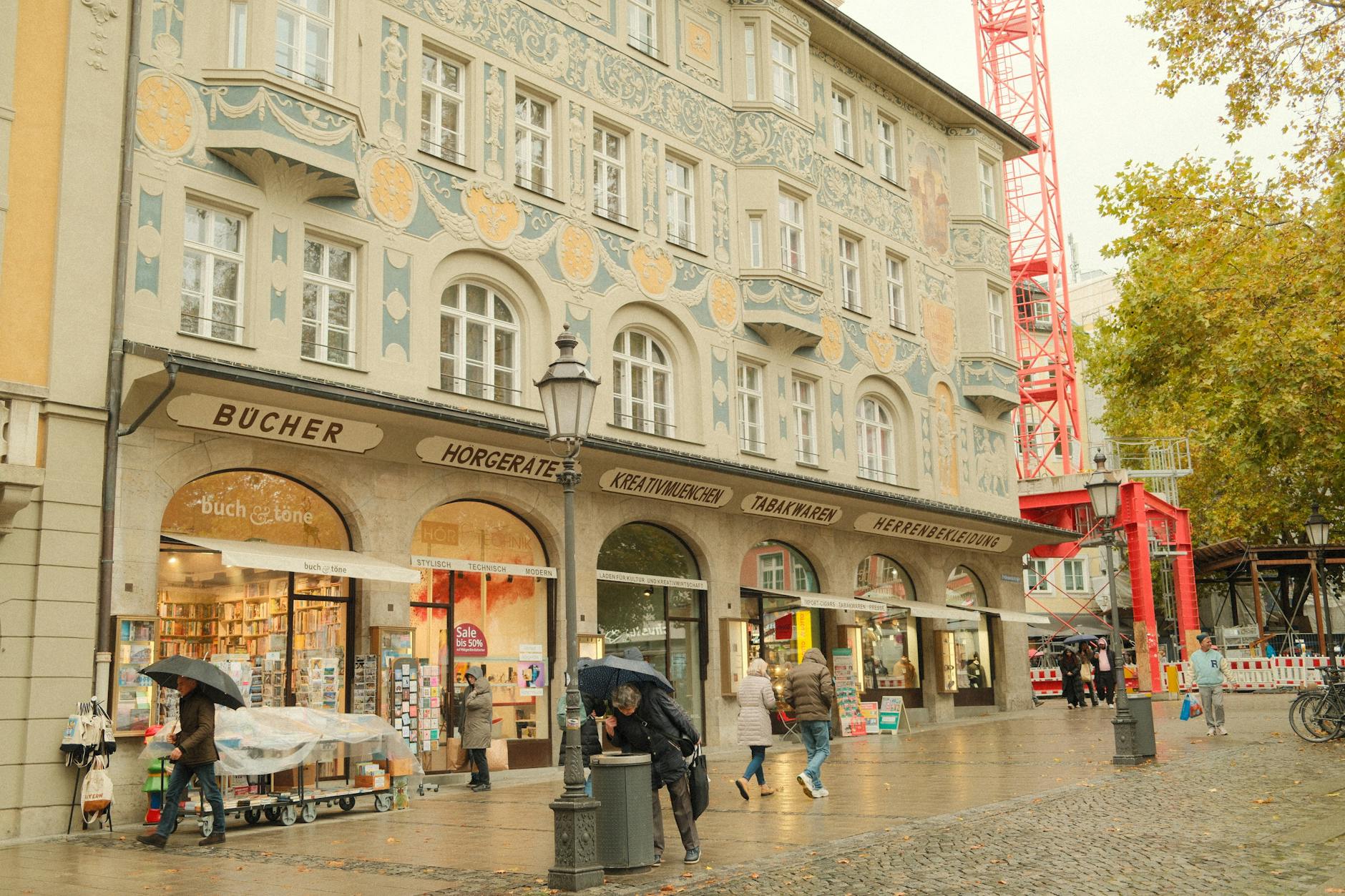
If Glockenbachviertel (often shortened to “Glockenbach” by locals) were a person, it would be the effortlessly cool friend who knows every hidden bar in the city. This compact neighborhood, wedged between the Altstadt and the Isar River, has evolved from a working-class area into Munich’s undisputed hub for contemporary culture, LGBTQ+ life, independent fashion, and innovative gastronomy. It’s where Munich feels least traditionally Bavarian and most cosmopolitan.
The neighborhood’s identity is closely tied to its role as the heart of Munich’s LGBTQ+ community. Müllerstraße and the surrounding streets have long been home to gay bars, queer-friendly cafés, community organizations, and the annual Christopher Street Day (Pride) celebrations. This openness has fostered a broader culture of inclusivity and creativity that permeates the entire district, making it welcoming for everyone regardless of background.
Gärtnerplatz, the elegant square at the neighborhood’s northern edge, is anchored by the Staatstheater am Gärtnerplatz — a beautiful venue for opera, musicals, and ballet. On summer evenings, the grassy areas of the square fill with locals sharing wine, playing music, and enjoying the warm Bavarian twilight. It’s one of Munich’s most beloved public gathering spaces and perfectly captures the neighborhood’s relaxed, communal spirit.
Fraunhoferstraße, the main commercial street, is a treasure trove of independent businesses. You’ll find specialty coffee roasters like Man Versus Machine (consistently rated among Germany’s best), quirky comic book shops, vintage clothing boutiques, natural wine bars, and restaurants serving everything from Neapolitan pizza to modern Israeli cuisine. The street also leads to the Fraunhofer theater, one of Munich’s oldest repertory venues.
The Isar River forms Glockenbach’s eastern boundary, and the renovated riverbanks here are among the most popular spots in Munich for summer socializing. On warm days, thousands of locals spread out along the gravel banks with picnic blankets, portable grills, and bottles of wine. The section between Reichenbachbrücke and Wittelsbacherbrücke bridges is particularly popular and offers stunning sunset views over the river toward the city’s spires.
What to see and do: Gärtnerplatz theater and square, Fraunhoferstraße independent shops, Müllerstraße nightlife, Isar riverbank sunbathing, specialty coffee shops, vintage shopping, street art, evening bar-hopping.
Best for: Nightlife lovers, foodies, the LGBTQ+ community, young travelers, and anyone seeking Munich’s most contemporary urban culture.
Haidhausen: The Village in the City

Cross the Isar River heading east and you’ll discover Haidhausen, a neighborhood that genuinely feels like a small Bavarian village transplanted into the middle of a major city. Once a settlement of day laborers and craftsmen who worked across the river in the wealthier Altstadt, Haidhausen has transformed into one of Munich’s most desirable residential areas. Yet it has retained its intimate scale — narrow cobblestone lanes, independent shops, hidden courtyards, and a pace of life that feels distinctly slower than the neighborhoods west of the river.
Weißenburger Platz is the neighborhood’s elegant centerpiece, a beautifully landscaped square surrounded by ornate 19th-century buildings with wrought-iron balconies and pastel facades. The fountain at its center and the carefully maintained gardens make it one of Munich’s most photogenic spots. Nearby, the streets radiating from the square — particularly Steinstraße and Wörthstraße — are lined with charming cafés, bakeries, and small restaurants that cater primarily to locals rather than tourists.
The Gasteig cultural center is Haidhausen’s cultural anchor, though its main building is closed for a long renovation. Home to the Munich Philharmonic, the city library, and the Munich Adult Education Center (Volkshochschule), it now runs its packed calendar of concerts, lectures, exhibitions, and workshops from the temporary Gasteig HP8 in Sendling. The renovated Gasteig is planned to reopen in stages from 2034, with full operation expected in 2034/35, and when it does Haidhausen gets its concert hall back.
For families, Haidhausen is arguably Munich’s best neighborhood. The area is full of playgrounds, child-friendly cafés, and green spaces. The Bordeauxplatz farmers’ market on Thursdays is a neighborhood institution, and the proximity to both the Isar riverbanks (excellent for cycling and walking) and the Deutsches Museum on its island in the Isar makes it ideal for days out with children.
What to see and do: Weißenburger Platz, Gasteig HP8, Bordeauxplatz farmers’ market, Hofbräukeller beer garden, Deutsches Museum (nearby), French Quarter streets, Wiener Platz daily market, Isar riverside walks.
Best for: Families, couples seeking a romantic base, architecture enthusiasts, and visitors wanting an authentic residential Munich experience away from tourist crowds.
Maxvorstadt: The Museum and University District
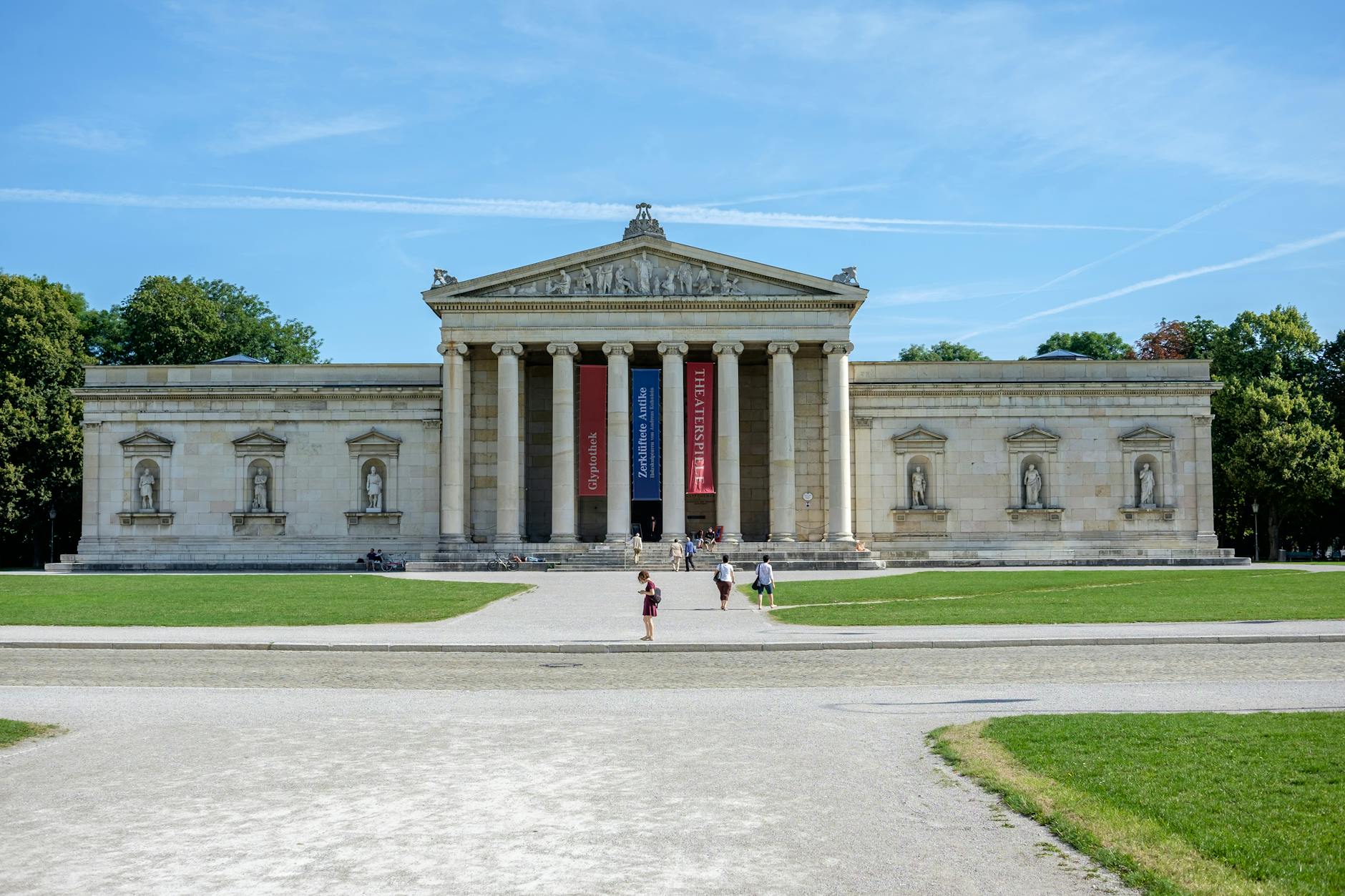
Maxvorstadt is sometimes called “the brain of Munich,” and one visit makes the nickname obvious. This neighborhood northwest of the Altstadt is home to two major universities (Ludwig-Maximilians-Universität and the Technical University of Munich), the sprawling Kunstareal museum quarter, and a youthful energy powered by the tens of thousands of students who live and study here.
The Kunstareal (Art Quarter) is Maxvorstadt’s crown jewel and one of the most significant museum clusters in all of Europe. Within a few hundred meters of each other, you’ll find the Alte Pinakothek (Old Masters including Dürer, Rubens, and Rembrandt), the Neue Pinakothek (19th-century art, closed for renovation for several years, with a selection of its highlights shown in the Alte Pinakothek meanwhile), the Pinakothek der Moderne (20th and 21st-century art and design), Museum Brandhorst (contemporary art with a spectacular facade of 36,000 colored ceramic rods), the Glyptothek (ancient Greek and Roman sculpture), the Staatliche Antikensammlungen (antiquities), and the Lenbachhaus (featuring the world’s largest collection of Blue Rider movement artworks by Kandinsky, Marc, and Münter).
Beyond the museums, Maxvorstadt has a vibrant street-level culture driven by its student population. Türkenstraße and Schellingstraße are particularly popular strips, packed with affordable international restaurants, secondhand bookshops, cozy bars, and independent cafés. The atmosphere is intellectual but unpretentious — you’re as likely to overhear a debate about contemporary philosophy as a conversation about the latest football results. For budget travelers, Maxvorstadt offers some of Munich’s best-value dining, with student-oriented eateries serving generous portions at reasonable prices.
Architecturally, Maxvorstadt showcases Munich’s 19th-century ambitions. King Ludwig I commissioned many of the neoclassical buildings that line its broad streets, including the Königsplatz square — a monumental ensemble of Greek-inspired buildings that houses the Glyptothek and Antikensammlungen. On summer weekends, the grassy areas of Königsplatz become an impromptu park where students and families relax amid the columns and pediments.
What to see and do: Kunstareal museums (all seven venues), Königsplatz, Türkenstraße and Schellingstraße dining, LMU main building, NS-Dokumentationszentrum (Nazi documentation center), student nightlife.
Best for: Art and museum lovers, students, budget travelers, architecture enthusiasts, and intellectually curious visitors.
Go deeper with the Maxvorstadt guide, and see the Kunstareal art quarter guide if the museums are your main reason for coming.
Sendling and Westpark: Munich’s Green South
Sendling is the kind of neighborhood that rarely makes it into tourist guidebooks, and that’s precisely its appeal. Located in Munich’s southern reaches, this historically working-class area has maintained an authentic Bavarian character that’s increasingly hard to find in the gentrifying central districts. Sendlinger Straße, which begins near the Altstadt’s Sendlinger Tor gate, leads south into the heart of Sendling, passing the magnificent Asamkirche — a tiny Baroque church with an impossibly ornate interior that ranks among Munich’s most spectacular architectural surprises.
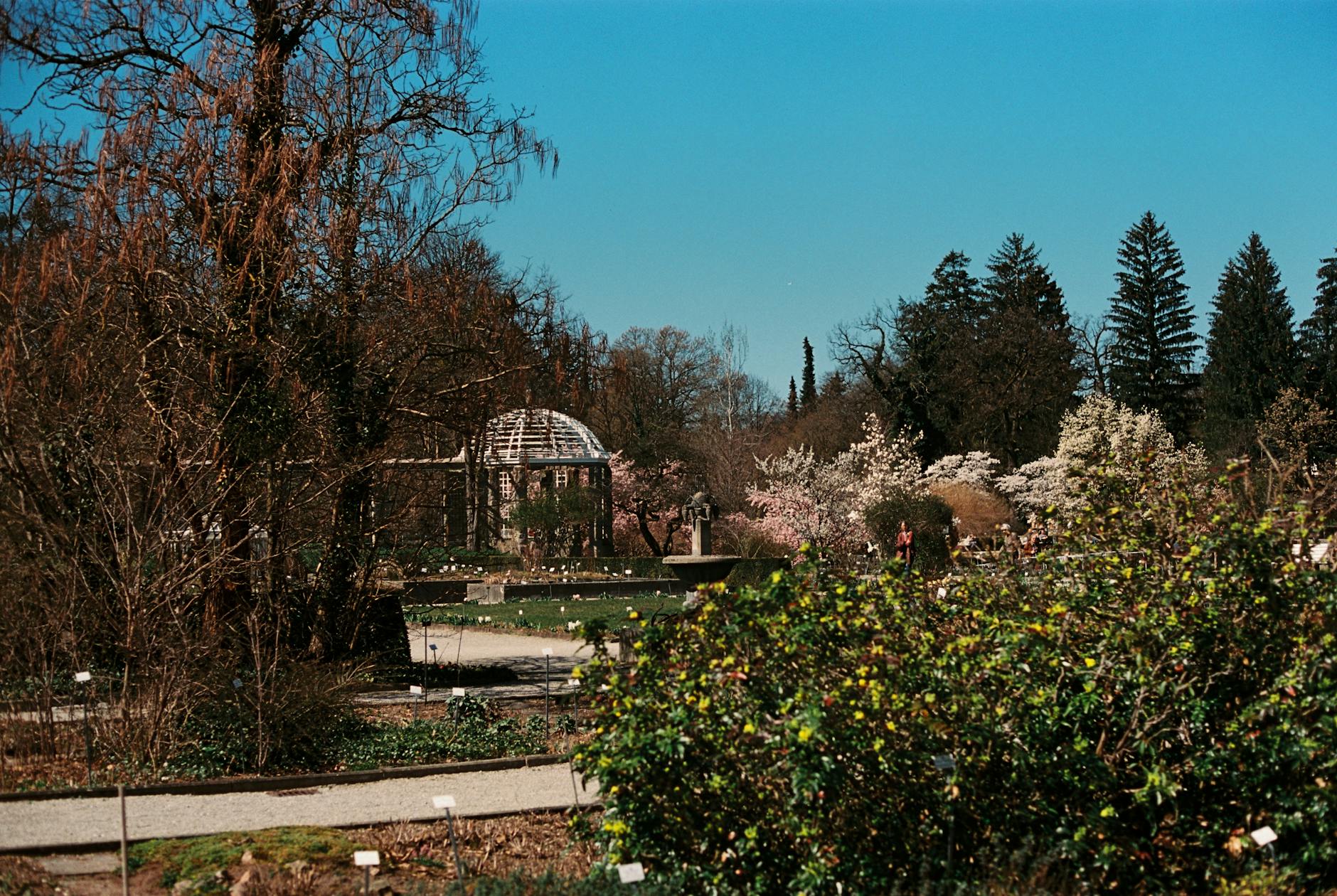
Westpark, created for the 1983 International Garden Exhibition, is Sendling’s most significant attraction for visitors. This 69-hectare park is far less crowded than the English Garden but equally beautiful, featuring a Thai pagoda, a Japanese garden, a Chinese garden, rolling hills, two lakes, and extensive lawns. The park’s multicultural garden designs reflect Munich’s international character, and the Thai pagoda area is a particularly popular spot for evening gatherings in summer. Westpark also has a well-loved beer garden and an outdoor amphitheater that hosts open-air cinema screenings during the summer months.
The Großmarkthalle (wholesale market hall) area near Sendling has become an emerging food scene, with trendy restaurants and food concepts popping up around the market’s perimeter. Sendling’s Müllerstraße extension and Implerstraße offer a good selection of traditional Bavarian restaurants, Italian trattorias, and Turkish kebab shops — reflecting the neighborhood’s multicultural makeup.
For visitors staying in the area, Sendling’s main advantage is value for money. Accommodation is usually cheaper than in the central districts, and the U-Bahn from Sendlinger Tor or Implerstraße has you at Marienplatz in about 5–10 minutes. It’s an excellent base for travelers who prefer authentic neighborhood life over tourist convenience.
What to see and do: Westpark (Thai pagoda, Japanese garden, beer garden, summer cinema), Asamkirche, Flaucher Isar beach area, Sendlinger Tor, local Bavarian restaurants, Großmarkthalle food scene.
Best for: Budget travelers, nature lovers, families, and visitors seeking an authentic local experience away from the tourist center.
Our Sendling and Westpark guide covers the Thai pagoda, the Rosengarten, the Grossmarkthalle and where locals actually eat down here.
The Olympic Quarter: Sport, Cars, and Architecture
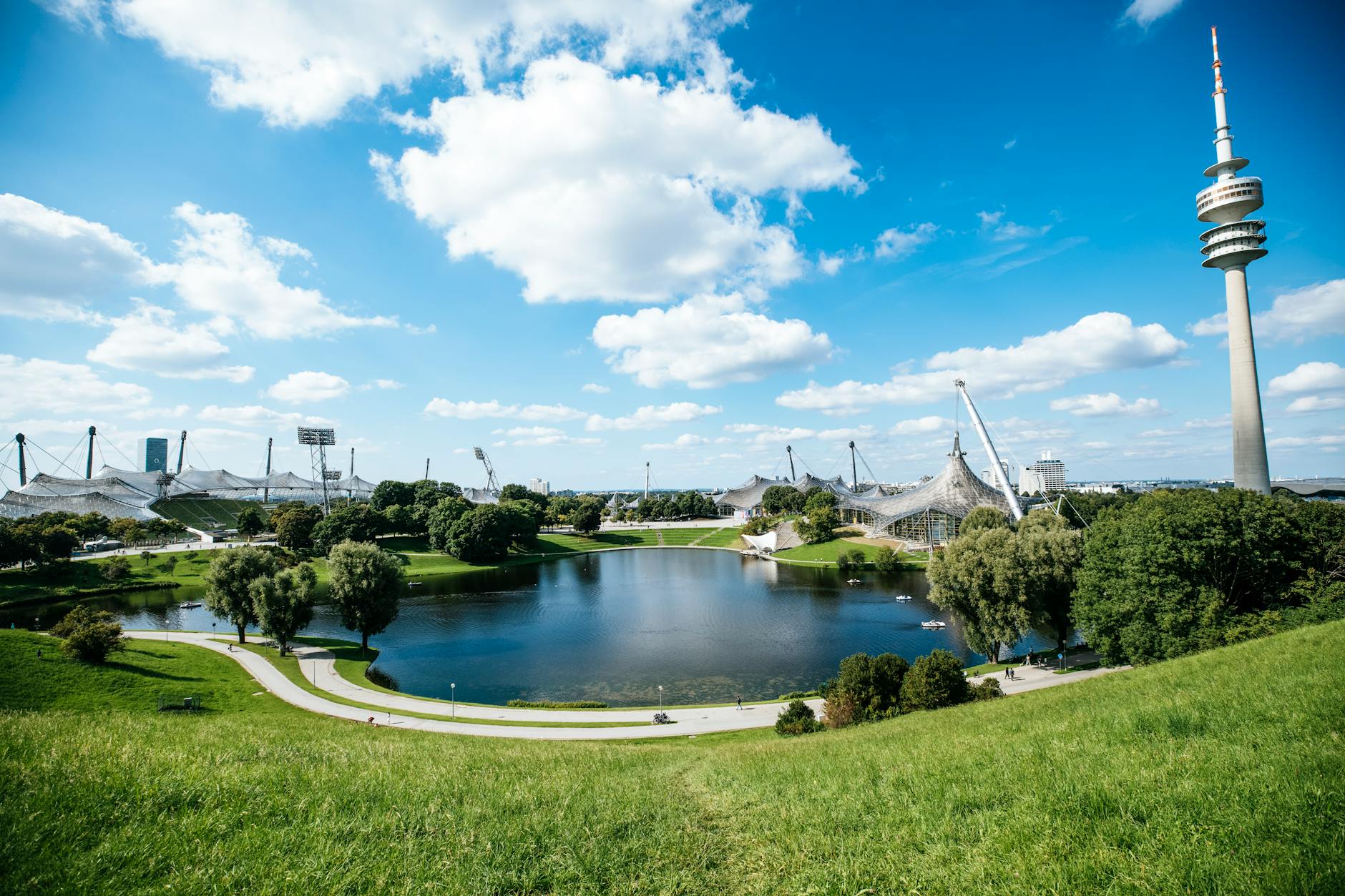
The Olympic Quarter in Munich’s north was purpose-built for the 1972 Summer Olympics and has since evolved into one of the city’s most distinctive and versatile districts. Unlike many Olympic sites around the world that have fallen into disuse, Munich’s Olympiapark has remained vibrant and relevant for over five decades, hosting major concerts, festivals, sporting events, and serving as a beloved public park for daily recreation.
The park’s revolutionary tent-like roof structures, designed by Günter Behnisch’s practice Behnisch & Partner with Frei Otto, remain architectural landmarks — their sweeping, translucent acrylic panels were groundbreaking in 1972 and still look strikingly modern today. The Olympiaturm (Olympic Tower) rises 291 meters, but it has been closed since 1 June 2024 and is expected to reopen during 2027, so its observation platform is off limits for now. Until then, walk up the free Olympiaberg beside it for a view across the tent roofs and the city.
Adjacent to the park, BMW Welt (BMW World) is a spectacular exhibition space and delivery center designed by the Viennese architectural firm Coop Himmelb(l)au. Admission to the main exhibition is free, and visitors can explore the latest BMW, MINI, and Rolls-Royce models, learn about electric mobility, and experience interactive technology displays. Next door, the BMW Museum traces the company’s history from its founding in 1916 through a beautifully designed permanent exhibition spanning art, technology, and automotive culture.
The Olympic Quarter also includes the SEA LIFE München aquarium (great for families), the Olympia-Eissportzentrum (ice sports center with public skating sessions), and during warmer months, the Olympic Lake offers pedal boat rentals with views of the iconic stadium. Major international concerts frequently take place in the Olympiahalle and Olympiastadion, and the park’s summer festival calendar includes events like Tollwood, impark, and Sommernachtstraum.
What to see and do: Olympiapark and tent-roof architecture, the Olympiaberg viewpoint while the Olympic Tower is closed, BMW Welt (free) and BMW Museum, Olympic Lake, SEA LIFE aquarium, summer festivals and concerts, rooftop climbing tour of the Olympic Stadium.
Best for: Architecture enthusiasts, car lovers, families with children, sports fans, and anyone seeking a break from traditional Bavarian sightseeing.
The full Olympic Quarter guide walks the tent-roof stadium, the Olympiaberg view (the Olympiaturm itself is closed until its expected 2027 reopening), BMW Welt and the surprisingly good swimming hall next door.
Au and Isarvorstadt: Munich’s River Districts
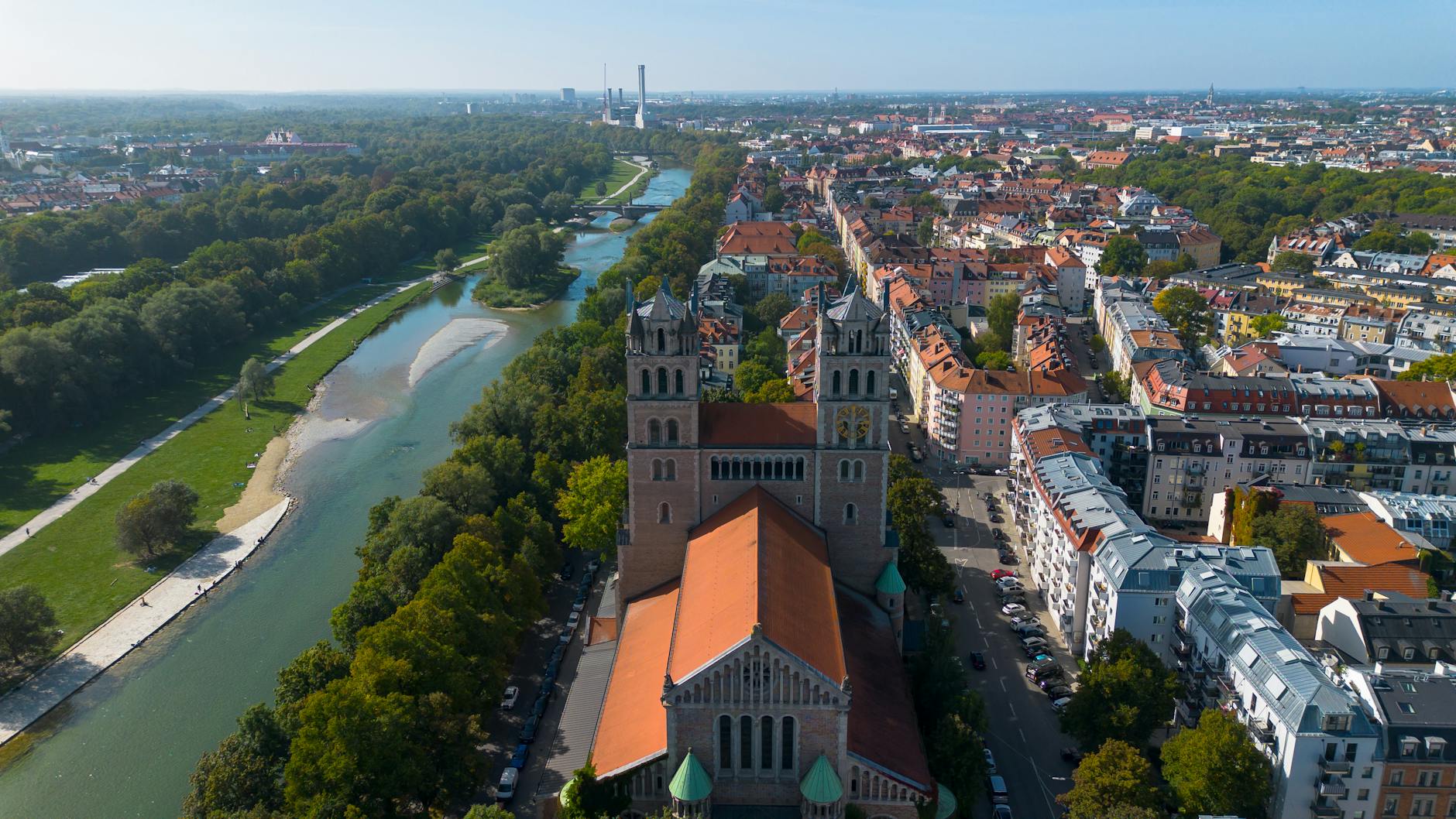
The Au and Isarvorstadt districts occupy the area where the Isar River and Munich’s urban core intersect, creating some of the city’s most appealing riverside neighborhoods. Au, perched on the east bank, was historically a settlement of millers and rafters who worked the river, while Isarvorstadt, on the west bank, developed as the area just outside (“vor”) the old city walls. Together, they form a interconnected zone of riverside living, cultural venues, and outdoor recreation that many Munich residents consider the city’s best-kept secret.
The Deutsches Museum, located on an island in the Isar within the Au district, is one of the world’s largest and most important science and technology museums. With around 125,000 exhibited objects from 50 fields in roughly 20 departments, it covers everything from mining and marine navigation to aerospace and nanotechnology. The museum has undergone extensive renovation in recent years, with modernized exhibitions that balance historical artifacts with interactive, family-friendly displays. Plan at least half a day to explore even a fraction of its collections.
The Isar riverbanks in this area have been beautifully renaturalized, transforming what was once a channeled waterway into a more natural landscape of gravel banks, shallow pools, and riverside meadows. The Flaucher area, in the southern part of Au/Isarvorstadt, is Munich’s most popular riverside recreation zone — particularly the unofficial nudist area (FKK) and the extensive gravel banks where locals barbecue, swim, and sunbathe through the summer months. The Flaucher beer garden, tucked among the trees on the riverbank, is one of Munich’s most atmospheric outdoor drinking spots.
Culturally, the Isarvorstadt side includes the Gärtnerplatz area (which overlaps with Glockenbachviertel) and the increasingly trendy Dreimühlenstraße, a short street that has become a foodie destination with excellent bakeries, wine bars, and small restaurants. The Au side features Nockherberg, home to the Paulaner brewery’s famous Starkbierfest (Strong Beer Festival) each spring — Munich’s “fifth season” of political satire and potent beer that locals love as much as Oktoberfest.
What to see and do: Deutsches Museum, Flaucher riverbank, Nockherberg Starkbierfest, Dreimühlenstraße dining, Auer Dult folk festival (three times yearly), Isar cycling paths, Gärtnerplatz, craft beer bars.
Best for: Science enthusiasts, outdoor lovers, craft beer fans, and visitors who want to combine riverside relaxation with cultural exploration.
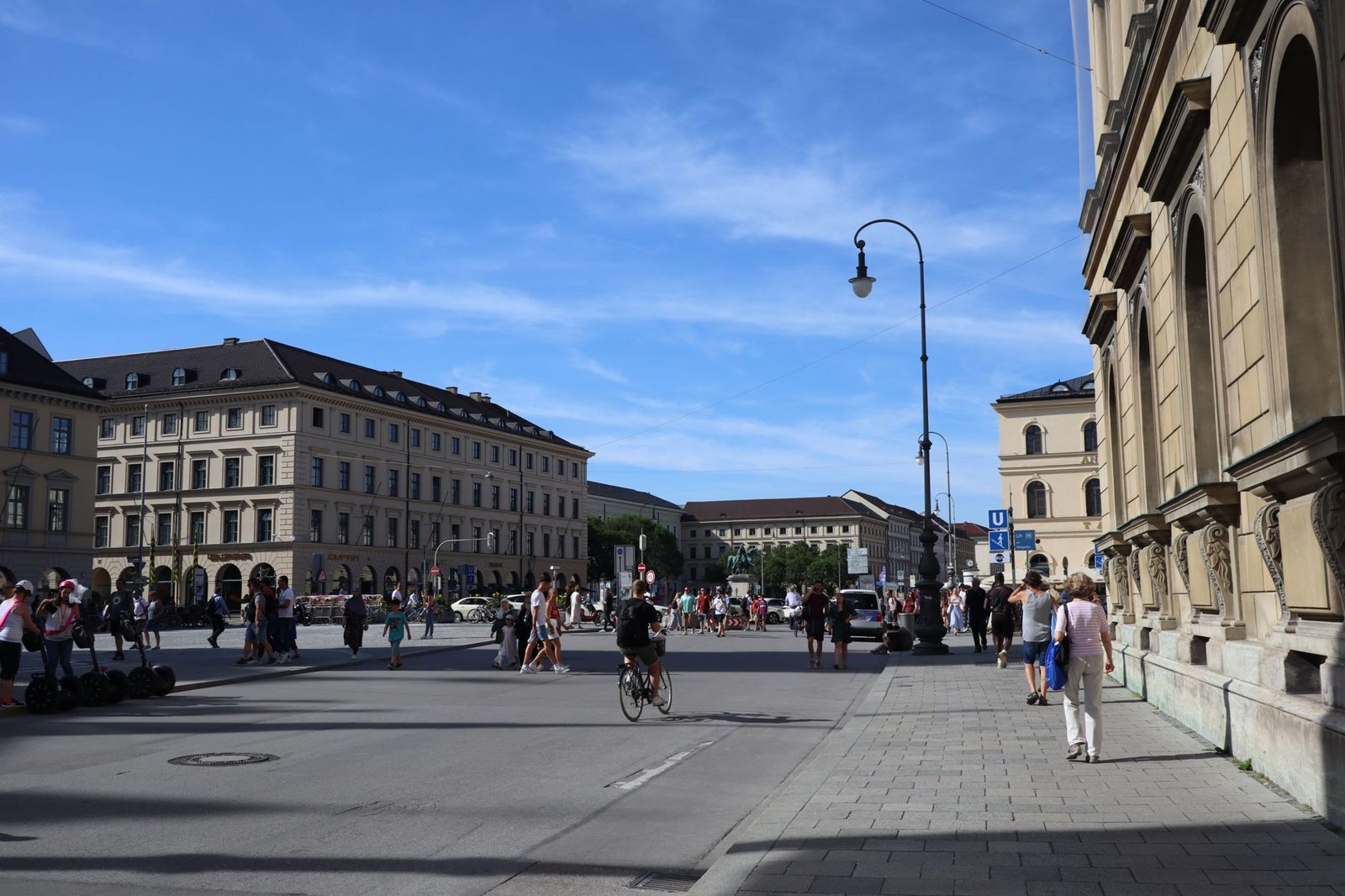
Both districts reward slow wandering. Our closer look at Au and Isarvorstadt covers Gärtnerplatz, the Auer Dult and the Nockherberg brewery.
A Few More Districts Worth Knowing
The eight neighborhoods above cover most of what a visitor needs, but Munich rewards anyone who strays a little further. Four more districts deserve a place on your radar — one for a fairy-tale palace, one for a scruffy-cool food scene, one for old money and quiet streets, and one for the unvarnished local Munich that football fans already know.
Neuhausen-Nymphenburg: Palace Grounds and Easy Living
West of the centre, Neuhausen-Nymphenburg pairs an unhurried residential quarter with one of Munich’s grandest set pieces: Schloss Nymphenburg, the Wittelsbachs’ summer palace, with its baroque halls, the Marstallmuseum of royal carriages, and a vast park of canals, fountains, and gravel avenues that locals jog and cycle through year-round. Spring brings cherry blossom along the canal; in winter the frozen channels fill with ice skaters. The neighbourhood itself, centred on Rotkreuzplatz, is comfortable and self-contained — good bakeries, the Rotkreuzplatz market, and a steady stream of families on the trams. The Botanical Garden and the small but lovely Hirschgarten, Munich’s largest beer garden with around 8,000 seats and resident fallow deer, both sit on this side of town. It is a calm, good-value place to stay if you do not mind a tram or U-Bahn ride into the Altstadt (the MVG journey planner gives exact times from your street), and it puts two of Munich’s finest parks on your doorstep.
Westend (Schwanthalerhöhe): The Up-and-Comer
Officially Schwanthalerhöhe but known to everyone as Westend, this former industrial and immigrant quarter just west of the Hauptbahnhof has quietly become one of Munich’s most interesting eating districts. Gollierstraße and the streets around it run thick with Turkish grocers, Croatian grills, Italian delis, and a new wave of natural-wine bars and third-wave cafés — a genuinely multicultural stretch that feels a world away from the lederhosen clichés. The old Augustiner brewery site, the Augustiner-Bräu cellars, anchors the area’s beer credentials. Westend also borders the Theresienwiese, the great gravel field that hosts Oktoberfest each autumn and the Frühlingsfest in spring, so for two or three weeks a year you can practically walk to the tents. Bavariapark and the colossal bronze Bavaria statue with its viewing platform sit on the western edge. Rents and hotel rates here undercut the centre while keeping you within a short U-Bahn hop of it.
Bogenhausen: Munich’s Villa Belt
On the east bank north of Haidhausen, Bogenhausen is where Munich keeps its old money. The streets off Prinzregentenstraße — especially around the Friedensengel (Angel of Peace) monument and along Maria-Theresia-Straße and Möhlstraße — are lined with grand Jugendstil villas, embassies, and discreet old apartment houses behind mature gardens. Thomas Mann lived here; so, later, did much of the city’s establishment. The pull for visitors is partly the architecture and partly the riverside walk: the Maximiliansanlagen, a ribbon of parkland along the Isar’s high east bank, gives some of the prettiest views back across to the Maximilianeum, Bavaria’s parliament building. The dining leans grown-up and traditional, with long-standing spots like the Käfer delicatessen empire headquartered nearby. Bogenhausen is genuinely quiet and very green, which is its appeal and its catch — it is a lovely, leafy place to stay but a little removed, so factor in the tram or U-Bahn to reach the action.
Giesing: The Real, Unpolished South
If you want the Munich that has not been smoothed over for visitors, ride south to Giesing. This hilly, historically working-class district wears its identity loudly, not least through TSV 1860 München, the beloved “other” football club whose fans treat the Grünwalder Stadion as hallowed ground. The old core around Giesinger Berg, with the steep climb up to the Heilig-Kreuz church, still feels like a self-contained village, while the new Giesinger Bräu craft brewery has become a local institution and a magnet for the area’s slow gentrification. You will find honest Bavarian taverns, kebab counters, and a scattering of artist studios rather than boutiques. There is little in the way of marquee sights, and that is exactly the point: Giesing is for travelers who would rather sink a beer where Münchners actually drink one than tick off another monument.
Where to Stay by Neighborhood
The single most useful decision you make about Munich is which neighborhood you sleep in, because the city is compact enough that your front door sets the tone for everything. Match the district to the kind of traveler you are rather than chasing the cheapest rate, and the whole trip gets easier. Here is how the choice usually breaks down — and our full where to stay in Munich guide and roundup of the best neighborhoods in Munich for visitors go deeper on specific streets and properties.
First-timers who want to walk everywhere should base themselves in or beside the Altstadt. You will pay a premium, but you wake up minutes from Marienplatz, the Viktualienmarkt, and the Residenz, and you waste no time on transport. The cluster of hotels near Marienplatz runs the full range from grand dames to smart mid-range rooms, and the area around the Hauptbahnhof — slightly grittier but improving fast — is where you will find the best concentration of value.
Couples and travelers who want atmosphere over convenience are better off in Schwabing or Haidhausen. Schwabing gives you tree-lined streets, the English Garden, and an easy U-Bahn ride down Leopoldstraße; Haidhausen offers village quiet and romantic squares a quick hop east of the river. Both feel residential and real without sacrificing connections.
Night owls and foodies belong in or beside the Glockenbachviertel, where the bars, cafés, and restaurants you came for are literally downstairs and the Altstadt sights are a ten-minute stroll by day. Families trade buzz for breathing room — Haidhausen, Schwabing, and the area near the Olympic Park all offer apartments, playgrounds, and parks, and our Munich with kids guide flags the most child-friendly bases.
Budget travelers should look just outside the centre — Sendling, Westend, or the fringes of Au — where rates drop sharply but a single U-Bahn line still puts you at Marienplatz in well under fifteen minutes; the budget hotels and hostels guide maps the best of them. Those after a splurge will find Munich’s luxury hotels concentrated along Maximilianstraße and in Lehel, with a handful of refined boltholes scattered through Bogenhausen and Neuhausen for travelers who prefer their indulgence quiet.
Insider tip: wherever you stay, check the nearest U-Bahn or S-Bahn stop before you book rather than the map distance to Marienplatz. A hotel that is two stops out on a fast line will often beat one that looks central but sits a long walk from any station — and during Oktoberfest, anything within a few stops of the Theresienwiese books out months ahead and charges accordingly.
Eating and Drinking by Neighborhood
You can eat well anywhere in Munich, but each district has a signature — a market, a beer garden, a street — that tells you what it cares about. Follow these and you eat the way locals do rather than the way the guidebooks default to. For the bigger picture, our Munich food and beer guide and our pick of the best restaurants in Munich go well beyond these highlights.
Altstadt is anchored by the Viktualienmarkt, the 200-year-old food market whose central beer garden — pouring whichever of Munich’s six breweries is in rotation that season — is the most atmospheric spot in the old town for a midday Brotzeit of Obatzda, pretzel, and Weisswurst. Skip the obvious Hofbräuhaus and you will eat better at Münchner standbys like the Pfälzer Residenz Weinstube. For the textbook traditional Bavarian dishes, this is the easiest place to start.
Glockenbachviertel is the city’s serious food district: third-wave coffee at Man Versus Machine, natural-wine bars, modern Israeli and Levantine kitchens, and the kind of small, owner-run places that change Munich’s reputation as a meat-and-potatoes town. Maxvorstadt feeds its students cheaply and well along Türkenstraße and Schellingstraße — the historic Schelling-Salon among them — making it prime territory for cheap eats. Schwabing runs on café culture and the lovely little Elisabethmarkt, a calmer alternative to the Viktualienmarkt with its own pocket beer garden.
Haidhausen hides one of Munich’s great beer gardens at the Hofbräukeller on Wiener Platz, where a daily market keeps the surrounding streets stocked with bakeries and cheese stalls. Au and Isarvorstadt belong to the riverside: the wooded Flaucher beer garden for long summer afternoons, the Nockherberg for spring’s potent Starkbier, and the foodie cluster on Dreimühlenstraße for wine bars and bakeries. Neuhausen claims the giant Hirschgarten, Munich’s largest beer garden, while Westend serves the city’s most genuinely multicultural plates around Gollierstraße.
Insider tip: almost every Munich beer garden lets you bring your own food to any table without a tablecloth — buy a Maß of beer, then unpack your own bread, radishes, and cold cuts from the market down the road. It is a centuries-old right that locals exercise constantly, and it turns a market visit and a beer garden into a single, very Bavarian afternoon. For more on the gardens themselves, see our guide to the best beer gardens in Munich.
Choosing the Right Munich Neighborhood for Your Trip
With so many distinct neighborhoods to choose from, selecting the right base for your Munich trip depends on your priorities and travel style. Here’s a quick guide to help you decide:
For first-time visitors: Altstadt-Lehel puts you at the center of everything, within walking distance of Munich’s most iconic landmarks. You’ll pay premium prices for accommodation, but you’ll save on transport and maximize your time at the sights.
For nightlife and culture: Glockenbachviertel is unbeatable. You’re a short walk from the Altstadt sights during the day, and at your doorstep when the bars and restaurants come alive at night. Munich’s nightlife scene centers here.
For families: Haidhausen offers a peaceful, village-like atmosphere with excellent parks, kid-friendly cafés, and easy access to the Deutsches Museum. Schwabing is also excellent thanks to the English Garden.
For art and museums: Maxvorstadt places you within the Kunstareal, steps from seven major museums. The student atmosphere also means affordable dining and a lively evening scene.
For budget travelers: Sendling and the outer parts of Au offer significantly lower accommodation prices while maintaining excellent U-Bahn connections to the center. You’ll also eat better for less in these local neighborhoods.
For a local experience: Any neighborhood beyond the Altstadt will feel more “real,” but Haidhausen and Au particularly shine for their village atmospheres and neighborhood markets. Our complete accommodation guide provides detailed hotel and hostel recommendations for each district.
Getting Between Munich Neighborhoods
Munich’s public transport system (MVV) makes neighborhood-hopping effortless. The U-Bahn (subway) connects all major districts, with lines U1 through U8 criss-crossing the city. Most central neighborhoods are also linked by the extensive tram network, which offers a more scenic way to travel and is particularly useful for routes between Schwabing, Maxvorstadt, and the Altstadt.
For the most enjoyable neighborhood exploration, however, walking and cycling are hard to beat. Munich is remarkably flat, and the distances between central neighborhoods are shorter than you might expect — Marienplatz to Haidhausen is an easy walk, and so is Maxvorstadt to Schwabing. The city’s extensive network of cycling paths, including beautiful routes along the Isar River, makes renting a bike an excellent option for covering more ground while still soaking in the neighborhood atmospheres.
A single-day MVV ticket (Single-Tageskarte) costs €10.10 for the inner zone M, or €11.70 if you add zone 1, and provides unlimited travel on all U-Bahn, S-Bahn, tram, and bus routes within the zone. For groups of two to five people of any age, the group day ticket (Gruppen-Tageskarte) at €19.70 for zone M offers exceptional value. If you’re staying for several days, consider the CityTourCard, which combines unlimited public transport with discounts at major attractions.
Frequently Asked Questions
What is the best neighborhood to stay in Munich?
For most first-time visitors, the Altstadt-Lehel area is the best base — you can walk to nearly every major sight and save your transit time for day trips. If you would rather trade convenience for atmosphere, Schwabing and Haidhausen are calmer and more residential, while the Glockenbachviertel is unbeatable for nightlife and food. Budget travelers do well just outside the centre in Sendling or Westend, where rates drop but the U-Bahn still gets you to Marienplatz in minutes. Our where to stay in Munich guide matches each district to a traveler type.
Which Munich neighborhood is the most walkable?
The Altstadt is the most walkable by a wide margin — its medieval core is largely pedestrianized, and Marienplatz, the Viktualienmarkt, the Residenz, and the main shopping streets are all within a few flat minutes of each other. Beyond it, the Glockenbachviertel, Maxvorstadt, and Haidhausen are all comfortably explored on foot, and the distances between central districts are short: Marienplatz to Haidhausen is barely a fifteen-minute walk. Munich is famously flat, which makes walking and cycling a pleasure across the whole inner city.
What is the trendiest neighborhood in Munich?
The Glockenbachviertel is Munich’s undisputed trendsetter — the heart of its LGBTQ+ scene and the centre of its independent fashion, specialty coffee, natural wine, and modern dining. The neighbouring Gärtnerplatz area shares its energy. For an up-and-coming alternative with a grittier, more multicultural edge, watch Westend (Schwanthalerhöhe) west of the Hauptbahnhof, where the new bars and kitchens are arriving fastest.
Which Munich neighborhood is best for families?
Haidhausen is widely considered Munich’s best family neighborhood, with its village pace, abundant playgrounds, child-friendly cafés, and easy reach of the Deutsches Museum. Schwabing runs a close second thanks to the English Garden on its doorstep, and the area around the Olympic Park offers wide-open space, the SEA LIFE aquarium, and a public swimming complex. See our Munich with kids guide for more family-focused detail.
Is Munich safe, and which neighborhoods should I be aware of?
Munich is consistently ranked among the safest large cities in Europe, and every neighborhood in this guide is comfortable to walk by day and night. The only area where you should stay a little more alert is the immediate ring of streets around the Hauptbahnhof (main station), which, like most big-city station districts, can feel scruffier after dark — though it is steadily improving and far from dangerous. Standard urban common sense, especially watching your bag in crowds at Oktoberfest and the Christmas markets, is all you need.
Where do locals actually live in Munich?
Plenty of Münchners live right in the desirable inner districts — Haidhausen, Schwabing, the Glockenbachviertel, and Neuhausen are all genuine residential neighborhoods, not tourist shells. But the city’s everyday life also plays out further from the centre, in places like Giesing, Sendling, Westend, and the outer boroughs beyond the Mittlerer Ring, where rents are lower and the cafés and taverns serve regulars rather than visitors. Spend an evening in one of those and you see the unscripted version of the city.
How do I get between Munich’s neighborhoods?
Munich’s integrated MVV network of U-Bahn, S-Bahn, tram, and bus lines connects every district covered here, and a single day ticket for the inner zone covers the lot. Trams are the scenic choice for short central hops; the U-Bahn is fastest for longer ones. For many central journeys, though, walking or cycling is quicker and more enjoyable — the city is flat and the riverside paths are lovely. Our getting around Munich and U-Bahn and S-Bahn guides explain tickets and routes in full.
Further Official Resources
For the most current information on Munich’s neighborhoods and events, consult these authoritative sources:
Munich Tourism Official Neighborhood Guide — Detailed profiles of each district from the city’s official tourism board, including local tips and walking tours.
MVV Munich Transport Authority — Plan routes between neighborhoods, check ticket prices, and download the official transport app for real-time connections.
Munich Boroughs on Wikipedia — Comprehensive overview of all 25 official boroughs with historical context and demographic data.