Altstadt-Lehel: Munich’s Historic Heart
Complete 2026 guide to Altstadt-Lehel — Munich's historic Old Town and elegant residential extension. Things to do, walking tours, where to eat, where to stay, hidden corners, and shopping.
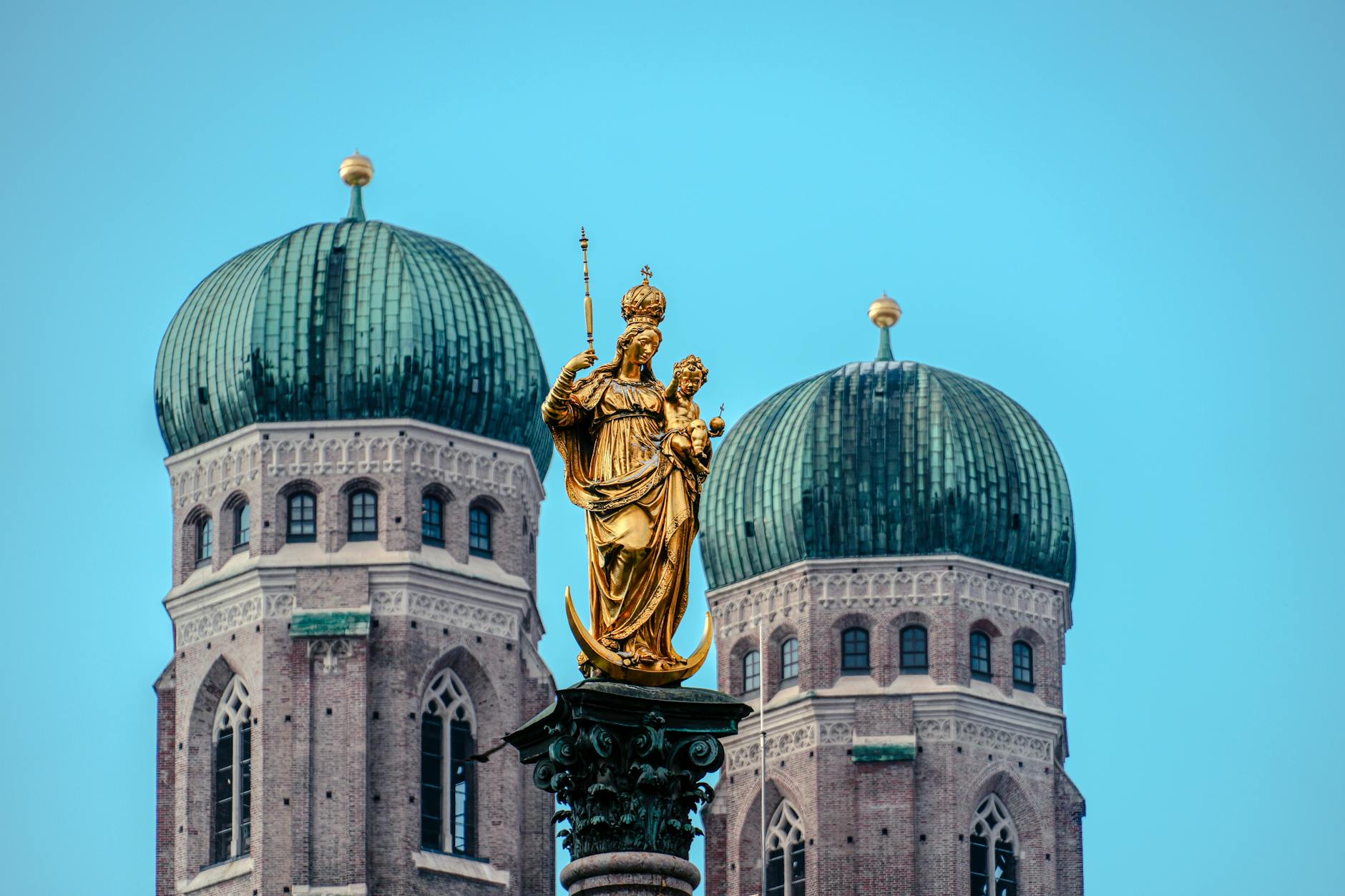
Altstadt-Lehel is the official name of Munich’s first city district — a single administrative borough that combines the medieval Altstadt (Old Town), the city’s commercial and tourist core, with Lehel, the elegant residential quarter that stretches east to the Isar river. Together, they form the historic heart of Munich — the place every visitor sees first, where the Glockenspiel chimes, the Hofbräuhaus bustles, the Residenz palace stands, and the side streets still trace the curves of medieval lanes. This complete Munich Altstadt guide covers what to do, where to eat and stay, hidden corners locals love, and how to use the district like a Münchner.
Quick Facts: Altstadt-Lehel
| Detail | Information |
|---|---|
| Population | ~21,500 residents (one of Munich’s smallest by residents) |
| Area | 3.16 km² |
| District number | 01 |
| Foundation date | 1158 (Altstadt); 1724 (Lehel incorporation) |
| Vibe | Historic, central, refined, lively by day |
| Best for | First-time visitors, sightseeing, shopping, fine dining |
| Hotel range | €€€ to €€€€ |
| Walk to Marienplatz | 0–15 minutes |
| Closest U-Bahn hubs | Marienplatz, Sendlinger Tor, Karlsplatz, Odeonsplatz, Lehel |
The Difference Between Altstadt and Lehel
Although officially one borough, the two halves feel different and a clean mental map helps:
Altstadt (Old Town)
The medieval core, bounded roughly by Karlsplatz, Hofgarten, Isartor, and Sendlinger Tor — a pedestrianized, dense, lively zone where almost every famous Munich landmark lives. Marienplatz, the Frauenkirche, the Residenz, the Hofbräuhaus, the Asamkirche, the Viktualienmarkt, and St. Peter’s are all here. This is where you’ll spend most of your sightseeing time.
Lehel
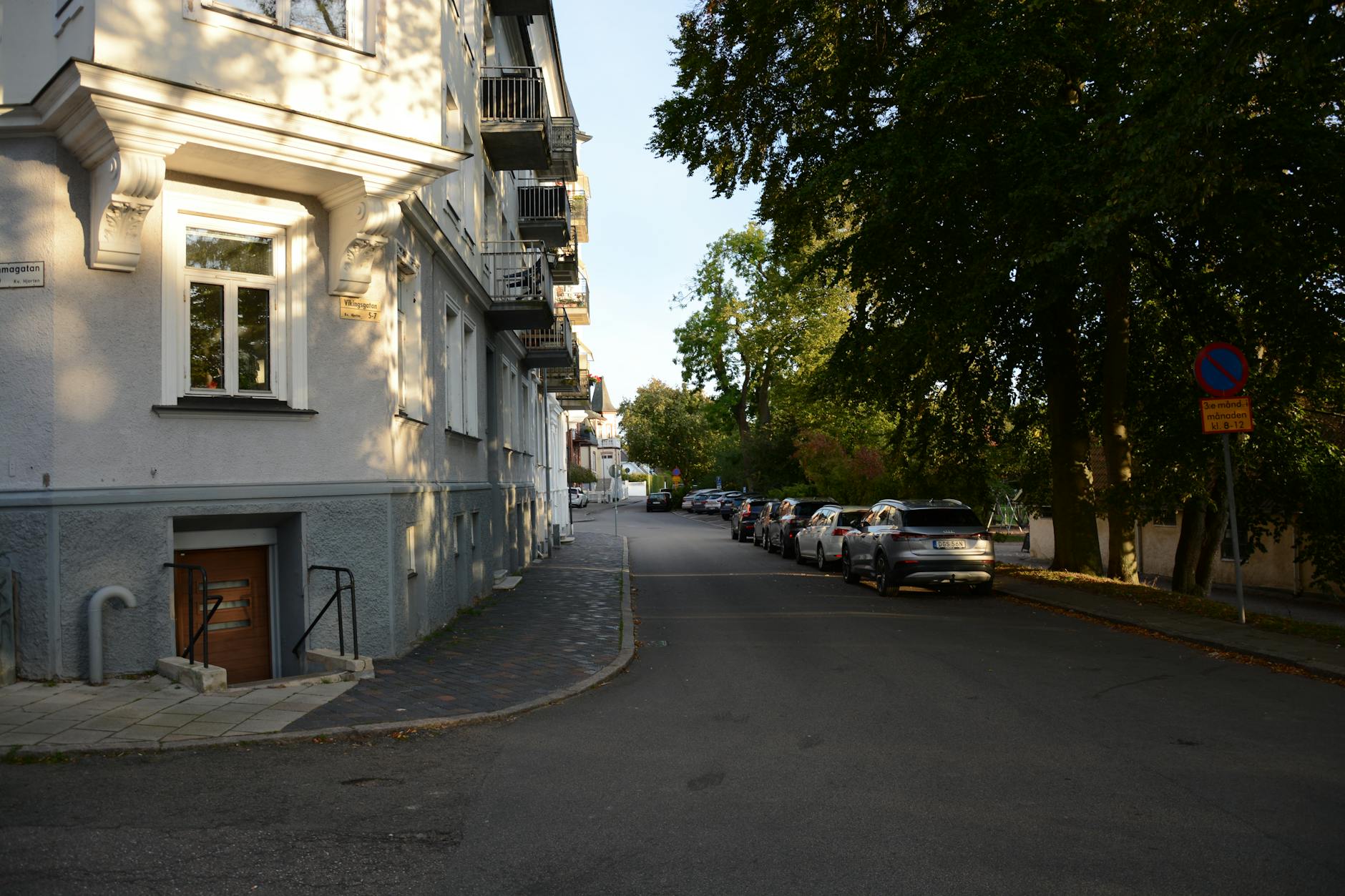
East of the Hofgarten and the Residenz, between the Altstadt and the Isar river, Lehel is Munich’s oldest “suburb” (incorporated 1724) and one of its most exclusive residential neighborhoods. Wide tree-lined streets, handsome 19th-century apartment houses, the Bavarian National Museum, the Haus der Kunst, and the southern entrance to the English Garden are its main features. A 5-minute walk from the Hofbräuhaus drops you in serene, leafy Lehel — a contrast that captures the unique appeal of staying in Altstadt-Lehel.
Top Things to Do in Altstadt-Lehel
1. Marienplatz and the Glockenspiel
The square has been Munich’s heart since 1158. The Neo-Gothic Neue Rathaus (New Town Hall, 1867–1909) towers 100 meters above it, with the famous Glockenspiel performing daily at 11 a.m., 12 p.m., and (March–October) 5 p.m. Climb the Rathaus tower (€8) for one of the best skyline views — straight across to the Frauenkirche.
2. The Frauenkirche
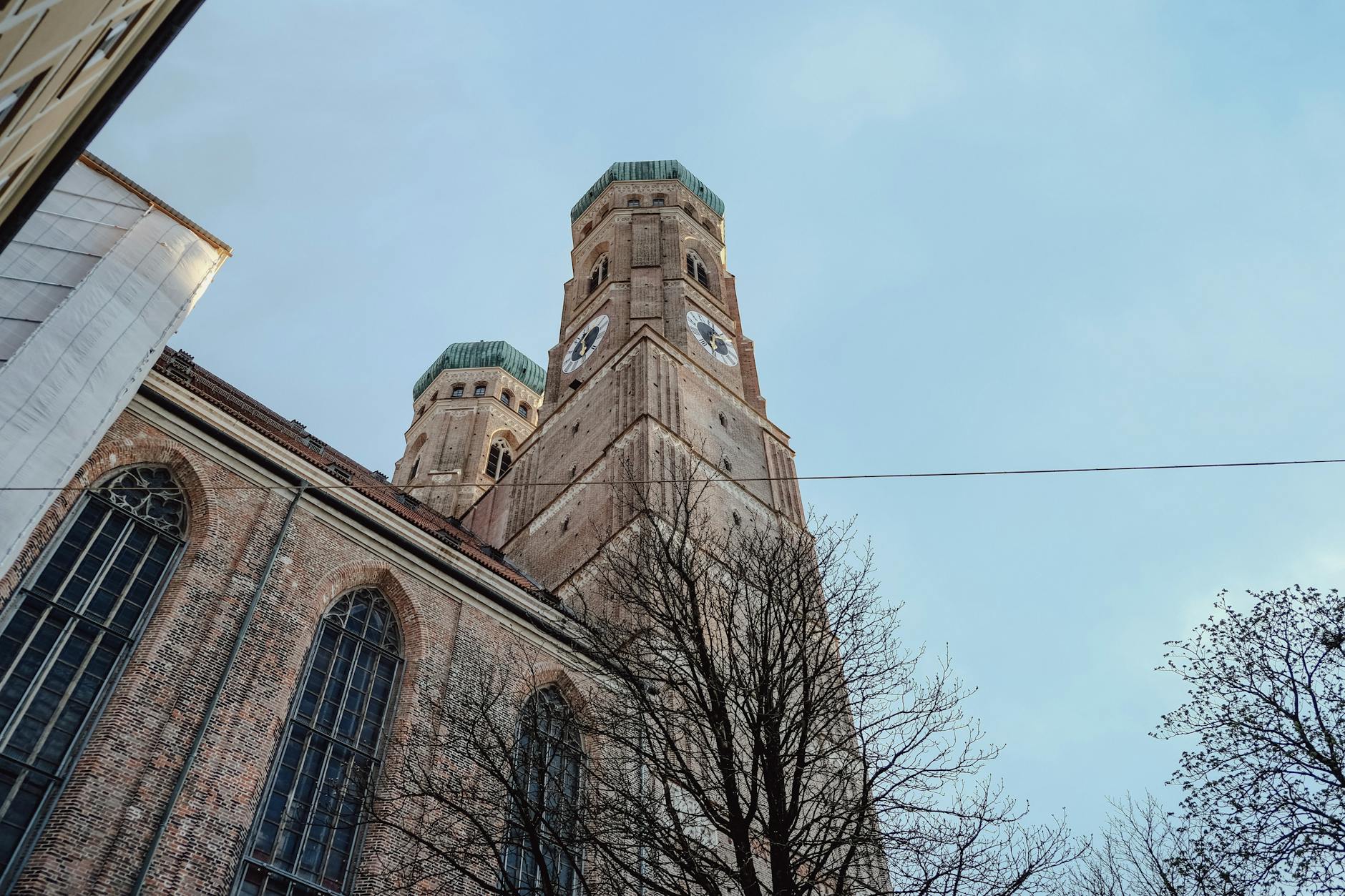
Munich’s iconic 15th-century cathedral with its twin onion domes is a 90-second walk from Marienplatz. The 99-meter towers — city policy, backed by a 2004 referendum, keeps new central buildings below about 100 meters — define Munich’s low, generous skyline. The south tower viewing platform reopened in 2022 (€7.50) for the best close-range view of the Old Town rooftops.
3. The Residenz
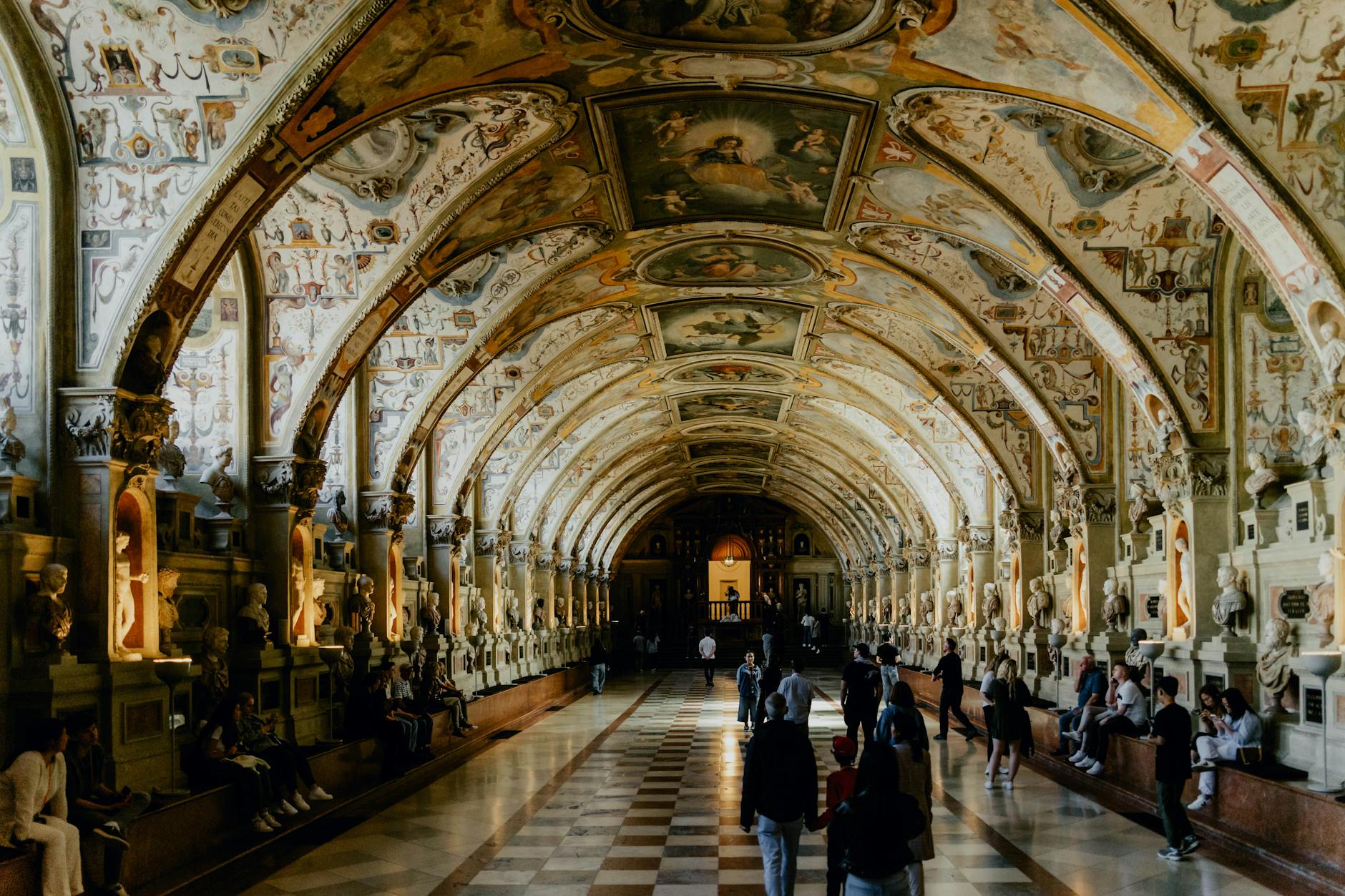
The largest city palace complex in Germany, with 600 years of Wittelsbach royal building campaigns layered into one site of 10 courtyards and 130 public rooms. Highlights: the Antiquarium (the largest Renaissance hall north of the Alps), the Cuvilliés Theatre (where Mozart conducted), and the dazzling Treasury. Combo ticket (museum and treasury) €15, half a day minimum. The Hofgarten behind the palace is free to enter and one of the prettiest formal Renaissance gardens in Europe.
4. The Hofbräuhaus
One of the world’s best-known beer halls (founded 1589 as the ducal court brewery; current building 1897). Touristy but a genuine Munich rite of passage. Around the corner, the Augustiner-Großgaststätte on Neuhauser Straße offers a more local-feeling alternative.
5. Viktualienmarkt
An 18,591-square-meter open-air food market with more than 100 traders — flowers, cheese, meats, produce, fish, herbs — anchored by a colorful maypole and a small year-round beer garden that rotates the city’s six big breweries roughly every five to six weeks. Two minutes south of Marienplatz.
6. The Asamkirche
On Sendlinger Straße, this 22-meter-long private chapel of the Asam brothers (1733–46) is widely considered the most concentrated Rococo interior in the world. Free entry. Step in for 10 minutes — it’s overwhelming.
7. St. Peter’s Church (Alter Peter)
Munich’s oldest parish church, just off Marienplatz. The view from the 299-step tower (€5, no elevator) is the best 360-degree Old Town panorama. On clear days you can see the Alps.
8. Odeonsplatz, Theatinerkirche, and Feldherrnhalle
Munich’s grandest Italianate square: the bright yellow Theatinerkirche (1663–90), the Feldherrnhalle loggia (1844, modeled on Florence), and the Hofgarten just to the east. Café Tambosi — Munich’s oldest café, on the square since 1775 — is the classic stop.
9. Maximilianstraße
Munich’s grandest 19th-century boulevard runs east from the Residenz to the Maximilianeum (Bavarian State Parliament) on the far bank of the Isar. The 1850s Gothic-Tudor-revival buildings now house the city’s most exclusive shops — Hermès, Gucci, Bottega Veneta, Bvlgari, plus the legendary Cortiina Bar.
10. The Bavarian National Museum and Haus der Kunst
In Lehel, two world-class museums sit on Prinzregentenstraße. The Bavarian National Museum (€7) covers Bavarian art and folk culture from the Middle Ages to the 1920s. The Haus der Kunst (€14) — built as a Nazi monumental gallery in 1937 — now houses some of Europe’s most ambitious contemporary exhibitions.
Walking Tour: A Half-Day Self-Guided Loop
Allow about 4 hours including stops:
- 09:00 — Start at Karlsplatz (Stachus). Pass through the Karlstor city gate east into the pedestrian zone
- 09:10 — Neuhauser Straße: Augustinerkeller, Bürgersaalkirche, Michaelskirche
- 09:30 — Detour two minutes south to the Asamkirche on Sendlinger Straße
- 09:50 — Continue east to Marienplatz; climb St. Peter’s tower for the panorama
- 10:30 — Watch the 11:00 Glockenspiel show (or skip it and continue)
- 11:00 — Walk north past the Frauenkirche to Odeonsplatz (Theatinerkirche, Feldherrnhalle)
- 11:20 — Visit the Hofgarten and the exterior of the Residenz
- 12:00 — Lunch at the Hofbräuhaus or Augustiner-Großgaststätte
- 13:30 — Stroll east along Maximilianstraße to the Isar; cross the Maximiliansbrücke
- 14:00 — End at the southern English Garden / Eisbach surfers, or return to Marienplatz
Hidden Corners Locals Love
- The Hofgraben courtyard behind the Alter Hof — peaceful medieval inner courtyard, free to enter
- The Münzhof courtyard on Hofgraben — a 16th-century Renaissance courtyard, often empty even in summer
- Dallmayr’s coffee counter on Dienerstraße — Munich’s most famous delicatessen (since 1700) has a quiet little café
- Schrannenhalle interior at Viktualienmarkt — restored 19th-century iron market hall, with a wine bar inside
- Café Glockenspiel — the elevated terrace looking directly at the Glockenspiel; far less crowded than the square below
- The Bürgersaal Kirche upper church — a hidden 18th-century chapel above the lower one; visit the small downstairs crypt of Father Rupert Mayer
- The Münchner Stadtmuseum garden courtyard — a quiet break with sculpture and shade
- Rückert Brunnen (Lehel) — a tiny ornate fountain just south of St. Anna Kloster, often missed
Where to Eat in Altstadt-Lehel
Traditional Bavarian
- Hofbräuhaus — the icon, beer-hall energy, classic dishes (Marienplatz)
- Augustiner-Großgaststätte — Munich’s best in-town beer (Neuhauser Straße)
- Wirtshaus in der Au (technically across the river but a 5-min walk) — famous for dumplings (18 varieties)
- Spatenhaus an der Oper — refined Bavarian opposite the National Theatre
- Haxnbauer im Scholastikahaus — pork-knuckle specialist on Münzstraße
Modern / International
- Pageou (Glockenbachviertel border) — modern Mediterranean, Michelin Plate
- Atelier (inside the Bayerischer Hof) — 2-Michelin-star tasting menu
- Ederer — refined French/Bavarian fusion in a townhouse
- Goldene Bar in the Haus der Kunst — Lehel’s most beautiful Art Deco bar
- Schumann’s on Odeonsplatz — Munich’s most legendary cocktail bar
Casual and Cafés
- Café Frischhut on Prälat-Zistl-Straße — best Schmalznudel pastries since 1973
- Tushita Teehaus — calm tea house on Klenzestraße
- Dallmayr Café — Munich’s coffee institution
- Café Tambosi on Odeonsplatz — Munich’s oldest café (1775)
- Café Luitpold on Brienner Straße — 1888 Wiener Kaffeehaus traditions
Where to Stay in Altstadt-Lehel
Altstadt-Lehel has Munich’s highest concentration of upmarket hotels — convenience comes at a price. Expect 4-star from €220/night and 5-star from €350+. See our full Munich neighborhoods guide for alternatives.
Luxury (5-star)
- Bayerischer Hof — historic 1841, rooftop pool, central
- Vier Jahreszeiten Kempinski — grand 1858, on Maximilianstraße
- Mandarin Oriental Munich — discreet luxury, rooftop bar
- Rosewood Munich — newest entry (2023), ultra-luxury
Boutique and Mid-Range
- Cortiina Hotel — design boutique near Marienplatz
- Louis Hotel — chic on Viktualienmarkt
- Platzl Hotel — across from the Hofbräuhaus
- Hotel Torbräu — Munich’s oldest hotel (1490)
- Eden Hotel Wolff — value 4-star near Hbf
Apartments
- Adina Apartment Hotel Munich — kitchenette suites in Lehel
- The Flushing Meadows (technically Glockenbachviertel border) — design apartments
Shopping in Altstadt-Lehel
- Neuhauser Straße and Kaufingerstraße — Munich’s main pedestrian shopping spine; mass-market labels (Zara, H&M, Galleria)
- Maximilianstraße — luxury (Hermès, Bottega Veneta, Gucci, Cartier, Prada)
- Theatinerstraße and Maffeistraße — premium designer (Comme des Garçons, Acne, Stone Island)
- Fünf Höfe arcade — design-focused mini-mall on Theatinerstraße
- Dallmayr on Dienerstraße — Munich’s grand delicatessen and gift shop
- Loden-Frey on Maffeistraße — traditional Bavarian dirndl and Lederhosen
- Dirndl-Liesl in the Tal — affordable dirndl rentals and purchases
See our Munich shopping guide for a full district-by-district breakdown.
Practical Tips
- Most of the Altstadt is car-free pedestrian zone — even buses are limited inside the central ring
- Marienplatz S/U-Bahn station is the city’s busiest transit hub; Sendlinger Tor and Karlsplatz are nearby alternates
- Bicycle and e-scooter rentals (Voi, Tier, MyRadl) are convenient — but watch for pedestrian zones where cycling is forbidden
- Public WCs: Marienplatz station, Stachus station, Viktualienmarkt — generally €0.50
- Free walking tours leave Marienplatz daily at 10:00 and 14:00 (tip-based)
- Most state museums are €1 on Sundays — Alte Pinakothek, Glyptothek, etc.
- The Altstadt is very safe day and night; only the immediate Hauptbahnhof streets (just outside the Altstadt) feel rough after midnight
- Glockenspiel times: 11:00, 12:00, and (March–October) 17:00 daily; 12-minute show
How Altstadt-Lehel Compares to Munich’s Other Central Districts
Altstadt-Lehel is the obvious base for a first visit, but it is not the only central district worth your time — and if you are choosing where to stay or where to spend an evening, it helps to see how it sits against its neighbours. The table compares the four boroughs most visitors weigh up, all within two or three U-Bahn stops of Marienplatz.
| District | Character | Best for | Trade-off |
|---|---|---|---|
| Altstadt-Lehel | Historic core, landmarks, quiet riverside east | First-timers, sightseeing on foot | Priciest, busiest by day |
| Schwabing | Leafy, bohemian, university energy | Cafés, the English Garden, longer stays | 20 minutes from the centre |
| Glockenbachviertel | Nightlife, design shops, LGBTQ+ scene | Bars, brunch, going out | Loud at weekends |
| Haidhausen | Village feel across the Isar, French Quarter | Local restaurants, better value | A river crossing from the sights |
If you want to be able to walk out of your hotel and into the sights, Altstadt-Lehel wins outright. If you would rather trade ten minutes of transit for lower prices and a more residential feel, read our guides to Schwabing, the Glockenbachviertel and Haidhausen before you book — and the Munich neighbourhoods overview maps how all of them connect.
Lehel and the Isar: Munich’s Quiet Riverside
Most visitors never cross from the Altstadt into Lehel proper, which is exactly why it stays calm. Lehel is Munich’s oldest suburb — a grid of elegant 19th-century apartment houses between the old town and the river — and it rewards an unhurried morning. The set piece is the Müllersches Volksbad, a 1901 Jugendstil swimming hall beside the Ludwigsbrücke with a barrel-vaulted ceiling, a marble fountain and a Roman-style steam bath. It is still a working public pool, so you can swim laps under one of the most beautiful ceilings in the city for the price of a regular ticket.

A few blocks north, the twin churches of St. Anna im Lehel face each other across a square: the small Baroque Klosterkirche from 1733, considered Munich’s first Rococo church, and the larger neo-Romanesque parish church opposite. Walk east and you reach the Maximiliansanlagen, the green strip along the high east bank of the Isar, with the gilded Friedensengel (Angel of Peace) looking back over the river toward the city. The Bayerisches Nationalmuseum and the Schackgalerie sit on Prinzregentenstrasse here, and the Deutsches Museum occupies its own island in the Isar at the district’s southern edge. From Lehel it is a ten-minute stroll north into the southern tip of the English Garden — the path most locals take rather than the crowded Odeonsplatz entrance.
Getting to and Around Altstadt-Lehel
This is the most connected square kilometre in Bavaria. Marienplatz station sits directly under the main square and carries the U3 and U6 plus every S-Bahn line (S1 to S8), which means a single platform links you to the airport, the day-trip towns and the suburbs. Odeonsplatz (U3/U4/U5/U6) covers the north end by the Residenz, Lehel station (U4/U5) drops you among the quiet streets toward the river, and Isartor on the S-Bahn trunk line is the gateway to the Deutsches Museum and Viktualienmarkt.
Honestly, though, the best way around Altstadt-Lehel is on foot. The core is a pedestrian zone — the Kaufingerstrasse and Neuhauser Strasse axis runs traffic-free from Marienplatz west to Karlsplatz (Stachus) — and you can cross the entire old town in about twenty minutes. Trams 16, 17, 18 and 19 thread the edges for tired legs, with tram 19 running the length of Maximilianstrasse past the opera house. If you are arriving from the airport or planning day trips, our guide to getting around Munich and the dedicated U-Bahn and S-Bahn guide cover tickets and zones in detail.
Altstadt-Lehel Through the Year
The district changes character with the seasons, and timing your visit to one of its set-piece days is worth doing. In Advent, the old town fills with the Marienplatz Christkindlmarkt and the 30-metre tree, while smaller stalls spill into the Rindermarkt and the Residenz courtyards. The single most local moment comes on the Tuesday before Lent, when the Tanz der Marktfrauen — the costumed dance of the Viktualienmarkt stallholders — closes Fasching (Carnival) with a raucous crowd packed around the maypole.
Summer pulls the action toward the water: the Isar’s gravel banks below the Reichenbachbrücke fill with sunbathers, the Volksbad reopens its outdoor terrace, and the Viktualienmarkt beer garden runs at full tilt under the chestnut trees. In mid-June the Stadtgründungsfest marks the city’s founding with stages on Marienplatz, and on a single autumn night the Lange Nacht der Museen throws open the Bayerisches Nationalmuseum and dozens of others until 2am. Whatever month you land in, the Altstadt gives you something specific to build a day around.
Rainy-Day and Indoor Options in the Old Town
Munich gets its share of grey, wet days, and the Altstadt is the easiest part of the city to enjoy without ever being outside for long. The churches are the obvious refuge and among the best things to see anyway: the Asamkirche on Sendlinger Strasse packs more Baroque gold leaf into a narrow space than anywhere in Bavaria, the Frauenkirche and St. Peter’s anchor the skyline, and the Theatinerkirche’s yellow facade glows even under cloud. None charge admission to step inside.
For longer shelter, the Munich Residenz alone can fill a rainy half-day — 130 rooms of Wittelsbach palace, the Antiquarium hall and the Treasury, all under one roof at the north end of the old town. The Bayerisches Nationalmuseum in Lehel and the Deutsches Museum on its island are both indoor giants within walking distance. When you just need to dry off and warm up, the Hofbräuhaus seats 1,300 under its vaulted halls, the indoor aisles of the Viktualienmarkt keep their stalls trading, and the historic department stores — Ludwig Beck on Marienplatz and Oberpollinger on Neuhauser Strasse — give you several floors to wander. For more ways to fill a day without spending much, see our roundup of free things to do in Munich.
The Altstadt’s best food is outdoors. Our Viktualienmarkt guide covers the market two minutes from Marienplatz, its beer garden and the stalls worth queuing for.
Frequently Asked Questions
What is Altstadt-Lehel?
Altstadt-Lehel is Munich’s first official borough (district 01), combining the medieval Old Town (Altstadt) and the elegant 18th-century Lehel residential quarter. It’s where most major Munich landmarks sit.
Is Altstadt-Lehel a good place to stay?
For first-time visitors, yes — it’s the most convenient base, with virtually every famous Munich landmark within walking distance. The trade-off is price (the most expensive district) and tourist density. Returning visitors often prefer Glockenbachviertel, Schwabing, or Haidhausen for a more local feel.
How big is the Munich Altstadt?
Compact — roughly 1.5 km from Karlsplatz to the Isartor (east-west) and 1 km from the Hofgarten to the Sendlinger Tor (north-south). You can walk from one end to the other in 20 minutes.
Can you drive in the Altstadt?
Most of the central pedestrian zone (Neuhauser Straße, Kaufingerstraße, Marienplatz, the Tal east of Marienplatz, and Sendlinger Straße) is closed to cars; deliveries only before 11:00 and after 19:00. The outer ring streets (Sonnenstraße, Maximilianstraße east of the Residenz) are accessible.
What’s the difference between Altstadt and Lehel?
Altstadt is the medieval commercial Old Town — busy, pedestrianized, full of landmarks. Lehel is the elegant residential extension east of the Hofgarten — quieter, leafier, more refined. Together they form a single administrative borough but two distinctly different atmospheres.
Is Munich’s Old Town original?
Mostly no — but it looks like it is. Up to 90% of the medieval Altstadt was destroyed in WWII bombing. Almost everything you see at street level was carefully rebuilt between 1946 and the early 1970s using original plans and salvaged stones. See our history & architecture guide for the full story.
How much time do I need in Altstadt-Lehel?
A focused half-day covers Marienplatz, Frauenkirche, Hofbräuhaus, Viktualienmarkt, and St. Peter’s. A full day adds Asamkirche, Residenz interior, Odeonsplatz, and Maximilianstraße. With three days you can do everything above plus the museums in Lehel.
Continue Exploring Munich
This Altstadt-Lehel guide is part of our deeper Munich neighborhoods guide, which covers Schwabing, Maxvorstadt, Glockenbachviertel, Haidhausen, Bogenhausen, and more. For broader trip planning, see our things to do guide, our where to stay guide, our history & architecture guide, and our trip planner.