Best Neighborhoods for Tourists in Munich
Choose the right Munich neighborhood for your trip. A complete 2026 guide to the Altstadt, Schwabing, Maxvorstadt, Glockenbachviertel, Haidhausen, Lehel, Bogenhausen and more — with vibe, price, and best-for guides.
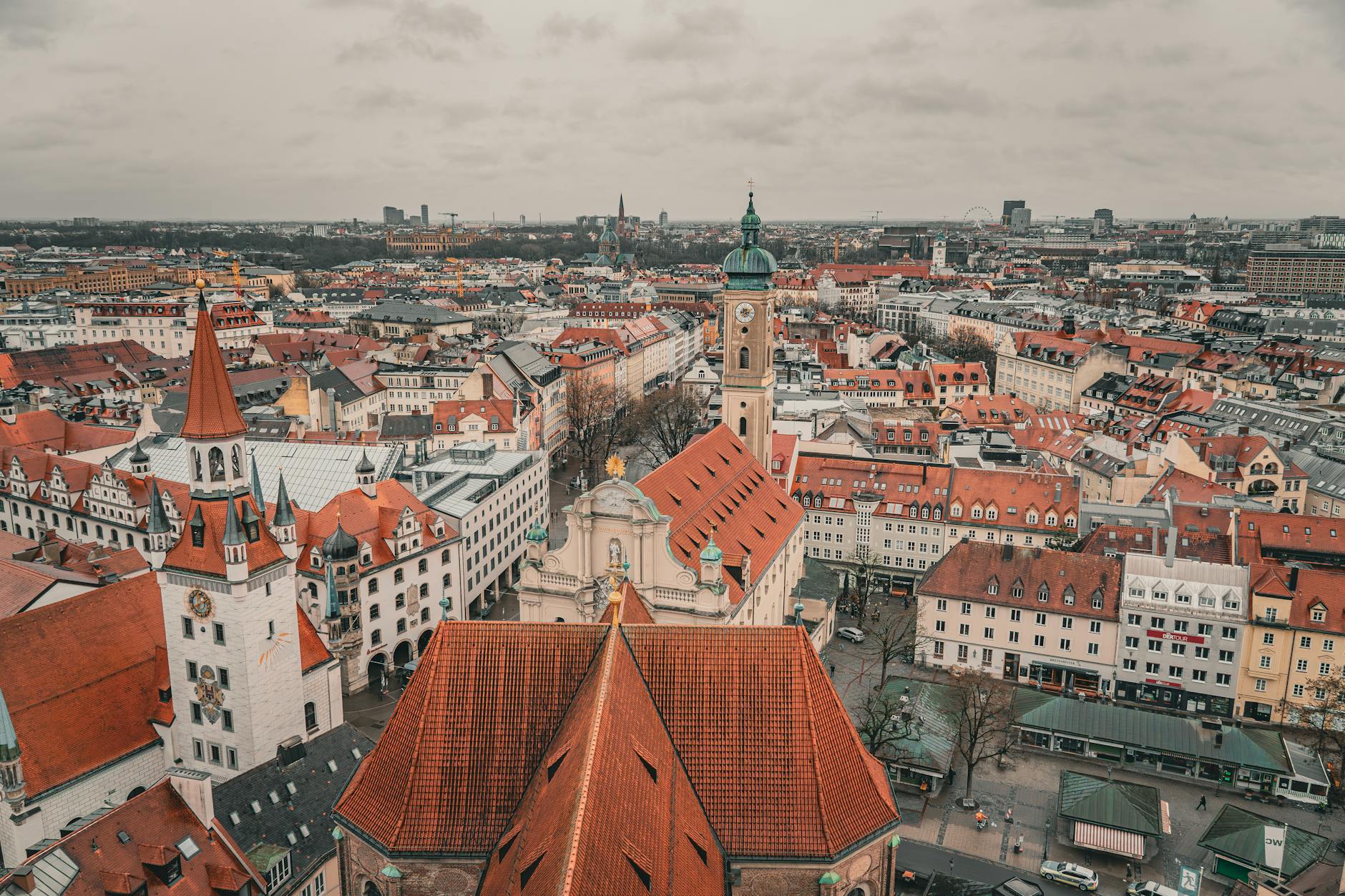
Choosing the right Munich neighborhood is the single biggest decision you’ll make about the texture of your trip. Stay in the Altstadt and you’ll wake up to the sound of the Frauenkirche bells; stay in Schwabing and you’ll have the English Garden as your backyard; stay in the Glockenbachviertel and you’ll dine where Münchners actually eat. This guide walks through the best Munich neighborhoods for tourists in 2026 — what each district feels like, who it suits, where the best hotels and restaurants are, what the budget looks like, and how to get around — so you can pick the one that matches your trip.
Quick-Compare: Munich’s Best Neighborhoods for Tourists
| Neighborhood | Best For | Vibe | Price Range | Walk to Marienplatz |
|---|---|---|---|---|
| Altstadt | First-time visitors, sightseeing | Historic, central, touristy | €€€–€€€€ | 0 min |
| Lehel | Quiet luxury near the Old Town | Refined, residential, leafy | €€€ | 10 min |
| Maxvorstadt | Museums, students, foodies | Cultured, lively, central | €€–€€€ | 15 min |
| Schwabing | Cafés, English Garden, classic Munich | Upmarket bohemian, leafy | €€–€€€ | U-Bahn 8 min |
| Glockenbachviertel | Nightlife, dining, LGBTQ+ | Trendy, creative, vibrant | €€–€€€ | 12 min |
| Haidhausen | Local feel, value, cafés | Charming, residential, cool | €€ | S-Bahn 6 min |
| Bogenhausen | Calm, parks, families | Elegant, suburban, quiet | €€ | U-Bahn 10 min |
| Au / Isarvorstadt | Riverside, alternative | Hip, mixed, walkable | €€ | 10–15 min |
| Hauptbahnhof / Ludwigsvorstadt | Late arrivals, transit, Oktoberfest | Functional, gritty in spots, cheap | €–€€ | 12 min |
1. Altstadt (Old Town) — Best for First-Time Visitors
If it’s your first trip to Munich, stay in the Altstadt. The medieval Old Town — bounded roughly by Karlsplatz, the Hofgarten, the Isartor, and the Sendlinger Tor — packs nearly every famous landmark within a 12-minute walk: Marienplatz, the Frauenkirche, the Residenz, the Hofbräuhaus, the Viktualienmarkt, St. Peter’s, Odeonsplatz, the Theatinerkirche, and the Asamkirche. The streets are largely pedestrianized, the public-transit hub at Marienplatz puts the rest of the city 5–10 minutes away, and you’ll save serious time by being able to drop bags at lunch and head out again.
The trade-off is price and atmosphere. The Altstadt is full of tourists and corporate brands, and 4-star hotels generally start at €220–€280 per night in shoulder season and €350+ during Oktoberfest and Christmas markets. For luxury, look at the Bayerischer Hof, the Mandarin Oriental, the Vier Jahreszeiten Kempinski, or Rosewood Munich. For mid-range, Hotel Torbräu (the city’s oldest hotel, 1490) and Platzl Hotel are reliable. For boutique character, try Cortiina or Louis Hotel.
Stay in Altstadt If…
- It’s your first trip and you want to maximize sightseeing efficiency
- You want to walk everywhere and not deal with public transit
- You’re traveling for a short stay (2–3 nights) and want zero commute
- Budget is comfortable; €€€–€€€€ per night is fine
Skip Altstadt If…
- You want a more local, residential atmosphere
- You’re on a tight budget — Altstadt is the most expensive part of Munich
- You’re a returning visitor and want to see a different side of the city
2. Lehel — Refined and Walkable
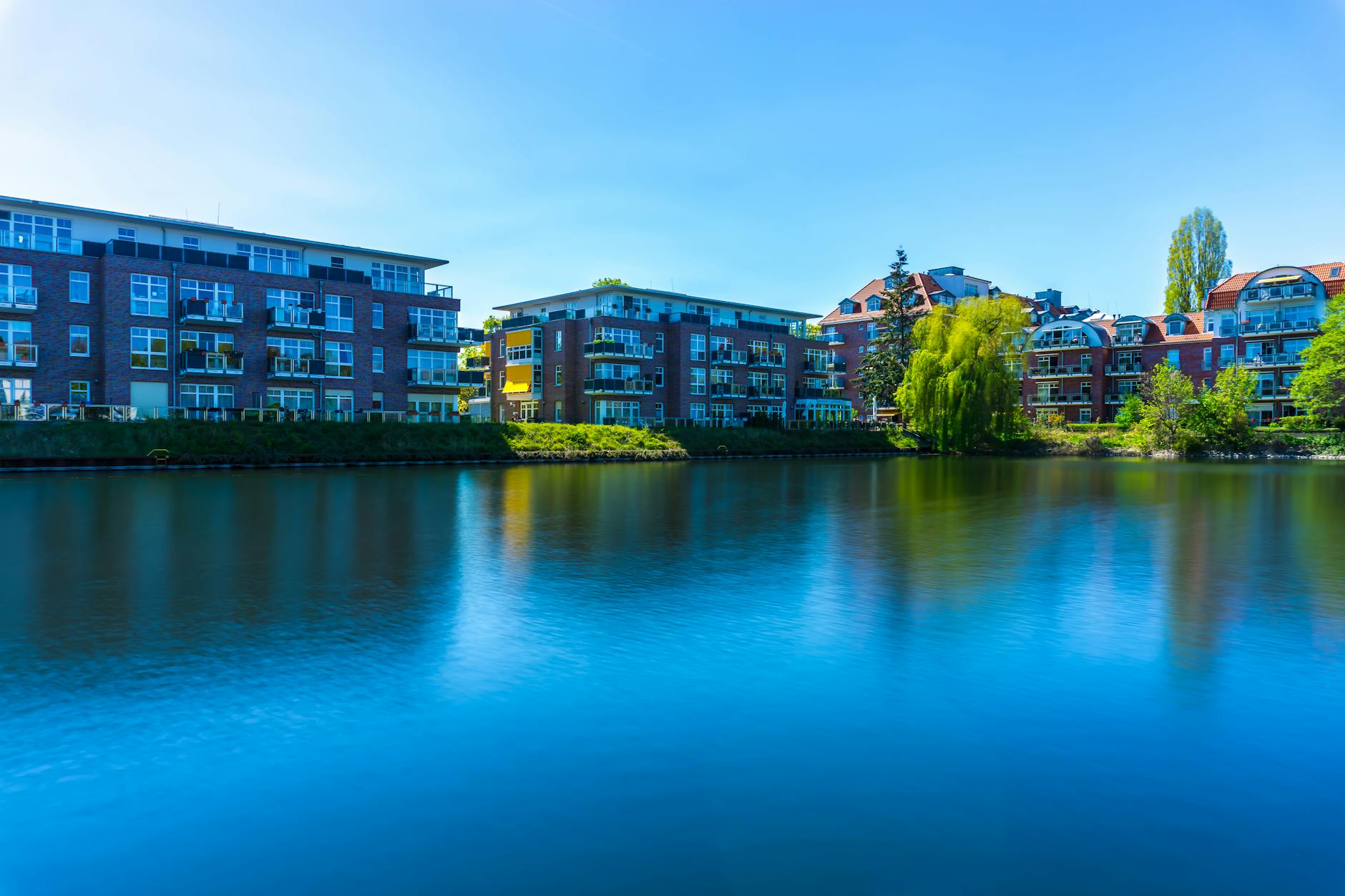
Tucked between the Altstadt and the Isar river, Lehel is Munich’s oldest “suburb” (incorporated 1724) and one of its most exclusive residential districts. From your hotel here you can stroll to Marienplatz in under 10 minutes, but the streets are mostly residential — quiet, leafy, lined with handsome 19th-century apartment buildings. The Bavarian National Museum, the Haus der Kunst, and the southern entrance to the English Garden are all in Lehel itself.
Lehel is a great choice for travelers who want central convenience without Altstadt crowds. Hotel options include the Hilton Munich Park, the Hotel Opéra (a small boutique gem), and a number of charming residence-style apartments. Restaurants like Atelier (2-Michelin-star inside the Bayerischer Hof, technically just over the line in Altstadt) and the relaxed cafés around Bräuhausstraße give the area a refined evening feel.
3. Maxvorstadt — Museums, Universities, and Foodies
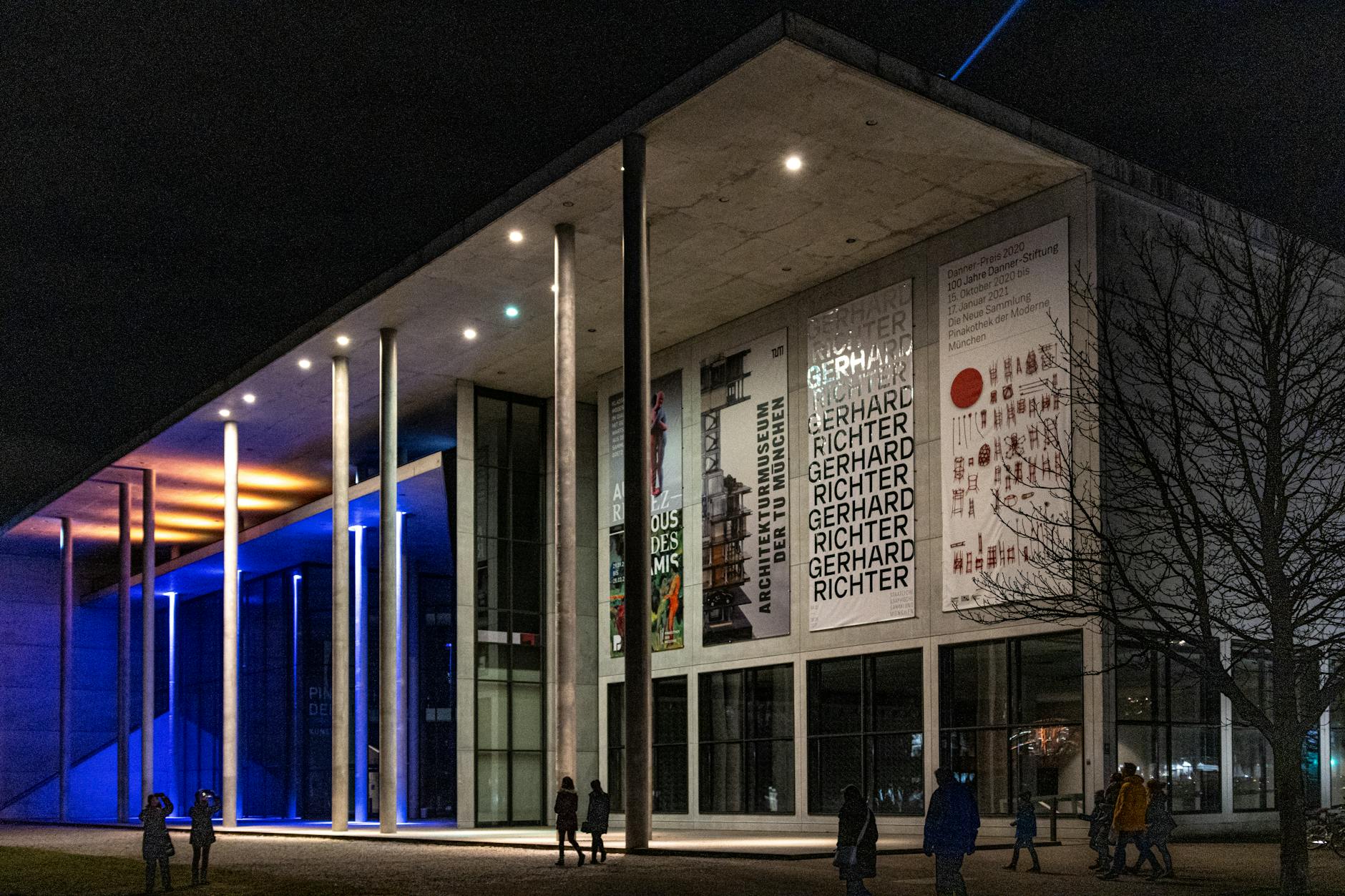
West of the Altstadt and centered on Königsplatz and the LMU university, Maxvorstadt is Munich’s intellectual heart. The Kunstareal — the city’s museum row — runs through it: the Alte Pinakothek, Neue Pinakothek (closed for renovation through 2026), Pinakothek der Moderne, Museum Brandhorst, the Glyptothek, the State Antiquities Collection, and the NS-Dokumentationszentrum are all clustered within a few blocks. The Lenbachhaus — home of the Blue Rider artists Kandinsky, Marc, and Münter — is just to the south.
The vibe is younger and more energetic than the Altstadt. Three universities feed an excellent dining scene of casual eateries, brunch spots, and natural-wine bars. Ainmillerstraße, Türkenstraße, and the streets around Schellingstraße are particularly pleasant for an evening stroll. Hotel options include Hotel Schwabinger Wahrheit, Hotel Maximilian Munich, and the boutique Mona Hotel.
Maxvorstadt is best for…
- Museum-focused trips where you want to roll out of bed into the Kunstareal
- Budget-conscious travelers who want central without Altstadt prices
- Foodies and coffee enthusiasts
- Returning visitors looking for a less-touristed home base
4. Schwabing — Classic Munich Café Culture
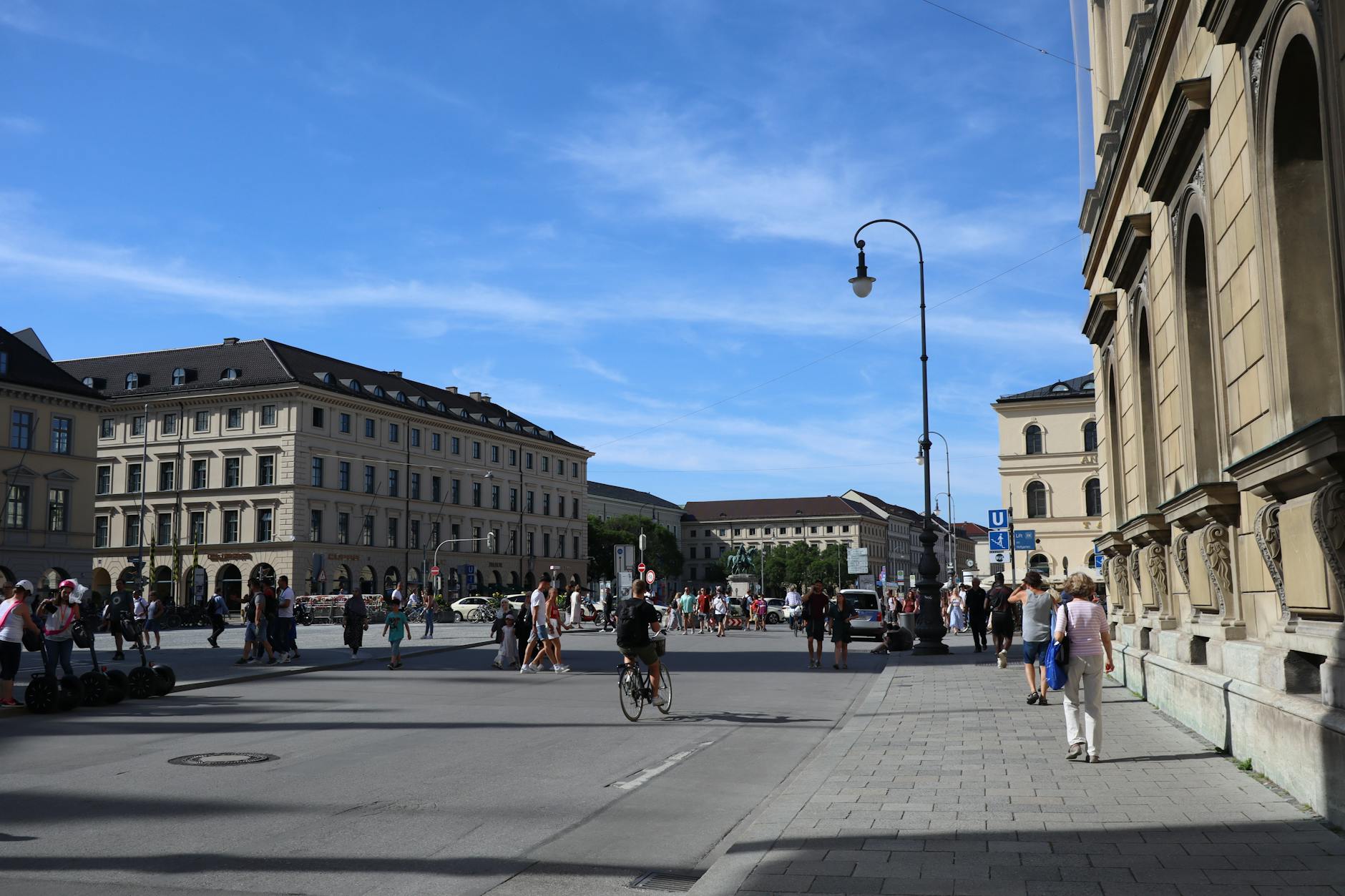
North of Maxvorstadt along the long axis of Leopoldstraße, Schwabing is the Munich neighborhood of legend — the bohemian artists’ district of the late 19th and early 20th centuries that hosted Kandinsky, Klee, Thomas Mann, Rilke, and the staff of the seminal art magazine that gave Jugendstil (Art Nouveau) its name. Today’s Schwabing is a more upmarket, leafy version of its bohemian self: tree-lined streets, beautiful preserved Art Nouveau apartment houses, sidewalk cafés, and an excellent restaurant and shopping scene. The vast English Garden borders it directly to the east.
Münchner Freiheit (U-Bahn 3 / 6, ~8 minutes to Marienplatz) is the busy commercial hub. Wander into the side streets — Ainmillerstraße especially — for the best Jugendstil facades. Hotel choices range from the modern Holiday Inn Munich-Unterhaching to the quirky Hotel Pension am Siegestor and the iconic Holiday Inn Munich Schwabing.
5. Glockenbachviertel — Nightlife, Dining, and Creativity
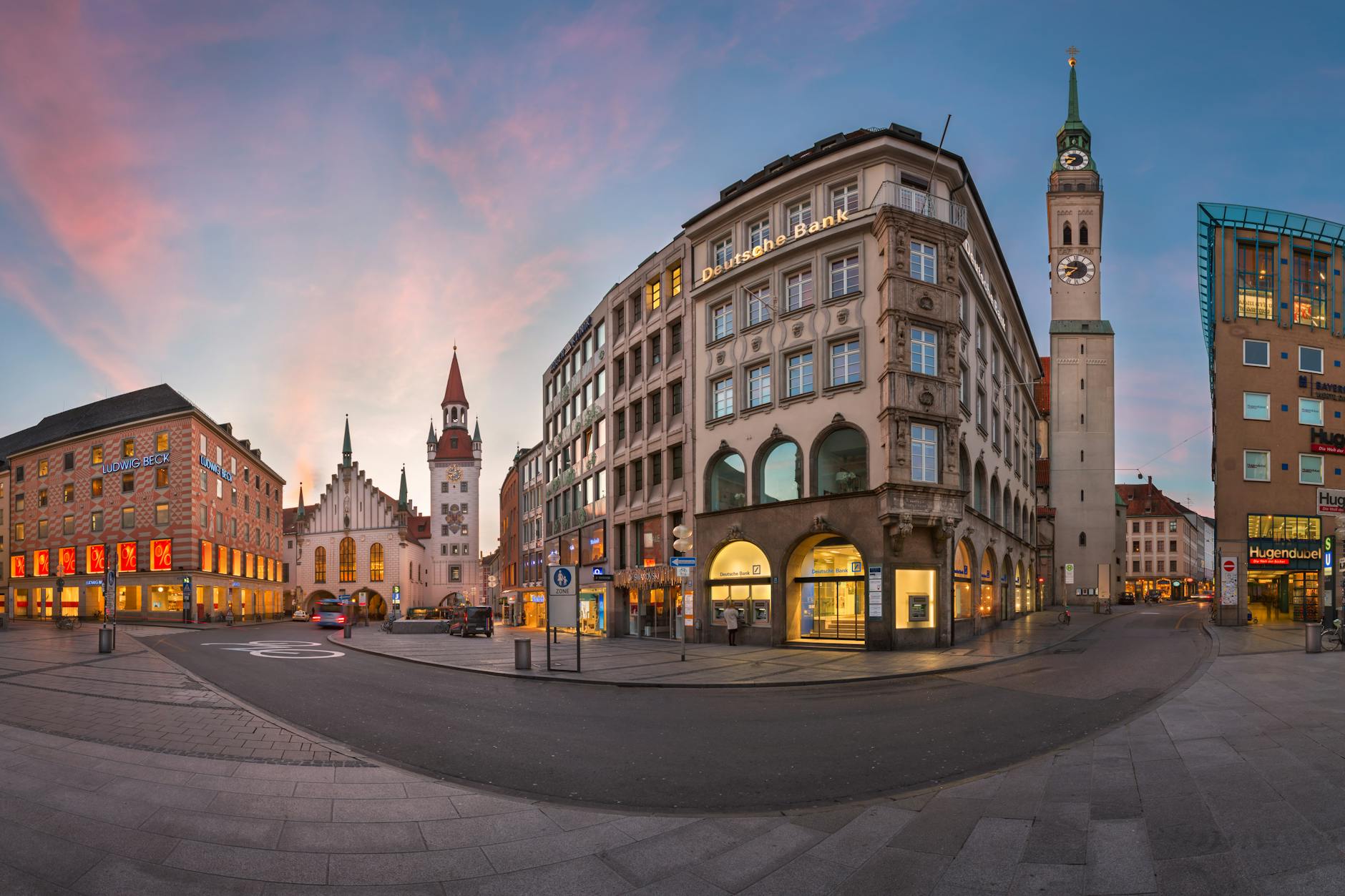
Southwest of the Altstadt, just below Sendlinger Tor, the Glockenbachviertel is the trendiest neighborhood in central Munich. Once a working-class red-light district at the turn of the 20th century, it has reinvented itself as the city’s nightlife and creative epicenter, with the highest concentration of independent restaurants, cocktail bars, art galleries, and vintage shops in the city. It’s also Munich’s main LGBTQ+ neighborhood, with friendly bars and clubs along Müllerstraße and Hans-Sachs-Straße.
The Gärtnerplatz — a circular Baroque-style square anchored by the Gärtnerplatztheater — is the social heart. Around it are some of Munich’s best small restaurants (Pageou, Mural, Tian, Werneckhof) and natural-wine bars. The neighborhood is also home to the Gärtnerplatztheater itself and the Deutsches Theater. Walking distance to Marienplatz is 12 minutes.
Best for…
- Travelers who care more about evening atmosphere than morning sightseeing
- Returning visitors and design-conscious travelers
- LGBTQ+ travelers — Munich’s most welcoming district
- Foodies — see our food and beer guide
6. Haidhausen — The Local Charm Pick
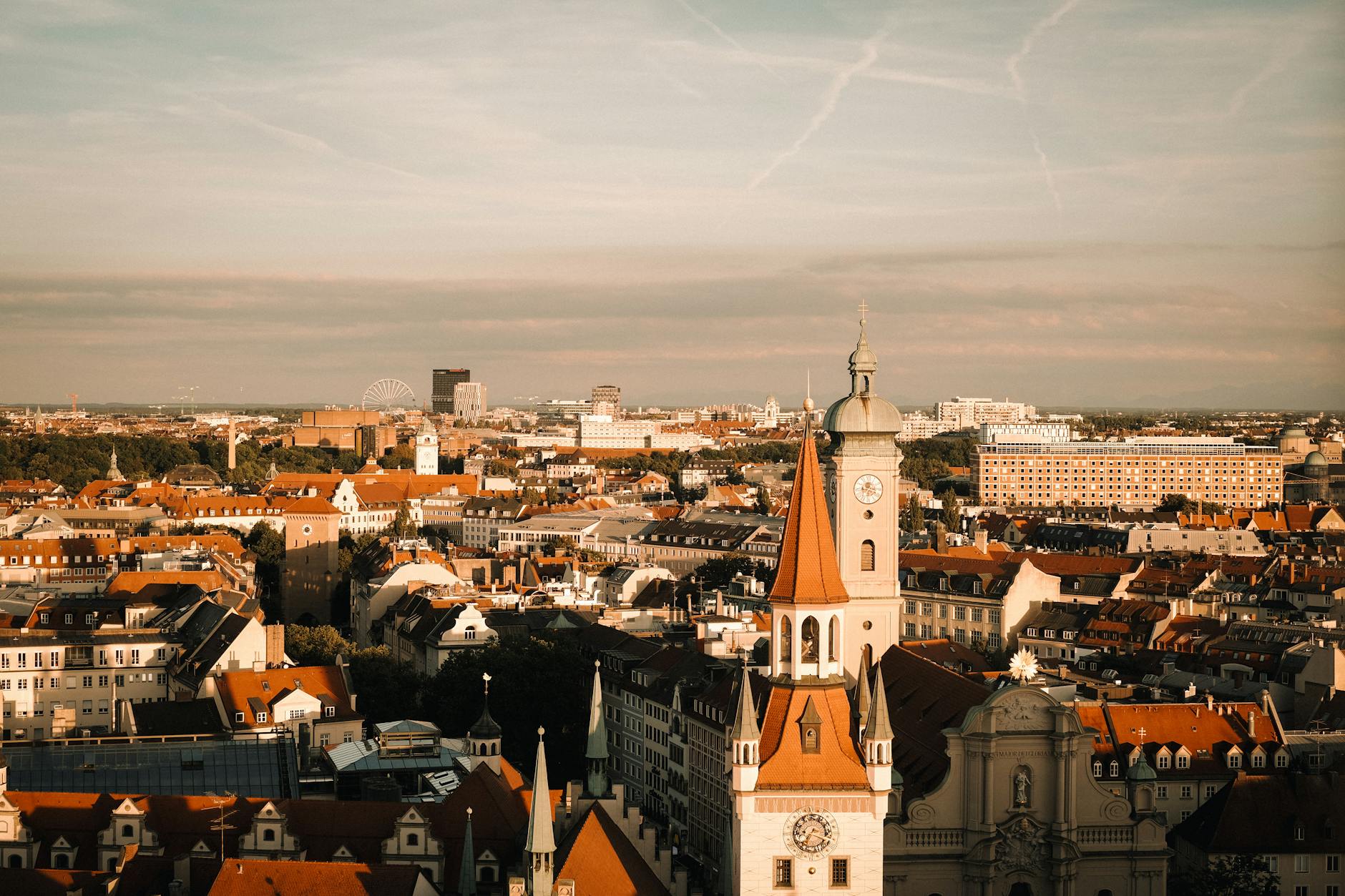
Across the Isar from the Altstadt, Haidhausen retains the small-village feel of pre-incorporation Munich (it joined the city in 1854). The streets are narrow and intimate; the Wiener Platz hosts a permanent farmers’ market and the most genuine working-class beer garden in central Munich; and the so-called French Quarter — a grid of streets named after French battlefield victories (Pariser Platz, Lyoner Straße, Bordeauxplatz) — has some of the city’s most beautiful 19th-century architecture and a remarkable density of independent restaurants and cafés.
Haidhausen is also home to the Gasteig HP8 cultural center (the Munich Philharmonic’s interim home) and Muffathalle, a converted-industrial concert and club venue. The area is well-served by S-Bahn (Rosenheimer Platz, ~6 minutes to Marienplatz) and tram. Prices are noticeably lower than central Altstadt for similar-quality hotels — and you’ll feel more like a Münchner than a tourist.
7. Bogenhausen — Elegant and Calm
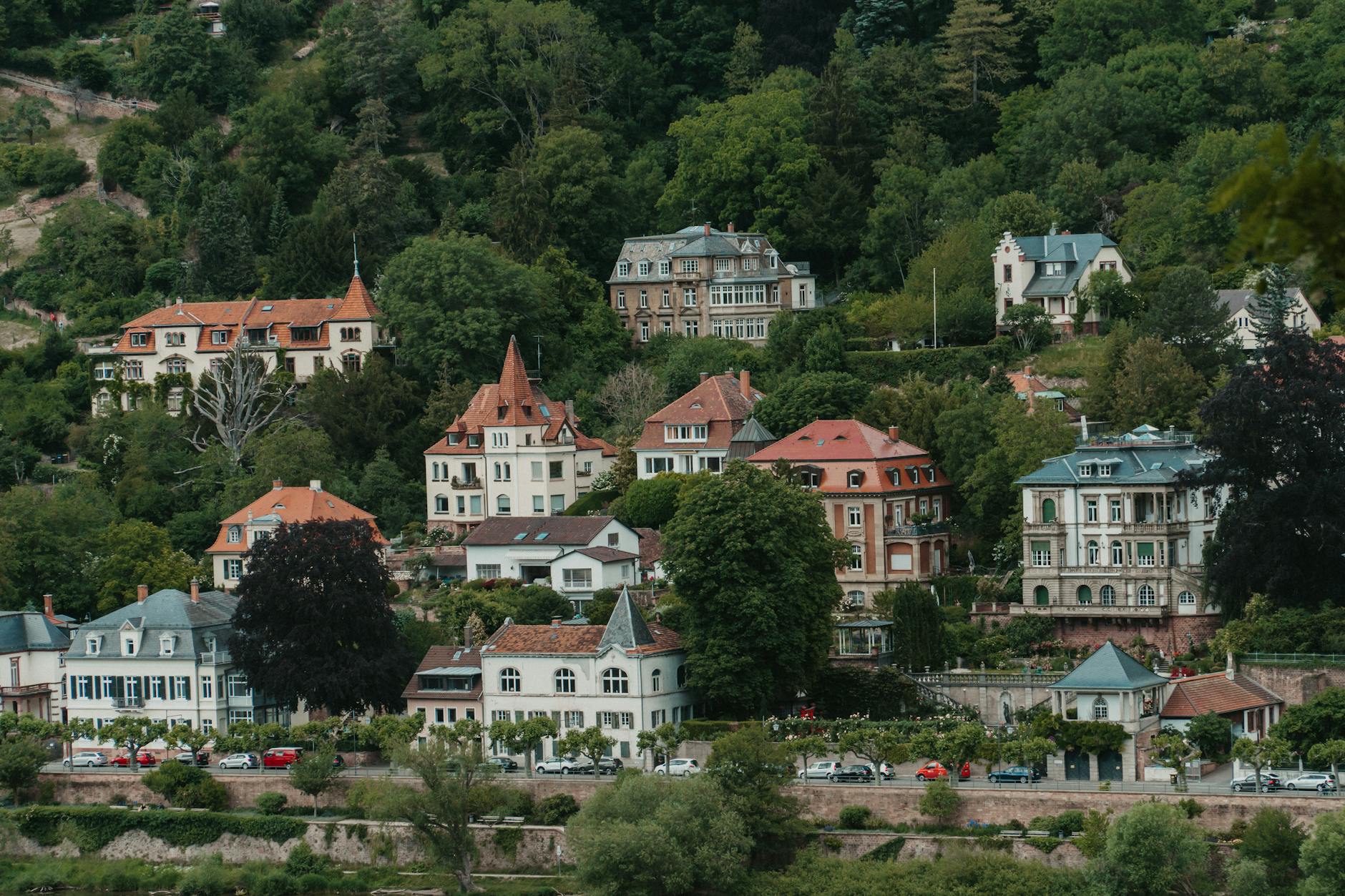
On the eastern bank of the Isar northeast of the Altstadt, Bogenhausen is one of Munich’s most exclusive residential neighborhoods. Tree-lined avenues, large turn-of-the-century villas, and the green sweep of the Englischer Garten make it feel almost suburban. Prinzregentenstraße — a wide ceremonial boulevard — runs through it and connects to the Bavarian National Museum and the Friedensengel (Angel of Peace) viewpoint over the Isar.
Bogenhausen is best for travelers who want quiet over central. Hotels include the discreet Hilton Munich City and the iconic Hotel Königshof outpost; some of Munich’s best fine dining (Käfer, Acquarello) is in the area. The U-Bahn 4 from Max-Weber-Platz reaches Marienplatz in under 10 minutes.
8. Au and Isarvorstadt — Riverside and Hip
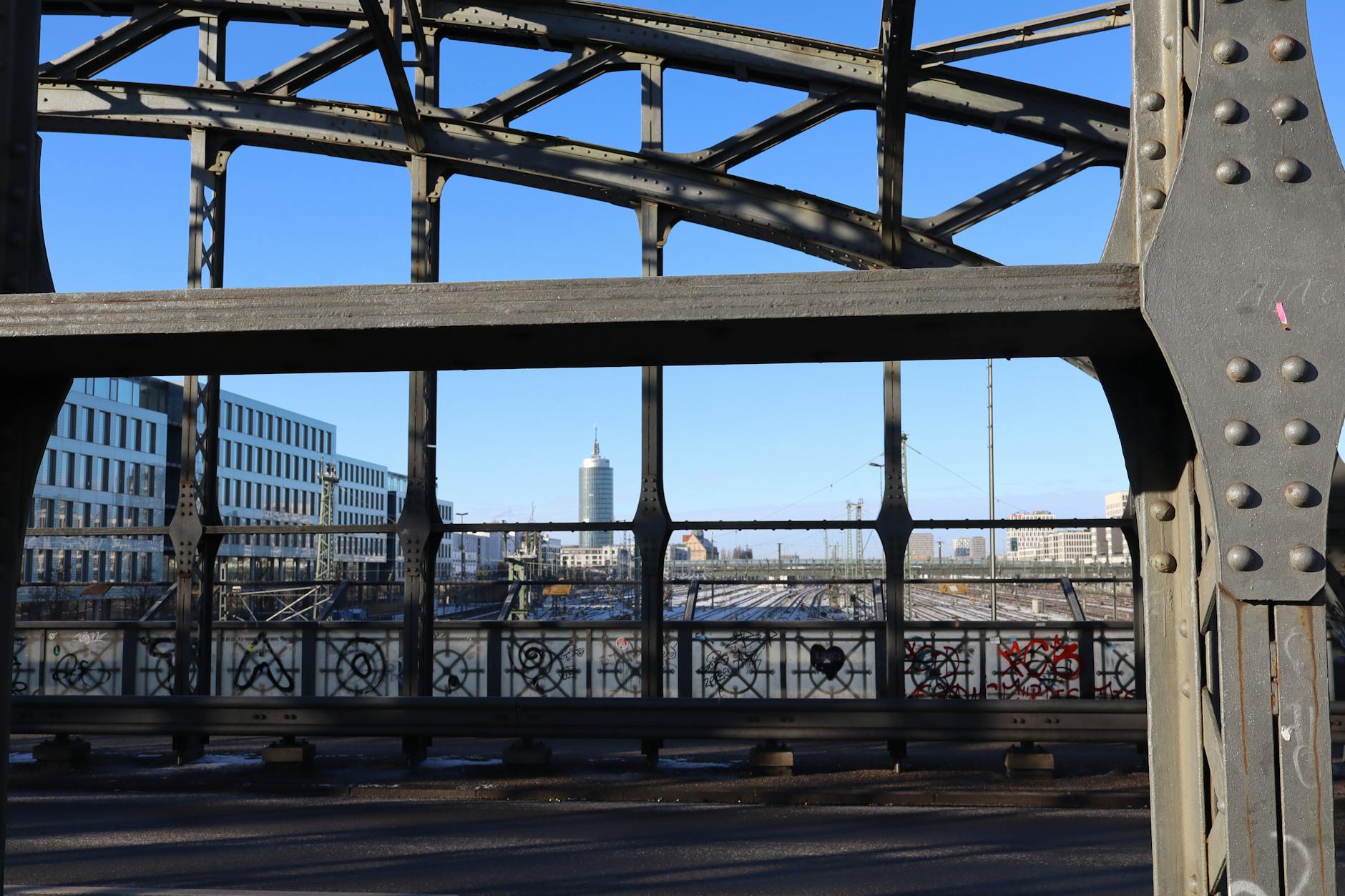
Squeezed between the Glockenbachviertel and the Isar, the small Isarvorstadt and the southern Au have one of the most underrated atmospheres in Munich. The Isar riverfront — particularly the Reichenbachbrücke and Wittelsbacherbrücke crossings — is where Münchners come on summer weekends to picnic, swim, and barbecue. The area has a hip but unpolished feel, with an excellent mix of cocktail bars, casual eateries, vintage shops, and small parks. The Auer Dult, a centuries-old folk fair, takes over the Mariahilfplatz three times a year.
Lodging here is more limited but generally good-value. The riverside path connects you to the Englischer Garten in 25 minutes north or the Tierpark Hellabrunn (Munich’s zoo) in 25 minutes south.
9. Hauptbahnhof / Ludwigsvorstadt — Cheap and Connected
Around the Hauptbahnhof (Munich Central Station) and west into Ludwigsvorstadt, you’ll find Munich’s largest concentration of mid-range and budget hotels. This is where many tour-bus travelers stay because it’s where the trains and buses arrive. The convenience for late arrivals and Oktoberfest visitors (the Theresienwiese is a 10-minute walk away) is unmatched, and budget-traveler institutions like Wombat’s, Euro Youth Hostel, and the Meininger chain dominate.
The trade-off is that the immediate streets around the Hauptbahnhof can feel gritty after dark — there’s some petty crime, drug use, and unpolished commerce. Walk a few blocks south or west and the neighborhood quickly improves: the streets around Goetheplatz and Augustinerkeller (one of Munich’s oldest beer gardens) are perfectly pleasant.
Best for…
- Budget travelers — €70–€120 hotels are easy to find
- Late arrivals, early departures, and rail-heavy itineraries
- Oktoberfest — the Theresienwiese is on your doorstep
- Day-trippers using the central transit hub heavily
How to Choose: Match Neighborhood to Trip Type
First Trip, 3 Nights
Stay in the Altstadt if your budget allows, or Maxvorstadt if you want to save money without losing convenience. You’ll spend most of your time on foot in the Old Town anyway.
Returning Visitor, 4–5 Nights
Try Glockenbachviertel, Haidhausen, or Schwabing for a more local feel. You already know how to navigate the city; trade some convenience for atmosphere.
Family with Kids
Lehel for proximity to museums and the English Garden. Bogenhausen if you have a car or don’t mind 10 minutes on the U-Bahn — it’s quieter and has more parks. See our Munich with kids guide for full family travel tips.
Couples / Romantic
Schwabing for the leafy café-culture vibe, or boutique hotels in Lehel or central Altstadt for old-world charm.
Solo / Younger Travelers
Glockenbachviertel or Maxvorstadt — both walkable, both safe, both packed with independent restaurants, bars, and cafés where you’ll meet locals.
Oktoberfest
Ludwigsvorstadt if you can find availability and budget allows (book 6–9 months ahead), Schwanthalerhöhe for the Theresienwiese walk, or — counterintuitively — Haidhausen, which is far enough from the festival to escape the late-night chaos but a quick S-Bahn ride to the Wiesn. See our Oktoberfest guide.
Practical Tips for Choosing a Munich Neighborhood
- Munich is small. The entire central area fits inside a 4-km radius. Even from “outer” neighborhoods like Bogenhausen, Marienplatz is rarely more than 15 minutes by U-Bahn
- The MVV transit system is excellent (S-Bahn, U-Bahn, tram, bus). A €10.10 single Tageskarte for Zone M covers the central area — see our transport guide
- All neighborhoods listed here are very safe, even at night. Munich consistently ranks among Europe’s safest big cities. The exception: the streets immediately around the Hauptbahnhof can feel uncomfortable after midnight
- Hotel prices spike during Oktoberfest (mid-Sep to early Oct) and Christmas markets (late Nov–Dec) — expect 50–100% premium
- Booking 3–4 months ahead gets the best mid-range deals; further ahead for Oktoberfest. See our accommodation guide for booking strategy
- Look for hotels near U/S-Bahn stations rather than just “central” — Munich’s transit is so good that 8 minutes by train can be more convenient than a 20-minute walk through tourist crowds
- Many of Munich’s best restaurants are in the residential neighborhoods (Glockenbachviertel, Haidhausen, Maxvorstadt), not the Altstadt. Eat where the locals eat
Staying a week or more, or travelling as a family? Our guide to apartment rentals and aparthotels in Munich covers where they make more sense than a hotel room.
Frequently Asked Questions
What is the best area to stay in Munich for first-time visitors?
The Altstadt (Old Town) is the most convenient choice for first-timers — virtually every major landmark is within walking distance. If budget is tight, Maxvorstadt offers similar convenience for less.
Is Munich’s Hauptbahnhof area safe?
During the day, yes — perfectly safe. After midnight the immediate streets around the station are gritty and have some drug activity, though violent crime is rare. If staying near the Hauptbahnhof, choose a hotel a few blocks south (Goetheplatz, Sendlinger Tor side) rather than directly across from the station.
Which Munich neighborhood has the best food?
Glockenbachviertel for cutting-edge restaurants and bars; Maxvorstadt for casual quality and student-friendly prices; Haidhausen for the most authentic Bavarian cafés and beer gardens; Altstadt for grand traditional venues like the Hofbräuhaus.
How do I get from the Munich neighborhoods to Marienplatz?
Most central neighborhoods (Altstadt, Lehel, Maxvorstadt, Glockenbachviertel) are 10–15 minutes on foot. From Schwabing, U-Bahn 3 or 6 reaches Marienplatz in 8 minutes. From Haidhausen, S-Bahn from Rosenheimer Platz is ~6 minutes. From Bogenhausen, U-Bahn 4 from Max-Weber-Platz is ~10 minutes.
Is it better to stay in Altstadt or Schwabing?
Altstadt for a short trip with heavy sightseeing — you’ll walk to most landmarks. Schwabing for a longer stay or returning visit — leafier, more local, and great cafés right at the English Garden.
Where do locals actually live?
Glockenbachviertel and Haidhausen are the two most popular “cool” districts among 25–40-year-old Munich residents. Schwabing is classic upper-middle-class. Bogenhausen and Lehel skew older and wealthier. The Altstadt is largely commercial — very few people actually live there.
Beyond the Center: Underrated Neighborhoods Worth a Look
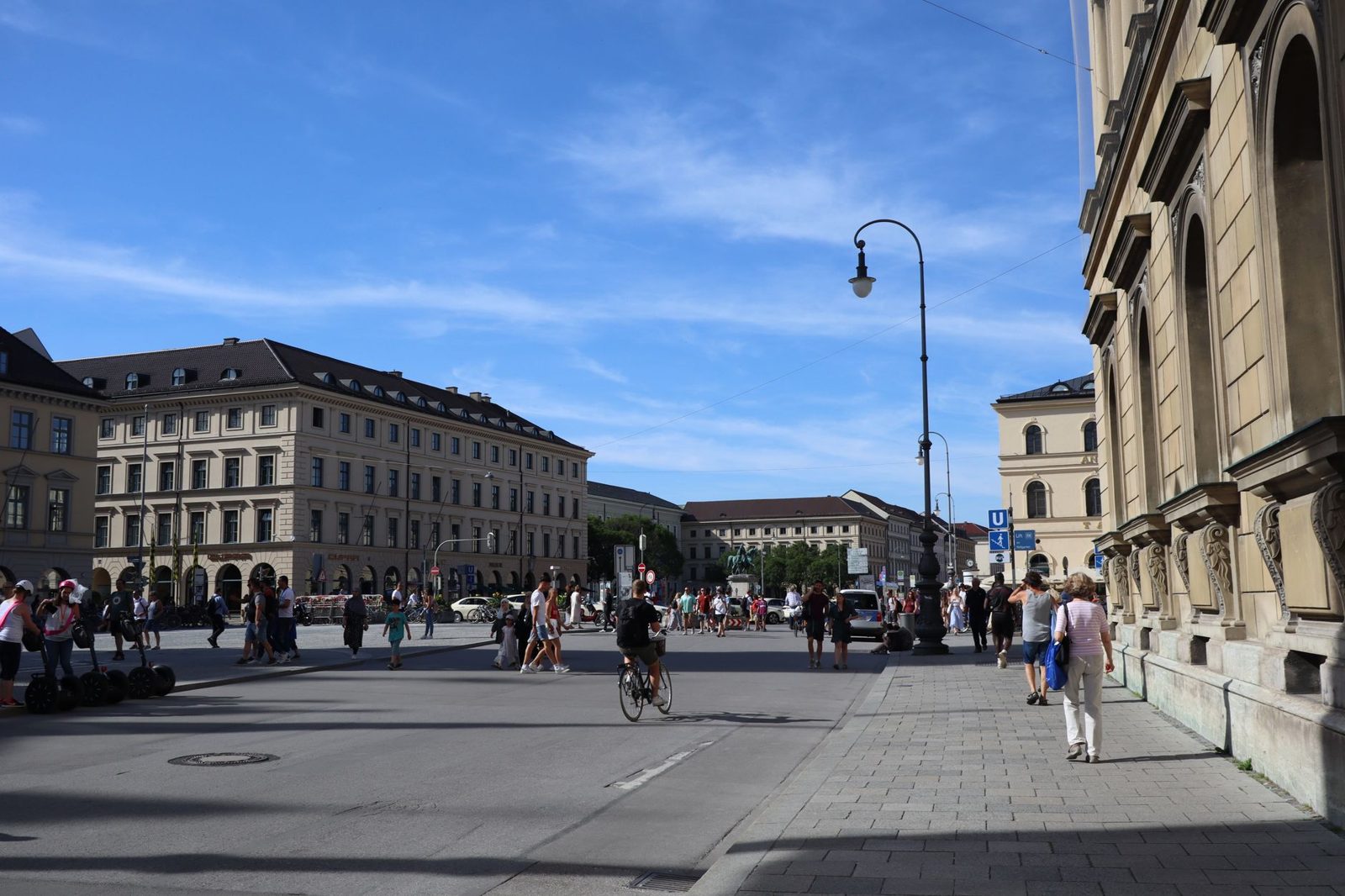
The nine areas above cover where most visitors end up, but Munich rewards anyone willing to sleep one or two U-Bahn stops further out. Room rates drop, the corner bakery starts recognizing you by day three, and you still reach Marienplatz in under fifteen minutes. These are the neighborhoods locals actually move to — not tourist zones, which is exactly the point.
Neuhausen-Nymphenburg spreads west around the baroque Schloss Nymphenburg and its canal. Rotkreuzplatz is the hub — a single U1 ride to the center — and the streets around Nymphenburger Straße are full of mid-priced hotels, Italian delis, and Sunday-quiet courtyards. It’s the pick for travelers who want calm and greenery without feeling stranded.
Westend (Schwanthalerhöhe) sits directly against the Theresienwiese, the field where Oktoberfest sets up. That makes it pure gold during the festival — you can walk home from the tents — and pleasantly cheap and multicultural the other eleven months. U4 and U5 stop at Schwanthalerhöhe and Heimeranplatz; the Turkish bakeries and Croatian grills around Gollierplatz are some of the best-value eating in the city.
Sendling, due south, has working-class roots and a fast-rising profile. Harras is the transport anchor (U6 plus S-Bahn), and in summer the Flaucher gravel banks of the Isar — locals’ favorite spot for a riverside barbecue — are a ten-minute stroll away. Untergiesing, just across the river, offers tall Altbau apartments, leafy quays, and the cult Grünwalder Stadion where second-division 1860 München still plays.
Pasing lies far west but compensates with its own major rail hub: nearly every S-Bahn line plus regional and long-distance trains stop here. If your trip leans on day trips to Neuschwanstein, the Alps, or Salzburg, basing yourself in Pasing can shave real time and money off every outbound morning.
| Area | Typical 3–4★ double/night | To Marienplatz | Nearest hub |
|---|---|---|---|
| Neuhausen-Nymphenburg | €110–160 | ~12 min (U1) | Rotkreuzplatz |
| Westend | €100–150 | ~10 min (U4/U5) | Schwanthalerhöhe |
| Sendling | €95–140 | ~10 min (U6) | Harras |
| Untergiesing | €90–135 | ~10 min (S-Bahn/tram) | Giesing |
| Pasing | €85–130 | ~13 min (S-Bahn) | Pasing Bahnhof |
Booking Smart: When Munich Prices Spike — and How to Dodge Them
Munich hotel pricing swings harder than almost any other German city, and the biggest reason has nothing to do with summer or sightseeing. It’s Messe München, the vast trade-fair complex out east in Riem. When a major fair is on, tens of thousands of business travelers fill rooms across the whole metro area, and rates triple overnight regardless of neighborhood.
The repeat offenders are bauma (construction machinery, the world’s largest), ISPO in January, IAA Mobility in September, EXPO REAL in October, and electronica. A €120 room can list at €320 the week a fair runs. Before you commit to dates, glance at the Messe München calendar — shifting your trip by three days can halve your hotel bill.
The other two predictable spikes are easier to plan around: Oktoberfest (mid-September through the first Sunday of October) and the December weekends when the Christmas markets draw regional crowds. For both, book two to three months ahead or expect slim, pricey pickings. If central rates look brutal, shift to Neuhausen or Westend, or compare options in our budget hotels and hostels and hotels near Marienplatz guides. For the full lay of the land, the where to stay in Munich pillar maps every area against price and trip type.
Pick Your Neighborhood, Then Plan the Trip
Once you’ve narrowed down a neighborhood, dive into the rest of your trip planning with our complete where to stay guide, things to do guide, food and beer guide, and transport guide. For broader logistics, our trip planner covers visas, money, packing, and timing.