Getting Around Munich: Complete Transport Guide
Complete Munich transport guide. U-Bahn, S-Bahn, trams, buses, airport transfers, tickets, cycling, walking, taxis, and driving explained.
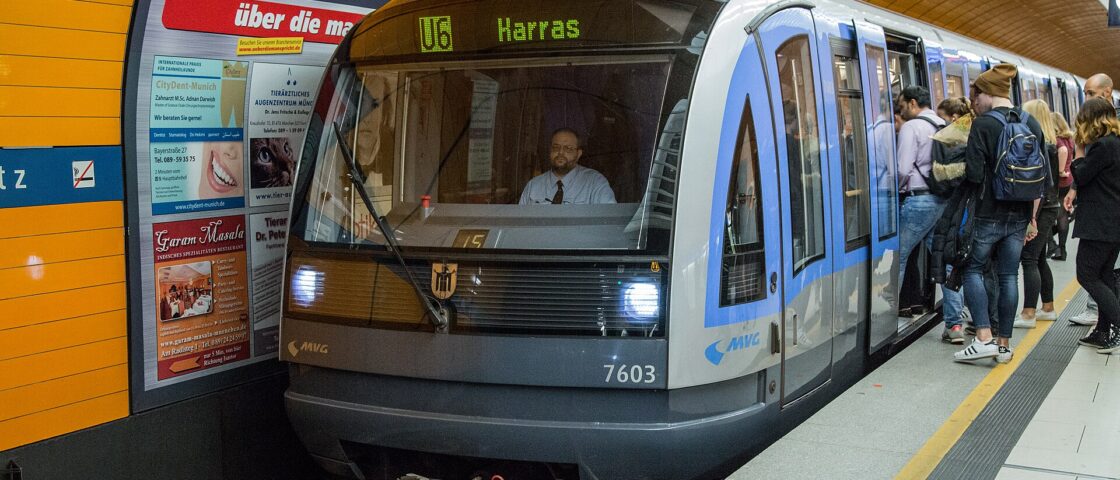
Munich has one of the most efficient public transport systems in Europe, and understanding it is the single biggest determinant of how smooth your visit feels. Get the basics right in your first hour on the ground and everything else — day trips, neighborhood hopping, late-night beer-garden escapes — becomes effortless. Get it wrong and you’ll waste money on taxis, miss trains, and spend your holiday staring at route maps. This complete Munich public transport guide walks you through the U-Bahn, S-Bahn, trams, buses, airport transfers, tickets, cycling, walking, taxis, and driving — everything you need to move confidently through the Bavarian capital.
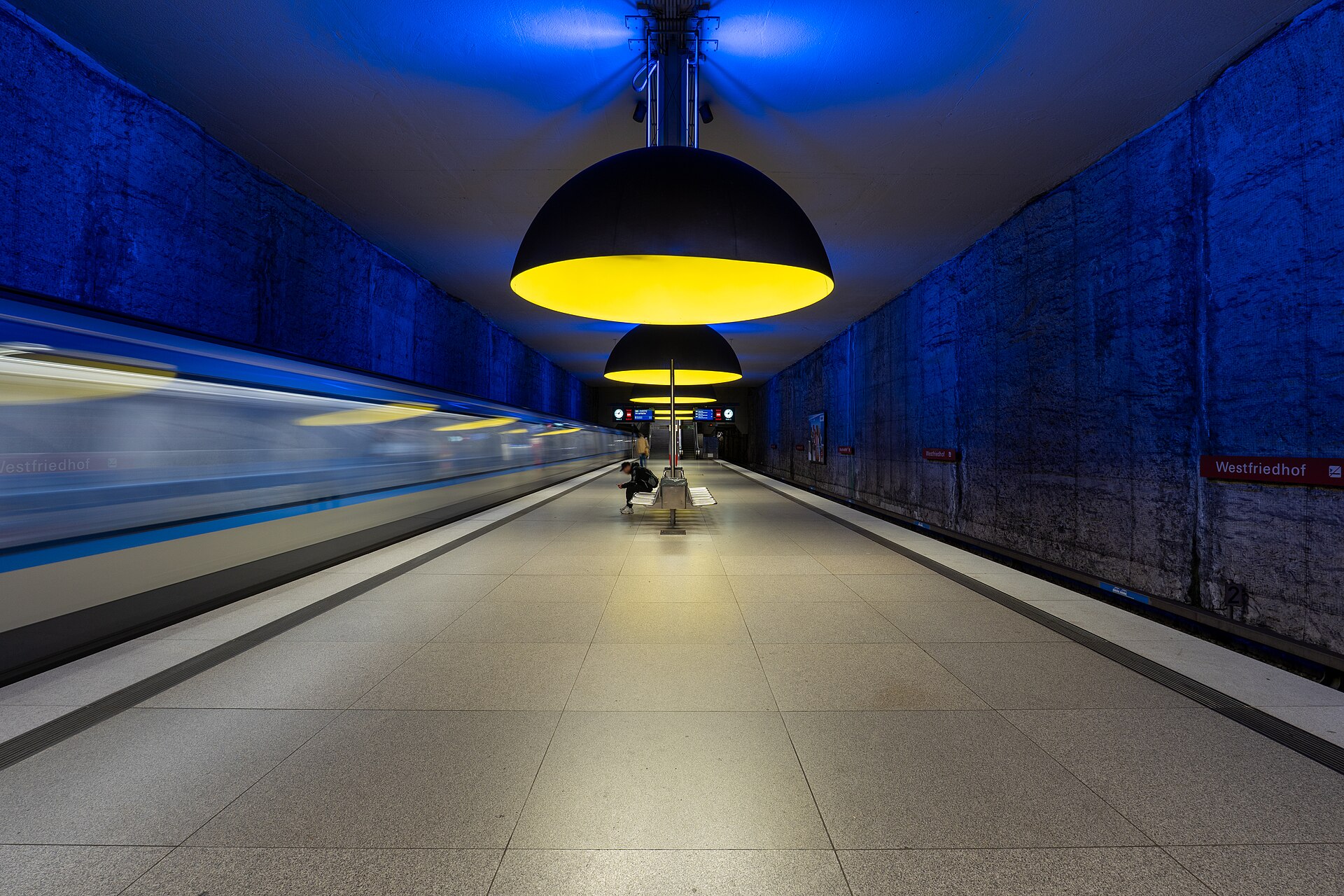
The good news is that Munich is designed for visitors. Signage is bilingual, apps are excellent, the honor system means no turnstiles to fumble with, and all four main transport modes work off a single integrated ticketing system. The bad news — if we can even call it that — is that the system uses a few specific words and quirks that are unfamiliar to most first-timers. Once you know what “Stammstrecke,” “Zone M,” “Gruppentageskarte,” and “entwerten” mean, you’ll move through Munich like a local.
Getting Around Munich at a Glance
Before we go mode by mode, here is the whole toolkit on one screen. Munich gives you seven realistic ways to move, and the right choice usually comes down to distance, time of day, and how much you want to spend. Use this table to pick your default, then dip into the detailed sections below for the specifics.
| Mode | Typical cost | Best for | Worth knowing |
|---|---|---|---|
| U-Bahn (subway) | €4.20 single / €10.10 day (Zone M) | Crossing the city fast, any weather | Every 2–5 min peak; all night on Fri/Sat nights |
| S-Bahn (commuter rail) | Same MVV fare as U-Bahn | Airport, day trips, suburbs | All lines funnel through the Stammstrecke trunk |
| Tram | Same MVV fare | Short scenic hops above ground | The 19 doubles as a sightseeing ride on a regular MVV ticket |
| Bus | Same MVV fare | Gaps the rail network misses; night routes | N-lines (every 30–60 min) cover the small hours |
| Bike | MyRadl bike-share: €1 per 30 min, €9 day rate (e-bike €3 / €18) | The English Garden, Isar paths, flat city core | Radial and ring cycle routes; locals cycle year-round |
| Taxi / rideshare | €8–15 typical city hop; €96 fixed fare from the airport to the Hauptbahnhof zone | Late nights, luggage, groups of four | FreeNow and Uber both work; cream-coloured cabs |
| Walking | Free | The Altstadt, where most sights cluster | Marienplatz to the Residenz is under 10 min |
The MVV: Munich’s Integrated Transit System
Everything in Munich’s public transport runs under a single umbrella organization called the Münchner Verkehrs- und Tarifverbund (MVV). The MVV integrates four transport modes — U-Bahn (subway), S-Bahn (commuter rail), trams (Strassenbahn), and buses — into one ticketing system, one app, and one route planner. You can transfer between any of these four modes on a single ticket without buying a new fare. This simplicity is a huge advantage: decide where you’re going, buy a ticket for that journey, and every mode of transport you need is covered.
The MVV divides the region into concentric zones. Zone M (formerly zones 1-2) covers the entire city of Munich itself — everything you’ll need as a typical visitor. Zones 1 through 12 ring it, reaching out to suburbs, surrounding towns, and the airport. Munich Airport sits in Zone 5, so a ticket from the city center is a “Zones M-5” ticket. Most sightseeing stays inside Zone M, but the airport lies outside it.
Two key apps are worth installing before you arrive: the official MVV app for route planning, timetables, and digital ticket purchase, and the DB Navigator app for regional and long-distance trains. Both work offline for already-downloaded tickets, both accept international credit cards, and both are free.
The U-Bahn: Munich’s Subway
The U-Bahn (short for “Untergrundbahn” — literally “underground railway”) is Munich’s subway system, and it’s the backbone of the transit network. Eight lines (U1 through U8, with a U9 still at the planning stage) connect roughly 100 stations across the city. Trains run every 2-5 minutes during peak hours and every 5-10 minutes at other times. On Friday and Saturday nights, and before public holidays, they keep going all night every 30 minutes. Sunday to Thursday the last U-Bahn departs around 1 a.m.
U-Bahn stations are marked with a bold blue “U” sign on the street. The two most important stations for tourists are Marienplatz (U3/U6) in the heart of the Altstadt and Hauptbahnhof (U1/U2/U4/U5) at the main train station. From either of these hubs, most neighborhoods in the city are a short ride away. The system is clean and generally reliable, which makes it the easiest way to cross the city.
A few quirks worth knowing: trains are bidirectional and you should check the destination (Richtung) sign to make sure you’re boarding in the correct direction. Doors generally don’t open automatically on older trains — press the button or pull the handle. Announcements are in German only on most trains, but platform signage is bilingual. For a full line-by-line breakdown, see our Munich U-Bahn and S-Bahn guide.
The S-Bahn: Commuter Rail and Airport Connection
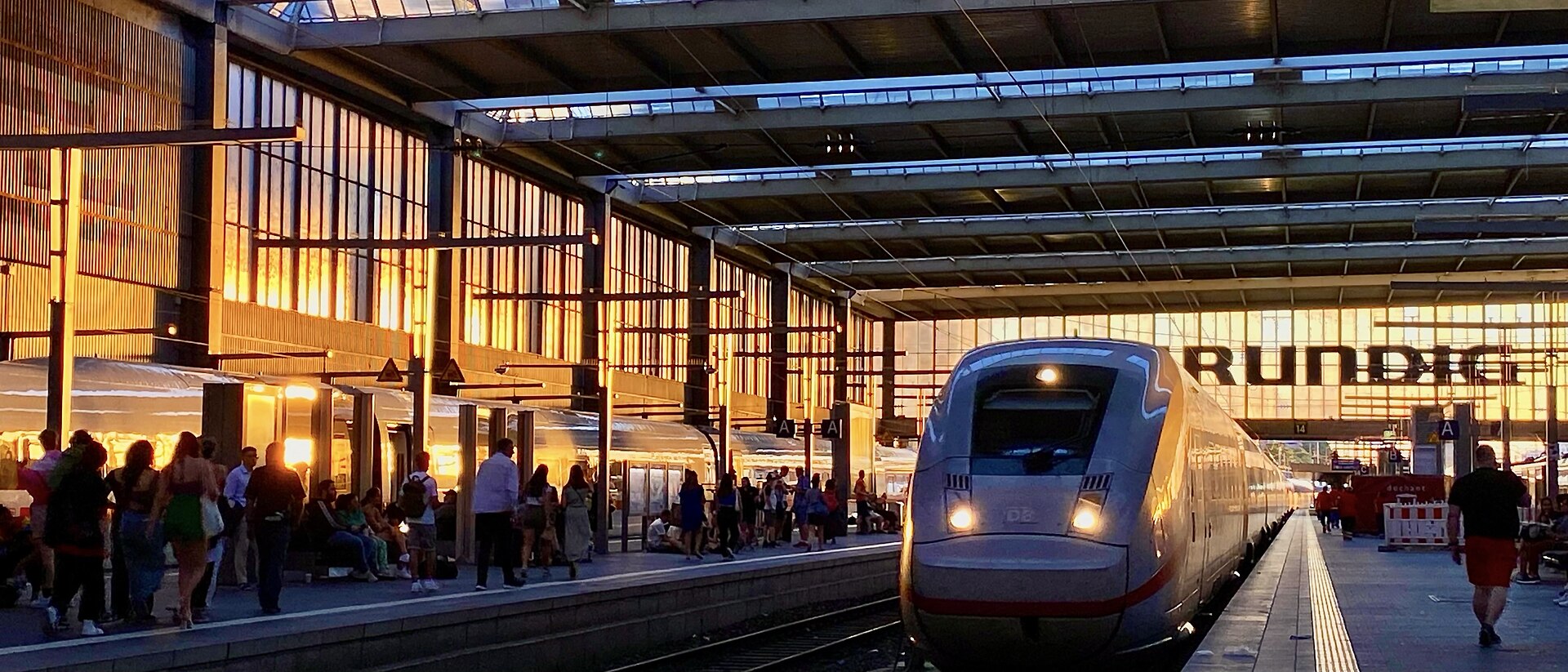
The S-Bahn (Schnellbahn, or rapid transit) is the commuter rail network that connects central Munich to surrounding suburbs, day-trip towns, and crucially, the airport. Eight lines (S1 through S8) fan out from a central east-west spine called the Stammstrecke, which runs through Hauptbahnhof, Karlsplatz (Stachus), Marienplatz, Isartor, and Ostbahnhof. Along this central axis, trains come every few minutes — just board the first train headed in your direction if you’re traveling between these stations.
For tourists, the most important S-Bahn lines are the S1 and S8, which both connect central Munich to Munich Airport (MUC) in about 40 minutes, running every 10-20 minutes. The S-Bahn is also how you’ll reach Dachau (S2), Starnberg (S6), Herrsching for Ammersee (S8), and Holzkirchen for Tegernsee connections (S3).
S-Bahn stations are marked with a green “S” sign. Journey times posted on platform displays are reliable. During weekday rush hours, the Stammstrecke can get crowded. Night trains (Nachtbus/Nachttram replacements) continue services on key routes through the small hours on weekends.
Trams and Buses
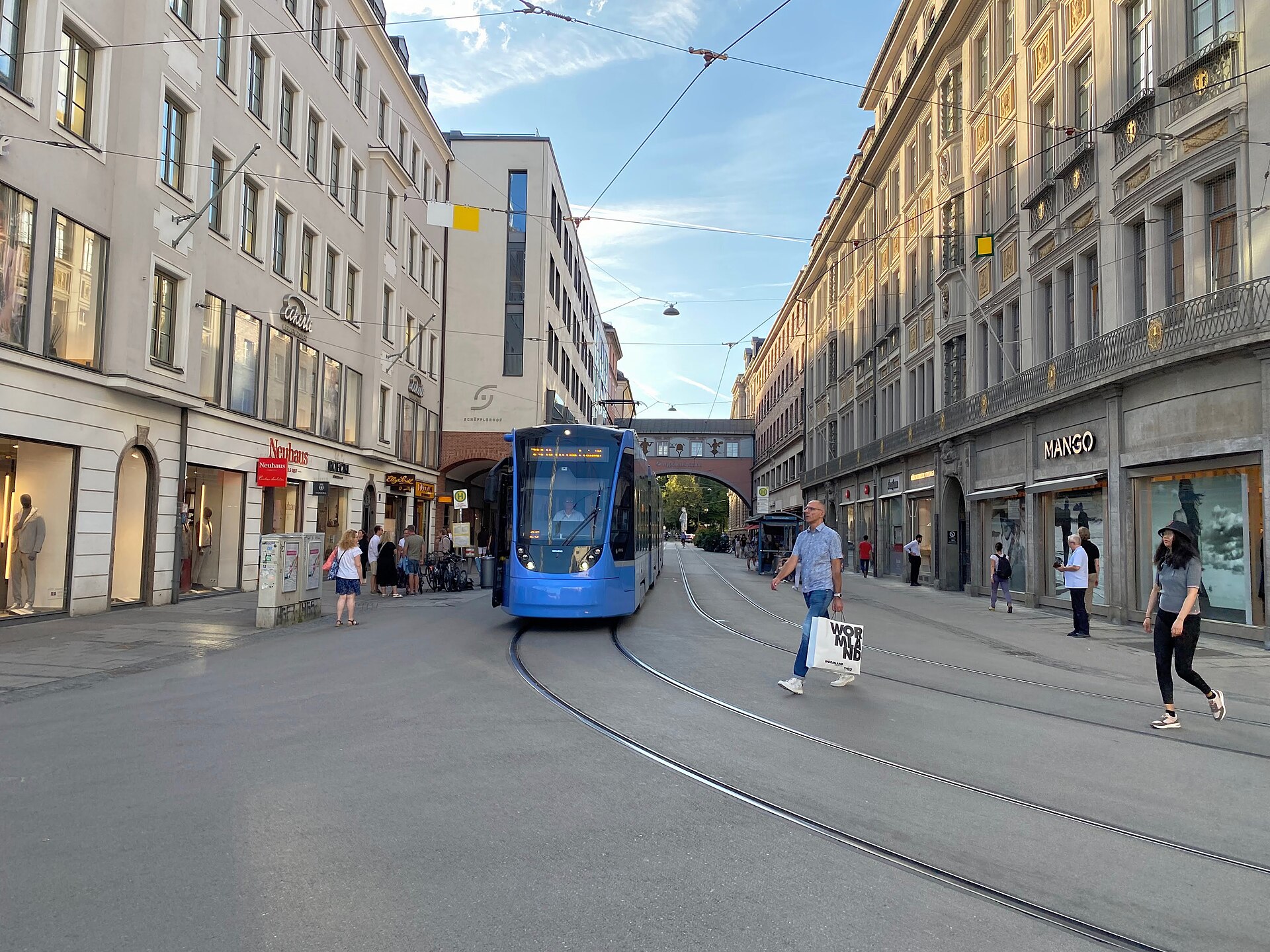
Munich’s tram network, locally called the Strassenbahn, covers more than 80 kilometers of track and reaches places the U-Bahn doesn’t. Trams are particularly useful for journeys to Nymphenburg Palace (tram 17), along Maximilianstraße (tram 19), and through the English Garden to Tivolistraße (tram 18). They’re also just more pleasant than the U-Bahn — you see the city while you travel, which makes them feel more like sightseeing than transit.
Buses fill the gaps, connecting neighborhoods and suburbs that aren’t on the U-Bahn or tram networks. For tourists, the most useful bus is the Bus 100 museum line, which loops from the Hauptbahnhof past most major museums (Alte Pinakothek, Haus der Kunst, Bavarian National Museum) and is essentially a free bus tour of cultural highlights if you already have a day ticket.
Night buses (lines starting with “N”) cover the city roughly between 1 and 4:30 a.m.: every 30 minutes on Friday, Saturday and pre-holiday nights, hourly from Sunday to Thursday. They’re safe, reliable, and cheaper than a taxi if you’ve missed the last U-Bahn.
Tickets and Passes: What to Buy
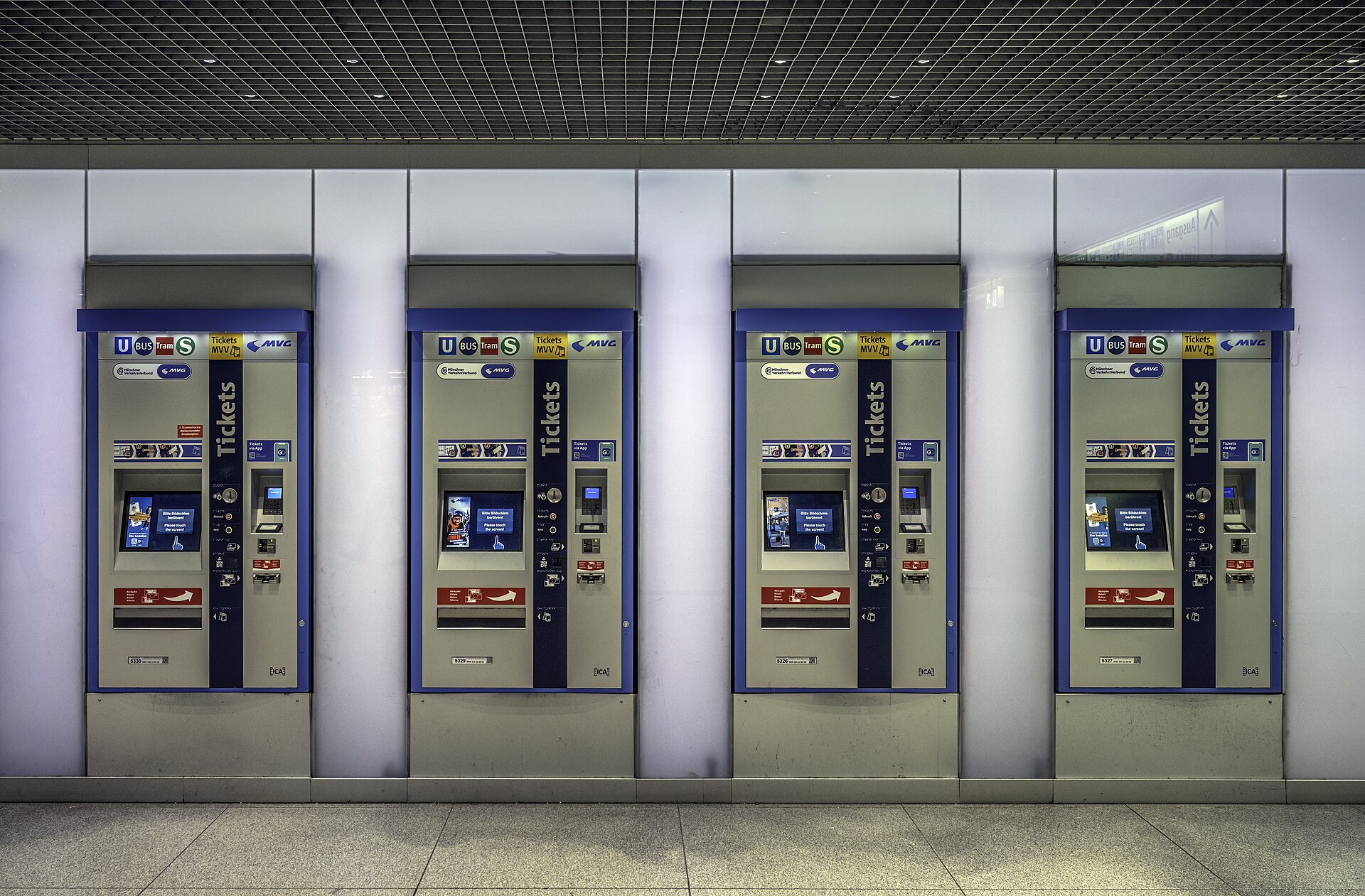
Tickets are the single thing visitors most often get wrong. Here’s the short version for tourists staying in Munich:
- Single Ticket (Einzelfahrkarte): €4.20 for one journey in Zone M. Valid in one direction with transfers: 2 hours within Zone M, 3 hours from Zones M-1, 5 hours from Zones M-5.
- Short Trip Ticket (Kurzstrecke): €2.10 for up to 4 stops on any mode (max 2 stops on U-Bahn/S-Bahn). Rarely worth the stress of calculating stops.
- Day Ticket Single (Tageskarte Single): €10.10 for one person (€10.80 from January 2027), unlimited rides in Zone M until 6 a.m. the next morning. This is the ticket most tourists should buy.
- Group Day Ticket (Gruppentageskarte): €19.70 for 2 to 5 people, with children counting as half a person. Excellent value for families, couples, or travel groups.
- 3-Day Ticket (3-Tage Karte): check the current price and availability on the MVV website before you count on it. Best value for visits of 3-5 days.
- München Card / CityTourCard: Combined transit pass + discount card for sights. Range from €19.50 per day. See the comparison in our Munich city card guide.
For airport transfers, you’ll need a Single Ticket Zones M-5 (€15.10) or a Day Ticket Zones M-5 (€17.50 single / €32.60 group). The Airport-City-Day-Ticket is the most popular airport option at €17.50, covering the journey in plus a full day of Zone M rides in the city, valid until 6 a.m. the next morning.
Always validate paper tickets at the blue stamping machines on platforms or inside trams/buses before your journey begins. An unvalidated ticket is treated as no ticket, and the fine is €60 for being caught by a roaming inspector. Digital tickets purchased in the MVV app don’t need validation. For a complete breakdown including multi-zone tickets and monthly passes, see our Munich tickets and travel passes guide.
To squeeze the most out of every euro, saving money on Munich transport compares day tickets, group tickets and the Deutschlandticket against real itineraries.
Getting from Munich Airport to the City

Munich Airport (MUC) is 28 kilometers northeast of the city center. You have three practical options for the journey:
S-Bahn (S1 or S8): The cheapest and most reliable option. Each line runs about every 20 minutes, so between them a train leaves roughly every 10 minutes from the airport’s own S-Bahn station (directly under the Munich Airport Center between terminals) to central Munich. Travel time is about 40-45 minutes to Hauptbahnhof or Marienplatz. A single ticket costs €15.10; an Airport-City-Day-Ticket costs €17.50 and includes your full day in Munich. Landing very late or flying out at dawn? Check the first and last departures in the MVV app. S1 runs via the western suburbs, S8 via the east.
Lufthansa Express Bus: A coach service that runs every 20 minutes, seven days a week, from both terminals to key stops in central Munich including Hauptbahnhof and Schwabing Nordfriedhof. Travel time is about 45 minutes. An adult single costs €12.50 online or €13.50 from the driver. Good if you have lots of luggage or want a single no-transfer journey.
Taxi or rideshare: €75-€110 to central Munich depending on your destination and traffic. Journey time is about 30-50 minutes depending on traffic. Uber, Bolt, and FreeNow all operate in Munich. Door-to-door convenience, but significantly more expensive than public transport.
For full detail including pick-up locations, pricing scenarios for groups and families, and overnight arrival options, see our Munich Airport to city center guide.
Cycling in Munich

Munich is a good city for cycling, with dedicated bike lanes and a flat, compact centre that often makes a bike quicker than transit. Locals cycle everywhere, year-round, in every weather. For visitors, a bike rental is one of the best ways to see Munich’s greener edges — the English Garden is made for cycling, the Isar river paths are glorious, and the ride from Marienplatz out to Nymphenburg Palace is one of the city’s best day-experiences.
The most popular options for visitors: MyRadl (the MVV bike-share scheme, with stations across town; €1 per half hour on a classic bike or €3 on an e-bike, with day rates of €9 and €18), Call a Bike by Deutsche Bahn, and dozens of private rental shops. A classic shop like Mike’s Bike Tours near Marienplatz rents city bikes and e-bikes by the day; check the shop’s current rates before you go. Guided cycling tours are also excellent if you want a local to show you the best routes.
A few cycling rules Munich locals take seriously: stay in marked bike lanes, never cycle on pedestrian-only zones, use hand signals to indicate turns, and absolutely don’t run red lights (police do enforce this). Helmets are legal but not required. For a complete breakdown of routes, rental comparisons, and rules, see our cycling in Munich guide.
Walking: Munich’s Best Way to Explore
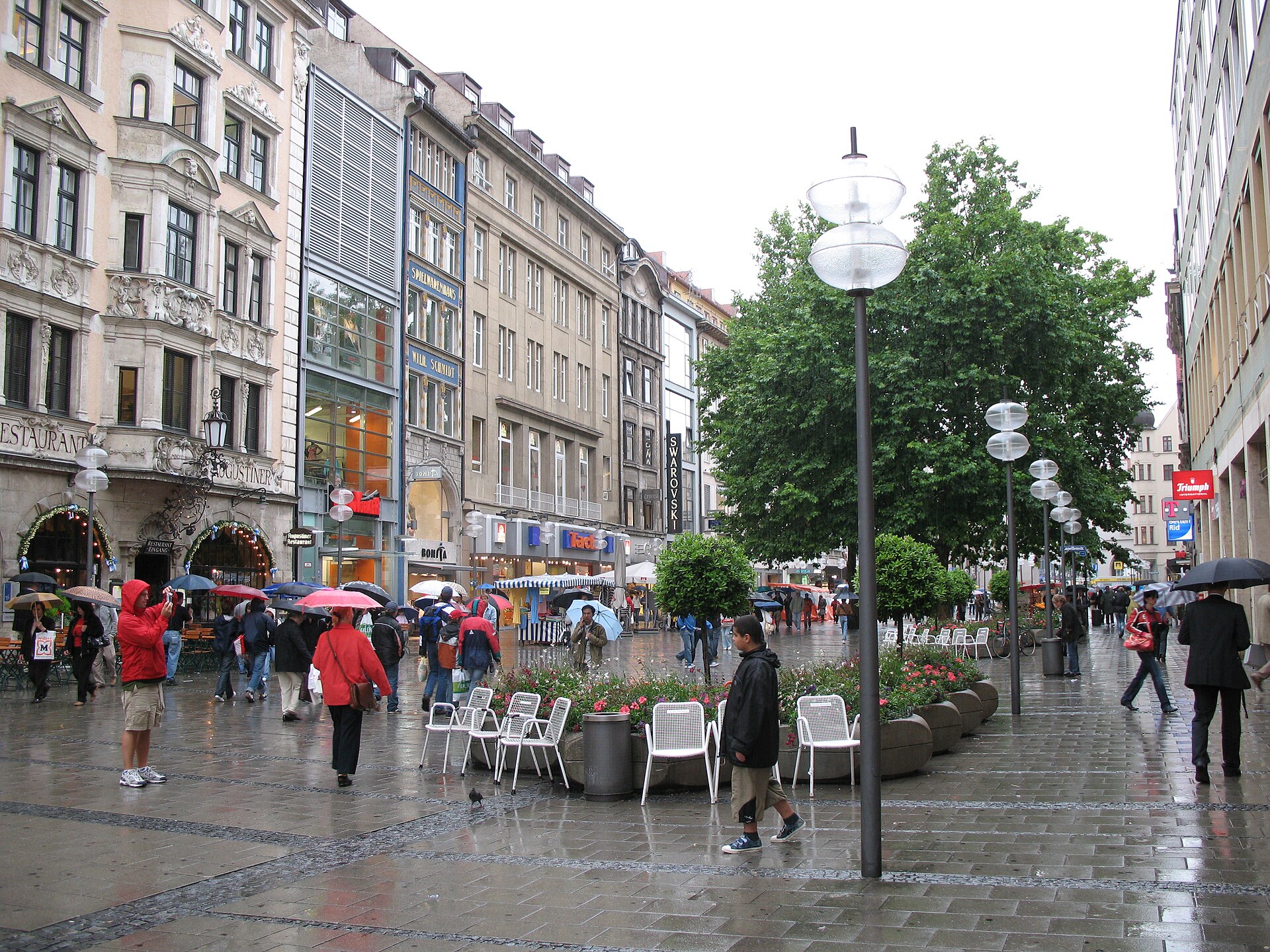
Munich’s Altstadt is compact and walkable, with its edges a short stroll from Marienplatz. Large portions of the old town are pedestrianized, including the main shopping arteries of Kaufingerstraße and Neuhauser Straße. Walking is often the fastest way to get between central sights, and it’s always the most enjoyable.
Key walking distances worth knowing: Marienplatz to the Residenz is under 10 minutes. Viktualienmarkt is just a few minutes from Marienplatz. The Hauptbahnhof and the English Garden’s southern entrance are both an easy walk from Marienplatz, and you can cross the whole Altstadt on foot, from Isartor in the east to Karlsplatz in the west. For extended walking routes, themed self-guided walks, and the best photo-stop paths, see our Munich walking guide.
If you would rather cover the city on foot than underground, our Munich walking guide maps self-guided routes, realistic timings and the stretches where walking stops making sense.
Taxis and Ridesharing
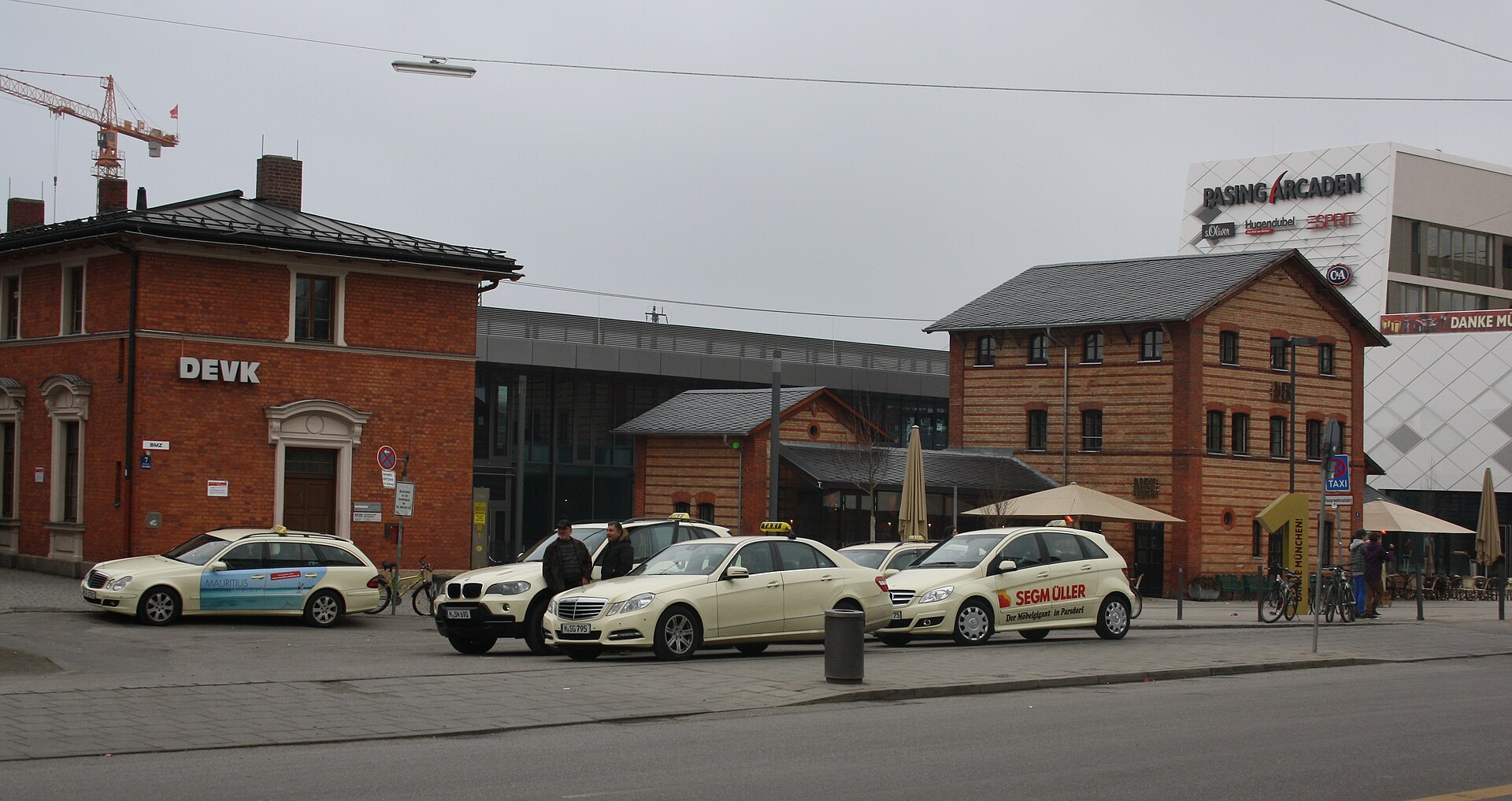
Taxis in Munich are plentiful, regulated, and well-priced for European capitals. The meter starts at a €5.90 minimum fare and charges €2.70 per kilometer for the first 7 km, then €2.50, with waiting time billed at €39 an hour. There’s no separate night rate. Taxis are most easily found at designated ranks at Hauptbahnhof, Marienplatz, Odeonsplatz, Karlsplatz, and outside most major hotels; you can’t generally flag them in the street.
Rideshare apps are widely available. FreeNow (Munich’s official licensed taxi app — which also offers rideshare) is most widely used. Uber and Bolt both operate in Munich. App pricing moves with demand, so expect it to rise at busy times.
A few taxi practicalities: tipping is a custom rather than part of the fare; rounding up to the nearest euro, or adding 5-10% for good service, is usual. Most taxis take cards; confirm before starting the ride. Airport pre-bookings can be arranged through any hotel and save a few euros at peak hours. See our Munich taxi guide for more details.
See the Munich taxi guide for current tariffs, airport fixed fares and how Uber, Bolt and FreeNow actually compare here.
Driving and Parking in Munich
Short version: don’t drive in central Munich unless you absolutely have to. Traffic is heavy, parking is scarce and expensive at hotels and public garages alike, the city has a low-emission zone (Umweltzone) to check before you bring a vehicle in, and the city is optimized for transit. If you’re flying in without onward travel, skip the rental car entirely.
Driving makes sense only in two scenarios: if you’re doing a multi-day Bavarian road trip (Alps, Romantic Road, Bavarian Forest) with Munich as a stopover, or if you have specific accessibility needs that transit can’t address. For these cases, all major rental companies operate at the airport and Hauptbahnhof, and German roads are excellent. Autobahns have famously unrestricted sections (though urban speed limits are strictly enforced). See our detailed driving in Munich guide for rental comparisons, Umweltzone rules, and parking strategy.
If you do end up behind the wheel, driving in Munich explains the Umweltzone green sticker, parking zone pricing and rental pickup points in detail.
Getting to Munich from Abroad
Munich is exceptionally well-connected to the rest of Europe and beyond. Munich Airport (MUC) is Germany’s second-busiest, served by major carriers including Lufthansa (MUC is their second hub), Air France, British Airways, United, American, and dozens of European budget airlines. In 2025, MUC had direct flights to 232 destinations worldwide.
By train, Munich Hauptbahnhof is one of Europe’s major rail hubs with direct ICE and EC connections to Berlin (about 4-4.5 hours), Frankfurt (about 3 hours 15 minutes), Salzburg (about 90 minutes), Vienna (about 4 hours), Prague (about 5.5 hours), Zurich (about 3.5 hours), and Milan (about 7.5 hours); check bahn.de for the exact times on your day. Night trains (ÖBB Nightjet) serve Vienna, Amsterdam, and other destinations with sleeper cabins.
By bus, Flixbus operates inexpensive routes across Germany and neighboring countries from the Munich ZOB (central bus station) adjacent to Hauptbahnhof. For a full comparison of how to reach Munich from major European cities and the US, see our getting to Munich guide.
For a full comparison of flights, long-distance trains and FlixBus routes into the city, see getting to Munich.
Leaving Munich for another city? Our guide to travelling on from Munich compares trains, buses and driving routes.
Car-Sharing, Scooters, and Alternative Mobility
Munich has embraced alternative mobility more than most German cities. SHARE NOW (formerly Car2Go/DriveNow) operates a large fleet of compact cars you can unlock by app, drive anywhere in Munich, and park in any regular space — useful for the rare occasions you need a car for a specific trip. You pay by the minute, and rates change, so check the app for the current price.
E-scooters from operators like Voi, Tier, Lime, and Bolt are everywhere in central Munich, typically €1 to unlock plus €0.20-€0.30 per minute. They’re fun for short hops, though local rules are strictly enforced: riding on pedestrian sidewalks is forbidden, two riders on one scooter is forbidden, and drunk scooting carries the same penalties as drunk driving (a number of visitors have learned this the hard way after Oktoberfest). Always use the dedicated bike lanes. Helmets are legal but not required; many locals still skip them.
For longer weekend trips, Flinkster by Deutsche Bahn provides car rental by the hour or day at stations across Bavaria. All of these services work with international driver’s licenses plus a scan of your passport during signup. See our driving in Munich guide for detail on each.
Practical Tips for Using Munich Transport
A few habits that separate smooth Munich travel from frustrated Munich travel:
- Download the MVV app before you land. It works as a journey planner, timetable, and ticket wallet — and eliminates the need to fumble with German ticket machines.
- Check direction signs (Richtung) before boarding. U-Bahn and S-Bahn platforms list the final destination, not the numbered stations in between.
- Validate paper tickets immediately. The blue stamping machines are on platforms and inside trams/buses. Unvalidated tickets are invalid and carry a €60 fine.
- Plan around the Stammstrecke. S-Bahn service concentrates on this east-west axis, so journeys that use it are faster than those that require transfers.
- Use Bus 100 if visiting museums. It’s the most scenic bus in Munich and connects most cultural venues.
- Carry small cash. Ticket machines accept cards, but some older trams and bus drivers still prefer cash for onboard purchases.
- Night transport exists. Once the main network closes, night trams and N-line buses take over: half-hourly at weekends, hourly on other nights.
- Don’t drive. See our driving guide for the full explanation, but for 95% of visitors, renting a car actively makes your trip worse.
Accessibility and Mobility Considerations
Munich’s public transport is among the most accessible in Europe. Almost all U-Bahn stations have elevators; the remaining handful are being upgraded. Most S-Bahn platforms are at-grade with train doors. Trams have low-floor entry at designated doors. Buses kneel for wheelchair and stroller boarding. Audible announcements are available in both German and English on most trains.
For travelers with mobility limitations, the MVV app has a dedicated accessibility layer that shows elevator status in real time and routes around any temporarily out-of-service elevators. Staff at Hauptbahnhof and Marienplatz can arrange assistance with advance notice. Most taxis are wheelchair-accessible on request. For specific advice, the MVV accessibility hotline operates daily and speaks English.
Travelling with small children adds its own logistics. Munich with a stroller covers which U-Bahn stations have working lifts, tram boarding, and where pushchairs are genuinely awkward.
A Typical Day Using Munich Transport
To make all of this concrete, here’s how a typical tourist day might use Munich’s transport network. You wake at your hotel in Maxvorstadt around 8 a.m. Walk five minutes to the Universität U-Bahn station, board a U3 or U6 toward Marienplatz, and arrive at the central square in six minutes. Spend the morning in the Altstadt walking between Marienplatz, Viktualienmarkt, and the Residenz — no transport needed, it’s all within a 10-minute radius on foot. Around 1 p.m., take tram 19 east along Maximilianstraße to Maxmonument, stroll across the Isar, and walk into Haidhausen for a late lunch at Wirtshaus in der Au.
After lunch, grab the U4 or U5 westward to Olympiazentrum for an afternoon at BMW Welt and Olympiapark. When you’ve had your fill (late afternoon), catch the U3 down to Münchner Freiheit in Schwabing, grab a coffee at a local café, and wander into the English Garden for a sunset Maß at the Chinese Tower beer garden. Later that night, after the beer garden closes, you walk back to Münchner Freiheit, catch the U3 directly home, and you’re in bed by 11:30. Total transport cost for the day: €10.10 (a single Day Ticket for Zone M). That’s the system working exactly as it should.
Transport Safety
Munich’s public transport is very safe, day and night, for solo travelers of any age and gender. Platforms are well-lit, security is visible, and violent crime is extremely rare. The primary risk is pickpocketing in crowded trains, particularly during rush hour on the S-Bahn Stammstrecke and around Hauptbahnhof. Keep wallets in interior pockets, backpacks worn front-facing in crowds, and phones out of easily grabbable side pockets.
Late at night, the Hauptbahnhof area can have a grittier feel than the rest of the city (some rough sleepers, late-night nightlife, occasional loud crowds), but it’s still objectively safe — not dangerous, just less picturesque. Women traveling alone at night report feeling comfortable on all MVV services; all stations have emergency call buttons on platforms and in every train car.
Transport During Oktoberfest and Major Events
During Oktoberfest (mid-September to early October), Munich’s transport network handles a daily traffic spike of hundreds of thousands of visitors flowing to and from the Theresienwiese. The U4 and U5 lines stop directly at Theresienwiese and are the main arteries; both add extra services for the festival, so check the MVV timetable for late-night departures before you head out. Hauptbahnhof is also a reasonable alternative — the grounds are within walking distance, and it’s typically less crowded than the direct U-Bahn connection.
During major trade fairs at Messe München (BAU, ISPO, IAA Mobility, Bauma, Productronica), the U2 line to Messestadt Ost and West becomes packed with trade visitors during morning and evening commute windows. Christmas market season sees heavy foot traffic around Marienplatz, Karlsplatz, Schwabing, and Haidhausen; plan extra time for these journeys in December.
For the specifics — which stations to avoid, how the Theresienwiese stop behaves at peak, and the walking routes locals use instead — see our guide to getting to Oktoberfest.
The Deutschlandticket: Is It Worth It for Visitors?
One ticket worth mentioning briefly: the Deutschlandticket is a Germany-wide monthly subscription (€63 per month in 2026) that covers unlimited regional transport across the entire country — every U-Bahn, S-Bahn, tram, bus, and regional train from Kiel to Berchtesgaden. For multi-city Germany trips lasting 10+ days with significant regional rail travel, it can be a better deal than buying individual tickets. For a Munich-only visit, it’s overkill.
The subscription auto-renews each month, so if you buy one, remember to cancel it after your trip. It’s purchased through the DB Navigator app or at any Deutsche Bahn service counter. Many Germans now use it as their primary transit ticket, and as a visitor you might hear locals refer to it casually — now you’ll know what they mean.
Frequently Asked Questions
Do I need a car to visit Munich?
No. Munich’s public transport, walkability, and cycling network cover everything a visitor needs for the city itself. A rental car only makes sense for multi-day Bavarian road trips into remote Alpine regions where train service is limited.
What’s the best transport ticket for tourists?
For solo travelers, the €10.10 single-day Zone M ticket. For groups of 2-5, the €19.70 Gruppentageskarte is unbeatable value. For stays of 3+ days, look at the 3-Day Ticket or the München Card/CityTourCard combos.
How do I get from Munich Airport to the city cheaply?
Take the S1 or S8 S-Bahn. Journey takes 40-45 minutes and costs €15.10 single or €17.50 for the Airport-City-Day-Ticket (which also covers your first day in town). Much cheaper than a taxi (€75-€110).
Is Munich’s public transport safe at night?
Yes. Munich consistently ranks among the safest major European cities, and public transport is safe day and night. Standard common-sense precautions around pickpocketing in crowded areas apply.
Can I use contactless payment on Munich transport?
Not directly on the train or bus, but MVV ticket machines accept contactless cards and Apple Pay / Google Pay. The MVV app accepts all major international credit cards for digital ticket purchase.
What happens if I don’t validate my ticket?
You’re liable for a €60 fine (“Erhöhtes Beförderungsentgelt”) if a fare inspector catches you with an unvalidated paper ticket. Inspectors conduct random checks on all lines. Digital app tickets don’t require validation.
How does Munich’s zone system work?
Munich’s MVV network is built around concentric rings. Zone M covers the entire city — almost everything a visitor wants, from Marienplatz to the English Garden to Nymphenburg — and a single Zone M ticket lets you ride the U-Bahn, S-Bahn, tram, and bus interchangeably for that journey. Beyond the city, zones numbered 1 to 6 fan outward to the suburbs and surrounding towns. The one zone boundary most tourists actually cross is the airport, which sits out in Zone 5, so an airport ticket spans M–5. For day-to-day sightseeing you will rarely think about zones at all; buy a Zone M day ticket and forget it. Our Munich travel passes guide breaks down every option side by side.
Is Munich walkable for tourists?
Remarkably so. Munich’s historic core is compact and largely pedestrianised, and the headline sights sit within a tight cluster: Marienplatz to the Residenz is under ten minutes on foot, the Viktualienmarkt and Frauenkirche are a few minutes more, and the Hofgarten and English Garden begin right at the Altstadt’s northern edge. The terrain is flat, the pavements are wide, and the pedestrian zone between Karlsplatz and Marienplatz is one continuous shopping street. Most visitors walk their entire first day without touching transit. For longer hops — out to Nymphenburg, the Olympiapark, or a beer garden across town — you will want the U-Bahn, but the centre itself rewards exploring on foot. See our things to do in Munich for sights grouped by walkable district.
Are taxis and Uber available in Munich?
Yes to both, though the public network usually wins on price and speed. Munich’s cream-coloured taxis queue at ranks outside major stations, hotels, and squares, or can be hailed by phone and increasingly by app. Ride-hailing apps work here too, though their prices climb when the city is busy. Short rides are metered from a €5.90 minimum; the airport to the centre is a fixed €96 to the Hauptbahnhof zone and takes 35–45 minutes without traffic, which is why most visitors prefer the S-Bahn from the airport instead. Where taxis earn their keep is late at night with luggage, or splitting a fare three or four ways when the night trams are running only every half hour.
After Midnight: Munich’s Night Transport
The U-Bahn only runs all night at weekends, and a platform at 2 a.m. on a Tuesday is a bad place to learn that. Here is the rhythm: from Sunday to Thursday the last U-Bahn trains leave the central stations around 1 a.m. On Friday and Saturday nights, and before public holidays, the U-Bahn keeps going all night every 30 minutes. Whenever it stops, the network hands over to the Nachtlinien — the dedicated night service of NachtTrams and NachtBuses that keeps the city moving until the morning trains start again around 4 a.m.
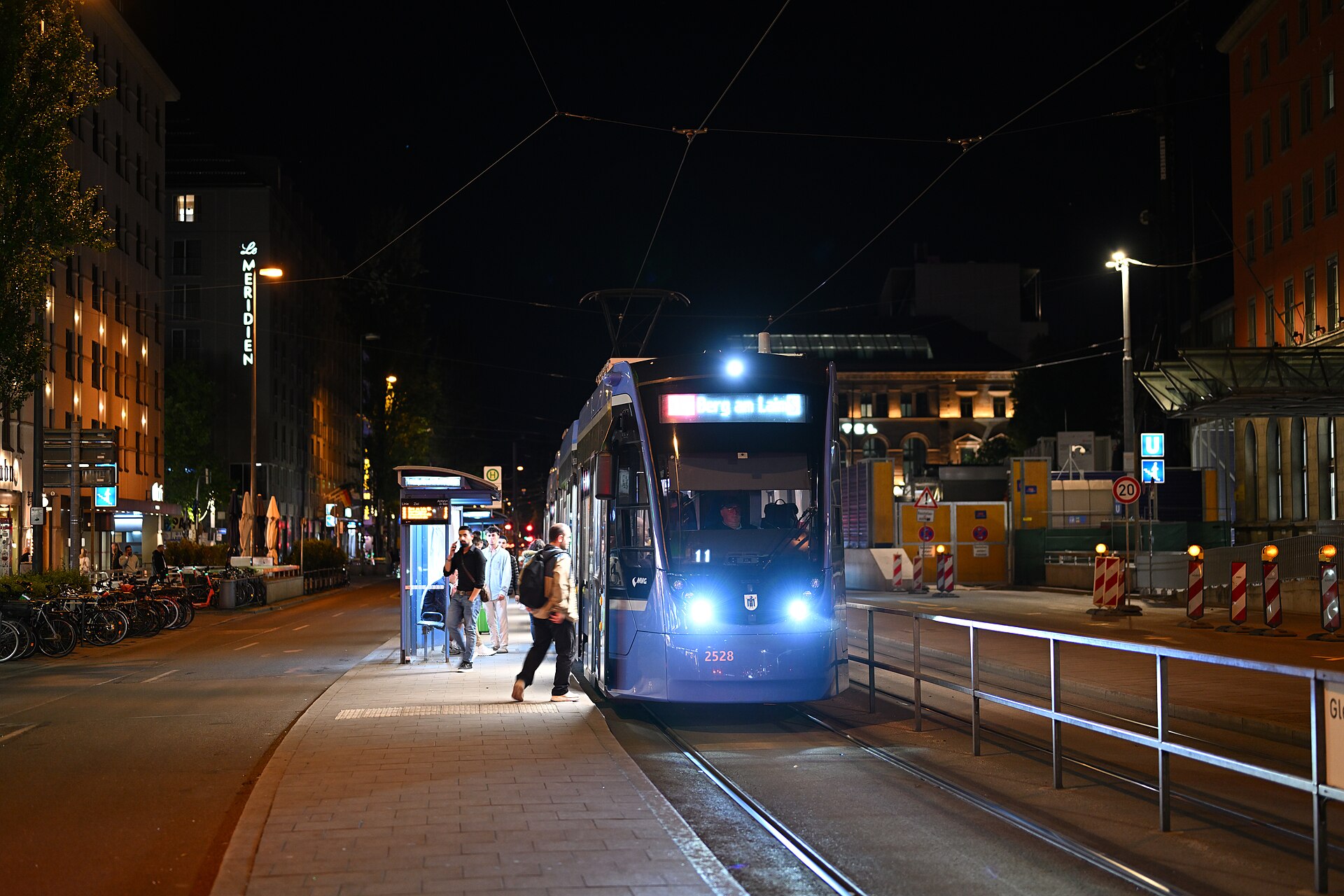
Night trams (numbered N17, N19, N20, N27) and night buses (the “N” lines) radiate out from Karlsplatz/Stachus, where they meet every half hour on Friday, Saturday and pre-holiday nights; from Sunday to Thursday the night trams run hourly. Regular MVV fares apply (mvg.de has the details), so a day ticket bought that morning still covers you until 6 a.m. If you have been out in the Glockenbachviertel bars or following our Munich nightlife guide, the night tram back to your hotel is the cheap, sober alternative to a taxi.
Insider tip: screenshot your route home before the last drink, not after. The MVG app plans night connections just as it does daytime ones, but reception in a basement club is unreliable. If you do miss the last connection, a taxi from the centre to most inner districts is a short meter run at €2.70 a kilometre — splitting it three or four ways often beats waiting 30 minutes in the cold. On the night of a big match or a festival, frequencies tighten and crowds swell, so build in buffer time. During Oktoberfest the system runs reinforced late service, which we cover in our Oktoberfest guide.
Plan Your Munich Transport
Master the basics and Munich becomes one of the easiest cities in Europe to navigate. Download the MVV app before you land. Buy the right day ticket for your group size. Use the S-Bahn for airport transfers and day trips. Use the U-Bahn for cross-city journeys. Use trams and buses for neighborhood hops. Walk the Altstadt whenever you can. Rent a bike for a day of riverside exploration.
Pair this transport guide with our things to do in Munich pillar for sightseeing plans and our accommodation guide to find hotels near the transport lines you’ll use most. Transport is the invisible infrastructure of a great Munich trip — when it works, you barely notice it, and you spend your time enjoying the city instead. That’s the Munich experience at its best: efficient, punctual, and designed to let you focus on the things you actually came for.
One final piece of advice: Munich rewards travelers who trust the system. Don’t overthink it. The MVV works. Trains run on time. The app tells you the truth. The signs are accurate. The honor system is honored. Buy your ticket, validate it, get on the right train, and get off at the right station. That’s it. Once you make peace with how well it all works, you’ll wonder why every city isn’t built this way — and you’ll appreciate Munich more for every small efficiency that lets you spend less time moving and more time actually being here. Safe travels, Gute Fahrt, and welcome to one of the best-connected cities in Europe. Come back to this guide when you’re mapping out your first or second day — or just save a screenshot of the ticket prices and the airport options for offline reference, since those are the two pieces you’ll actually need on the ground. Everything else will fall into place naturally once you’ve used the system once or twice. And remember: the best way to feel like a local in Munich is to look like you know where you’re going on the U-Bahn. A folded ticket, a confirmed direction, and a quick stride toward the correct platform is the universal body language of someone who’s got the city figured out. You will have it figured out within a day, and the rest of the trip will flow naturally from there. Munich gives its secrets up quickly to travelers who take the time to learn its rhythm, and the transport system is where that rhythm starts. Enjoy every station announcement, every tram bell, every on-time arrival. Once you’ve experienced transport at this quality, it changes how you measure cities. It’s one of the quiet, cumulative reasons Munich keeps winning quality-of-life rankings year after year — and it’s a reason many visitors come back again and again, knowing the system will be ready for them whenever they return. Before your trip, take ten minutes to download the MVV app, skim the ticket options one more time, and bookmark this guide on your phone. That’s all the preparation you need. When you land at MUC, walk downstairs to the S-Bahn station, buy an Airport-City-Day-Ticket from the machine, validate it in the blue stamper, board the next S1 or S8 headed south, and 40 minutes later you’ll be at Marienplatz. Step out of the station into the sound of the Glockenspiel bells, and your Munich trip has officially begun — on time, on budget, and entirely stress-free. That’s the experience this system makes possible, and it’s one of the single best reasons to choose Munich as a European base. For onward travel across Germany and Europe, the same Hauptbahnhof that greets you at arrival will send you seamlessly to Berlin, Frankfurt, Salzburg, Vienna, Prague, Zurich, or Milan — no terminal hops, no airline check-ins, no early arrivals. You’ll come to love the efficiency of it quickly. And by the time you leave, you’ll have internalized a rhythm of transit that makes every other European city you visit afterward feel just slightly less organized by comparison. Munich sets a standard that way. Enjoy discovering it, and safe onward journeys wherever you head next.
Further Official Resources
For real-time updates, pricing, and booking details beyond this guide, we recommend cross-referencing with the official MVV website, Munich Airport public transport information, the Munich U-Bahn on Wikipedia. These authoritative sources maintain current information and are the original primary sources for much of the data used throughout this guide.
We update this Munich public transport guide regularly to reflect seasonal changes, new venues, and reader feedback — bookmark it and check back before your trip. For related planning, explore the rest of our Munich travel guides linked throughout this article.
Photo Credits
A Munich U-Bahn train at Marienplatz: 2017-05-13 München, U6 nach Harras (freddy2001) by Freddy2001, CC BY-SA 3.0, via Wikimedia Commons.
A U-Bahn train at Westfriedhof: 2025-09-09 210559 München Westfriedhof underground station by Tim Rademacher, CC BY-SA 4.0, via Wikimedia Commons.
A train at Munich Hauptbahnhof: Arriving train at München Hauptbahnhof by Kimmo Räisänen, CC BY 2.0, via Wikimedia Commons.
A Munich tram on Maffeistrasse: GER München, Maffeistraße 0004 by -wuppertaler, CC BY 4.0, via Wikimedia Commons.
Taxis at Munich Pasing station: 04 Taxistand am Bahnhof Muenchen Pasing by Usien, CC BY-SA 3.0, via Wikimedia Commons.
Walking on Neuhauser Strasse: 2273 – München – Neuhauser Straße by Andrew Bossi, CC BY-SA 2.5, via Wikimedia Commons.
Munich MVG ticket machines: Metro Ticket machines in Bavaria, from Munich by Wilfredor, CC0, via Wikimedia Commons.
A tram at Hauptbahnhof Sued at night: Munich Line 19 tram at Hauptbahnhof Süd May 2025 by 4300streetcar, CC BY 4.0, via Wikimedia Commons.