Driving in Munich: Car Rental, Parking and Tips (2026)
Complete driving in Munich guide. Car rental, parking, Environmental Zone, autobahn etiquette and best Bavarian road trips.
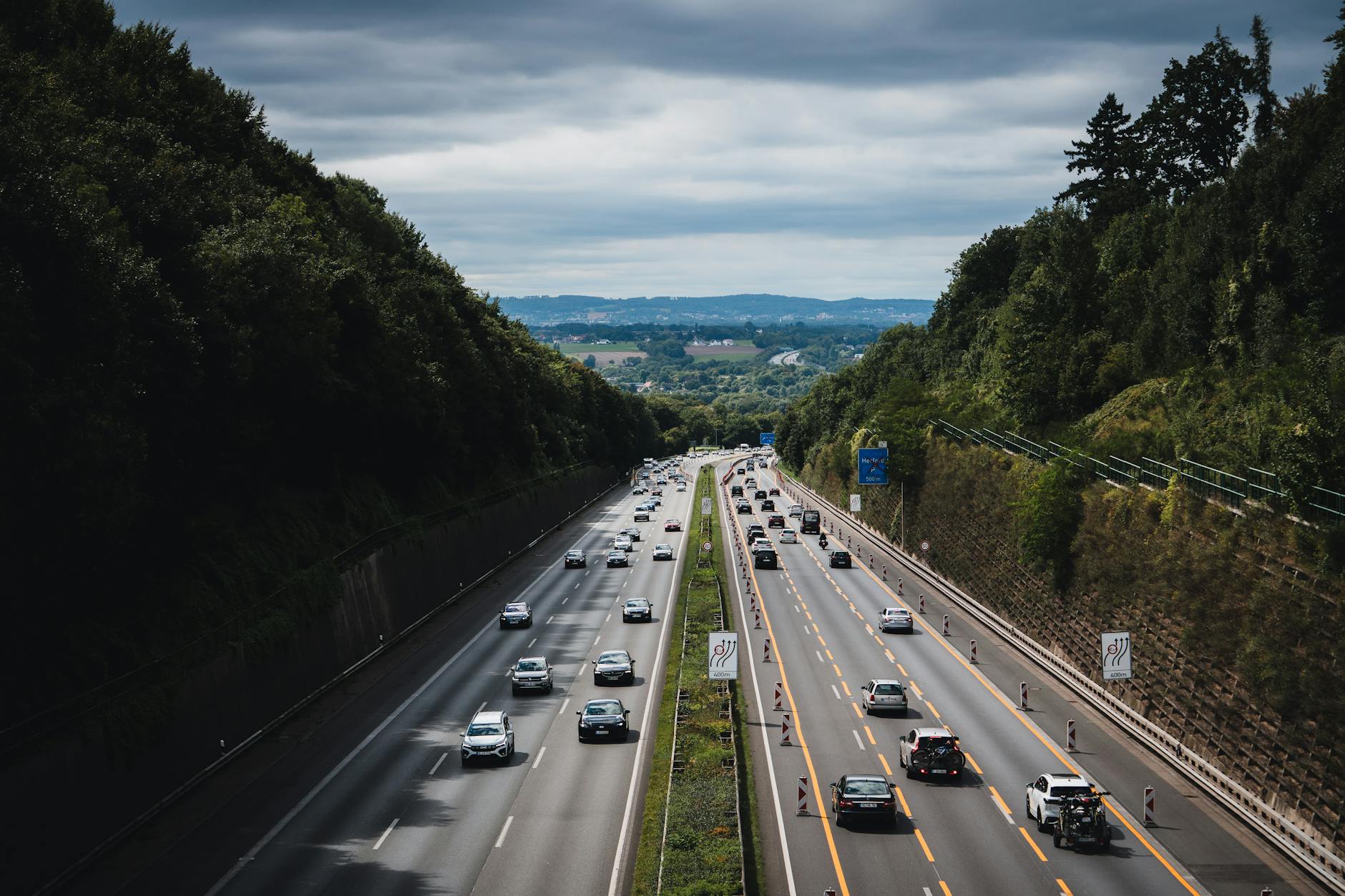
Driving in Munich is rarely the right answer for a city-only trip — public transport is faster, parking is expensive, and the central pedestrian zone is closed to cars. But for travelers planning Alpine road trips, Romantic Road excursions, multi-day castle tours, or simply preferring the flexibility of a rental car, understanding how driving works in and around Munich saves money, time, and stress. This guide covers car rental at Munich Airport and Hauptbahnhof, parking strategies, German traffic rules visitors miss, the Environmental Zone (Umweltzone), autobahn etiquette, fuel and toll considerations, and recommended road-trip routes from Munich.
Should You Drive in Munich? Quick Decision Guide
| Your situation | Recommendation |
|---|---|
| City-only trip, 1–4 days | Don’t rent. Use U-Bahn, S-Bahn, taxi. |
| Day trips to Neuschwanstein, Salzburg | Don’t rent. Trains are faster than driving with parking. |
| Multi-day road trip Romantic Road or Alps | Yes, rent. Pick up at airport. |
| Day trip to Walchensee, Königssee, or Skyline Park | Often yes. Some destinations are car-friendly. |
| Stay in suburbs / countryside hotel | Yes, if hotel parking is included. |
| Family of 5+ with luggage | Yes, often cheaper than train + taxis. |
| Mobility issues | Sometimes; check accessible transit alternatives first. |
Car Rental in Munich

Where to Pick Up
- Munich Airport (MUC) — Largest selection, every major rental company. Sixt, Hertz, Avis, Europcar, Enterprise, Budget. Pick-up takes 20 to 45 minutes after deplaning.
- Munich Hauptbahnhof — Most major companies have downtown branches. Smaller fleet, slightly higher rates than the airport.
- Train station drop-offs — Useful for one-way rentals to Frankfurt, Berlin, Vienna.
- Bavarian airport secondary rentals — Sixt ‘Share’, Europcar ‘Flex’ offer hourly rentals from city locations.
Typical Rental Costs (2026)
| Vehicle Class | Per day | Per week | Examples |
|---|---|---|---|
| Mini / Economy | €45 to €70 | €220 to €350 | Fiat 500, VW Polo |
| Compact | €55 to €85 | €280 to €430 | VW Golf, Opel Astra |
| Mid-size | €70 to €110 | €370 to €560 | VW Passat, Skoda Octavia |
| SUV | €90 to €150 | €500 to €800 | VW Tiguan, BMW X1 |
| Premium | €130 to €250 | €700 to €1,400 | BMW 5-Series, Audi A6 |
| Van (7+ seats) | €110 to €180 | €600 to €950 | VW Touran, Ford Tourneo |
Prices include basic insurance and unlimited mileage. Standard age requirement is 21; under-25 drivers pay a young-driver surcharge (€20 to €40 per day). One-way fees vary (€50 to €250 depending on destination). Cross-border to Austria, Italy, Switzerland is allowed but often charged at €10 to €30 per day.
Insurance Considerations
Rental insurance can be confusing. The basic third-party liability included with the rental rarely covers damage to the rental car itself; collision damage waiver (CDW) is typically extra. Many credit cards (especially Amex Platinum, Visa Signature, Mastercard World Elite) include primary or secondary car rental insurance. Third-party providers (Allianz Travel, Mondial) offer cheaper coverage than the rental counter.
- Liability coverage — Usually included. €100,000 minimum German requirement.
- CDW / loss damage waiver — Reduces or eliminates your responsibility for vehicle damage; €15 to €30 per day at the counter, often available cheaper online.
- Theft protection — Often bundled with CDW.
- Personal accident insurance — Usually unnecessary if you have travel insurance.
- Tyres, glass, undercarriage — Often excluded from basic CDW; check the fine print.
Parking in Munich

Underground Garages (Recommended)
- Tiefgarage Hofgarten — Under the Hofgarten, walking distance to Marienplatz. €3.50/hour, €30/day.
- Tiefgarage Max-Joseph-Platz — Beside the Opera. €3.50/hour, €30/day.
- Tiefgarage Schwabinger Tor — North of city centre. €3/hour, €24/day.
- Tiefgarage am Karolinenplatz — Near the Kunstareal. €3/hour, €25/day.
- Parkhaus Kaufingertor — On the western edge of the pedestrian zone. €3.50/hour, €30/day.
- Parkhaus Olympiapark — €5/day flat rate, useful for BMW Welt and Olympia Schwimmhalle visits.
Street Parking
Street parking exists but is heavily regulated. Most central Munich streets are ‘Parkraummanagement’ zones, meaning paid parking (€1 to €4/hour) from 09:00 to 23:00 with rules clearly marked on parking meter signs. Use the EasyPark or PayByPhone app to pay; the meter accepts coins but few drivers carry enough. Most central districts run from €3 to €4/hour. Free street parking is essentially unavailable inside the Mittlerer Ring.
Park-and-Ride
MVV operates 36 Park-and-Ride (P+R) lots at U-Bahn and S-Bahn terminus stations. Daily rate €5 to €8, plus your transit ticket. P+R Fröttmaning (U6 northern terminus), P+R Garching-Forschungszentrum (U6 north of city), and P+R Westkreuz (S-Bahn west) are popular for visitors. Useful if your hotel includes free overnight parking but your daily explorations are downtown.
German Traffic Rules Visitors Miss
- Right of way — Right-before-left at unmarked intersections unless a sign says otherwise. Yellow diamond signs (Vorfahrtstraße) indicate priority road.
- Speed limits — 50 km/h in built-up areas, 100 km/h on rural roads, 130 km/h recommended (often no limit) on autobahn. Speed cameras are common.
- Reverse parking — Required on streets with diagonal parking; failing to reverse-park can result in fines.
- Roundabouts — Vehicles in the roundabout have right of way (continental rule, similar to UK).
- Headlights — Daytime running lights required by law since 2011. Most newer cars have automatic.
- Reflective vest — Required in every car. €5 fine if missing during a check.
- First-aid kit — Required in every car. €5 fine if missing or expired.
- Triangle — Warning triangle required. €15 fine if missing.
- Mobile phones — Hands-free only. €100 fine plus 1 point on your German license.
- Alcohol limit — 0.5 g/L for adults, 0.0 g/L for new drivers (under 21 or with less than 2 years license).
- Winter tires — Required when conditions are wintry (snow, ice, slush). Heavy fines for non-compliance.
The Environmental Zone (Umweltzone)
Munich’s Mittlerer Ring boundary marks the inner Environmental Zone (Umweltzone). Only vehicles with a green environmental sticker (Umweltplakette) can enter. The sticker is included on all post-2007 rental cars; check before you leave the rental counter that yours is displayed in the windshield. Fine for entering the zone without a sticker: €100. New from 2026, certain Euro-4 diesel vehicles are also restricted; check current rules if you’re driving an older private car.
Autobahn Etiquette

German autobahns are not anarchic. The system works because everyone follows the rules, and tourists who don’t stand out unpleasantly. Critical principles:
- Keep right. The right lane is for travel; left lanes only for overtaking.
- Pass on the left only. Passing on the right is illegal and dangerous.
- Move out of fast lane immediately after overtaking. Sitting in the left lane at 130 km/h while a BMW approaches at 200 is the most dangerous tourist mistake.
- Use mirrors before changing lanes — fast traffic closes the gap quickly.
- Indicate every lane change — Germans rely on signals, not assumptions.
- Match traffic flow on unrestricted sections — driving too slowly is also dangerous.
- Rest areas (Rasthof) are well-marked. Stop every 2 hours.
- Toll-free in Germany — Autobahn use is free for passenger cars. Vignettes required in Austria, Switzerland, Czech Republic, and Slovenia.
Best Road Trips from Munich
Bavarian Alps Loop (2 to 3 days)
Munich → Garmisch-Partenkirchen → Linderhof Palace → Oberammergau → Ettal Monastery → Murnau → Kochel → Walchensee → back to Munich. About 350 km total. Mountain scenery, two minor royal sites, an art-painter village. The most rewarding short Bavarian road trip.
Romantic Road (4 to 7 days)
Würzburg → Rothenburg ob der Tauber → Dinkelsbühl → Nördlingen → Augsburg → Munich, or its reverse. 460 km. The classic Bavarian heritage route. Most travelers do it as a multi-day loop with overnights in each medieval town.
Castles Tour (3 days)
Munich → Hohenschwangau / Neuschwanstein → Linderhof → Wieskirche → Herrenchiemsee → Munich. Heavy on the Ludwig II castles. Excellent for first-time Bavarian visitors with car flexibility.
Salzburg + Berchtesgaden (2 days)
Munich → Bad Reichenhall → Berchtesgaden → Königssee → Salzburg → back. 280 km. Salt mine, Alpine lake, and Mozart’s hometown.
Lake District (1 to 2 days)
Starnberger See → Ammersee (via Andechs) → Kochelsee → Walchensee. 180 km loop. Multiple lakes, monastery, mountains. Manageable as a single long day or comfortable two-day with one overnight.
Fuel and Charging
German fuel costs €1.65 to €1.80 per litre for petrol (Super E10) and €1.65 to €1.80 for diesel in 2026. Most filling stations accept cards. Fuel station prices fluctuate daily; the cheapest stations are often supermarket-attached (Edeka, Rewe) or autobahn off-ramps. EV charging is widespread; networks include EnBW, IONITY, and Tesla Supercharger. Hertz, Sixt, and Europcar all offer EV rentals with charging cards included.
Driving the German Way: Cultural Notes
German drivers are precise, fast, and rule-following. A few cultural notes that help visitors navigate:
- Honking is rare. Hearing a horn usually means a serious safety issue or a driver letting you know about a problem (e.g., your dome light is on).
- Flashing high beams from behind on the autobahn means ‘please move right’ — comply quickly.
- Pedestrians at crosswalks have absolute right of way. Stop fully, not just slow down.
- Cyclists have right of way on bike paths and at red lights when crossing.
- Drivers wait at red lights even at deserted intersections at 03:00. Running a red is heavily fined.
- Jaywalking is fineable. €5 to €10 fines are issued, though enforcement is rare.
- Turning right on red is permitted only when a green arrow sign is shown.
- Blocking emergency vehicles by failing to form a Rettungsgasse (rescue lane) is a €320 fine and 2 points on your license.
- Drivers move into intersections waiting for the green; American-style waiting back from the line is uncommon.
Bavarian Road Trip Toolkit
Apps to Install
- Google Maps — Reliable for navigation and traffic.
- Waze — Excellent for autobahn traffic awareness, especially weekends.
- EasyPark / PayByPhone — German parking meter payment.
- Tankerkönig — Compare nearby fuel prices.
- ADAC — German automobile club; the app links you to roadside assistance.
- DKV / EnBW mobility+ — EV charging networks if driving electric.
- Maps.me or OsmAnd — Offline maps for poor-signal mountain areas.
Emergency Numbers
- 110 — Police (free, works without SIM).
- 112 — Medical / fire (free, works without SIM).
- +49 89 76 76 76 — ADAC roadside assistance.
- Rental company emergency line — Note it before leaving the counter.
Driving in Adverse Conditions
Winter Driving
Bavarian winters bring snow regularly to mountain passes and occasionally to Munich itself. Winter tires (Winterreifen) are legally required when conditions are ‘wintry’ (snow, ice, slush). Most rental cars are fitted with winter tires from October to Easter at no extra cost. Carry chains if driving above 1,000 m elevation in winter; they’re rarely needed but mandatory on some mountain roads after heavy snow. Black ice (Glatteis) is the main winter risk; reduce speed dramatically when bridges and shaded sections look damp.
Mountain Driving
Alpine roads have tight switchbacks, gradients above 10 percent, and weather that changes within minutes. Use lower gears for descents to save brakes. Yield to oncoming traffic on single-lane stretches; uphill traffic generally has right of way. Tunnel lights must be on. Some smaller Alpine roads close in winter; check before setting off.
Heavy Rain and Storms
Summer thunderstorms hit Bavaria hard, often with sudden flooding on autobahn sections. Reduce speed significantly and use low beams (not high beams; they reflect off rain). If aquaplaning, ease off the accelerator without braking and steer gently.
Sample Road Trip Costs
| Route | Duration | Distance | Estimated total cost |
|---|---|---|---|
| Munich → Neuschwanstein day trip | 1 day | 240 km | €70 to €110 (fuel + parking) |
| Bavarian Alps Loop | 2 days | 350 km | €220 to €350 (rental + fuel + hotel) |
| Romantic Road | 4 days | 460 km | €480 to €750 (rental + fuel + hotels) |
| Salzburg + Berchtesgaden weekend | 2 days | 280 km | €220 to €350 + €11 Austrian Vignette |
| Lake District loop | 1 day | 180 km | €55 to €85 (fuel + parking) |
| Munich → Garda Lake, Italy | 3+ days | 450 km one way | €350 to €600 including Italian tolls |
Estimates assume mid-range Compact rental at €65/day, fuel at €1.70/L, and overnight hotels at €100/night. Toll costs add €11 for Austria, ~€30 for Switzerland, and €30 to €60 for the Italian autostrada systems.
EV Road Trips from Munich
Electric vehicles are increasingly practical for Bavarian road trips. Major fast-charging networks (IONITY, EnBW, EWE Go, Tesla Supercharger) cover the autobahn routes well; charging stops add 30 to 45 minutes per 250 to 300 km. The Bavarian Alps and Salzburg are accessible without range anxiety; the Romantic Road has spotty fast-charging in smaller towns but slow charging at most hotels. Rental EVs run €80 to €130 per day from Sixt, Hertz, and Europcar; some include charging cards. Tesla rentals come with Supercharger access typically included.
- Rental EV options: Tesla Model 3, BMW iX1, Hyundai Ioniq, Volkswagen ID.3
- Charging in Munich: dense fast-charging on the Mittlerer Ring; slow-charging at most hotels
- Charging on the autobahn: 350 kW fast chargers at all major service stops
- Cost: €0.45 to €0.79 per kWh depending on network
- Range planning: a 400 km battery covers Salzburg or Neuschwanstein round trip without charging
Driving with Children
German law requires children under 12 (or under 150 cm) to use approved booster or child seats. Rental companies provide seats for €5 to €10 per day if booked in advance; supply is limited in peak season so reserve ahead. ISOFIX is standard on most rentals. The middle rear seat is generally safest. Take frequent rest stops on longer trips — Bavarian rest areas (Rasthof) typically have playgrounds and bathrooms. Bring entertainment (tablets, books, snacks) for mountain drives where signal may drop.
What about cross-border driving to Austria, Italy, Switzerland?
All major rental companies allow cross-border use to Austria, Italy, Switzerland, Czech Republic, and France with no additional paperwork. Vignettes (motorway stickers) are required in Austria (€11 / 10 days) and Switzerland (CHF 40 / annual). Italy uses ticket-and-pay tolls. Croatia, Slovenia, and Hungary often require €10 to €30 cross-border surcharges from the rental company; clarify at the counter.
Where can I read about specific autobahn rules?
The ADAC website (adac.de) has English-language guides to autobahn rules, current speed limits, construction zones, and toll information. The federal Ministry of Transport publishes traffic regulations in English. For real-time traffic, the Bayerninfo app shows live conditions across Bavaria.
Frequently Asked Questions
Do I need an International Driving Permit?
EU and US licenses are accepted for visits up to 6 months. For UK, Canadian, Australian, and most other licenses, an International Driving Permit (IDP) is recommended though enforcement is inconsistent. Rental companies sometimes ask for it.
Are there toll roads in Bavaria?
No tolls on German autobahn for passenger cars. Crossing into Austria requires a Vignette (€11 for 10 days, €31 for 2 months); Switzerland’s annual Vignette is CHF 40. Italy charges by ticket-and-pay tolls. Plan ahead if your road trip crosses borders.
How does parking enforcement work?
Strict. Plain-clothes inspectors check parking meters and zone signs constantly. Tickets are €15 to €60 depending on violation; they get attached to the windshield and you can pay online or at the bank within 14 days.
Are car rentals available without a credit card?
Some companies accept debit cards but require a higher deposit (often €500 to €1,000). Smaller chains rarely accept debit cards at all. A credit card with sufficient available credit (€1,000+) is the easiest path.
Can I drive into the pedestrian zone for hotel deliveries?
Delivery and pickup access is limited to certain hours (typically 04:00 to 11:00) and requires the access bollard to lower. If your hotel is inside the pedestrian zone, ask the front desk for instructions before driving. Otherwise, plan to park outside the zone and walk.
Is it safe to drive in Munich for first-time visitors?
Yes, with adjustments. The biggest issues are aggressive autobahn driving and the strict rule-following culture (right-before-left, mandatory equipment, parking enforcement). Pick up the car at the airport, drive directly out of Munich, and you’ll avoid most of the central-city stress.
Can I drop off a rental in another city?
Yes. Munich rentals can be dropped at airports and Hauptbahnhof locations across Germany, Austria, Switzerland, Italy, and France. Cross-border drop-off fees range €50 to €350. Within Germany, most major cities cost €50 to €120. Specify the drop-off location at booking; some companies offer free drop-off at certain partner stations.
Are diesel rentals worth it?
Marginal. Diesel cars achieve roughly 15 to 20 percent better fuel economy, but rental rates often run €5 to €10 higher per day. Worth it only for road trips over 1,500 km. For typical Bavarian road trips (300 to 600 km), the savings don’t justify the surcharge. Note: many older diesel cars are restricted from the Munich Environmental Zone.
Should I take Sat-Nav from the rental company?
No. Smartphone navigation (Google Maps, Waze) outperforms most rental GPS units. Rental GPS costs €5 to €10 per day; smartphone navigation is free. Bring a phone mount or charger; many rental cars now have wireless CarPlay or Android Auto built in.
Should I rent an automatic or manual?
European rentals default to manual; automatics are available but limited and pricier. If you cannot drive manual, specify ‘automatic’ when booking and book early — supply runs out in summer. Surcharge is typically €5 to €15 per day.
Can I use my Google Maps offline?
Yes. Download the Bavaria map area to your phone before leaving Munich (Google Maps → Profile → Offline Maps). This provides full navigation if data signal drops in mountain valleys or rural Bavaria.
How fast can I drive on the autobahn?
Where there is no posted limit, the ‘recommended’ speed is 130 km/h, but driving faster is legal unless conditions require slower speed. Many German drivers cruise at 150 to 180 km/h in the left lane. Rental cars are typically electronically limited to 200 to 240 km/h. Speed-limited sections (often 100, 120, or 130 km/h) are common, especially in construction zones and near major cities.
Plan Your Munich Trip
- Getting Around Munich Guide — your usually-better alternative
- Munich Airport to City Centre — including airport rental options
- Munich Taxi Guide — when a taxi beats a rental
- Best Day Trips from Munich — many work better with a car
- Munich Trip Planning Guide — master overview