Munich Hauptbahnhof: Complete Station Guide
A practical guide to Munich Hauptbahnhof during the rebuild: how the main hall and wing stations fit together, getting to and from the airport, tickets, lockers, the lounge and the trains that leave from here.
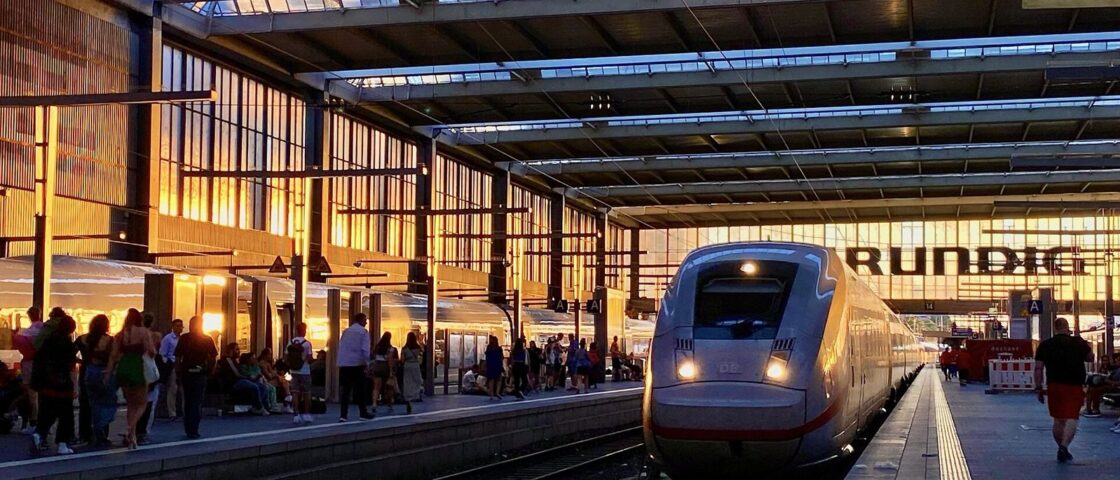
Munich Hauptbahnhof is the city’s main railway station, at Bayerstraße 10a just west of the old town, and most visitors arriving by train get off here. It is also a building site, and has been since 2019. The trains run, the S-Bahn and U-Bahn work and the essentials are all here, but the station you walk through in late 2026 is a maze of hoardings, temporary walkways and signs pointing round corners. This guide explains how it fits together, where to find the things you actually need, and what the rebuild means for you.
The short version: arrive with your onward plan already made, give yourself extra minutes for the walk to your platform, and use the 24-hour DB Information desk in the main hall when the signs run out.
Munich Hauptbahnhof at a glance
| What you need | Where and when |
|---|---|
| Address | Bayerstraße 10a, 80335 München |
| Size | 32 platform tracks above ground plus the underground S-Bahn |
| From the airport | S1 or S8, about 40 minutes; Lufthansa Express Bus, about 45 minutes; taxi fixed fare €96 |
| Help | DB Information, main hall by the Bayerstraße exit, open 24 hours |
| Tickets in person | DB Reisezentrum at the Bayerstraße exit: Mon–Fri 07:00–21:00, weekends and holidays 08:00–20:00 |
| Left luggage | Coin-operated lockers, €2–€6 depending on size and time |
| Tourist information | None at the station since November 2024; the office is in the New Town Hall on Marienplatz |
| Coaches | ZOB central bus station at Hackerbrücke, a few minutes’ walk or one S-Bahn stop away |
The rebuild: what is happening and what it means for you
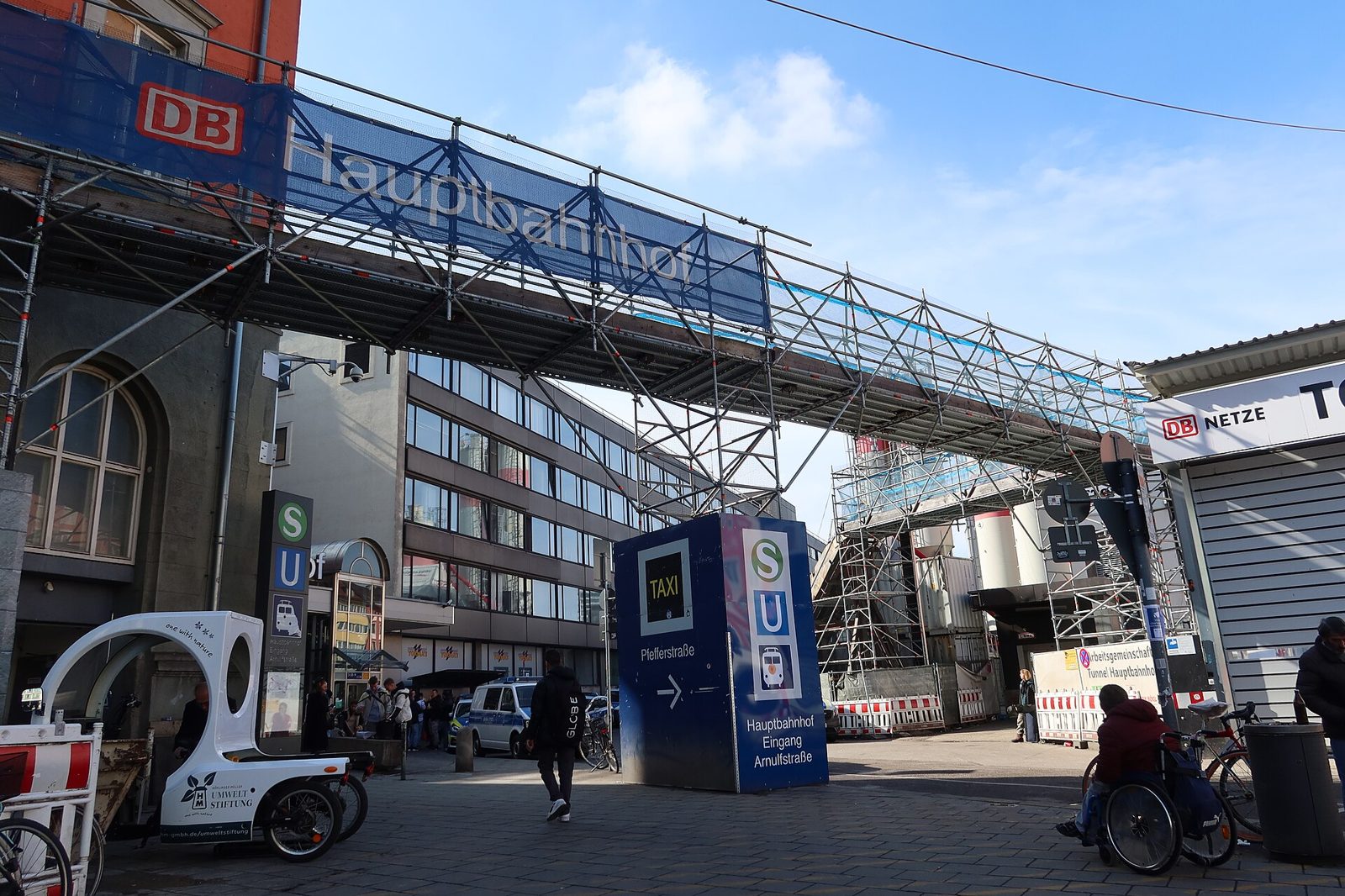
Two big projects overlap here. The first is the station itself. The old ticket hall on the Bahnhofplatz side was demolished in 2019, and a new reception building is planned in its place, together with a rebuilt Starnberger wing station that includes a 69-metre tower. The city council has also decided that the forecourt will become car-free. For the new building’s opening date, go by Deutsche Bahn’s own project pages rather than older reports.
The second, and the reason for the deepest holes, is Munich’s second S-Bahn trunk line, the 2. Stammstrecke: two new tracks running about 10 kilometres from Laim to Leuchtenbergring, with a 7-kilometre tunnel between the Hauptbahnhof and Ostbahnhof and three new underground stations, at the Hauptbahnhof, Marienhof and Ostbahnhof. Because the tunnel passes under existing U-Bahn lines, those stations will sit about 40 metres underground. Deutsche Bahn plans to open it between 2035 and 2037. Until then, the existing S-Bahn tunnel carries the whole network, and the Hauptbahnhof sits on top of the construction.
For travellers, the most important announcement came in February 2026. Deutsche Bahn is putting up a five-storey interim station building at the south exit, and from mid-2027, for around ten years, it will house the DB Reisezentrum, the lockers, lost property and other services. Until it opens, they stay where they are now, which is covered below. DB also warns that construction can limit how many lockers are available.
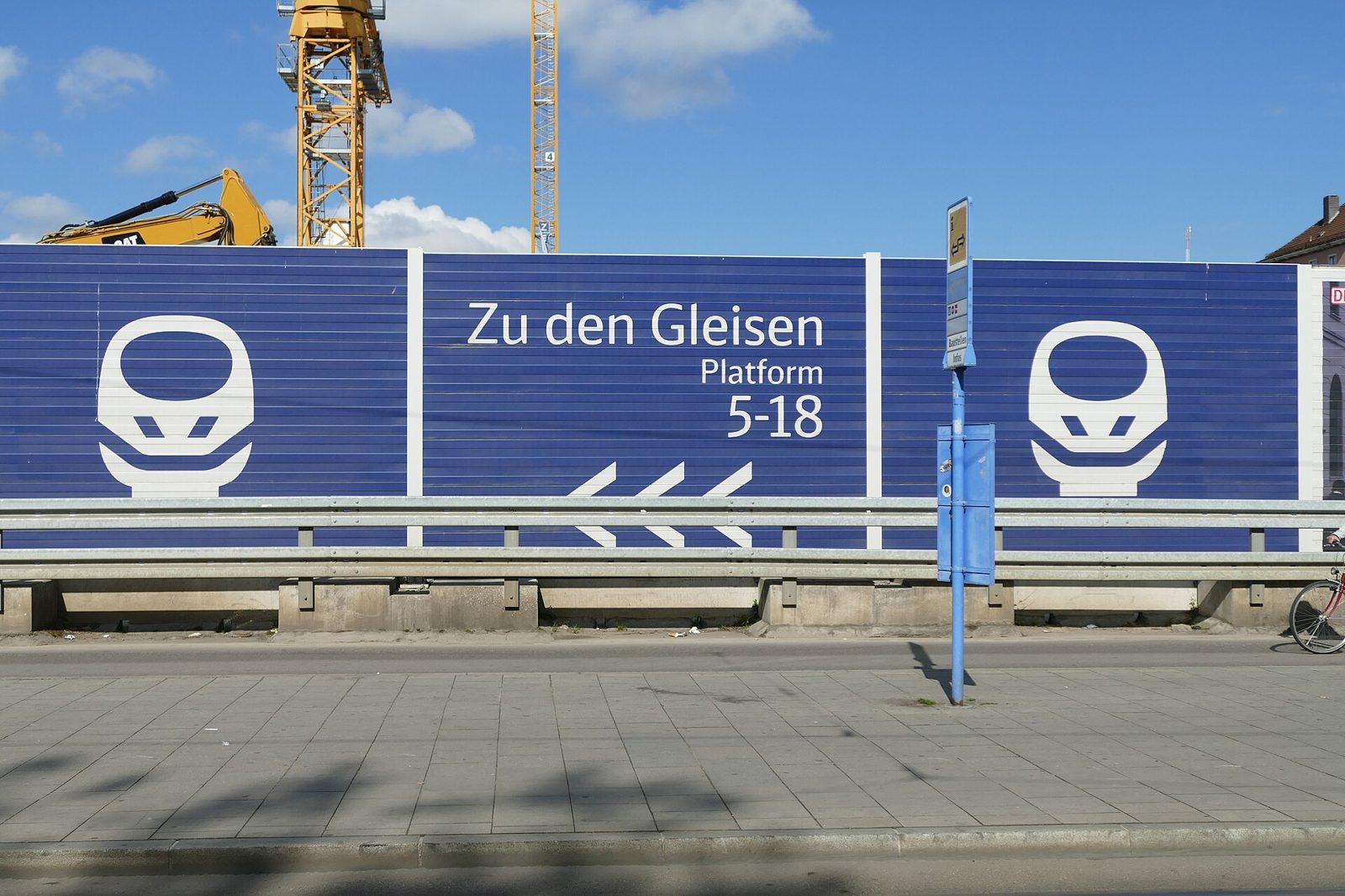
What it means in practice is simple. Routes through the station change as the work moves, so follow the signs on the day rather than a map or an older description, this one included. DB’s station pages, which move from bahnhof.de to the new DB Info on 17 November 2026, carry a current site plan and lift status. Honestly, the station is not pleasant while the work continues. It works, and it works better if you are not in a hurry.
How the station is laid out
Munich Hauptbahnhof is a terminus: trains arrive and reverse out the way they came, so every platform ends at the same concourse. That makes it easy to understand once you know it has three parts side by side, plus two underground levels.
- The main hall, platforms 11 to 26. The heart of the station, where DB Information stands in front of the exit towards Bayerstraße. The city’s own description has regional trains to Augsburg, Ingolstadt and Landshut leaving from here.
- The Holzkirchner wing, platforms 5 to 10, on the south side. The city lists regional trains towards Mühldorf and Salzburg here.
- The Starnberger wing, platforms 27 to 36, on the north side. The city lists trains towards Lindau, Kochel am See and Garmisch-Partenkirchen here.
- Underground: the S-Bahn platforms on the central trunk line, which most of Munich’s S-Bahn lines run through, and the U-Bahn stations for the U1 and U2 and, under Bayerstraße, the U4 and U5.
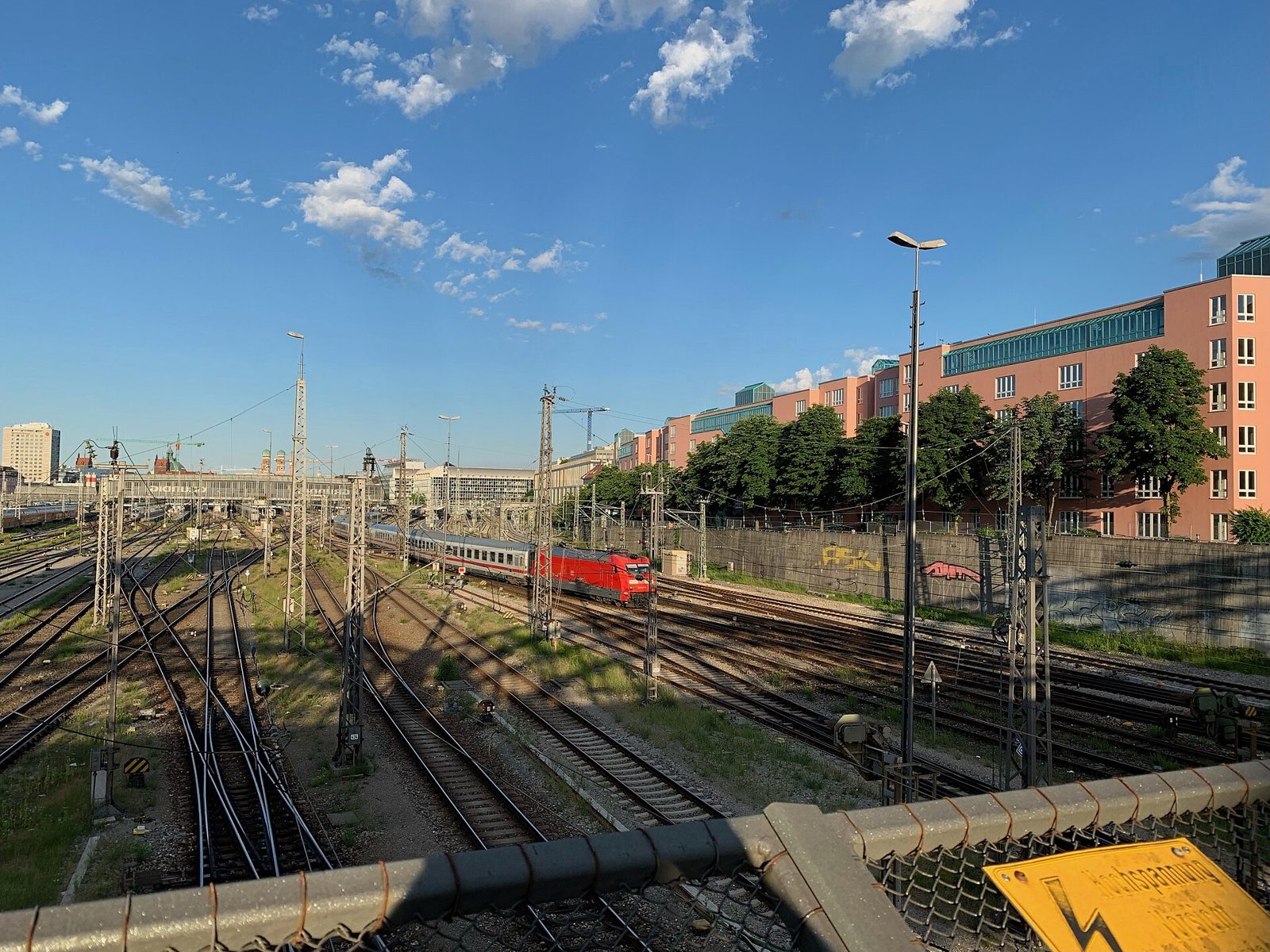
The wing stations are the trap for first-timers. They sit either side of the main hall, and with the construction detours the walk from the S-Bahn to a train on platform 34 or platform 6 can take longer than you expect. Check the departure board as soon as you arrive, and if your connection leaves from a wing, go straight there.
From the airport to the Hauptbahnhof
Three options, and for most people the first is the right one.
- S-Bahn S1 or S8. The two lines alternate to give a train every ten minutes, and the airport puts the journey to the Hauptbahnhof at about 40 minutes. It drops you underground, an escalator or lift ride from the main hall.
- Lufthansa Express Bus. Every 20 minutes daily, about 45 minutes to the Hauptbahnhof, stopping on Arnulfstraße at number 12, on the north side of the station. Worth it if you have heavy bags and would rather not wrestle them through the S-Bahn.
- Taxi. Munich sets a fixed fare of €96 from the airport to the Hauptbahnhof zone. That only makes sense for a group, or very early and very late.
Our guide to getting from Munich Airport to the city compares tickets and times in more detail, and the Munich taxi guide explains fares and ranks.
Getting into the city from the Hauptbahnhof
The Hauptbahnhof is the hub of Munich’s transport network, and almost everything leaves from under or beside it.
- To Marienplatz: take any S-Bahn heading east on the trunk line. Karlsplatz (Stachus) is the next stop and Marienplatz the one after.
- To Theresienwiese, for the Oktoberfest or Tollwood’s winter festival: the U4 or U5 from the station under Bayerstraße, one stop.
- To Nymphenburg Palace: tram 17, about 20 minutes.
- On foot: Karlsplatz is east of the station along Schützenstraße or Prielmayerstraße, and from there the pedestrian Neuhauser Straße runs through the Karlstor towards Marienplatz. It is an easy walk without luggage and a long one with it.
Trams stop on three sides of the station, at Hauptbahnhof, Hauptbahnhof Nord and Hauptbahnhof Süd, which is useful once you know your line and confusing until you do. Late at night, the U-Bahn runs all night on Friday and Saturday nights and before public holidays; on other nights it stops in the early hours, at about one in the morning from Monday to Thursday, and the night trams and buses meet at Karlsplatz. Our guide to Munich’s U-Bahn and S-Bahn explains zones and tickets, and getting around Munich covers the rest of the network.
Tickets: machines, apps and the travel centre
For most journeys you will never need to queue. DB tickets, including regional tickets, can be bought on DB’s app and website, and there are ticket machines throughout the station. For anything more involved — BahnCards, season tickets, or advice on national and international timetables and fares — go to the DB Reisezentrum, the travel centre, at the Bayerstraße exit. It opens Monday to Friday 07:00–21:00 and 08:00–20:00 at weekends and on public holidays.
Two other desks are worth knowing. The Kundencenter S-Bahn, on the S-Bahn concourse level below Arnulfstraße, deals with S-Bahn tickets and questions, Monday to Friday 07:00–20:00 and Saturday 08:00–19:00. And the Austrian private rail company WESTbahn has its own desk on the level between the main hall and the S-Bahn, open daily 07:00–17:30.
If you are heading into the countryside, the ticket to know is the Bayern-Ticket: unlimited regional trains and S-Bahn across Bavaria for a day, from €34 for one person or €44 for two in second class. It is valid from 09:00 on weekdays and from midnight at weekends and on holidays, until 03:00 the next morning, and it reaches as far as Salzburg Hauptbahnhof and Kufstein, but not on ICE or IC trains. Germany’s monthly Deutschlandticket costs €63 a month in 2026 and covers regional trains and local transport nationwide, again excluding ICE and IC. Our guides to Munich travel passes and getting around Munich on a budget compare the options.
Arriving and leaving: habits that save time
The first five minutes after you step off a train decide how smoothly the next hour goes. Before you leave the platform, know where you are heading and how: the S-Bahn east for the old town, the U4 or U5 for the Theresienwiese and the Westend, a tram from one of the three stops outside, or a taxi. Then a few habits make the rest easy.
- Buy and validate your local ticket before you board. There are no ticket barriers on Munich’s U-Bahn and S-Bahn, but there are inspectors, and travelling without a valid ticket costs €60. For a day of sightseeing, the single day ticket for zone M, which covers the city, costs €10.10 in 2026 (€10.80 from 1 January 2027) and runs from validation until 06:00 the next morning; the group day ticket for up to five people is €19.70.
- Drop your bags first if you cannot check in yet. A locker for the day costs less than dragging a case round the Residenz.
- Read the platform before the train arrives. Long-distance platforms are divided into lettered sections, and the display tells you where each carriage will stop, so stand at the right letter for your reserved seat rather than sprinting along the train.
Leaving, the rule is to add time. With the construction detours, the walk to a platform in either wing takes longer than the map suggests, and platform changes do happen, so check the departure board or DB’s app again a few minutes before you go down. Buy food and water in the station before an early train, and if yours is cancelled or badly delayed, head for DB Information or the travel centre: they can rebook you, and DB’s website explains how to claim compensation for long delays.
Station facilities: what is where
Information and help
DB Information is in the main hall, in front of the exit towards Bayerstraße, and is staffed 24 hours a day, holidays included. DB’s mobile service staff, in burgundy caps marked “Service”, work around the clock too. If you need help with mobility, the station’s Mobilitätsservice is staffed 24 hours, though DB advises booking assistance through its mobility service centre in advance if you want to be sure of it. The Bahnhofsmission, the station mission, offers free help without registration to anyone in difficulty; the city places it by platform 11. For service, safety or cleanliness problems, DB’s 3-S centre answers around the clock on +49 89 13081055.
Left luggage
The station has coin-operated lockers in two sizes. The smaller ones (24 × 42 × 76 cm) cost €2 for six hours or €4 for 24 hours; the larger ones (44 × 61 × 93 cm) cost €3 for six hours or €6 for 24 hours. Bring coins, and be prepared to hunt: DB says the construction can limit how many lockers are available. From mid-2027 the lockers move to the new interim building at the south exit.
The DB Lounge
The DB Lounge is on the first floor opposite platform 24, towards the Arnulfstraße exit, reached by stairs, escalator or lift, and it includes a Premium area. Inside there are free drinks, newspapers and Wi-Fi. It opens Monday to Wednesday 06:30–21:00, Thursday and Friday 06:30–22:00, Saturday 08:00–20:00, and Sunday and holidays 08:00–22:00. Check DB’s lounge rules to see whether your ticket or status gets you in.
Lost property, toilets and Wi-Fi
DB’s lost property office, the Fundservice, opens Monday and Tuesday 07:30–19:00, Wednesday 15:00–19:00, and Thursday to Sunday and holidays 07:30–19:00. The rail & fresh WC is open around the clock, and the station has free Wi-Fi.
Food and shopping
The station’s shops are the usual mix of bakeries, coffee chains, newsagents, fast food and a supermarket. The Munich bakeries Höflinger and Rischart open early, and so does the newsagent, Press & Books, which makes the Hauptbahnhof the place to find breakfast before a dawn train. Remember that almost every shop in Munich closes on Sundays and public holidays; if you arrive on one, check DB’s shop listing to see which of the station’s shops are open. For a proper meal, you are better off walking a few streets than eating in the concourse, and our guide to late-night eats in Munich helps after a late arrival.
Long-distance trains from Munich Hauptbahnhof
The Hauptbahnhof is the starting point for ICE trains across Germany and for international trains to Austria, Switzerland and Italy. These are the fastest journey times on Deutsche Bahn’s route pages in November 2026; individual trains, timetable changes and engineering work can make them longer.
| Destination | Fastest journey |
|---|---|
| Nuremberg | Under 2 hours by ICE |
| Salzburg | About 1 h 45 |
| Frankfurt | About 3 h 30 by ICE |
| Zurich | About 3 h 40 |
| Vienna | About 4 h 15 by Railjet |
| Berlin | About 4 h 35 by ICE |
| Hamburg | About 5 h 45 by ICE |
| Venice | About 7 h by Railjet, up to two direct trains a day |
Book long-distance trains early for the cheapest fares, and treat the Saver fares as tied to the train on your ticket. Our guides to Munich to Berlin, Munich to Vienna, Munich to Prague and Munich to Venice and northern Italy go through each route. ÖBB’s Nightjet sleeper trains also leave from here, but several routes, including Munich–Rome, have planned interruptions in 2027, so check nightjet.com before you plan around one.
Regional trains to the Alps and lakes
Munich’s great advantage as a base is how quickly regional trains get you into the mountains, and most of them leave from the Hauptbahnhof. The city lists the trains to Garmisch-Partenkirchen, for the Zugspitze, and to Kochel am See in the Starnberger wing; the Bayerische Regiobahn serves the Tegernsee; and Salzburg is within reach of a Bayern-Ticket. Arrive early, check the departure board for your platform, and allow for the walk if it is in one of the wings.
For ideas, see our guides to day trips from Munich by train, Garmisch-Partenkirchen, the Tegernsee and Schliersee and Salzburg. Neuschwanstein is a longer day, with a train to Füssen and a bus onward.
Coaches: the ZOB at Hackerbrücke
Long-distance coaches do not use the Hauptbahnhof. They leave from the ZOB, Munich’s central bus station, at Hackerbrücke 4, which handles about 50,000 long-distance buses a year. It is a few minutes’ walk west of the station, or one stop on any S-Bahn heading west, and trams 16 and 17 stop at Hackerbrücke. FlixBus lists it as its main Munich stop, with a second stop at Fröttmaning in the north of the city, so check your ticket for which one you need.
Around the station: safety, rules, food and hotels
The streets around the Hauptbahnhof are the least polished part of central Munich, and the station attracts the mix of travellers, commuters and people with nowhere else to go that big stations everywhere do. It is busy and heavily used, and with ordinary big-city care it is not a place to worry about. Keep an eye on your bags in crowds and on the escalators, as you would anywhere, and our Munich safety guide covers the rest.
One rule catches visitors out. A city ordinance bans drinking alcohol, or carrying it to drink, on the outdoor public areas around the station, including the Bahnhofplatz, stretches of Arnulfstraße and Bayerstraße, Schützenstraße and Prielmayerstraße, and the city says it applies all day. It does not cover the inside of buildings, the railway areas or licensed outdoor seating, so a beer at a café table is fine and a can on the forecourt is not. The ordinance runs until 1 May 2028, and breaking it can mean a fine.
The neighbourhood is better for eating than its reputation suggests. The streets south of the station, towards Schillerstraße and Landwehrstraße, are full of Turkish, Middle Eastern and Asian restaurants that are good value by Munich standards. And a walk west along Arnulfstraße brings you to the Augustiner-Keller at number 52, first recorded as a beer cellar in 1812, with a beer garden that seats up to 5,000 in summer and a restaurant that stays open in winter. It is one of the city’s classic places to spend a first evening, and our pick of the best beer gardens in Munich has others.
If you are staying close by, the 25hours Hotel The Royal Bavarian is right on the Bahnhofplatz at number 1, and the Sofitel Munich Bayerpost next to the station has a 574-square-metre spa with a pool, covered in our guide to wellness hotels in Munich. The station area is convenient rather than charming, though. Our guides to where to stay in Munich and budget hotels and hostels help you decide whether being next to the trains is worth it.
Frequently Asked Questions
Is Munich Hauptbahnhof open 24 hours?
Its help points are: DB Information in the main hall, the mobility service and DB’s mobile service staff are all available around the clock, and the rail & fresh WC is open 24 hours. The travel centre, lost property office and most shops keep shorter hours.
How do I get from Munich Airport to Hauptbahnhof?
The S1 or S8 S-Bahn takes about 40 minutes, with a train every ten minutes. The Lufthansa Express Bus runs every 20 minutes and takes about 45 minutes. A taxi costs a fixed €96.
Is there left luggage at Munich Hauptbahnhof?
Yes, coin-operated lockers: €2 for six hours or €4 for 24 hours for a small one, €3 or €6 for a large one. Construction can limit how many are free, and from mid-2027 they move to the interim building at the south exit.
Is there a tourist information office at Munich Hauptbahnhof?
Not any more. Munich’s tourist office closed its Hauptbahnhof branch on 1 November 2024, and its tourist information is now in the New Town Hall on Marienplatz. DB Information in the main hall can still help with travel questions.
How do I get from Hauptbahnhof to Marienplatz?
Take any S-Bahn heading east on the trunk line: Marienplatz is the second stop, after Karlsplatz. On foot, walk east to Karlsplatz and carry on along the pedestrian Neuhauser Straße.
Can you drink alcohol at Munich Hauptbahnhof?
Not on the outdoor public areas around it. A city ordinance, in force until 1 May 2028, bans drinking alcohol there or carrying it to drink. It does not apply inside buildings, on railway premises or at licensed outdoor seating.
Where do FlixBus coaches leave from in Munich?
From the ZOB central bus station at Hackerbrücke, a few minutes’ walk from the Hauptbahnhof or one S-Bahn stop. FlixBus also uses a stop at Fröttmaning, so check your ticket.
When will the Munich Hauptbahnhof rebuild be finished?
Deutsche Bahn plans to open the second S-Bahn trunk line between 2035 and 2037, and its interim station building at the south exit is meant to serve for about ten years from mid-2027. For the new reception building, check DB’s project pages for the latest schedule.
More on getting around Munich
Once you are through the station, our guide to getting around Munich covers the U-Bahn, trams, buses and bikes, and day trips from Munich is the place to start planning the trains you will catch back here. If you are arriving for a festival, read up on getting to the Oktoberfest before you set off.
Photo Credits
Featured image: Arriving train at München Hauptbahnhof by Kimmo Räisänen, CC BY 2.0, via Wikimedia Commons.
Arnulfstraße entrance: Baustelle am Hauptbahnhof Nord München 2024-03-02 by Strubbl, CC BY-SA 4.0, via Wikimedia Commons.
Tracks from the Hackerbrücke: Blick von der Hackerbrücke aus auf den Holzkirchner Bahnhof rechts by Haxpointner, CC0, via Wikimedia Commons.
Construction hoarding: Baustelle am Münchner Hauptbahnhof Mai 2024 01 by Kritzolina, CC BY-SA 4.0, via Wikimedia Commons.
Related Guides
- Hofbräuhaus Munich: What to Order and Is It Worth It — Munich’s single biggest attraction term and the cocoon has no dedicated page
- Weisswurst and the Bavarian Breakfast Explained — Named-dish query with a strong ritual and etiquette story in the noon rule
- Best Brunch in Munich — Weekend-visitor intent with no page on site
- Michelin-Star and Fine Dining in Munich — Only budget and mid-range dining are covered; the high end is missing