Michelin-Star and Fine Dining in Munich
All 15 Michelin-starred restaurants in Munich in the 2026 guide, from three-star JAN and Tohru to the best-value lunches under €100, with menu prices, chefs, booking tips and which to choose.
Munich has 15 Michelin-starred restaurants in the 2026 guide: two with three stars — JAN and Tohru in der Schreiberei — five with two, and eight with one, counting the starred kitchen at the airport. A three-star dinner menu costs €360–380 per person before a drop of wine; the cheapest way into the starred world is a weekday lunch for under €100.
That range is the first thing to understand about the Michelin star Munich scene. This is a wealthy, conservative city that takes eating out seriously, and its top end is expensive even by German standards. It is also unusually varied: a Japanese-German kitchen in one of the oldest houses in the old town, a brutalist 1970s temple in Schwabing, a gourmet room above a delicatessen that has supplied the Bavarian court, a farm-to-table restaurant in the English Garden and a two-star in a car showroom. This guide lists every starred restaurant with its current menu price, explains which are worth it and for whom, and shows how to eat at this level for a fraction of the dinner price.
For the everyday side of the city’s food — Weisswurst, beer halls, markets — start with the Munich food and beer guide.
Every Michelin-starred restaurant in Munich at a glance
| Restaurant | Stars | Chef | Where | Dinner menu | Cheaper option |
|---|---|---|---|---|---|
| JAN | 3 | Jan Hartwig | Maxvorstadt | €380 (7 courses) | Lunch €335 (5 courses) |
| Tohru in der Schreiberei | 3 | Tohru Nakamura | Altstadt | €360 (10 courses) | Bar Tatar (à la carte) |
| Tantris | 2 | Benjamin Chmura | Schwabing | €345 | Menu Jeune (under 35): lunch €150, dinner €225 |
| Alois – Dallmayr Fine Dining | 2 | Rosina Ostler | Altstadt, above Dallmayr | €300 | Short lunch €185 |
| KOMU | 2 | Christoph Kunz | Altstadt, Hackenstraße | €295 (8 courses) | Lunch €175 (5 courses) |
| Atelier (Bayerischer Hof) | 2 | Kevin Romes | Altstadt | €295 (7 courses) | Vegetarian 7 courses €245 |
| The Cloud by Käfer | 2 (new 2026) | Jens Madsen | BMW Welt | €270–290 (8 courses) | — |
| Werneckhof Sigi Schelling | 1 | Sigi Schelling | Schwabing | €240 (5 courses) | Business lunch €135 / €155 |
| Tantris DNA | 1 | Benjamin Chmura | Schwabing | À la carte | Check tantris.de |
| Brothers | 1 | Daniel Bodamer | City | €220 (5 courses) | Lunch €175 (4 courses) |
| Hirschau 1804 | 1 + green star | Lukas Adebahr | English Garden | €175 / €220 | — |
| Les Deux | 1 | Nathalie Leblond | Altstadt | €215 | Vegetarian €175; à la carte €28–125 |
| Gabelspiel | 1 | Florian Berger | Giesing | €179 / €189 | — |
| Sparkling Bistro | 1 | — | Maxvorstadt, Amalienpassage | €150 (5 courses) | Lunch €85 (4 courses) |
| Mountain Hub Gourmet | 1 | Marcel Tauschek | Munich Airport (Hilton, level 4) | Check the restaurant | Lunch Wed–Fri, 12:00–13:30 |
The 2026 guide was presented on 23 June 2026. The headline change for Munich was The Cloud by Käfer, which entered straight in at two stars. Star lists change every year, so check the current guide before you book a special-occasion dinner on the strength of a rating.
What a starred meal in Munich really costs
The menu price is only the start. A dinner for two at a three-star restaurant in Munich, with a wine pairing, water and coffee, will cost well over €1,000. Wine pairings are priced separately and are rarely cheap — wine pairings add a large sum per person — and most restaurants also offer non-alcoholic pairings of juices, teas and ferments that are interesting in their own right and seldom much cheaper.
Here is the honest calculation. At the two- and three-star level you are paying for precision, an intimate room and service of a kind few visitors will experience at home. That is worth doing once for a reason that matters to you. If you simply want to eat very well, the one-star restaurants and the lunch menus give you most of the cooking for half the outlay, and the city’s best Wirtshäuser give you something no starred kitchen will: the food Munich actually eats.
Lunch is the smart way in
Several of Munich’s starred kitchens run lunch menus, and they are the best way into the city’s fine dining for less:
- Sparkling Bistro — four courses for €85 at lunch in a small room tucked into the Amalienpassage.
- Tantris — the Menu Jeune for guests under 35 is €150 at lunch (four courses, wine pairing included).
- Werneckhof Sigi Schelling — a business lunch of three or four courses for €135 or €155, Wednesday to Friday.
- Mountain Hub Gourmet — lunch Wednesday to Friday, 12:00–13:30, on level 4 of the Hilton at the airport, which makes it a good layover meal; check the current menu price when you book.
- KOMU and Brothers — five and four courses respectively for €175.
- Alois — a short lunch menu for €185.
JAN’s lunch, by contrast, is €335 for five courses: a saving on dinner, not a bargain. If budget is the deciding factor and you want three-star cooking, Tohru’s Bar Tatar is the way to taste the kitchen’s style at a fraction of the cost.
The three-star restaurants
JAN — Jan Hartwig, Maxvorstadt
Jan Hartwig made his name at the Atelier in the Bayerischer Hof before opening his own restaurant in the Maxvorstadt, close to the museums of the Kunstareal. The cooking reinterprets German cuisine: familiar flavours and regional produce taken apart and reassembled with enormous technical control. Dinner is a seven-course menu at €380; lunch, five courses at €335. It is among the most expensive menus in the city and one of the hardest tables to get, so book well ahead. If you are going to spend this much once, this is the place where the cooking most clearly says something about where you are.
Tohru in der Schreiberei — Tohru Nakamura, Altstadt
Tohru Nakamura, a chef with German and Japanese roots, cooks in the Schreiberei, a historic burgher’s house in the old town, and was promoted to three stars in 2025. The kitchen pairs local produce with Japanese ingredients and technique — Bavarian game with dashi, alpine fish with Japanese citrus — over a ten-course dinner menu at €360. The building is part of the appeal: a narrow, centuries-old house a few minutes’ walk from the Marienplatz, with a casual bar, the Bar Tatar, as a more relaxed way to taste the kitchen’s style.
The two-star restaurants
Tantris — the building is half the experience
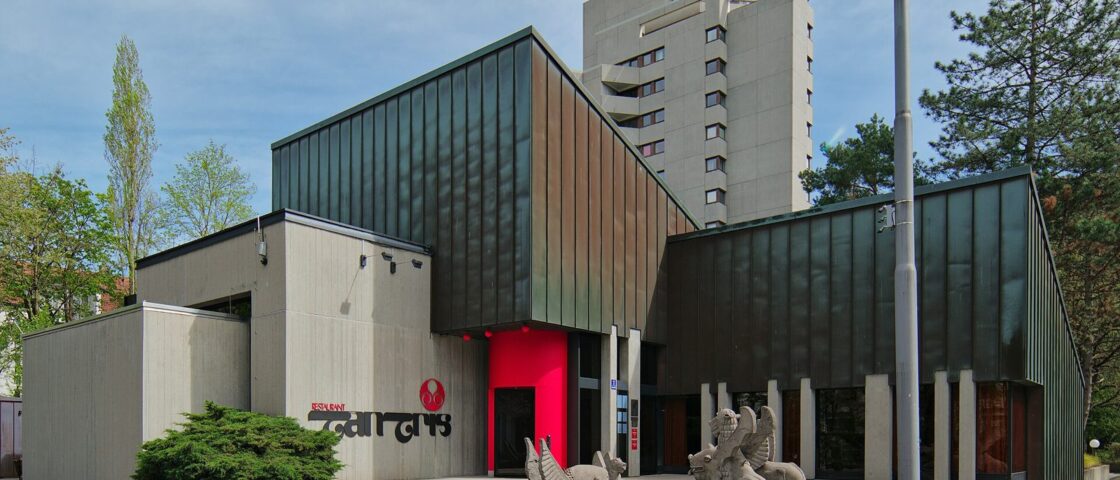
Tantris opened in Schwabing on 2 December 1971, built for the Munich construction entrepreneur Fritz Eichbauer to designs by the Swiss architect Justus Dahinden: a low concrete-and-dark-metal pavilion guarded by stone griffins, with a red-and-orange interior that looks like a 1970s film set because it is one. Eckart Witzigmann was its first head chef, and the kitchen helped launch modern German haute cuisine.
After a renovation the house reopened in 2021 as Tantris Maison Culinaire, with two restaurants under one roof, both led by Benjamin Chmura. Tantris itself holds two stars, with a dinner menu at €345 and lunch at €210; Tantris DNA, the more relaxed room focused on classics à la carte, holds one star. Go to the DNA if you want the building and the history without the full ceremony. It is a short walk from the Münchner Freiheit area of Schwabing.
Alois — Dallmayr Fine Dining
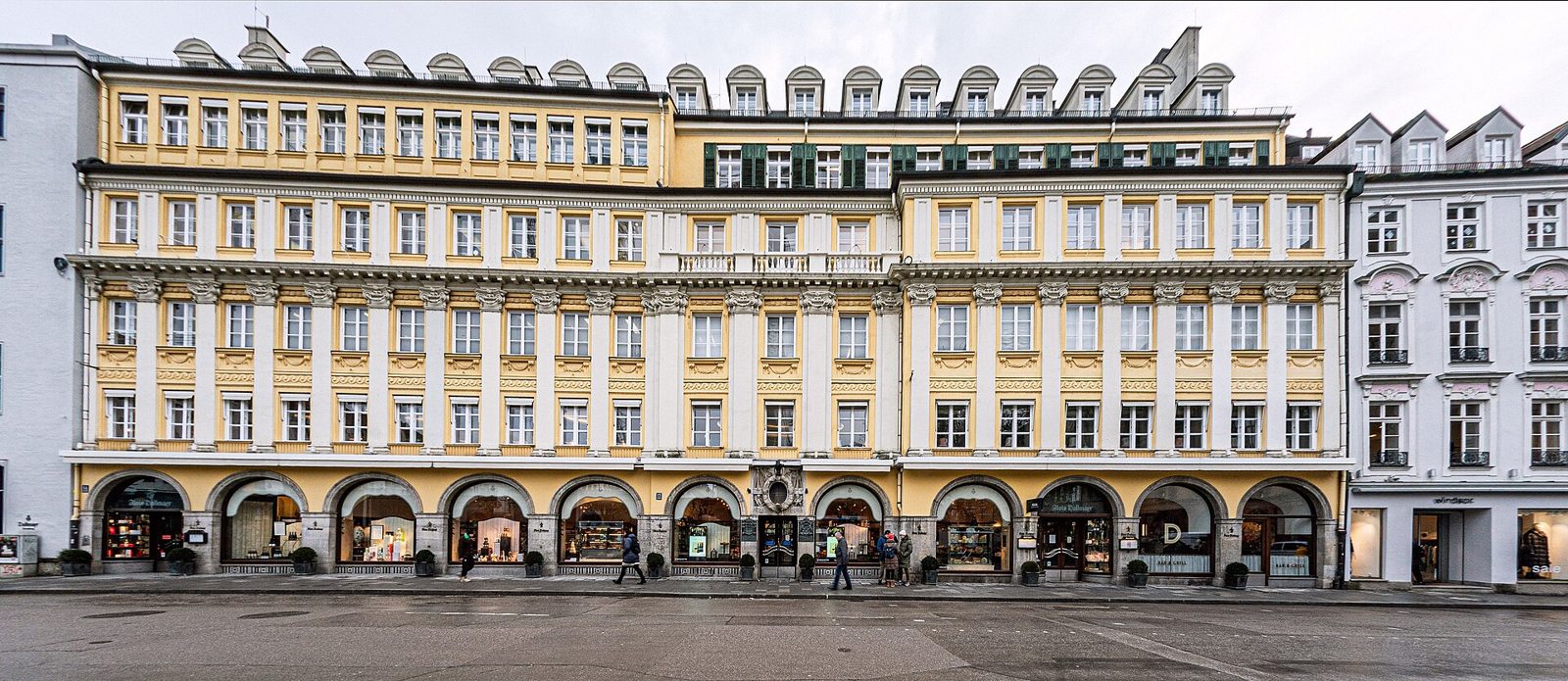
On the first floor of Dallmayr, the grand delicatessen on the Dienerstraße behind the Marienplatz, Alois is run by Rosina Ostler and serves a tasting menu of many small, bold dishes for €300, with a short lunch menu at €185. The approach is part of the appeal: you walk in through the food hall, past the coffee counters, the cheese and the chocolates. Spend half an hour downstairs first; our guide to food shopping in Munich covers Dallmayr and the city’s other delicatessens.
Atelier — Hotel Bayerischer Hof
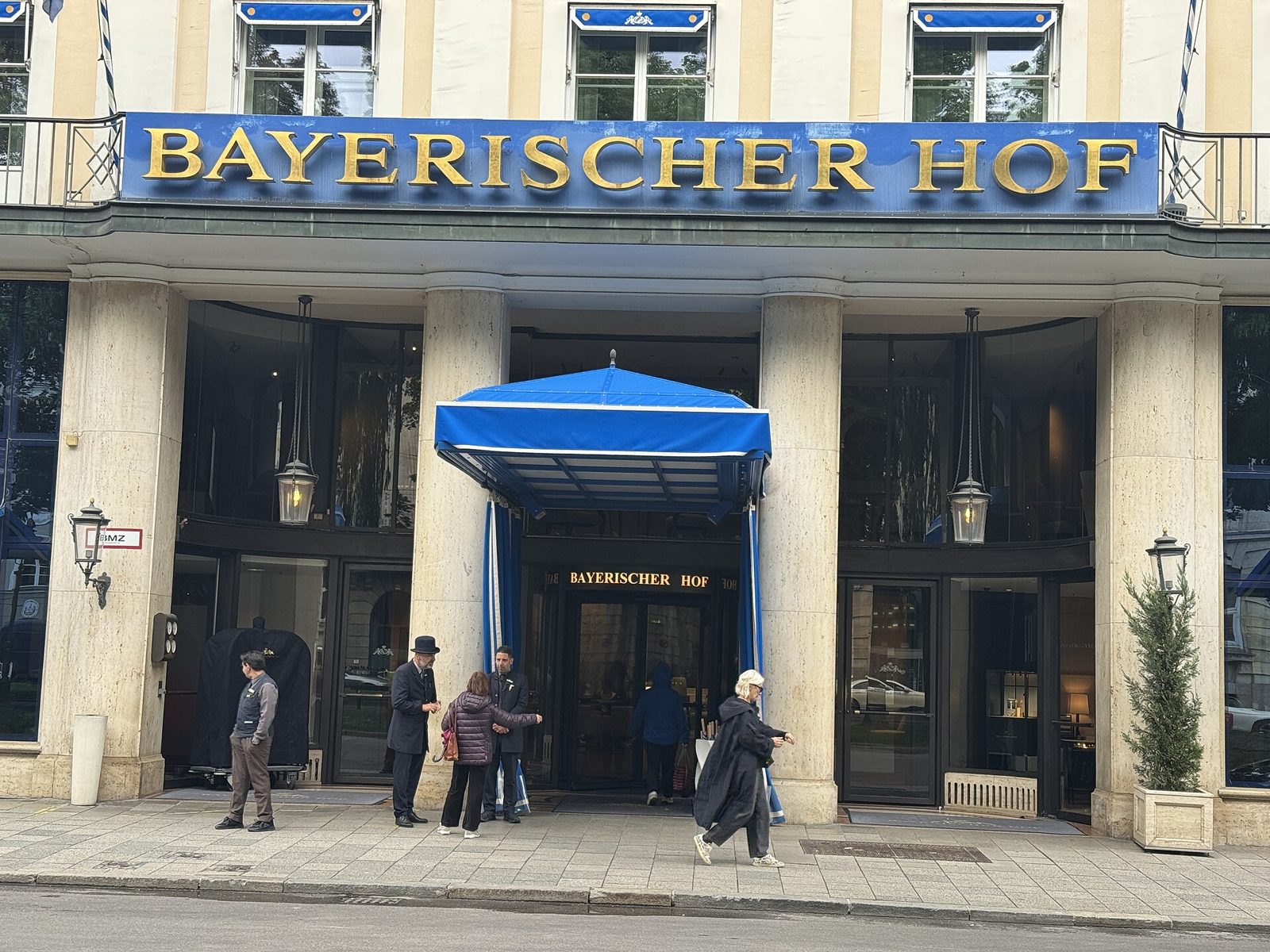
The fine-dining room of the Bayerischer Hof, Munich’s grand old hotel on the Promenadeplatz, holds two stars in 2026. The cooking is refined, technical and international, with a seven-course menu at €295 — and, unusually at this level, a full seven-course vegetarian menu at €245. That makes Atelier a strong choice for a vegetarian who wants the full starred experience. It is also the easiest of the top tables to combine with a night at the opera, which is a five-minute walk away; see Munich theatre and opera.
KOMU — Christoph Kunz
Christoph Kunz’s KOMU is one of Munich’s two-star kitchens. The guide-speak for its style is “round yet angular” flavours; in practice that means seasonal, punchy food without excessive fuss. Dinner is eight courses for €295, lunch five courses for €175. For a first starred meal in Munich that feels contemporary rather than grand, start here.
The Cloud by Käfer — two stars in a car showroom
The newcomer. The Cloud by Käfer took over the restaurant space in BMW Welt, the swooping glass-and-steel brand centre opposite the BMW headquarters, where the starred EssZimmer used to be, and went straight in at two stars in 2026. Jens Madsen’s kitchen calls its style “culinary nomadism”: regional produce with flavours borrowed from around the world, over eight courses at €270–290. The setting is the oddity — you are eating at the highest level inside a car brand’s showroom — and how much that bothers you will decide whether you go. Combine it with the BMW Museum and BMW Welt and the Olympiapark across the road.
The one-star restaurants
This is where the best value sits, and where the range is widest.
- Werneckhof Sigi Schelling (Schwabing, near the English Garden). Sigi Schelling cooks reduced, reinterpreted classics in an intimate corner restaurant. Five courses €240; business lunch €135 or €155. The most grown-up one-star in town.
- Hirschau 1804 (English Garden). Lukas Adebahr’s farm-to-table kitchen inside the English Garden reinterprets Bavarian dishes and holds a Michelin green star for sustainability as well as its red one. Menus €175 or €220. The best choice for anyone who wants a starred meal that tastes of Bavaria. See Munich’s parks and gardens for the walk there.
- Les Deux (Altstadt, by the Frauenkirche). Nathalie Leblond’s straightforward French cooking. Menu €215, vegetarian €175, and an à la carte option from €28.
- Sparkling Bistro (Amalienpassage, Maxvorstadt). A small room tucked into the Amalienpassage. Five courses €150 at dinner; four courses €85 at lunch. Our pick for the best value starred meal in Munich.
- Brothers. Daniel Bodamer’s modern French haute cuisine. Five courses €220 at dinner, four €175 at lunch.
- Gabelspiel (Giesing). Florian Berger’s French-based cooking with new flavours, in a residential neighbourhood south of the river. Six or seven courses €179 or €189.
- Tantris DNA (Schwabing). See Tantris above.
- Mountain Hub Gourmet (Munich Airport). Marcel Tauschek’s reduced, flavour-intensive cooking. It serves lunch Wednesday to Friday and dinner Tuesday to Friday, on level 4 of the Hilton. Technically in Freising, not Munich, but it is the airport, and if you have a long layover there is no better use of it.
How Munich became a fine-dining city
Munich’s place at the top of German cooking goes back half a century, to Tantris and to one chef. Eckart Witzigmann, an Austrian trained in the great French kitchens, ran the stoves at Tantris from its opening and then opened his own restaurant, the Aubergine, where he became the first chef in Germany to be awarded three Michelin stars. Before him, German fine dining largely meant imitating France; after him, a generation of chefs trained in Munich went on to define modern German cuisine.
The city’s money helps. Munich is home to the headquarters of BMW, Siemens and Allianz, to a deep pool of old Bavarian wealth and to a trade-fair calendar that fills expensive tables all year. Its two great gourmet names, Dallmayr and Käfer, began as delicatessens and caterers rather than restaurants, which explains why two of today’s two-star kitchens sit inside their businesses. Not every story ends well: the celebrity chef Alfons Schuhbeck’s fine-dining restaurant on the Platzl closed and dropped out of the guide, and the premises became a Wirtshaus. Stars come and go; the appetite for them in Munich does not.
Fitting a starred meal into a Munich trip
The best starred meals are the ones that fit the day around them. A few pairings that work:
- JAN after the Pinakotheks. JAN is in the Maxvorstadt, a short walk from the Kunstareal’s museums. Spend the afternoon in the Alte Pinakothek and walk to dinner. Our Maxvorstadt guide covers the neighbourhood.
- Hirschau 1804 after a walk in the English Garden. Walk north from the Eisbach and the Chinesischer Turm and arrive hungry. See Munich’s parks and gardens.
- The Cloud by Käfer with BMW Welt and the Olympiapark. A morning in the BMW Museum, an afternoon on the Olympiaberg, dinner across the road.
- Atelier or Alois with the opera. Both are within a few minutes’ walk of the Nationaltheater; book an early table or a late one around the performance.
- Mountain Hub Gourmet on a layover. Munich Airport is a 40–45-minute ride from the city on the S1 or S8, so a long layover is better spent eating at the airport than racing into town. Our guide to getting from Munich Airport to the city has the transport detail if you do head in.
Which starred restaurant should you choose?
| If you want… | Book |
|---|---|
| The one blow-out dinner of a lifetime | JAN or Tohru in der Schreiberei |
| History and architecture with your dinner | Tantris, or Tantris DNA for less |
| The best starred value | Sparkling Bistro at lunch |
| Bavarian produce and a sense of place | Hirschau 1804 |
| A full vegetarian tasting menu | Atelier |
| Classic French, à la carte | Les Deux or Tantris DNA |
| Something contemporary and lively | KOMU |
| A meal before a flight | Mountain Hub Gourmet |
| Starred cooking near the opera | Atelier, or Alois at Dallmayr |
Booking, dress and etiquette
- Book early. The three-stars and the most talked-about two-stars fill weeks ahead, especially on Fridays and Saturdays and during big trade fairs. Most take reservations online through their own websites.
- Expect a card guarantee. Many top restaurants ask for card details when you book and charge a fee for late cancellations or no-shows. Read the terms before you confirm.
- Check the opening days. Many top kitchens close two days a week and some close for weeks at a time in summer or around New Year. Each restaurant’s own site has the current days.
- Tell them about allergies when you book, not at the table. Tasting menus are planned in advance.
- Dress smart. Smart casual is the safe choice. Munich dresses up more than Berlin does, and you will not feel out of place in a jacket.
- Tipping. Service is included in German prices, but rounding up generously is normal for good service.
- Budget for drinks. Water, aperitifs and coffee are charged separately and add up quickly.
Opening days matter more than visitors expect, and they decide which lunches you can actually get. KOMU, for example, closes on Sundays, Mondays and Tuesdays, opens only for dinner on Wednesdays and serves lunch from Thursday to Saturday. Werneckhof’s business lunch runs Wednesday to Friday. Mountain Hub Gourmet at the airport serves lunch only from Wednesday to Friday, 12:00 to 13:30, and dinner from Tuesday to Friday. A Sunday or Monday in Munich is therefore the hardest time to find a starred table, so if a particular restaurant matters to you, build the rest of the week around its days rather than the other way round.
Eating very well without a star
A Michelin star is one measure of a restaurant, and in Munich it is a narrow one. The city’s food culture is built on the Wirtshaus, the beer hall and the market, and some of its best meals come from kitchens that will never be starred: a roast pork with crackling done properly, a Weisswurst breakfast before noon, Obatzda and a pretzel in a beer garden under chestnut trees. Our guides to the best restaurants in Munich and traditional Bavarian food cover that side, and the Viktualienmarkt is where Munich’s chefs shop.
If you want a good wine list without a tasting menu, Munich’s wine bars are the middle ground; see wine bars and craft beer in Munich. And if you are building a whole trip around a special dinner, our guide to Munich’s luxury hotels includes the Bayerischer Hof, home of the Atelier.
Frequently Asked Questions
How many Michelin-star restaurants are there in Munich?
Fifteen in the MICHELIN Guide Germany 2026, counting Mountain Hub Gourmet at the airport: two with three stars, five with two and eight with one.
Which restaurants in Munich have three Michelin stars?
JAN, Jan Hartwig’s restaurant in the Maxvorstadt, and Tohru in der Schreiberei, Tohru Nakamura’s restaurant in the old town.
How much does a Michelin-star dinner in Munich cost?
Dinner menus range from about €150 at the cheapest one-stars to €360–380 at the three-stars, per person, before drinks. Wine pairings, water and coffee are extra.
What is the cheapest Michelin-star meal in Munich?
Lunch menus: four courses for €85 at Sparkling Bistro, or the Menu Jeune at Tantris (guests under 35 only) for €150 with wine.
Is Tantris still open?
Yes. It reopened in 2021 after a renovation as Tantris Maison Culinaire, with Tantris (two stars) and Tantris DNA (one star) under the same roof in Schwabing.
Which starred restaurant in Munich is best for vegetarians?
Atelier at the Bayerischer Hof offers a full seven-course vegetarian menu at €245. Les Deux has a vegetarian menu at €175.
Do you need to dress up for fine dining in Munich?
Smart casual is the norm. Few restaurants insist on a jacket, but Munich dresses more formally than most German cities, and you will not be overdressed in one.
When is the next MICHELIN Guide for Germany published?
The 2026 guide was presented on 23 June 2026. Check the MICHELIN Guide’s own site for the date of the next edition, and re-check any star rating before booking.
More Munich food guides
The Munich food and beer guide is the hub for eating in the city. From there, the best restaurants in Munich covers every budget, Munich’s brunch spots cover the morning, and Munich food tours are the guided way in.
Stars from the MICHELIN Guide Germany 2026. JAN’s prices are from its own website; check every other menu price on the restaurant’s site when you book.
Photo Credits
Tantris: Restaurant Tantris mit Wohnhochhaus (Schwabing-West), München by Ursula Jaeger, CC BY-SA 4.0, via Wikimedia Commons. Dallmayr: 1 Dienerstraße 14;Dienerstraße 15 Minga by Freddo213, CC BY 4.0, via Wikimedia Commons. Bayerischer Hof: Bayerischer Hof Frontansicht 16 09 57 427000 by RudolfSimon, CC BY-SA 4.0, via Wikimedia Commons.
Related Guides
- Hofbräuhaus Munich: What to Order and Is It Worth It — Munich’s single biggest attraction term and the cocoon has no dedicated page
- Weisswurst and the Bavarian Breakfast Explained — Named-dish query with a strong ritual and etiquette story in the noon rule
- Best Brunch in Munich — Weekend-visitor intent with no page on site