Munich Tickets and Travel Passes
Compare every Munich travel pass for 2026 — MVV Tageskarte, IsarCard 7, Munich Card, Munich City Pass, Bayern-Ticket, Deutschlandticket. Prices, coverage, and clear recommendations.
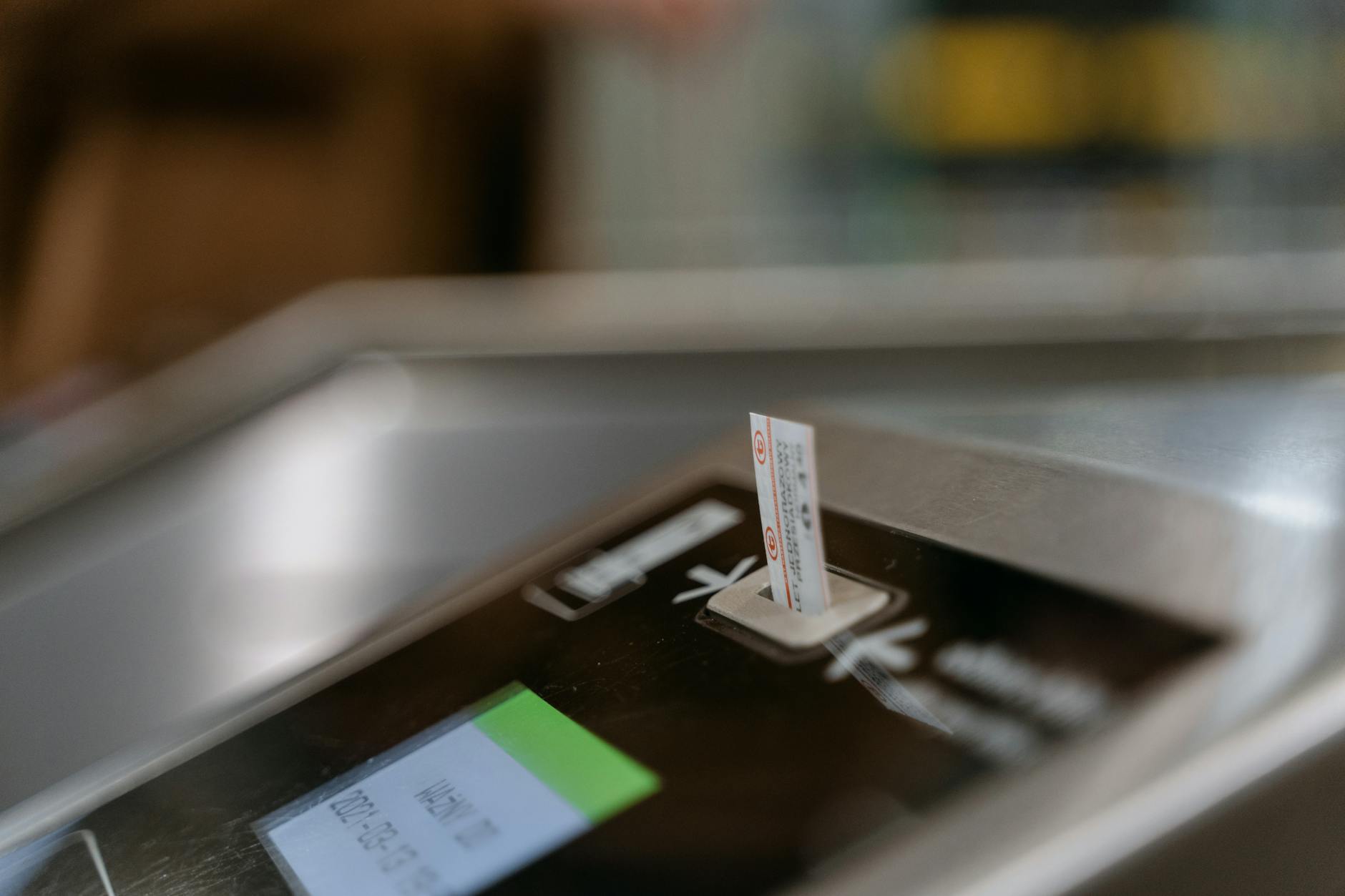
Choosing the right Munich travel pass for your trip can easily save €30–€80 per person across a few days — but choosing the wrong one wastes money on benefits you don’t use. Munich has at least eight different transit and tourist-card options, plus city-pass packages bundling attractions with transport. This complete 2026 Munich travel pass guide compares every option side by side, with exact prices, what each one covers, and a clear recommendation for different trip types.
Quick Decision Tree
- Solo, 1–2 days, transit only → MVV Tageskarte Single (€9.90/day)
- 2+ people, 1–2 days, transit only → MVV Tageskarte Group (€18.80/day for up to 5)
- 3–5 days, transit only → IsarCard 7 weekly pass (€21.30)
- Sightseeing-heavy 1–3 days, want bundled attractions → Munich Card or Munich City Pass
- Day trip to Salzburg / Neuschwanstein / Alps → Bayern-Ticket (€34 first / €10 each addl)
- Multi-city Germany trip → Deutschlandticket (€58/month)
- Airport arrival only → Single Zone M+5 €14.30 or all-day €17.90
MVV Tickets — Munich’s Local Transit
The MVV (Münchner Verkehrs- und Tarifverbund) integrates U-Bahn, S-Bahn, tram, and bus across Munich and its suburbs. One ticket = all four modes. The fare zones (recently simplified in 2019) are:
- Zone M (inner) — all of central Munich including Olympiapark, Hirschgarten, Bogenhausen, Schwabing. 90% of visitor needs
- Zone 1 — inner suburbs
- Zone 2–6 — outer suburbs
- Zone 5 specifically includes Munich Airport
MVV Single and Streifenkarte
| Ticket | Price 2026 | Validity |
|---|---|---|
| Single Zone M | €4.20 | 1 trip, 2 hours |
| Single Zone M+1 | €7.30 | 1 trip, including inner suburbs |
| Single Zone M+5 (incl. airport) | €14.30 | 1 trip, all zones |
| Short-distance (Kurzstrecke) | €2.00 | Max 4 stops bus/tram; 2 stops S/U-Bahn |
| Streifenkarte (10 strips) | €20.10 | Adult trips use 2 strips; light users |
MVV Tageskarte (Day Passes) — Most Visitors’ Best Choice
| Ticket | Price 2026 | Best For |
|---|---|---|
| Tageskarte Single (Zone M) | €9.90 | Solo traveler, central Munich |
| Tageskarte Single (M+1) | €12.20 | Solo, inner suburbs |
| Tageskarte Single (all zones) | €17.90 | Solo, includes airport |
| Tageskarte Group (up to 5, Zone M) | €18.80 | Group, central Munich |
| Tageskarte Group (up to 5, all zones) | €33.40 | Group, includes airport |
The Group Day Pass at €18.80 is Munich’s single best transit deal — it covers up to 5 people (any combination of adults + children) on every form of MVV transit until 06:00 the next morning, for less than €4 per person if shared 5 ways.
IsarCard 7 — Best for 5+ Day Stays
- Cost: €21.30
- Validity: 7 consecutive days, Zone M only
- Best for: Solo traveler staying 5+ days
- Per-day cost: just €3.04
- Note: cannot be shared; one-person only
Munich Card and Munich City Pass — Tourist Bundles

Munich Card (Transit + Discounts)
- What it includes: unlimited MVV transit + 25–50% discounts at 80+ Munich attractions
- Validity: 1, 2, 3, 4, or 5 consecutive days
- Adult prices (Zone M): 1-day €16.90, 2-day €24.90, 3-day €30.90
- Family rates (up to 2 adults + 3 children): 1-day €27.90, 2-day €43.90
- Best for: visitors who plan to visit 2+ paid attractions per day
- Discounted at: Residenz, Nymphenburg, BMW Museum, Tierpark Hellabrunn, Allianz Arena, Deutsches Museum, NS-Dokumentationszentrum, Olympiaturm, and many more
Munich City Pass (Transit + Free Attractions)
- What it includes: unlimited MVV transit + FREE entry (not just discount) to 45+ attractions
- Adult prices: 1-day €41.90, 2-day €54.90, 3-day €68.90, 4-day €82.90, 5-day €92.90
- Best for: Visitors planning 2-3 major attraction visits per day
- Free entry at: BMW Museum, Tierpark Hellabrunn, Olympic Tower, Hop-on/Hop-off bus, Allianz Arena tour, Munich Residenz, Nymphenburg, Deutsches Museum, NS-Dokumentationszentrum, walking tours
- Break-even: Need 3+ attractions per day to beat the Munich Card
Munich Card vs Munich City Pass
| Feature | Munich Card | Munich City Pass |
|---|---|---|
| Transit | Yes | Yes |
| Discounts | 25–50% at 80+ sites | — |
| Free entries | — | 45+ attractions |
| 1-day adult | €16.90 | €41.90 |
| 3-day adult | €30.90 | €68.90 |
| Best if | 1–2 attractions/day | 3+ attractions/day |
Bayern-Ticket — For Day Trips Outside Munich

The Bayern-Ticket is Bavaria’s regional rail group pass — essential for Munich day-trippers. €34 first person + €10 each additional traveler up to 5 people max (€74 for a group of 5). Covers all DB regional trains in Bavaria, all MVV transit, and local transit at the destination.
- Validity: weekdays from 09:00, weekends/German-holidays from 00:00
- Covered destinations from Munich: Salzburg (cross-border exception), Garmisch-Partenkirchen, Tegernsee, Schliersee, Berchtesgaden, Nuremberg, Regensburg, Augsburg, Würzburg, Bayreuth, plus the Bayern-Ticket-only Meridian route covering Munich to Salzburg
- NOT covered: ICE and EuroCity trains (Sparpreis required), city of Berlin and Frankfurt
- Where to buy: Munich Hbf vending machines, DB Navigator app, station counter
Bayern-Ticket Night
- Cost: €27 first person + €9 each additional
- Validity: 18:00–06:00 (next morning)
- Best for: late evening returns from day trips
For fifteen places the Bayern-Ticket gets you to and back in a day, see our day trips from Munich by train guide.
Deutschlandticket (D-Ticket) — Best for Multi-City Trips
- Cost: €58/month, valid Germany-wide
- What it covers: all regional trains, S-Bahn, U-Bahn, trams, buses, and most regional rail across Germany
- What it doesn’t: ICE, IC, and EC trains (separate Sparpreis tickets required)
- Validity: One calendar month at a time (or rolling 4-week subscription)
- Best for: visitors spending 5+ days in Germany combining 2+ cities + day trips
- Where to buy: DB Navigator app, station counter (must cancel manually if you don’t want auto-renewal)
- Bonus: also valid for the MVV Munich transit — so doubles as a Munich transit pass
Comparing All Options for Different Trip Types
Solo, 3-day Munich-only trip
| Option | Cost | Notes |
|---|---|---|
| 3 × Tageskarte Single | €29.70 | Cheapest if only transit |
| IsarCard 7 | €21.30 | Better if 5+ days, same coverage |
| Munich Card 3-day | €30.90 | + discounts at 80+ attractions |
| Munich City Pass 3-day | €68.90 | + free entry to 45 attractions if you’ll use 9+ |
Couple, 4-day trip with Neuschwanstein day trip
- 3 days in Munich: 3 × Group Day Pass = €56.40
- 1 day Neuschwanstein: Bayern-Ticket €44 for 2 + castle tickets
- Total transit: ~€100
- Alternative: Munich City Pass 4-day per person + separate Bayern-Ticket: €82.90 + €82.90 + €44 = €209 (only better if you’ll use 12+ attractions)
Family of 4, 5-day intensive sightseeing
- Munich City Pass family: 5-day family pass €175 (covers BMW, Hellabrunn, Residenz, Nymphenburg, Olympiaturm, hop-on/hop-off, walking tours, Deutsches Museum)
- Estimated value: would otherwise cost ~€340 in attractions + transit
- Net saving: ~€165
Backpacker, 2 days, museum-focused on a Sunday
- 2 × Tageskarte Single: €19.80
- €1 Sunday museum entries (Alte Pinakothek, Glyptothek, etc.): €5 total
- Total: €25 for the entire trip
- See our free museums guide
Where to Buy Tickets
- Platform vending machines: at every U-Bahn and S-Bahn station; German/English/French/Italian; accept cards including foreign Visa/Mastercard
- MVV app: free, iOS/Android, digital tickets
- DB Navigator: for Bayern-Ticket and Deutschlandticket
- Munich Card / City Pass: at Munich Tourist Office, partner hotels, or online
- Bus/tram drivers: single tickets only; prefer cash
- Validation: paper tickets MUST be stamped at blue pillars on platforms before boarding; digital tickets are pre-validated. €60 fine for unstamped tickets
Common Mistakes
- Buying single tickets repeatedly instead of a day pass — break-even is 3 single rides
- Buying the wrong zone for airport — you need Zone M+5 (€14.30) or all-day (€17.90), not just Zone M
- Forgetting to validate paper tickets — €60 fine
- Buying a Group Pass alone — wasted; Single Pass is half the price
- Buying Munich City Pass without museum agenda — pays off only with 3+ daily attractions
- Using only credit card without backup — some vending machines reject foreign cards; bring some cash
Discounts and Free Travel for Specific Groups
- Children under 6: travel free on all MVV with an accompanying paid adult
- Children 6–14: half-price single tickets; covered free on Group Day Passes
- Seniors 65+: small discount on some long-term passes
- Students: monthly IsarCard for students €36–€48 (proof of enrollment)
- Disabled travelers: free travel with valid disability card (“Schwerbehindertenausweis”)
- Free travel on first night of New Year’s Eve and other selected holidays
Frequently Asked Questions
Which Munich travel pass is best?
For most visitors: the MVV Tageskarte Group Day Pass at €18.80 for up to 5 people, or the Tageskarte Single at €9.90 for solo travelers. The Munich City Pass adds attraction entry for €41.90/day but only pays off if you visit 3+ major attractions per day.
How do I get a Bayern-Ticket?
At any Munich Hauptbahnhof vending machine, the DB Navigator app, or the station ticket counter. €34 first person + €10 each additional traveler up to 5. Valid weekdays from 09:00, weekends from 00:00.
Is the Deutschlandticket worth it for tourists?
If you’re in Germany for 5+ days and plan to use regional trains in 2+ cities, yes. €58/month covers all regional trains and city transit Germany-wide. Not great for shorter Munich-only trips — the MVV passes are cheaper for that.
Should I buy the Munich Card or Munich City Pass?
Munich Card if you plan 1–2 attractions per day (cheaper, gets you discounts). Munich City Pass if you plan 3+ attractions per day (gets you free entry). The City Pass break-even is roughly 3 paid attractions per day.
Can I use one ticket for U-Bahn and tram in Munich?
Yes — one MVV ticket covers U-Bahn, S-Bahn, tram, and bus throughout your zone validity. No transfer ticket needed.
How much is the airport transfer ticket?
€14.30 for a single Zone M+5 (all zones) or €17.90 for a day pass that covers the airport plus all of central Munich for the day. See our airport guide.
How Munich’s Fare System Evolved
The MVV fare system Munich uses today is the result of a fundamental simplification implemented in December 2019. Before that date, the city had an extraordinarily complex 16-zone ring system that confused residents and visitors alike. The 2019 reform consolidated this into the much simpler 7-zone structure — M (inner core) plus zones 1 through 6 radiating outward. The vast majority of visitor needs (over 90% of typical sightseeing) fall within Zone M, dramatically simplifying ticket purchase. The Munich Airport, which previously required a complex 5-ring calculation, now sits clearly within Zone 5, making airport tickets uniformly €14.30 single or €17.90 all-day. This reform was widely praised even by the Munich Chamber of Commerce — though it produced higher fares for some suburban commuters, the gain in ticket comprehensibility was deemed worth the trade-off. The simplification has notably boosted Munich’s tourist satisfaction scores in surveys conducted by the Munich Tourism Office.
The fare zones still confuse first-time visitors in one specific way: the inner ring M includes some surprisingly distant destinations. Olympiapark, Hirschgarten, Bogenhausen’s villa district, Schwabing’s northern tip, and even Trudering on the eastern edge are all in Zone M. This means a €4.20 single covers what feels geographically like a long ride. Conversely, a few central-feeling destinations like the airport, Dachau, and Schleißheim Palace sit outside Zone M, requiring additional zones. The MVV app’s route planner handles all this automatically — but if you’re buying a paper ticket at a vending machine, double-check the zone designation before paying.
Comparing Munich Passes Against International Equivalents
How Munich’s transit pricing stacks up against comparable European cities:
Munich’s MVV Tageskarte Single at €9.90 represents the most expensive day pass among major continental European capitals, but the system’s comprehensiveness offsets the higher price. Paris’s Navigo Easy day pass costs €8.45 for similar central coverage; Berlin’s BVG AB-zone day pass is €9.90 (same as Munich); Vienna’s 24-hour Wiener Linien pass is €8.20; Amsterdam’s GVB 24-hour is €9.00. Munich’s coverage uniquely integrates U-Bahn, S-Bahn, tram, and bus into one ticket without any inter-modal supplements, which puts it ahead of Paris’s three-zone billet system and Rome’s notoriously fragmented integration. The Group Day Pass at €18.80 for up to 5 people has no equivalent in most other European capitals — it is genuinely a Munich-specific bargain. Conversely, London’s TfL daily price-cap system is more visitor-friendly for occasional users; Berlin’s longer 24-hour validity (starting from first stamp, not first hour) gives more flexibility than Munich’s strict midnight cutoff.
Common Reader Questions Answered
Several frequently asked questions deserve longer answers than fit in a brief FAQ:
What is the Bayern-Ticket and how does it differ from a regular MVV ticket? The Bayern-Ticket is a Bavaria-wide regional rail pass operated by Deutsche Bahn, not the MVV. It costs €34 for one person plus €10 per additional passenger up to 5 (€74 for a group of 5). It covers all DB Regio regional trains throughout Bavaria, plus local transit (U-Bahn, S-Bahn, tram, bus) in Munich and in the destination city. Importantly, it is valid on weekdays only after 09:00, and all day on weekends and German national holidays. It explicitly covers the route from Munich to Salzburg as a bilateral exception (the only inter-country regional fare in Germany). The Bayern-Ticket is the right choice for visitors planning day trips to Salzburg, Neuschwanstein (via Füssen), Tegernsee, Garmisch-Partenkirchen, or any other Bavarian destination — see our day trips guide. It does NOT cover ICE, IC, or EC high-speed trains, which require separate Sparpreis tickets.
Should I get the Deutschlandticket if I’m only in Munich? Generally no, unless your stay extends beyond one calendar month. The Deutschlandticket is a €58/month nationwide pass that covers all German regional trains and city transit. For a single Munich week, the IsarCard 7 (€21.30) is far cheaper. The Deutschlandticket makes sense if (a) you’re combining Munich with a longer Germany trip across multiple cities, (b) you’re planning many day trips from Munich, or (c) you’ll be in Germany over a calendar-month boundary and would otherwise need overlapping passes. The Deutschlandticket auto-renews monthly — important to cancel manually if you don’t want continued charges. Booking is through the DB Navigator app or any station counter.
What happens if I take the wrong train with the wrong ticket? If a ticket inspector finds you with a Zone M ticket but you’re in zone 1 (or no ticket at all), the standard fine is €60 paid on the spot. Inspectors are generally fair — if you’re a tourist who’s clearly confused about zones, they may waive the fine on a first encounter, but don’t count on it. Inspectors typically board between major stations and check tickets quickly. They wear plainclothes and reveal a discreet badge when they begin checking. The fine system has been controversial — some advocate a tap-to-ride contactless system like London’s, but Munich has resisted, partly to maintain the validation system that keeps ticket prices stable for residents.
Combined Tickets and Multi-Day Strategy
Selecting between MVV singles, the Tageskarte day pass, and the multi-day passes depends on specific patterns. Here’s a detailed break-even calculation. For 2 short rides per day, 4 singles (€16.80) costs less than two day passes (€19.80) — singles win for very light usage. For 3 rides per day, 2 day passes (€19.80) beats 6 singles (€25.20). For 4+ rides per day, day passes are clearly cheaper. For 5 consecutive days, the IsarCard 7 weekly pass at €21.30 beats 5 day passes (€49.50) substantially. For two travelers, the Group Day Pass at €18.80 is always cheaper than two singles or single passes; this is Munich’s single best transit deal. For a family of four, the Group Day Pass becomes extraordinary value — €18.80 per day covers all transit for everyone.
The complications come when mixing destinations and trip types. The Munich Card and Munich City Pass bundle transit with attraction entry — but they have different break-even calculations. The Munich Card includes attraction discounts (25-50% off) rather than free entry; you need 2-3 paid attractions per day to recover the day-pass premium. The Munich City Pass provides free entry to 45+ attractions; you need 3+ attractions per day to recover the substantial premium. For visitors planning intensive sightseeing (BMW Museum, Residenz, Nymphenburg, Olympiaturm, plus several smaller attractions), the City Pass at €68.90 for 3 days pays off after the equivalent of 8-10 paid attractions. For visitors planning 1-2 attractions per day plus walking, the basic Tageskarte plus paying individual attractions is cheaper than the City Pass.
What Happens If You Ride Without a Valid Ticket

Munich’s transit runs on an honour system with teeth. There are no barriers on the U-Bahn or S-Bahn — you walk straight down the escalator onto the platform — but riding without a validated ticket is Schwarzfahren, and the penalty is a flat €60 whether you were going one stop or twenty. The inspectors (Kontrolleure) work in plain clothes, wait until the doors close so nobody can slip off, then flash an MVG badge. They cluster on exactly the trips visitors take: the S8 in from the airport, the U4 and U5 toward the Theresienwiese, and the U3/U6 spine through Marienplatz. “I didn’t understand the machine” carries no weight, and a printed-but-unstamped Streifenkarte counts as no ticket at all.
Insider tip: the rule is about validation, not just purchase. A Tageskarte or Streifenkarte bought from a blue machine must be stamped in the small box on the platform (or at the tram door) before you ride; a ticket bought in the MVGO or MVV app is activated the moment you buy it and needs no stamp. If you are even slightly unsure which lines and zones your ticket covers, the mechanics are spelled out in our guides to getting around Munich and the U-Bahn and S-Bahn — both worth two minutes before your first ride, because the €60 lesson is an expensive one.
Travel Passes for Oktoberfest and the Christmas Markets
Two windows put real strain on the network, and your ticket choice should bend to them. During Oktoberfest (mid-September into the first days of October), the U4/U5 to Theresienwiese and the U3/U6 to the festival’s edges run shoulder-to-shoulder from late morning. A Tageskarte is the obvious move here: you will shuttle between your hotel, the Wiesn, and a late dinner several times, and a day pass turns all of it into one flat fare instead of a fistful of singles. Plan the timing around the official Oktoberfest dates and schedule, and read the crowd-and-transport notes in our complete Oktoberfest guide before you pick a ticket.
The same logic carries into December. A day pass makes an evening of Christmas market hopping — Marienplatz to the Residenz courtyard to the medieval market at Wittelsbacherplatz — a single decision rather than a cold calculation at every Glühwein stop. If your days also involve a lot of paid museums and attractions, weigh the transit-plus-discount bundles in our Munich Card vs City Pass comparison; for anyone arriving by air, the airport run is its own calculation, broken down in getting from Munich Airport to the city. The rule of thumb holds across all of it: if you will take more than two rides in a day, a Tageskarte has already paid for itself.
Plan Your Munich Trip
This travel passes guide is part of our deeper Munich transport guide. For the U-Bahn specifically see our U-Bahn & S-Bahn guide. For airport-specific info see our airport to city guide. For budget travel see our Munich on a budget guide.