The Complete Munich Oktoberfest Guide
Complete 2026 Oktoberfest guide. Dates, tents, reservations, outfits, food, beer, transport, budget, and insider tips for the world's largest beer festival in Munich.
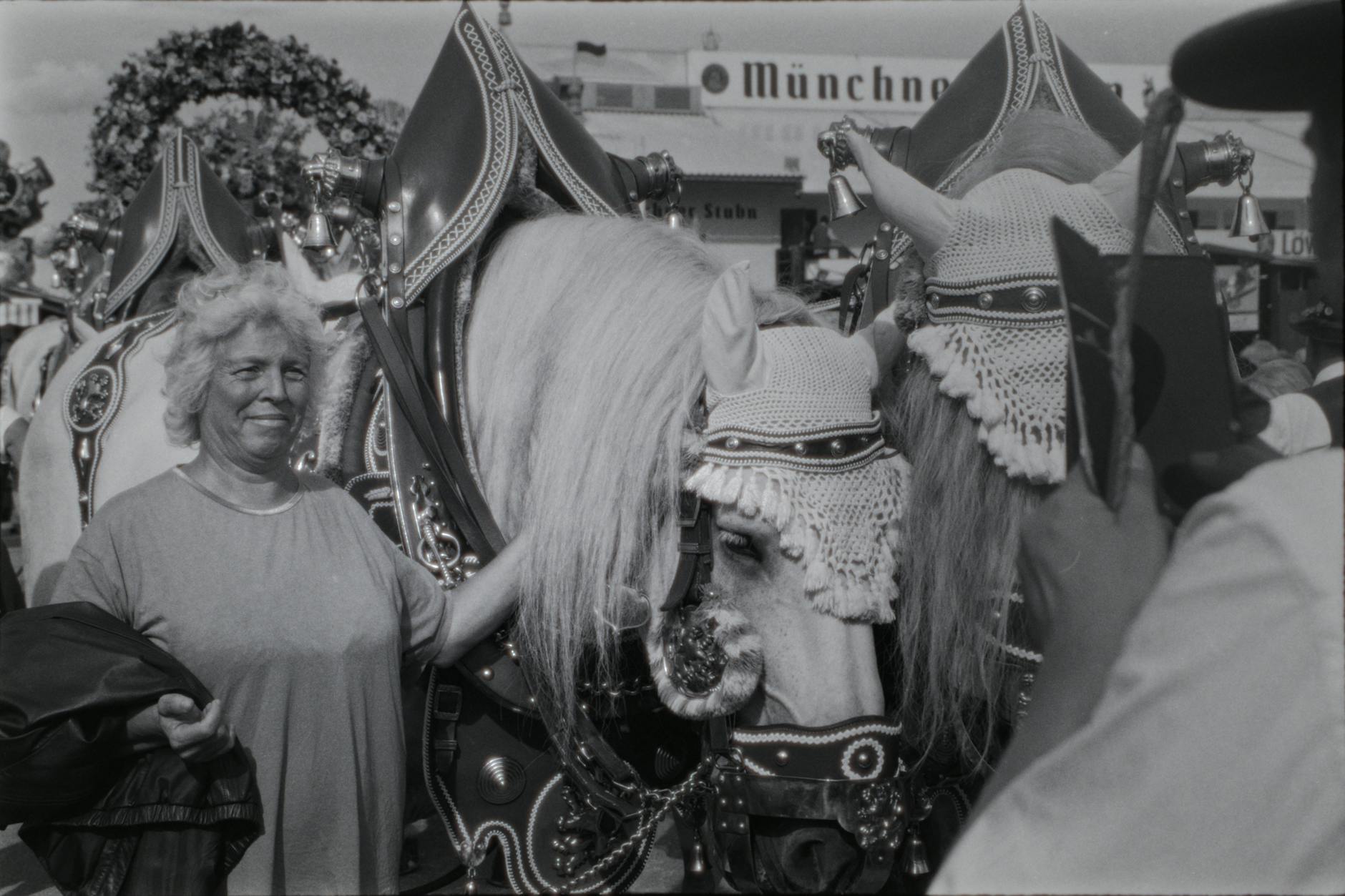
Oktoberfest is not just the world’s largest beer festival — it’s a 200-year-old Bavarian cultural institution that draws six million visitors to Munich every autumn, consumes roughly seven million liters of beer, and transforms a 42-hectare patch of grass called the Theresienwiese into the most photographed fairground on earth. Whether you’ve been planning your first pilgrimage for years or you’re trying to decide if it’s worth crashing into your itinerary this year, this complete Munich Oktoberfest guide walks you through everything you need to know: dates, tents, reservations, outfits, food, transport, budgets, and the insider tactics that turn a chaotic tourist slog into a genuinely magical Bavarian experience.
We’ve built this guide from decades of local experience and verified it against the most recent official sources and on-the-ground reports. Everything here reflects what Oktoberfest actually is in 2026, not what it was twenty years ago. If you only have five minutes to prepare, skim the bold sections. If you have an hour, read it through — it will save you considerably more than an hour of confusion on the ground, and it will almost certainly save you money.
Oktoberfest 2026 at a Glance
Oktoberfest looks chaotic from the outside, but the essentials fit on a single card. Here are the facts every first-timer asks for — dates, where it actually is, what entry costs, when the tents open and when they fill up — so you can plan the rest of your trip around them. The detailed sections below unpack each line.
| The essentials | What to know |
|---|---|
| 2026 dates | Saturday, Sept 19 – Sunday, Oct 4 (16 days) |
| Location | Theresienwiese, a 10-min walk from the Hauptbahnhof (U4/U5 Theresienwiese) |
| Entry cost | Free — grounds and tents alike; you pay only for food, beer, and rides |
| Tent hours | 10 a.m.–11:30 p.m. weekdays; 9 a.m. weekends; beer until 10:30 p.m. |
| When tents fill | By late morning on weekends and from early evening on weekdays; arrive before 11 a.m. (Sat/Sun) or 3 p.m. (weekdays) for walk-in seats |
| Cost of a Maß | €14.80–€15.90 for one liter in 2026; most big tents charge €15.80 |
| Legal drinking age | 16 for beer and wine in Germany; 18 for spirits |
| Quietest day | Tuesday (Family Day), with reduced ride and food prices until 7 p.m. |
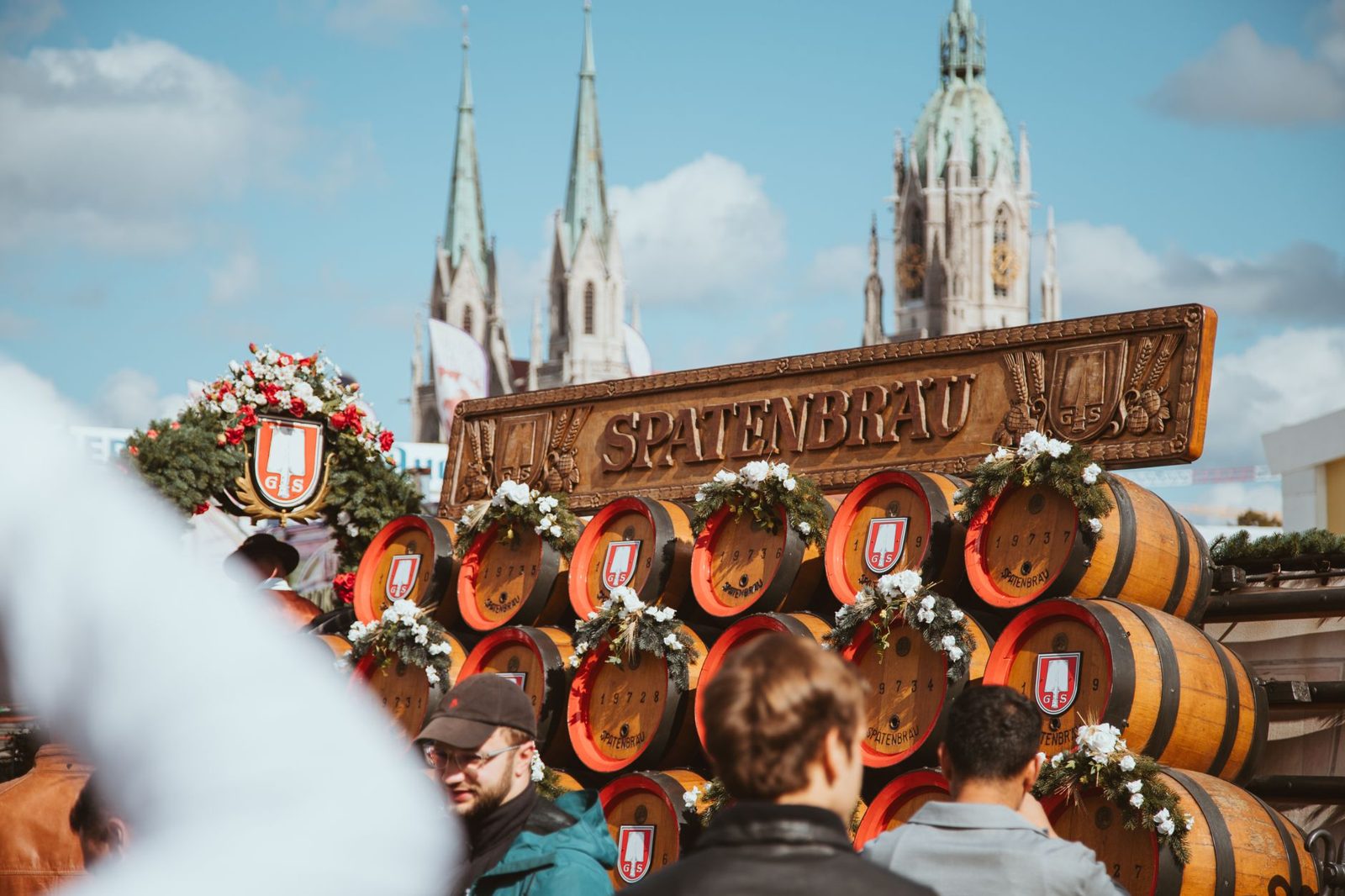
Oktoberfest 2026: Key Dates and Hours
Oktoberfest 2026 runs from Saturday, September 19, 2026 through Sunday, October 4, 2026 — 16 days in total. The opening ceremony, the legendary “O’zapft is!” tapping of the first keg by Munich’s Mayor, happens at noon on the opening Saturday in the Schottenhamel tent. From that moment on, beer flows across the entire fairground.
Daily operating hours follow a predictable rhythm. On weekdays, beer tents open at 10 a.m. and serve beer until 10:30 p.m., with tents closing at 11:30 p.m. On weekends and holidays, tents open an hour earlier, at 9 a.m. The opening Saturday is special: beer service begins at 12 noon and not a moment earlier — anyone drinking beer before the Mayor’s first tap is drinking illegally.
The festival grounds and rides stay open until around midnight each night, but most tents empty by 11:15 p.m. as staff begin preparing to close. Two other critical dates on the calendar: the traditional costume parade on the opening Sunday (September 20, 2026), which sees 9,000 performers in full Bavarian regalia march through central Munich to the grounds, and Italian Weekend (typically the first full weekend), when tens of thousands of visitors from northern Italy descend on the Theresienwiese. For a year-round event calendar including the full Oktoberfest schedule, see our Oktoberfest 2026 dates and schedule guide.
Understanding the Beer Tents

Oktoberfest’s 14 large tents and 21 smaller tents are the heart of the festival. Each one has a distinct personality — some are rowdy international party venues, others are refined Bavarian institutions, and a handful cater to specific crowds like gay Oktoberfest-goers, wine drinkers, or Italian tourists. Choosing the right tent for your mood, group, and time of day dramatically shapes your experience.
Only six Munich breweries are legally allowed to serve beer at Oktoberfest, and each tent pours exclusively from one of them: Augustiner, Hacker-Pschorr, Hofbräu, Löwenbräu, Paulaner, and Spaten. The beer itself is Wiesn Märzen — a slightly stronger, maltier lager brewed specifically for the festival at around 6% ABV, compared to a regular Helles at 5%. A single Maß (one-liter stein) in 2026 costs €14.80 to €15.90 on the city of Munich’s official list — €14.90 at the Augustiner-Festhalle, the cheapest big tent, and €15.80 at most of the others — with a small deposit on the glass refunded when you return it.
The Big Tents: Which One Is Right for You?
Hofbräu-Festzelt is the largest tent and by far the most popular with international visitors. It has the only standing-room area in front of the band, where the party gets particularly wild. If you’re traveling with a group of friends in their twenties who want an unambiguously rowdy night and don’t speak German, this is the easiest first pick. If you’re looking for a local Bavarian atmosphere, skip it.
Hacker-Festzelt (“Bavarian Heaven”) is widely considered the best big tent. Its iconic blue-and-white clouded ceiling, top-tier Hacker-Pschorr beer, and balanced mix of Bavarian locals and tourists make it a consistent favorite. The oompah band plays traditional music during the day and shifts to crowd-pleasing party sets in the evening. You’ll leave Hacker feeling like you experienced Oktoberfest correctly.
Schottenhamel, the festival’s oldest tent (founded in 1867), is where the Mayor taps the first keg. Its benches are arranged in a distinctive square pattern that makes table conversations easier than other tents’ long rows. The crowd skews younger, flirtier, and more affluent, and the energy is genuinely Bavarian.
Augustiner-Festzelt is the connoisseurs’ pick. Augustiner is the beer most locals actually drink year-round, and at Oktoberfest it’s served directly from wooden kegs — a detail that matters more than you’d think. The atmosphere is family-friendly during the day and slightly more reserved than the other big tents at night.
Paulaner-Festzelt (sometimes called “Winzerer Fähndl”) is identified by its huge revolving beer tower on the roof. Inside, it’s one of the prettier tents, with ornate chandeliers and an upscale feel. Service is efficient and the crowd is mixed — mostly German with a steady influx of tourists. A solid mid-week choice.
Löwenbräu-Festzelt is marked by the enormous mechanical lion over its entrance that roars “Löööwenbräu!” every few minutes. Lively, international, and always packed. The tent sits directly across from Hofbräu in the fairground’s most densely trafficked area.
For detailed tent-by-tent breakdowns including the smaller tents, capacity, music schedules, and photos, see our complete Oktoberfest beer tents guide.
Reservations: Do You Need One?
This is the most common Oktoberfest question, and the answer is nuanced. Entry to the festival grounds is always free, and the tents themselves have no cover charge. However, during peak times (weekends, evenings after 5 p.m., Italian Weekend, and the final weekend), the tents fill up and stop admitting new visitors — sometimes by early afternoon. A reservation guarantees you a table at a specific time, but it also costs money and requires advance planning.
Here’s how reservations actually work. Reservations are for whole tables only — typically for 10 people, sometimes for 8. You cannot reserve fewer seats. Reservations in the big tents require a minimum consumption voucher of two Maß and half a chicken per person, which usually runs €35-€45 per person per block. Boxes and gallery tables can cost more. Small tents may charge €50 per person for pre-2 p.m. reservations and €75 for evenings and weekends.
You book directly through each tent’s website, and reservations typically open in April or May of the same year. Popular tents and popular dates sell out within hours of the booking window opening. If you’re reading this after April and hoping for a prime Saturday evening at Hacker, you’re probably too late — but weekday lunch reservations are often still available much later, and they’re one of Oktoberfest’s underrated sweet spots.
If you can’t get a reservation, don’t panic. 25% of indoor seats in the big tents are kept free for walk-ins by law, as are all seats in the large outdoor beer gardens attached to most tents. Arriving at opening time (9-10 a.m. weekdays, 9 a.m. weekends) almost always gets you a seat inside. For a detailed booking walkthrough, see our complete Oktoberfest reservations guide.
What to Wear: Dirndls, Lederhosen, and Tracht
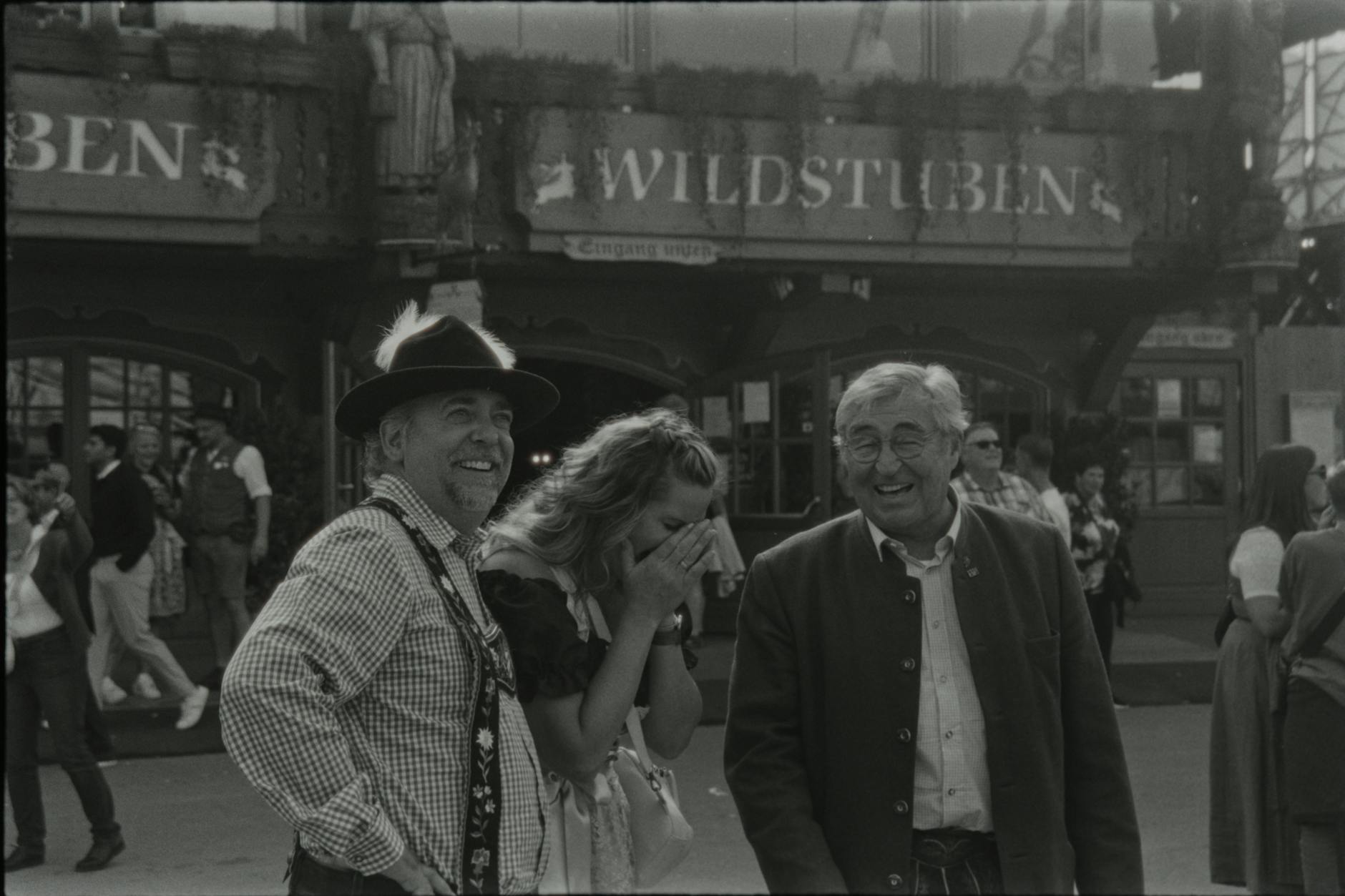
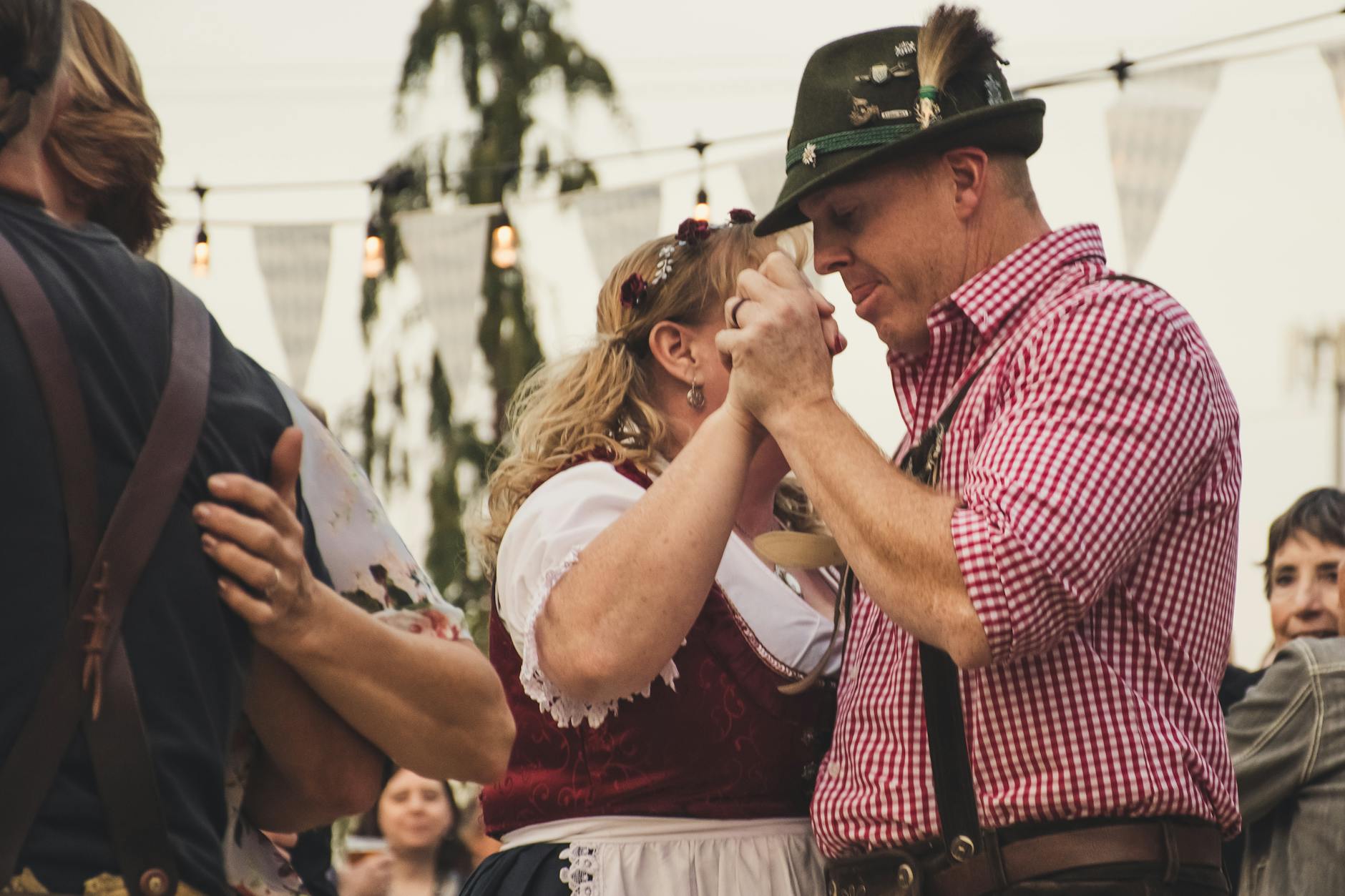
Traditional Bavarian costume, called Tracht, is not required — but at least 80% of attendees wear it, and if you skip it, you’ll feel out of place. Locals appreciate visitors making the effort; wearing Tracht is a sign of respect for the festival’s heritage.
For men, lederhosen (leather breeches) in either short or knee-length cut, paired with a checked shirt, wool socks or stockings, and traditional Haferl leather shoes. Add a vest or Alpine hat for extra authenticity. A good quality lederhosen set costs €150-€400 and lasts a lifetime; cheap costume-grade sets for €40-€80 are available at most Munich department stores during Oktoberfest season but are visibly inferior.
For women, a dirndl — a fitted bodice over a puffed-sleeve blouse with a long skirt and apron. A detail that matters: the knot on your apron signals your relationship status. A bow tied on the left means single. On the right means taken. In the middle means virgin (traditionally for unmarried young women). On the back means widowed. This is real, not a tourist myth, and locals do notice.
You can buy Tracht at any of Munich’s department stores, at specialist shops like Angermaier or Lodenfrey, or rent for the weekend at places like Bavarian Outfitters. Kids’ Tracht is also widely available and charming. For a complete outfit breakdown including accessories, rentals, and what to avoid, see our what to wear to Oktoberfest guide.
Once you know what to wear, see where to buy a dirndl or lederhosen in Munich for a shop-by-shop price comparison and how to tell real Tracht from costume-grade polyester.
First-Time Visitor Tips
Experienced Oktoberfest-goers do things differently from first-timers, and a handful of habits separate a great day from a frustrating one.
- Start early. The single most important tip. Arrive at a big tent by 9 or 10 a.m. for weekends, noon at the latest on weekdays. By 4 p.m. most good tents are at capacity.
- Pace yourself. Wiesn beer is 6% ABV and served in one-liter glasses. Three Maß in six hours is a strong, manageable session. Six Maß in six hours will put you in the hospital — Oktoberfest has a purpose-built first-aid station for exactly this reason.
- Eat between beers. The food served at Oktoberfest is exceptional and important. Pretzels, Hendl (half chickens), Schweinshaxe, and Käsespätzle all soak up alcohol and are part of the experience.
- Tip your server generously. A 10-15% tip is standard. Servers carry ten Maß at a time and are the single hardest-working people on the festival grounds.
- Always carry your ID and some cash. Some tents take card; many still prefer cash. ATMs on the fairground charge punitive fees.
- Use the official Oktoberfest app. It shows real-time tent capacity, which tents are closed to walk-ins, and lost-and-found contacts. It’s genuinely useful.
- Stand on the benches, never on the tables. Standing on tables is strictly forbidden and will get you thrown out. Dancing on benches, on the other hand, is encouraged and practically mandatory.
For our complete first-time survival playbook with more nuanced etiquette, language phrases, and bathroom strategy, see our Oktoberfest first-time tips guide.
What to Eat at Oktoberfest
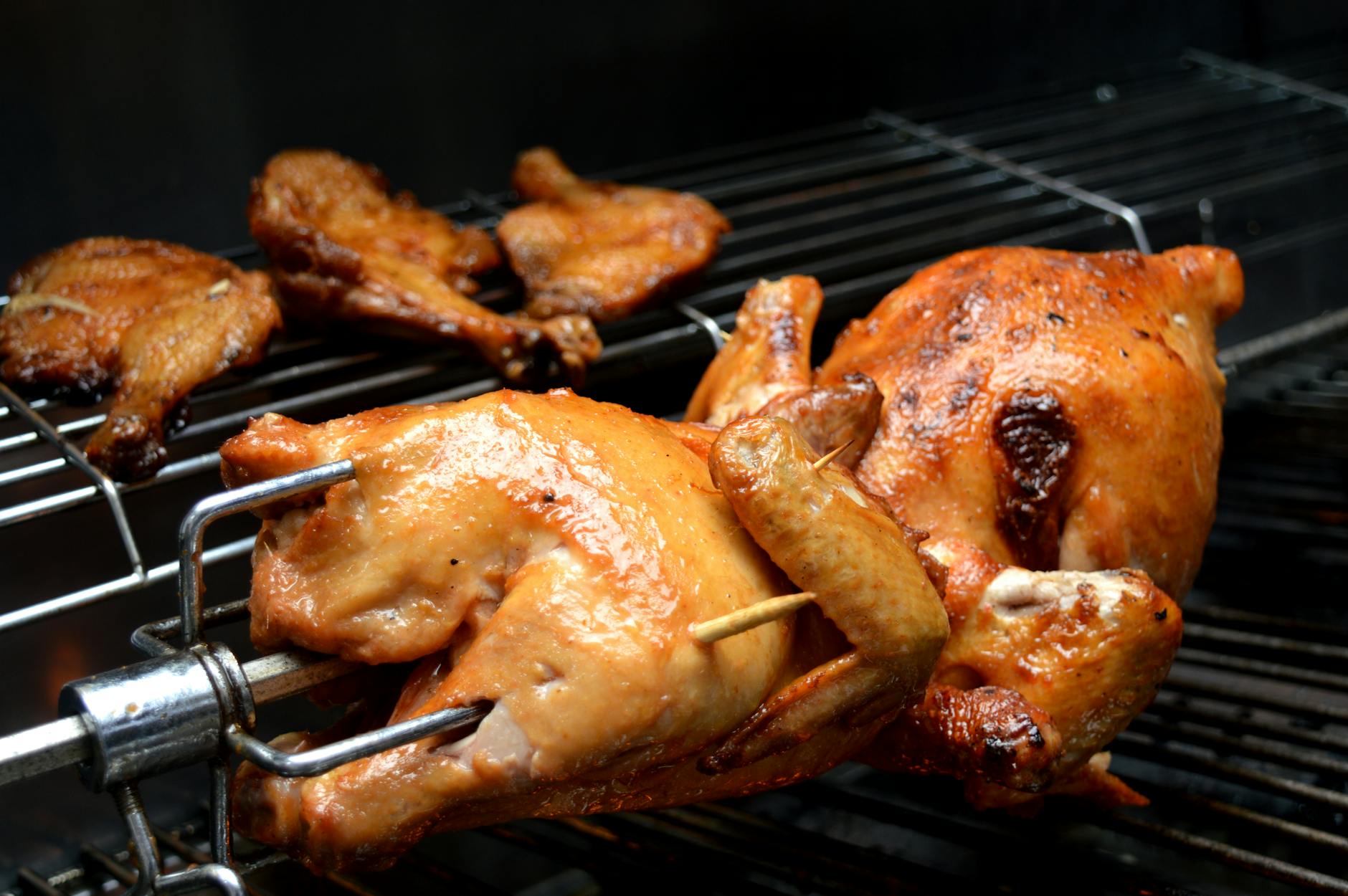
Oktoberfest food is heartier and, honestly, better than most visitors expect. The traditional showpieces are Hendl (a half roast chicken with crispy skin, served with a pretzel or bread), Schweinshaxe (a pork knuckle roasted until the skin shatters), Schweinsbraten (pork roast with gravy), Käsespätzle (Bavarian mac and cheese with crispy onions), and Obatzda (a creamy paprika-spiked cheese spread eaten with soft pretzels). Prices in the tents run €16-€28 per main dish.
Outside the tents, the fairground is packed with traditional stalls selling Steckerlfisch (whole mackerel grilled on wooden sticks), Lebkuchenherzen (gingerbread hearts with romantic slogans), roasted almonds, chocolate-covered fruit kebabs, fresh Dampfnudel (steamed yeast dumplings), and a dozen varieties of sausage. A full Oktoberfest meal at a stall runs €8-€16 and is a great way to eat well on a budget.
For a comprehensive breakdown of every food option, what to order in each tent, and which stalls have the best specific dishes, see our Oktoberfest food guide. And for more on the festival’s specific beer styles and the six breweries, see our Oktoberfest beer guide.
Outside the tents, the Munich food and beer guide covers the beer halls, gardens and restaurants serving the same dishes year-round.
Getting to Oktoberfest
The Theresienwiese sits about 1.5 kilometers southwest of Marienplatz and is exceptionally well-served by public transport. Do not drive or take a taxi. Traffic becomes gridlocked within a 2-km radius of the grounds, and parking is effectively impossible.
The fastest way to arrive is by U-Bahn: lines U4 and U5 both stop at Theresienwiese, directly under the grounds. From Hauptbahnhof it’s a single stop; from Marienplatz it’s two stops on U-line direction Ostbahnhof and a transfer, or four minutes on foot to Karlsplatz then one stop. You can also walk from Hauptbahnhof in about 15 minutes, which we actually recommend — the approach up the Esperantoplatz stairs onto the grounds is one of the festival’s best first impressions.
Returning home, the same U4/U5 stations run until about 1 a.m., and night buses cover the rest of the city until dawn. Ride-hail services work but surge aggressively during peak hours, with 2-3x prices common after 10 p.m. For complete transit instructions from every major Munich neighborhood and the airport, see our getting to Oktoberfest transport guide.
Getting around Munich covers the wider transport picture, including which ticket covers the Theresienwiese and how late the U-Bahn runs.
Oktoberfest Budget: How Much Does It Cost?

Oktoberfest is not cheap, and budgeting realistically helps you enjoy the day without constantly feeling you’ve overspent. Here’s a realistic per-person breakdown for a full tent day in 2026:
- Beer: 3 Maß × €15 = €45
- Food: one main dish + one snack = €25-€40
- Tip: €10-€15 over the day
- Rides and games: €20-€60 (optional)
- Souvenirs: €20-€50 (optional)
- Total per day (moderate): €100-€160
Add hotel costs, which triple during Oktoberfest (expect €250-€500 per night for a mid-range central hotel), and transit, which is negligible at €8.80 per day. Six million visitors spend roughly €1.5 billion across the 16 days — it’s a serious economic engine. For a detailed cost breakdown including hotel math and money-saving tactics, see our Oktoberfest budget guide.
How much a Munich trip costs sets the Wiesn against the rest of your spending, and Munich on a budget covers where to claw money back.
Where to Stay During Oktoberfest
Accommodation during Oktoberfest is the single biggest logistical challenge of attending. Hotels sell out 6-12 months in advance, and those that remain available often double or triple their normal rates. The absolute best neighborhood for Oktoberfest is Ludwigsvorstadt, which is walking distance from the Theresienwiese — no late-night taxi hunt, no missed final trams, just a 15-minute walk home when you’ve had enough. Isarvorstadt and Maxvorstadt are the next-best options for proximity.
If central Munich is sold out or too expensive, consider staying in Dachau, Freising, or Augsburg, all reachable by S-Bahn or regional train in under 45 minutes. Prices in these towns remain relatively normal even during Oktoberfest, and the commute is straightforward. For full accommodation strategy including booking timelines and fallback options, see our where to stay during Oktoberfest guide, which pairs well with our broader Munich accommodation guide.
A Brief History of Oktoberfest
Oktoberfest’s origins date to October 12, 1810, when Crown Prince Ludwig (later King Ludwig I of Bavaria) married Princess Therese of Saxe-Hildburghausen. The citizens of Munich were invited to celebrate the royal wedding on the fields in front of the city gates — fields that were subsequently renamed “Theresienwiese” (Therese’s Meadow) in the new princess’s honor. The original festival culminated in horse races, which proved so popular that the city decided to repeat the event the following year, and Oktoberfest was born.
For the first several decades, Oktoberfest was primarily an agricultural fair with horse racing and cattle shows. Beer booths appeared gradually through the 19th century, and by the 1880s the festival had begun its transformation into the beer-centric celebration we know today. The first proper beer tents (as enclosed structures) date to the turn of the 20th century, and the six official Munich breweries we still associate with the festival were formally designated in the early 1900s. The festival has been cancelled only 24 times in its history, primarily due to war, cholera outbreaks, and, most recently, the COVID-19 pandemic in 2020 and 2021.
Today Oktoberfest is the model for beer festivals worldwide, with thousands of smaller copies held in every country from the US to Brazil to Japan. But there is only one original, and its 200+ years of accumulated tradition, craftsmanship, and local pride are part of what makes the Munich Wiesn different from any Oktoberfest clone elsewhere. For the full historical picture including wartime cancellations, the Nazi-era distortions of the festival’s traditions, and how it has adapted to modern tourism, see our dedicated history of Oktoberfest guide.
Oide Wiesn: The Traditional Oktoberfest Section
In a separate fenced-off section of the Theresienwiese, you’ll find the Oide Wiesn (Old Wiesn) — a more traditional, quieter corner of the festival that focuses on Oktoberfest’s heritage rather than its modern party atmosphere. Entry to the Oide Wiesn costs €4 (kids under 14 free), and the ticket includes historical exhibitions, museum-style carousel rides, a dedicated tent with traditional Bavarian brass music, and folk dance performances.
The Oide Wiesn is the answer for visitors who want to experience the cultural side of Oktoberfest without the international party crowd. It runs in parallel with the main festival during 15 of the 16 Oktoberfest days and is one of the most underappreciated parts of the experience. Families, older visitors, and anyone who values traditional craft over sheer volume should absolutely spend at least a few hours here.
Oktoberfest with Kids and Families
Contrary to its reputation as an adults-only party, Oktoberfest is surprisingly family-friendly during daylight hours. Tuesdays are officially designated as Family Day, with discounted ride tickets, cheaper food, and a visibly calmer atmosphere. The rides section (Fahrgeschäfte) includes dozens of attractions specifically for children — carousels, bumper cars, mini-rollercoasters, ghost trains, and the spectacular 50-meter Ferris wheel from which, on a clear day, you can see the Alps.
The festival grounds are fenced, well-staffed with security, and feel far safer than you might expect. Most tents welcome kids during the day, and you’ll see plenty of Bavarian families with children in full Tracht enjoying lunch together. After about 6 p.m., however, the atmosphere becomes decidedly adult and is not appropriate for young kids. For a detailed family-specific breakdown, see our Oktoberfest with kids guide.
Rides, Attractions, and the Fairground
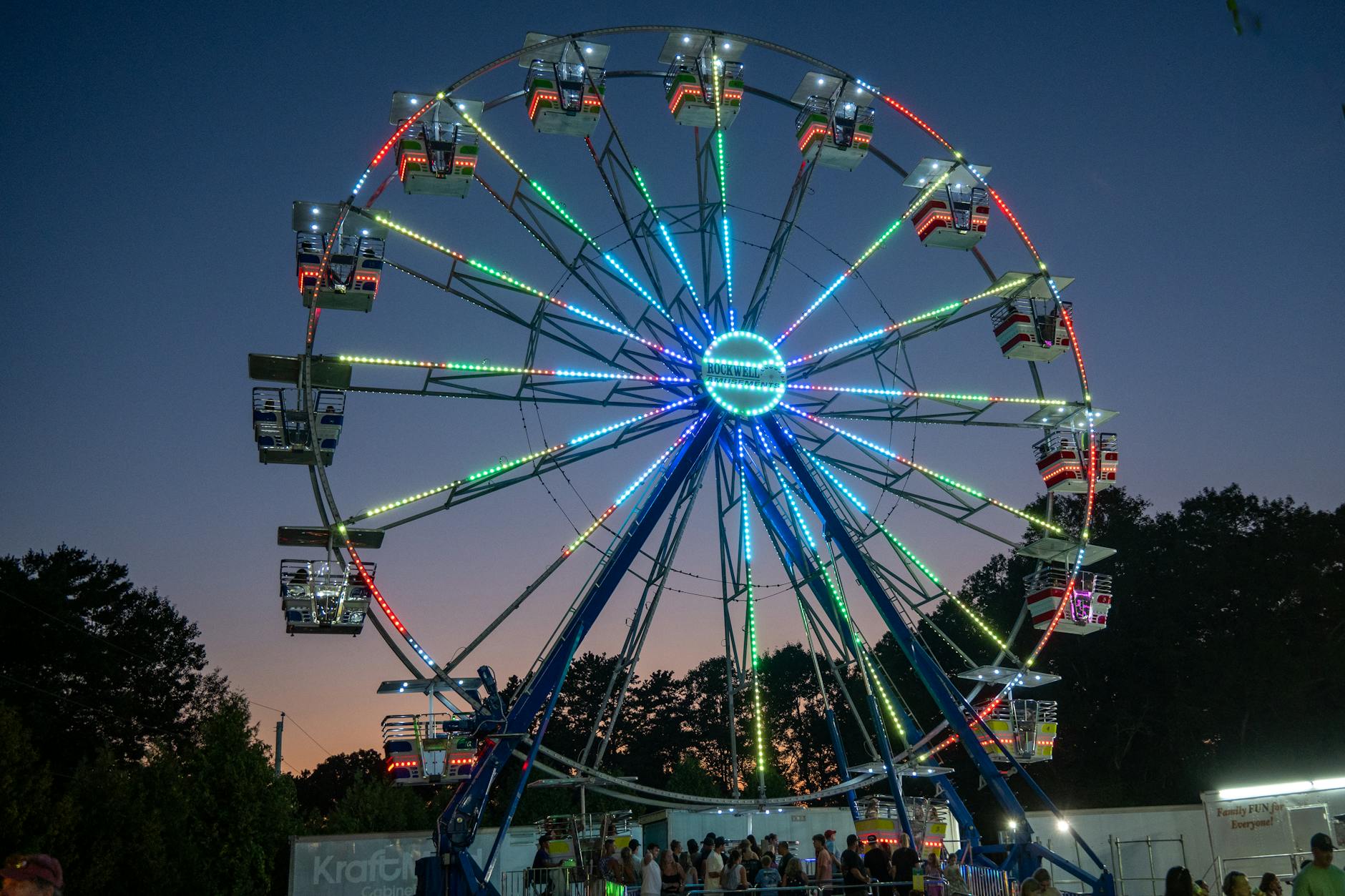
It’s easy to forget that Oktoberfest is also one of Europe’s largest traveling funfairs. Beyond the tents, the Theresienwiese hosts more than 80 rides and attractions: the Riesenrad Ferris wheel with its panoramic views, the Olympia Looping five-loop roller coaster (one of the world’s largest transportable coasters), the spinning Toboggan where visitors attempt to walk up a moving conveyor belt, the terrifying Predator, and classics like the Krinoline carousel powered by live oompah music.
A single ride ticket runs €4-€10 depending on the attraction. Tuesday Family Day drops these by 30-50%. If you’re attending with kids or just want some variety from tent life, budget at least an hour for the fairground on any visit. The carnival games — shooting galleries, ring toss, knock-down-the-cans — are also a nostalgic part of the experience, though they favor the house like all fairground games everywhere.
Oktoberfest Traditions and Live Music

Music is woven through every minute of Oktoberfest. Every big tent hosts a house band that plays a mix of traditional Bavarian Blasmusik, German schlager hits, and crowd-pleasing international sing-along anthems like “Sweet Caroline,” “Country Roads,” and “YMCA.” Don’t be surprised to hear Bon Jovi’s “Livin’ on a Prayer” immediately followed by a yodel-heavy Bavarian march. The whole thing somehow works.
The one song you’ll hear more than any other is “Ein Prosit der Gemütlichkeit” — the Oktoberfest cheers song. It plays every 15-20 minutes. When it starts, everyone in the tent stands, raises their Maß, and toasts. Learn the words (there are only eight) before you go. Making proper eye contact with your clinking partners is required — skipping eye contact is considered seven years of bad luck.
Major traditions worth timing your visit around include the opening parade on the first Saturday, the massive traditional costume parade on the first Sunday (one of the world’s largest folk parades, featuring brass bands, horse-drawn brewery drays, and marchers from every Bavarian region), and the gun salute on the final Sunday, which formally closes the festival. For the cultural history behind all of it, see our history of Oktoberfest guide.
Beyond the Tents: The Rest of the Festival
First-time visitors often think Oktoberfest is only about the tents. That’s understandable — the tents are the main event — but the fairground around them has an entire second life worth exploring. The Schausteller (showmen’s) area includes bizarre and wonderful attractions like Schichtl, a satirical cabaret that has been performing its signature “beheading” comedy act for over a century; the Varieté Tent with acrobats and circus performers; and Schützenfestzelt, which combines beer with shooting galleries in a way that would make insurance companies in other countries weep.
Don’t miss the Bavaria statue overlooking the grounds from the west. This 19th-century bronze colossus is hollow, and you can climb inside her head for €3.50 and look out over the Theresienwiese through her eyes — one of the most unusual and dramatic viewpoints in all of Germany. During Oktoberfest the climb is especially atmospheric at golden hour, when the whole festival glows beneath you.
Practical Logistics: Bathrooms, Bags, and Weather
A few practical realities that no one tells you. Bathrooms inside the tents are cleaned continuously but have long queues during peak hours; plan bathroom breaks strategically around band breaks when the rush subsides. Free water bottle refill stations are scattered across the grounds — use them generously.
Bag rules are strict and enforced. Nothing larger than 20 × 15 × 10 cm is allowed on the grounds. Backpacks, camera bags, and oversized handbags will be refused at the entry security. The on-site bag-check facility charges around €5 per item. Bring only what you actually need: phone, ID, cash, a small wallet, and a light layer for evenings.
Weather in late September and early October can range from warm, sunny 24°C (75°F) days to cold, wet 10°C (50°F) nights. Layer under or over your Tracht depending on the day. A light rain jacket or warm scarf tucked into a small bag can transform a miserable chilly evening into a comfortable one. Check the forecast the morning of your visit — Munich’s weather is genuinely unpredictable in this season.
Oktoberfest Etiquette: Cultural Do’s and Don’ts
A few quick etiquette rules that will save you awkwardness. Always toast before drinking — never take the first sip alone at a shared table. Eye contact during toasts is mandatory. Never fist-bump or high-five across a table as cutlery and glassware fly. Don’t drink without a seat inside a tent; you’ll be refused service. Leave the table cleaner than you found it — servers appreciate it and the people behind you even more.
Culturally, Oktoberfest is a participatory event. Sing along even if you don’t know the words. Stand on the benches during popular songs. Dance. Talk to the people beside you — tables are shared and striking up conversation with strangers is a fundamental part of the experience. And above all, don’t treat it as a spring-break-style drinking marathon. The Germans who invented Oktoberfest see it as a festival of community, heritage, and hospitality. Visitors who approach it that way leave with the best memories.
Frequently Asked Questions
When is Oktoberfest 2026?
Oktoberfest 2026 runs from Saturday, September 19, 2026 to Sunday, October 4, 2026 — 16 days total. The Mayor’s opening tap is at noon on September 19.
Do I need a ticket to enter Oktoberfest?
No. Entry to the festival grounds is completely free. Beer tent entry is also free, although during peak hours tents close to new admission when they reach capacity. You only pay for what you consume (beer, food, rides).
How much does a beer cost at Oktoberfest 2026?
A Maß (one liter) of Wiesn beer costs €14.80 to €15.90 in 2026 on the city of Munich’s official list, averaging €15.61. The cheapest pour anywhere is €14.80 in the Oide Wiesn’s Museumszelt; the cheapest big tent is the Augustiner-Festhalle at €14.90; most big tents charge €15.80. A small glass deposit is refunded when you return your stein.
Can I get a seat at Oktoberfest without a reservation?
Yes, but you need to arrive early. Big tents keep 25% of seats open to walk-ins by law, and outdoor beer gardens attached to most tents are always walk-in only. Weekday mornings and afternoons are the easiest times to find seats without a reservation.
What’s the best day of Oktoberfest to attend?
For a balance of atmosphere and manageable crowds, a Wednesday or Thursday is ideal. Tuesday is Family Day and the quietest. The opening Saturday is the most iconic but insanely crowded. Italian Weekend (first full weekend) and the closing weekend are both peak chaos. Midweek days offer the tent atmosphere without the queue.
Is Oktoberfest safe?
Yes. Despite its size, Oktoberfest has a strong security infrastructure: visible police presence, a fully staffed field hospital, lost-and-found counters, and tight controls on large bags. Pickpocketing is the most common issue, so keep valuables in a zipped interior pocket. Solo female travelers report feeling comfortable; the Security Point (located in the Servicezentrum) offers dedicated support if needed.
Is Oktoberfest in October?
Mostly in September. Originally held in October to mark the 1810 royal wedding of Crown Prince Ludwig, the festival was later moved to September for better weather. Today Oktoberfest begins in mid-to-late September and runs into the first week of October.
Can you enjoy Oktoberfest if you don’t drink beer?
Absolutely. The tents serve Radler (beer with lemonade), wine, sparkling wine, and non-alcoholic beer and soft drinks, and there is a dedicated wine tent — the Weinzelt — for anyone who would rather skip the Maß entirely. Beyond the drinking halls, half of Oktoberfest is a giant funfair: roller coasters, the Riesenrad ferris wheel, sideshows, and rows of food stalls selling everything from giant pretzels to roasted almonds and Bavarian cheese. Plenty of visitors come for the rides, the parade, and the food alone. For the eating side of the festival, our guide to traditional Bavarian food covers the dishes worth queuing for.
What time should I arrive to get into a tent?
It depends entirely on the day. On weekdays, walk in any time before mid-afternoon and you will usually find a bench; arrive by 2 to 3 p.m. to be safe. On weekends, the popular tents can hit capacity and close their doors by late morning, so aim to be seated by 9:30 to 10:30 a.m. if you want a guaranteed spot — yes, that early. Once a tent is full, security closes it to new entry until people leave, often not reopening for hours. If you arrive late, head for the outdoor beer gardens attached to most tents, which stay walk-in only and rarely close. To skip the gamble entirely, a table reservation locks in your seat — see our Oktoberfest reservations guide.
How many days do you need at Oktoberfest?
One full day is enough to experience the heart of it — a tent, the food, the fairground, and the atmosphere — and most visitors who are in Munich for other reasons treat it as a single big day out. Two days lets you pace yourself: one day in the modern tents and rides, a second exploring the quieter Oide Wiesn historical section and the smaller tents without the hangover working against you. More than two days is really for the devoted. Whatever you choose, build the rest of your visit around it with our wider list of things to do in Munich, and check the official Oktoberfest dates and schedule for the daily highlights worth timing your visit around.
Start Planning Your Oktoberfest Trip
Oktoberfest rewards preparation. Book your hotel as early as possible — 6 to 12 months ahead isn’t excessive. Secure tent reservations in April or May if you want prime slots. Buy or rent your Tracht before you arrive. Study the tent map so you don’t wander aimlessly on your first afternoon. Pace your drinking, eat between beers, and save the peak party tents for after you’ve experienced a quieter Bavarian one during the day.
And then let it happen to you. The moment “Ein Prosit” starts and six thousand strangers around you stand up with their Maß raised, the first time a stranger across the table pulls you into a group selfie, the first time you find yourself singing along in a language you don’t speak — that’s when you stop being a tourist and become part of the festival. Prost, safe travels, and we’ll see you at the Wiesn.
A Suggested Oktoberfest Day Plan
If you only get one day at Oktoberfest and want to maximize it, here’s a well-tested plan that hits the highlights without burning out. Arrive by 10 a.m. — earlier on weekends — and head straight to a big tent like Hacker or Augustiner for your first Maß and a Brezn. The morning tent atmosphere is surprisingly civilized and lets you actually talk to the people at your table. By 12:30 p.m., order Hendl and take your time with lunch.
Around 2 p.m., step outside for a walk through the Oide Wiesn or the ride area to clear your head and reset. The change of scene matters; tent time can sneakily pile up. Back into a different tent around 4 p.m. for your second round — the bands pick up, the energy shifts, and you’ll notice the whole festival click into a higher gear as afternoon slides into evening. Pace with water and a shared snack between rounds. Around 7 p.m., when many visitors are starting to struggle, you’ll feel fresh and ready for the best part of the night, when the band is fully warmed up and everyone is singing along.
Leave the tent before last call around 10 p.m. and take a few souvenir photos with the illuminated Ferris wheel as your backdrop. Walk back through the fairground slowly. Catch the U-Bahn home by 11:30 p.m. You’ll sleep better than you expect, wake up the next morning with only a moderate headache, and carry Oktoberfest memories that last the rest of your life. Pair this day plan with our broader Munich itinerary guide for the rest of your trip, and our things to do in Munich pillar for non-festival days. A final piece of advice from locals: Oktoberfest genuinely is a once-a-year moment that doesn’t fully translate to photos or videos. Put your phone away more than you take it out. Sing when everyone sings. Toast the stranger across the bench. Trade travel stories with the Australian couple next to you. That’s the part of Oktoberfest people remember thirty years later, and none of it shows up in a social media caption. You came a long way for this — give it your full attention for a few hours, and it will give you far more in return. Safe travels, and may your Maß never be empty when “Ein Prosit” starts up again. Finally, remember that Oktoberfest is as much about community as it is about beer: the servers, the brass bands, the sixty thousand strangers sharing benches with you, the horse-drawn brewery drays clattering past at dawn. Respect the tradition, lean into the shared joy, and the festival will reward you accordingly.
Further Official Resources
For real-time updates, pricing, and booking details beyond this guide, we recommend cross-referencing with the official Oktoberfest website, the Munich tourist board Oktoberfest pages, Oktoberfest on Wikipedia. These authoritative sources maintain current information and are the original primary sources for much of the data used throughout this guide.
We update this Munich Oktoberfest guide guide regularly to reflect seasonal changes, new venues, and reader feedback — bookmark it and check back before your trip. For related planning, explore the rest of our Munich travel guides linked throughout this article.