Oktoberfest First Time Tips: 30 Essential Things to Know
First Oktoberfest? 30 essential first-timer tips. Tent rules, what to wear, costs, when to arrive.
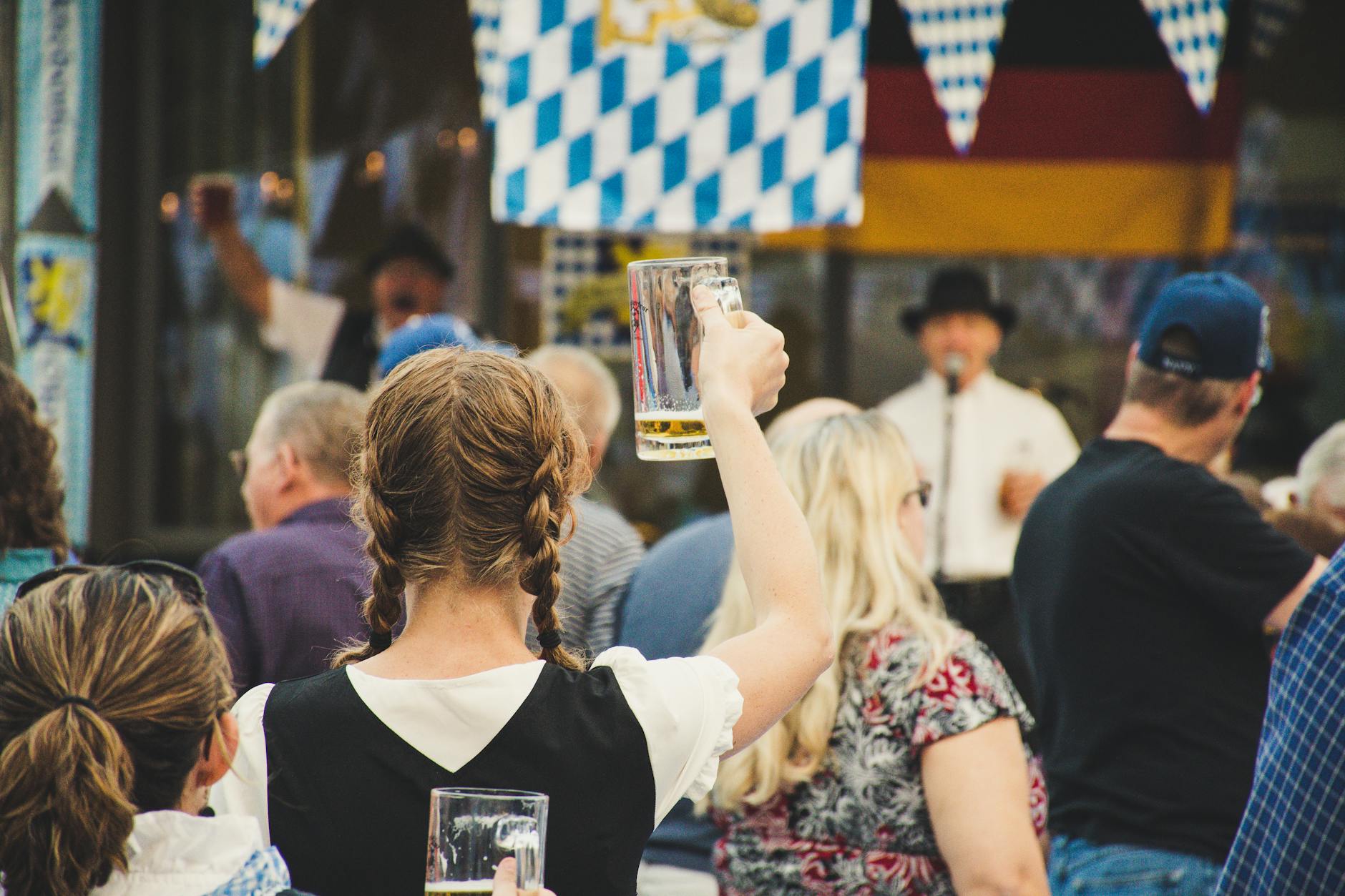
Your first Wiesn is unlike anything else on Earth: a 16-day, six-million-person village of giant beer cathedrals, brass bands, Hendl-roasted air and total strangers becoming table-family by lunch. These Oktoberfest first time tips are written by Munich locals to save you the rookie mistakes – the queues outside full tents, the overpriced Tracht from the wrong shop, the moment you realise the beer is 6% and you’ve had three. Below you’ll find 30 essential tips across 5 categories (timing, tents & seating, what to wear, food & drink, etiquette & safety), plus quick facts, FAQs and a budget breakdown so you arrive in 2026 ready to enjoy the world’s biggest folk festival like you’ve done it before.
Oktoberfest 2026 Quick Facts
- Dates 2026: Saturday 19 September – Sunday 4 October (16 days)
- Opening tap: Noon, Saturday 19 September at the Schottenhamel tent
- Hours: Tents open 10am weekdays, 9am weekends; last beer ~22:30, tents close 23:30 (Käfer & Wein-zelt until 01:00)
- Entry: Free – no ticket exists. Anyone selling “Oktoberfest tickets” is scamming you
- Beer price 2026: €14.80 – €15.90 per Maß (1 litre) on the city’s official list, averaging €15.61; the Augustiner-Festhalle is the cheapest big tent at €14.90, most charge €15.80
- Food prices: Half Hendl ~€17–20, Schweinsbraten ~€18–22, Brez’n ~€6–7
- Cash vs card: Most big tents now accept card, but cash is faster and many smaller stands are cash-only
- Dress code: Tracht (lederhosen / dirndl) optional but warmly encouraged
- Kids welcome: Yes – but children under 6 cannot be in the beer tents after 8pm
- Location: Theresienwiese (U4/U5 “Theresienwiese” or U3/U6 “Goetheplatz” / “Poccistraße”)
The 30 Oktoberfest First Time Tips (Every Wiesn Beginner Should Read These)
This is the heart of the guide. The 30 tips below are grouped loosely into timing, seating, dress, food & drink, and etiquette & safety. They’re ordered the way a local would actually walk you through Oktoberfest first time tips over a coffee – in roughly the order you’ll need them.
1. Pick the right weekend (and avoid “Italian Weekend”)
The second weekend of Oktoberfest is informally called Italienerwochenende – Italian Weekend – when roughly 200,000 visitors from northern Italy descend on Munich. Tents fill earliest, queues are longest and many tents go red-flag (closed to walk-ins) by mid-morning. For your first Wiesn, aim for the opening weekend (after the noon tap on Saturday) or, even better, any weekday in the second week. The middle Tuesday is also family day with discounted rides. Avoid the very last weekend if you want anything resembling a calm seat.
2. Arrive EARLY on weekends
Tent gates open at 9am on Saturdays, Sundays and public holidays. The popular tents (Hofbräu, Hacker, Schottenhamel, Löwenbräu) routinely hit capacity and close their doors by 10:30am on busy weekends. If you want to walk into a big tent on a Saturday without a reservation, plan to be queueing at the entrance by 8:30am at the latest. Yes, that means breakfast before the U-Bahn. It feels brutal; it is the only reliable strategy.
3. Or come on a weekday afternoon for spontaneity
The single best-kept secret of Oktoberfest: Monday to Thursday between 10am and 3pm, almost every tent has unreserved seats. You can stroll in at 11am, find a bench, order a Maß and feel like a local. The music is still going, the food is still being served, and you don’t have to set an alarm. If you only have one Wiesn day and any flexibility, make it a Tuesday or Wednesday.
4. Free entry – no ticket needed
Oktoberfest is free to enter. There is no admission ticket, no wristband, no gate fee. Anyone online selling “Oktoberfest entry tickets” is scamming you. You only pay for what you eat, drink and ride. Tent reservations exist (see tip 5) but they’re not the same as entry tickets.
5. How tent reservations actually work
The reservation itself is free – but you have to commit to a food & drink minimum (typically 2 Maß + half a chicken per person, paid up front as vouchers). Reservations are made directly with each tent operator from January/February for the following Wiesn and usually sell out by spring. A typical 10-person table for an evening slot costs around €450–€700 in vouchers. See our Oktoberfest reservations guide for the booking links to every big tent.
6. No reservation? Here’s the timing strategy
By Munich law, big tents must keep at least 25% of seats free for walk-ins on weekdays, and 40% on weekend mornings until 3pm. Translation: tables exist for you, you just need to be there first. Weekdays – arrive before 10:30am for a guaranteed seat, before 14:00 to still get something. Weekends – before 9am or you’re gambling. Once a tent is full, security closes the doors and only lets people in as others leave.
7. Where to sit if everything is full
Three back-up plans. First: the outdoor beer gardens in front of each big tent – they have no reservations at all, just walk up. Second: the smaller mid-size tents like Käfer Wiesn-Schänke (upscale), Marstall (boutique horse-themed), Glöckle Wirt (the tiniest), Heimer Enten- und Hühnerbraterei or Able’s Kalbsbraterei – atmosphere intact, queues much shorter. Third: the Oide Wiesn (€4 entry), which by rule keeps a third of all seats unreserved at all times and is a calmer, more traditional experience.
8. Wear Tracht – it makes the day better
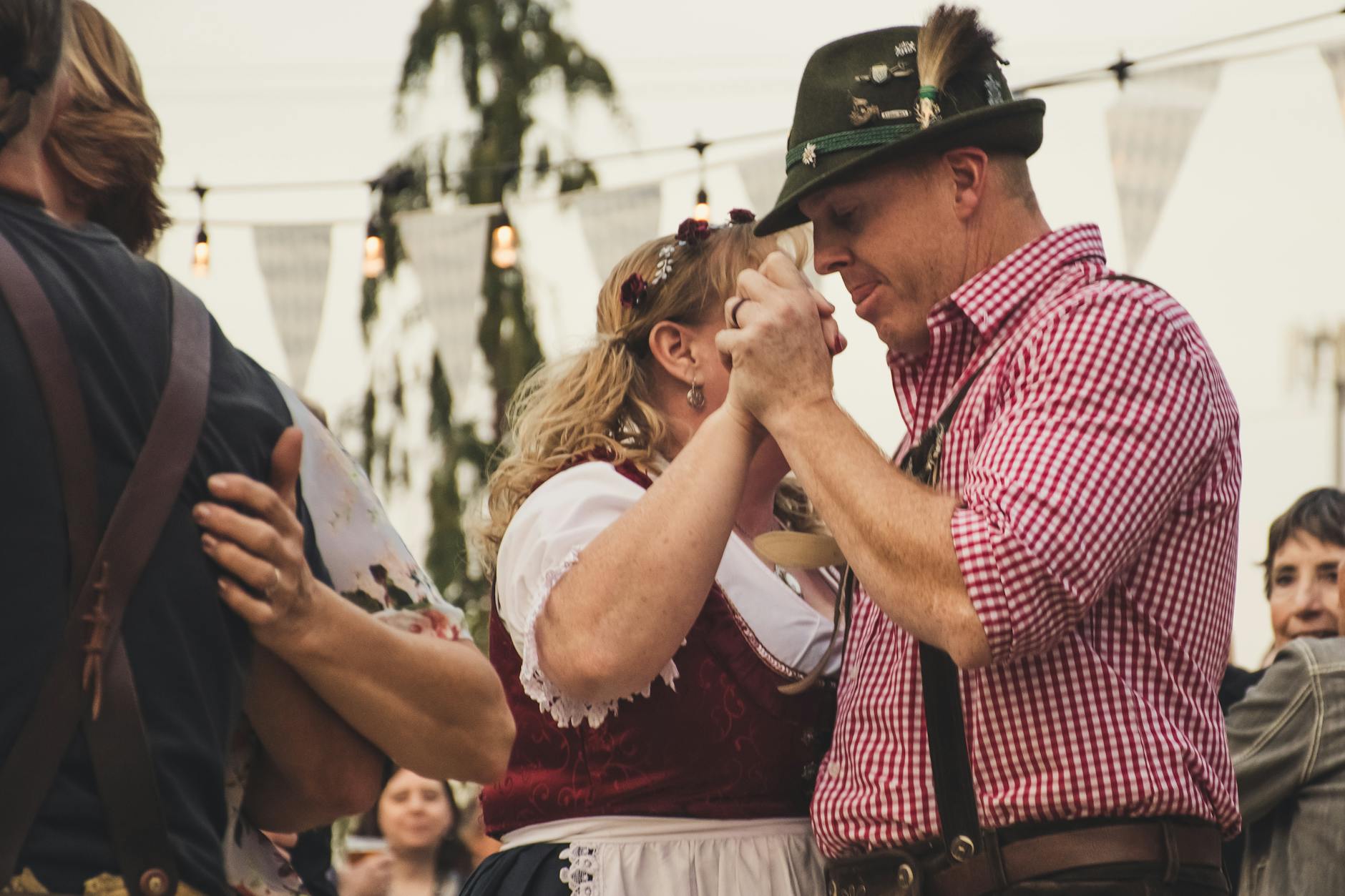
You don’t have to wear Lederhosen or a Dirndl, but if you do you’ll feel ten times more inside the experience. Locals overwhelmingly wear Tracht and they appreciate visitors who join in (genuinely – not ironically). Buy a quality piece from a Munich store like Angermaier, Lodenfrey, Lola Paltinger or Trachten Werner; expect €150–€350 for a real outfit. Renting is also fine – Bavarian Outfitters and Munich Tracht Rental do daily rentals from around €60. See our full what to wear at Oktoberfest guide.
9. Know your dirndl bow placement
The bow on a dirndl apron sends a signal. Tied on the left means single and looking. Tied on the right means taken – married or in a relationship. Tied in the centre front traditionally means virgin and is usually worn by young girls; many adults tie it centre simply when they don’t want to make a statement. Tied in the back means widowed – or, much more commonly today, “I’m a server working here.” Plenty of people ignore the convention now, but everyone over thirty in Munich still notices, so place it deliberately.
10. Don’t wear costume-shop Tracht
The shiny polyester “Beer Wench” outfit from a Halloween shop is the single biggest first-timer giveaway. Locals see it and quietly file you under “tourist.” The same goes for fake fur lederhosen, neon Hawaiian-pattern dirndls and any outfit with built-in suspenders that say “Oktoberfest!” Even a budget €80 dirndl from C&A or a real second-hand pair from Holareidulijö looks infinitely better than a costume.
11. Cash is king – but cards now work
Most of the 14 big tents accept card payments at the table from 2024 onwards – a big change from the cash-only era. That said, cash is still faster, smaller stands are cash-only, and you’ll need coins for the toilet attendants (~€0.50). Bring €150–€200 in cash per Wiesn day. Withdraw it before you arrive at the Theresienwiese – the on-site ATMs have queues 20 deep and routinely run out.
12. Tipping: 10–15%, in cash, into the server’s hand
Wiesn servers (Bedienung) work brutal 12-hour shifts and depend on tips. Round up generously – 10–15% is standard, more if the service is good. The Bavarian way is to hand the cash directly to the server and say the total you want her to take (“’60 bitte” if your bill is €53 and you want to tip €7). Don’t leave money on the table – it will be assumed lost. Tip your first server well and you’ll get refills noticeably faster all afternoon.
13. Beer comes in 1-litre Maß – there is no other size
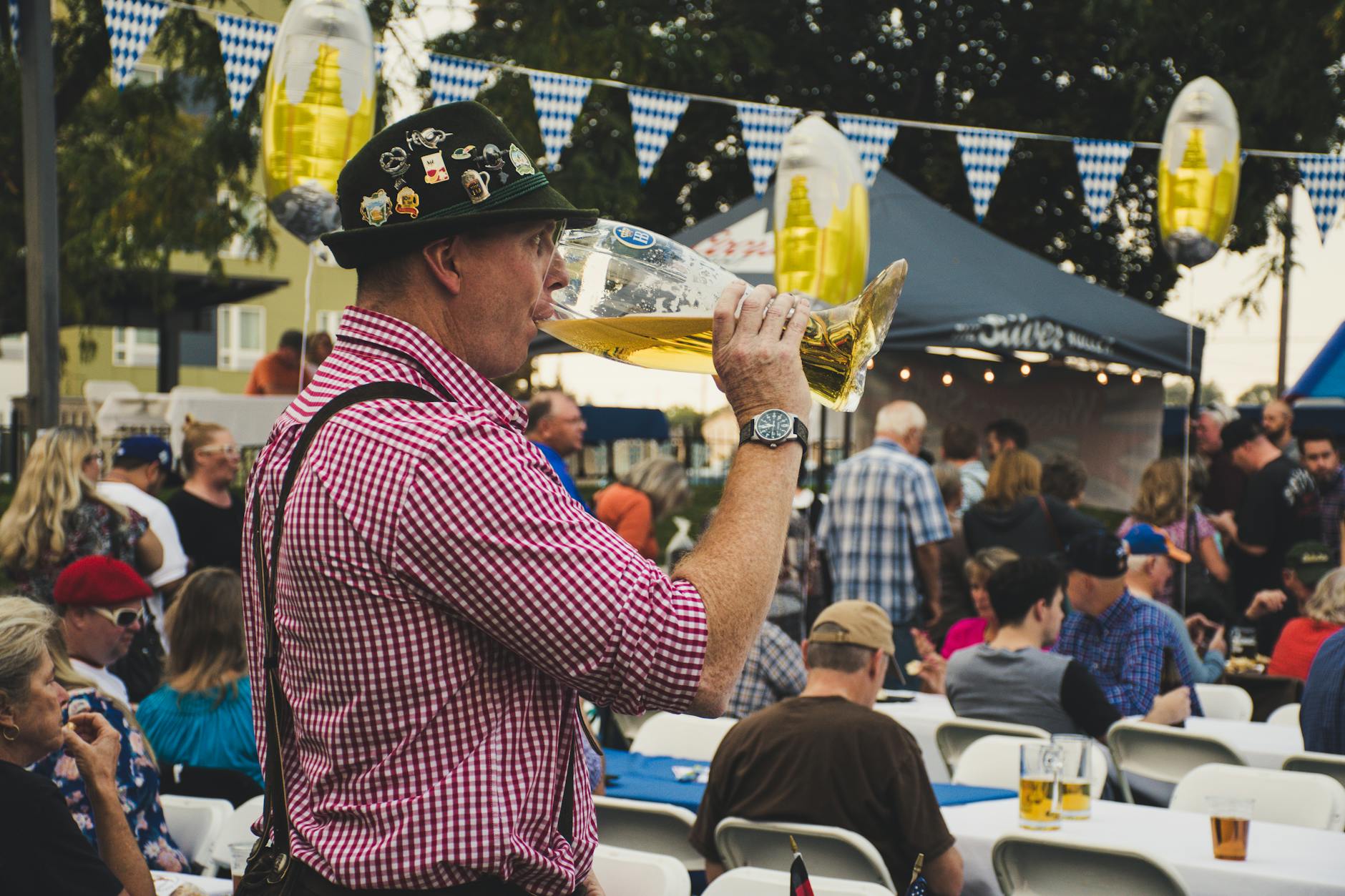
Inside the big tents, beer is served only in Maßkrüge – one-litre glass steins. There is no half-litre, no small, no “I’ll just try a taster.” The only exceptions: wheat beer (Hefeweizen) comes in a 0.5L glass at a few tents, and non-alcoholic Spezi/Apfelschorle is available. Each tent serves only one brewery (Augustiner, Paulaner, Spaten, Hofbräu, Löwenbräu or Hacker-Pschorr) and the beer is the special Wiesnbier, brewed stronger for the festival.
14. Pace yourself – Wiesnbier is 6%+ ABV
Oktoberfest beer is 5.8–6.4% alcohol – about 50% stronger than the lager you might be used to. A litre of Wiesnbier is the alcohol equivalent of roughly 3.5 American pints. Two Maß is a happy afternoon. Three is the limit for most adults. Four is when first-timers end up at the Bierleichen (“beer corpses”) area behind the medical tent. Drink water between Maß – the servers will bring it free – and don’t feel any pressure to keep up with the German guy across the table.
15. Eat regularly – and eat the right things
Big breakfast at the hotel, proper meal in the tent, snack in the afternoon. The classics: Schweinsbraten (roast pork in dark beer gravy, served with a giant dumpling), halbes Hendl (half roast chicken, the unofficial Wiesn dish), Schweinshaxe (crackling-skinned pork knuckle), Steckerlfisch (whole mackerel grilled on a stick – grab it at the outdoor stands), Obatzda (creamy Camembert spread), and the giant pretzel (Brez’n) you tear apart while waiting for the main course. Vegetarians: Käsespätzle, Brézn with Obatzda, and Reiberdatschi (potato pancakes).
16. Bench-dancing OK; table-standing = ejection
This is the rule that catches more first-timers than any other. Standing on the wooden bench behind your table and dancing during a song? Encouraged, expected, glorious. Climbing onto the table itself? Security will be on you within seconds and you’ll be marched out of the tent and barred for the day – no second chances, no exceptions, no “I didn’t know.” Tables are for steins and food only. Benches are the dance floor.
17. Toast properly: Prost!
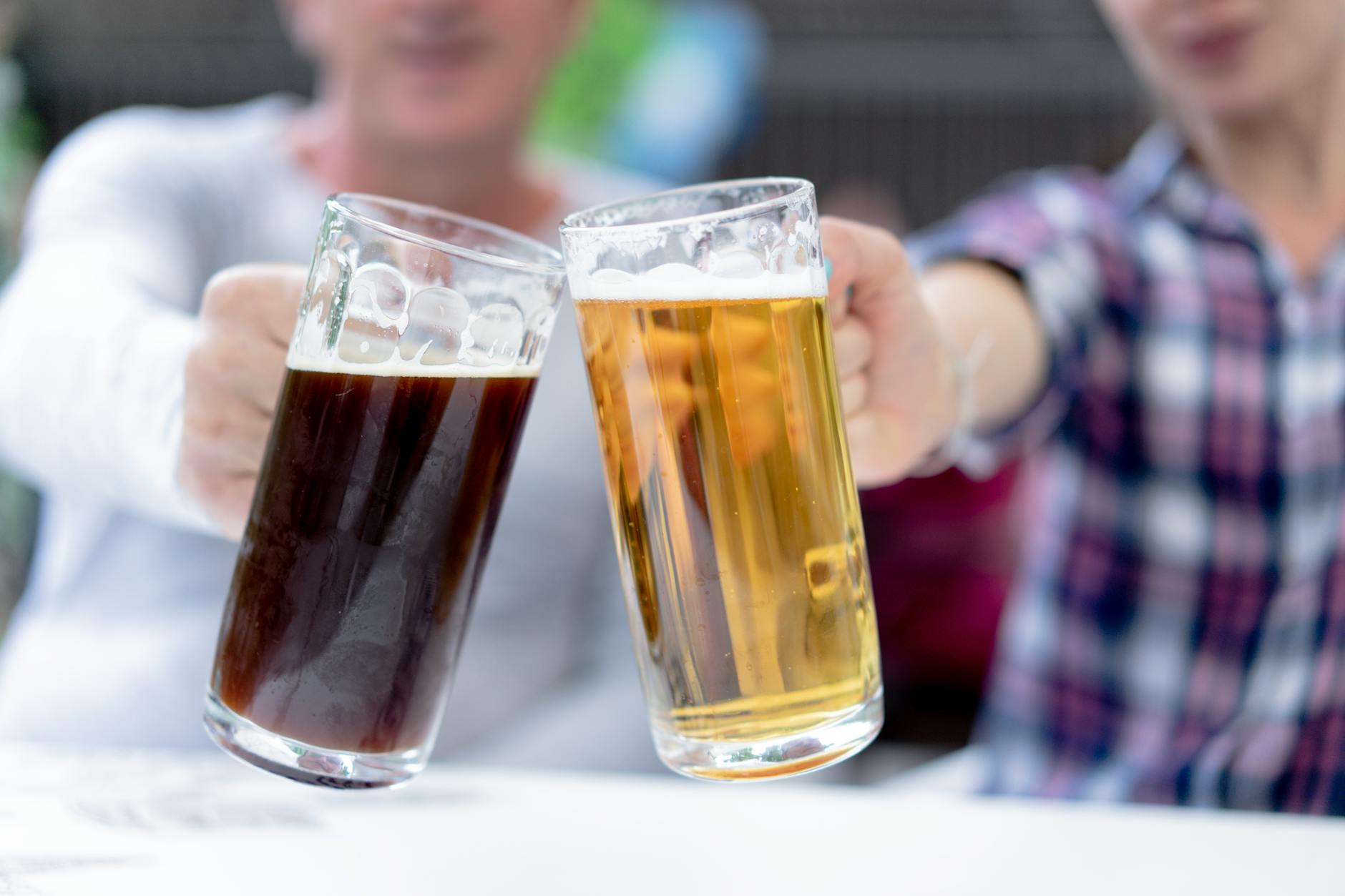
Before you take the first sip of every Maß, you toast. Raise your stein, say “Prost!” (or the fuller “Prosit der Gemütlichkeit!”), make eye contact with each person you’re clinking with, and clink at the thick base of the mug, not the rim (those glasses chip easily and a cracked Maß sprays beer like a fire hose). German superstition says no eye contact = seven years of bad luck and bad sex. Don’t test it.
18. Small bag only – the 3-litre rule
Since 2017, bag size at Oktoberfest is strictly enforced. Maximum: 3 litres of volume OR no bigger than 20 × 15 × 10 cm – roughly the size of a small handbag. Anything larger and security will turn you away at the gate. There are paid luggage lockers at entrances P1, P5, P8 and P10 (€5 per item) for bigger bags, but the queues are awful by mid-morning. Travel light: phone, wallet, ID, lipstick / lip balm, hair tie. That’s genuinely all you need.
19. No backpacks in tents
Even if your backpack would technically fit the 3-litre limit, most tents refuse backpacks of any size at the door for security reasons. Crossbody bags, small handbags and bum bags / fanny packs are fine. If you arrive with a backpack, you’ll be sent to the luggage lockers and you’ll lose your spot in the queue. The simple solution: don’t bring one.
20. Bring ID – always
The legal drinking age for beer in Germany is 16, but at Oktoberfest many tents enforce 18+ at the door from evening onwards, and some popular tents (Hofbräu, Hacker) run 21+ door policies on busy nights. Bring a physical photo ID – passport, EU ID card or driving licence. Photos of your ID on your phone are not accepted. American visitors: yes, even if you look 35, they will ask.
21. Bathroom strategy
In-tent toilets get queue-of-doom long after 3pm. Better strategy: use the large public toilet blocks outside the tents – they’re cleaner, faster, and you only have to walk 30 seconds. Bring €0.50 in change for the attendant. Women: go in pairs and someone keeps your seat by leaving a Maß glass and jacket on the bench. Men: there are huge bays of urinals everywhere and you’ll never wait more than two minutes.
22. Phone charging and lockers
Your phone will die. Between photos, WhatsApp pinging, Google Maps and the cold, a full battery rarely lasts past 5pm. Bring a small power bank (under 3L, see tip 18). Several big tents (Hofbräu, Schottenhamel, Augustiner) offer phone-charging lockers near the entrance for a few euros, but they sell out by lunchtime. The fall-back: ask politely at the bar – some staff will plug your cable in for an hour if you tip.
23. Pickpockets target tents – front pocket only
Oktoberfest is one of the largest pickpocket operations in Europe each year. Munich police report hundreds of stolen wallets and phones every Wiesn weekend. Rules: phone and wallet in front trouser pocket only (lederhosen have a perfect inner pocket for this); never put a bag on the floor or hanging off the back of the bench; never leave your seat without your valuables; split your cash across two pockets. Don’t go for the inviting friendly stranger’s “let me take a photo of you all” offer at the entrance.
24. Sing “Ein Prosit der Gemütlichkeit”
Every band in every tent plays “Ein Prosit der Gemütlichkeit” roughly every 15–20 minutes. The whole tent stands up on the benches, sways with arms around each other and roars the chorus: “Ein Prosit, ein Prosit, der Gemütlichkeit!” (a toast to good times). It ends in a count – „Oans, zwoa, drei, g’suffa!“ – and everyone drinks. Learn the four lines on the U-Bahn ride over. Joining in is the single fastest way to feel like you belong.
25. The “O’zapft is!” opening at Schottenhamel
At 12:00 noon on opening Saturday (19 September 2026), the Mayor of Munich taps the first keg at the Festhalle Schottenhamel and shouts “O’zapft is!” (“It’s tapped!”). Twelve cannon shots from the Bavaria statue announce that beer is now flowing across the Wiesn. No tent serves beer before this moment. The mayor traditionally hands the first Maß to the Bavarian Minister-President. If you’re in the Schottenhamel beer garden or watching on Bavarian TV (BR), it’s pure Bavarian theatre and the official start of your Wiesn.
26. Tents close 23:30 – but two go later
Music stops at 22:30, last orders soon after, tents empty by 23:30. The exceptions: Käfer Wiesn-Schänke and Wein-Zelt both run until 01:00, but only with a confirmed evening reservation – these get booked out months in advance and the door policy is strict. Without a Käfer reservation, your post-tent plan is the surrounding U-Bahn nightlife (see tip 30) or a Schnitzel at a late-night Gäststatte.
27. Last U-Bahn home (and the platform crush)
Trains run until ~01:30 from Theresienwiese and all night on weekends. The catch: at closing time, 30,000 people leave the tents within 45 minutes. The platform at Theresienwiese (U4/U5) becomes a slow-moving river and waits of 30–60 minutes to even reach the platform are normal. Better plan: walk five minutes to Goetheplatz (U3/U6) or Poccistraße (U3/U6) instead – both are far quieter. Save offline U-Bahn maps before you arrive; phone signal at peak time can drop entirely.
28. Don’t drink and bike
Munich is a cycling city and tempting to wobble home on a Lime or your own bike. Don’t. The police set up a special Wiesn perimeter operation each year and stop hundreds of cyclists each night for breath tests. The German blood-alcohol limit for cycling is 1.6‰ – above that is a criminal offence with a fine of €500+, a court date and a mandatory medical-psychological assessment that costs another €750. One Maß puts most adults over the absolute (0.3‰) reckless-cycling threshold. Take the U-Bahn or a taxi.
29. Don’t lose your group – pick a meeting spot
Phones die, signal disappears, voices are lost in 6,000-person tents. Before you go in, pick a clear meeting point for if you get separated. The best three: the Bavaria statue (the giant bronze woman on the hill above the Wiesn, visible from anywhere), the fountain in front of the Riesenrad (the Ferris wheel), or the entrance to your starting tent. Agree a time too: “If we lose each other, Bavaria statue at 6pm.” Future you will thank present you.
30. Plan the hangover – Katerfrühstück the morning after
Bavarians have a word for hangover breakfast: Katerfrühstück (literally “tomcat breakfast”). The traditional cure is Weißwurst – white veal-and-pork sausages eaten with sweet mustard, a fresh pretzel and a wheat beer (yes, more beer; it works). Best spots: Weisses Bräuhaus (Tal 7), Nuernberger Bratwurst Glöckl (Frauenplatz 9) or any Augustiner in the Altstadt. By tradition, Weißwurst must be eaten before the church bells ring noon – which lines up neatly with the time you’ll finally get out of bed.

Best Tents for Your First Oktoberfest
With 14 big tents and 21 mid-size tents to pick from, choice paralysis is real. Three Oktoberfest first time tips on tent selection:
- Augustiner-Festhalle – the most authentic local choice. Beer is still served from wooden barrels, the atmosphere is warm rather than rowdy, families and older Bavarians mix with travellers. The best first-timer tent if you want to feel Munich.
- Hofbräu-Festzelt – the international party tent. Loudest band, biggest standing area, statistically the most Americans, Australians and Brits. Brilliant fun, very tourist-heavy, expect a queue.
- Käfer Wiesn-Schänke – the upscale option. Excellent food, late-night licence until 1am, expect to spot the occasional German footballer or B-list celebrity. Reservations essentially mandatory for evenings.
- Marstall – the boutique horse-themed tent, opened in 2014. Beautiful interior, smaller scale (~3,200 seats), more elegant atmosphere, easier to get in.
- Schottenhamel – the historic opening tent. Skews young and German on weekends. Great if you want a 20-something crowd.
For a full tent-by-tent breakdown, see our Oktoberfest beer tents guide.
Oktoberfest with Kids: The Rules
Oktoberfest is genuinely family-friendly during the day. Key rules to know:
- Children under 6: not allowed inside the beer tents after 8pm under any circumstances (including the Oide Wiesn).
- Children under 16: must be accompanied by a parent or guardian on the festival grounds after 8pm.
- Tuesday is Family Day (Familientag): discounted ride and food prices until 7pm.
- Family-friendly zone: Straße 3 Ost has kids’ rides, a pram parking area, a baby-changing station and a family beer garden.
- Best time to come with kids: weekday morning to 4pm. After that, the crowds become genuinely overwhelming for small children.
For the full family plan — the best days, rides by age and where to eat with children — read our Oktoberfest with kids guide.
Budget: How Much Will Your First Oktoberfest Cost?
Honest numbers for one adult, 2026 prices:
- One day, moderate: 3 Maß (€48) + Hendl + Brez’n + dessert (€35) + tip (€10) + 2 rides (€15) + U-Bahn day pass (€9) = ~€120–€140 per day.
- One day, big: 4 Maß + Schweinshaxe + sides + Ferris wheel + souvenir Maß + late-night taxi home = ~€200–€260 per day.
- Three-day Wiesn weekend (no Tracht purchase): roughly €450–€750 on food, drink, transport and incidentals.
- Tracht outfit: add €150–€350 to buy or €60–€90/day to rent.
- Hotel: expect €150–€350/night for a basic 3-star during Wiesn. See where to stay for Oktoberfest.
When (And How) To Leave If You’ve Had Enough
Knowing when to call it is itself an Oktoberfest first time tip. Warning signs: you’ve lost track of how many Maß, you’re struggling to make change, the tent is spinning slightly, you’re feeling cold and sweaty at the same time. Drink a litre of water immediately, eat a pretzel, get fresh air outside the tent for 15 minutes. If a friend is in worse shape, the medical tent (Sanitätszelt) of the Red Cross is on Matthias-Pschorr-Straße and free to use – no judgement, around 600 people are treated there every weekend. Don’t put a passed-out friend on a U-Bahn alone; share a taxi.
What to Wear if You’re Not Doing Tracht
Tracht is optional, regular clothes are absolutely fine – but there’s an unwritten dress code. Yes: jeans or chinos, a smart shirt or jumper, decent shoes or trainers, a warm layer for the evening. No: shorts (you’ll look out of place – even in 28°C Munich locals wear long lederhosen or trousers), swimwear, jerseys/sportswear, football shirts (genuinely a problem at some tents), open-toed sandals (it gets sticky), heels above 5cm (you’re walking and standing on benches for 10 hours). The most underrated item: a thick pair of socks and broken-in shoes.
Weather: What to Expect on the Theresienwiese
Late September and early October in Munich is a coin flip. Average daytime highs are 15–20°C; nights drop to 6–10°C and can be properly cold. There’s often one full rainy day in any three-day Wiesn trip. Bring: a packable rain jacket, a warm cardigan or Trachtenjacke for the evening, an umbrella (allowed) and waterproof footwear. The tents are heated to 25°C inside even when it’s 5°C outside, so dress in layers you can leave with the cloakroom (€3–5).
Photography Etiquette
You’ll want photos and you should take them. A few common-sense rules: don’t shove your phone in strangers’ faces – ask first, almost everyone will say yes. Don’t stand on benches blocking the band view to get a video; sit down between songs. Don’t photograph servers without asking – they’re working and dealing with drunk people all day. Never photograph someone passed out, even “as a joke.” And the absolute best Wiesn photos are at golden hour around 18:30, not at peak chaos.

Health & Safety: Sichere Wiesn and the Safe Space
Munich runs an excellent women’s safety initiative called Sichere Wiesn für Mädchen und Frauen (Safe Wiesn for Girls and Women), operating since 2003. The Safe Space is located under the Bavaria statue in the Service Centre, next to the police and Red Cross. Any girl or woman who feels unsafe, has lost her group, has had her drink spiked, has experienced harassment or assault, or just needs help getting home can walk in. Staff offer counselling, free phone calls, taxi vouchers, blankets and clothing, plus accompaniment to the police if needed. Hours: 6pm–01:00 weekdays, 15:30–01:00 Fri–Sun and German Unity Day (3 October). The Safe Space is open to everyone who identifies as a woman.
Other safety contacts to save: Emergency 112 (medical, fire), Police 110, Red Cross medical tent on Matthias-Pschorr-Straße, and the official Wiesn lost-property office at the south entrance.
Top Mistakes First-Timers Make
The honest list. Avoid these and you’re ahead of 90% of first Wiesn visitors:
- Trying to do too many tents in one day – commit to one tent for an afternoon.
- Arriving at 14:00 on a Saturday without a reservation and being shocked at closed doors.
- Not eating before or during the first Maß.
- Forgetting cash and queueing 40 minutes for an on-site ATM.
- Wearing a costume-shop dirndl and getting laughed at quietly.
- Standing on the table – see tip 16.
- Walking back to the hotel through the dark park behind the Theresienwiese instead of the well-lit main roads.
- Drinking your last Maß at 22:25 and missing all the singing.
Useful German Phrases
- Ein Maß, bitte. – One litre of beer, please.
- Noch a Maß! – Another beer! (Bavarian dialect; sounds friendlier than the standard German.)
- Zahlen, bitte. – The bill, please.
- Stimmt so. – Keep the change.
- Prost! – Cheers!
- Servus! – Hi / bye (the all-purpose Bavarian greeting).
- Ist hier noch frei? – Is this seat free? (How you join a stranger’s table – totally normal.)
- I mog di! – I like you! (Bavarian; surprisingly common after the third Maß.)
After the Tents: Late-Night Munich
23:30 doesn’t have to be the end. Munich’s nightlife absorbs the Wiesn crowd in a few predictable directions. Around Sonnenstraße / Maximiliansplatz you’ll find clubs like P1 and Pacha; for a calmer beer, head to the Glockenbachviertel bars on Holzstraße and Hans-Sachs-Straße. Several Wiesn-themed late-night spots like Tollwood Afterwiesn and Substanz stay open until 5am during Oktoberfest. Munich U-Bahn runs Friday and Saturday nights, but Sunday–Thursday you’ll need a night bus or taxi after ~01:30.
Oktoberfest First Time Tips: FAQs
Do I need to book anything in advance for my first Oktoberfest?
Yes – but only your hotel (book by January for September 2026; basic 3-star rooms in central Munich are €150–€350 a night during Wiesn) and ideally your flights. Tent reservations are optional and only useful for groups of 6+; you can absolutely enjoy Oktoberfest as a walk-in if you follow tips 2, 3 and 6. There are no entry tickets to buy.
How much should I budget per day at Oktoberfest?
Realistic numbers: €100–€150 per adult for a moderate day (3 Maß, a proper meal, U-Bahn, tip), €200–€260 for a big day with rides, souvenirs and a late taxi. That’s on top of hotel and flights. Backpackers can do it for €80 by sharing a Hendl and walking back; couples easily hit €350 with Tracht rental and reservations.
Can I bring kids to Oktoberfest?
Yes – it’s genuinely family-friendly during the day. Children of any age are welcome on the grounds and in the tents until 8pm. After 8pm, children under 6 cannot enter or remain in the beer tents, and under-16s must be with a parent. Aim for a Tuesday (Family Day, discounted rides) and stick to the morning or early afternoon. The Strasse 3 Ost area is built for families.
Cash or card at Oktoberfest?
Both, but cash is faster. Since 2024 every big tent accepts card at the table, but the transaction takes 30–60 seconds vs. instant cash. Smaller food stands and ride operators are still mostly cash-only. Bring €150–€200 in cash per day, and have your card as back-up. Withdraw before arriving at the Theresienwiese.
What’s the best day to attend Oktoberfest as a first-timer?
A Tuesday or Wednesday in the second week – specifically Tuesday 29 September or Wednesday 30 September 2026. You’ll get unreserved seats in any tent without queueing, Family Day discounts (Tuesday), full festival atmosphere, and a much shorter U-Bahn ride home. Avoid: any Saturday, the Italian weekend (26–27 September 2026), and the final Sunday (4 October 2026) when locals come for the closing fireworks.
Is Oktoberfest worth it as a solo traveller?
Absolutely – maybe more than as a couple. Tables seat 8–10 strangers and within one Maß you’ll be deep in conversation with whoever you sat next to. Solo Wiesn visitors come home with the best stories. Go in Tracht, sit in the outdoor section of a calmer tent for your first hour, and let the locals do the rest.
Your First Oktoberfest, Sorted
That’s the full set of Oktoberfest first time tips a Munich local would give you over a pre-Wiesn pretzel. Book the hotel, learn the chorus to Ein Prosit, put your phone in the front pocket of your lederhosen, and remember tip 16 above all: benches yes, tables no. Everything else falls into place once you’re sat at that long wooden table with a Maß in front of you and a brass band winding into So ein schöner Tag.
Plan the rest of your trip with our full Oktoberfest Munich guide, double-check the 2026 Oktoberfest dates and schedule, pick your tent in the beer tents guide, book ahead via the tent reservations guide, sort the outfit with what to wear at Oktoberfest and lock down a bed via where to stay for Oktoberfest. Prost – and see you on the Theresienwiese.