The Bavarian Alps from Munich: Complete Mountain Guide
The Alps start an hour south of Munich. Rail times, real prices, the Zugspitze's €78 catch, the train that splits into three, and which mountain days actually repay the effort.
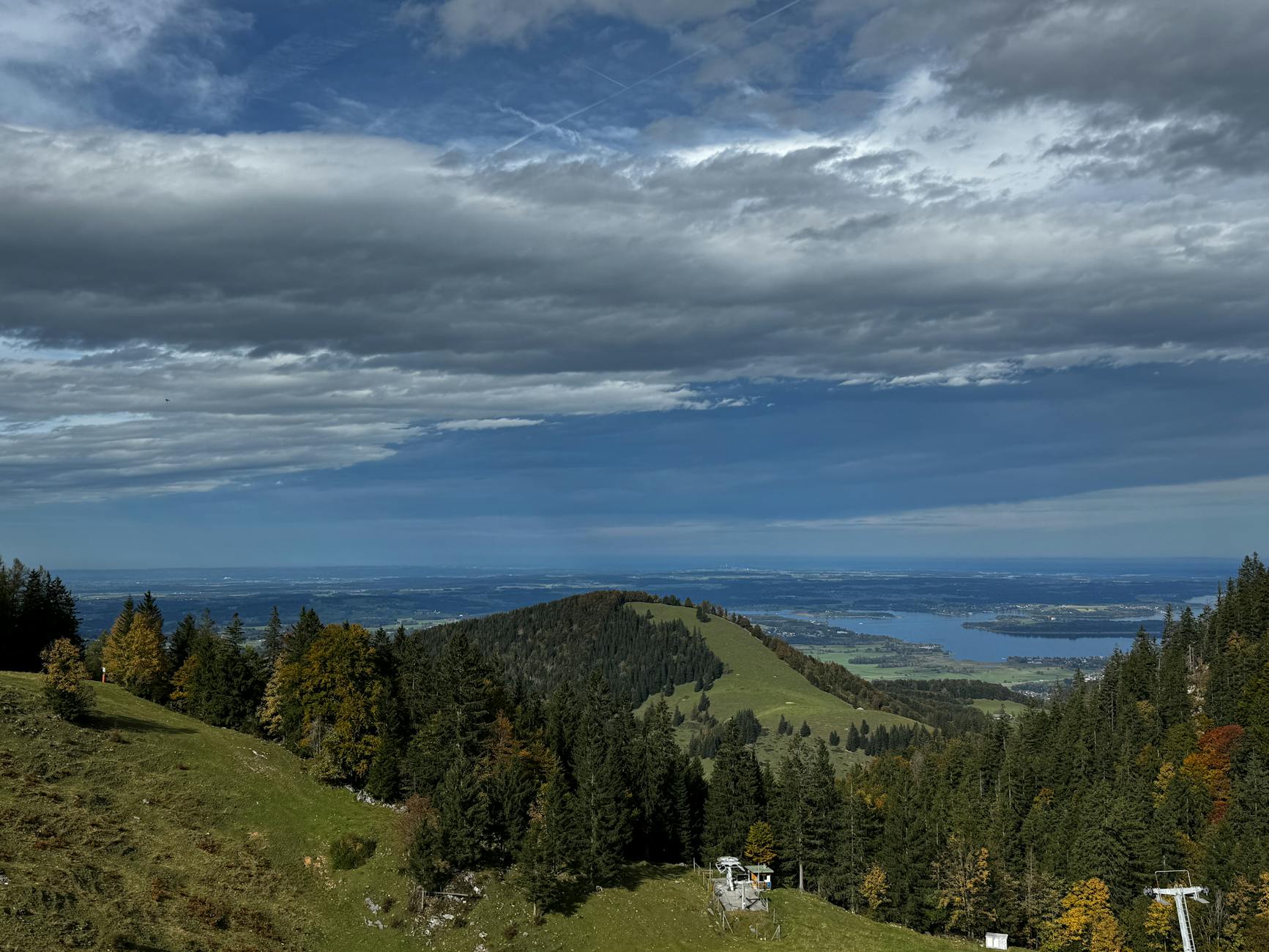
Forty-five minutes. That is how long it takes to be standing at the edge of an Alpine lake with the limestone wall of the Benediktenwand in front of you, having left Munich Hauptbahnhof on an ordinary regional train. The Bavarian Alps are not a separate holiday from Munich. They are a day trip, and on a good day they are a half-day trip.
This matters more than most guides admit. Visitors routinely book two nights in Garmisch-Partenkirchen, move hotels, drag suitcases across a platform at Munich Hbf, and gain roughly ninety minutes of mountain time over someone who simply took the 08:32 out and the 18:04 back. Unless you are climbing something that needs an alpine start, keep your Munich room and treat the mountains as an out-and-back.
What follows is the whole southern arc — the Zugspitze, the Oberland lakes, the Königssee, the castles and the gorges — with journey times, real prices, and honest notes on which of them repay a full day and which do not.
The Bavarian Alps from Munich at a glance
TOKEN_HERO| Destination | Rail time (each way) | Day length | Verdict |
|---|---|---|---|
| Tegernsee | 1h05 (BRB RB57) | Half day | Easiest first taste of the Alps. Lake, mountains, brewery. |
| Schliersee / Bayrischzell | 1h00 / 1h20 (BRB RB55) | Half to full day | Quieter than Tegernsee. Bayrischzell puts you under the Wendelstein. |
| Lenggries | 1h05 (BRB RB56) | Full day | Brauneck cable car; the best value lift in the Oberland. |
| Garmisch-Partenkirchen | 1h20 | Full day | The obvious base. Gorge, cable cars, the Zugspitze above it. |
| Zugspitze summit | 1h20 + ~1h15 of lifts | Full day | Germany’s highest point. €78 return. Read the caveats below. |
| Kochelsee / Walchensee | ~1h + bus | Full day | The Herzogstand ridge. Best walk-to-effort ratio in this guide. |
| Chiemsee | ~1h | Full day | Lake plus Ludwig II’s unfinished Versailles. |
| Berchtesgaden / Königssee | ~2h30 | Long full day | The most beautiful water in Germany. Also the longest sit. |
| Füssen (Neuschwanstein) | 2h–2h15 + bus 78 | 10–12 hours | A castle day, not a mountain day. Book the timed slot weeks out. |
How close are the Alps to Munich, actually?
Munich sits on a gravel plain at about 520 m. The land stays flat and then stops being flat rather suddenly around Holzkirchen, forty minutes south. From the top floors of the city — the Alter Peter tower, the Olympiaberg hill in the Olympiapark — you can see the whole northern wall of the Alps on a clear day, which happens most often after a föhn wind clears the haze in autumn.
Three rail corridors run south, and knowing which is which saves you an hour of platform confusion:
- The BRB (Bayerische Regiobahn) fan — Munich to Holzkirchen, then splitting to Tegernsee, Lenggries and Bayrischzell. Regional, cheap, every hour.
- The Garmisch line — Munich to Garmisch-Partenkirchen in about 1h20, continuing to Mittenwald and Innsbruck. This is the Zugspitze line.
- The Salzburg line — east through Rosenheim, serving Chiemsee and, with a change at Freilassing, Berchtesgaden.
All three are regional services, which means a Bayern-Ticket covers them. It does not cover the ICE, and it is not valid before 09:00 on weekdays — a rule that quietly shapes every itinerary in this guide. Plan around the 09:02, not the 08:02.
The train that splits into three
The single most common mistake on a first Alpine day trip from Munich has nothing to do with weather or boots. It is sitting in the wrong carriage.
The BRB leaves München Hbf as one long train made of three separate portions. The front goes to Bayrischzell. The middle goes to Lenggries. The rear goes to Tegernsee. At Holzkirchen the Bayrischzell portion is uncoupled and goes its own way; the remaining two run on together to Schaftlach, where they split again. There is no walk-through connection between portions. If you board at the wrong end, you will end up in a different valley, roughly forty minutes from where you meant to be, on a line with hourly service.
Insider tip: the destination is displayed on the side of each carriage and announced on the platform, but the announcement is in German first and the platform is long. Walk to the display, read it, then board. Do not follow the crowd — half of them are going somewhere else by design.
The Zugspitze: Germany’s highest point, and what €78 buys
The Zugspitze is 2,962 m, the highest ground in Germany, and the return ticket from Garmisch-Partenkirchen is €78 for an adult and €39 for a child aged 6–15 in the summer season, which ran from 23 May in 2026. That is one ascent and one descent, valid across the Zahnradbahn cog railway, the Gletscherbahn and the Seilbahn Zugspitze cable car.
Here is the unflattering part, and you should read it before you book. On a clear day the summit view runs across four countries and is genuinely one of the great panoramas in Europe. On a cloudy day you pay €78 to stand inside a cloud, on a crowded terrace, next to a restaurant, having spent two and a half hours in transit. The summit makes its own weather and it is frequently in cloud when Garmisch below is in sunshine. There is no refund for a white-out.
So: do not pre-book the Zugspitze. Buy the ticket on the day, in Garmisch, after you have looked up. The webcams on the operator’s site show the summit in real time, and if the top is socked in, spend the day on the Partnachklamm and the Eckbauer instead and come back another time. Treating the Zugspitze as a weather-dependent option rather than a fixed plan is the single best decision available to anyone visiting the Bavarian Alps from Munich.
Doing it as the round trip
The ticket allows the “Zugspitze Round Trip” — up one way, down the other — and you should use it. Go up on the cog railway, which grinds through a tunnel inside the mountain and emerges on the glacier plateau at Zugspitzplatt. Come down on the Seilbahn Zugspitze, a single cable-car span that drops to the Eibsee and is, in its own right, one of the more startling pieces of engineering in the Alps. Doing it in that order means the spectacular descent comes when you are tired rather than the slow tunnel.
Budget the full day. Munich to Garmisch is 1h20; Garmisch to the summit and back with time at the top is five to six hours; then 1h20 home. You will not also fit in a gorge walk.
TOKEN_ZUGThe Eibsee alternative
If the summit is clouded or the price is more than you want to spend, take the train one stop past Garmisch to Eibsee and walk the lake circuit instead. It is about 7 km, mostly flat, on a good path, and the water is a startling green over pale gravel with the Zugspitze massif standing directly behind it. It costs nothing. Photographers frequently prefer it to the summit, and they are not wrong.
Garmisch-Partenkirchen: the base that does not require staying over
Garmisch-Partenkirchen is two villages that were merged for the 1936 Winter Olympics and have never entirely agreed about it. Partenkirchen, east of the river, is the older half and much the prettier — Ludwigstraße is a run of painted façades and overhanging eaves that looks the way people imagine Bavaria looks. Garmisch, west, is the busier and blander half where most of the shops are. Most visitors arrive at the station, walk into Garmisch, and never see Partenkirchen. Cross the river.
The Partnachklamm
The Partnachklamm is a gorge roughly 700 m long where the Partnach river has cut a slot through limestone deep enough that the sky becomes a strip. Entry is around €10 for an adult. You walk it on a gallery hacked into the rock wall, through short tunnels, with the water going past very fast and very loud a few metres below. It is wet — genuinely wet, not atmospheric-mist wet — and a jacket is not optional.
From the station it is about a 25-minute walk to the Olympic ski stadium and another 20 up the valley to the gorge entrance, or you can take a bus to the stadium and walk from there. The gorge is open year-round, though it closes at short notice in bad weather, most often in winter when ice falls are a hazard. Check before travelling; the operator posts closures the same morning.
Insider tip: do not turn round at the far end and walk back through the gorge. Continue up the path, cross the valley, and come down via the Eckbauer — either on foot in about two hours or on the small cable car, which lands you back near the stadium. You get the gorge, a ridge walk and an aerial view of the whole valley for a couple of extra euros and no backtracking. In winter the Partnachklamm is arguably better than in summer: the spray freezes into columns down the walls and the crowds thin out. See the Munich winter guide for what else works in the cold months.
The Oberland lakes: Tegernsee, Schliersee, Bayrischzell
This is the Alps at their most accessible — about an hour from Munich, no lifts required, and the mountains rise straight out of the water. If you have one spare day and do not want to spend it in transit, come here rather than Berchtesgaden.
Tegernsee
About 1h05 on the BRB RB57. Tegernsee is the smart one — this is where wealthy Munich keeps its second homes, and the prices in the lakeside cafés reflect that. The Bräustüberl Tegernsee, in the former Benedictine monastery on the lakefront, is the correcting influence: a vast, loud, cash-only hall where the beer is cheap, the tables are shared, and the clientele is entirely local. It is one of the better beer halls in Bavaria and it is a five-minute walk from the station.
Boats cross to Rottach-Egern and Bad Wiessee, and the walk along the eastern shore is flat and pleasant. For height, the Wallberg cable car from Rottach-Egern gets you onto a ridge with the whole lake below.
Schliersee and Bayrischzell
The RB55 runs to Schliersee in about an hour and continues to Bayrischzell in about 1h20. Schliersee is smaller and considerably less polished than Tegernsee, which is the point. Bayrischzell, at the end of the line, sits under the Wendelstein — a peak with both a cog railway and a cable car, a summit chapel, and an observatory.
Honest assessment: the Wendelstein is a good mountain and a poor value proposition next to the free ridge walks elsewhere in this guide. Take it if the weather is marginal and you want a guaranteed summit; skip it if you are willing to walk.
Lenggries and the Brauneck
The RB56 reaches Lenggries in about 1h05. The Brauneck cable car from the village puts you on a broad ridge at around 1,500 m with a run of mountain huts along it, and the walking from the top station is genuinely easy — this is the trip to make with people who want an Alpine ridge without an Alpine effort. In winter Brauneck is one of the closest proper ski areas to Munich.
More on the whole southern lake belt, including the ones inside the S-Bahn network, in our guide to the lakes near Munich.
Walchensee, Kochelsee and the Herzogstand
If this guide recommended one mountain day, it would be this one.
Take the train to Kochel (about an hour) and the bus up to the Walchensee. The Walchensee is one of the deepest and largest Alpine lakes in Germany, sits at around 800 m, and is an improbable turquoise in summer. Above it, the Herzogstand ridge runs between two summits with the lake on one side and the Kochelsee on the other, a long way down.
A cable car from Walchensee village does most of the climbing. From the top station it is roughly forty minutes of walking to the Herzogstand summit pavilion, on a wide path, and the view from that ridge — two lakes at different heights, the Karwendel behind — is better than the Zugspitze’s on nine days out of ten, because you can actually see the mountains rather than standing on top of one.
TOKEN_LAKEStrong walkers continue along the ridge to the Heimgarten, which adds a couple of exposed hours and should not be attempted in poor visibility. Everyone else should have lunch at the Herzogstandhaus and go back down.
Berchtesgaden and the Königssee
The Königssee is the most beautiful stretch of water in Germany and it is about 2h30 each way, which makes it a long day and a poor one if the forecast is bad. The lake is a fjord in everything but geology — a narrow trench of very dark green water between walls that go up more than a kilometre on both sides.
Boats are electric and have been since 1909, which is why the lake is silent. Partway down, the crew stops and plays a flugelhorn at the rock face to demonstrate the echo. It is a tourist ritual performed several times a day and it is also, annoyingly, rather moving. The boat calls at St. Bartholomä, the onion-domed chapel on the peninsula, and continues to Salet for the walk to the Obersee — do that walk, it is twenty minutes and most people skip it.
The Eagle’s Nest (Kehlsteinhaus) above Berchtesgaden is a separate proposition and is closed through the winter. It is a documentary-history site with a spectacular road, and the queuing for the buses and the brass lift is substantial in season. Our Berchtesgaden and Eagle’s Nest guide covers the logistics of combining both in one day, which is possible but tight.
Insider tip: Berchtesgaden is close to Salzburg — closer than it is to Munich. If you were already considering a Salzburg day trip, some travellers do better to combine the two on an overnight than to attempt each from Munich separately.
Chiemsee, Neuschwanstein and the castle days
Two of the region’s best-known days are castle days rather than mountain days, and it is worth being clear about the difference before you spend one.
Chiemsee is about an hour east. Ludwig II built Herrenchiemsee on an island in the lake as a copy of Versailles and never finished it — the state ran out of patience and money — so half the building is a bare brick shell behind a completed state apartment of genuine excess. The boat, the island, the palace and the lake make a comfortable full day. See our Chiemsee and Herrenchiemsee guide.
Neuschwanstein is 2h–2h15 to Füssen plus bus 78, and door to door it is a ten to twelve hour day. Entry is timed and sells out weeks ahead in season. The castle sits in Alpine foothills rather than the high Alps, and you spend perhaps thirty-five minutes inside on a briskly managed tour. It is worth doing once; it is not worth doing on your only free day if what you want is mountains. The Neuschwanstein day trip guide has the timings and the ticket rules.
Winter: what actually works as a day trip
Munich is one of the few large European cities where you can ski before dinner. Whether you should is a different question.
| Area | Getting there | Best for |
|---|---|---|
| Brauneck (Lenggries) | BRB RB56, ~1h05, cable car from the village | The closest proper ski area reachable without a car |
| Garmisch-Classic | Train 1h20 + lifts | Bigger terrain, longer runs, higher prices |
| Zugspitze glacier | Train 1h20 + cog railway | The most reliable snow, and the most expensive access |
| Sudelfeld (Bayrischzell) | BRB RB55, ~1h20 + bus | Broad, unintimidating slopes; popular with Munich families |
| Spitzingsee (Schliersee) | BRB RB55, ~1h + bus | Compact area, short lift queues midweek |
The honest verdict: if you are a keen skier on a dedicated ski holiday, none of these is why you came to Europe. Go to the Tirol or the Arlberg. If you are in Munich for other reasons and want a day on snow, Brauneck and Sudelfeld are entirely reasonable and cost you nothing in transit beyond a Bayern-Ticket.
Non-skiers do better in winter than they expect. Frozen lakes, cleared valley walks, the Partnachklamm in ice, and Alpine huts serving Kaiserschmarrn at two in the afternoon — this is a strong season for the Oberland even without equipment. Note that the Eagle’s Nest closes and some high cable cars run reduced schedules.
TOKEN_WINTERTickets: what to buy before you go
Almost every trip in this guide runs on regional trains, which means one product covers the lot.
- Bayern-Ticket — unlimited regional travel across Bavaria for a day, from around €29 for one person, with each additional traveller adding considerably less. It reaches Füssen, Garmisch, Berchtesgaden and, unusually, Salzburg. Not valid on ICE or EC trains, and not before 09:00 on weekdays.
- Zone M day ticket (€10.10) — city only. It does not reach any of these destinations. Do not assume your city ticket covers the first leg.
- Lift tickets are always separate. The Bayern-Ticket gets you to the bottom of the mountain and no further.
For a group of two or more, the Bayern-Ticket is close to unbeatable — the marginal cost of a second and third traveller is small enough that a family of four reaches the Alps and back for roughly what one person pays in many countries. Our Munich transport on a budget guide breaks down the exact combinations, and getting around Munich covers the city network you will use to reach the Hauptbahnhof.
Prices move. Re-check the Bayern-Ticket figure on the day rather than trusting any guide, including this one.
Mountain weather, and what to carry
The mistake visitors make is dressing for Munich. The city can be 24°C and still while a ridge at 1,700 m is 10°C with wind, and the summit of the Zugspitze can be below freezing in July. Every metre of height costs you roughly half a degree, and the wind on a ridge does the rest.
- A windproof layer, always, even in August.
- Proper shoes with a grip pattern. The gorge galleries and the ridge paths are wet limestone, and smooth-soled trainers are the reason mountain rescue has a busy summer.
- Cash. Mountain huts and the Bräustüberl at Tegernsee are frequently cash-only.
- Water. Hut prices are what you would expect from a business that carries everything uphill.
Afternoon thunderstorms are a real pattern in June and July, which are also Munich’s wettest months. Alpine convection builds through the afternoon, so start early and be off the ridge by mid-afternoon. Our Munich weather and packing guide covers the seasonal detail.
Eating on the mountain
The Alpine hut — the Hütte or Berggasthof — is not an incidental part of a walking day here. It is half the reason to come, and it runs on conventions that catch visitors out.
Huts open roughly from late May to mid-October at altitude, with a second winter season where there is skiing. Many close entirely in the shoulder weeks of April and November, which is the most common reason a perfectly good autumn walk ends with a locked door and a long hungry descent. Check the hut’s own page before you plan a route around lunch.
What you will be served is heavy, hot and generous. Kaiserschmarrn — shredded, caramelised pancake with stewed plums — is the canonical mountain dish and one portion comfortably feeds two people who have already had soup. Kaspressknödel, flattened cheese dumplings in a clear broth, are the standard savoury order. Germknödel, a steamed yeast dumpling under melted butter and poppy seed, appears mostly in the ski season. A large beer or an Apfelschorle, and you are looking at a bill in the low teens.
- Cash. A surprising number of huts still do not take cards, and the ones on ridges frequently have no signal for a terminal. Carry €30 to €40 per person.
- Shared tables are normal. Ask “Ist hier frei?” and sit down. Waiting to be seated will leave you standing a long time.
- Order at the counter in self-service huts — the sign says Selbstbedienung. Sitting and waiting for a waiter in one of those is the classic visitor error.
- Kitchens close early. Warm food often stops at 16:00 or 16:30 because the staff have their own descent to make. Plan lunch, not a late afternoon meal.
Insider tip: the valley-floor restaurants in Garmisch and around the Tegernsee shore are consistently more expensive and less interesting than the huts twenty minutes above them. If you are walking at all, eat up the hill. The Bräustüberl at Tegernsee is the one lakeside exception worth breaking that rule for. For the equivalent city version of this — beer gardens, prices and the bring-your-own rule — see our Munich food and beer guide.
What is not worth your day
Being useful means saying this plainly.
- The Zugspitze in poor weather. €78 to stand in a cloud. There is no version of this that is good value. Check the webcam.
- Coach tours that combine Neuschwanstein and Linderhof. Twelve hours, most of it seated, thirty-five minutes inside each castle, and no mountain time at all.
- Moving hotels to Garmisch for one night. You gain about ninety minutes of mountain and lose an afternoon to logistics and check-in.
- The Wendelstein as a first summit. A perfectly good mountain that costs cable-car money for a view the Herzogstand gives you for less.
- Berchtesgaden on a two-day Munich trip. Five hours of the day is transit. Go to Tegernsee or the Walchensee instead and come back for the Königssee properly.
Building the Alps into a Munich trip
How many mountain days you can justify depends on how long you have, and the answer is less generous than people expect.
| Trip length | Mountain days | Which one |
|---|---|---|
| 2 days | 0 | Stay in the city. You will not have seen Munich yet. |
| 3 days | 1 (optional) | Tegernsee or the Walchensee — back by early evening. |
| 4–5 days | 1–2 | One Alpine day plus one castle day. Not two of each. |
| 7 days | 2–3 | Zugspitze on the clearest morning, Königssee, one lake day. |
The one rule worth keeping: decide your mountain day the night before, based on the forecast, not at booking time. The Alps reward flexibility more than any other part of a Bavarian trip. Our Munich itineraries guide sets out how many days the city itself needs before you start spending them elsewhere, and the Bavarian Alps day trips article goes deeper on individual routes.
Frequently Asked Questions
Can you see the Bavarian Alps from Munich?
Yes, on clear days, from any elevated viewpoint. The Alter Peter tower (306 steps, no lift) and the Olympiaberg, the grass hill in the Olympiapark, are the two reliable ones. Note that the Olympiaturm has been closed since June 2024 for fire-safety and lift works and is not expected to reopen until October 2027, so ignore older guides that send you up it. The clearest views come after a föhn wind, which is most common in autumn and spring and scours the haze out of the air. From street level in the centre you will not see them.
How far are the Alps from Munich by train?
The first Alpine lakes are about an hour: Tegernsee and Lenggries at roughly 1h05, Schliersee at about an hour. Garmisch-Partenkirchen, the main mountain base, is 1h20. Berchtesgaden and the Königssee are the far end at about 2h30. All of these are regional services covered by a Bayern-Ticket.
Do I need a car to visit the Bavarian Alps from Munich?
No, and for most trips a car is a liability. Every destination in this guide is reachable by train and bus, parking at the popular trailheads fills by mid-morning at weekends, and a Bayern-Ticket for two people costs less than the fuel. A car helps only if you want several dispersed trailheads in one day, or you are travelling with equipment.
How much does it cost to go up the Zugspitze?
€78 for an adult return and €39 for a child aged 6–15 in the 2026 summer season, covering one ascent and one descent across the cog railway, the Gletscherbahn and the Zugspitze cable car. That is on top of your rail fare from Munich. Winter rates differ and are published separately.
What is the best Alpine day trip from Munich?
For a first visit with good weather: the Walchensee and the Herzogstand ridge. It gives you an Alpine lake, a cable car, an easy summit walk and a two-lake panorama, for far less than the Zugspitze and with a much lower chance of being clouded out. For a first visit with limited time or energy: Tegernsee, which is an hour away and requires no walking at all.
When is the best time of year for the Bavarian Alps?
Late September and early October are the strongest weeks — stable air, clear views, autumn colour on the lower slopes, huts still open and the summer crowds gone. June and July have the longest days but also the afternoon thunderstorms and the highest rainfall. May can still have snow on the high paths. Winter works well for lakes, gorges and skiing, but several high lifts and the Eagle’s Nest close.
Can I do the Alps and Neuschwanstein in one day?
Not sensibly. Neuschwanstein alone is a ten to twelve hour day from Munich and sits in the foothills rather than the high Alps, in a different direction from Garmisch and the Oberland. Treat it as its own day. Combining it with anything mountainous means seeing both badly.
Are the mountain paths difficult?
It varies enormously, and the German grading is worth learning. The routes recommended here — the Eibsee circuit, the Herzogstand from the cable car, the Brauneck ridge, the Partnachklamm galleries — are all straightforward on good paths in reasonable footwear. The Herzogstand-to-Heimgarten traverse and anything marked with a black diamond are a different category and need experience, a head for heights and settled weather.
Do I need to book anything in advance?
Only Neuschwanstein, where timed entry sells out weeks ahead in season. Regional trains have no reservations and no capacity limit. Cable cars and the Zugspitze are sold on the day — deliberately so, because you want to keep the option of not going up when the summit is in cloud.
Where to go next
If you are still deciding how to spend your days, start with our day trips from Munich overview, which sets the mountains against Dachau, Nuremberg and the smaller lakes. For active days closer to the city, outdoor activities in Munich covers the English Garden, the Isar and the Eisbach wave. And if you are travelling in the cold half of the year, the Munich winter guide explains which of these routes still work once the high lifts shut down.
Every Guide in This Cluster
- Zugspitze from Munich: Germany’s Highest Peak — Major untargeted head term; SERP is tour operators, no authority guide
- Garmisch-Partenkirchen Day Trip from Munich — Top-five Munich day trip with no page on the site
- Best Day Hikes Near Munich (Reachable by Train) — Strong year-round volume; competitors are hotel-chain blogs
- Skiing Near Munich: Best Resorts for a Day on the Slopes — November to March traffic the site currently captures none of