Berchtesgaden and Eagle’s Nest: Day Trip from Munich
Visit Königssee lake, the historic Eagle's Nest and Berchtesgaden salt mine on a comprehensive day trip from Munich.
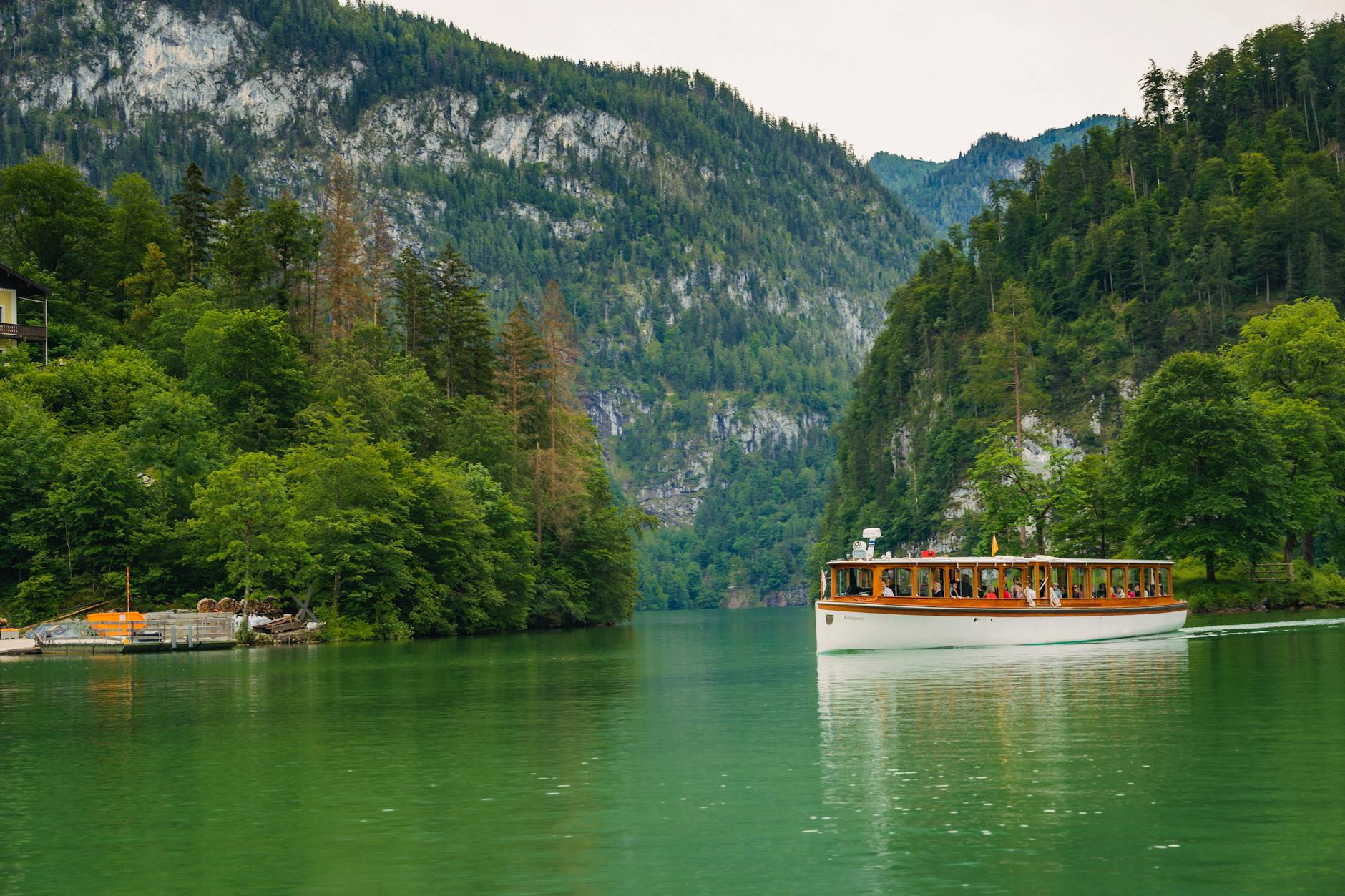
A Berchtesgaden day trip from Munich combines three of Bavaria’s most striking experiences in a single ambitious day: the impossibly clear Königssee lake (Germany’s deepest and cleanest), the historically loaded Eagle’s Nest (Kehlsteinhaus) on its rocky mountain perch, and the centuries-old Berchtesgaden Salt Mine still in operation since 1517. Add to that the picture-postcard village of Berchtesgaden itself and a 2-hour-15-minute train ride south of Munich. This is one of Bavaria’s most rewarding day trips — and one of its most logistically demanding. This guide covers every detail: how to get there, what to prioritize, ticket strategies, when to visit, and how to handle the moral weight of the Eagle’s Nest’s Nazi-era history.
Berchtesgaden Day Trip Quick Facts
| Detail | Information |
|---|---|
| Distance from Munich | 180 km southeast |
| Train time | 2 hr 15 min via Freilassing change |
| Drive time | 2 hours via A8 |
| Bayern-Ticket cost | €29 first adult / €69 group of 5 |
| Königssee boat tour | €21 adult, €12 child |
| Eagle’s Nest bus + visit | €31.50 per adult |
| Salt mine tour | €22 adult, €11 child |
| Best season | May to October (Eagle’s Nest closed in winter) |
| Total cost solo | €100-€150 |
| Total cost family of 4 | €280-€380 |
Getting from Munich to Berchtesgaden
By Train
Regional trains run hourly from Munich Hauptbahnhof to Berchtesgaden via Freilassing (one change). Total journey 2 hours 15 minutes. The Bayern-Ticket covers it (€29 first adult plus €10 per additional). The scenic route passes Lake Chiemsee — sit on the right-hand side for the best views.
By Car
Two hours via the A8 motorway. Parking is widely available but expensive in summer. Driving makes sense if you want maximum flexibility for visiting Eagle’s Nest plus Königssee in one day. RGN, Schönau, and Berchtesgaden each have parking garages charging €5-€10 per day.
By Tour
Several Munich operators run Berchtesgaden day tours (€85-€130 per person), including transport and at least one of the major attractions. Easier but less flexible than going independently.
Königssee: Germany’s Most Beautiful Lake
An alpine fjord-like lake at 603m elevation, Königssee runs 8 km north-south through towering mountains rising 1,800m+ from the water’s edge. The water is famously clear and clean — drinking-water quality. The classic experience is the silent electric-boat tour: the Bayerische Seenschifffahrt operates a fleet of battery-powered ferries that glide silently across the lake, passing the Echo Cliff where the captain plays a small trumpet to demonstrate the famous lake acoustics.
- St Bartholomä church — Tiny red-domed pilgrimage church on a peninsula halfway down the lake. Boat stop; restaurant on-site serving smoked Königssee fish.
- Salet — Far end of the lake; gateway to the Obersee (Upper Lake) walking path.
- Echo Cliff (Echowand) — Boat captain demonstrates the legendary echo with a flugelhorn.
- Boat tour round trip: 2 to 4 hours depending on stops; €21 adult, €12 child.
- Swimming: Allowed at designated spots near the boarding pier; cold even in summer.
- Obersee walk: 1-hour gentle trail from Salet to the smaller upper lake; spectacular views.
Eagle’s Nest (Kehlsteinhaus)

The Kehlsteinhaus was built 1937-1939 as a 50th-birthday gift to Hitler from the Nazi Party. Today it operates as a restaurant and viewing platform with sweeping views over Bavaria into Austria. The German government has deliberately stripped the site of Nazi memorabilia and contextualized its history; the location stands as a historic monument rather than a tourist attraction in the conventional sense. Visitors typically treat the place with appropriate solemnity.
Access requires the dedicated Kehlsteinhaus bus from the Documentation Centre Obersalzberg parking area. The road is closed to private cars. Round-trip bus + entry: €31.50 adult, €23 child. The bus winds up the 6.5 km mountain road in 15 minutes; from the upper bus station, you walk through a 124-metre tunnel and ride a brass-paneled elevator to the summit. Open May to October only; closed in winter.
Documentation Centre Obersalzberg
At the foot of the Kehlsteinhaus mountain, the Documentation Centre Obersalzberg documents the history of the Berghof, Hitler’s personal mountain residence destroyed by Allied bombing in 1945. Free entry; allow 90 minutes. The visit is contextually essential — it places the Eagle’s Nest into its historical reality. Many visitors find this site more important than the Eagle’s Nest itself for understanding what happened here. Not recommended for children under 12.
Berchtesgaden Salt Mine

Continuously operating since 1517, the Berchtesgaden Salzbergwerk offers a 90-minute underground tour by miners’ train. Visitors don traditional miners’ overalls, ride wooden slides between levels, cross an underground salt lake by boat, and learn about Bavaria’s centuries-long salt mining tradition. €22 adult, €11 child. Family-friendly and consistently rated one of the region’s best attractions. Underground temperature is 12°C year-round; bring a light jacket.
Berchtesgaden Village

Berchtesgaden village itself is a charming Alpine town with cobbled streets, traditional painted houses, and the 12th-century Stiftskirche church. The Marktplatz hosts a weekly market and several traditional restaurants. Smaller than typical Bavarian tourist destinations but worth 60-90 minutes for a walk through the centre.
Sample Day Itineraries
Königssee + Salt Mine Day (No Eagle’s Nest)
- 07:51 — Train from Munich Hauptbahnhof.
- 10:00 — Arrive Berchtesgaden; bus to Schönau am Königssee.
- 10:30 — Königssee electric-boat tour to Salet (allow 2 hours round trip).
- 13:00 — Lunch at the Königssee pier.
- 14:30 — Bus to Berchtesgaden Salt Mine.
- 15:00 — Salt mine tour (90 minutes).
- 17:00 — Walk Berchtesgaden village.
- 18:30 — Train back to Munich.
- 20:35 — Arrive Munich.
Eagle’s Nest + Documentation Centre Day
- 07:51 — Train from Munich.
- 10:00 — Arrive Berchtesgaden; bus to Obersalzberg.
- 10:30 — Documentation Centre Obersalzberg (90 minutes).
- 12:30 — Light lunch; queue for the Kehlsteinhaus bus.
- 13:30 — Bus up to the Kehlsteinhaus.
- 14:00 — Eagle’s Nest visit; sweeping Alpine views.
- 15:30 — Bus down to the Documentation Centre.
- 16:30 — Walk Berchtesgaden village.
- 18:00 — Train back to Munich.
- 20:15 — Arrive Munich.
Long Single Day (All Three Major Sites)
Ambitious but possible with an 06:30 start and an own car. Königssee morning, salt mine after lunch, Eagle’s Nest late afternoon. Most travelers find this too rushed to enjoy properly; an overnight stay is the better solution if you want everything.
When to Visit
| Season | Pros | Cons |
|---|---|---|
| Spring (May-Jun) | Wildflowers, all sites open, fewer crowds | Variable weather |
| Summer (Jul-Aug) | Warmest weather, full ferry schedule, swimming | Peak crowds, Eagle’s Nest queues |
| Autumn (Sep-Oct) | Golden trees, comfortable temperatures | Eagle’s Nest closes late Oct |
| Winter (Nov-Apr) | Salt mine open, snow scenery | Eagle’s Nest closed, ferry reduced |
Practical Tips
- Bayern-Ticket valid only after 09:00 on weekdays; book earlier or pay regional fares.
- Eagle’s Nest closes mid-October to mid-May due to snow; plan around this.
- Combine Königssee + salt mine + village in one day if you cannot fit Eagle’s Nest.
- Documentation Centre Obersalzberg is free; allow 60-90 minutes.
- Book Eagle’s Nest bus tickets at the kiosk; advance online booking limited.
- Cash is widely needed at smaller restaurants and salt-mine extras.
- Underground temperatures at 12°C; bring a jacket for the salt mine.
- Königssee boat schedule: peak summer every 15 minutes; winter much reduced.
- Photography: Echo Cliff and Königssee are spectacular in morning light.
Where to Eat
- St Bartholomä restaurant — Smoked Königssee fish on the lake peninsula.
- Kehlsteinhaus restaurant — Cafe at the Eagle’s Nest summit.
- Hotel Edelweiss Berchtesgaden — Classic Bavarian dining.
- Goldener Bär — Family restaurant in central Berchtesgaden.
- Salzheilbad Berchtesgaden — Lunch at the salt mine cafeteria.
- Café Mokant — Pastries and coffee in Berchtesgaden.
- Pier kiosks at Königssee — Casual lakeside meals.
Where to Stay if Extending
- Hotel Edelweiss Berchtesgaden — 4-star, central, doubles €180-€280.
- Berghotel Schober — Mountain-side 3-star, doubles €120-€180.
- Gästehaus Schober — Family-run B&B, doubles €90-€140.
- Hotel Vier Jahreszeiten — Classic alpine hotel, doubles €150-€220.
- Camping Allweglehen — Pitches in mountain setting from €25.
- Hostel Berchtesgaden — Dormitory beds from €30.
Königssee in More Detail
The lake formed from glacial activity at the end of the last ice age. Its dramatic depth (190 m at the deepest point) and remarkable clarity result from the limestone mountains feeding minimal sediment into the water. The Bavarian state imposes strict pollution controls — gasoline boats are forbidden; only electric boats, rowing boats, and kayaks operate on the surface. The result is an almost-silent lake experience, where you hear the ferry engines as quiet hums against the wind.
The Obersee Upper Lake Walk
From the Salet pier (the southern terminus of the Königssee ferry), a 20-minute gentle walk through forest brings you to the Obersee — a smaller, even quieter lake with a famous reflection of the surrounding peaks. Allow another 30 to 60 minutes to walk around the Obersee shoreline; the path is mostly flat and family-friendly. Beyond the Obersee, the Röthbach Falls (Germany’s tallest waterfall at 470 m) is visible distantly and accessible by a steeper 90-minute hike. Many Königssee visitors do the full round trip Königssee-Salet-Obersee-Salet-Königssee in a half-day.
Documentation Centre Obersalzberg: A Deeper Look
The Centre traces the history of the Obersalzberg region from idyllic alpine pasture in the 1920s through its conversion into Hitler’s personal retreat (the Berghof) and the broader Nazi leadership compound. Photographs, films, and personal artifacts document the everyday life of the Nazi inner circle here from 1933 to 1945 — Hitler hosted foreign leaders, planned military campaigns, and lived for extended periods at the Berghof. Allied bombing in April 1945 destroyed most of the buildings; the surviving foundations are accessible on a walking trail. The Centre’s exhibition contextualizes both the human atrocities directed from this location and the local civilian community’s complicity. Free entry; allow 90 to 120 minutes.
Berchtesgaden Salt Mine: What to Expect
- Don miners’ overalls at the entrance — kids love this.
- Ride the miners’ train 700 metres into the mountain.
- Ride two wooden slides connecting different levels — the classic ‘salt mine fun’ moments.
- Cross the underground salt lake by illuminated ferry.
- Visit the salt cathedral, a vast underground chamber with light show.
- Multimedia exhibits on Bavarian salt history.
- Walk through the salt-extraction history with English-language commentary.
- Exit through the gift shop with salt products, lamps, and traditional crafts.
Specific Activity Costs for a Family of Four
| Activity | Cost |
|---|---|
| Bayern-Ticket (group of 5) | €69 |
| Königssee boat tour x4 | €60 |
| Königssee + Obersee walk | Free additional |
| Documentation Centre | Free |
| Eagle’s Nest bus + visit x4 | €110 |
| Salt mine tour x4 | €88 |
| Lunch and snacks | €80-€120 |
| Total full day (3 sites) | €407-€447 |
| Total Königssee + salt mine (no Eagle’s Nest) | €297-€337 |
The Berchtesgaden National Park
The Berchtesgaden National Park (Nationalpark Berchtesgaden) was established in 1978 as Germany’s only Alpine national park. 210 square kilometres of protected wilderness containing the Königssee, the Watzmann (Germany’s third-highest mountain at 2,713 m), and dramatic Alpine forest. The park welcomes hikers, mountain bikers, and rock climbers across difficulty levels. National park visitor centres provide trail maps, weather updates, and guided tour bookings. For day-trip travelers, the easy walks around Königssee and Obersee are the most accessible park experiences.
For the rest of the range within reach of Munich, see our complete guide to the Bavarian Alps from Munich.
Activities Beyond the Three Major Sites
- Watzmann hiking — Multi-day hut-to-hut trek; serious mountaineering.
- Jenner cable car — Cable car to 1,800m for spectacular views; family-friendly.
- Mountain biking the Roßfeld panorama road — Scenic ride with Alpine vistas.
- Almbachklamm gorge walk — Spectacular gorge with waterfalls; 90-minute family walk.
- Berchtesgaden Watzmann therme spa — Indoor pools and saunas for relaxation.
- Maria Gern church — Famous baroque pilgrimage church with mountain backdrop.
- Berchtesgaden Christmas market — December weekends; small but atmospheric.
- Schloss Hellbrunn across the Austrian border — trick fountains and gardens.
- Rossfeld Panorama Road — Toll road with stunning Alpine views; €8 per car.
- Walks to the Eagle’s Nest via the Mannlsteig — Strenuous hike up to the Kehlsteinhaus from below.
Berchtesgaden Through the Seasons
Spring (April-May)
Wildflowers across alpine meadows; Königssee boat service runs at reduced frequency. Eagle’s Nest reopens around mid-May. Cool temperatures; some snow at elevation. Best season for hiking before peak tourist arrivals.
Summer (June-August)
Peak season for all sites. Königssee boats run frequently. Eagle’s Nest queues stretch up to 90 minutes on weekends. The salt mine reaches capacity by mid-morning. Best with weekday arrivals and reservations where possible. Hot Alpine sun; bring sunscreen.
Autumn (September-October)
Golden trees and snow-dusted peaks combine; arguably the prettiest season. Eagle’s Nest typically closes mid-October. Comfortable temperatures. Smaller crowds than summer.
Winter (November-April)
Eagle’s Nest closed. Königssee ferry runs reduced schedule with smaller boats. Berchtesgaden becomes a quieter ski-resort village. Cross-country skiing and snowshoeing replace summer hiking. Best for visitors specifically wanting Alpine winter atmosphere.
Photography Tips for Berchtesgaden Day
- Königssee at sunrise — Mirror-calm water with St Bartholomä in golden light.
- Echo Cliff acoustic moment — Capture the trumpet flugelhorn moment for video.
- Eagle’s Nest summit panorama — Wide-angle lens for the Alpine sweep.
- Obersee reflection — Still mornings produce perfect mirror reflections.
- Berchtesgaden village in autumn — Painted houses against snow-dusted mountains.
- Salt mine interior — Low-light camera; flash usually not permitted.
- Jenner cable car summit — Best free panoramic photography opportunity.
- Watzmann mountain from various viewpoints — The iconic Berchtesgaden silhouette.
Combining Berchtesgaden with Other Destinations
Salzburg + Berchtesgaden Weekend
Day 1: Train to Salzburg, fortress, Mozart sites, dinner. Sleep in Salzburg or Berchtesgaden. Day 2: Bus to Berchtesgaden, Königssee + salt mine. Return train to Munich. Two days delivers Mozart heritage + Alpine drama; the classic Bavarian-Austrian weekend trip.
Bavaria Castle Loop with Berchtesgaden
Day 1: Munich Residenz. Day 2: Neuschwanstein. Day 3: Berchtesgaden + Königssee. Day 4: Chiemsee + Herrenchiemsee. Day 5: Return Munich. Five-day loop covering Wittelsbach royal heritage and Alpine drama.
Final Tips
- Book Eagle’s Nest bus tickets first thing on arrival — Buses fill up by 11:00 in peak season.
- Bring water and snacks — Site prices are elevated.
- Wear layered clothing — Alpine weather changes within hours.
- Cash for the salt mine extras — Some souvenirs cash-only.
- Charge your camera — Long photogenic day.
- Use the Berchtesgaden Tourist Information by the train station for current schedules.
- Avoid Sunday afternoons — locals visit and the ferry queues lengthen significantly.
Are there other lesser-known sites worth seeing in Berchtesgaden?
Yes. The Hintersee lake (40 minutes from Berchtesgaden village by bus) is the area’s quieter glacial lake — fewer visitors, easy walking trails, and remarkable color. The Maria Gern church on a hillside above Berchtesgaden offers one of Bavaria’s most photographed church-and-mountain views. The Roßfeld panorama road is a scenic toll road across the Austrian border with sweeping Alpine vistas. The Almbachklamm gorge near Marktschellenberg has waterfalls and short hiking trails. Each adds a quieter dimension to busy main-site days.
Final advice for first-time Berchtesgaden visitors?
Choose one of the two core itineraries (Königssee + salt mine OR Eagle’s Nest + Documentation Centre) rather than racing through all three sites in a single day. Berchtesgaden rewards visitors who slow down enough to absorb both the natural beauty and the heavy historical context. An overnight stay transforms it from a rushed day-trip into one of Bavaria’s most memorable visits.
Any final logistical reminder?
Check the train schedule for last-train-home times — typically 19:00 to 20:00 from Berchtesgaden. The Bayern-Ticket validity ends at 03:00 the next day, so even a late evening return works.
Frequently Asked Questions
Is Eagle’s Nest open in winter?
No. The mountain road and Kehlsteinhaus close from mid-October to mid-May due to snow. The Documentation Centre Obersalzberg remains open year-round. Königssee boat service operates year-round but with greatly reduced frequency in winter.
Is Berchtesgaden suitable with kids?
Excellent for ages 6+. The salt mine, electric boats, and village exploration all engage kids. The Documentation Centre is heavy and not recommended for under-12s. Eagle’s Nest works for older kids but the historical context can be challenging.
Can I see all three major sites in one day?
Tight but possible with a car and 06:00 start. Königssee in early morning, salt mine after lunch, Eagle’s Nest mid-afternoon. Most travelers prefer focused single-day visits to either Eagle’s Nest OR Königssee + salt mine.
How is the Eagle’s Nest contextualized today?
The site presents itself as a historic monument, not a tourist attraction in the conventional sense. Visitors are expected to behave respectfully. The Documentation Centre Obersalzberg provides essential historical framing; visit both together for full understanding.
Is Berchtesgaden the same as Bavaria’s Berchtesgaden Land?
Berchtesgaden the town sits within Berchtesgaden Land (Berchtesgadener Land), one of Germany’s most southeastern administrative districts. The wider area encompasses the village, surrounding mountain villages, Königssee, and the Berchtesgaden National Park.
Should I bring my passport?
Yes. Berchtesgaden sits on the Austrian border; some Königssee-area paths cross briefly into Austria. EU citizens carry ID; non-EU citizens carry passports. Borders are open under Schengen but ID checks occasionally occur.
Can I combine Berchtesgaden with Salzburg?
Yes for ambitious travelers. Salzburg is 45 minutes from Berchtesgaden by bus. A long single-day combination is achievable but rushed; two-day overnight stays in either town are more rewarding.
Is the Eagle’s Nest accessible to wheelchair users?
Partially. The brass-paneled elevator reaches the summit area. Surrounding walking paths have some steps. The Kehlsteinhaus restaurant is accessible. The 124-metre tunnel from the bus stop is wheelchair-friendly. Plan ahead and call the operator for current accessibility status.
Are there guided tours of the Eagle’s Nest?
Yes. The site operates with audio-guide-style information panels in English and several other languages. Private guided tours are available through Berchtesgaden tour operators for €40-€80 per group. Specialized history tours combining the Documentation Centre and Eagle’s Nest are particularly informative.
How emotionally heavy is the Eagle’s Nest visit?
Variable. Visitors who already understand the historical context find it sobering rather than overwhelming. The site itself feels strangely empty — Allied forces stripped most furnishings; today it functions as a restaurant. The Documentation Centre Obersalzberg pairs more emotionally with the Dachau Memorial experience than with light tourism. Plan a calm evening after the visit.