Best Lakes Near Munich: Swimming, Boating & Day Trips
10 best lakes near Munich for swimming, boating, hiking. Distance, transport, ferries, beaches, mountain views.
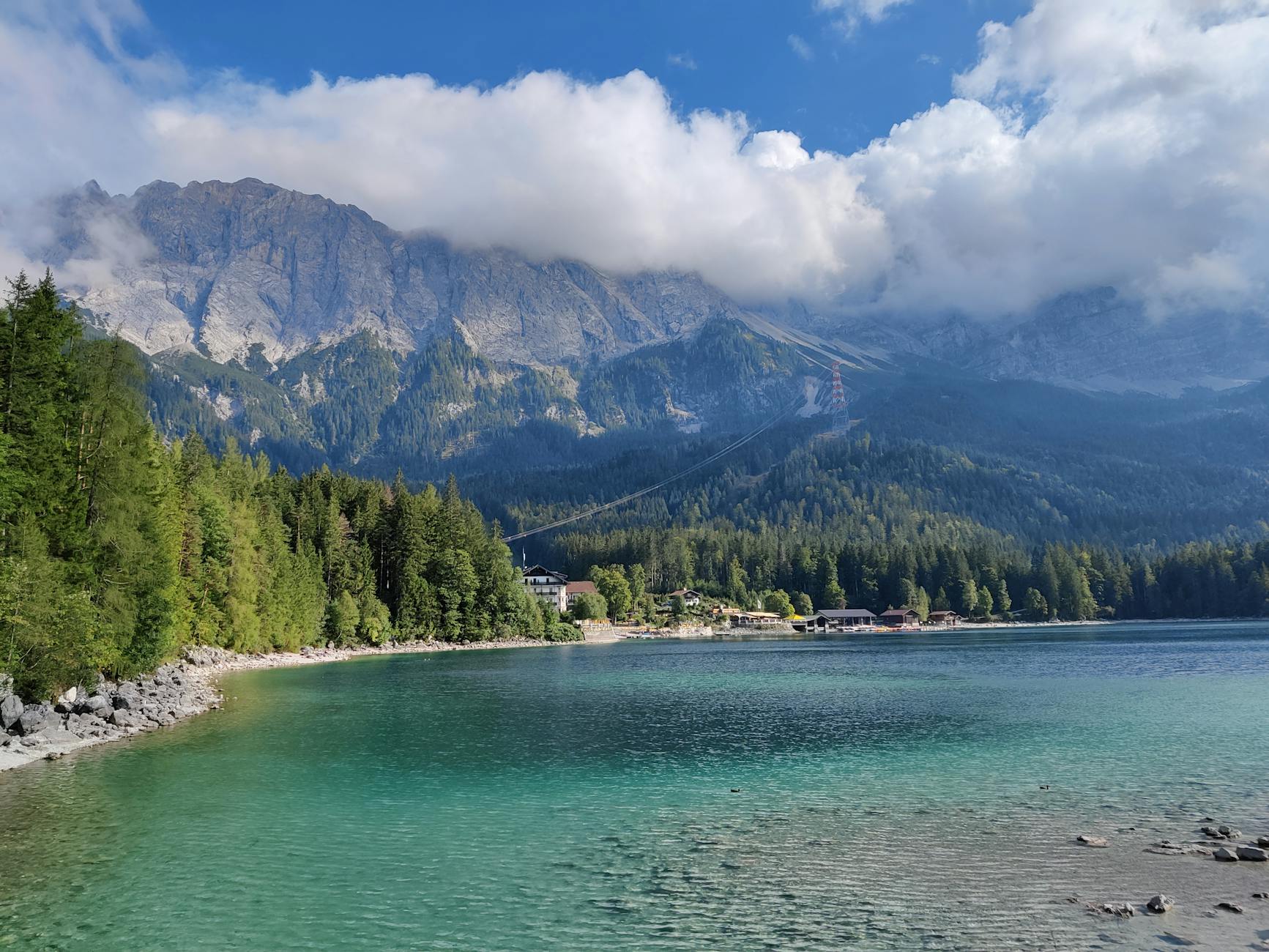
The lakes near Munich are why locals leave the city the moment summer hits. From the city-edge sand of Feringasee to the turquoise glacial water beneath the Zugspitze at Eibsee, every one of these lakes sits inside a 25-to-100-kilometre arc south and west of München Hauptbahnhof — and almost every one of them is reachable by S-Bahn or regional train without a car. You can be in your office at 9am and floating in a Bavarian lake by lunchtime. This guide ranks the 10 best lakes near Munich, with exact distances, the right train line, public-beach details, ferry schedules, summer water temperatures, restaurants worth the detour, and day-trip costs. It is written by people who have packed too many bath-towels into too many S-Bahn carriages, and it tells you which lake to pick for swimming, which to pick for photographs, and which to pick when the kids are along.
Lakes Near Munich at a Glance
| Category | Lake | Why |
|---|---|---|
| Closest to Munich | Feringasee | 12 km, U-Bahn + bus, free city beach |
| Closest “real” lake | Starnberger See | 25 km, S6, 30 minutes door to door |
| Largest by area | Ammersee (Chiemsee farther east is larger) | 47 km², 3rd-largest in Bavaria, swimmable |
| Most photographed | Königssee & Eibsee | Bavarian Alps, fjord-like cliffs and turquoise water |
| Most expensive day trip | Tegernsee | Luxury hotels, premium restaurants, designer cafes |
| Cheapest day trip | Feringasee | Free entry, MVV day ticket only |
| Swim cleanliness | Excellent at almost all | EU bathing-water rating excellent across most public beaches |
| Summer water temp | 17–25°C | Alpine lakes 17–21°C, prealpine lakes 22–25°C |
| Bayern-Ticket 2026 | €34 solo / €74 group of 5 | Covers regional trains, S-Bahn, most buses, all day |
The 10 Best Lakes Near Munich
What follows is ranked roughly by how often Munich locals actually go, not by Instagram fame. The deeper alpine lakes — Eibsee, Walchensee, Königssee — are spectacular but cold; the prealpine lakes — Starnberger, Ammersee, Wörthsee — are warmer and more swim-friendly. Pick by mood, not just by photo.
1. Starnberger See — the Closest Real Lake
Distance: 25 km · Transport: S6 from München Hbf to Starnberg, ~30 min · Summer water: 20–23°C · Day-trip cost: €15–40.
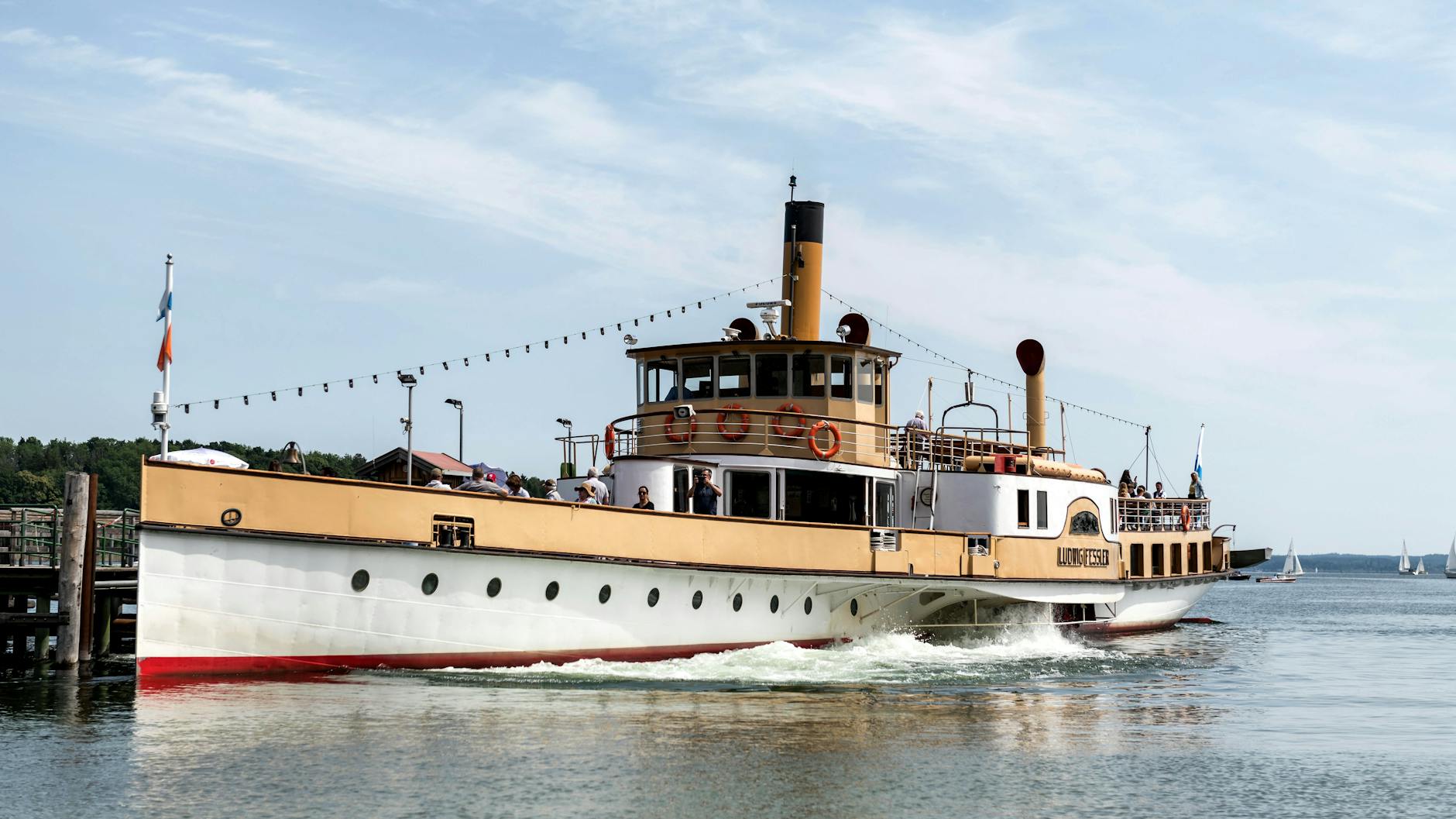
The S6 spits you out 200 metres from the lake. Starnberger See is Bavaria’s second-largest lake, 20 km long, deep enough that the steamers genuinely steam, and ringed by a string of villages — Tutzing, Possenhofen, Bernried — each with its own little Strandbad. Public beach: the free Undosa lido in Starnberg plus the paid Strandbad Tutzing (€5–7) for sand and lawns. Boat rental: pedal and electric boats from Hafen Starnberg, ~€15–20/hr. Restaurants: Seerestaurant Undosa for lake views, La Villa in Niederpoecking for a splurge, the Tutzing Strandbad kiosk for a Weißwurst. Hiking: the 6 km Starnberg–Possenhofen lakeside path is flat, shaded, and one of the gentlest walks in Bavaria. Ferry: Bayerische Seenschifffahrt runs round-trip steamer tours from April–October (~€19 day pass, several stops). Who it suits: first-time visitors, families wanting structure, anyone short on time. The S6 starts at the Hauptbahnhof and crosses the city — you can board at Marienplatz.
2. Ammersee — the Andechs Lake
Distance: 40 km southwest · Transport: S8 to Herrsching, ~55 min from Hbf · Summer water: 21–24°C · Day-trip cost: €20–45.
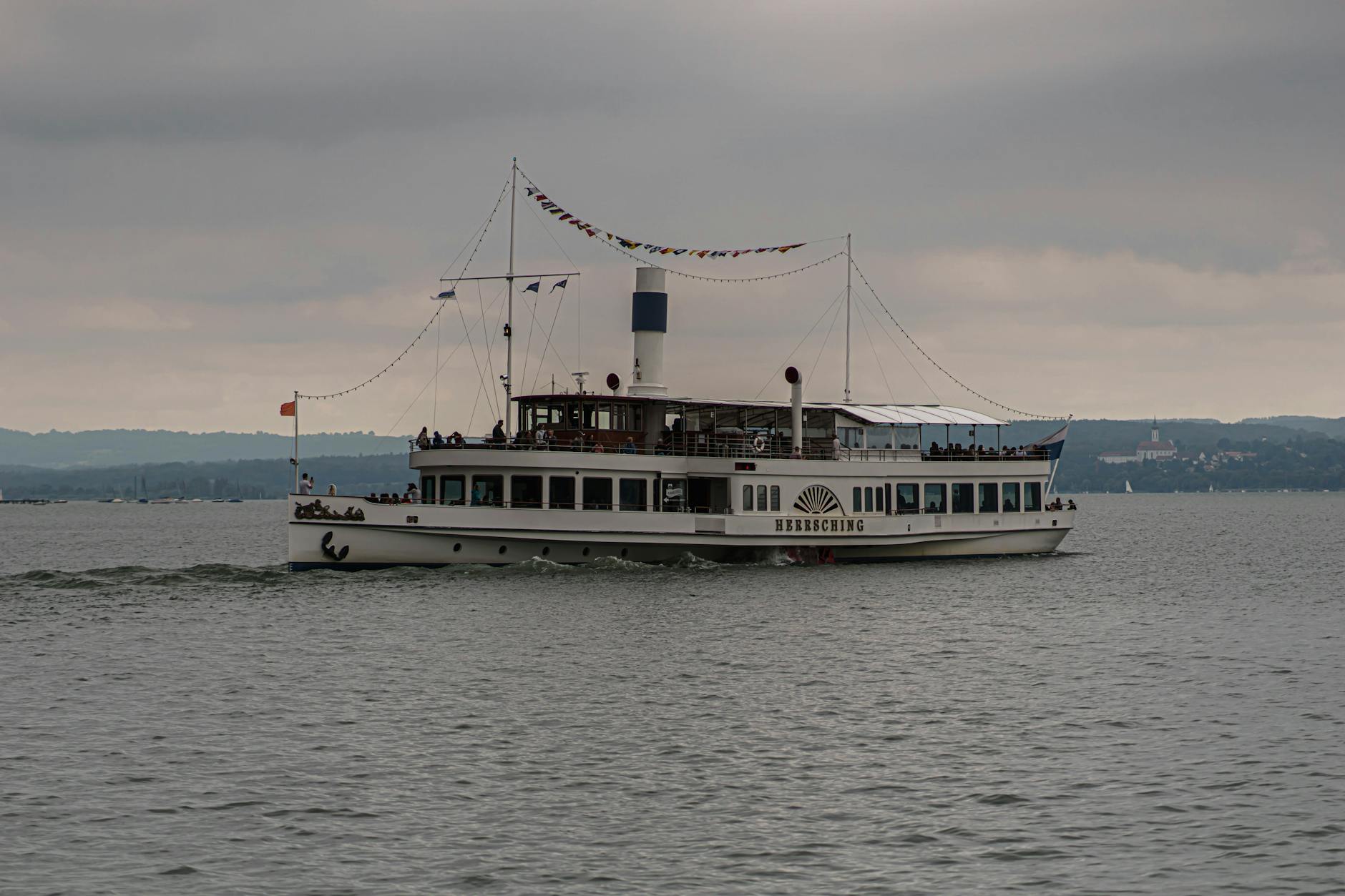
Ammersee is the third-largest lake in Bavaria and the local favourite for a long lazy day. The terminus of the S8 is Herrsching, where the lake promenade starts 500 metres from the platform. Hike 45–60 minutes uphill through the Kühbach gorge to Kloster Andechs, the Benedictine monastery whose 3,500-seat beer garden has been pouring its own monks’ Doppelbock since the 15th century — the canonical Ammersee day. Public beach: the free Seebad Herrsching plus several lawn beaches around Diesßen (paid €3–5). Boat rental: sailing yachts, pedal boats, SUPs (€15–30/hr). Restaurants: Andechs beer garden for pork knuckle and monastery beer, Seeresidenz Alte Post for a refined lake lunch. Hiking: the Herrsching–Andechs–Diesßen loop is the classic. Ferry: Bayerische Seenschifffahrt steamers from Herrsching cross to Diesßen and Stegen (~€18 round trip). Who it suits: beer fans, hikers, anyone who wants the perfect “swim + beer garden + ferry” Bavarian afternoon.
3. Tegernsee — the Picture-Postcard Lake
Distance: 55 km south · Transport: BOB regional train from München Hbf, ~1 hr direct to Tegernsee station · Summer water: 20–22°C · Day-trip cost: €25–80.
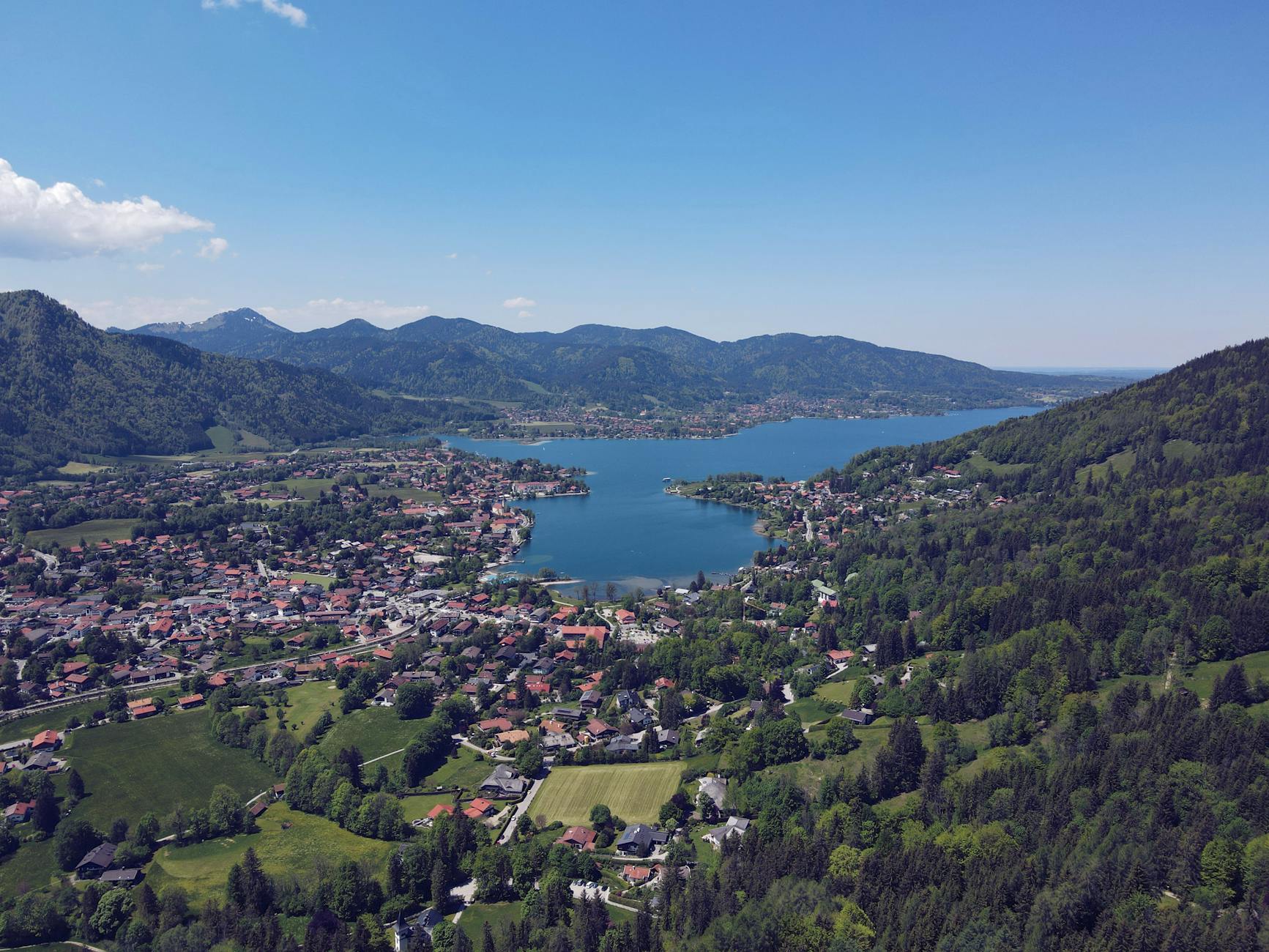
Tegernsee is where Munich’s wealth retires. The 9-km long alpine lake is rimmed by four pretty villages — Tegernsee, Rottach-Egern, Bad Wiessee, Gmund — with mountain views from every shoreline. Water quality is excellent (one of Bavaria’s cleanest), and high water exchange keeps it that way. Public beach: the lawns at Strandbad Tegernsee and the free Point in Rottach. Boat rental: electric boats and SUPs at every village dock (€15–25/hr). Restaurants: Bachmair Weissach for a designer-Bavarian lunch, Brauhaus Tegernsee for the famous monastery beer right by the water, Leeberghof for a sunset terrace. Hiking: the Wallberg cable car (~€25 return) rises to a 1,722 m summit with a panoramic lake view; the Tegernsee–Bad Wiessee shoreline path is flat and beautiful. Ferry: small Tegernsee Schifffahrt boats hop the four villages (€13–17 day pass). Who it suits: couples, anyone who wants luxury polish, hikers combining a lake with a mountain.
4. Schliersee — the Quieter Alpine Twin
Distance: 60 km southeast · Transport: BOB regional train direct from Hbf, ~1 hr · Summer water: 19–21°C · Day-trip cost: €20–45.
Schliersee is the slightly smaller, slightly cheaper, slightly less-photographed twin of Tegernsee — and that’s exactly its appeal. A pretty mountain village with the lake at its feet, the Schlierseer alps behind, and far fewer designer boutiques. Public beach: the Strandbad Schliersee on the eastern shore (paid, €4–6) with diving boards, slides, lawns, and a small kiosk. Boat rental: rowing and electric boats from the Schliersee Boote dock (~€15–20/hr). Restaurants: Café Milchhaeusl for cake with lake views, the Strandbad’s terrace for a swim-and-eat afternoon. Hiking: the Schliersbergalm chairlift hauls you up to a 1,055 m mountain plateau with a beer garden and summer toboggan run; the lake-loop walk is 7 km and easy. Ferry: small electric boats run lake tours in season. Who it suits: families, anyone burnt out on the Tegernsee crowd, winter visitors (the lake sometimes freezes solid enough for skating).
5. Walchensee — the Turquoise Alpine
Distance: 75 km south · Transport: Werdenfelsbahn (BRB) from Hbf to Kochel ~1 hr, then Bus 9608 to Walchensee/Herzogstand ~25 min · Summer water: 17–20°C · Day-trip cost: €25–50.
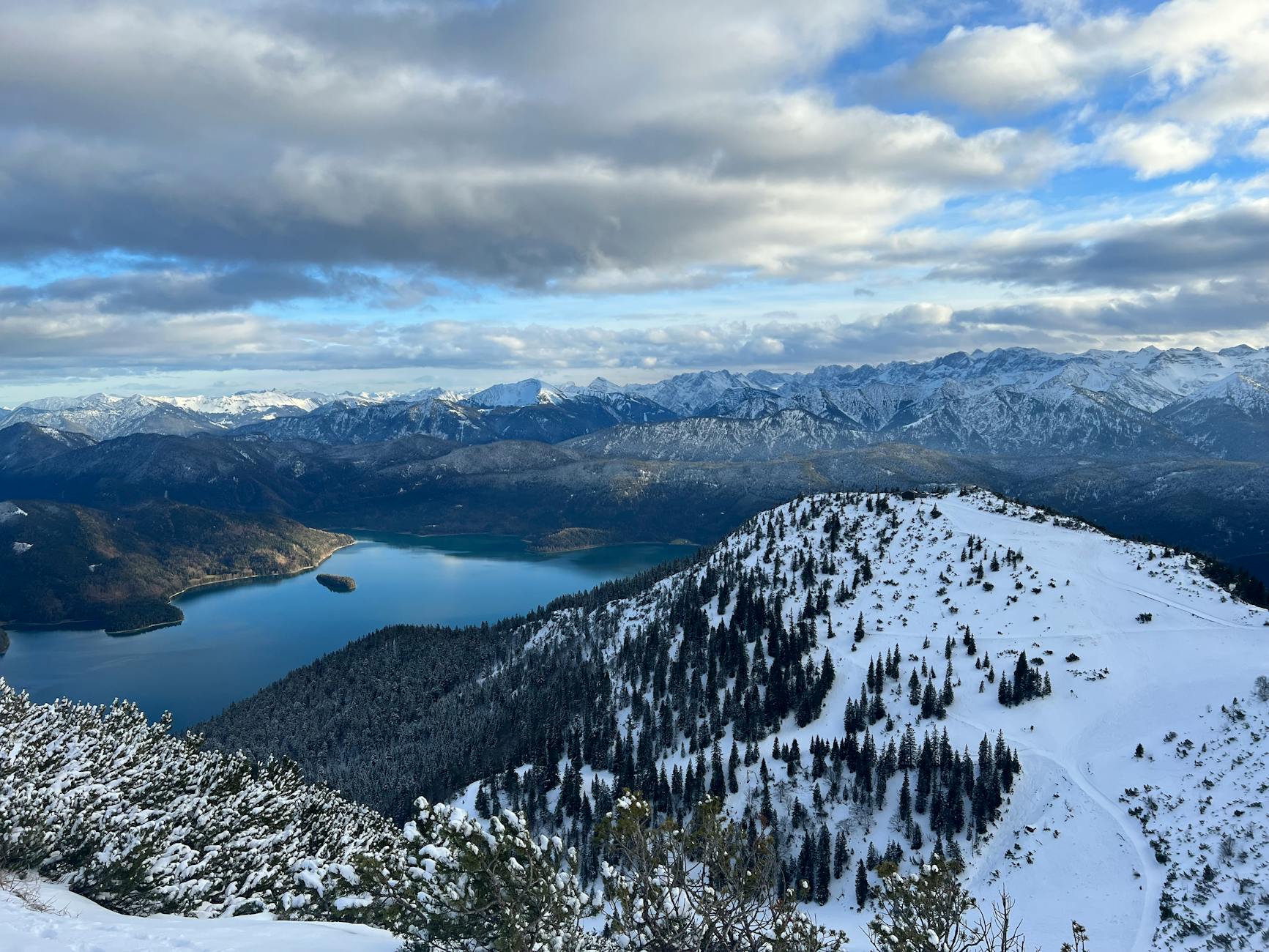
Walchensee is the Caribbean of the Alps. At 800 m elevation, it holds an almost unreal turquoise colour that comes from glacial sediment and depth (Germany’s deepest natural lake at 192 m). The water stays cool — mountain-lake honest, mid-teens to low 20s — but on a hot July day, that’s exactly what you want. Public beach: several free pebble beaches around Walchensee village and the Strandbad in Niedernach. Boat rental: SUPs, kayaks, sailing dinghies at the village (€15–25/hr); Walchensee is Germany’s premier inland windsurfing and kitesurfing lake. Restaurants: Brentenjoch and the Walchensee Strandhotel for shoreline terraces. Hiking: the Herzogstand cable car (€25 return) climbs to one of Bavaria’s most spectacular ridge walks, with both Walchensee and Kochelsee visible below. Ferry: small day boats run weather-dependent. Who it suits: photographers, surfers and paddlers, anyone wanting the most alpine of the swimmable lakes near Munich.
6. Kochelsee — Walchensee’s Lower Sibling
Distance: 70 km south · Transport: Werdenfelsbahn direct from Hbf to Kochel, ~1 hr · Summer water: 19–22°C · Day-trip cost: €20–40.
Kochelsee sits 200 m below Walchensee at 600 m, fed by the same water that drops through Germany’s first pump-storage power station (a Walter Schmidt landmark from 1924, worth a five-minute look on its own). The water is slightly warmer than Walchensee, the beaches are friendlier, and the village is sleepy in the best way. Public beach: the free Bauernsee Strandbad and the lawn beach at Trimini lido. Boat rental: rowing and pedal boats from the village dock. Restaurants: Café am See in Kochel, the Grauer Bär in town. Hiking: the Jochberg (1,565 m) overlooks both Walchen- and Kochelsee. Who it suits: a quieter alternative to its more famous neighbour, or a paired half-day (most locals do both in one trip by jumping off the bus halfway up the road).
7. Wörthsee — the Family-Friendly Five-Lakes Pick
Distance: 30 km southwest · Transport: S8 to Steinebach, ~35 min · Summer water: 22–25°C · Day-trip cost: €15–35.
Wörthsee is the smaller, cleaner, less-crowded star of the Fünfseenland (“Five Lakes Land”) west of Munich. The water is famously some of the warmest and clearest in Bavaria, the shores are gently sloped, and the lake is small enough to swim across on a good day. Public beach: the Strandbad Wörthsee (paid, €4) with sand, lawns, and a kiosk; plus free meadow beaches at Bachern. Boat rental: rowing boats and SUPs from Bachern. Restaurants: Strandbad terrace, Café Bachern. Hiking: the 8-km lake loop is flat, shaded, perfect for kids. Who it suits: families with small children, anyone wanting the warmest water of the prealpine lakes within 30 minutes of Munich. A genuine local secret hiding in the S-Bahn map.
8. Pilsensee — the Hidden Tiny One
Distance: 35 km southwest · Transport: S8 to Seefeld-Hechendorf, ~45 min, then 10-min walk · Summer water: 22–25°C · Day-trip cost: €15–30.
Pilsensee is the smallest of the Fünfseenland lakes and the one most Munich locals fail to visit until a friend drags them. Reedy shores, water lilies, Schloss Seefeld presiding over the eastern bank, and a population of windsurfers who consider this their secret training pool. Public beach: the free meadow beach at Seebad Pilsensee. Boat rental: small surf and SUP rental near the campground. Restaurants: Schlossbräustueberl Seefeld for castle-courtyard beer and food. Hiking: short loops connect Pilsensee to Wörthsee for an easy two-lakes day. Who it suits: contemplative swimmers, surfers, anyone whose ideal day involves “the same lake but emptier.”
9. Feringasee — the City-Edge Urban Beach
Distance: 12 km northeast · Transport: U6 to Unterföhring + 10-min walk, or U4 to Arabellapark + Bus 184 · Summer water: 22–25°C · Day-trip cost: €0 entry + €9 MVV day ticket.
Feringasee is technically still inside the Munich U-Bahn region. 32 hectares, up to 7 m deep, with proper sand beaches along the southern shore, grills permitted across most of the meadows, and a kiosk that opens for the season. The peninsula beyond the kiosk is an officially designated nudist (FKK) section, with the rest of the lake firmly textile. Public beach: free, supervised southern shore. Boat rental: SUPs in season. Restaurants: the on-site kiosk for grill sausages and ice; a five-minute walk reaches Bavarian wirtshäuser in Unterföhring. Hiking: a flat 4-km loop around the lake; bike paths reach the English Garden. Who it suits: anyone who decides on the swim at 11am and is in the water by 12, plus anyone on a budget. The most accessible of the swimming lakes Munich offers.
10. Eibsee — the Glacial Showstopper
Distance: 100 km south · Transport: RB6 to Garmisch-Partenkirchen ~1 hr 20 min, then Eibsee-Bus (Line 9608) ~30 min · Summer water: 14–19°C · Day-trip cost: €30–80.
Eibsee is the lake on every Bavarian Instagram feed: turquoise, ringed by pine forest, with the Zugspitze (Germany’s highest peak, 2,962 m) towering directly above. At 1,000 m elevation, it’s glacial cold — bring a wetsuit if you plan to swim a real distance — but a quick dip on a hot day is unforgettable. Public beach: several free pebble bays along the 7-km shoreline loop. Boat rental: rowboats, pedal boats, and SUPs at the Eibsee boat station (~€18–25/hr); the hotel separately rents kayaks. Restaurants: Hotel Eibsee for an alpine lunch with the Zugspitze framing the window. Hiking: the 7-km Eibsee lake walk is easy, shaded, and one of the prettiest in Germany. Cable car: the Seilbahn Zugspitze rises from the lake to the summit (~€72 return adult) for a glacier, a panorama platform, and Austria’s border at the top. Who it suits: photographers, summit-baggers, anyone willing to invest a full day and a bigger ticket budget for the most spectacular of the lakes near Munich.
Three More Lakes You Can Reach Without Even Leaving the MVV
Three urban swim lakes that don’t make the top 10 but earn a mention for being inside or right next to the city:
- Riemer See. Artificial lake in Messestadt Riem, built for the 2005 Federal Garden Show. Sandy bays, sunset views, U2 to Messestadt Ost. Quietest at the southern beach.
- Langwieder See. Northwest edge of Munich, S-Bahn line S2 to Langwied or A8 by car. Two adjacent lakes, free entry, big meadows, popular with families.
- Karlsfelder See. 12 km northwest, S2 to Dachau then bus, free entry, big lawns, often the warmest urban swim of the lot.
Lakes Near Munich by Activity
Pick by what you want to do, not where you’ve seen the photos. Bavarian lakes specialise.
- Best for swimming (warmest, cleanest, easiest). Ammersee, Wörthsee, Tegernsee. All three regularly clock the EU bathing-water grade of “excellent.”
- Best for SUP and kayak. Walchensee for that turquoise paddle, Tegernsee for protected shoreline routes between four villages, Eibsee for paddling around eight tiny islands.
- Best for sailing. Starnberger See (the classic) and Ammersee. Both have established sailing schools and rental fleets.
- Best family beach. Wörthsee (warm, shallow, supervised) and Feringasee (sand, kiosks, U-Bahn).
- Best for photography. Eibsee at sunrise, Walchensee at midday, Tegernsee from the Wallberg cable car.
- Best hike + lake combo. Tegernsee with the Wallberg, Schliersee with the Schlierbergalm, Walchensee with the Herzogstand, Ammersee with the Andechs hike.
- Best cheap day trip. Feringasee (free entry, MVV ticket only), Starnberger See’s free Undosa lido + Bayern-Ticket train fare.
- Best for windsurfing or kitesurfing. Walchensee and Pilsensee — both have reliable thermal winds.
Getting There: Trains, Tickets, and the Bayern-Ticket Hack
The single best decision for a lake day trip Munich-from is sorting your ticket before you board. In 2026 there are three good options:
- Bayern-Ticket (€34 solo, €44 for 2, up to €74 for 5). Unlimited regional trains, S-Bahn, U-Bahn, trams, and most buses across Bavaria, valid all day on weekends and public holidays, weekdays from 9am to 3am the next morning. The default choice for any lake beyond the S-Bahn network. Buy at any DB machine or on int.bahn.de.
- MVV day ticket (Tageskarte Gesamtnetz, ~€9 solo). Enough for Feringasee, Riemer See, Langwieder See and the closest S-Bahn lakes like Wörthsee — but check current zone validity.
- Deutschland-Ticket (€63/month in 2026, €66.80 from January 2027). Monthly pass covering every regional train and local transport across Germany. If you’re staying for more than a long weekend in summer, do the math — it usually wins.
The cleanest pairings:
- S-Bahn alone gets you to: Starnberger See (S6), Ammersee (S8), Wörthsee (S8), Pilsensee (S8), Feringasee (U6).
- Regional train BOB to: Tegernsee, Schliersee, Bad Tölz.
- Train + bus to: Walchensee, Kochelsee (via Kochel), Eibsee (via Garmisch).
- Train + electric boat to: Königssee (via Berchtesgaden).
For deeper transport detail and the full ticket comparison, see our Munich travel passes guide.
Ferries and Boat Tours
Few things make a Bavarian lake day better than letting someone else drive the boat. The main operators:
- Starnberger See — Bayerische Seenschifffahrt. April–October, round trips from Starnberg via Berg, Possenhofen, Tutzing, Bernried, Seeshaupt and back. Day pass ~€19. The full loop is a relaxing 4–5 hours; jump off at any village for a swim, jump back on for the next steamer.
- Ammersee — Bayerische Seenschifffahrt. Same operator, ferries between Herrsching, Diesßen, Stegen, Utting, Eching. Day pass ~€18. The Herrsching–Diesßen run is a classic.
- Tegernsee — Tegernsee Schifffahrt. Hourly small ferries hop the four villages (Gmund, Tegernsee, Rottach, Bad Wiessee) in summer, ~€13–17 day pass.
- Schliersee. Smaller electric boat fleet runs lake tours in season.
- Königssee — Bayerische Seenschifffahrt (electric only). The most famous lake-boat ride in Germany. Since 1909 only electric boats have been allowed on the lake, which is why it remains so clean. 19 boats, 93 passengers each, run every 30 minutes April–October. Round-trip fare 2026 is around €22; the captain still plays a flugelhorn into the famous rock-face echo. Full coverage in our Bavarian Alps day trips guide.
- Eibsee. No public ferries, but rowboats, pedal boats, and SUPs at the boat station.
Beaches, Entry Fees, and Naturist Sections
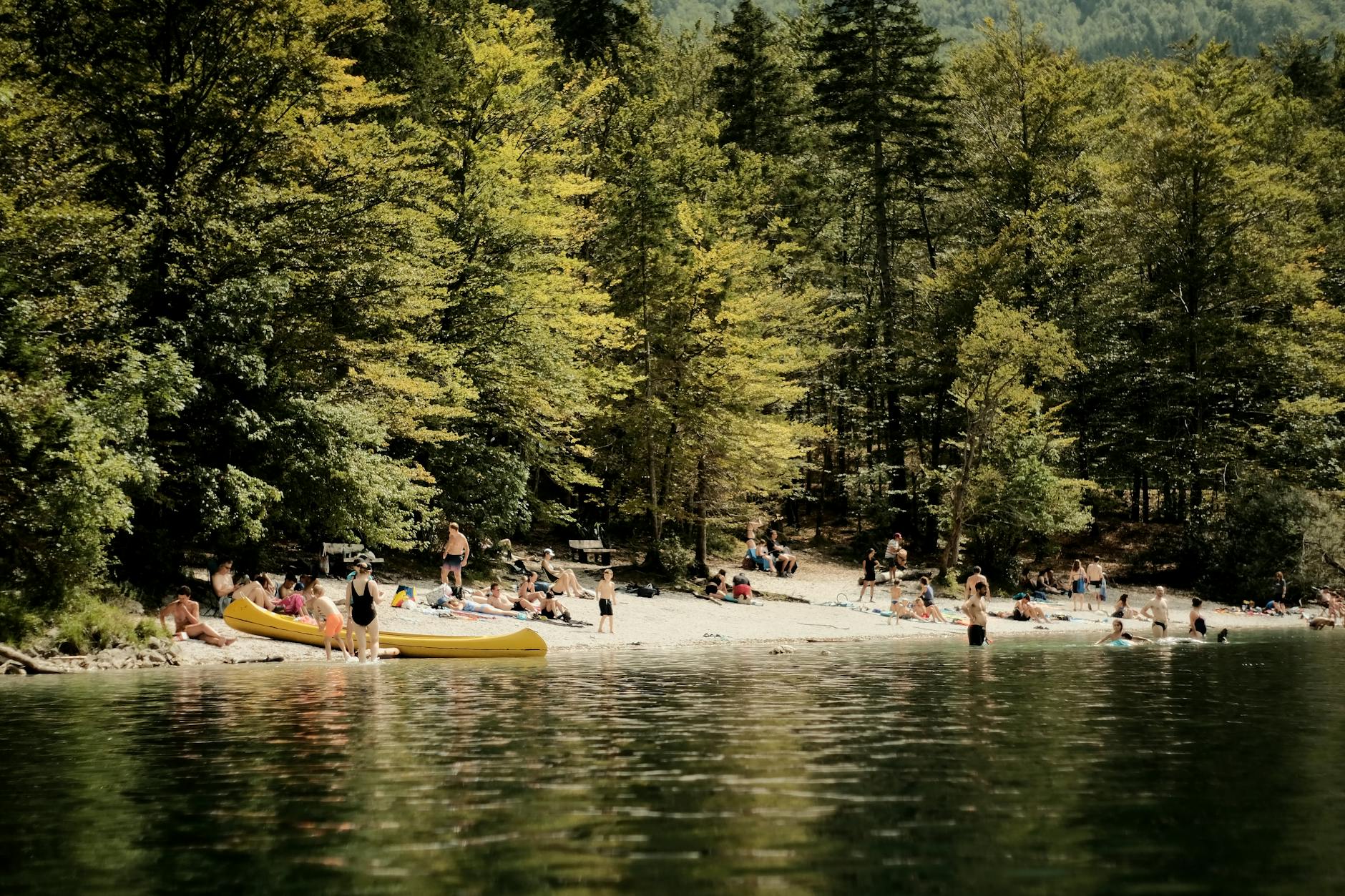
Most of the lakes near Munich are free to swim in at most points along the shore. The paid sections, called Strandbäder, charge a small entry fee (€3–7 typically) in exchange for proper lawns, sand, lifeguards, changing rooms, kiosks, and sometimes diving platforms or slides. Quick orientation:
- Free shore swims: Walchensee, Kochelsee, Feringasee (with kiosk), Pilsensee, most of Ammersee, most of Starnberger See, Eibsee.
- Paid Strandbad sections: Strandbad Tutzing (Starnberg), Strandbad Wörthsee, Strandbad Schliersee, Strandbad Tegernsee, plus the Trimini lido at Kochel.
- Officially designated FKK (naturist): peninsula section at Feringasee; small designated zones on parts of Starnberger and Ammersee. Most of Munich’s lake culture is relaxed but not naturist-by-default — in textile zones, wear swimwear.
- Dog-friendly beaches: Most lakes have a designated Hundestrand (dog beach) — check ahead. Feringasee permits dogs on a marked section.
Restaurants at the Lakes
Eating well by a lake is part of the entire enterprise. A short list of the institutions:
- Kloster Andechs (Ammersee). 3,500-seat beer garden of the Benedictine monastery. Pork knuckle, Doppelbock, monastery-baked pretzels. Cash-friendly, queue-fast, beer fast.
- Bachmair Weissach (Tegernsee). Boutique hotel and several restaurants on the lakeshore at Rottach-Egern. The Mizu Sushi Bar is a surprise hit; the main restaurant is reliable Bavarian-modern.
- Brauhaus Tegernsee. The monastery brewery’s own beer garden in Tegernsee village, with views straight across the lake. Pour-and-pretzel locals’ favourite.
- Seerestaurant Undosa (Starnberg). Steamer-deck lake views from the Starnberger See pier.
- Leeberghof (Tegernsee). Romantic terrace above the lake; book ahead, it earns the reputation.
- Strandbad Schliersee. Swim, dive, eat — the Strandbad has its own restaurant terrace with a panoramic view.
- Café am See (Kochel). Sunset cake-and-coffee classic.
- Hotel Eibsee. Lunch with the Zugspitze in the window. Reservation recommended.
- Biergarten am See generally. Every village dock has at least one shoreline Biergarten — pick the one with the most kids and old men, that’s where the locals trust the food.
Water Temperature Expectations by Month
Bavarian lakes are not the Mediterranean. Even in August, an alpine lake is bracing. The prealpine lakes (Starnberger, Ammersee, Wörthsee, Feringasee) warm faster and stay warmer; the alpine lakes (Walchensee, Eibsee) stay cool all year. Rough averages for the most popular swim lakes:
| Month | Prealpine lakes | Alpine lakes | Verdict |
|---|---|---|---|
| May | 14–17°C | 10–13°C | Brave-swim only |
| June | 18–22°C | 14–17°C | Tolerable, sun helps |
| July | 22–25°C | 17–20°C | Peak swim season |
| August | 22–24°C | 18–21°C | Warmest, can hit 25°C |
| September | 18–20°C | 15–18°C | Quiet, warm enough for a dip |
| October | 13–15°C | 10–13°C | Look-don’t-swim weather |
Best Time to Visit the Lakes Near Munich
Three rules of thumb after years of mistakes:
- July–August weekdays beat July–August weekends. Saturday at Ammersee is a parking lot; Wednesday is a paradise. If you have flexibility, take the Wednesday.
- Early September is the local secret. Water still warm, kids back in school, S-Bahns empty. Many regulars consider 1–15 September the peak Bavarian-lake fortnight.
- Arrive by 10am or after 4pm. Skipping noon avoids the heaviest crowds and the most aggressive sun, and the late-afternoon swim plus sunset dinner is a Bavarian masterclass.
For a full seasonal breakdown of Munich and its lakes, see our best time to visit Munich guide.
Three Sample Day Itineraries
The Family Day — Herrsching & Andechs
9:00 am S8 from Marienplatz to Herrsching (55 min). 10:00 lake-promenade walk; the kids paddle. 11:00 begin the gentle Kühbach gorge climb to Kloster Andechs (45–60 min). 12:30 monastery beer garden lunch (pretzels, Weißwurst, monastery soda for the kids, Doppelbock for the grown-ups). 14:30 walk down the easier road back to Herrsching. 15:30 swim at Seebad Herrsching. 17:00 ice creams on the promenade. 18:00 S8 home. Total cost for a family of four: ~€74 Bayern-Ticket + food.
The Romantic Day — Tegernsee Shoreline
10:00 BOB from Hbf to Tegernsee station (~1 hr). 11:15 coffee and Kuchen at Café Kreutzkamm on the lake. 12:00 walk or ferry to Bad Wiessee (90 min flat shore path or 20 min boat). 14:00 leisurely lunch on the Leeberghof terrace. 15:30 swim at the Bad Wiessee lawn. 17:00 sunset on the lake at Rottach-Egern; quick dinner at Brauhaus Tegernsee. 20:30 BOB home. Total cost for two: ~€44 Bayern-Ticket + dinner.
The Adventure Day — Eibsee & Zugspitze
7:30 am RB6 to Garmisch-Partenkirchen (1 hr 20 min). 9:00 Eibsee-Bus to the lake (30 min). 9:30 the 7-km Eibsee lake walk in cool morning shade. 11:30 SUP or kayak rental at the boat station (1–2 hours). 13:30 picnic on a pebble bay or lunch at Hotel Eibsee. 14:30 Zugspitze Seilbahn cable car to the summit (return ticket ~€72). 16:30 back at the lake, quick swim if you’re brave. 18:00 bus to Garmisch, train home, 20:30 in Munich. Bigger spend day — ~€140 per person all in — but unforgettable.
If you would rather spend a day on castles, mountains or Salzburg instead, our complete guide to day trips from Munich compares the options by travel time.
Lakes Near Munich in Winter
The lake season doesn’t end with the swim season. From November to March most Munich locals come for entirely different reasons:
- Ice skating on Schliersee. In cold winters (typically late January–mid February) the lake freezes solid enough for skating — the village rents skates and clears a path. Conditions vary year to year, check the Schliersee tourism site before going.
- Ice swimming on Tegernsee. A small but growing community in Gmund holds organised ice-bathing sessions from December–February.
- Snow walks at all alpine lakes. Walchensee, Kochelsee, Eibsee in fresh snow are postcard scenes; the lake-loop paths are usually walkable in good boots.
- Sledding above the lakes. The Wallberg (Tegernsee) and the Schlierbergalm (Schliersee) both offer winter toboggan runs.
- Christmas markets at lake villages. Tegernsee, Rottach-Egern, Schliersee and Starnberg all run small Advent markets that are far prettier than the city versions.
For broader outdoor ideas year-round, see our Munich outdoor activities guide.
For the mountains behind these lakes, see our guide to the Bavarian Alps from Munich.
What to Pack for a Bavarian Lake Day
- Swimwear (textile zones require it — only FKK sections are nudist).
- A microfibre towel — lighter than the hotel terry-cloth.
- Water shoes for pebble bays (Eibsee, Walchensee, Kochelsee).
- Sun cream and a hat — the high-altitude UV at Eibsee and Walchensee surprises everyone.
- A small picnic; supermarket bakeries near the Hbf open at 6am.
- Cash for kiosks, beer gardens and small ferry tickets — many still don’t take cards.
- A bike if you can — almost all S-Bahn and BOB trains take bikes on a separate ticket, and lake-loop bike paths are spectacular.
- A light jacket even in August — alpine lakes get an evening chill that catches city visitors out.
FAQs: Lakes Near Munich
Which is the closest lake to Munich?
The closest swimmable lake to Munich is Feringasee, just 12 km from the city centre and reachable in under 30 minutes on the U6 + a short walk or the U4 + Bus 184. It’s free, sandy, supervised on the southern shore, and the lake of choice for spontaneous afternoon swims. For the closest “real” alpine-foreland lake with steamers and villages, Starnberger See on the S6 is 25 km and 30 minutes from the Hauptbahnhof.
What is the best Bavarian lake for kids?
Wörthsee — warm water, shallow shores, S-Bahn-accessible, and a supervised Strandbad with sand and lawns. Honourable mentions to Feringasee (urban, easy) and the Strandbad Schliersee (lake plus diving boards plus a kids’ play area). At Tegernsee, the Strandbad at Bad Wiessee and the Point lawn at Rottach-Egern are also excellent. For a full family-day plan, see the “Family Day” itinerary above.
Which lake near Munich has the cleanest swimming water?
Almost all of them are excellent — Bavaria publishes EU bathing-water quality data each summer and the vast majority of lake bathing sites score “excellent.” Tegernsee and Wörthsee regularly top the cleanliness rankings; Walchensee and Eibsee, being alpine, are essentially pristine; Königssee is one of the cleanest lakes in Germany because only electric boats are permitted on it. Avoid swimming right at busy boat docks, which can have higher bacterial counts after thunderstorms.
Which lake near Munich has the best alpine view?
Eibsee is unbeatable for raw alpine drama — the Zugspitze rises directly above the water. Walchensee from the Herzogstand ridge is the most photographed alpine view in Bavaria. Tegernsee from the Wallberg cable car gives you the whole lake plus the prealpine ridges in one frame. For a view without the cable-car investment, Schliersee’s eastern lawns give a free, easy panorama of the Schlierseer alps.
Can I visit lakes near Munich without a car?
Yes — every lake in this guide is accessible by public transport. The S-Bahn alone handles Feringasee, Starnberger See, Ammersee, Wörthsee, and Pilsensee. Regional trains (BOB) handle Tegernsee and Schliersee directly. Walchensee, Kochelsee, and Eibsee need a train plus a bus connection, all covered by the Bayern-Ticket (€34 solo, €74 for five people). Königssee is a longer trip but reachable by regional train to Berchtesgaden. No rental car needed for any of these lakes.
How much does a lake day trip from Munich cost?
A bare-bones lake day costs as little as €9 (MVV day ticket to Feringasee, picnic). A standard Bayern-Ticket lake day for one runs around €50–70 including transport, beer-garden lunch, and a small boat rental. A premium day at Tegernsee or Eibsee with a cable car and a sit-down dinner reaches €120–150 per person. For groups of three to five, the Bayern-Ticket’s group price (€55–74) makes any of these trips dramatically cheaper per head.
What’s the difference between Starnberger See and Ammersee?
Starnberger See is bigger, deeper, slightly more developed and closer to Munich; Ammersee is a touch smaller, has the Andechs monastery as its showpiece, and feels marginally less polished. Starnberger has more historic estate villages (Berg, Possenhofen); Ammersee has the better beer-garden day-trip story. Both have ferries, both have great swimming, and both are 30–55 minutes on the S-Bahn. Locals tend to alternate.
Are there lakes in Munich itself?
Yes — Feringasee, Riemer See, Langwieder See, Karlsfelder See and Fasaneriesee are all within the city limits or its immediate edge, all reachable by U-Bahn or S-Bahn, all swimmable in summer. The Kleinhesseloher See in the English Garden has rowboats but isn’t a designated swimming lake.
Pack the Towel
Munich’s secret is that it isn’t only Munich. Within an hour of the Hauptbahnhof you can be on a turquoise alpine lake, under a Benedictine monastery, on a wooden ferry boat, or on a sand beach with a sausage in one hand and a beer in the other. The lakes near Munich are the city’s release valve, its summer routine, and the reason locals smile when you say “day trip.” Pick a forecast above 22°C, grab a Bayern-Ticket at the machine before 9am, and pick any of the ten. You will not pick wrong.
Plan the rest of your time with our things to do in Munich hub, extend the trip into the mountains with our Bavarian Alps day trips guide, find a hike or bike route in our Munich outdoor activities collection, sort your tickets with our Munich travel passes guide, and time it right with our best time to visit Munich piece. Summer in this city is short. The lakes don’t wait.