Linderhof Palace Day Trip from Munich (and Oberammergau & Ettal)
Plan a Linderhof Palace day trip from Munich. Tickets, transport, Oberammergau & Ettal combo, what to see.
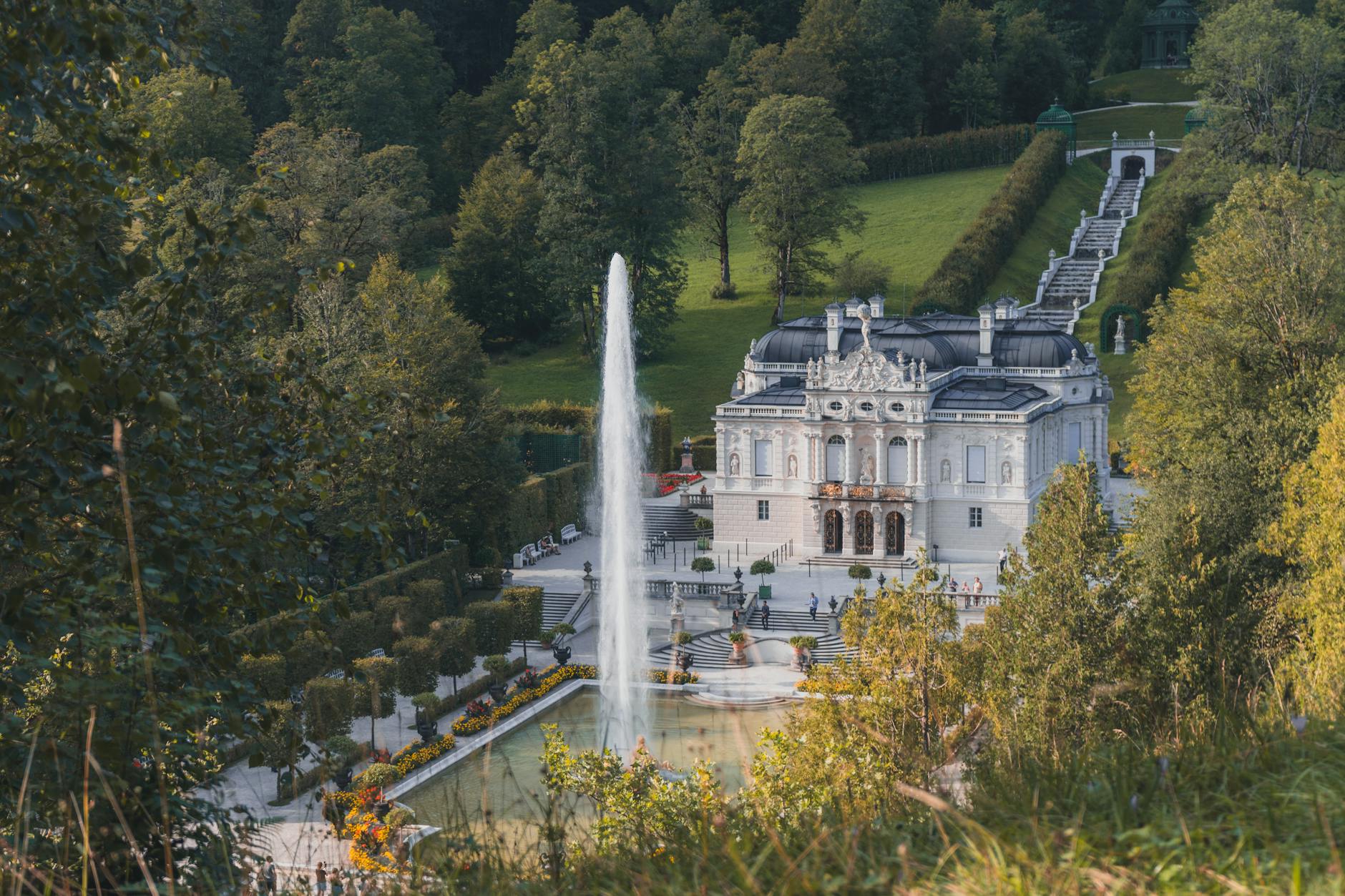
A Linderhof Palace day trip from Munich combines King Ludwig II’s smallest, most personal palace with two of the prettiest cultural stops in the Bavarian Alps: the painted village of Oberammergau and the baroque Ettal Abbey. Linderhof was the only one of Ludwig’s three fantasy palaces actually completed in his lifetime, the only one he genuinely lived in, and the place where his obsessions with French absolutism, Wagnerian opera, and orientalist daydreaming collided in a remote Graswang valley. Add a stroll past the Lueftlmalerei facades of Oberammergau and a quiet hour inside the Ettal basilica, and you have a single day that covers Ludwig’s private world, Bavarian folk art, and a working Benedictine monastery, all within a 15 kilometre radius. This guide walks you through the history, the logistics, and the practical choices for a confident, well-paced Linderhof Palace day trip in 2026.

Quick facts for a Linderhof Palace day trip
The table below summarises the practical numbers you will plan around. All figures reflect the 2026 season as published by the Bavarian Palace Administration (Bayerische Schloesserverwaltung) and the official Linderhof, Oberammergau, and Ettal Abbey sites. Confirm timings on the day, especially for the Venus Grotto, which has only recently reopened after a long restoration.
| Detail | Information |
|---|---|
| Distance from Munich | Around 95 km southwest of Munich, in the Graswang valley |
| Travel time by car | Approximately 1 hour 45 minutes via A95 and B23 |
| Travel time by public transport | Around 2 hours: BRB train to Oberammergau, then RVO bus 9622 |
| Linderhof Palace open | Year-round: 15 April to 15 October 9:00-18:00; 16 October to 14 April 10:00-16:30 |
| Palace admission 2026 | 11 EUR adult, 10 EUR reduced (palace only, guided tour) |
| Combination ticket (palace + grotto) | 18 EUR adult, 16 EUR reduced |
| Venus Grotto season | 15 April to 15 October only; closed in winter |
| Royal Lodge (Koenigshaeuschen) | 2 EUR adult, 1 EUR reduced |
| Park admission | Free to walk year-round |
| Oberammergau distance | 10 km from Linderhof, about 15 minutes by car or bus |
| Ettal Abbey distance | 5 km from Linderhof, about 10 minutes by car |
| Ettal basilica admission | Free; open daily 8:00-18:00 outside services |
| Bavarian Castle Pass (Mehrtagesticket) | 14-day pass covering Linderhof and many other state palaces |
| Recommended total day | 9-10 hours door to door from Munich |
King Ludwig II and the three fairy-tale palaces
To understand a Linderhof Palace day trip you have to understand its builder. Ludwig II of Bavaria, born in 1845, came to the throne in 1864 at the age of 18 and reigned until his mysterious death in Lake Starnberg in June 1886. He is the king the world calls the Fairy-Tale King, the Swan King, or, less kindly, Mad King Ludwig. He was a Wittelsbach, the dynasty that had ruled Bavaria for over 700 years, and his story is inseparable from theirs; for the family’s longer arc see our guide to the Wittelsbach dynasty.
Ludwig inherited a politically constrained throne. Bavaria had lost autonomy after the 1866 war with Prussia and was absorbed into the new German Empire in 1871. Shut out of real power, the young king retreated into art, music, and architecture. He summoned the composer Richard Wagner to Munich in 1864, rescued him from his creditors, and bankrolled the early productions that shaped European opera. He then turned that same imaginative drive on stone, glass, and gilt. Between 1869 and his death he commissioned three palaces, each tied to a different fantasy world: Neuschwanstein, the medieval Christian-knight castle on a crag above Hohenschwangau; Herrenchiemsee, the Bavarian Versailles set on an island in the Chiemsee; and Linderhof, the smallest and most lived-in of the three.
Of those three, only Linderhof was completed during his lifetime. Neuschwanstein was unfinished when Ludwig drowned in 1886 and Herrenchiemsee remained a magnificent fragment. Linderhof, smaller in ambition but more intensely personal, was where Ludwig actually lived for long stretches of his last years, often arriving by sleigh in winter, attended by a small staff who fed him through the famous mechanical dining table so he could eat undisturbed by servants. If you only have time for one of the king’s palaces and you want to see the rooms he genuinely used, Linderhof is the one.
Linderhof Palace in depth
Linderhof began as something quite humble. Ludwig’s father, King Maximilian II, had built a wooden hunting lodge in the Graswang valley, known as the Koenigshaeuschen (the King’s Little House). Ludwig inherited it in 1864, fell in love with the remote valley setting, and in 1869 began enlarging the building. Construction continued for 17 years under the court architect Georg Dollmann, with garden design by Carl von Effner, and the cost ran to a vast 8,460,937 marks before completion in 1886. The original wooden lodge was eventually moved to the eastern edge of the park, where you can still visit it as the Royal Lodge.
Architecturally, Linderhof is a Rococo Revival villa in the 18th-century French manner, deliberately reminiscent of the Petit Trianon at Versailles. Ludwig idolised Louis XIV, the Sun King, and Linderhof is full of Bourbon iconography: sunbursts, peacocks, the Latin motto “Nec pluribus impar” (“not unequal to many”). The plan is compact, almost square, two storeys high, set in a clearing of the Bavarian Alps and surrounded by fountains, terraces, and a steep cascade that climbs the hillside behind. From the front, looking across the water parterre with its gilded Flora group spouting on the hour, Linderhof feels like a miniature French chateau dropped into an Alpine clearing.
It is the most-visited of the royal Bavarian palaces year by year and, paradoxically, the most intimate. Where Neuschwanstein overwhelms with scale and Herrenchiemsee with imperial ambition, Linderhof rewards close looking: heavily gilded carving, painted ceilings, ornate textiles, and a series of rooms designed for an audience of one.

The rooms you will see on the tour
Interior visits are conducted by guided tour only, in groups led at fixed intervals through the same fixed sequence of rooms. The tour is short, around 25 minutes, and dense; do not expect to linger in any single chamber. Highlights include:
- The Vestibule. A bronze equestrian statuette of Louis XIV greets you under a sunburst ceiling. The motto, the sun, and the peacocks set the tone for everything that follows: this is a private monarch performing the rituals of a much grander king.
- The Audience Chamber. Modelled on French audience rooms, but used by Ludwig as a study. The throne canopy and the writing desk hint at a court that, by the 1880s, had largely retreated from real political life.
- The Hall of Mirrors. The most theatrical room in the palace and Ludwig’s favourite for reading at night. Mirrors set into the panelling reflect each other endlessly, so the lit candle of a single chandelier multiplies into an infinite ballroom. Ludwig is said to have spent whole nights here with books spread across an ivory chaise longue.
- The Dining Room and mechanical table. A round room whose centrepiece is the famous “Tischlein deck dich” (little table, set yourself), a mechanical dining table that could be lowered into the kitchens below, laid by unseen servants, and raised again fully set. Ludwig dined alone here, often with imagined royal guests addressed by name.
- The Bedroom. The largest room in the palace, decorated as a state bedroom in the Versailles tradition. The balustrade-enclosed bed, the heavy blue and gold textiles, and a vast crystal chandelier dominate. Ludwig used it as much as a salon as a sleeping chamber.
- Reception Room and East and West Tapestry Chambers. Smaller anterooms hung with painted “tapestries” (actually paintings imitating Gobelin weave) showing pastoral and mythological scenes. The smaller scale of these rooms is a reminder that Linderhof was built for one person, not a court.
The park and its buildings
The Linderhof park is more than a garden; it is a sequence of fantasy stage sets scattered through woodland and pasture. The formal core, designed by Carl von Effner, sets the palace inside a baroque parterre with a fountain group of Flora and her putti, balanced by a steep cascade of 30 marble steps that climbs the hill behind the palace to a Music Pavilion. Beyond the formal axis the park dissolves into the English landscape style and is studded with romantic structures, most of them tied to Ludwig’s two great passions, Wagner and oriental fantasy.
- The Venus Grotto. Probably the most famous park building, a man-made cave built in 1876-77 to recreate the Venusberg scene from Act I of Wagner’s Tannhaeuser. Inside, an artificial lake, a painted backdrop, and rocky walls were illuminated by some of the earliest electric lighting in Europe, with coloured glass discs producing changing red, blue, and green effects. The grotto was closed for a major restoration between 2016 and 2024, addressing decades of moisture damage and the original innovative but fragile construction. It reopened to visitors in 2025; visits remain by timed guided tour only and only between mid-April and mid-October.
- The Moorish Kiosk. A piece of orientalist drama originally built for the 1867 World Exhibition in Paris and bought by Ludwig in 1876. He had it remodelled with a Peacock Throne (a fan of jewelled peacock tails behind a low seat), marble fountains, and glass chandeliers, and used it for solitary reading and tea drinking. The kiosk has been undergoing facade and roof restoration in recent years; check the day’s status before relying on entering.
- Hunding’s Hut. A Germanic stage set built to Wagner’s stage directions for Act I of Die Walkuere, complete with a sword embedded in an ash tree. The original burned down in 1945 and the present reconstruction stands closer to the palace, in a small forest clearing. Ludwig liked to read Nordic sagas here while servants in Germanic costume kept the fire going.
- The Moroccan House and the Hermitage of Gurnemanz. Two further follies that complete the park’s strange logic: a chalet-sized Moroccan house with carved doors and a small fountain, and a thatched hermitage referencing the Grail knight Gurnemanz from Wagner’s Parsifal.
- The Royal Lodge (Koenigshaeuschen). The original 1850s wooden hunting lodge of Maximilian II, relocated to the eastern park, with simple panelled rooms now open as a small extra exhibit.
Walking the full park, with stops at the main follies, takes around 1.5 to 2 hours at an unhurried pace. Trails are gravel and grass and the cascade is steep, with steps; sensible shoes are essential.
Linderhof visit logistics
A Linderhof Palace day trip works best when you understand the small but firm rules the Palace Administration imposes. Linderhof is not a museum you wander; entry to the palace itself is only on a timed guided tour, and tickets can only be bought on the day, in person, at the ticket booth on site. Online booking is not currently available for the palace tour. Group sizes are limited, the schedule fills up fast in summer, and tours in English run at fixed times each day. Arrive early.
Opening hours and seasons
- Summer season (15 April to 15 October): Palace open daily 9:00 to 18:00; last admission shortly before close. Venus Grotto open same hours.
- Winter season (16 October to 14 April): Palace open daily 10:00 to 16:30. Venus Grotto, Moorish Kiosk, Moroccan House, and Hunding’s Hut closed for the season.
- Closed dates: 1 January, Shrove Tuesday, 24, 25 and 31 December.
Tickets and prices for 2026
- Palace tour only: 11 EUR adult, 10 EUR reduced (students, seniors, etc.).
- Venus Grotto: 9 EUR adult, 8 EUR reduced.
- Combination ticket (palace + grotto): 18 EUR adult, 16 EUR reduced. Strongly recommended in summer.
- Royal Lodge: 2 EUR adult, 1 EUR reduced.
- Under 18s: Free entry to all state palaces, but require a free admission ticket from the booth.
- Park: Free year-round.
- Mehrtagesticket (Bavarian Castle Pass): A 14-day pass covering more than 40 Bavarian palaces, residences, and gardens, including Linderhof. Useful if you also plan to visit Neuschwanstein, Herrenchiemsee, the Munich Residenz, or the Nymphenburg complex on the same trip.
Booking and arriving on the day
Buy tickets from the central ticket office to the left of the entrance as you approach from the main car park. You will be given a tour number and a specific tour time; tours leave every few minutes, but the English-language slots are spaced wider apart, so in peak summer you may book at 10:30 for a 13:00 tour and use the intervening time for the park and grotto. To avoid this gap, arrive at opening (9:00 in summer, 10:00 in winter). Parking is in a paid car park a short walk from the ticket office; cash is useful for the machine. Coaches drop off at a dedicated area.
Photography, accessibility, and amenities
Photography is not permitted inside the palace, the grotto, or the other interior monuments; photography of the exterior and the park is freely allowed without tripod or drone. Audio guides are available in several languages but the palace itself remains a guided-tour-only experience. Accessibility is partial: the park has gravel paths and some gradients, and the palace interior involves a number of staircases that are not wheelchair-accessible; ask at the ticket office for current accessibility options if needed. On-site amenities include a cafe-restaurant on the main approach (warm meals and Bavarian classics), a kiosk for drinks and ice cream, public toilets near the entrance, and a small bookshop carrying English-language guides to all the royal palaces.
Oberammergau: painted houses and a 400-year vow
Ten kilometres north of Linderhof, in the next valley over, sits Oberammergau, a village of just over 5,000 people that has, for nearly 400 years, kept a peculiar and binding promise. In 1633, with the Thirty Years’ War raging and the plague sweeping through Bavarian villages, the people of Oberammergau vowed that if God spared them, they would perform the Passion of Christ every ten years forever. The plague abated, the village kept its promise, and in 1634 staged the first Oberammergau Passion Play. Since then it has been performed every ten years (with very few wartime exceptions). The 42nd play ran in 2022; the next, the 43rd, opens in 2030.
The Passion Play
The Oberammergau Passion Play is one of the most extraordinary cultural events in Europe. More than 2,000 villagers, all of them current residents of Oberammergau, take part as actors, musicians, choir, and crew. The performance lasts roughly five hours and runs several times a week from May to early October, drawing around half a million visitors over a single play year. The 2030 production will be the 43rd staging, directed by Christian Stueckl, in the purpose-built Passion Theatre (Passionstheater) on the edge of the village. Tickets typically go on sale years in advance and sell out, particularly for combined ticket-and-accommodation packages. If you are reading this in 2026 and want to plan ahead for 2030, watch the official Passion Play website for opening dates of the 2030 booking window.
On a day trip in 2026 you can still see the play’s home: the Passion Theatre is visible from the village, with its huge open stage backed by woodland. Guided tours of the theatre run several times a week outside the play season; check times locally.
Lueftlmalerei: the painted houses
Oberammergau is famous beyond the Passion for Lueftlmalerei, a tradition of fresco-painted house facades unique to the foothill villages of the Bavarian Alps. The pigments are applied directly to wet lime plaster in the same way as Italian fresco painting; as the plaster dries, the colour bonds with the surface and can survive for centuries. The name probably derives from a painter named Franz Seraph Zwinck whose 18th-century house was called “zum Lueftl,” though the practice draws on a longer tradition of votive and biblical exterior painting in the region.
Stroll Dorfstrasse, Pilatusplatz, and the surrounding lanes and look up. You will see grand biblical cycles climbing whole gables, scenes of Hansel and Gretel, the Pied Piper, and Little Red Riding Hood from the Brothers Grimm, painted saints with their attributes, trompe-l’oeil window surrounds, and elaborate framed sgraffito. The most famous single house is the Pilatushaus, painted in the 1780s with a Pilate-judges-Christ scene that climbs almost the entire street facade; the Pilatushaus today also functions as an art house and exhibition space.
Woodcarving and other things to do
The village has been a centre of religious woodcarving since the 16th century, supplying altar pieces, crucifixes, and nativity figures across Catholic Europe. Look for the Pilatushaus’ rotating craft demonstrations and the Museum Oberammergau on Dorfstrasse, which displays carvings, painted glass, and Passion costume from past plays. A short walk south of the village brings you to the Kolbensesselbahn, a chairlift up the Kolben mountain for views over the Ammergauer Alps; in summer there is a small summer toboggan run alongside.
For lunch on a day trip, Dorfstrasse offers a string of traditional Bavarian Gasthaeuser and bakeries, with terraces facing the painted facades. Allow at least two to three hours in Oberammergau to walk the village, photograph the houses, look into a workshop or two, and have a proper meal.

Ettal Abbey: Benedictines, baroque, and liqueur
Five minutes from Linderhof on the road back towards Oberammergau, the white-and-yellow domes of Kloster Ettal rise out of the trees. The Benedictine abbey was founded on 28 April 1330 by the Wittelsbach emperor Ludwig the Bavarian, who had vowed during a difficult journey from Italy to build a monastery on his return; legend says his horse stopped of its own accord on the Ettal site and refused to move. Almost 700 years later the abbey is still occupied by a working community of monks and runs one of the most visited baroque churches in southern Bavaria.
The original Gothic church was destroyed by fire in 1744 and rebuilt in the high baroque-rococo style by the architect Enrico Zuccalli and later Joseph Schmuzer. The result is the basilica you visit today: a vast rotunda crowned by a frescoed dome, painted by Johann Jakob Zeiller, depicting the assembly of all the Christian orders adoring the Trinity. The high altar holds Ettal’s most precious object, a small marble statue of the Madonna and Child attributed to Giovanni Pisano, which was brought from Pisa by the founder. The basilica is free to enter; visits and tours are not possible during services, so plan around mass times. Hours run roughly 8:00 to 18:00 daily.
Brewery, distillery, and Klosterlikoer
Ettal is also a working economic community in the medieval tradition. The Benediktiner Weissbraeu brews monastic beer on site, the Ettal distillery produces the famous Ettaler Klosterlikoer (in green-herbal and yellow-mild varieties, both based on a secret recipe of mountain herbs), and the abbey also runs a cheese dairy, a bookshop, and a hotel. The monastery shop is the place to taste and buy: a small flight of the green and yellow Klosterlikoer is a charming end to an Ettal stop, and bottles travel home well.
For deeper experiences, the abbey runs scheduled tours of the brewery (typically Tuesday and Friday afternoons) and the distillery (typically Monday and Thursday afternoons), each lasting about an hour and including tasting. These are not the focus of a multi-stop day trip but are worth knowing about if you decide to base yourself locally for a night. Allow 1 to 2 hours at Ettal for the basilica and shop, longer if you join a tour.
A combined day trip itinerary from Munich
The geographic logic of a Linderhof Palace day trip is forgiving: the three sites sit within 15 kilometres of each other on a small loop, so the order is less important than the timing. The plan below assumes you have a car. For public transport adaptations see the next section.
- 07:30 – Munich departure. Leave central Munich by A95 motorway and B23 towards Garmisch-Partenkirchen. Allow 1 hour 45 minutes to Linderhof, longer with summer weekend traffic.
- 09:15 – Arrive Linderhof. Park, buy tickets at the booth, and book the next available English-language palace tour. Expect a small wait in peak summer.
- 09:30 to 11:30 – Linderhof Palace and Venus Grotto. Palace tour (25 minutes), Venus Grotto tour (about 25 minutes), and time to walk the formal parterre and the lower park. In summer add 20-30 minutes for the Moorish Kiosk and Hunding’s Hut.
- 11:30 to 12:30 – Linderhof park and lunch. Either a quick lunch at the on-site cafe or save the meal for Oberammergau.
- 12:45 – Drive 5 minutes to Ettal Abbey. Park outside the abbey complex.
- 13:00 to 14:00 – Ettal basilica and monastery shop. Walk the basilica, pause for the dome fresco, taste a flight of Klosterlikoer at the shop, and stock up on monastic cheese or beer if you wish.
- 14:15 – Drive 10 minutes to Oberammergau.
- 14:30 to 17:00 – Oberammergau. Lunch on Dorfstrasse if you skipped Linderhof, then walk the painted houses, look at the Pilatushaus and Passion Theatre exterior, browse a woodcarving workshop, and end with coffee and apple strudel on a sunny terrace.
- 17:00 to 19:00 – Return to Munich. Drive back via Oberau, Murnau, and the A95.
Total time door to door is about 9.5 to 10 hours. To pace yourself less aggressively, drop Ettal or save Oberammergau for another day; both stand alone as half-day visits if you have time. For other regional options, see our overview of Bavarian Alps day trips.
How to get to Linderhof from Munich
Three realistic transport options exist for travellers planning Linderhof from Munich: by car, by public transport via Oberammergau, or by an organised tour from Munich. Each has its own trade-offs.
By car
The fastest and most flexible option. From central Munich take the A95 (Garmisch motorway) south to its end at Eschenlohe-Ohlstadt, continue as the B2 to Oberau, branch right onto the B23 towards Ettal, Oberammergau, and Linderhof. Total distance is around 95 kilometres and the drive takes 1 hour 45 minutes in normal traffic, occasionally longer on summer Saturdays. Parking at Linderhof is signposted and runs from a paid main lot near the entrance; bring coins or a contactless card. Ettal and Oberammergau both have multiple paid parking areas in the village centre.
By public transport: train and RVO bus 9622
Linderhof has no rail station of its own. The standard public-transport route uses the Bayerische Regiobahn (BRB) regional train from Munich Hauptbahnhof to Oberammergau, normally via Murnau where a change is required. The journey from Munich to Oberammergau takes roughly 1 hour 50 minutes and runs hourly through most of the day. At Oberammergau station, walk to the bus stand outside and take RVO bus 9622 (direction Linderhof / Reutte), which stops directly at the Linderhof Palace car park.
Bus 9622 runs roughly hourly Monday to Friday and a little less often on weekends, with the first departures from Oberammergau around 06:15 and the last returns from Linderhof around 16:00-17:00 depending on the day. The ride takes about 30 minutes. Total Munich-to-Linderhof time door to door is around 2 hours 30 minutes if connections work, longer if they don’t. The Bayern-Ticket day pass is valid on both the BRB train and the RVO bus and is the cheapest option for one to five travellers; the Deutschland-Ticket also covers the journey.
By design this is a single-line itinerary: Munich – Oberammergau – Linderhof, with optional Ettal Abbey on the route in between (bus 9622 stops at Ettal). Plan an early departure (07:30 from Munich at the latest) to give yourself a useful day, and check the last return bus before walking into the palace.
Organised day tours from Munich
Many Munich operators run coach day tours covering Linderhof, sometimes paired with Oberammergau, sometimes with Neuschwanstein, and occasionally with all three sites in a long but feasible day. Prices typically run 60 to 95 EUR per adult, often excluding palace admission. Operators include Gray Line / Mentor Reisen, Bavaria Castle Tours, Sandemans, and various GetYourGuide and Viator partners; tours usually depart from Sonnenstrasse near Karlsplatz around 08:45 and return by 19:30. Advantages include hassle-free transport, a guide on the coach, and pre-bought palace tour slots; disadvantages include fixed pacing, limited free time in an Oberammergau day trip stop, and a coach-load atmosphere at the palace gates.
Where Linderhof sits in the Bavarian Alps
Linderhof lies in the Graswang valley, a quiet east-west fold of meadows and forest tucked between the Ammergauer Alps to the north and the higher Wetterstein massif to the south. The valley feels remote even today; in Ludwig’s time the journey from Munich took a full day by horse-drawn coach. The palace sits at 950 metres above sea level, 12 kilometres west of Ettal and 23 kilometres north of the Austrian border at Reutte. The popular ski and hiking towns of Garmisch-Partenkirchen and Mittenwald lie a short drive east; Germany’s highest peak, the Zugspitze, is around 40 minutes by car. Together, this stretch of southern Bavaria is one of the most concentrated alpine cultural landscapes in Europe, combining royal palaces, working monasteries, and traditional Lueftlmalerei villages within an hour’s drive of each other.
Best time to visit
Linderhof rewards different visits at different times of year. The shoulder seasons are arguably the most enjoyable.
- May to early July. Long daylight, full park access, gardens in early flower, fountains running, fewer summer-holiday crowds before mid-July. Probably the best overall window for a first visit.
- Mid-July to August. Peak season. Expect longer waits for English tours, busy car parks, and a livelier atmosphere in Oberammergau. Arrive at 9:00 opening to stay ahead.
- September to mid-October. Cooling air, low autumn light on the cascade, and a quieter park. The grotto, kiosk, and other follies remain open until 15 October.
- Mid-October to late March. Winter season. The palace stays open but with shorter hours (10:00 to 16:30), the grotto and most park buildings close, and the gardens become a snowy ground for atmospheric photographs. Ettal hosts a small Christmas market in early December, a particular highlight for a winter day trip.
- February to April. Quietest months. Snow is often still on the ground in the Graswang valley well into April; check road conditions if driving.

Combining Linderhof with other sights
Linderhof and Neuschwanstein in one day
Possible, popular, and tight. Neuschwanstein lies about 60 kilometres west of Linderhof; the drive between the two palaces takes around an hour via Plansee and Reutte. A combined day from Munich runs roughly: Munich – Linderhof (palace tour and short park walk) – Neuschwanstein (or vice versa) – Munich, totalling 11 to 12 hours. Most coach tours that promise both palaces include a brief Linderhof stop and a longer Neuschwanstein climb, but you will see neither at depth. If your priority is Ludwig and his King Ludwig palaces collectively, this combination is workable; if you want to actually feel each place, choose one and do it well. For a focused Neuschwanstein day, see our Neuschwanstein Castle day trip guide.
Linderhof and Garmisch-Partenkirchen
Closer and easier than the Neuschwanstein combination. Garmisch lies 30 kilometres east of Linderhof, about 40 minutes by car. A morning palace visit pairs comfortably with an afternoon in Garmisch (the Partnachklamm gorge, Olympic ski stadium, traditional Bavarian streets) before returning to Munich. Both fit into 10 hours from Munich.
Linderhof and the Zugspitze
The Zugspitze is in the same broad area but in a different valley, and the cable-car or cog-railway ascent is a substantial day on its own. Combining the two in a single day is technically possible but exhausting, and weather can ruin the summit half. Consider splitting them across two days if you are basing yourself in Garmisch.
Linderhof and Herrenchiemsee
Herrenchiemsee lies in the opposite direction, on Lake Chiemsee east of Munich, and is impossible to combine with Linderhof in a single day from the city. Do it as a separate day trip: see our Chiemsee and Herrenchiemsee guide.
Ludwig II in history: the long shadow
A Linderhof Palace day trip is, in the end, a walk through the inner life of a famously secretive king. A handful of historical moments help to frame what you see.
Ludwig and Wagner. The king’s youthful summoning of Richard Wagner to Munich in 1864 reshaped European music. Wagner staged Tristan, Die Meistersinger, Das Rheingold, and Die Walkuere with Ludwig’s financial backing, and the Bayreuth Festival itself was eventually funded by a royal loan. The Venus Grotto, Hunding’s Hut, and Gurnemanz’s Hermitage at Linderhof are physical traces of that obsession: stage sets from Tannhaeuser, Die Walkuere, and Parsifal turned into private theme parks for an audience of one. Walking past them, it helps to know which opera each refers to.
The Bavarian succession crisis. Ludwig had no heirs and his only sibling, Otto, was already declared insane. The succession passed through his uncle, the Prince Regent Luitpold, who in 1886 declared Ludwig himself mentally unfit and effectively assumed power. The political and financial unease around the king’s vast building costs at Neuschwanstein, Linderhof, and Herrenchiemsee contributed directly to that decision. By the mid-1880s the building debts threatened to spill into the public budget, and ministers feared international embarrassment.
Ludwig’s death. On 13 June 1886, only a month after the official completion of Linderhof, Ludwig and his physician Dr. Bernhard von Gudden were found drowned in the shallows of Lake Starnberg. The official ruling was suicide while of unsound mind; alternative theories of accident, escape attempt, or political assassination have circulated for more than a century. No fully convincing answer has ever been published, and the Wittelsbach family continues to mark 13 June at the lakeside memorial cross. For more on the Munich context of Ludwig’s reign, see our history of Munich.
What to bring
- Comfortable, closed walking shoes. The park has gravel, the cascade has steps, Oberammergau has cobbles, and the basilica floor is hard.
- A light jacket or layered top even in summer. Interior temperatures in the palace stay cool year-round, and Alpine afternoons can turn quickly.
- A camera. No tripods, no drones, no interior flash, but plenty of opportunity outdoors.
- A bottle of water and a small snack; the on-site cafe is limited and queues build in midsummer.
- Some cash for parking machines, public toilets in villages, and small purchases at Ettal.
- A printed or downloaded train ticket if travelling by public transport.
Linderhof tickets and the wider Bavarian Castle Pass
If you intend to see multiple state palaces during your Bavarian trip, do not buy individual Linderhof tickets one by one. The Bavarian Palace Administration sells a 14-day Mehrtagesticket (often called the Bavarian Castle Pass in English) covering admission to more than 40 sites, including Linderhof Palace and grotto, Neuschwanstein, Hohenschwangau (via separate sale at Hohenschwangau), Herrenchiemsee, the Munich Residenz, Nymphenburg and its park palaces, and the Wuerzburg Residence. Two adults travelling together, planning to combine Linderhof with Neuschwanstein and one Munich palace, will usually save money. The pass does not normally include the surcharge for the new English-language reservation system at Neuschwanstein, so check current rules at the Linderhof ticket booth on arrival.
The Oberammergau Passion Play in detail
If your interest in Oberammergau is rooted in the Passion Play, plan your day with that in mind. The performance lasts roughly five hours, split into an afternoon and an evening session separated by a long dinner break. The stage is open-air, the auditorium covered, and the production combines spoken dialogue, choral music, and tableaux vivants in a tradition that has been refined over four centuries. The 2030 production opens in May 2030 and runs into early October, with performances five days a week. Tickets are typically sold as combined ticket-and-accommodation packages first, with single tickets released later; the first wave usually opens around two years before the play year. Tour operators run organised packages from Munich and elsewhere, including transport, hotel, and the play itself. If you are planning a Linderhof Palace day trip in 2026 and intend to return for the 2030 play, register interest on the official Passion Play website now.
Family-friendly? Accessibility?
Linderhof is family-friendly with caveats. Children love the fountains, the cascade, and especially the Venus Grotto and Hunding’s Hut, both of which feel like a walk into a fairy tale. The strict 25-minute tour pace inside the palace can be hard for very young children, and pushchairs are not allowed inside; ask about baby-carrier options at the booth. Older children (eight upwards) usually enjoy the whole circuit. Oberammergau is excellent for families, with painted houses to spot, a summer toboggan run on the Kolben, and ice-cream stops on Dorfstrasse. Ettal is quiet and church-shaped; younger children may be restless, though the monastery shop and its chocolates can rescue an Ettal stop.
Accessibility is partial across all three sites. Linderhof’s park has gravel paths and gradients; the palace interior involves stairs that are not currently accessible. Ettal’s basilica is accessible at ground level with a ramped side entrance. Oberammergau is broadly walkable on pavement and cobble, with most cafes and the village museum accessible. Confirm specific needs in advance with each site if travelling with a wheelchair or limited mobility.
Common mistakes on a Linderhof Palace day trip
- Underestimating the drive. 1 hour 45 minutes is the best case. On summer Saturdays and Sundays it can stretch to 2.5 hours each way.
- Arriving late. The English tour slots are limited and fill quickly. A 09:15 arrival usually secures a tour by 10:30; a midday arrival in July may push you to 14:00 or later.
- Buying only the palace ticket. The Venus Grotto is the most surprising single experience on site. Buy the combination ticket in summer.
- Skipping the park. Visitors who tour the palace and leave miss two thirds of what makes Linderhof unique. Budget at least 90 minutes in the park.
- Skipping Ettal. The basilica is five minutes from Linderhof and free to enter; the only reason to skip it is genuine fatigue.
- Eating at the wrong moment. Lunch in Oberammergau after Ettal tends to be more atmospheric (and cheaper) than at the Linderhof cafe in midsummer.
- Missing the last public bus. If travelling by RVO bus 9622, photograph the last return time on the bus shelter on arrival and pace your day around it.
Frequently asked questions
Is Linderhof Palace worth visiting?
Yes, particularly for travellers interested in 19th-century history, opera, garden design, or Bavarian royalty. Linderhof is the smallest of King Ludwig II’s three palaces and the only one he actually lived in, which makes the interior feel personal rather than ceremonial. The combination of rococo-revival rooms, fountain gardens, the Venus Grotto, and the surrounding alpine setting is not duplicated anywhere else. Many visitors who have seen Neuschwanstein find Linderhof more rewarding for its scale and atmosphere.
How long should I spend on a Linderhof Palace day trip?
Plan a minimum of 3 hours on the Linderhof site (palace tour, Venus Grotto, park) and 9 to 10 hours total from Munich if you also include Oberammergau and Ettal Abbey. A focused Linderhof-only return trip can be done in around 7 hours but misses the cultural depth of the combined route.
Can I visit Linderhof in winter?
Yes. The palace is open year-round, with shorter winter hours (10:00 to 16:30 from 16 October to 14 April). The Venus Grotto, Moorish Kiosk, Moroccan House, and Hunding’s Hut are closed in winter, so a winter visit focuses on the palace interior and the snowed-over parterre. Many travellers find the snow-covered formal garden especially photogenic; bring proper winter shoes.
Can I see Linderhof and Neuschwanstein in the same day?
Yes, but the day is long, tight, and best done by car or organised coach tour. Allow at least 12 hours door to door from Munich, expect a short tour at each palace, and accept that you will see neither in real depth. Many travellers prefer to split the two across two days, which lets you walk the parks properly and time the tours without stress.
Can I get to Linderhof by public transport?
Yes, by combining the BRB train from Munich Hauptbahnhof to Oberammergau (about 1 hour 50 minutes, normally with a change at Murnau) with RVO bus 9622 from Oberammergau station to Linderhof (about 30 minutes). The Bayern-Ticket and the Deutschland-Ticket both cover the entire journey. Plan an early start, check the last return bus, and budget about 2 hours 30 minutes each way.
Is the Venus Grotto open in 2026?
Yes. After almost a decade of restoration (2016 to 2024) the Venus Grotto reopened to visitors in 2025 and is open for the 2026 summer season from 15 April to 15 October. Visits are by timed guided tour only and the buying of a combination ticket is recommended.
Can I buy Linderhof tickets online in advance?
Linderhof Palace currently sells tickets in person at the on-site ticket office only; advance online booking is not available for the palace tour. Arrive early on busy summer days to secure an English-language slot. Some elements of the wider Bavarian Castle Pass can be bought in advance and used to skip the payment queue but still require a tour-time assignment on arrival.
When is the next Oberammergau Passion Play?
The next Oberammergau Passion Play opens in May 2030 and runs through October 2030. It is the 43rd staging in a tradition begun in 1634 after a plague vow. Tickets and ticket-plus-accommodation packages typically begin to be released around two years in advance through the official Passion Play website and approved tour operators.

A final word
A Linderhof Palace day trip from Munich is the most quietly rewarding of the three Ludwig palace pilgrimages. The drama is smaller than Neuschwanstein and the gilt thinner than Herrenchiemsee, but the rooms feel inhabited, the park feels like a private theatre, and the surrounding stops at Ettal and Oberammergau frame the palace in living Bavarian culture, a working monastery on one side and a painted village with a 400-year vow on the other. Take the early train or set off before rush hour, buy the combination ticket, walk the park slowly, and end the day with a glass of Klosterlikoer at Ettal before the drive back. You will leave with a better feel for Ludwig II than any of his more famous palaces give you.
For more Bavarian day trips from the city, see our overview of day trips from Munich, the partner page on Bavarian Alps day trips, the focused Neuschwanstein Castle day trip guide, and the lake-and-island alternative at Chiemsee and Herrenchiemsee. To dig deeper into the king and his family, continue with our wider history of Munich and the Wittelsbach dynasty guide.