History of Munich: Medieval to Modern
The complete history of Munich — from 8th-century monks and the 1158 founding through 678 years of Wittelsbach rule, neoclassical Ludwig I, Nazi-era darkness, postwar reconstruction, and modern wealthy capital.
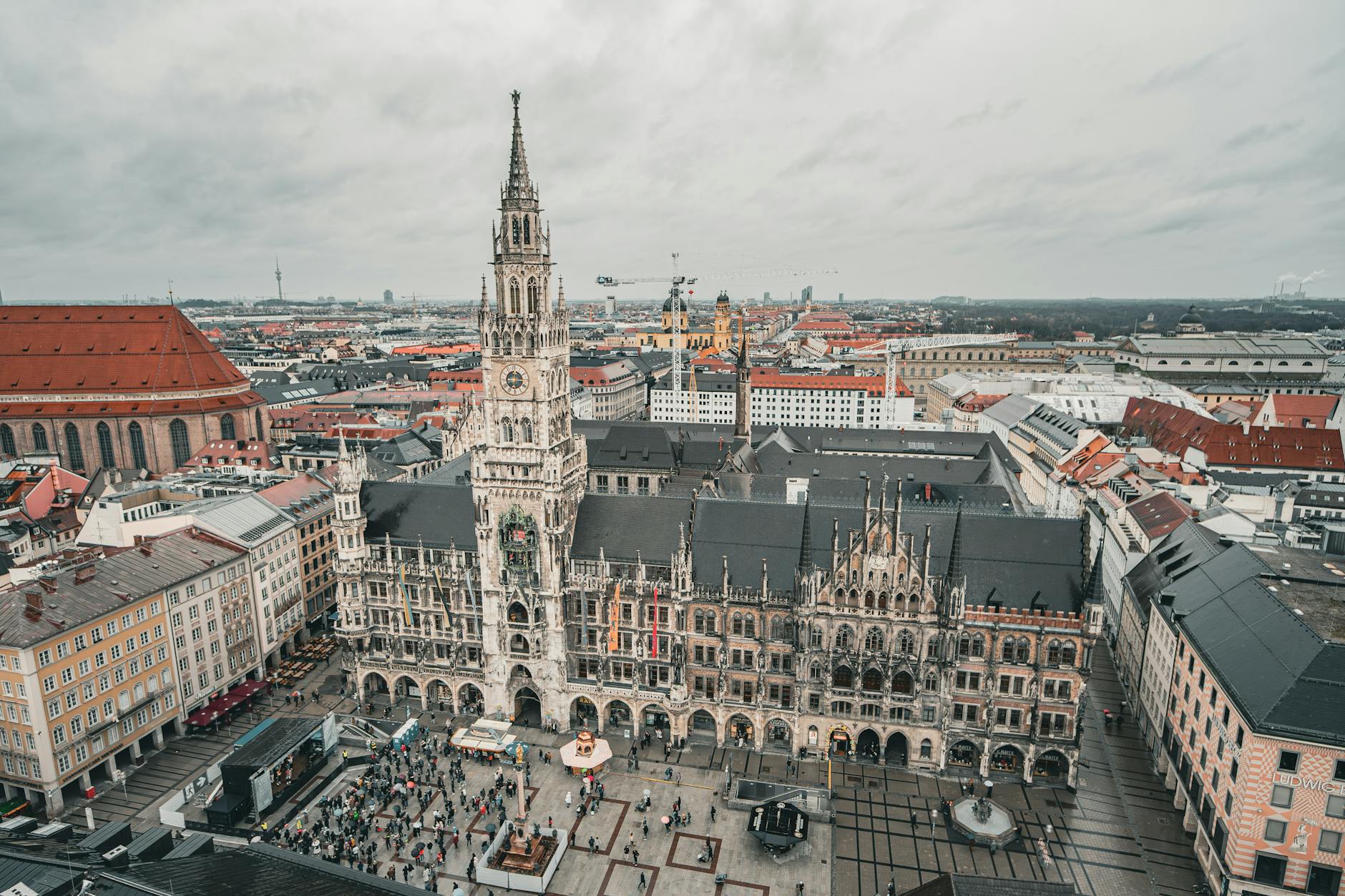
The history of Munich spans nearly nine centuries — from a Benedictine monk settlement in the 8th century, to a medieval salt-trade outpost, to the royal capital of Bavaria, to one of the most expensive and design-conscious cities in modern Europe. This complete Munich timeline covers every major era from the 1158 founding to today: the Wittelsbach dynasty’s 678-year reign, the Italian Renaissance and Baroque transformations, King Ludwig I’s neoclassical rebuilding, the dark 20th century of Nazism and bombing, the careful postwar reconstruction, and the modern wealthy metropolis. By the end you’ll understand why Munich looks and feels the way it does — and what to look for as you walk around.
Munich Timeline: Key Dates
| Year | Event |
|---|---|
| c. 750 | Tegernsee Benedictine monks settle on the Petersbergl |
| 1158 | Henry the Lion’s bridge forces the salt road through Munich; official founding |
| 1175 | Munich receives city status; first town wall built |
| 1240 | Wittelsbach dynasty inherits Munich |
| 1255 | Munich becomes Wittelsbach residence |
| 1468 | Construction of the Frauenkirche begins |
| 1506 | Bavaria reunified; Munich confirmed as capital |
| 1583 | Construction of the Renaissance Michaelskirche begins |
| 1623 | Munich becomes electoral residence |
| 1632 | Swedish occupation during the Thirty Years’ War |
| 1664 | Construction of Nymphenburg Palace begins |
| 1810 | First Oktoberfest celebrates royal wedding of Ludwig I and Therese |
| 1806 | Bavaria becomes a kingdom; Munich a royal capital |
| 1825–1848 | Reign of Ludwig I: Königsplatz, Ludwigstraße, the Pinakotheken |
| 1858 | First Bayerischer Hof hotel opens on Promenadeplatz |
| 1886 | King Ludwig II dies; Prince-Regent Luitpold begins 26-year reign |
| 1918 | Wittelsbach monarchy ends; Bavarian Republic declared |
| 1923 | Failed Beer Hall Putsch by Hitler |
| 1933 | Nazis declare Munich “Capital of the Movement”; Dachau opens |
| 1945 | Munich liberated; ~50% of city in ruins |
| 1957 | Reopening of the rebuilt Alte Pinakothek |
| 1972 | Munich Summer Olympics; Olympiapark opens |
| 1990s | Munich emerges as a tech and finance hub |
| 2005 | Allianz Arena opens |
| 2015 | NS-Dokumentationszentrum opens |
| 2024 | Frauenkirche south tower viewing platform reopens |
Origins: Monks and a Salt Bridge (8th–12th Century)
The story begins, as so many Bavarian stories do, with monks. As far back as the 8th century, Benedictine monks from Tegernsee Abbey established a small settlement on the elevated ground where Old Peter (Peterskirche) stands today. The German name München derives from the Old High German Munichen, meaning “by the monks,” and the city’s coat of arms still features a hooded monk to this day.
The official founding date is 1158. Henry the Lion, Duke of Saxony and Bavaria, destroyed a rival toll bridge upstream at Föhring (which had belonged to the Bishop of Freising) and forced the lucrative salt trade from Reichenhall to Augsburg to cross his own new bridge over the Isar. The settlement that grew around this bridge was granted market, mint, and toll rights in the so-called Augsburg Arbitration. Salt — the white gold of medieval economy — funded the city’s first century of growth.
By 1175, Munich had received city status and was ringed by a fortified wall. Three of its medieval gates still stand — the Isartor, Sendlinger Tor, and Karlstor — though all have been heavily restored. The compact ring of the medieval city wall is still visible in the layout of Sonnenstraße, Karlsplatz, Lenbachplatz, Maximiliansplatz, Odeonsplatz, and Frauenstraße. If you walk this loop today, you’re tracing a 13th-century city plan.
The Wittelsbachs: 678 Years of Bavarian Rule (1240–1918)
In 1240 Munich passed into the hands of the House of Wittelsbach, a dynasty that would rule Bavaria for an extraordinary 678 years — until 1918. From 1255 the Wittelsbachs made Munich their residence, and the city’s fate became inseparable from theirs. Every great palace, royal church, opera house, and museum you’ll see in central Munich exists because some Wittelsbach duke, elector, or king commissioned it.
Late Gothic Munich (1450–1550)
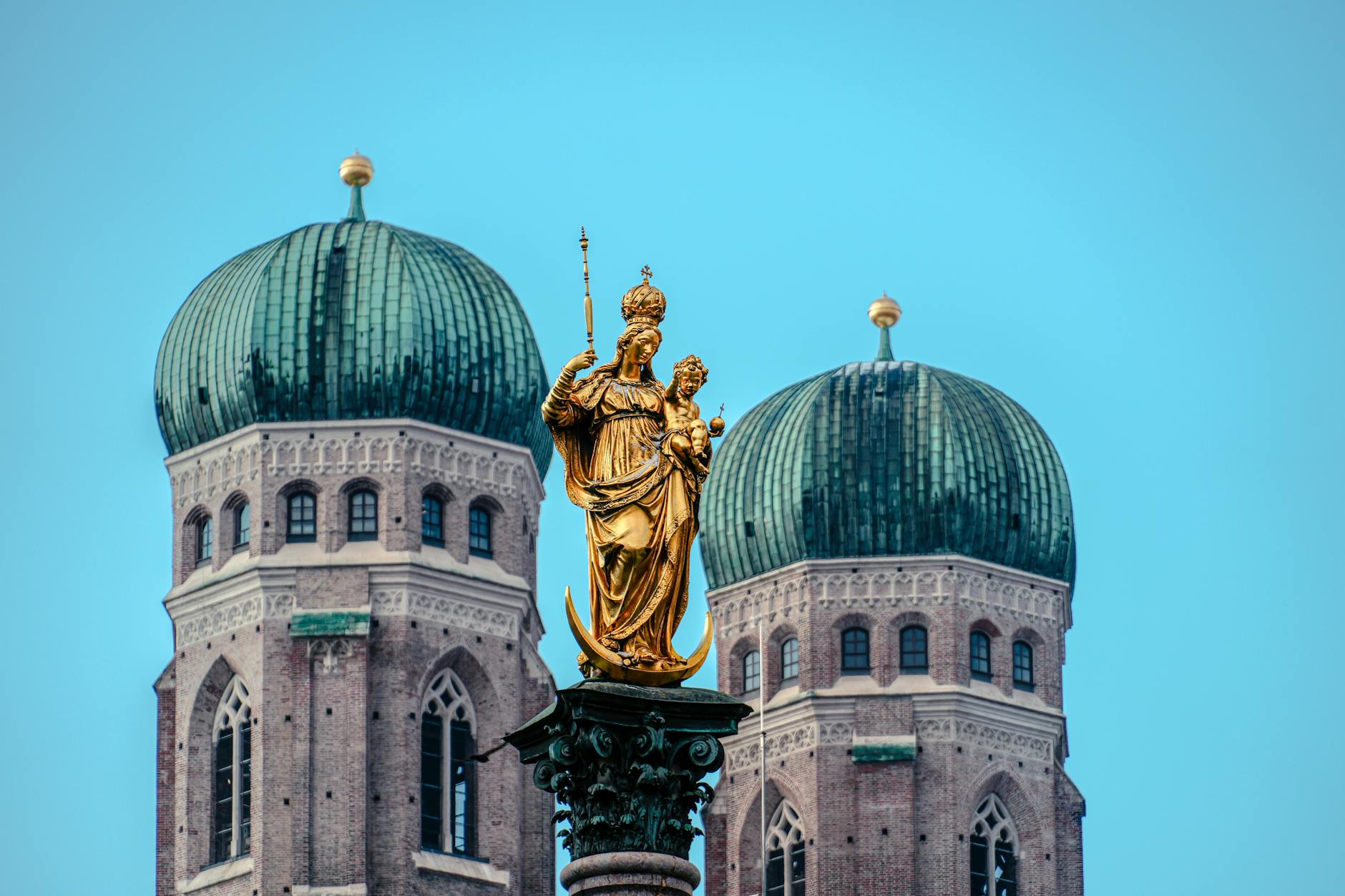
The late 15th century saw Munich’s first Gothic golden age. The Frauenkirche — Munich’s iconic cathedral with its twin onion-domed towers — was built between 1468 and 1488 in red brick, an astonishing twenty-year construction time for a major medieval cathedral. The Old Town Hall (Altes Rathaus) was enlarged. The old salt-trade settlement was now the most important city in southern Germany after Vienna.
Renaissance and Counter-Reformation (1550–1650)
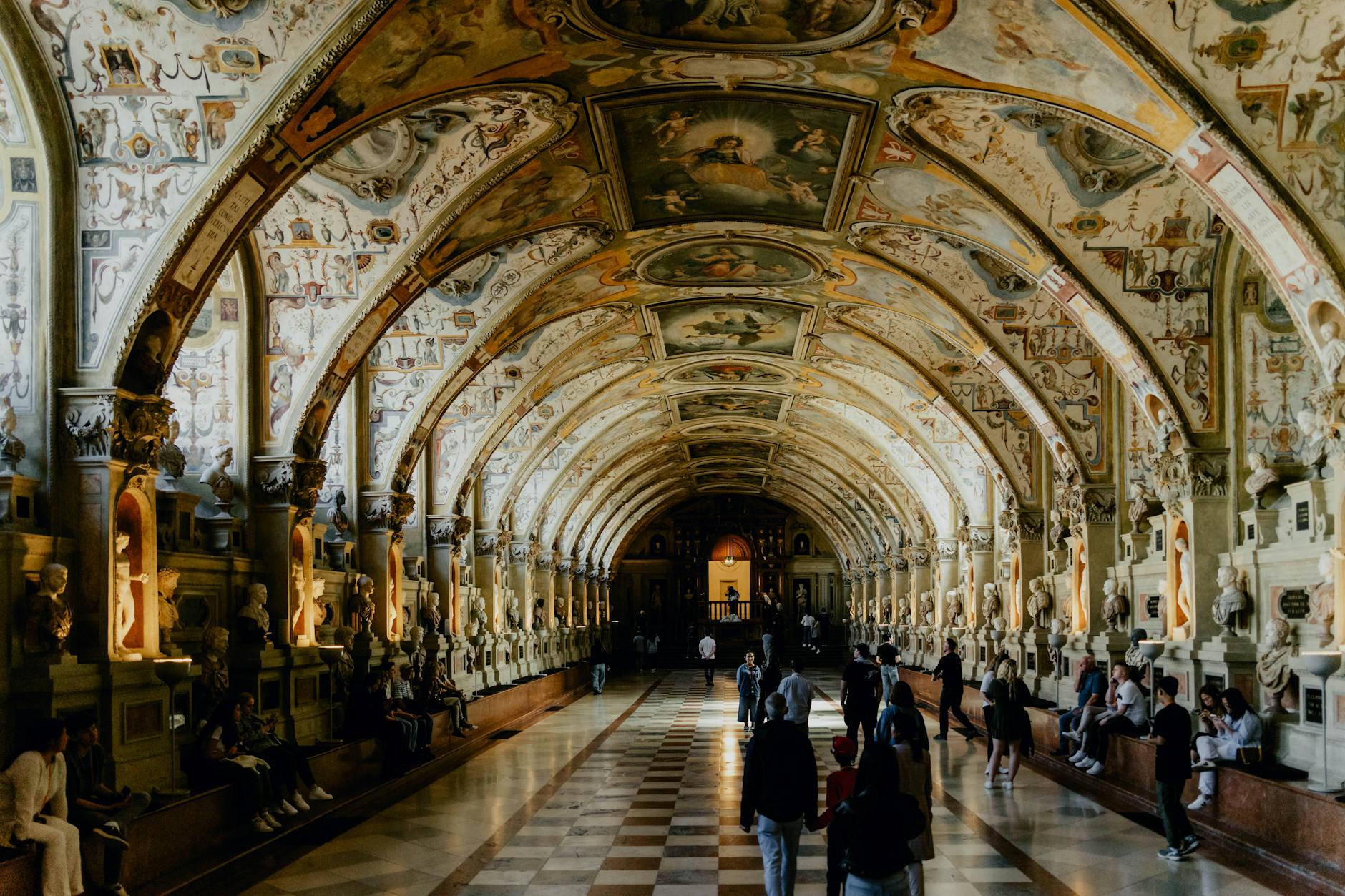
The 16th and 17th centuries transformed Munich from a Gothic merchant city into a Renaissance capital and a stronghold of the Catholic Counter-Reformation. The Wittelsbachs were enthusiastic patrons of Italian style, importing architects, sculptors, and painters from Florence, Venice, and Rome. In 1568 Duke Albrecht V built the Antiquarium inside the Residenz — a 66-meter-long barrel-vaulted hall designed to display the Wittelsbach collection of Greek and Roman antiquities, one of the largest and most magnificent Renaissance halls north of the Alps.
Duke William V built the Michaelskirche on Neuhauser Straße between 1583 and 1597 as a spiritual flagship for the Jesuits. It was — and still is — the largest Renaissance church north of the Alps. Munich’s commitment to Catholicism would shape its identity into the modern era.
The Thirty Years’ War (1618–1648) brought catastrophe. In 1632 King Gustavus Adolphus of Sweden occupied Munich and only a massive ransom prevented its destruction. Plague and starvation in the following years killed roughly a third of the population.
Baroque Splendor (1650–1780)
Recovery brought one of Munich’s most beloved architectural eras: high Bavarian Baroque and Rococo. Construction of Nymphenburg Palace began in 1664 as a summer retreat for Electress Henriette Adelaide of Savoy. The 632-meter-wide Baroque palace would grow into one of the largest royal residences in Europe. Inside the city, the Theatinerkirche (1663–1690) introduced full-blown Italian high Baroque to Munich, and the Asamkirche (1733–46) on Sendlinger Straße became the most concentrated Rococo interior in the world.
Royal Capital: The Kingdom of Bavaria (1806–1918)
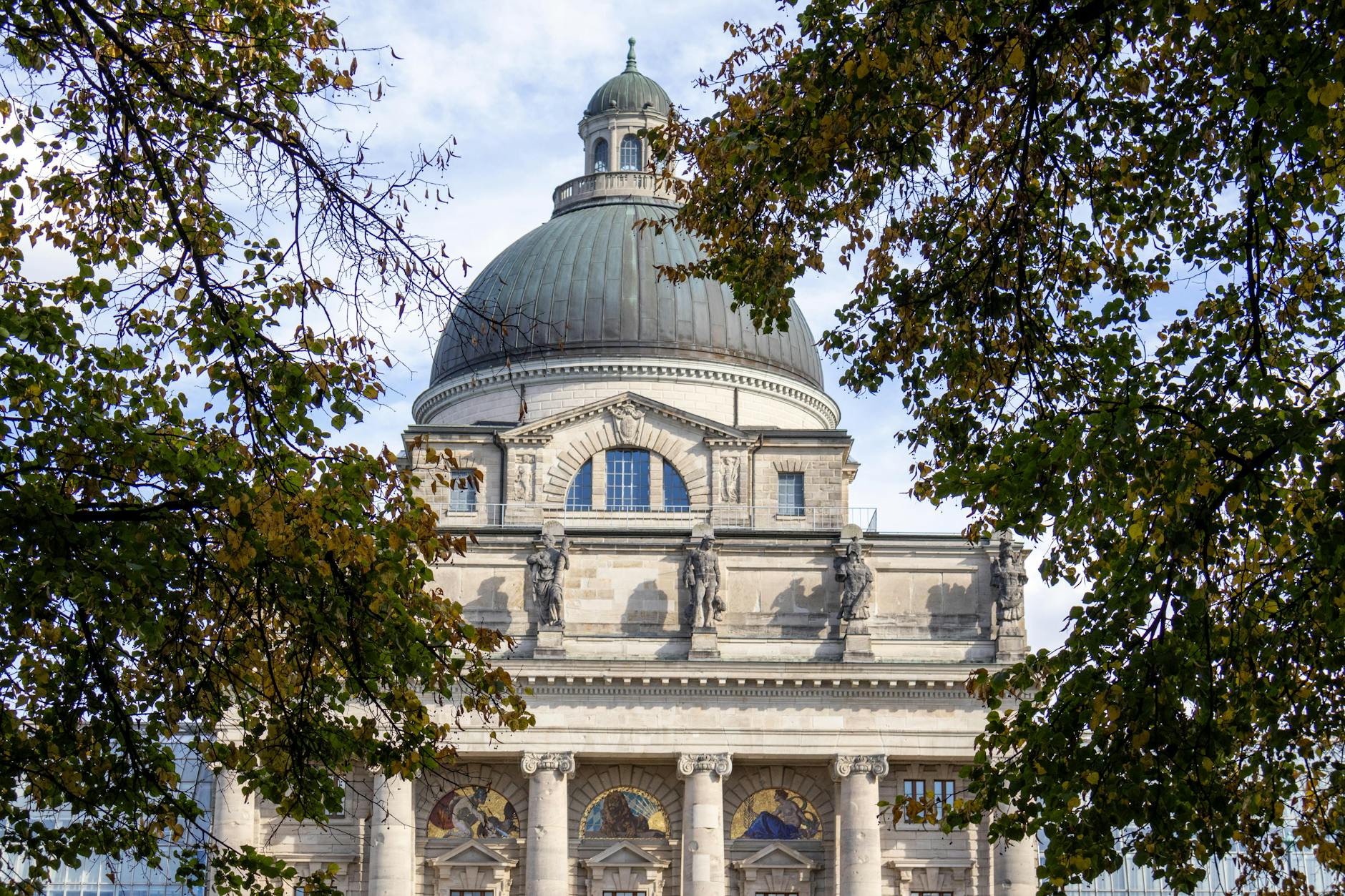
In 1806, Bavaria was elevated from an Electorate to a Kingdom — a gift from Napoleon to Maximilian I Joseph for switching sides. Munich became a royal capital, and three successive kings remade it in their own image.
Ludwig I and the New Athens (1825–1848)
Ludwig I, with his court architect Leo von Klenze, reinvented Munich as a “New Athens on the Isar.” Königsplatz was conceived as a Greek temple precinct: the Doric Propyläen (1862), the Ionic Glyptothek (1830), and the Corinthian State Antiquities Collection (1848) form one of the most coherent neoclassical squares in Europe. Ludwigstraße, a kilometer-long ceremonial boulevard, was punched north from Odeonsplatz to a new triumphal arch, the Siegestor. Klenze built the Alte Pinakothek (1826–1836) — one of the world’s first purpose-built public art museums.
Ludwig’s reign ended in scandal. In 1846 he scandalized Europe with his open affair with the Irish-born dancer Lola Montez, and the political fallout (combined with the wider 1848 European revolutions) forced his abdication.
Maximilian II and the Maximilianstraße (1848–1864)
Ludwig’s son Maximilian II built his own grand boulevard — Maximilianstraße — running east from the Residenz to the Maximilianeum on the far bank of the Isar. The Tudor-Gothic-Renaissance hybrid “Maximilian style” buildings still line it today. The street is now Munich’s premier luxury shopping district — see our Maximilianstraße shopping guide.
Ludwig II and the Fairy-tale Castles (1864–1886)
The famously eccentric “Mad King” Ludwig II spent most of his reign avoiding Munich and building fantasy castles in the Bavarian Alps — Neuschwanstein, Linderhof, and Herrenchiemsee. He was deposed in 1886 and died (officially by drowning) in Lake Starnberg three days later. His legacy — beyond the castles that make him perhaps the most-visited Bavarian to ever live — was a near-bankrupt state.
The Prinzregentenzeit (1886–1912)
Ludwig II’s mentally ill brother Otto became king in name only; his uncle Luitpold ruled as Prince-Regent for 26 years (1886–1912). This was Munich’s belle époque: the population doubled to 600,000, Schwabing exploded as a bohemian artists’ quarter (Kandinsky, Klee, Mann, Rilke), and Jugendstil (Art Nouveau) flowered. The 1896 Munich magazine Jugend gave the entire movement its name.
The Dark 20th Century (1914–1945)
Defeat in World War I ended the Wittelsbach monarchy in November 1918. King Ludwig III simply released his subjects from their oaths of loyalty and slipped away. A short-lived Bavarian Soviet Republic was declared in 1919, then violently crushed by Freikorps paramilitaries. In the bitter postwar years, Munich became a hothouse of right-wing extremism.
It was here, in Munich, that Adolf Hitler joined the tiny German Workers’ Party in 1919, transformed it into the NSDAP, and on November 8–9, 1923 launched the failed Beer Hall Putsch. The march was stopped by Bavarian police gunfire at the Feldherrnhalle on Odeonsplatz. After taking power in 1933, the Nazis declared Munich the “Capital of the Movement” and built monumental party buildings around Königsplatz.
The first Nazi concentration camp, Dachau, opened in March 1933 just 16 km northwest of Munich. The 1938 Munich Agreement was signed in the Führerbau on Königsplatz. Allied bombing between 1940 and 1945 hit Munich 71 times. By the war’s end, ~50% of the city — and 90% of the medieval Old Town — lay in ruins. American troops entered Munich on April 30, 1945.
Postwar Munich: Rebuilding the City (1945–1972)
Many bombed German cities chose modernization — Frankfurt and Hannover replaced ruined centers with grids of modernist towers. Munich, almost uniquely, chose the opposite path. After fierce public debate in the late 1940s, the city decided to rebuild its historic center largely as it had been. Streets kept their medieval widths and curves. The Frauenkirche, the Old and New Town Halls, the Residenz, the Theatinerkirche, the major churches — all were painstakingly reconstructed using surviving photographs, plans, and salvaged stones.
The result is one of Europe’s most successful postwar reconstructions. To casual visitors today, the Altstadt looks centuries old. Look closer and you’ll see the seams: a slightly too-clean stone here, a 1950s-era door fitting there. The Alte Pinakothek by Hans Döllgast (reopened 1957) is a particularly admired “creative reconstruction” — Döllgast left the bombed central section deliberately stripped down in plain brick, so the wound is still visible alongside the rebuild.
By the late 1950s the West German Wirtschaftswunder (economic miracle) was in full swing. BMW thrived on Munich’s northern edge. Siemens and Allianz expanded their headquarters. The city had a new self-image as a wealthy, livable, design-conscious capital.
The 1972 Olympics and Modern Munich (1972–Today)
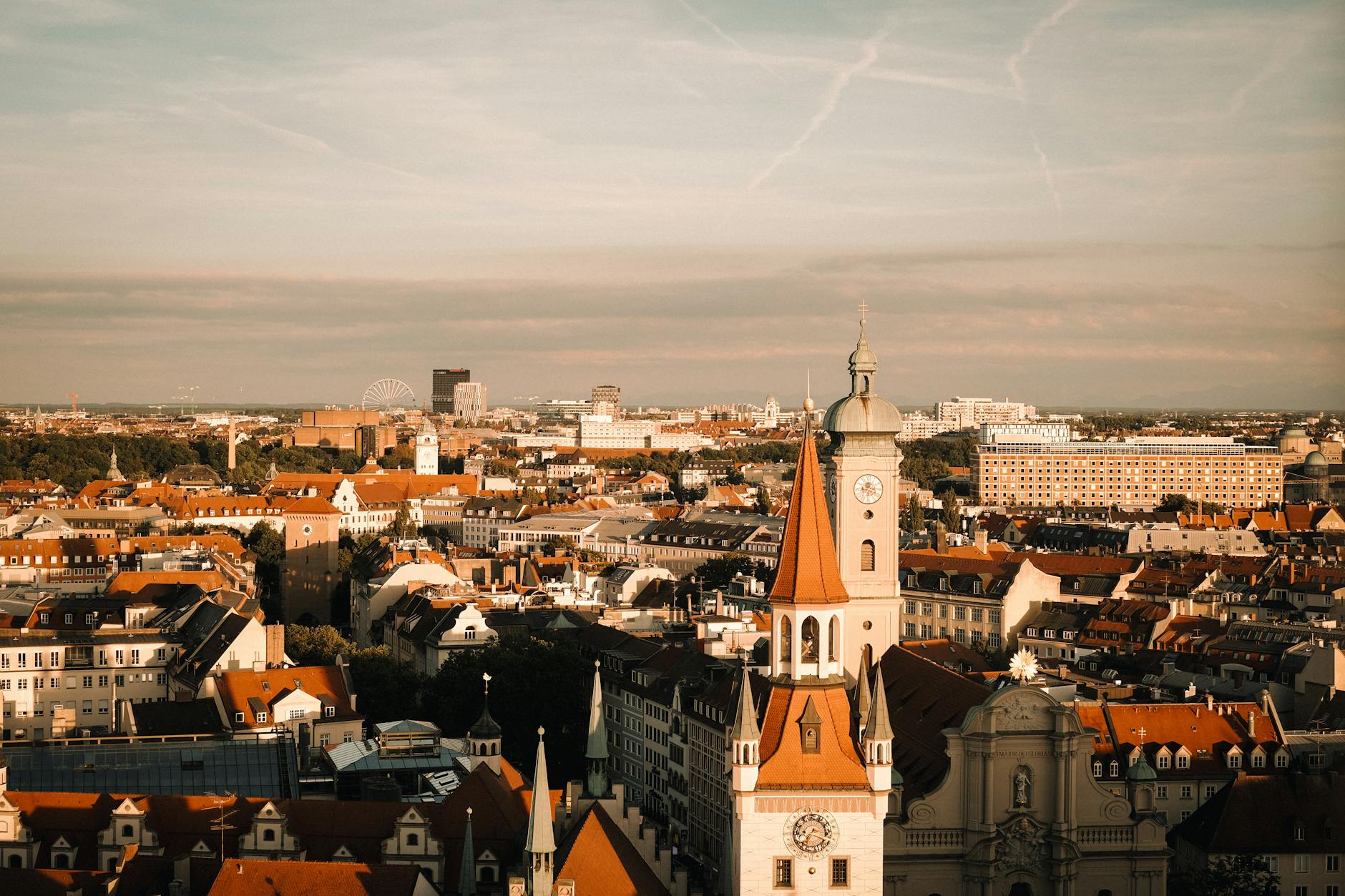
If 1945–1970 was about restoring the past, the 1972 Munich Olympics were about asserting a confident, transparent future. Architect Günter Behnisch and engineer Frei Otto designed the Olympiapark with a revolutionary lightweight tensile-cable canopy — a deliberate architectural metaphor for the new “Heitere Spiele” (“Cheerful Games”) that postwar Germany wanted to present to the world.
The Games were tragically scarred by the September 5, 1972 terrorist attack at the Israeli athletes’ quarters, in which 11 Israeli team members and a German police officer were killed. A memorial site at Connollystraße 31 commemorates them today.
From the 1970s onward, Munich extended its U-Bahn and S-Bahn (see our transport guide), pedestrianized the central streets between Karlsplatz and Marienplatz (one of the first big pedestrian zones in Germany), and built the dramatic Allianz Arena (Herzog & de Meuron, 2005) in the northern suburb of Fröttmaning. By the 1990s, Munich was firmly established as a tech and finance hub — BMW, Siemens, Allianz, MAN, Linde, and Rohde & Schwarz all headquarter here.
21st-Century Munich
Modern Munich is one of Europe’s wealthiest cities, with a population of 1.5 million in the city and 6 million in the metropolitan area. Hotel rates are second only to Paris among continental European capitals. The 99-meter Frauenkirche-height rule still holds — central Munich has no glass-tower skyline. New construction is conservative, contextual, and quietly high-quality: the Pinakothek der Moderne (2002), Museum Brandhorst (2009), the NS-Dokumentationszentrum (2015) confronting the Nazi past, the new Volkstheater (2021), and ongoing rebuilds of historic interiors.
How to See Munich’s History on the Ground
A 1-Day Historical Walking Tour
Start at Karlsplatz (medieval gate), walk east through the medieval Altstadt to Marienplatz, see the Old and New Town Halls (medieval and 19th-century), continue to the Frauenkirche (15th-century), detour to the Asamkirche (Rococo), visit Odeonsplatz (Italianate and Royal), walk north up Ludwigstraße to the Siegestor (Ludwig I’s neoclassical), then east to the Hofgarten and the Residenz (600 years of Wittelsbach building campaigns). Allow 4 hours.
Half-Day Modern History Add-On
Visit the NS-Dokumentationszentrum on Brienner Straße (2015 museum on the Nazi era), the Olympiapark (1972), and either the BMW Museum & BMW Welt or take the U-Bahn to Fröttmaning for the Allianz Arena exterior.
Full Day at Dachau Memorial
S-Bahn S2 to Dachau (about 25 min), then bus 726 to the Memorial. Allow at least 4 hours including the museum, barracks reconstructions, and crematoria. Free entry, audio guides €4. Closed Mondays. One of Europe’s most important historical sites.
Notable People in Munich’s History
- Henry the Lion (1129–1195) — founded Munich in 1158
- Albrecht V (1528–1579) — built the Antiquarium
- Maximilian I (1573–1651) — earned the Electoral title in the Thirty Years’ War
- Ludwig I (1786–1868) — created Königsplatz, Ludwigstraße, the Pinakotheken
- Ludwig II (1845–1886) — the “fairy-tale king” who built Neuschwanstein
- Prince-Regent Luitpold (1821–1912) — oversaw Munich’s belle époque
- Thomas Mann (1875–1955) — Nobel laureate; lived in Munich’s Schwabing
- Wassily Kandinsky (1866–1944) — pioneer of abstract painting; co-founded the Blue Rider in Munich
- Adolf Hitler (1889–1945) — rose to power from Munich; the city earned its terrible “Capital of the Movement” label here
- Sophie Scholl (1921–1943) — Munich university student executed for Nazi resistance; central figure in the White Rose movement
- Charles Schumann (1941–) — defined modern German cocktail culture from his bar on Maximilianstraße
Frequently Asked Questions
How old is Munich?
Munich’s official founding is 1158, making the city 868 years old in 2026. Earlier monastic settlements on the same hill from the 8th century gave the city its name.
Why is Munich called München in German?
From the Old High German Munichen, meaning “by the monks” — referring to the Benedictine monks who established the original settlement. The city’s coat of arms still features a hooded monk.
Is Munich older than Berlin?
Yes — Munich was founded in 1158; Berlin received its city charter in 1237. Munich is roughly 80 years older.
How was Munich rebuilt after WWII?
Munich made a deliberate decision to rebuild its medieval Old Town in its pre-war form using surviving photographs, drawings, and salvaged stones. Most major historic buildings — the Frauenkirche, Town Halls, Residenz, Theatinerkirche, and major churches — were carefully reconstructed between 1946 and the early 1970s.
Why is Munich called the “Capital of the Movement”?
This was a Nazi designation. Hitler started the NSDAP in Munich, attempted the failed 1923 Beer Hall Putsch here, and the Nazi regime maintained its symbolic headquarters in Munich. The city today operates the NS-Dokumentationszentrum (opened 2015) as a museum confronting this history honestly.
How long did the Wittelsbachs rule Bavaria?
678 years — from 1240 to 1918. It is one of the longest unbroken hereditary rules in European history.
Munich History You Can Still Walk Into
The timeline above plays out in stone across the modern city. Munich rebuilt so thoroughly after 1945 that it’s easy to forget how much survived — or was painstakingly put back. Use this as a field guide: pick an era, walk to the building, and read the history off the facade.
| Era | Where to see it | What to look for |
|---|---|---|
| Medieval origins (12th–14th c.) | Marienplatz & the Alter Peter | The city’s oldest parish church; climb 306 steps for the view the monks never had |
| Late Gothic (15th c.) | Frauenkirche (1488) | Twin brick towers with green onion caps — and the Teufelstritt, the “Devil’s Footstep,” just inside the door |
| Renaissance & Counter-Reformation (16th c.) | Michaelskirche & the Residenz Antiquarium | The largest Renaissance church north of the Alps; the long barrel-vaulted hall of antiquities |
| Baroque & Rococo (17th–18th c.) | Asamkirche & Theatinerkirche | The Asam brothers’ tiny gilded church on Sendlinger Straße; the lemon-yellow Italian dome on Odeonsplatz |
| Royal neoclassicism (19th c.) | Königsplatz & Ludwigstraße | Leo von Klenze’s Greek-revival temples, built for Ludwig I’s “New Athens” |
| Nazi era (1933–45) | Königsplatz & the NS-Dokumentationszentrum | The documentation centre on the footprint of the former Nazi party headquarters |
| Postwar & modern (1972) | Olympiapark | Frei Otto’s sweeping tent roofs, raised for the Games that reintroduced Munich to the world |
None of these are museum pieces behind glass — they’re working churches, public squares, and parks you walk through for free. For the full roster of what to see and how to reach each one, our Munich landmarks guide maps them out, and the Residenz guide goes deep on the 500-room palace where the Wittelsbachs actually lived.
Beer, Guilds, and the Münchner Kindl: Munich’s Everyday History
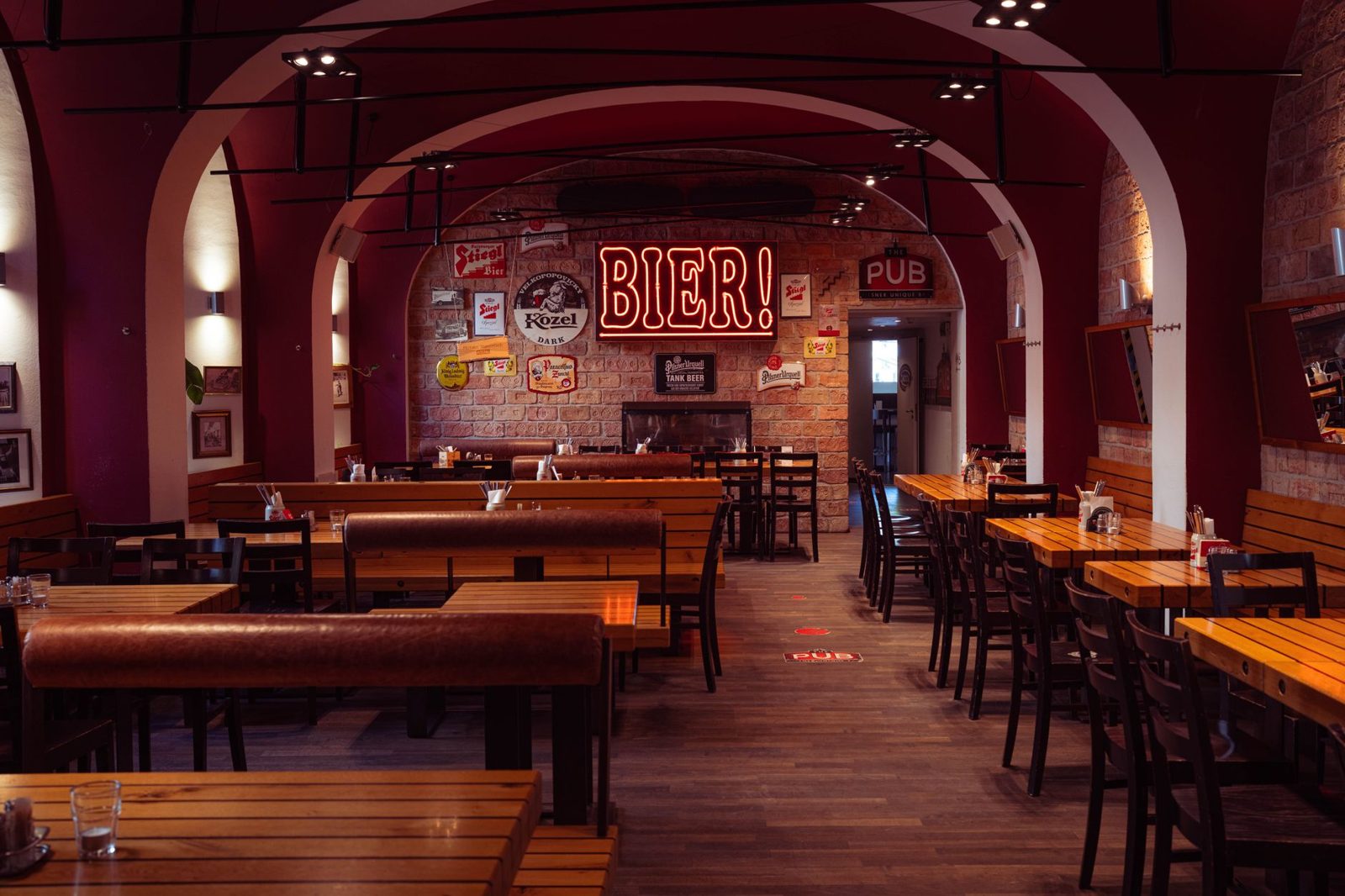
Kings and architects get the timeline, but Munich’s identity was built just as much in its breweries, markets, and guild halls. Start with the symbol you’ll see everywhere — on manhole covers, beer steins, and the city flag. The name München means “by the monks,” and the monk on the medieval coat of arms softened over the centuries into a child: the Münchner Kindl, a hooded figure in a black-and-gold robe holding a book. Every September a young Münchnerin plays the Kindl on horseback, leading the Oktoberfest opening parade down through the city.
The beer itself is a matter of law. In 1516 Duke Wilhelm IV issued the Reinheitsgebot, the Bavarian Beer Purity Law, restricting beer to water, barley, and hops — often called the oldest food-quality regulation still shaping what’s in your glass. Munich’s brewing actually began earlier, in the monasteries: Paulaner grew from the strong Lenten Starkbier brewed by Paulist friars, a tradition the city still celebrates each spring at the Nockherberg. You can taste five centuries of it in a single afternoon — our beer halls and breweries guide walks through the historic cellars, and the Bavarian food guide covers what to order alongside.
Two living traditions tie this everyday history to dates you can actually plan around. The Schäfflertanz — the coopers’ dance — supposedly began in 1517, when barrel-makers danced through plague-emptied streets to coax frightened townspeople back outdoors. It’s performed only every seven years, and 2026 is a Schäffler year: look for the troupes in their red jackets and green hats dancing on Marienplatz through the Fasching carnival season. And the Viktualienmarkt, the daily food market just south of Marienplatz, moved to its present spot by royal decree in 1807 when the old square-side market outgrew itself — it’s been Munich’s larder ever since, beer garden and all. For the date that started the city’s biggest tradition of all, the 1810 royal wedding behind Oktoberfest sits squarely in this everyday history too.
Continue Exploring Munich’s History
This timeline is a companion to our deeper Munich history & architecture pillar, which goes further into the buildings of each era. For travel context, see our things to do guide, our museums and culture guide, and our overall trip planner.