Top 15 Must-See Landmarks in Munich
The 15 must-see Munich landmarks for first-time visitors — from Marienplatz and the Frauenkirche to Nymphenburg, the Olympic Park, and the Allianz Arena — with practical tips, hours, and itineraries.
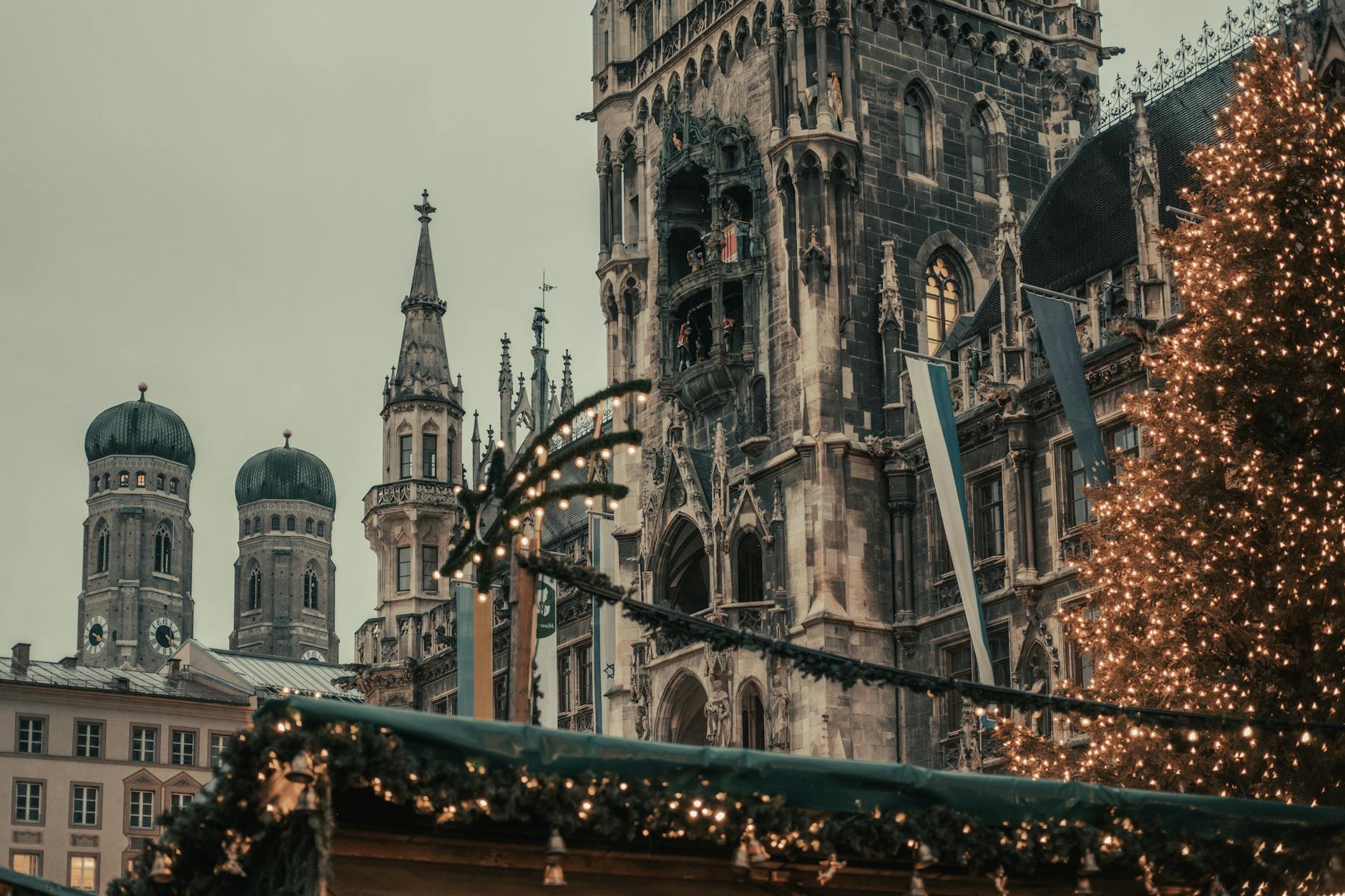
Munich landmarks tell the story of one of Europe’s most architecturally rewarding cities. From the medieval Frauenkirche and the lively Marienplatz Glockenspiel to the Baroque splendor of Nymphenburg Palace, the world-famous Hofbräuhaus, and the futuristic Olympic Park, this guide rounds up the 15 must-see Munich landmarks first-time visitors should not miss — with practical tips on opening hours, ticket prices, photography spots, and how to combine them efficiently in one or two days. Every landmark below is reachable on foot or with a single tram or U-Bahn from Marienplatz.
Quick Reference: Munich’s Top 15 Landmarks
| # | Landmark | Type | Best Time | Cost (2026) |
|---|---|---|---|---|
| 1 | Marienplatz & New Town Hall | Square / Civic | 11 a.m. or 12 p.m. for Glockenspiel | Free; tower €8 |
| 2 | Frauenkirche | Cathedral | Morning, soft light | Free; tower €7.50 |
| 3 | Hofbräuhaus am Platzl | Beer hall | Late afternoon | Free entry |
| 4 | Munich Residenz | Royal palace | Mornings, open 09:00 | €10 / combo €15 |
| 5 | Nymphenburg Palace | Royal palace | Spring–autumn for gardens | €12 / combo €17 |
| 6 | English Garden / Chinese Tower | Park | Sunny afternoons | Free |
| 7 | Viktualienmarkt | Market | 10 a.m.–6 p.m. weekdays | Free entry |
| 8 | Asamkirche | Rococo church | 10 a.m. weekdays | Free |
| 9 | Peterskirche (Alter Peter) | Church / viewpoint | Clear days | Tower €5 |
| 10 | Odeonsplatz & Theatinerkirche | Square / church | Anytime | Free |
| 11 | Olympiapark & Olympic Tower | Park / sports | Clear afternoons | Park free; tower closed until its expected 2027 reopening |
| 12 | BMW Welt & BMW Museum | Museum | Tue–Sun 10–18 | Welt free; museum €10 |
| 13 | Allianz Arena | Stadium | Evening match days | Museum + Arena Tour €25 |
| 14 | Königsplatz & Glyptothek | Square / museums | Sunday €1 entry | Glyptothek €6 |
| 15 | Deutsches Museum | Science museum | Open 09–17 daily | €15 |
1. Marienplatz and the New Town Hall
Marienplatz has been the heart of Munich since 1158 — first as a market square, then as a tournament ground, and today as the city’s symbolic and pedestrian center. Looming over it is the 100-meter Neue Rathaus (New Town Hall), a Neo-Gothic fantasy of spires, gargoyles, and statues built between 1867 and 1909. Most visitors come for one specific reason: the Glockenspiel, an 84-figure mechanical clock show set in the central tower. It performs daily at 11 a.m. and 12 p.m. year-round, with an additional 5 p.m. show from March through October.
Climb the tower (lift available, €8) for one of Munich’s best skyline views — straight across to the Frauenkirche and St. Peter’s. Below the New Town Hall, look for the 14th-century Mariensäule (Column of Mary, 1638), erected after Munich was spared in the Thirty Years’ War. Across the square, the Altes Rathaus (Old Town Hall, c. 1470) houses a charming Toy Museum.
Insider Tip
The Glockenspiel show is good but slow (about 15 minutes). For a less crowded view, watch from the elevated terrace of the Café Glockenspiel above, or — better — climb the tower of St. Peter’s a few minutes before showtime and watch the figures dance from above.
2. Frauenkirche — Munich’s Iconic Cathedral
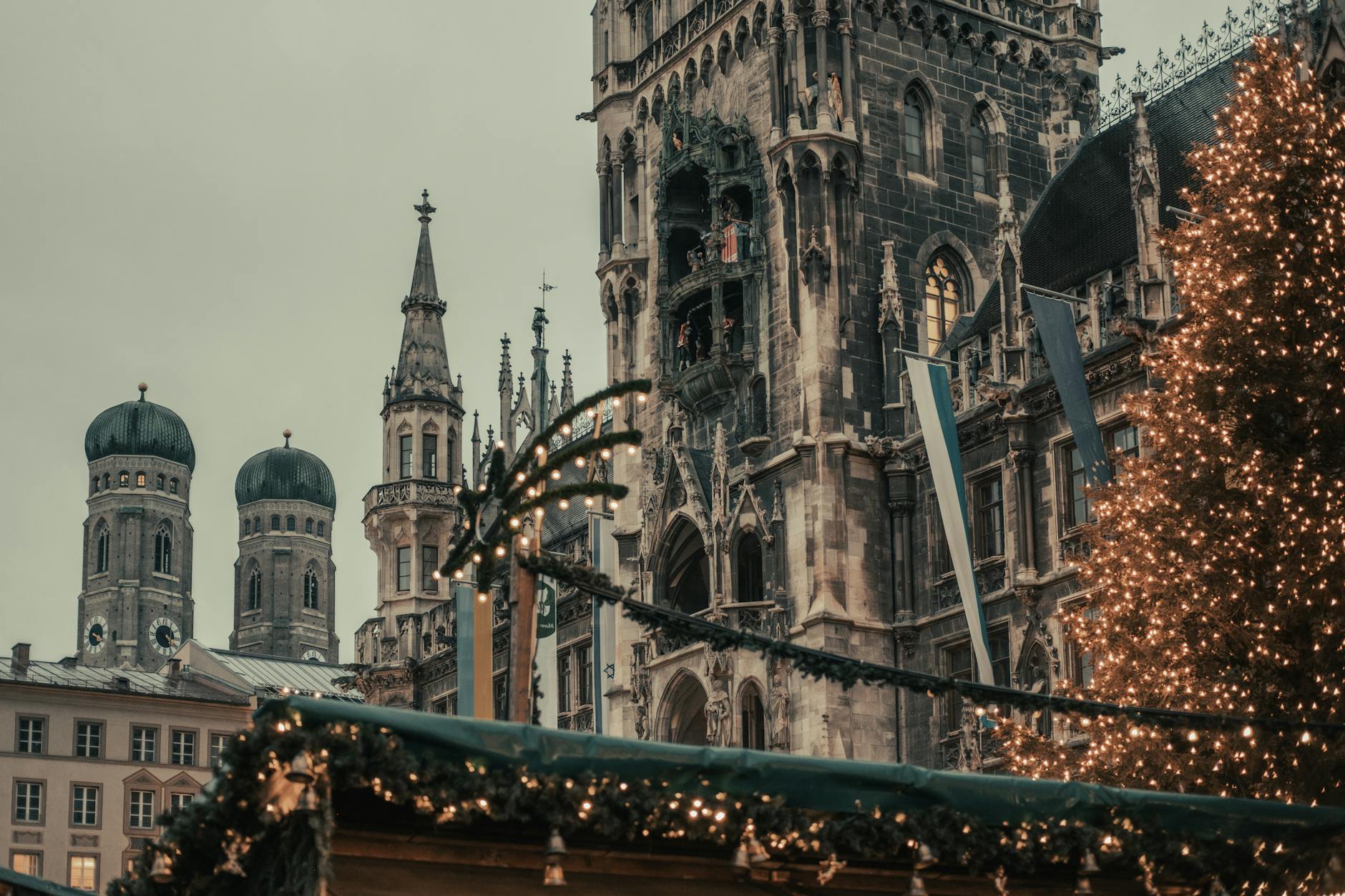
The Frauenkirche (Cathedral of Our Lady) is the building Münchners use to navigate from any rooftop in the city. Built between 1468 and 1488 in red brick — astonishingly, in just 20 years — its twin onion-domed towers (added in 1525) reach 99 meters. By long-standing local rule, no building inside the central ring may be taller. Inside, look for the Devil’s Footprint in the entryway tile floor — an indentation legend says was left by Satan when the architect tricked him into helping with construction.
After standing closed for years of renovation, the south tower viewing platform reopened to visitors in 2024. Tickets are €7.50 and the climb is worth it on any clear day — you’ll see all the way to the Alps. The cathedral itself is free, but it remains an active church; behave respectfully during services.
How to Visit
- Hours: Daily 8 a.m.–8 p.m. (church); tower hours vary
- Best time: Early morning for soft light through the stained glass; sunny afternoons for the tower view
- Photo angle: Stand on Frauenplatz on the south side for the classic shot, or head to Promenadeplatz for a wider perspective
3. Hofbräuhaus am Platzl
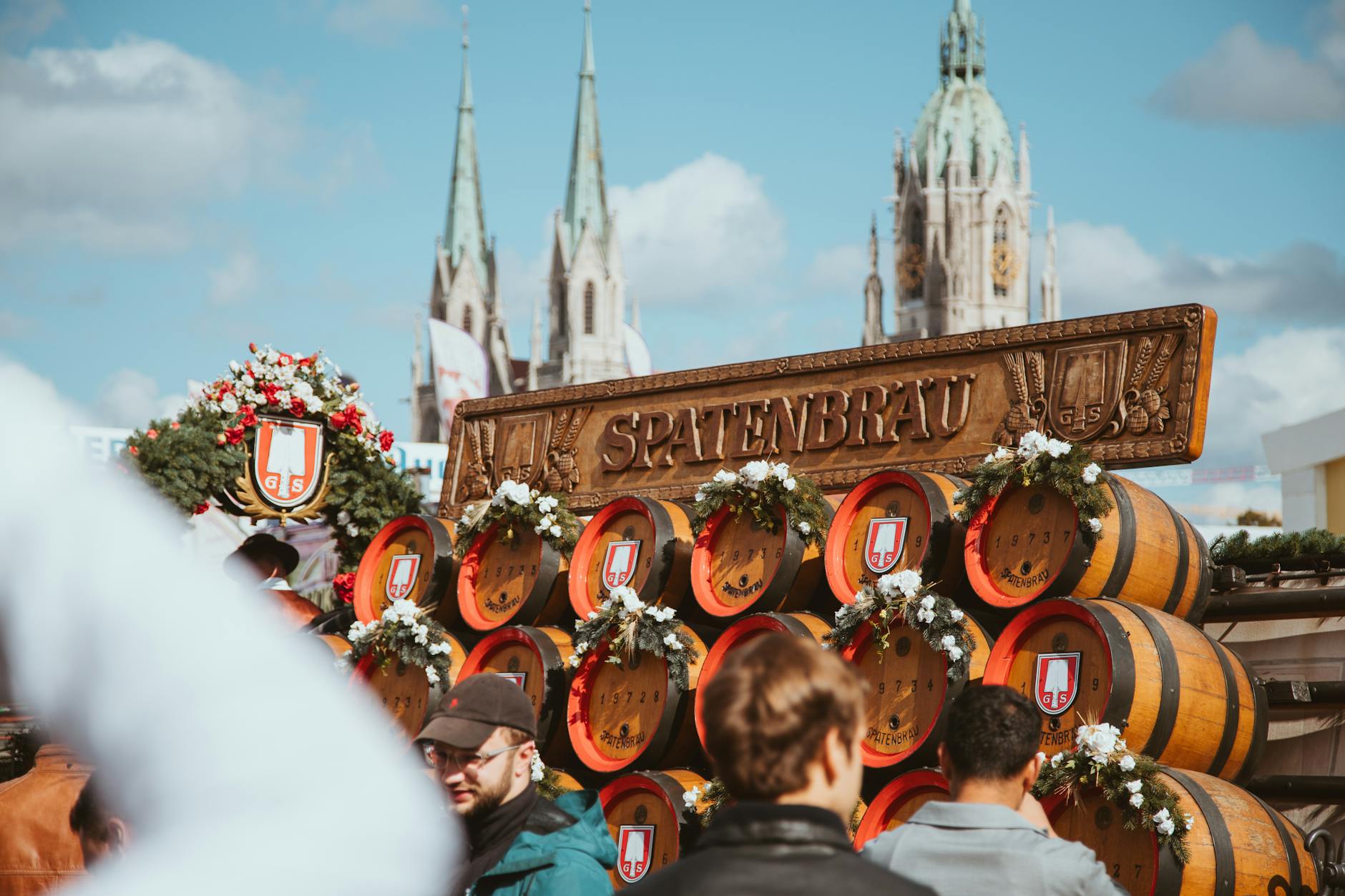
Founded in 1589 as the ducal court brewery, the Hofbräuhaus is one of the most famous beer halls anywhere. The current building dates to 1897 and seats around 3,000 people across multiple halls, a courtyard, and an upstairs ballroom where Mozart, Lenin, and (less happily) Hitler all spent time. Yes, it’s touristy. But the live oompah band, the wood-paneled main hall, and the experience of clinking a one-liter Maß of Hofbräu Original with strangers from twelve countries is part of the Munich rite of passage.
Order the Hofbräu Original (helles lager) or, if you prefer something sweeter, the Schwarze Weisse dark wheat. For food, classic options include Schweinsbraten (roast pork with dumpling), Weißwurst (white sausage, traditionally only before noon), or a giant Brezn (pretzel). For a more local-feeling alternative, walk five minutes south to the Augustiner-Großgaststätte on Neuhauser Straße, where Münchners are more likely to actually drink.
4. The Munich Residenz
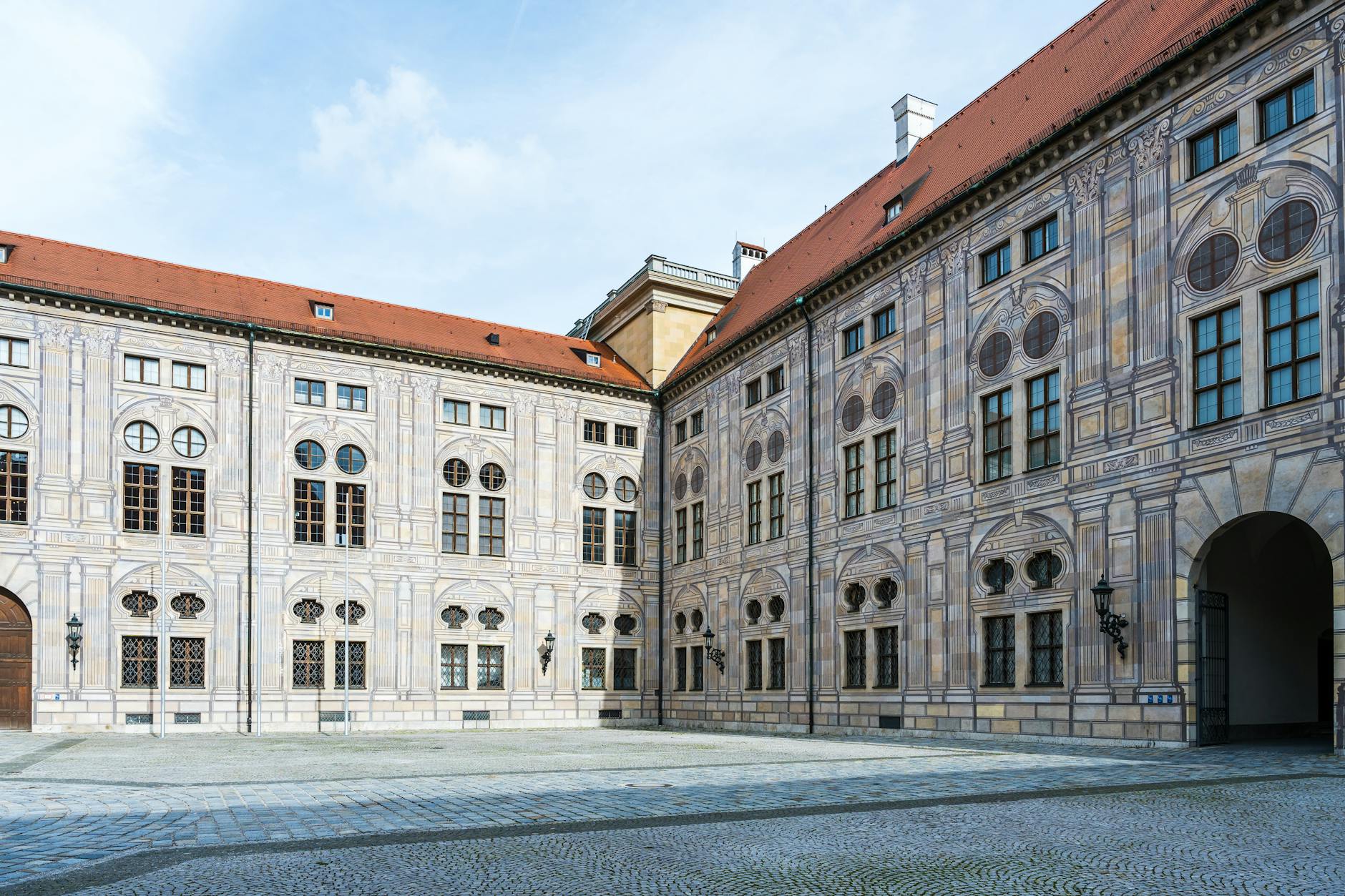
The Residenz was the seat of the Wittelsbach dukes, electors, and kings of Bavaria from 1508 to 1918, and is the largest city palace complex in Germany. With ten courtyards and 130 public rooms, it can easily absorb half a day. Highlights include the Antiquarium — a 66-meter Renaissance hall of marble busts and ceiling frescoes, the largest of its kind north of the Alps; the dazzling Treasury with the crown jewels of Bavaria; the Court Chapel; and the exquisite Rococo Cuvilliés Theatre, where Mozart conducted the premiere of Idomeneo.
A separate ticket gets you into the Hofgarten — the formal Renaissance garden behind the palace, free to enter and a peaceful escape from Marienplatz crowds. Combo tickets for the Residenz, Treasury, and Cuvilliés Theatre are excellent value at €17.
5. Nymphenburg Palace
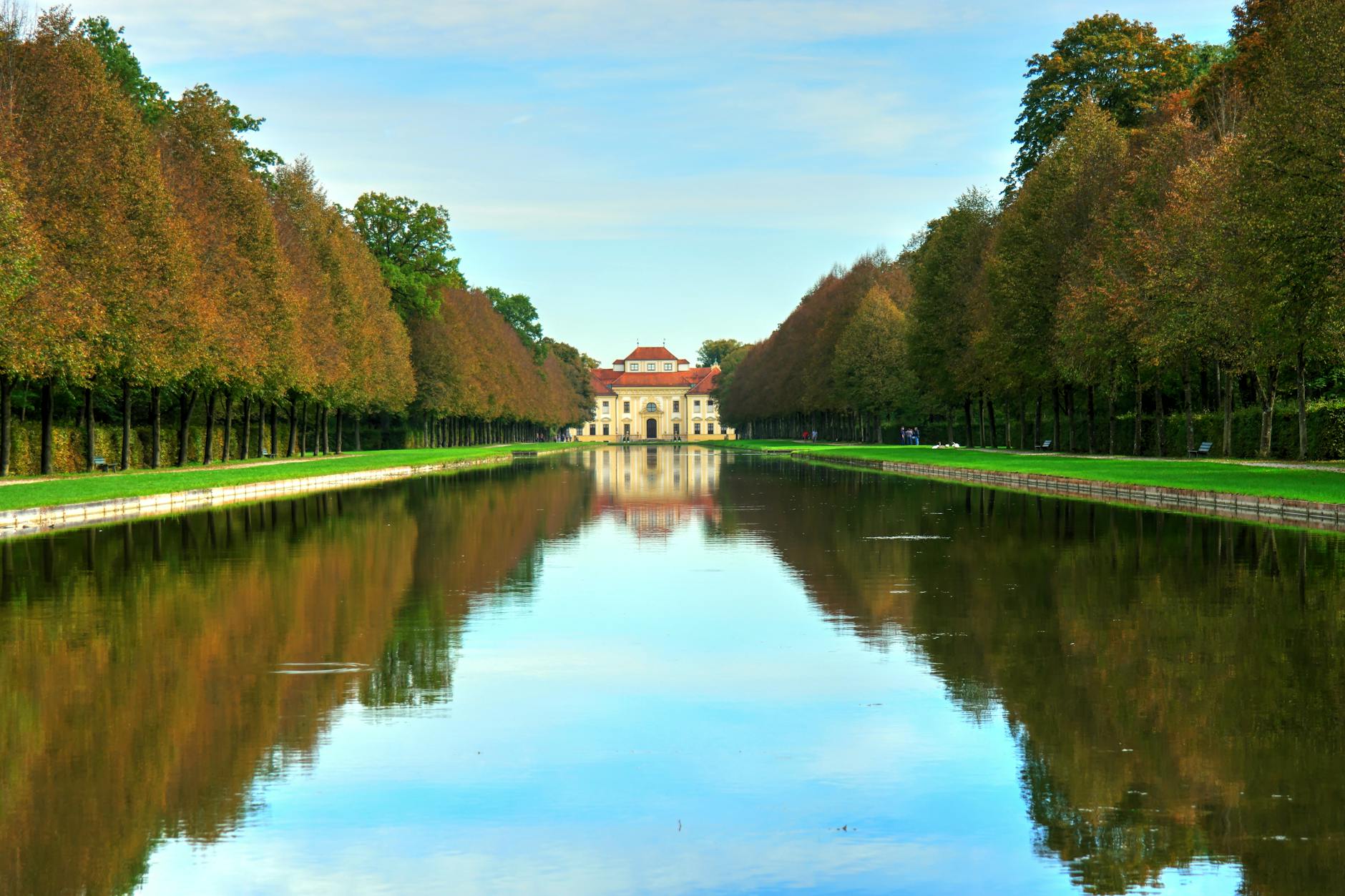
Begun in 1664 as a summer escape for Electress Henriette Adelaide of Savoy, Nymphenburg Palace grew into a 632-meter-wide Baroque pleasure complex with a 200-hectare park, two long canals, and four exquisite garden pavilions. Inside the main palace, don’t miss the Stone Hall with its swirling Rococo ceiling fresco, the famous Schönheitengalerie (Gallery of Beauties) commissioned by King Ludwig I, and the room where King Ludwig II — the “fairy-tale king” who built Neuschwanstein — was born in 1845.
In the park, the Amalienburg hunting lodge (1734–39) is one of the supreme masterpieces of European Rococo — its silver-and-blue Hall of Mirrors is a transcendent space at any hour. The Marstallmuseum in the south wing displays Ludwig II’s gilded ceremonial sleighs and coaches and is included in most tickets.
How to Get There
Tram 17 from Karlsplatz/Hauptbahnhof drops you at the gates in 17 minutes. Allow 3 hours for palace + Amalienburg + a stroll. The gardens are free and open dawn to dusk year-round.
6. The English Garden and Chinese Tower
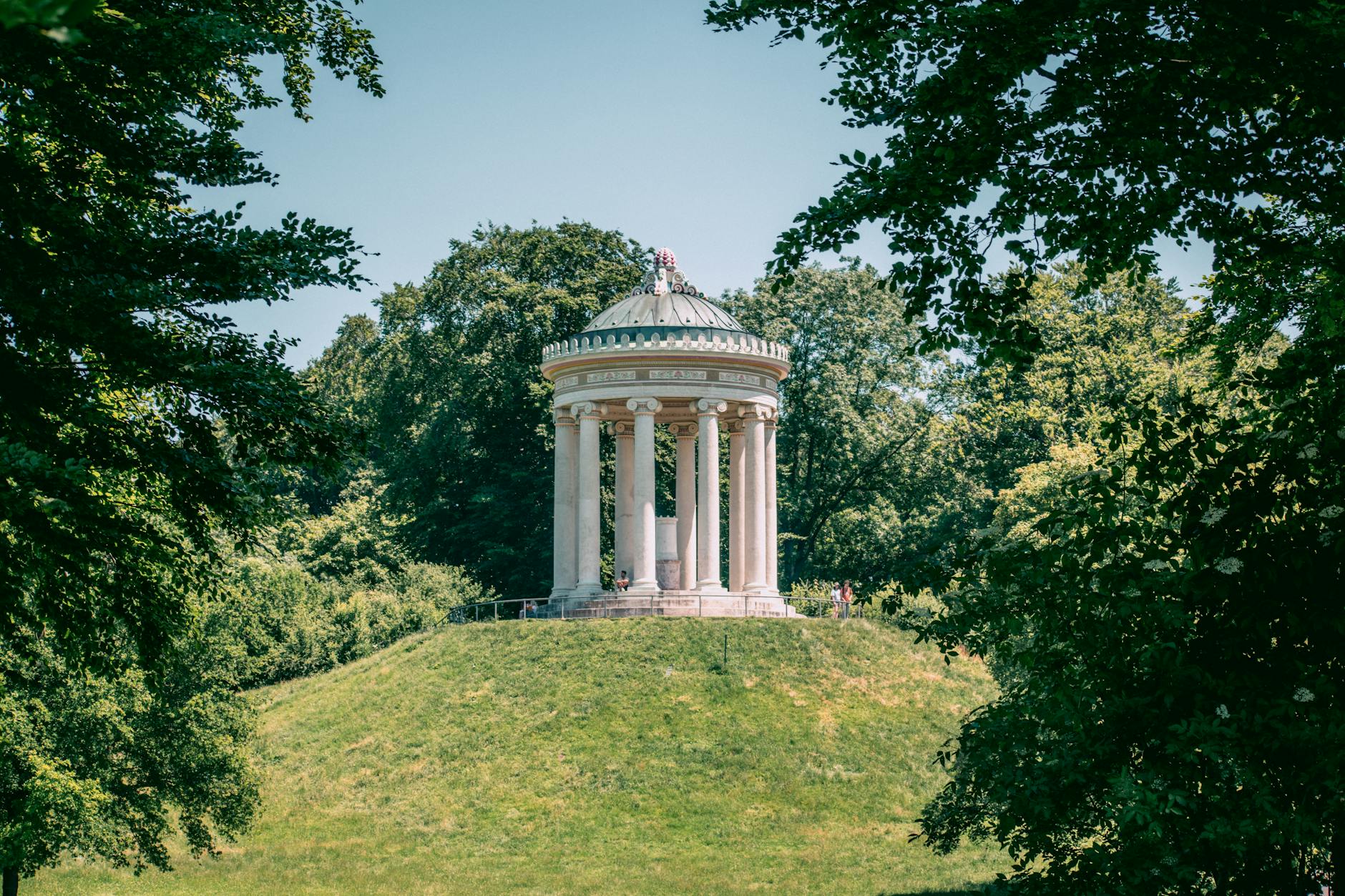
At 375 hectares, Munich’s Englischer Garten is one of the largest urban parks in the world — bigger than New York’s Central Park and Hyde Park combined. Laid out from 1789 by Sir Benjamin Thompson (Count Rumford) along Enlightenment ideals of “a park for the people,” it stretches 5.5 km north along the Isar. You’ll find: the Chinesischer Turm (Chinese Tower), a 25-meter pagoda surrounded by Munich’s second-largest beer garden (7,000 seats); the Eisbach, an artificial standing wave near the southern entrance where Münchners surf year-round (yes, in wetsuits in winter); the Monopteros, a Greek-style temple with a panoramic view back over the city; and the Japanese Tea House on a small island.
The southern third — closest to the city — has the most action and the most beer. The northern half (across the Isar Ring) is wilder and quieter. Bring a swimsuit in summer; the Eisbach and the Schwabinger Bach are both popular swimming streams.
7. Viktualienmarkt
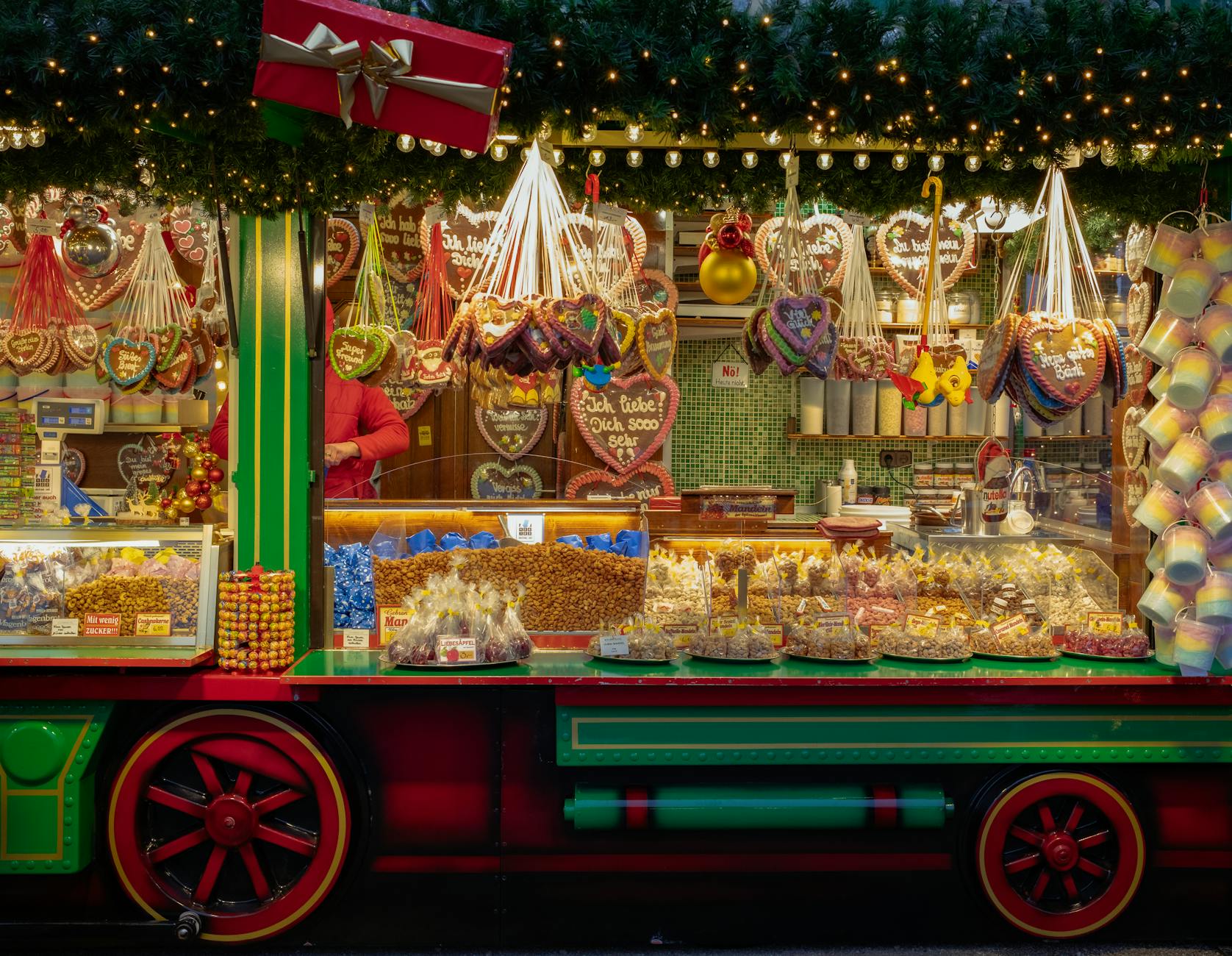
Two minutes south of Marienplatz, the Viktualienmarkt has been Munich’s main open-air food market since 1807. Spread across 22,000 square meters with around 110 stalls, it sells everything from artisan cheese, sausages, and seasonal Bavarian produce to flowers, herbs, and game. At its heart stands a colorful Maibaum (maypole) — a Bavarian village tradition transplanted to the city — and a small year-round beer garden that rotates between Munich’s six big breweries, switching beer about every five to six weeks.
Come hungry: try Leberkäs Semmel (Bavarian meatloaf in a roll), fresh oysters at the Bavarian Oyster Bar, a fish sandwich at Nordsee, or a glass of Sekt at the wine bar. Most stalls take cards now, but bring some cash for tips and small purchases.
8. Asamkirche
The Asam brothers — sculptor Egid Quirin and painter Cosmas Damian — built the Asamkirche (St. Johann Nepomuk) between 1733 and 1746 as their private parish church next to their residence on Sendlinger Straße. Just 22 meters long, it is the most concentrated Rococo interior in Germany. Every surface is encrusted with gilded stucco, twisting marble columns, and dramatic frescoes; the climax is a sculpted Holy Trinity bursting through the ceiling above the altar. The whole space feels like stepping inside a jewelry box. Entry is free; please be respectful and quiet — it remains an active Catholic church.
The Asamkirche is only one of several extraordinary interiors in the old town; our guide to Munich’s most beautiful churches ranks fifteen of them, with a walking route that links the best.
9. Peterskirche — Munich’s Best Skyline View
Right next to Marienplatz, Peterskirche (“Alter Peter,” Old Peter) is Munich’s oldest parish church — its origins go back to before the city’s official founding in 1158. The interior is a layered confection of Gothic structure, Baroque altars, and Rococo flourishes. But the real reason to come is the tower: 299 stairs (no elevator) lead to the open viewing platform, the best 360-degree panorama in Munich. On clear days you can see the Alps, 80 km south. €5, open daily 9 a.m.–6 p.m. (later in summer).
For more places to see the city from above, our guide to Munich’s best viewpoints and photo spots ranks fifteen of them.
10. Odeonsplatz, Theatinerkirche, and Feldherrnhalle
Odeonsplatz is Munich’s grandest Italian-flavored square: closed at the south by the Feldherrnhalle (1844), a loggia modeled on Florence’s Loggia dei Lanzi and flanked by lions; closed at the west by the gleaming yellow Theatinerkirche (1663–1690) with its 71-meter Italianate dome; and opening at the north onto the kilometer-long ceremonial Ludwigstraße. Just to the east stands the Hofgarten and the Residenz; just to the west, the Bavarian state government complex. Coffee at Café Tambosi — Munich’s oldest café, on the square since 1775 — is a classic stop.
11. Olympiapark and the Olympic Tower
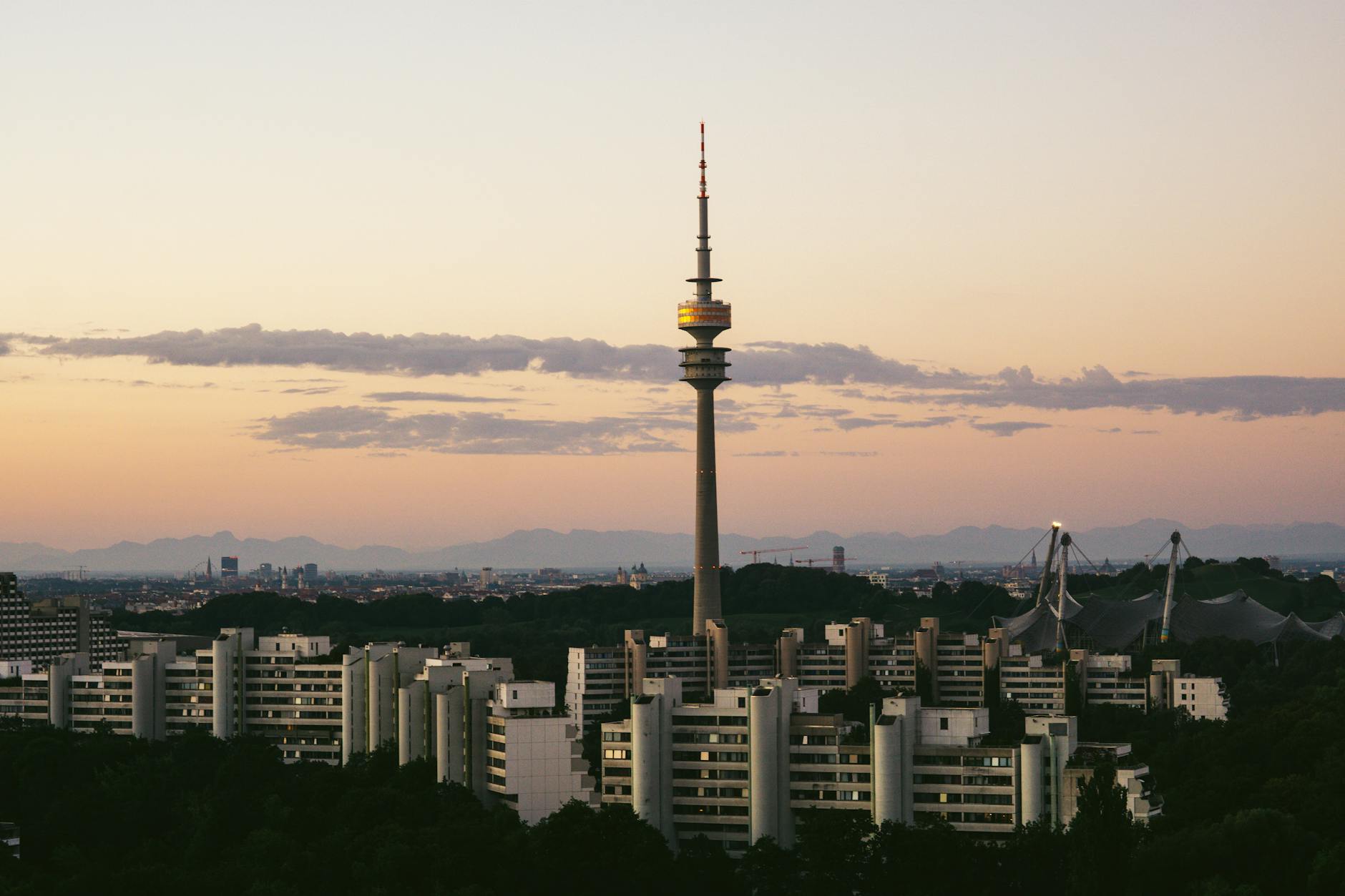
The Olympiapark, built for the 1972 Summer Olympics, is the most architecturally important green space in Munich. The translucent tensile-cable canopy — designed by Frei Otto and Günter Behnisch — was a structural revolution at the time and still looks futuristic today. Locals jog, swim, and sunbathe here year-round. The 291-meter Olympiaturm has been closed since 1 June 2024 and is expected to reopen during 2027. When it does, it gives the best high-altitude view in the city: on a clear day the Zugspitze and the entire Alpine wall fill the southern horizon. The site also hosts major concerts and the annual Tollwood summer festival.
12. BMW Welt and the BMW Museum
Adjacent to the Olympic Park, the BMW Welt (2007) is BMW’s free-to-enter delivery and exhibition center — a soaring twisted-cone of glass and steel by Coop Himmelb(l)au. Across the plaza, the silver bowl-shaped BMW Museum (1973) tells the company’s story from aero-engines to electric. The cylindrical four-cylinder BMW HQ tower (1972) next door is one of Munich’s signature modernist buildings. U-Bahn 3 to Olympiazentrum drops you at the door.
13. Allianz Arena
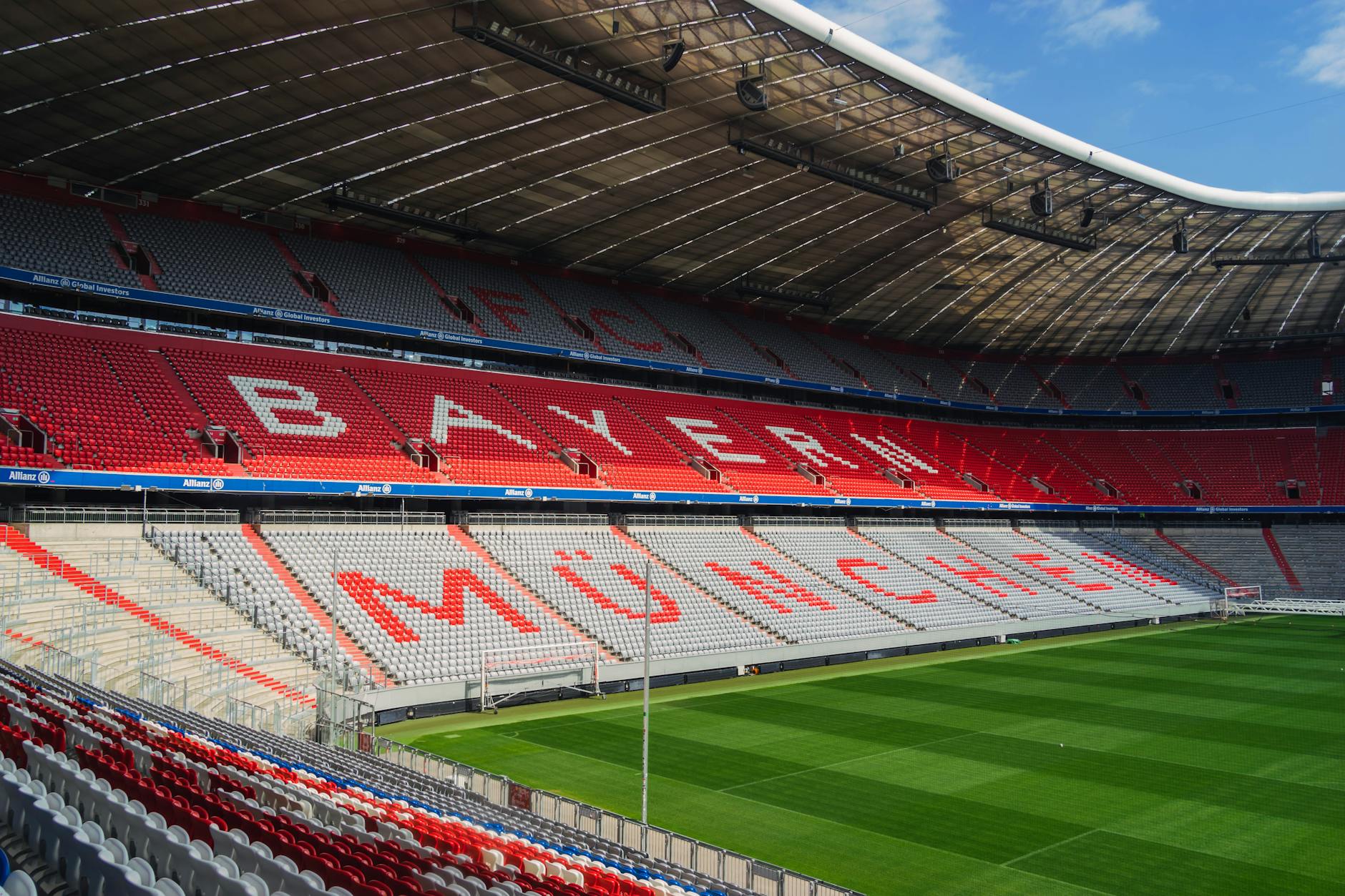
On the city’s northern edge, the Allianz Arena (Herzog & de Meuron, 2005) is one of the most striking pieces of contemporary architecture in Germany — a 70,000-seat ETFE-cushion stadium that glows red on FC Bayern home nights, white for the German national team, and (occasionally) other colors for special matches. Tours run daily and visit the locker rooms, press box, and pitch-side. U-Bahn 6 to Fröttmaning gets you there in 18 minutes from Marienplatz.
For match tickets, stadium tours and the city’s other sporting venues, see our guide to sport in Munich.
14. Königsplatz and the Glyptothek
Königsplatz was conceived by King Ludwig I in the 1810s as a Greek temple precinct on the model of the Athenian Acropolis. The Doric Propyläen gateway (1862), the Ionic Glyptothek (1830) housing classical sculpture, and the Corinthian State Antiquities Collection (1848) form one of the most coherent neoclassical squares in Europe. All three buildings cost just €1 on Sundays as part of the Bavarian state museum scheme — a remarkable bargain. The square is also surrounded by the Kunstareal museum row (Pinakotheken, Brandhorst) and the NS-Dokumentationszentrum, Munich’s main museum on the Nazi era.
15. Deutsches Museum
On its own island in the Isar, the Deutsches Museum is the world’s largest museum of science and technology — and one of Munich’s most-visited attractions. Highlights include a full U-Boot (submarine), Otto Lilienthal’s pioneering glider, an enormous mining tunnel reconstruction, the original 1965 Apollo lunar lander mockup, and a working tesla coil. Following a multi-year renovation, the main building is now far more interactive and family-friendly. Allow at least 3 hours; €15 admission. See our museums guide for a deeper look.
Suggested 1-Day and 2-Day Landmark Itineraries
1 Day: Compact Old Town Loop
- 09:00 — Asamkirche → Sendlinger Tor → Viktualienmarkt
- 10:30 — Marienplatz Glockenspiel (11:00 show) + St. Peter’s tower
- 12:30 — Lunch at Hofbräuhaus or Augustiner
- 14:00 — Frauenkirche + tower
- 15:30 — Residenz (focus: Antiquarium and Treasury)
- 17:30 — Hofgarten and Odeonsplatz (Theatinerkirche)
- 18:30 — Beer at the Chinese Tower in the English Garden
2 Days: Add Royal and Modern Munich
Day 2 morning: tram 17 to Nymphenburg (palace + Amalienburg + park, ~3 h). Afternoon: U-Bahn 3 to Olympiapark for a wander through the park, then BMW Welt and BMW Museum. Evening: tram or U-Bahn back into town for dinner in Schwabing or Glockenbachviertel — see our neighborhoods guide.
Practical Tips for Visiting Munich Landmarks
- The MVV day pass (€10.10 single, €19.70 group in 2026; the single rises to €10.80 from January 2027) covers all transit zones M and is the most efficient way to combine landmarks — see our transport guide
- Bavarian state museums (Pinakotheken, Glyptothek, State Antiquities, Schackgalerie) charge just €1 on Sundays
- Mondays are closed days for many museums — plan church/palace days first
- Royal palace combo tickets (Residenz, Nymphenburg, Schleißheim) save up to 30% if visiting more than two
- Free landmark walking tours leave Marienplatz daily at 10 a.m. and 2 p.m. (tip-based)
- Photography: most exteriors anytime; many interiors restrict flash and tripods
- Dress modestly in active churches like the Frauenkirche, Asamkirche, and Theatinerkirche
- Combine with Oktoberfest: see our Oktoberfest guide for the world’s biggest folk festival
For the styles behind the landmarks — Gothic, Baroque, neoclassical and the postwar rebuild — see our guide to Munich architecture.
Frequently Asked Questions
What is Munich’s most famous landmark?
The Frauenkirche with its twin onion-domed towers is Munich’s most recognizable landmark and appears on virtually every postcard. Marienplatz with the New Town Hall and Glockenspiel is the most-visited.
Can I see all 15 landmarks in one day?
Realistically, no — not if you want to enjoy them. A focused walking day can cover 6–8 central landmarks (Marienplatz, Frauenkirche, Hofbräuhaus, Asamkirche, Viktualienmarkt, St. Peter’s, Odeonsplatz, Hofgarten/Residenz exterior). For Nymphenburg and the Olympic Park you really need a second day.
Are Munich landmarks free?
Most squares, churches, gardens, and the Hofbräuhaus are free. Major palace and tower entries cost €5–€17. Museums range €1 (Sundays) to €15. The English Garden and Olympic Park are always free.
What’s the best landmark for skyline photos?
St. Peter’s tower for the classic Old Town panorama (with the New Town Hall and Frauenkirche in frame). Olympic Tower for the wider skyline including the Alps, though not until it reopens: it has been shut since June 2024, with reopening expected in 2027. Frauenkirche south tower (reopened 2022) for an intimate close-range view of the Old Town rooftops.
Is the Glockenspiel show worth waiting for?
Honestly, it’s slow — a quarter of an hour — and tourists pack the square. The figures and music are charming, but if you’ve seen one show you’ve seen them all. The 5 p.m. summer show is the least crowded. Watch from the Café Glockenspiel terrace or from the top of St. Peter’s instead of the square.
What Munich’s Landmarks Cost to Enter

Here is the budgeting reality most guides skip: standing in front of Munich’s icons is almost always free, and the cost only starts when you step inside or climb up. The two churches on Marienplatz charge nothing to enter the nave — you pay only for the tower view. The real money is at the royal sites, the Residenz and Nymphenburg, where combination tickets quickly earn their keep if you intend to see the outbuildings. The table below collects the headline 2026 adult prices so you can plan a day around the free landmarks and pick your two or three paid splurges.
| Landmark | Outside / square | Inside or tower |
|---|---|---|
| Marienplatz & Glockenspiel | Free | — (show at 11am, noon, +5pm in summer) |
| Peterskirche tower (“Alter Peter”) | Free (church) | €5 climb, 306 steps |
| New Town Hall tower | Free (square) | From €7 by lift (timed online slot) |
| Frauenkirche | Free (nave) | Tower under long renovation |
| Munich Residenz | Free (courtyards) | €10 museum; +€5 Treasury |
| Nymphenburg Palace | Free (park & canal) | €8 palace; ~€15 combination ticket |
| Olympiaturm (Olympic Tower) | Free (park) | Closed since June 2024; reopening expected 2027 |
| Asamkirche | Free | — |
Strung together, a free-first plan is easy: Marienplatz, the Viktualienmarkt, the Asamkirche and the Residenz courtyards cost nothing, leaving budget for one tower and one palace interior. If keeping costs down is the goal of your whole trip, our guides to free things to do in Munich and the city’s free and Sunday-€1 museums push the idea further, and the Residenz guide, the Deutsches Museum guide and the BMW Welt and Museum guide each break down what your ticket actually buys inside.
Seeing the Landmarks Through the Seasons
The same landmark can feel like a different place depending on the month. In summer, the Eisbach surfers at the south tip of the English Garden draw a permanent ring of spectators, the Chinese Tower beer garden hums until dusk, and Olympiapark flips into an open-air concert venue beneath its tent roof. Autumn belongs to the Theresienwiese and Oktoberfest, when the whole southwest of the centre reorganises around the festival. Time a visit with our guide to the best time to visit Munich and you can match the icons to the calendar rather than fight it.
December is the showpiece: the Christkindlmarkt fills Marienplatz under the floodlit Town Hall, and the Residenz courtyards run their own candlelit market. Winter light — low and gold by mid-afternoon — is the photographer’s gift, picking out the Frauenkirche’s twin domes from across the Isar. Spring brings the maypole rituals at the Viktualienmarkt and the first beer-garden afternoons. A guided walking tour reads the squares differently in each season, and the wider lay of attractions sits in our things to do in Munich pillar — the hub this landmarks guide belongs to.
Plan the Rest of Your Munich Trip
Once you’ve ticked off these landmarks, dive deeper into the city through our museums and culture guide, our food and beer guide, our neighborhoods guide, and our day trips guide. For the practical side, check our where to stay guide and our transport guide.