Munich Residenz: Complete Guide to the Royal Palace & Treasury
Tour Munich's largest city palace. Tickets, hours, must-see rooms, Treasury, gardens, Cuvilliés Theatre.
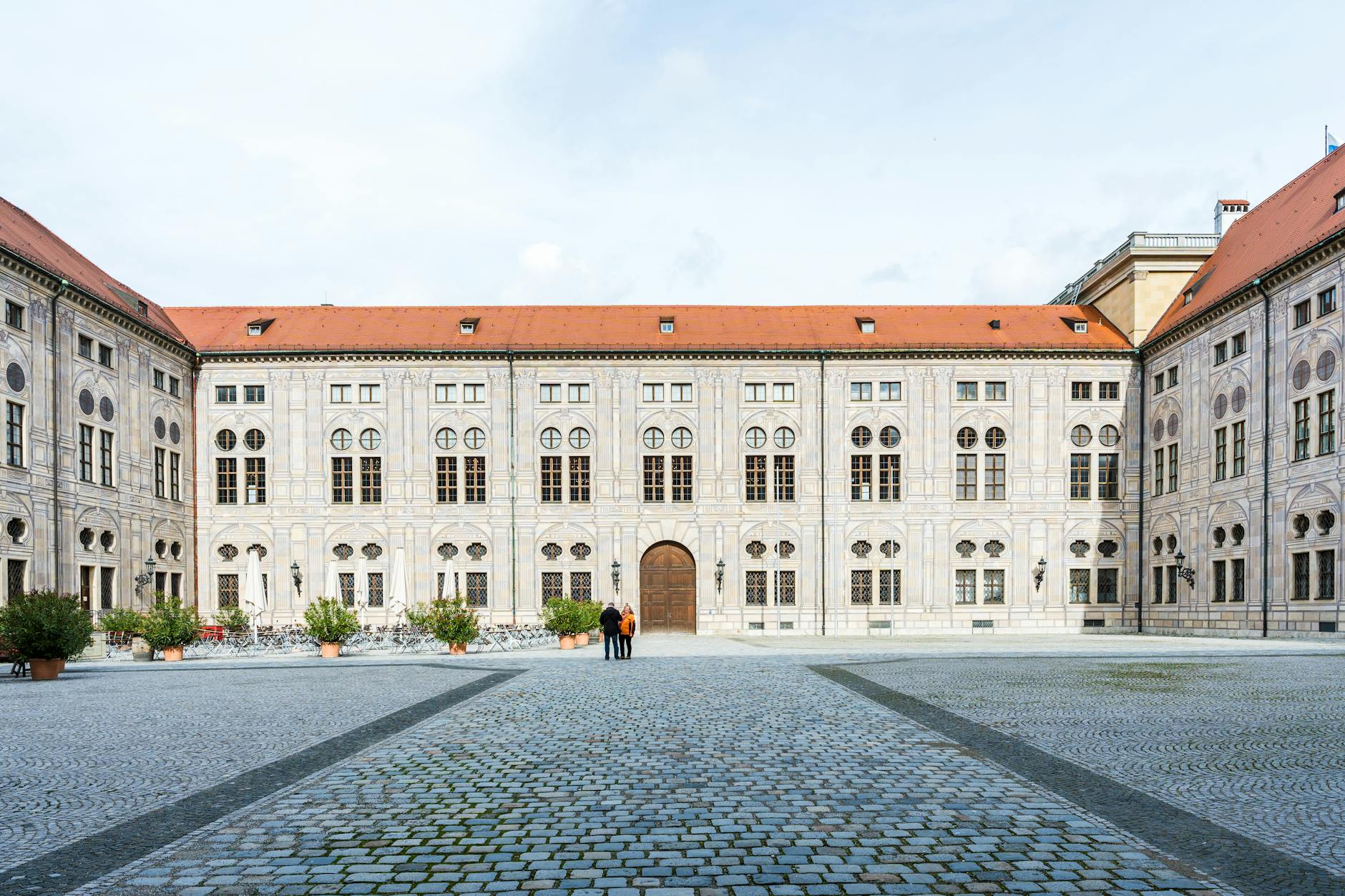
The Munich Residenz is Germany’s largest city palace and the seat from which the Wittelsbach dynasty ruled Bavaria for more than five centuries — first as dukes, then electors, and finally as kings until 1918. What began as a small moated fortress in 1385 grew, century by century, into a vast labyrinth of ten courtyards and roughly 130 publicly accessible rooms spanning late Gothic, Renaissance, Baroque, Rococo, and Neoclassical interiors. Today the complex contains three separately ticketed attractions — the Residenz Museum, the Schatzkammer (Treasury), and the Cuvilliés Theatre — plus the free Hofgarten. This complete Munich Residenz guide for 2026 covers tickets, hours, room-by-room highlights, the Bavarian crown jewels, accessibility, and how to plan the perfect visit.
Quick Facts: Munich Residenz at a Glance
| Information | Details |
|---|---|
| Address | Residenzstraße 1, 80333 München |
| Nearest U-Bahn | Odeonsplatz (U3, U4, U5, U6) — 2-minute walk |
| Hours (summer) | 28 March – 19 October: daily 9:00–18:00 (last entry 17:00) |
| Hours (winter) | 20 October – 27 March: daily 10:00–17:00 (last entry 16:00) |
| Closed | 1 January, Shrove Tuesday, 24 / 25 / 31 December |
| Residenz Museum admission | €10 adult / €9 reduced |
| Treasury admission | €10 adult / €9 reduced |
| Combo: Museum + Treasury | €15 adult / €13 reduced |
| Cuvilliés Theatre | €5 adult / €4 reduced (separate entrance) |
| Combo: Museum + Treasury + Cuvilliés | €20 adult / €16 reduced |
| Children under 18 | Free |
| Audio guide | Included in price (English, German, French, Italian, Spanish, Russian, Chinese, Japanese, Arabic) |
| Photography | Allowed without flash in most rooms; not in Treasury |
| Hofgarten | Free, open daily |
A Brief History of the Munich Residenz
The Residenz tells the political story of Bavaria itself. In 1385, after a citizens’ uprising against the Wittelsbach dukes drove them from their original residence further south, construction began on a small moated fortress at the northeastern edge of Munich’s medieval walls. This was the Neuveste (“new fortress”) — modest, defensive, and almost entirely unrelated in scale to what stands there today.
The transformation from fortress to palace began under Duke Wilhelm IV (1508–1550), who added the first courtyard garden and began the so-called Rundstubenbau. The decisive expansion came under his son Duke Albrecht V, who in 1568–1571 commissioned the vast Antiquarium hall to display his collection of antique sculpture — still the oldest surviving room in the complex and one of the largest Renaissance halls north of the Alps. From this point, every Wittelsbach ruler left a mark.
Duke Maximilian I, raised to Elector in 1623, added the Maximilian Residenz with its Imperial Hall and Stone Rooms. Elector Karl Albrecht commissioned the Rococo Ornate Rooms in the 1730s. After Bavaria became a kingdom in 1806, King Max I Joseph and King Ludwig I added the Königsbau and Festsaalbau in the Neoclassical style under Leo von Klenze, giving the Residenz its current footprint. By 1918, when King Ludwig III abdicated, the Wittelsbach complex had absorbed an entire former city quarter.

Destruction and Reconstruction
Between 1943 and 1945 the Residenz was hit by Allied bombs in multiple raids. The neoclassical Festsaalbau halls — including the Grand Throne Hall (now Hercules Hall) and the Grand Staircase — were obliterated. The Papal Rooms with the Golden Hall ceiling, the apartments of King Ludwig II, and the frescoes of the Court Church of All Saints were destroyed. The Cuvilliés Theatre burned out completely on 18 March 1944.
But the Bavarians had prepared. Before the bombings, palace staff dismantled and removed to safety the most important fixtures — including, crucially, the entire carved wooden interior of the Cuvilliés Theatre in 1943. A reconstruction office was set up in May 1945, before the war was even over. Most rooms were rebuilt by the 1980s; some — like the Court Church of All Saints — were not completed until the 2000s. The result is one of the most remarkable palace reconstructions in Europe, with original 16th-century rooms standing alongside 1950s recreations almost indistinguishable in quality.
The Three Parts of the Residenz Complex
The complex breaks down into three separately ticketed attractions, each requiring a distinct visit. They share the same main entrance on Residenzstraße but have different itineraries inside.
- Residenz Museum — about 130 rooms of the palace itself, from Renaissance Antiquarium to Rococo Ornate Rooms to the Royal Apartments. Plan 2–3 hours.
- Schatzkammer (Treasury) — ten rooms displaying the Wittelsbach crown jewels, gold work, and ecclesiastical regalia. Plan 1 hour.
- Cuvilliés Theatre — Germany’s finest Rococo theatre, reached by a separate entrance from the Brunnenhof courtyard. Plan 30 minutes.
If you only have time for one, choose the Residenz Museum — it contains the famous Antiquarium and Ornate Rooms. If you have a half-day, get the combination ticket and do all three. The free Hofgarten and the surviving outer courtyards can be enjoyed without any ticket at all.
Residenz Museum — Room by Room
The museum route changes slightly between summer and winter (some rooms close in the colder months), but the core highlights are open year-round. The audio guide is essential — without it the rooms can blur together. Here are the spaces no visitor should miss, in roughly the order you’ll encounter them on the standard route.
The Antiquarium
The single most impressive room in the palace. The Antiquarium Munich measures almost 70 metres long with a barrel-vaulted ceiling and originally sat above Duke Albrecht V’s library (the seed of today’s Bavarian State Library). Built 1568–1571, it is one of the largest Renaissance halls north of the Alps and the oldest room in the Residenz in its original form. The vaults and window reveals are painted with more than 100 views of towns in the 16th-century Duchy of Bavaria — a painted atlas of the realm. Around 60 antique busts that Albrecht V acquired in Rome and Venice line the walls. Under his son Wilhelm V the hall became a banquet space for state dinners.
Ahnengalerie (Ancestral Gallery)
Karl Albrecht commissioned the Ancestral Gallery in 1726–1731 to legitimise the Wittelsbach claim to imperial dignity — and a few years later he did briefly secure the Holy Roman Emperor’s crown as Karl VII. The gilded carved-wood interior frames 121 portraits of Wittelsbach ancestors, some entirely invented to extend the line back to Charlemagne. Even by Rococo standards, the gold is extravagant: most visitors stop walking and stare.
Porcelain Cabinet
Adjoining the Ancestral Gallery, this small jewel-box room is fitted with hundreds of pieces of Meissen and Nymphenburg porcelain set into mirrored walls. The effect — porcelain endlessly reflected — is one of the great Rococo party tricks.
Kurfürstenzimmer (Electoral Apartments)
This suite of state rooms — Audience Chamber, Bedroom, Cabinet — was used by visiting dignitaries. The Rococo carving, painted ceilings, and original furniture give the clearest sense of how a Bavarian elector actually lived day to day in the 18th century. Look up: the ceiling paintings reward neck strain.
Reiche Zimmer (Ornate Rooms)

If the Antiquarium is the palace’s Renaissance peak, the Reiche Zimmer are its Rococo high water mark. Designed by François Cuvilliés the Elder in the 1730s for Karl Albrecht, this suite is so densely covered in gilded carving, mirrors, and silver-thread textiles that the eye struggles to settle. The Mirror Cabinet — every surface either mirror or gold — is the most photographed corner of the museum after the Antiquarium. The decoration had been removed and stored before WWII, so the rooms today look much as the elector first saw them.
Hofkapelle (Court Chapel) and Reiche Kapelle (Ornate Chapel)
The Court Chapel (1601–1630), built under Maximilian I, served the public court — its stucco vaulting and dark Baroque atmosphere are striking. Next door, the tiny Reiche Kapelle was the private chapel of Maximilian himself: a Baroque jewel box of scagliola marble, hardstone inlay, and a private oratory directly accessible from the duke’s apartments.
Steinzimmer (Stone Rooms)
A suite of state rooms named for their lavish inlaid marble and stucco marble. Maximilian I used them to project his dignity as Elector to visiting ambassadors.
Kaisersaal (Imperial Hall)
The vast Imperial Hall, reached via the Imperial Staircase and the Hall of the Four White Horses, was the principal reception room for state occasions of imperial significance. The ceiling and walls were rebuilt after WWII, but the proportions and ceremonial intent come through powerfully.
Court Garden Rooms (Neue Hofgartenzimmer)
This suite of rooms along the Hofgarten side of the palace reopened in 2003 after decades of post-war vacancy. They now display 18th-century court furniture and Bavarian decorative art.
Royal Apartments in the Königsbau
King Ludwig I commissioned Leo von Klenze to build the Königsbau facing Max-Joseph-Platz in 1826–1835 — modelled on Florence’s Palazzo Pitti. The apartments inside, including the Nibelungen Halls with their Romantic frescoes, were heavily damaged in WWII but rebuilt.
The Treasury (Schatzkammer) — Ten Must-See Objects

The Munich Treasury Schatzkammer occupies ten rooms on the ground floor of the Königsbau and is, room for room, the densest concentration of decorative-art wealth in Bavaria. The collection has its origins in a 1565 decree by Duke Albrecht V stipulating that family treasures could never be given away or sold; nine successive generations of Wittelsbach rulers then added to it. After the Kingdom of Bavaria was established in 1806, the medieval treasures of secularised monasteries and cathedrals also flowed in. Today the collection includes over 1,200 objects spanning nearly 2,000 years.
These are the ten objects to track down on your visit:
- Statuette of St George and the Dragon (c. 1586–1597) — the Treasury’s signature piece. A small equestrian figure of the saint slaying the dragon, made of gold, silver, enamel, and semi-precious stones, encrusted with 2,291 diamonds, 406 rubies, and 209 pearls. Made to house a relic of St George sent to Duke Wilhelm V by his brother in Cologne.
- Bavarian Royal Crown (1806–1807) — made in Paris for King Maximilian I Joseph when Napoleon raised Bavaria to a kingdom. The Wittelsbach Diamond once set into the crown has since been removed (it surfaced again at auction in 2008).
- Royal Regalia of Bavaria — sceptre, orb, sword, and queen’s crown, all made together in 1806 in the French Empire style.
- The “Palatinate Crown” / Crown of Princess Blanche (c. 1370) — the oldest surviving royal crown known to have been in England, brought to the Palatinate as part of Blanche of England’s dowry in 1402. Gold, enamel, sapphires, rubies, diamonds.
- Statuette of Emperor Karl VII — gold, silver, and enamel commemorative figure of the Wittelsbach who briefly held the Holy Roman Emperor’s title (1742–1745).
- Reliquary Cross of Emperor Henry II (c. 1010) — Ottonian gold cross containing a fragment of the True Cross, originally from Bamberg Cathedral.
- Ciborium of Arnulf of Carinthia (c. 870) — a Carolingian-era portable altar in gold and gemstones, one of the great early-medieval goldsmith works in Germany.
- Renaissance jewellery cases — display cases of pendants, rings, and chains showing the courtly fashion of the Wittelsbach electors.
- Goldsmith works by Hans Reimer and Wenzel Jamnitzer — Renaissance masterpieces in gold and silver, including elaborate table centrepieces and drinking vessels.
- Turkish and East Asian curiosities — gifts to the Wittelsbach court that ended up in the Kunstkammer: jade, rock crystal, exotic shells mounted in silver.
Photography is not permitted in the Treasury. The audio guide is excellent and tracks you room by room; budget at least an hour, more if you have any interest in goldsmith craft.
Cuvilliés Theatre — Germany’s Finest Rococo Theatre

The Cuvilliés Theatre is the third great attraction in the Residenz complex and arguably the most jaw-dropping single room. Elector Maximilian III Joseph commissioned it in 1751 after a fire destroyed the previous court theatre, and François Cuvilliés the Elder — the same architect responsible for the Reiche Zimmer — designed an intimate horseshoe-shaped auditorium with four tiers of elaborately carved boxes in deep red, gold, and white. It was finished in 1755 and immediately recognised as a Rococo masterpiece.
Mozart’s Idomeneo premiered here on 29 January 1781, and Napoleon attended a gala here in 1806 to mark Bavaria’s elevation to a kingdom. The building was destroyed by bombing on 18 March 1944, but the carved wooden interior had been removed and stored in 1943 — and that is what survives. In the late 1950s the wooden interior was rebuilt into a different wing of the Residenz, the Apothekenstock above the Apothecary Courtyard, where it stands today.
The visit takes about 30 minutes. The theatre has a separate entrance off the Brunnenhof (Fountain Courtyard) and Apothekenhof, distinct from the main Residenz Museum entrance on Residenzstraße. Tickets for the Cuvilliés Theatre alone are €5; the only way to combine it with the museum and Treasury is the €20 three-attraction combo. Hours for the theatre differ from the museum — in particular, it usually opens only at 2:00 pm on weekdays during much of the year, with longer hours Sunday and during August’s full opening. The space is still in active use: the Bavarian State Opera and various concert series stage productions here, so check ahead for performance closures.
The Hofgarten — Free to Walk
Between the Residenz and the Englischer Garten lies the Hofgarten, a formal Italianate garden laid out in 1613–1617 under Maximilian I. It is centred on the Diana Temple, a small open pavilion topped by a bronze figure of Bavaria Tellus. The garden is enclosed on its north and west sides by arcades whose frescoes (commissioned by Ludwig I) tell scenes from Wittelsbach history. Café Tambosi, in the southern arcades, has been serving coffee on this spot since 1775 — the oldest café in Munich.
The Hofgarten is free to enter and open daily during daylight hours. It’s a popular lunch spot, a setting for impromptu tango dancing around the Diana Temple on summer evenings, and the natural connector between the Residenz and the Englischer Garten — keep walking north and you cross the Eisbach river-surfer wave at the Haus der Kunst.
Tickets and Combo Options for 2026
| Ticket | Adult | Reduced | Notes |
|---|---|---|---|
| Residenz Museum only | €10 | €9 | Audio guide included |
| Treasury only | €10 | €9 | Audio guide included |
| Combo: Museum + Treasury | €15 | €13 | Most common choice |
| Cuvilliés Theatre only | €5 | €4 | Separate entrance, separate hours |
| Combo: Museum + Treasury + Cuvilliés | €20 | €16 | Buy at Cuvilliés cash desk only |
| Children under 18 | Free | Free | Always |
| Hofgarten + Fountain machinery | Free | Free | Open daily |
Tickets are sold on-site (cash or card) and online at ticketshop-residenz-muenchen.de. Online buyers skip the cash-desk queue. Reduced-price tickets require proof of eligibility at entry.
Bavarian Castle Pass — A Better Option for Multi-Castle Visits
If you plan to visit other Bavarian state palaces — Neuschwanstein, Linderhof, Herrenchiemsee, Nymphenburg — the 14-Day Ticket (Mehrtagesticket) from the Bavarian Palace Administration is the best deal: €40 for one person (€80 for a family or two partners) for 14 consecutive days at 40+ castles, palaces, and gardens, including the Residenz Museum, Treasury, and Cuvilliés Theatre. The annual season ticket is €50 / €40. Either pays for itself with two or three castle visits.
Munich City Card and CityTourCard
Both city tourism cards include modest discounts at the Residenz (typically 10–20% off admission), not free entry. They make sense for the transit included, not for palace discounts. For more, see our Munich travel passes guide. The Bavarian Castle Pass is usually the better deal if palaces are your priority.
How Long to Spend and Suggested Routes
- Residenz Museum: 2–3 hours for a thorough visit; 90 minutes for headline rooms only
- Treasury: 1 hour for highlights; 90 minutes if you read every label
- Cuvilliés Theatre: 30 minutes (the visit is essentially one spectacular room)
- Hofgarten: 30 minutes for a stroll and arcade frescoes
90-Minute Express Route
Buy a Museum-only ticket. Enter, head straight to the Antiquarium (15 min), then follow signs to the Ahnengalerie + Porcelain Cabinet (15 min), then the Reiche Zimmer (20 min), the Hofkapelle and Reiche Kapelle (10 min), and the Royal Apartments in the Königsbau (20 min). Walk out through the Hofgarten and grab a coffee at Café Tambosi (10 min). Skip the Treasury and Cuvilliés on this version.
Standard 3-Hour Route
Buy the Museum + Treasury combo. Start with the Residenz Museum (2 hours, full audio guide); take a 15-minute coffee break in the Hofgarten; then the Treasury (45 min focusing on the ten highlights). Walk out through Max-Joseph-Platz and the Königsbau façade.
Full Half-Day Route
Buy the three-attraction combo ticket at the Cuvilliés Theatre cash desk first (this is the only place that sells it). Begin with the Cuvilliés Theatre at 10:00 (30 min); cross the Brunnenhof courtyard to the main Residenz entrance and do the Museum (2.5 hours including a quick break). Have lunch at Café Tambosi in the Hofgarten (45 min). Finish with the Treasury (1 hour). Total: about 5 hours.
Accessibility
The Residenz is largely wheelchair accessible, with elevators between floors and a step-free route through most of the Residenz Museum. The Treasury is fully step-free. The Cuvilliés Theatre auditorium itself has wheelchair places but limited movement within the tiers. Some historic rooms — particularly the Ornate Chapel, parts of the older Maximilian Residenz, and a few transitional corridors — retain steps and worn original flooring. The Bavarian Palace Administration publishes a detailed accessibility map; staff at the main entrance can advise on the best step-free routing for your visit. Loaner wheelchairs are available at the entrance free of charge.
Photography Rules
- Residenz Museum: photography is allowed without flash for personal use in nearly all rooms. Tripods and professional gear require a permit.
- Treasury: photography is not allowed — leave the camera in your bag. This is enforced.
- Cuvilliés Theatre: photography without flash is permitted when no performance rehearsal is in progress.
- Hofgarten and courtyards: free photography.
Where to Eat at the Residenz
- Café Tambosi — Hofgarten, southern arcades. Founded 1775 (oldest café in Munich); strong Italian-leaning lunch menu, classic Viennese cakes, a beer-garden section in summer. Mid-range prices.
- Café Luitpold — Brienner Straße 11, 5-minute walk west. Belle Époque grand café famous for its Luitpoldtorte; full lunch and dinner menu.
- Spatenhaus an der Oper — directly opposite the Königsbau on Max-Joseph-Platz. Bavarian classics in a smart but unstuffy setting; book ahead.
- Restaurant Königshof (luxury) — fine dining on Karlsplatz, 10-minute walk. Reserve.
- Quick options — the Galeria Kaufhof food hall on Marienplatz is a 10-minute walk south for casual quick eats.
Combining Your Visit with Other Sights
The Residenz sits in the heart of the Altstadt-Lehel district, where almost everything is walkable. Easy combinations within a few minutes’ walk:
- Theatinerkirche — the yellow-stuccoed Baroque church directly across Residenzstraße. Free; the Wittelsbach crypt is in the basement.
- Feldherrnhalle — the loggia on Odeonsplatz commemorating Bavarian generals; same square. Important also as the site of the 1923 Beer Hall Putsch.
- Odeonsplatz itself — one of Munich’s grandest squares, anchored by the Residenz, Theatinerkirche, and Feldherrnhalle.
- Englischer Garten — walk straight north through the Hofgarten and you’re at the Eisbach surf wave in five minutes; the Chinesischer Turm beer garden is fifteen more.
- Bayerisches Nationalmuseum — the state museum of Bavarian art and culture is a 10-minute walk east; a strong natural follow-up to the Residenz for anyone hooked on the Wittelsbach story.
- Marienplatz — the historic city centre is a flat 10-minute walk south.
Nymphenburg Palace is the Wittelsbachs’ summer counterpart, twenty minutes out by tram and far less crowded.
Insider Tips
- Quietest times: weekday mornings just after the 9:00 (summer) or 10:00 (winter) opening, or the last 90 minutes before close. Sundays and rainy summer afternoons are the busiest.
- Skip the line: buy your ticket online via the official ticket shop and walk past the cash-desk queue straight to the entrance.
- Unlike many Munich museums, there is no €1 Sunday at the Residenz — it is a Bavarian Palace Administration property, not a Bavarian state museum. The €1 Sunday rule applies to the Pinakothek, Glyptothek, etc.
- Combo ticket trick: the three-attraction combo (€20) can only be bought at the Cuvilliés Theatre cash desk, not at the main entrance. Start your visit there if you want it.
- Cloakroom: free and required for large bags and backpacks.
- Concerts in the Hercules Hall: the rebuilt former Throne Hall is now one of Munich’s main classical concert venues. Check residenz-muenchen.de or BR-Klassik for evening programmes.
- Combine with Nymphenburg: the Wittelsbach summer palace is a 25-minute tram ride west. Two palaces in one day is heavy but doable.
- If you have only an hour: visit the Antiquarium and the Reiche Zimmer on the express route; everything else is bonus.
Frequently Asked Questions
How much does the Munich Residenz cost in 2026?
The Residenz Museum is €10 adult / €9 reduced; the Treasury is €10 / €9; the Cuvilliés Theatre is €5 / €4. The Museum + Treasury combo is €15 / €13, and the three-attraction combo is €20 / €16. Children under 18 are free. The Hofgarten is free for everyone.
How long does it take to visit the Munich Residenz?
Plan 2–3 hours for the Residenz Museum, 1 hour for the Treasury, and 30 minutes for the Cuvilliés Theatre — about 4 hours for the full combo, plus another 30 minutes for the Hofgarten. Highlight-only express visits to the Museum can be done in 90 minutes.
What is the difference between the Residenz Museum and the Treasury?
The Residenz Museum is the palace itself — about 130 rooms of state apartments, halls, chapels, and royal living quarters from the 16th–19th centuries. The Treasury (Schatzkammer) is a separate ten-room display of the Wittelsbach crown jewels, goldsmith works, and ecclesiastical regalia. They have separate tickets but a combination ticket is available.
Is the Cuvilliés Theatre included in the Residenz Museum ticket?
No — the Cuvilliés Theatre is separately ticketed (€5) with its own entrance off the Brunnenhof courtyard. The only ticket that includes all three attractions is the €20 three-attraction combo, which must be bought at the Cuvilliés Theatre cash desk.
Can I take photos inside the Residenz?
Yes in most of the Residenz Museum (no flash, no tripod), and yes in the Cuvilliés Theatre. Photography is not permitted in the Treasury. Free everywhere in the Hofgarten and courtyards.
Is the Munich Residenz wheelchair accessible?
Mostly yes. Elevators connect floors and the Treasury is fully step-free. Some historic rooms — including parts of the older Maximilian Residenz and the Ornate Chapel — retain steps. Loaner wheelchairs are available free at the main entrance, and staff can advise on the best step-free route.
Do I need to book Residenz tickets in advance?
Not strictly — the Residenz rarely sells out — but buying online via ticketshop-residenz-muenchen.de lets you skip the cash-desk queue, which can be 15–25 minutes long on summer weekends. Audio guides are included free, so you don’t need to book those separately.
What is the best time of day to visit?
Right at opening (9:00 in summer, 10:00 in winter) is the calmest hour. The last ninety minutes before close are also quiet. Weekday mornings beat weekends; rainy summer afternoons are the busiest single window because outdoor sights empty into the Residenz.
Plan Your Munich Trip
The Munich Residenz is the keystone of any serious cultural visit to Munich — a single complex that contains 500 years of European political, artistic, and architectural history. Combine it with a broader walk through our Munich museums and culture guide, dig into the family who built it in our Wittelsbach dynasty guide, set it in context with our history of Munich, explore the surrounding neighbourhood in our Altstadt and Lehel guide, and follow up with the city’s other great cultural complex in our Pinakothek museums guide. For all the practicalities of getting around, see our U-Bahn and S-Bahn guide.