Munich’s WWII History and Memorials
Complete 2026 guide to Munich's WWII history and memorials — NS-Dokumentationszentrum, White Rose, Dachau, Königsplatz Nazi buildings, Stolpersteine, and guided tours.
Munich’s WWII history is impossible to ignore — and the city makes no attempt to. As the “Hauptstadt der Bewegung” (Capital of the Movement), Munich was the birthplace of the Nazi Party, the site of the failed 1923 Beer Hall Putsch, the place where the 1938 Munich Agreement was signed, and home to Dachau — the first Nazi concentration camp, 16 km northwest of the city. Today Munich confronts this past honestly through the NS-Dokumentationszentrum, dozens of memorials, and one of Europe’s most important museums of confrontation, the Dachau Memorial. This complete Munich WWII history guide for 2026 covers every major site, the moving White Rose resistance memorials, suggested itineraries, organized tours, and how to visit respectfully and meaningfully.
Munich’s WWII Timeline at a Glance
| Year | Event |
|---|---|
| 1919 | Hitler joins the tiny German Workers’ Party in Munich |
| 1920 | NSDAP (Nazi Party) founded in the Hofbräuhaus |
| November 1923 | Failed Beer Hall Putsch at the Bürgerbräukeller |
| 1924–1925 | Hitler writes Mein Kampf at Landsberg Prison after the failed putsch |
| January 1933 | Hitler appointed Chancellor of Germany |
| March 1933 | Dachau Concentration Camp opens |
| 1930s | Munich officially designated “Capital of the Movement” |
| September 1938 | Munich Agreement signed at the Führerbau on Königsplatz |
| November 1938 | Kristallnacht: Munich synagogues attacked and destroyed |
| 1939 | WWII begins |
| February 1943 | White Rose members Hans, Sophie Scholl, Christoph Probst executed |
| 1940–1945 | Munich bombed 71 times; ~50% of the city destroyed |
| April 30, 1945 | American troops liberate Munich |
| April 29, 1945 | Dachau Concentration Camp liberated |
| 1965 | Dachau Memorial opens |
| 2015 | NS-Dokumentationszentrum opens on Brienner Straße |
Major Munich WWII Sites in the City
1. NS-Dokumentationszentrum
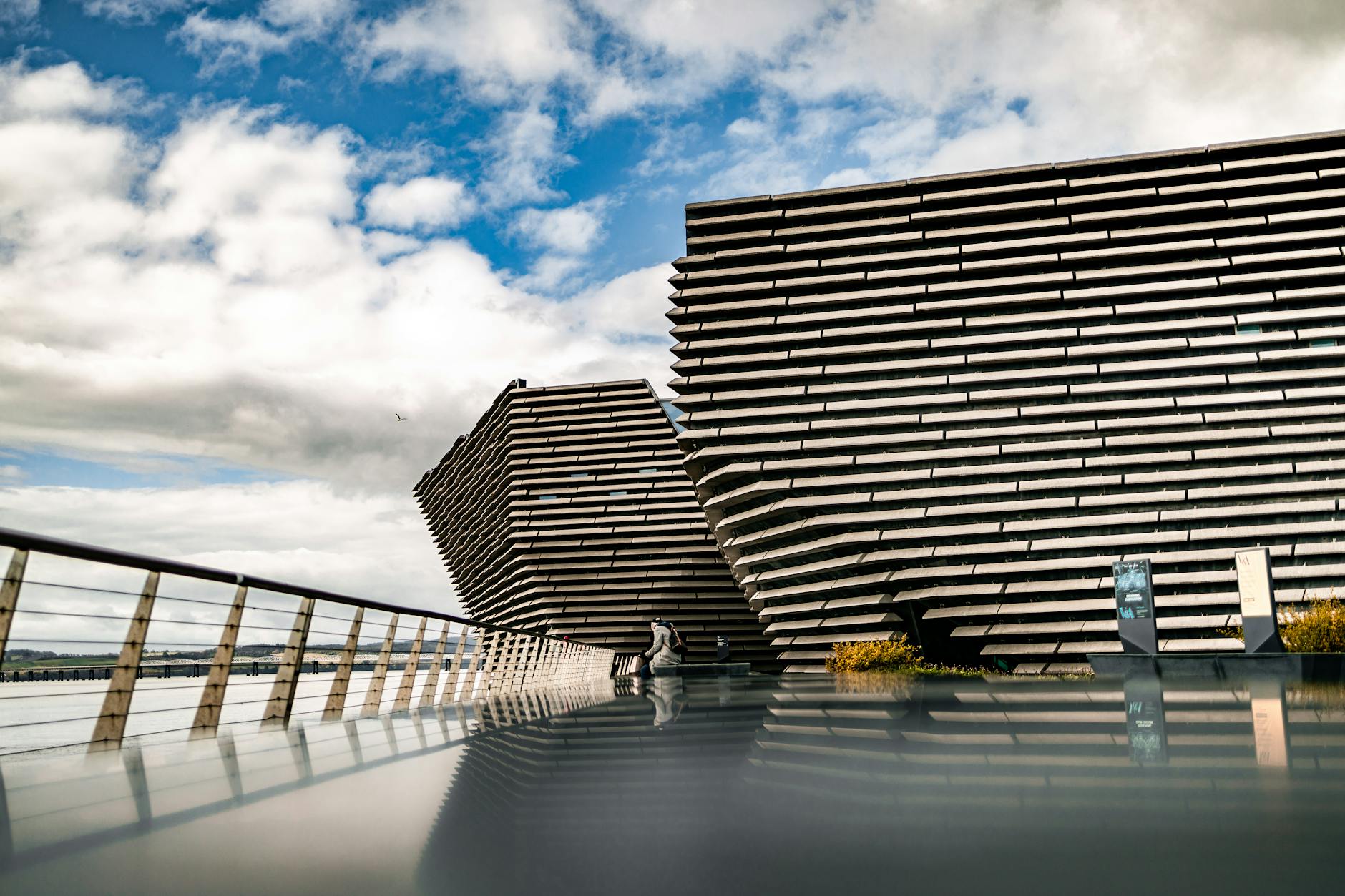
On Brienner Straße, the NS-Dokumentationszentrum (Documentation Center for the History of National Socialism) is Munich’s central institution for confronting its Nazi-era history. The deliberately stark, white-cube building (architect Georg Scheel Wetzel, 2015) stands on the site of the former Brown House — Nazi party national headquarters from 1930 to 1945. Four floors of permanent exhibition trace the rise of the Nazis specifically in Munich, the persecution of Jewish citizens, the war years, and postwar denazification.
- Address: Max-Mannheimer-Platz 1, near Königsplatz
- U-Bahn: Königsplatz (U2)
- Hours: Tue–Sun 10:00–19:00; closed Mondays
- Price: free admission
- Media guide: free, on a rental device or your own smartphone, in 10 languages (German, English, Arabic, French, Hebrew, Italian, Polish, Russian, Spanish and Greek)
- Time needed: 2–3 hours
2. Feldherrnhalle and Odeonsplatz
The Feldherrnhalle (1844) on Odeonsplatz is where the Beer Hall Putsch ended on November 9, 1923 — Bavarian police gunfire stopped Hitler’s march on the city, killing 16 putschists. The Nazis later turned the site into a hyper-glorified shrine; passers-by had to give the Hitler salute. Many Müncheners avoided the square entirely by detouring through the small Viscardigasse alley behind — now nicknamed “Drückebergergasse” (Shirkers’ Alley) with a bronze pavement memorial commemorating their quiet resistance. Free to view; always accessible.
3. Königsplatz and the Nazi Buildings
Königsplatz — originally Ludwig I’s neoclassical Greek-temple precinct — was paved over in 1934–35 with massive granite slabs and used as a Nazi parade ground. Two buildings still stand from this era: the Führerbau (where the 1938 Munich Agreement between Hitler, Chamberlain, Daladier, and Mussolini was signed; now the Musikhochschule) and the Verwaltungsbau (now the Central Institute for Art History). The granite paving was removed in 1988; the square was returned to lawn. The two adjacent Nazi-built “Temples of Honor” for the 1923 putschists were demolished after the war, but their plinths remain visible.
4. The White Rose Memorial at the University
Outside the LMU University main building on Geschwister-Scholl-Platz, bronze replicas of the White Rose leaflets are embedded in the pavement — an extraordinary public memorial. The leaflets were thrown by Sophie Scholl from an upper floor on February 18, 1943, just before the Gestapo arrived. Hans and Sophie were arrested, given a sham trial four days later, and beheaded on February 22 along with Christoph Probst. The memorial is inside the courtyard and free to visit; the DenkStätte Weiße Rose (White Rose Memorial Site) museum in the basement is one of the most moving small museums in Munich. Free entry, Mon–Fri 10:30–16:30.
5. Bürgerbräukeller Site
On Rosenheimer Straße in Haidhausen, the site of the Bürgerbräukeller — where Hitler launched the Beer Hall Putsch on November 8, 1923 — is marked by a small memorial plaque. The original beer hall was demolished in 1979; the Gasteig, the Hilton Munich City hotel and the GEMA headquarters now stand on the site. The plaque also commemorates Georg Elser, the Munich carpenter who nearly assassinated Hitler with a homemade bomb here on November 8, 1939. Hitler left the building 13 minutes before the bomb detonated, killing 8 others. Elser was executed at Dachau in April 1945.
6. Hofbräuhaus Connection
The Hofbräuhaus on Platzl was where Hitler announced the NSDAP party program on February 24, 1920, in a meeting in the Festsaal upstairs (the “founding” of the modern Nazi Party). A subtle plaque acknowledges this history. The Hofbräuhaus is otherwise just a tourist beer hall today — see our things to do guide.
7. Stolpersteine (Stumbling Stones)
Throughout Munich’s older streets, small brass plaques set into the pavement — Stolpersteine (“stumbling stones”) — mark the last freely chosen homes of Holocaust victims. Each names a deported person, their year of birth, the date of deportation, and the place of death (usually Auschwitz, Theresienstadt, or Dachau). Created by artist Gunter Demnig as a Europe-wide project, Munich has installed thousands. The Glockenbachviertel and Bogenhausen have particularly high concentrations.
8. The Justizpalast (Palace of Justice)
On Karlsplatz, the magnificent 1897 neo-Baroque Justizpalast hosted the People’s Court (Volksgerichtshof) that sentenced the White Rose members to death in 1943. The historic main courtroom is sometimes open during open-house days; the building itself is still Munich’s chief courthouse and partially open to visitors.
9. The Synagogue and Jewish Center
On Sankt-Jakobs-Platz, the new Munich Synagogue (Ohel Jakob, 2006) and adjacent Jewish Museum Munich were built to replace the main synagogue, which was destroyed in 1938. The Jewish Museum (€6 entry) tells the story of Munich’s Jewish community before and after the Holocaust. The synagogue can only be visited on guided tours.
Dachau Concentration Camp Memorial
Dachau — 16 km northwest of central Munich — was the first Nazi concentration camp, opening in March 1933 just weeks after Hitler took power. Over 12 years, more than 200,000 people were imprisoned there; at least 41,500 died. Almost every later Nazi camp was modeled on Dachau. After liberation by American troops on April 29, 1945, the camp was repurposed first as a refugee shelter, then opened as a memorial in 1965.
Today Dachau is one of Europe’s most important memorial sites — a sobering, unflinching museum and grounds. Highlights:
- The main entrance gate with the infamous “Arbeit macht frei” inscription (the original was stolen and later recovered)
- Reconstructed barracks — a sense of how cramped the prisoners’ quarters were
- The Roll Call Square (Appellplatz)
- The original crematorium and gas chamber (the gas chamber was constructed but evidence suggests it was used for small-scale experimental killings rather than mass extermination)
- The main museum building — extensive documentation, photographs, prisoner testimonies
- Various religious memorials — Catholic chapel, Protestant memorial, Jewish memorial, Russian Orthodox memorial
- The bunker — special punishment cells for high-profile prisoners (including Georg Elser)
Visiting Dachau
- Address: Pater-Roth-Straße 2A, 85221 Dachau
- Train: S2 from Munich Hauptbahnhof to Dachau Bahnhof, then bus 726 to the memorial; check the day’s timetable on the MVV or MVG site
- Total transit time: about 40-50 minutes door to door, one way
- Hours: Daily 09:00–17:00
- Closed: December 24 only
- Entry: FREE
- Audio guide: €5, or €4 reduced (essential — the site is large and spread out)
- Guided tour: €4 adult; English tours daily at 11:00 and 13:00
- Time needed: 3–4 hours minimum
- Children: Recommended only for ages 14+; the content is heavy and graphic
- Food: A small café at the visitor center; otherwise nothing on-site
- Respect: No loud talking, no eating in the camp grounds, no selfies in front of monuments. This is a memorial
Other Important Memorials Nearby
- The Memorial to the Victims of National Socialism on Brienner Straße (just south of NS-Dokumentationszentrum) — eternal flame; permanent installation
- Olympiapark Massacre Memorial at Connollystraße 31 — commemorating the 11 Israeli athletes and one German police officer killed in the September 5, 1972 Olympic attack
- The Plötzensee Memorial (in Berlin, but worth knowing) — many Munich resistance fighters executed here
- Bunker memorials around Munich — several surviving Hochbunker, for example on Prinzregentenstraße and Ungererstraße; some have small interpretive plaques
- Sankt-Jakobs-Platz — central Jewish memorial
A day trip to Nuremberg adds the Rally Grounds Documentation Centre and the Palace of Justice courtroom 600.
Suggested Itineraries
Half-Day: Central Munich WWII Walking Tour (4 hours)
- 10:00 — Begin at Marienplatz
- 10:15 — Walk to Odeonsplatz: Feldherrnhalle and Drückebergergasse
- 10:45 — Walk to Königsplatz: NS-Dokumentationszentrum (2 hours)
- 13:00 — Walk south to LMU University: White Rose Memorial
- 13:45 — End with lunch in Schwabing
Full Day: Dachau Memorial (8 hours)
- 09:00 — Take S2 from Hauptbahnhof to Dachau
- 10:00 — Arrive at Memorial
- 10:15 — Join 11:00 English guided tour
- 12:30 — Visit museum and barracks self-guided
- 14:30 — Crematorium and religious memorials
- 15:30 — Café break at visitor center
- 16:00 — Take S2 back to Munich
- 17:30 — Arrive Marienplatz; perhaps cap the day with the NS-Dokumentationszentrum if time permits, or just a quiet evening to process
2-Day Deep Dive
Day 1: Central Munich walking tour + NS-Dokumentationszentrum (5–6 hours). Day 2: Dachau Memorial (6–8 hours).
Guided Tours
For first-time visitors, a guided tour is strongly recommended — the context provided by a knowledgeable historian dramatically deepens the experience.
- Third Reich Walking Tour by Context Travel — historian-led; check the duration, price and group size on the operator’s site
- Viator Third Reich Tour — larger groups; check the listing for the current price and length
- Radius Tours Third Reich Walking Tour — about 2.5 hours; check the current price on the Radius Tours site
- Dachau guided tour from Munich — Radius Tours; check the current price and what it includes on their site
- Free walking tour (Third Reich) — tip-based, starting from Marienplatz; check the operator’s site for the day’s departure time
Books and Resources for Further Reading
- Sophie Scholl and the White Rose by Annette Dumbach and Jud Newborn — the definitive English-language book on the White Rose movement
- Munich: Hostage to History by David Clay Large — broad cultural-history overview
- The Past Is Not Dead: Facing Germany’s Crimes by Hans Schubert — wider context
- The film “Sophie Scholl: The Final Days” (2005) — based on actual trial transcripts; available on streaming
- The film “Schindler’s List” — Steven Spielberg, 1993
Visiting Respectfully: A Note
These sites — particularly Dachau and the NS-Dokumentationszentrum — are not tourist attractions in any conventional sense. They are memorials to mass murder and to one of the darkest chapters of modern European history. Visit them with care:
- Dress respectfully — clean, modest clothing
- Keep voices low — no loud conversation in either site
- No selfies at any memorial — this is firm cultural rule
- No food or drinks on memorial grounds
- Children under 12 are generally not encouraged at Dachau; talk to them beforehand if bringing them
- Allow time for emotion — many visitors find these sites profoundly affecting. Don’t try to rush
- Don’t try to take the audio guide off — the guides are well-paced and provide necessary context
Frequently Asked Questions
Is Munich’s WWII history accessible to visitors?
Yes, extensively. Munich operates a major NS-Dokumentationszentrum, a memorial White Rose museum at the university, dozens of marked sites in the city, and the major Dachau Memorial 25 minutes outside. The city has worked hard since the 1990s to confront and document this past.
How much time do I need for Munich WWII sites?
A half-day (4 hours) covers the central walking tour and the NS-Dokumentationszentrum. A separate full day is needed for Dachau. A serious history visit warrants 2 days.
Is Dachau Memorial free?
Yes — entry to Dachau Memorial is free. Audio guides (€5, or €4 reduced) and guided tours (€4) are highly recommended for first-time visitors. The site is open daily 09:00–17:00 (closed December 24).
Is it appropriate to visit Dachau with children?
Dachau strongly recommends a minimum age of 14 for visits, though some children younger may be ready depending on maturity. The content is graphic and emotionally heavy. Visit on your own first to gauge before bringing children.
What was the White Rose?
A small student-led non-violent resistance group at the LMU University 1942–1943. Members Hans and Sophie Scholl, Christoph Probst, Alexander Schmorell, Willi Graf, and Professor Kurt Huber distributed anti-Nazi leaflets at the university and via mail. They were captured in February 1943 and executed within weeks. They are remembered as moral heroes of German resistance.
Where was Hitler in Munich?
Hitler joined the NSDAP in Munich in 1919 and led the party from here through 1933. Key sites: the Hofbräuhaus (party founding), the Bürgerbräukeller (failed 1923 putsch), the Brown House on Brienner Straße (party HQ, demolished after war), the Führerbau on Königsplatz (1938 Munich Agreement). His apartment was at Prinzregentenplatz 16 in Bogenhausen.
A Deeper Look at the White Rose
The White Rose (Weiße Rose) story has become emblematic of German non-violent resistance during the Third Reich — and the LMU University in Munich plays an outsized role in this history. The core group included six members: Hans Scholl (24), Sophie Scholl (21), Christoph Probst (23), Alexander Schmorell (25), Willi Graf (25), and their philosophy professor Kurt Huber (49). Most were medical students at LMU; Sophie was studying biology and philosophy. Between June 1942 and February 1943, they printed and distributed six leaflets and one final leaflet draft calling for the overthrow of Hitler. The leaflets quoted Schiller, Aristotle, and the Old Testament — appealing to German moral tradition rather than political ideology. They were copied on typewriter, multiplied on a small printing machine in a basement, and distributed by mail to academics, lawyers, and other professionals across Germany. The risk was extreme; Gestapo penalties for resistance literature were summary execution. The group also painted anti-Nazi slogans on Munich building walls — “Freedom!” and “Down with Hitler!” — using black paint.
On February 18, 1943, Hans and Sophie distributed the sixth leaflet in the LMU University courtyard, then walked up to an upper floor and dropped the remaining leaflets down the staircase well. They were observed by a janitor, who locked the doors and called the Gestapo. They were arrested within hours. Their trial took place on February 22 before Roland Freisler’s notorious People’s Court (Volksgerichtshof), brought specially to Munich for the case. Hans, Sophie, and Christoph were sentenced to death and executed by guillotine at Stadelheim Prison the same afternoon. Other White Rose members were arrested and executed in the following months. Today, on the LMU University main building floor, bronze replicas of the leaflets are embedded in the pavement where Sophie threw them — one of the most poignant public memorials in Germany.
Munich’s Postwar Confrontation with Its Past
Munich’s relationship to its Third Reich heritage has evolved dramatically through the postwar period. In the immediate aftermath of WWII, the city’s official position was largely silent on its role as Nazi headquarters. The Nazi-era buildings around Königsplatz were quietly repurposed: the Führerbau became the Munich Music Academy (still operating today); the Verwaltungsbau became the Central Institute for Art History. The two Honor Temples in front were demolished after 1947, but their square plinths remain visible. The granite paving of Königsplatz used for Nazi parades was removed in 1988 — a watershed moment that signaled a shift in attitudes. The decision to open the NS-Dokumentationszentrum in 2015 on the former Brown House site reflected a generational change in how Munich approached its history.
The Stolpersteine (“stumbling stones”) — small brass plaques marking the last freely chosen homes of Holocaust victims — are the project of the artist Gunter Demnig, who began them in the 1990s. Munich took a different road. The city council rejected Stolpersteine on public ground in 2004 and confirmed that ban in 2015, so they are allowed only on private property. Munich now has thousands of Stolpersteine, with the densest concentrations in the Glockenbachviertel and Bogenhausen. Each one names a specific deported person — typically a Jewish resident, but also Roma, Jehovah’s Witnesses, political prisoners, and others. The act of looking down and reading a Stolperstein is a moment of personal connection across history; the project’s name (“stumbling”) refers to this metaphorical stopping to remember.
The Munich Agreement of 1938
One of the most consequential nights of the pre-war years played out on the south side of Königsplatz. In the early hours of 30 September 1938, inside the Führerbau at Arcisstraße 12, Hitler, Mussolini, Britain’s Neville Chamberlain and France’s Édouard Daladier signed the Munich Agreement, handing Germany the Sudetenland — Czechoslovakia’s own representatives were not allowed in the room, left to wait in a nearby hotel for a verdict on their country. Chamberlain flew back to London, waved the signed paper on the tarmac and promised “peace for our time.” Eleven months later, Germany invaded Poland.
The remarkable thing for a visitor is how intact the setting remains. The Führerbau survives almost unchanged and now houses the Hochschule für Musik und Theater — a music academy whose students climb the same monumental staircase. Its twin across the way, the former Nazi administration building, holds the Zentralinstitut für Kunstgeschichte, one of Europe’s great art-history libraries. Between the two once stood the Ehrentempel, open colonnades honouring the men killed in the 1923 Beer Hall Putsch; the US Army blew them up in 1947, and their ivy-covered plinths still sit at the corners of Königsplatz. To set this square in the longer story of the city, read our overview of Munich’s history and architecture and the way these buildings sit among today’s Munich landmarks and the museum quarter covered in Munich museums and culture.
The Bombing of Munich and Its Reconstruction
Munich absorbed 71 air raids between 1940 and 1945, and by the end roughly half the city — and as much as 90 percent of the medieval Altstadt — lay in rubble. The decision that shaped the city you walk today came right after: rebuild fast and modern, or restore the old silhouette. Munich, almost alone among large German cities, chose the historic path. The planner Karl Meitinger’s 1946 pamphlet Das Neue München argued for keeping the medieval street grid and the old rooflines, and the city largely followed it.
That is why the Altstadt looks centuries old yet is, in large part, a meticulous post-war reconstruction — the Frauenkirche rebuilt after the war, the Nationaltheater restored long after the fighting ended, the Residenz painstakingly restored after heavy destruction. A few buildings wear their scars on purpose: the bombed Alte Pinakothek was rebuilt with a band of plain brick where the wall was blown open, a deliberate seam between old and new. The rubble itself did not vanish — the Trümmerfrauen, the “rubble women,” cleared it by hand, and some of it ended up in the green hills of the Olympiapark. For the threads that run before and after this period, our history of Munich traces the full arc, while the Dachau Memorial remains the essential counterpart to any day spent on these city-centre sites.
Continue Exploring Munich’s History
This WWII guide is part of our deeper Munich history & architecture pillar and the history of Munich timeline. For broader trip planning see our things to do guide, our museums guide, and our trip planner.