Bavarian Culture Traditions: A Visitor’s Guide to Customs & Folklore
Bavarian culture traditions explained. Tracht, beer halls, Maypole, dialect, festivals, etiquette — what visitors need to know.
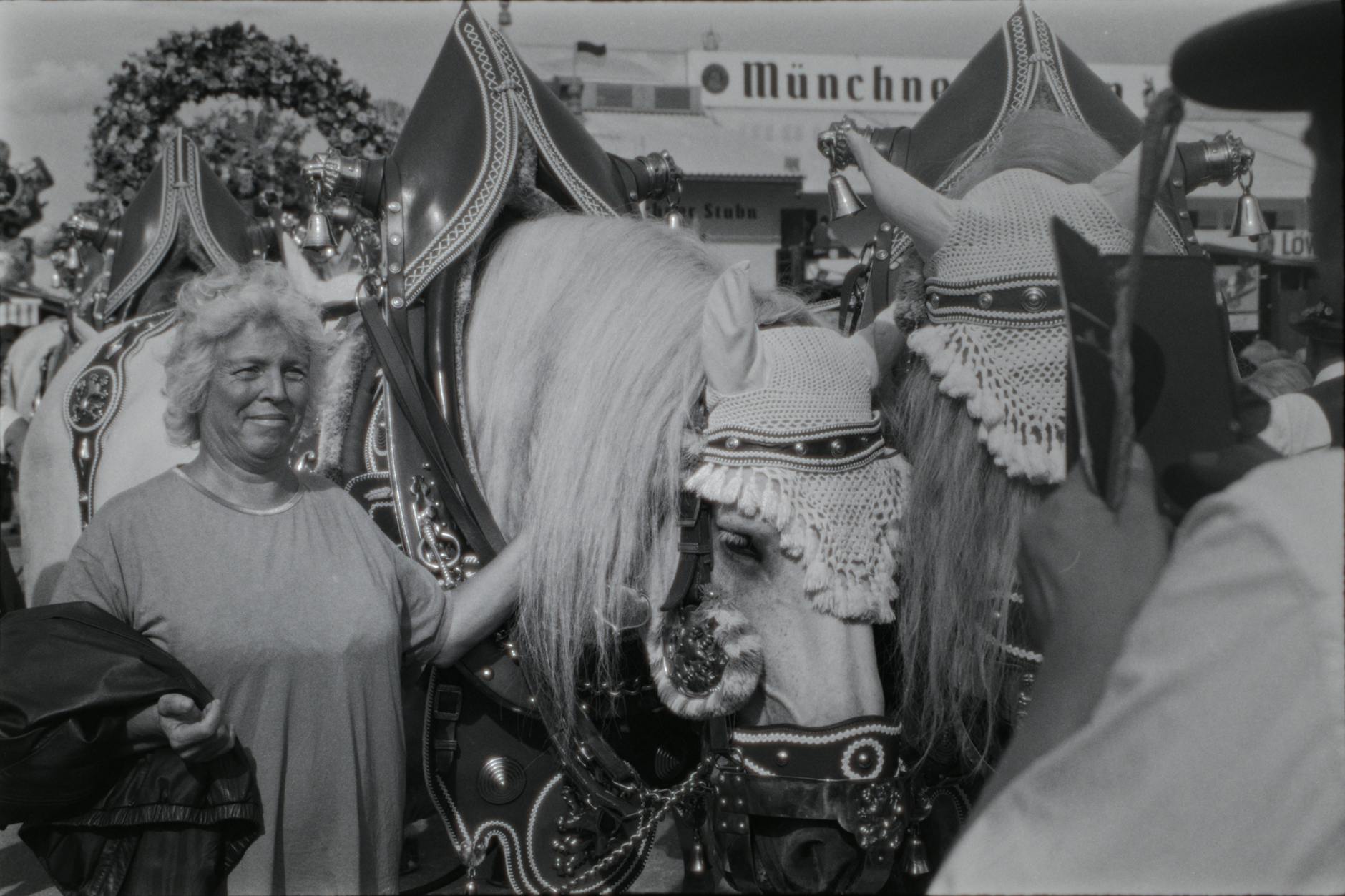
Bavarian culture traditions are not a museum exhibit you observe from behind glass — they are a living, breathing way of life you will bump into the moment you step off a train in Munich or wander into a village in the foothills of the Alps. From the leather-clad farmer hoisting a one-litre Maß at a beer hall to the schoolchildren in Lederhosen and Dirndl filing into a Corpus Christi procession, these customs shape daily life with a quiet stubbornness that has outlasted kings, wars, and the internet. This guide is your warm, observant local sitting beside you on the tram — explaining the rituals, the dialect, the etiquette, and the folklore so you can travel through the Free State of Bavaria with respect, curiosity, and a few good phrases ready on your tongue.
Bavaria at a Glance: Quick Facts for Visitors
Before we dive into specific Bavarian traditions, here is the cultural shorthand you will encounter again and again. Skim it; you will hear most of these terms within your first day on the ground.
| Element | What You Need to Know |
|---|---|
| Greeting | Grüß Gott (formal), Servus (casual, also a goodbye) |
| Language | Standard German officially; Bavarian (Boarisch) is widely spoken at home and in pubs |
| Traditional dress | Tracht — Dirndl for women, Lederhosen for men |
| Costume day | Many offices and shops observe a casual Tracht-Freitag (Tracht Friday) during festival season |
| Patron saint | Patrona Bavariae — the Virgin Mary, named patron saint by Elector Maximilian I in 1620 |
| State holiday | Tag der Bayerischen Heimat and a calendar of Catholic feast days |
| State colours | White and blue (the iconic diamond pattern, Rautenflagge) |
| State animal | The lion (you will see it on coats of arms and the Bayerischer Löwe statue at the Feldherrnhalle) |
| Population | Roughly 13 million in the Free State of Bavaria |
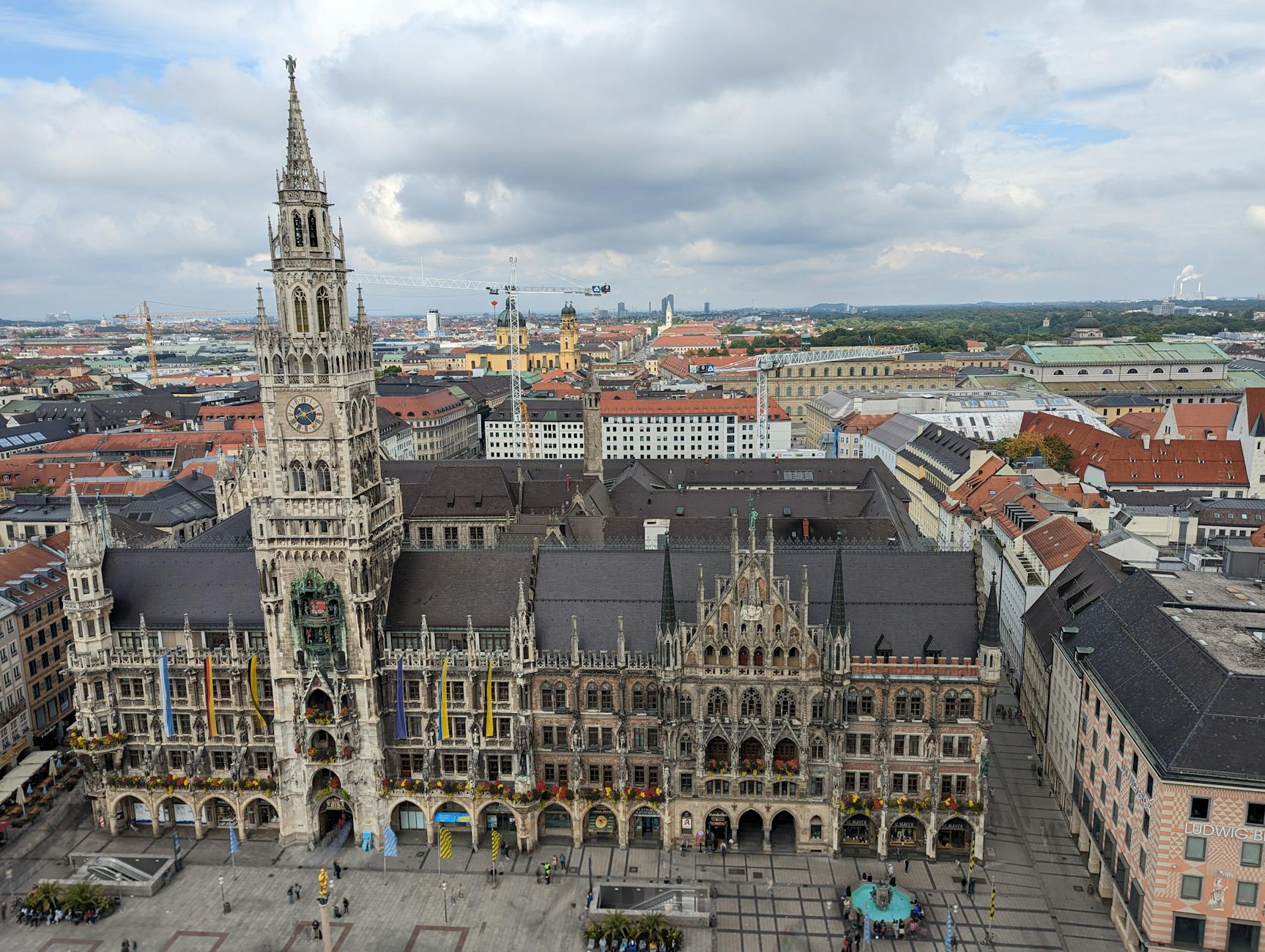
| Capital | Munich (München) |
A Brief History Behind Bavarian Culture Traditions
To understand why Bavarians still raise a Maypole or kneel during a Fronleichnam procession, you need to know a little about where these rituals come from. Bavaria has been a duchy, an electorate, and a kingdom — and from 1806 to 1918 it was a fully sovereign monarchy ruled by the Wittelsbach dynasty, one of Europe’s longest-reigning royal houses. The Wittelsbachs governed Bavaria for an astonishing 738 years, leaving behind palaces, breweries, art collections, and a strong sense that Bavaria is, culturally, its own country.
Bavaria is also overwhelmingly Catholic, a legacy of the Counter-Reformation. When Elector Maximilian I dedicated the realm to the Virgin Mary in 1620, he was doing more than a personal devotion — he was knitting Catholic ritual into the fabric of public life. That is why so many Bavarian customs revolve around saints’ days, processions, and roadside chapels. After World War II, Bavaria refounded itself as the Freistaat Bayern (Free State of Bavaria) in 1946 and ever since has guarded its own identity within the German federal system, with its own party (the CSU), its own dialect, and its own holidays.
For more on the city’s story, see our companion piece on the history of Munich, and the deeper architectural context at Munich’s history and architecture.
The Core Bavarian Traditions Visitors Encounter
1. Tracht: The Dirndl and Lederhosen
Tracht is the umbrella word for traditional Bavarian dress. For women, that means the Dirndl — a fitted bodice, white blouse, full skirt, and apron. For men, it is the Lederhosen — knee-length or short leather breeches, often with embroidered suspenders, paired with a checked shirt, wool socks (Loferl), and sturdy Haferl shoes. Originally working clothes for farmers and herders, Tracht was elevated in the 19th century into a marker of regional pride. Today Bavarians of all ages wear it to weddings, baptisms, civic parades, beer halls, and of course Oktoberfest.
One detail worth knowing as a visitor: the placement of the Dirndl’s apron bow communicates relationship status. Bow on the left = single. Bow on the right = taken (married or in a relationship). Bow in the centre front = traditionally a virgin or undecided. Bow at the back = widowed, or a server who would prefer you not flirt with her. Bavarians take this lightly today, but it is still considered polite to tie yours with intention.
Tracht also varies by region. The Bayerische Trachtenverband recognises distinct styles including the Miesbacher (the look most non-Bavarians picture — black bodice, silver chains, dark apron), the Werdenfelser from the area around Garmisch-Partenkirchen (red and green details, embroidered Mieder), the Chiemgauer, and the Münchner styles you will spot at Oktoberfest. Buying a cheap polyester Dirndl from a tourist stall is fine for a single night on the Wiesn, but Bavarians can tell at thirty paces. If you want more on what to wear when, our Oktoberfest dress guide goes deep.
2. The Maibaum (Maypole)
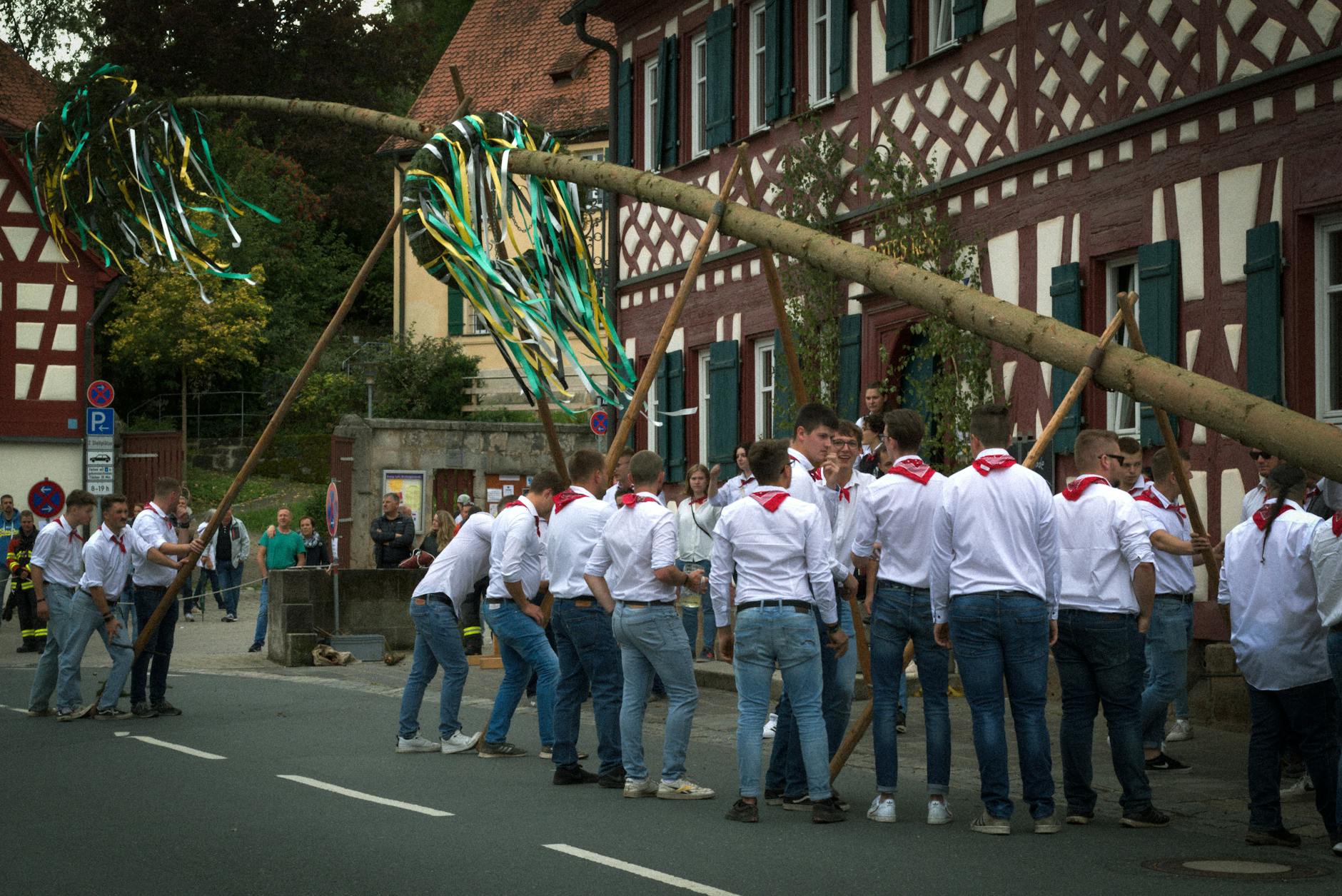
On May 1, almost every Bavarian village raises a tall, blue-and-white striped Maypole adorned with carved figures showing the local trades — bakers, brewers, blacksmiths, beekeepers. The Maibaum is hauled up by hand using long wooden poles called Schwalben, accompanied by a brass band and a beer tent. The trees are usually felled and trimmed weeks before, and here is where the fun starts: neighbouring villages try to steal each other’s Maypoles before they are raised. If they succeed, the victim village must ransom the pole back, typically with a precise number of beers and Brezn for the thieves. The thieves must follow the rules — you cannot take it once it has touched the ground for raising, and you must keep it visible at all times.
3. Schuhplattler: The Slap Dance
The Schuhplattler is the dance you have probably seen on a postcard — men in Lederhosen slapping their thighs, knees, and the soles of their Haferl shoes in rhythmic percussion. Originating as an alpine courting dance in the Bavarian and Tyrolean highlands, the choreography mimics the courtship display of the Auerhahn (the wood grouse). Couples turn and stamp; men leap, slap and stomp; women whirl their Dirndl skirts. You will catch it at folk evenings (Heimatabende) in Munich beer halls like Hofbräuhaus and at Trachtenverein festivals across the state.
4. Brass Band Tradition (Blasmusik)
Bavarian Blasmusik — the polka, march, and waltz repertoire played on tubas, trumpets, clarinets and accordion — is the soundtrack of nearly every public celebration. Almost every village has a Blaskapelle, and at Oktoberfest each tent has its own house band. If a tuba player tips his hat to you, lift your Maß and toast back; you are now part of the song.
5. Greetings: Grüß Gott and Servus
Forget the Hochdeutsch “Guten Tag” you learned from a phrasebook. In Bavaria the standard greeting is Grüß Gott (literally “greet God” — short for “may God greet you”). Use it in shops, at hotel reception, with strangers on a hiking trail. Servus (from the Latin for “servant,” via Roman occupation 2,000 years ago) is the casual all-purpose hello-and-goodbye between friends, equals, and anyone who has bought you a beer. “Pfiat di” or “Pfiat eich” — short for behüt dich Gott (may God protect you) — is the warm farewell you will hear in mountain villages.
6. Bavarian Dialect (Boarisch)
Linguists classify Bavarian as a separate Upper German language, not merely a dialect. Even Germans from Hamburg or Cologne can struggle to follow a conversation in deep Boarisch. Vowels shift, consonants soften, syllables disappear. Standard German Junge (boy) becomes Bua; Mädchen (girl) becomes Madl; nicht (not) becomes net or ned. Don’t worry — almost everyone switches to Hochdeutsch for visitors, and many speak excellent English. But a few words sprinkled into your conversation will earn you a grin and possibly a second pretzel on the house.
7. Stammtisch: The Regulars’ Table
Walk into a traditional Wirtshaus and you will likely spot a heavy wooden table bearing a brass or wrought-iron sign that reads Stammtisch. This is the regulars’ table — reserved, sometimes for decades, for a specific group of friends, the volunteer fire brigade, the local hunting club, or the parish council. Do not sit at it unless invited. If you are unsure whether a table is open, ask: “Ist hier frei?” If a Stammtisch member waves you over and pours you a beer, you have witnessed one of the warmest forms of Bavarian hospitality.
8. Beer Hall Culture
The Bavarian Wirtshaus and the giant beer hall (Bierhalle) are temples of communal eating. You order at the table from a waitress in Tracht (call her by name if you can — many beer halls have rosters at the entrance). Strangers share long oak benches; you say Grüß Gott as you sit down. Clink glasses with eye contact (failing to make eye contact is said to bring seven years of bad luck — or bad sex, depending on who is teasing you). Tip about 10% by rounding up. And when the band plays “Ein Prosit der Gemütlichkeit,” everyone stands and toasts — it is non-negotiable.
9. Brotzeit: The Bavarian Snack
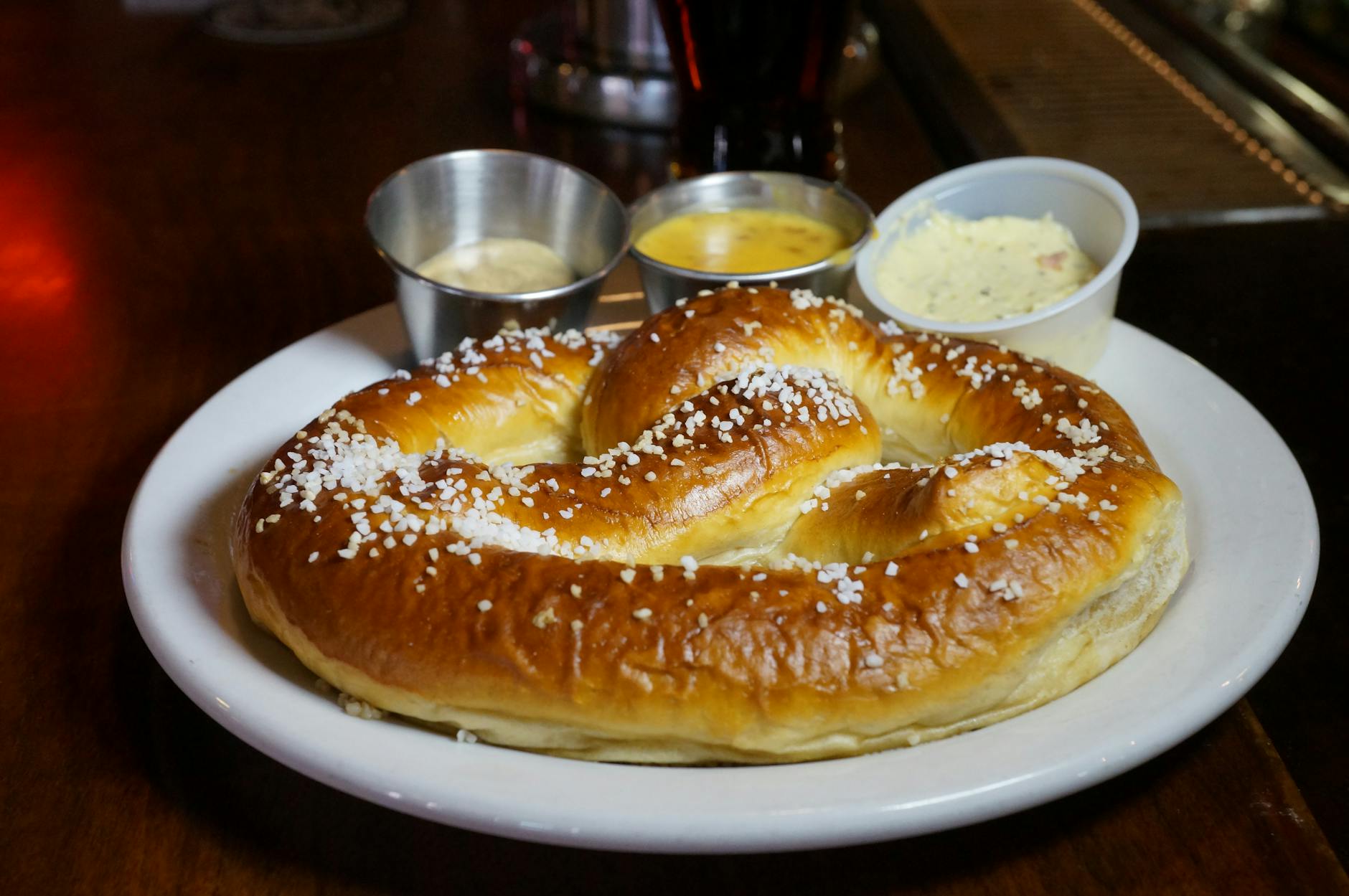
Literally “bread time,” Brotzeit is the late-morning or late-afternoon cold spread that fuels Bavarian life. A wooden board arrives bearing dark rye bread, butter, cold cuts (Leberkäse, ham, salami), pickles, radishes, soft pretzels, perhaps a sausage salad and a knob of Obatzda — a creamy spread of mashed Camembert, butter, paprika and onion. Eaten outdoors with a half-litre of beer on a sunny biergarten bench, it is one of the great underrated meals of Europe.
10. The Weißwurst Breakfast
The classic Bavarian breakfast — but only before noon, as tradition dictates: a pair of pale Weißwurst (veal-and-parsley sausages), sweet mustard (süßer Senf), a fresh-baked pretzel, and a half-litre of wheat beer (Weißbier). The sausages are not cut with a knife. You either suck them out of the casing (called zuzeln) or split them with a fork. The “before noon” rule comes from the days before refrigeration, when fresh sausage from the early-morning butcher had to be eaten before the church bells rang midday. For a deeper dive into Bavarian flavours, see our traditional Bavarian food guide.
11. Catholic Festivals and Processions
The Bavarian liturgical year is studded with public devotions. Fronleichnam (Corpus Christi), in late spring, brings flower-carpeted streets, brass bands, and processions led by clergy under embroidered canopies. Mariä Himmelfahrt (the Assumption of Mary) on August 15 is a public holiday in much of Bavaria; expect church services, herb bundle blessings (Kräuterbuschen), and quiet shops. Allerheiligen (All Saints’ Day, November 1) sees families place candles on cemetery graves. Even if you are not religious, attending a Fronleichnam procession in a village like Bad Tölz or Mittenwald is a moving spectacle.
12. Krampusnacht and Nikolaus (December 5-6)
On the evening of December 5 — Krampusnacht — Saint Nicholas’s terrifying horned companion Krampus prowls Alpine villages, snarling at children who have misbehaved. Costumed Krampus runs (Krampusläufe) in towns like Berchtesgaden are sweat-soaked, fire-lit, and not for the faint-hearted. The next morning, December 6, the gentler Saint Nicholas leaves chocolate and oranges in well-polished boots left by the door.
13. Sternsinger: The Star Singers
Around Epiphany (January 6), children dressed as the Three Kings — one carrying a gold star on a pole — go door-to-door singing carols and collecting for charity. They chalk a blessing above the door: 20*C+M+B+26, the letters standing for Christus mansionem benedicat (Christ bless this house), surrounded by the year. You will spot these markings on doorways throughout Bavaria all year long.
14. Fasching: Bavarian Carnival
The pre-Lent season — Fasching, also called Fastnacht — peaks in the days before Ash Wednesday. Expect parades, costume balls, and a few cheerful but bizarre rituals like the Munich Marktweiber dance, when the market women of Viktualienmarkt perform in costume on Faschingsdienstag (Shrove Tuesday). Krapfen (jam-filled doughnuts) appear in every bakery.
15. Maibockanstich: The Spring Beer Tapping
Late April brings the ceremonial tapping of the first keg of Maibock — a strong, hop-forward spring lager — at the Hofbräuhaus, often with the Bavarian Minister-President in attendance. The barrel is broached with theatrical force; the first Maß is poured for the dignitary; the brass band plays.
16. Starkbierzeit: The Strong Beer Season
In the weeks of Lent, monks once needed liquid sustenance during their fast. They brewed Doppelbock — a thick, malty, 7%+ beer they nicknamed “liquid bread.” Munich keeps this Bavarian tradition alive every March at the Nockherberg, where the Paulaner brewery hosts the famous Salvator tapping. A satirical “Derblecken” speech roasts the year’s politicians; comedians in costume play state ministers; the strong beer flows. Locals call it the unofficial fifth season.
17. Almabtrieb: When the Cows Come Home
In September, after a summer grazing on alpine pastures (the Alm), Bavarian cattle are led back down to valley farms. If no animal has been lost or injured, the herd is decorated with elaborate floral and pinecone headdresses, ribbons, and bells. The Almabtrieb in Lenggries, Bad Hindelang or Mittenwald is one of the most photogenic Bavarian customs — a slow, clanging parade of garlanded cows through narrow alpine streets, followed by a village festival of music and roasted meat.
18. Volksfeste: Bavaria’s Many Folk Festivals
Oktoberfest is the famous one, but it is one Volksfest among hundreds. Munich also hosts the Frühlingsfest (spring festival) on the same Theresienwiese in April–May, the three annual Auer Dult markets in Haidhausen (a centuries-old fair of crockery, antiques and ferris wheels), and the alternative arts and music festival Tollwood in winter and summer. Smaller towns have their own Volksfeste — Straubing’s Gäubodenfest in August is the second largest in Bavaria. For Oktoberfest specifically, see our complete Oktoberfest guide.
19. Lederhosen Sundays and Tracht-Friday
In many Bavarian villages and even some Munich offices, Friday during festival season is informal “Tracht Friday” — staff turn up in Dirndl and Lederhosen. Sunday morning church remains the most reliable place to see Tracht worn with full seriousness, especially in mountain parishes where the local Trachtenverein members process to Mass in formation.
20. The Bavarian Flag
The white-and-blue diamond pattern (Rautenflagge) and the horizontal white-over-blue stripe (Streifenflagge) are everywhere — fluttering from beer-garden poles, painted on Maypoles, embroidered on Trachten. Bavarians are quietly fierce about flying their own flag alongside or even instead of the German federal one. Do not be surprised if a Bavarian gently corrects you when you call them German first — “Mir san mir,” they say. We are us.
Bavarian Folklore: Creatures and Mountain Spirits
Bavarian folklore lives in the forests, the high pastures, and the imaginations of taxidermists with a sense of humour.
The Wolpertinger
The Wolpertinger is Bavaria’s signature mythical creature — a hare with antlers, sometimes with duck feet, fangs, or pheasant wings stitched on for good measure. The legend emerged in the 19th century, almost certainly invented by Bavarian taxidermists who assembled chimeras from spare animal parts and sold them as proof of forest oddities to gullible city folk. Wolpertinger are said to be elusive, found only on moonlit nights deep in the Bavarian woods, and only to virgins. You can see (very convincing) specimens at the Deutsches Jagd- und Fischereimuseum in Munich and in souvenir shops across the state. They are the Bavarian Sasquatch — a wink as much as a legend.
Mountain Spirits and Alpine Legends
The Alps are full of stories. The Perchten are masked winter spirits — some beautiful (Schönperchten), some terrifying (Schiachperchten) — who chase away winter in noisy January parades. The Drud is a night-mare witch who sits on the chest of sleepers. King Watzmann is said to be a cruel ruler turned to stone with his wife and children — the limestone peaks above Berchtesgaden. And every village has its own ghost story: a phantom hunter, a weeping lady at a chapel, a treasure guarded by serpents on a mountain pass.
Cultural Etiquette for Visitors to Bavaria
A few notes on cultural etiquette in Bavaria will keep you on the right side of locals and help you blend in faster than any Lederhosen ever could.
- Greet first, ask later. Always start with Grüß Gott or Servus before asking a shopkeeper or stranger anything. Walking in silently and demanding directions is considered rude.
- Eye contact when toasting. Lift your glass, look the other person directly in the eye, say “Prost” or “Zum Wohl,” then drink. Seven years of bad luck if you skip the eye contact.
- Sie versus Du. Default to the formal “Sie” with anyone over 25 you don’t know. Wait to be invited into the informal “Du.” Among younger people in casual settings, “Du” is common.
- Punctuality. Showing up on time is almost a moral category. Five minutes early is on time; on time is late.
- Sundays are sacred. Most shops close. Don’t run loud machinery, mow the lawn, or party with the windows open — “Sonntagsruhe” (Sunday quiet) is enshrined in law.
- Beer hall conduct. Share tables. Tip 10% by rounding up. Don’t snap fingers at staff. Don’t try to walk out with a Maßkrug — that is theft, and there are amnesty bins at the gates of Oktoberfest for returning them.
- Religion. Bavaria is majority Catholic. Crucifixes on public buildings, school rooms, and mountain peaks are normal. Do not photograph people during Mass or processions without clear consent.
- Gifts. If invited to someone’s home, bring flowers (unwrapped at the door — old custom is to remove paper before handing them over), good chocolate, or a bottle of wine.
- Cash. Many traditional Bavarian Wirtshäuser still prefer cash. Carry euros, especially in rural areas.
Bavarian Dialect: A Survival Phrasebook
You don’t need to master Boarisch, but a handful of phrases will warm any Bavarian’s heart. Approximate pronunciations in brackets.
| Bavarian | Meaning | Pronunciation |
|---|---|---|
| Servus / Grüß Gott | Hello (casual / formal) | SAIR-voos / grees GOT |
| Pfiat di / Pfiat eich | Goodbye (singular / plural) | FEE-aht dee / FEE-aht eyesh |
| Wia geht’s? | How are you? | VEE-uh gates |
| Bassd scho | It’s all good / fine | BAH-sd shoh |
| I mog di | I like you | ee MOHG dee |
| Schmarrn | Nonsense (also a sweet pancake dish) | SHMAR-n |
| Brez’n / Brezel | Pretzel | BRET-sn |
| Madl | Girl | MAH-dl |
| Bua | Boy | BOO-uh |
| Wiesn | Oktoberfest grounds (the meadow) | VEE-zn |
| Maß | One-litre beer mug | MAHSS |
| Hoibe | Half-litre beer | HOY-buh |
| O’zapft is! | It’s tapped! (the cry that opens Oktoberfest) | oh-TSAPFT iss |
Where to Experience Bavarian Culture Traditions Today
The good news for visitors: living Bavarian customs are not hard to find. You don’t need an invitation to a private wedding. Here is where to look.
- Volksmusik evenings at beer halls. The Hofbräuhaus, Augustiner-Keller, and Schneider Bräuhaus all host live Bavarian folk music nightly.
- Trachtenverein performances. Local Tracht clubs perform Schuhplattler and folk dance at festivals statewide — check the Bayerischer Trachtenverband calendar.
- The Oktoberfest opening parade. On the third Saturday of September, the Wiesn-Wirte (festival landlords) parade through Munich with horse-drawn beer wagons.
- Trachten- und Schützenzug. The Sunday after Oktoberfest opens, 9,000 Trachten wearers and Schützen (rifle club members) parade through central Munich in regional costume — the largest folk costume parade in the world.
- The Bayerisches Nationalmuseum. Stunning collection of Tracht, religious art, folk crafts, and Wittelsbach treasures on Prinzregentenstraße.
- Schwabing’s old-style cafés. Try Café Münchner Freiheit or Alter Simpl for a glimpse of Bavaria’s bohemian intellectual tradition.
- Nymphenburg porcelain manufactory. Royal porcelain has been made here since 1747; the workshop tours show painters still working by hand.
- Day trips to mountain villages. Mittenwald (violin-making and painted facades), Tegernsee (lakeside breweries and abbey), Schliersee (folk theatre and trachten festivals), Bad Tölz (Leonhardifahrt horse procession on November 6).
Common Misconceptions About Bavarian Customs
Bavarian customs get conflated with German culture more broadly, especially in films, beer ads, and Halloween costumes. Some gentle corrections:
- Not all Germans are Bavarian. Lederhosen, Oktoberfest, and Tracht are specifically southern. A native of Hamburg or Berlin is as foreign to these traditions as you are.
- Lederhosen is not exclusively Bavarian. Versions are worn in Austrian Tyrol, South Tyrol, and parts of Switzerland — it’s an Alpine tradition more than a strictly Bavarian one.
- Oktoberfest is just one festival. It is famous, but the Bavarian calendar is packed with hundreds of equally beloved local Volksfeste — many far more authentic.
- Bavarian is not just an accent. It is classified linguistically as a distinct Upper German language, with its own grammar and vocabulary. Standard German speakers genuinely struggle.
- Catholic, not Lutheran. Bavaria’s religious culture diverges sharply from northern Protestant Germany — and that shapes everything from public holidays to wedding customs.
- Not everyone in Munich wears Tracht every day. Office workers wear suits. Tracht comes out for occasions — though more often than in any other German-speaking region.
Bavarian Food as Culture
You cannot separate Bavarian culture from Bavarian food. Schweinshaxe (crispy roast pork knuckle), Schweinsbraten with dumplings, Leberkäse, the early-morning Weißwurst, the soft pretzel as both snack and symbol, Obatzda on a beer-garden table — these are not menu items so much as ritual. Beer itself is constitutionally protected as a basic foodstuff (the 1516 Reinheitsgebot still has cultural force). Coffee and cake on Sunday afternoon (Kaffee und Kuchen) is its own institution. For a full deep-dive, see our traditional Bavarian food guide.
Bavarian Music: From Volksmusik to Schlager
Bavarian music comes in three rough strands. Volksmusik is the traditional repertoire — zither, accordion, brass — sung in dialect and tied to specific dances. Schlager is the cheerful, sing-along pop genre with rhyming hooks and beer-friendly choruses you will hear blasted from Oktoberfest tents. And modern Bavarian folk-rock — bands like LaBrassBanda, Haindling, and Spider Murphy Gang — fuses traditional instrumentation with rock, ska and electronic beats. The Munich nightclub scene is excellent, but if you want to glimpse Bavarian musical soul, attend a Volksmusik evening at a mountain inn.
Bavarian Humour: Dry, Direct, and Often In-Jokes
Bavarian humour is famously deadpan. The classic Bavarian face — what locals call Grantln — is a kind of low-key grumpy resting expression that is actually a sign of contentment. The Münchner Grant (Munich grouchiness) is performance art. Comedians like Karl Valentin (a 1920s Charlie Chaplin equivalent) and Gerhard Polt built careers on absurdist dialogues and dialect wordplay. Many jokes turn on the rivalry between Bavarians and “Preißn” (anyone from north of the Main River). If a Bavarian teases you, that is affection. Tease back gently and you have made a friend.
Frequently Asked Questions About Bavarian Traditions
What language is spoken in Bavaria?
Officially, Standard German (Hochdeutsch). In daily life and at home, many Bavarians speak Bavarian (Boarisch), an Upper German language so distinct that linguists classify it separately. Schools and TV news are in Hochdeutsch; the beer hall, the village shop, and grandmother’s kitchen are in Boarisch. Most Bavarians switch effortlessly between the two for visitors, and English is widely understood in Munich.
When do locals actually wear Tracht?
More often than you might think. Weddings, baptisms, confirmations, Oktoberfest, May 1 Maypole raisings, the Trachten- und Schützenzug parade, Sunday Mass in mountain parishes, Trachtenverein events, civic processions, and during some festival-season Fridays in workplaces. Younger Munich locals wear Tracht primarily during Oktoberfest and Wiesn-adjacent weekends. Older rural Bavarians may wear it weekly.
What exactly is Brotzeit?
Brotzeit literally means “bread time” and refers to a cold snack meal eaten between main meals — typically late morning or late afternoon. A wooden board arrives with bread, cold cuts, cheese, butter, pickles, radishes and a pretzel, often accompanied by Obatzda spread and a half-litre of beer. It is a foundational Bavarian eating ritual, especially in beer gardens.
What’s the most important Bavarian holiday?
It depends who you ask. Oktoberfest is the most internationally famous. For Catholic Bavarians, Christmas Eve (Heiligabend), Easter, and Mariä Himmelfahrt (Assumption, August 15) are among the most important. For festival lovers, the Starkbier season at Nockherberg in March and the May 1 Maypole raising matter enormously. There is no single answer — Bavarian tradition is happily plural.
How does Bavarian culture differ from broader German culture?
Bavaria is more rural, more Catholic, more attached to dialect and folk costume, more religiously demonstrative, and historically more independent than most German states. Northern German culture (around Hamburg, Bremen, Berlin) tends to be Protestant or secular, more reserved, more cosmopolitan, and less attached to regional dress. Bavarians often say “Mir san mir” (we are us) — a polite reminder that being Bavarian comes first, being German second.
Is it disrespectful for tourists to wear Tracht?
Not at all — Bavarians are delighted when visitors take the effort to dress up for Oktoberfest or a folk festival. The unwritten rule is to wear it respectfully: a real or quality-made Dirndl or Lederhosen, not a sexy costume version. Tie the bow correctly. Wear it for the right occasion. Avoid Tracht at a serious event like a funeral or business meeting where it would be out of place.
Bringing Bavarian Culture Home With You
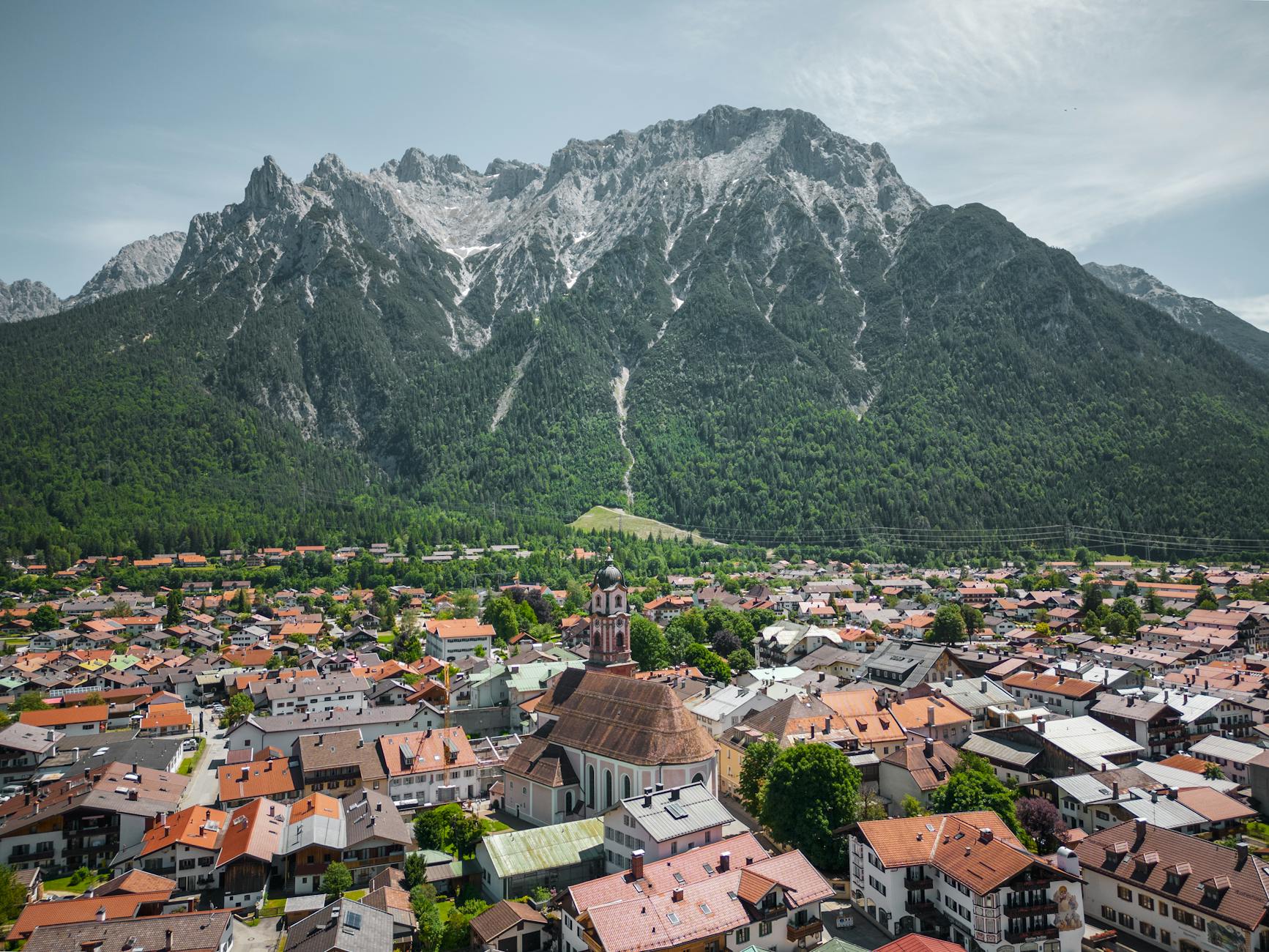
What makes Bavarian culture traditions so enduring is that they are not staged for tourists. The Maibaum goes up whether or not a coach party photographs it. The Weißwurst is eaten before noon because that is when it tastes right. The Stammtisch fills with the same faces every Thursday because that is what friendship looks like here. As a visitor, you are welcome to look, to taste, to dance a Schuhplattler badly and laugh about it. Greet with Grüß Gott. Toast with eye contact. Wear your Dirndl with the bow tied where it should be. Try the strong beer in March, the Maibock in May, the Almabtrieb in September. Listen for the Bavarian phrases tucked into ordinary speech. Most of all, slow down — Gemütlichkeit, that untranslatable Bavarian word for cosy, unhurried togetherness, is the real tradition underneath all the others.
For more on the city and region, dive into our guide to Munich’s history and architecture, the long story of the city’s founding and rise, the definitive Oktoberfest planning guide, our Tracht and Oktoberfest dress code, and the deep Bavarian food tradition. Pfiat di — until next time.