Munich Beer History: 800 Years of Brewing Tradition
Munich beer history explained: Reinheitsgebot 1516, monastery brewing, the six royal breweries, Oktoberfest origins.
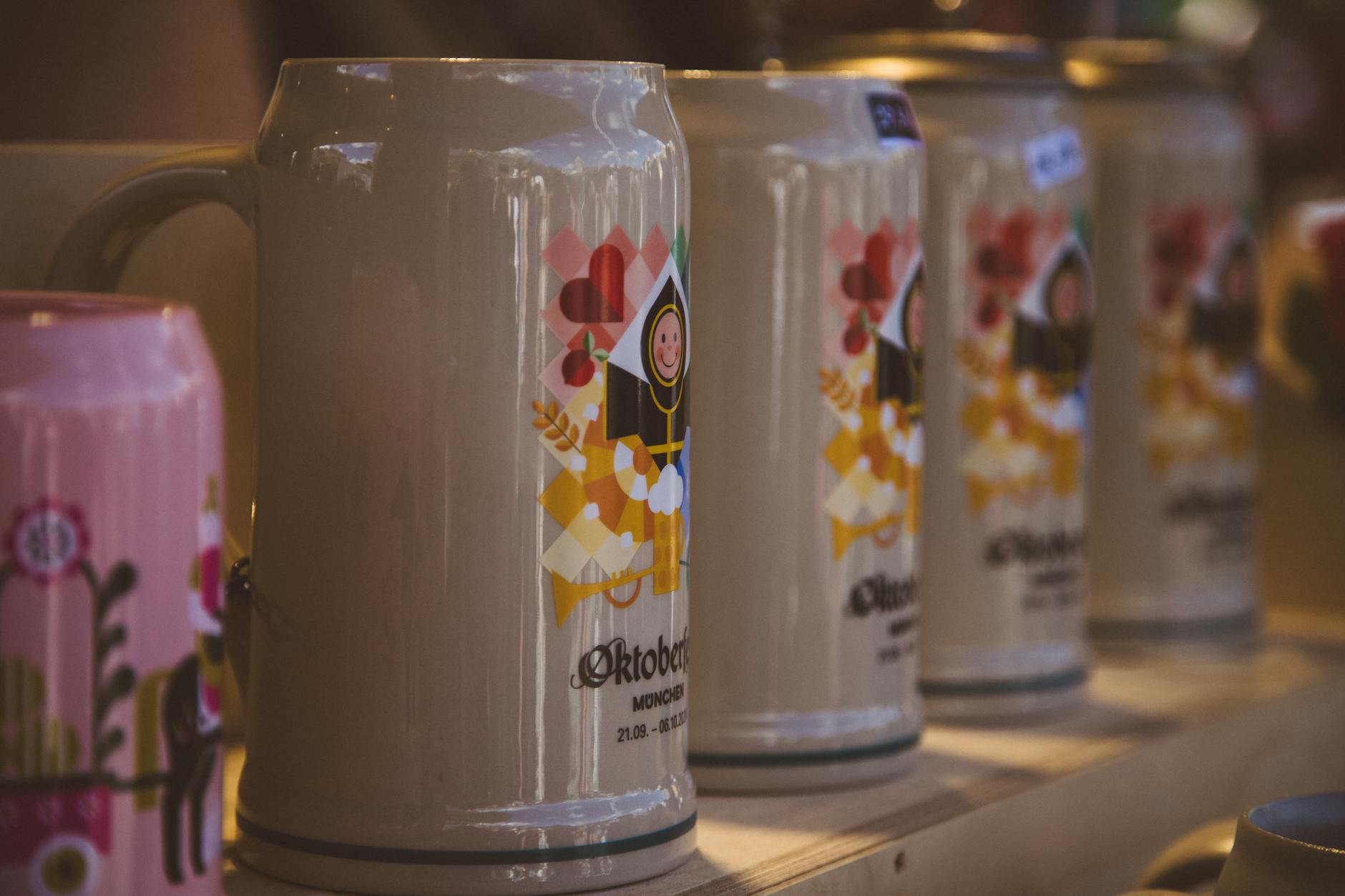
Munich beer history is not something you read about in a museum — it is something you taste every time you lift a one-litre Maß in a 400-year-old beer hall or sip a foamy Helles poured from a wooden keg in a beer garden. Stretching back more than 800 years through Bavarian monasteries, royal courts, world wars and EU courtrooms, the story of brewing in Munich is the story of the city itself. From medieval friars who turned the long Lenten fast into the art of liquid bread, through Duke Wilhelm IV’s 1516 Reinheitsgebot, the rise of six royal breweries, the invention of mechanical refrigeration, and the birth of Oktoberfest at a royal wedding, the city has shaped how the world drinks beer. This guide walks you through every chapter of Munich beer history — so the next pint you raise comes with eight centuries of context.
Munich Beer History at a Glance: Quick Facts
Before we dig into eight centuries of Munich brewery history, here is the short version — the milestones you will encounter again and again in every Bräustüberl, museum and brewery tour.
| Fact | Details |
|---|---|
| Claims to be the world’s oldest operating brewery | Weihenstephan, citing a 1040 licence — just outside Munich in Freising |
| Oldest brewery in Munich proper | Augustiner-Bräu, founded 1328 by Augustinian friars |
| Munich’s first purity law | 1487 — Duke Albrecht IV decrees beer ingredients in Munich |
| Bavarian Reinheitsgebot | 1516, proclaimed by Duke Wilhelm IV in Ingolstadt — water, barley, hops |
| Hofbräuhaus founded | 1589, by Duke Wilhelm V as the ducal Wittelsbach court brewery |
| First Oktoberfest | October 1810 — wedding of Crown Prince Ludwig and Princess Therese |
| Six Oktoberfest breweries | Augustiner, Hofbräu, Hacker-Pschorr, Löwenbräu, Paulaner, Spaten |
| Reinheitsgebot extended to all Germany | 1906 — as a condition of Bavarian integration |
| Münchener Bier PGI status | Protected geographic designation under EU law |
| Largest beer festival in the world | Oktoberfest, around 6 million visitors per year |
A Timeline of Munich Beer History
The history of beer in Munich did not start in Munich at all. Long before the city was founded, Bavarian monks were already brewing, and a Carolingian charter from the 8th century records the cultivation of hops near today’s Munich-Freising region. By 1040, the monks at Weihenstephan abbey — across the fields from modern Munich Airport — had received a formal brewing licence, and a continuous lineage of beer began that has not broken since.
- 8th century: Carolingian hops cultivation around Freising; Bavarian monasteries begin brewing.
- 1040: Weihenstephan brewery licensed — it claims to be the oldest continuously operating brewery in the world.
- 1158: Munich founded by Henry the Lion on the salt road.
- 1328: Augustiner-Bräu founded inside the Augustinian friary — oldest brewery still operating in Munich.
- 1372 / 1397: First documented breweries on the sites of today’s Spaten and Hacker-Pschorr.
- 1417 / 1487: Munich’s earliest brewing rules and the city’s own Reinheitsgebot under Duke Albrecht IV.
- 1516: Duke Wilhelm IV proclaims the Bavarian Reinheitsgebot in Ingolstadt — water, barley, hops only.
- 1589: Duke Wilhelm V founds the Hofbräuhaus as the ducal court brewery.
- 1632: Hofbräuhaus pays 23,168 litres of beer in tribute to occupying Swedish forces, saving Munich during the Thirty Years’ War.
- 1634: Paulaner friars in Au brew the first Salvator Doppelbock for Lent.
- 1810: The wedding of Crown Prince Ludwig and Princess Therese becomes the first Oktoberfest on the Theresienwiese.
- 1818: Beer sold at Oktoberfest for the first time.
- 1841 / 1872 / 1873: Spaten introduces the first amber Märzen, then Munich Helles, then Linde refrigeration.
- 1906: Reinheitsgebot extended across all of Germany at Bavaria’s insistence.
- 1923: The Beer Hall Putsch erupts at Munich’s Bürgerbräukeller.
- 1945-1990: Post-war Munich rebuilds its beer-hall culture.
- 1987: EU court rules the Reinheitsgebot cannot bar imports — Munich breweries keep following it voluntarily.
- 2022: Oktoberfest beer wins EU Protected Geographical Indication; Münchener Bier already protected.
The Monastery Origins of Munich Beer
To understand the deep roots of Munich beer history, start in the cloister. In medieval Bavaria, brewing was a monastic craft long before it was a civic industry. Monks needed clean drinking liquids when river water carried disease, and calorie-dense nutrition during Catholic fasting seasons. Beer answered both. Boiled (sterile), fermented (preserved), full of grain (nourishing), it became known as flüssiges Brot — “liquid bread.”
The clergy were not just consuming beer — they were perfecting it. By the 13th century, Bavarian monastic orders — Benedictines, Augustinians, Franciscans, Carmelites, Paulines — all ran their own breweries. Several of Munich’s most famous brands carry the names of those monks: Paulaner from the Order of Saint Francis of Paola, Franziskaner from the Franciscan friary near today’s Frauenkirche, Augustiner from the Augustinian Hermits. The beer culture Munich is famous for today rests squarely on this cloistered foundation, and you can still see the monastic DNA on every label.
The Reinheitsgebot: Munich Beer History’s Most Famous Law
No discussion of Munich beer history is complete without the Reinheitsgebot — the Bavarian Beer Purity Law of 1516. On 23 April 1516, at the Estates of Bavaria in Ingolstadt, Duke Wilhelm IV and his brother Ludwig X proclaimed that beer brewed in Bavaria could contain only three ingredients: water, barley and hops. Yeast was added later, once microbiology revealed its role.
Why the Reinheitsgebot Was Written
The Reinheitsgebot was not a marketing slogan in 1516. It was a public-health and economic measure: it ended the adulteration of beer with cheap or dangerous additives (henbane, poisonous mushrooms, soot, ox bile); it reserved wheat and rye for bakers so bread stayed affordable; and it gave the duke a tool to standardise quality and tax brewers consistently. Munich, notably, already had its own purity law from 1487 — twenty-nine years earlier — and its brewers had been writing the rulebook for Wilhelm IV’s draftsmen.
From Bavarian Law to German Standard
For nearly four centuries the Reinheitsgebot stayed a Bavarian institution. When Otto von Bismarck welded the German states into a single empire in 1871, Bavaria — wealthy, proud and brewing — insisted that any unified German beer market would have to play by Bavarian rules. The 1906 imperial law extended the Reinheitsgebot to all of Germany. From then on, anything sold as “German beer” had to meet the Bavarian standard.
The 1987 European Challenge
In 1987 the European Court of Justice ruled that Germany could not bar imported beers brewed with other ingredients from being sold within Germany — that constituted a non-tariff barrier to trade. The Reinheitsgebot survived as a label of origin and quality, not as a wall against imports. Critically, the ruling did not stop Munich breweries from voluntarily following the law. To this day, every drop produced by Munich’s six historic breweries is brewed to the Reinheitsgebot, and many display the words proudly on their labels.
What this means for you as a drinker: when you order an Augustiner Helles or a Hofbräu Original anywhere in the world, you are drinking a beer made to the same rules a 16th-century duke laid down in Ingolstadt. Few drinks anywhere claim such an unbroken regulatory pedigree.
The Hofbräuhaus Story: Royal Beer for the Wittelsbachs
One thread of Munich beer history runs straight through a royal court. In the late 1580s, Duke Wilhelm V of Bavaria — “Wilhelm the Pious” — was tired of paying to haul Einbecker beer from Lower Saxony to his Munich palace. On 27 September 1589 he founded a brewery of his own; his first brewmaster, Heimeran Pongratz, was poached from the Geisenfeld Monastery.
The Hofbräuhaus moved in 1607 to the Platzl, the square where it still stands today. For more than two centuries it brewed exclusively for the Wittelsbach household. The breakthrough came in 1828, when King Ludwig I opened the Hofbräuhaus to the public. A famous footnote: in May 1632, with Swedish troops besieging Munich during the Thirty Years’ War, the city paid a tribute that included 23,168 litres of Hofbräu beer — and was spared sack. Beer literally saved the city.
Today the Hofbräuhaus remains state-owned — its full name is the Staatliches Hofbräuhaus in München. Original royal recipes survive as Hofbräu Original (the everyday Helles) and Münchner Weisse (the wheat beer). The famous main hall, the Schwemme, seats around 1,300 drinkers under a painted vaulted ceiling.
The Six Oktoberfest Breweries
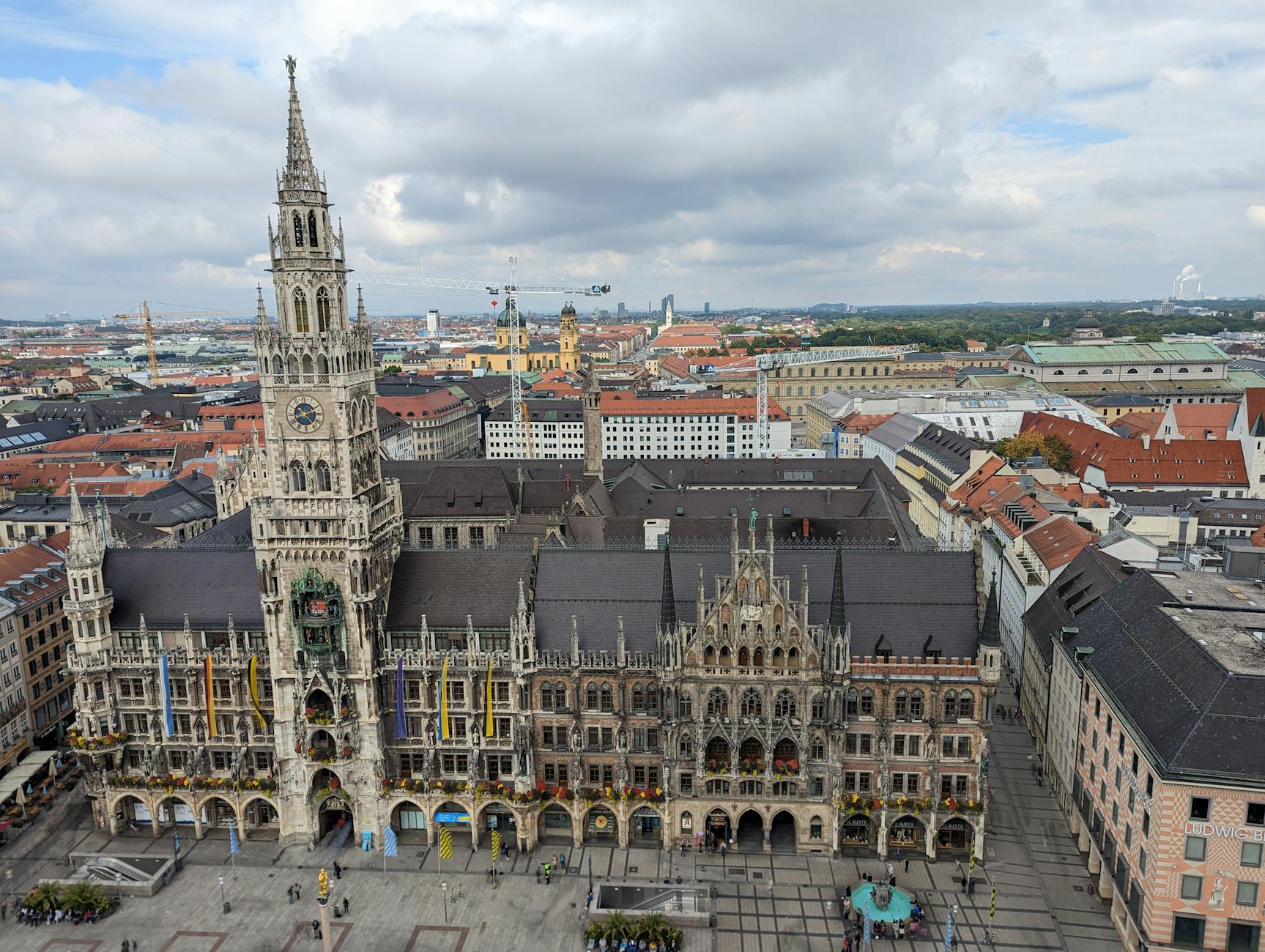
Modern Munich beer history converges on six historic breweries — the only ones legally permitted to pour at Oktoberfest. To qualify, a brewery must be located within Munich’s city limits and brew to the Münchener Bier standard. Six remain, and each has its own founding story. We cover them in depth in our Oktoberfest beer guide, but here is the short version that every visitor should know.
Augustiner-Bräu (1328)
The oldest and most beloved of locals. Founded inside the Augustinian friary in 1328, secularised in 1803, and bought by the Wagner family in 1829. Augustiner remains the only one of the six independently owned — a 51% stake is held by a charitable foundation, deliberately structured to keep it out of corporate hands. Drink it from a wooden keg at the Augustiner-Keller and you are tasting Munich’s longest-running recipe.
Hofbräu (1589)
The ducal Wittelsbach court brewery, still owned by the Free State of Bavaria. The Hofbräuhaus on the Platzl is one of the world’s best-known beer halls, and the one every visitor means when they say “Munich beer hall”.
Hacker-Pschorr (1417 / 1820)
The Hacker brewery’s documents go back to 1417, near the Sendlinger Tor. The Pschorr family married into Hacker in 1793 and split off to found their own brewery, which they merged back with Hacker in 1972 to form modern Hacker-Pschorr. Its Münchner Hell and Oktoberfest Märzen are pillars of the Wiesn.
Löwenbräu (1383 / 1524)
Löwenbräu (“lion’s brew”) claims roots back to 1383, with the first documented brewer at the site appearing in 1524. The brand became one of the first global German beer exports and remains a symbol of Munich abroad.
Paulaner (1634)
Founded by Paulan friars in the Munich suburb of Au, originally to brew a strong Lent beer for the monastery’s own use. Paulaner’s Salvator Doppelbock invented the entire Doppelbock category and gave it the “-ator” naming suffix that other breweries still copy today.
Spaten (1397 / 1807)
The technological pioneer. A brewery has stood on the site since 1397, but Spaten’s modern fame begins in 1807 when Gabriel Sedlmayr the Elder bought it. His son Gabriel II transformed Munich brewing forever — introducing the first amber Märzen (1841), the modern Helles lager (1872), and the world’s first industrial refrigeration (1873). Without Spaten, lager as we know it would not exist.
The First Oktoberfest: A Royal Wedding in 1810
On 12 October 1810, Crown Prince Ludwig — later King Ludwig I of Bavaria — married Princess Therese of Saxe-Hildburghausen at the Munich Residenz. Cavalry major and banker Andreas Michael Dall’Armi proposed celebrating the union with a public horse race on the meadow outside the city gates. King Max I Joseph agreed, the citizens of Munich turned up by the tens of thousands, and the field was renamed Theresienwiese — Theresa’s Meadow — in honour of the bride. It still bears that name today, and Munich locals still call Oktoberfest “die Wiesn” after it.
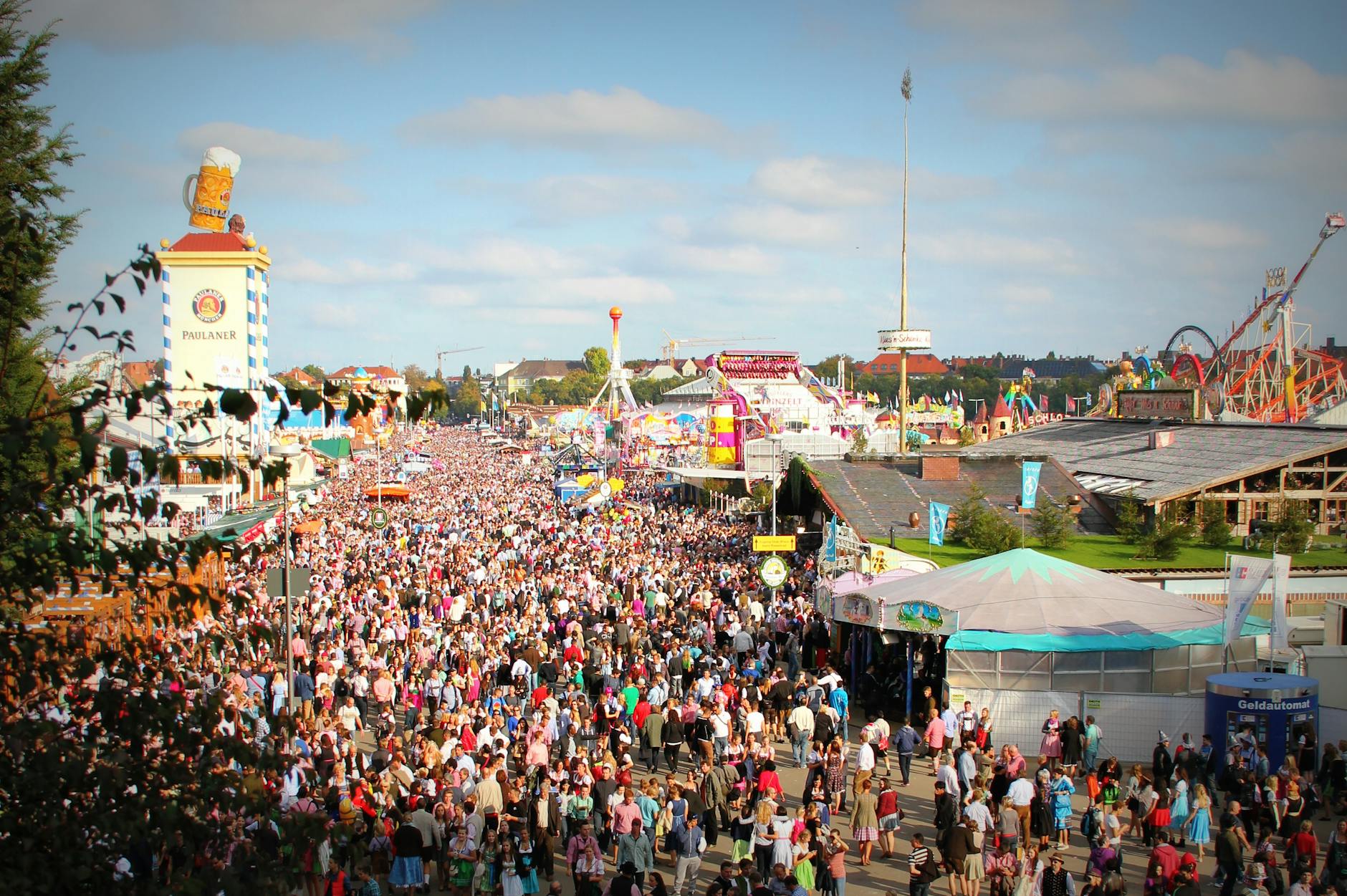
The horse race ran again in 1811. By 1818, beer was sold on the festival grounds for the first time, and small wooden stands became the ancestors of today’s giant tents. Munich’s city council took over organising in 1819. The festival shifted earlier from October into September in the 1870s for warmer evenings. Today Oktoberfest draws around 6 million visitors and pours roughly 7 million litres of beer each year.
One detail tourists rarely know: only Münchener Bier — beer brewed inside Munich’s city limits to Reinheitsgebot standards — may be served on the Wiesn. That is how all six historic Munich breweries got their permanent monopoly on the world’s largest beer festival.
Starkbierzeit: Munich’s Strong Beer Season
If you think Oktoberfest is Munich’s only beer festival, the locals will laugh. In March, the city celebrates Starkbierzeit — strong beer season — and the locals consider it the more authentic of the two.
The origin story goes straight back to the Paulaner monks of 1634. Forbidden to eat solid food during Lent, the friars brewed a high-gravity beer rich enough to sustain them through six weeks of fasting. They called the inaugural batch Sankt-Vater-Bier (Holy Father Beer), which over time morphed into “Salvator” — the Saviour. Legend says they sent a sample to Rome for papal approval; by the time the cask arrived, the beer had spoiled in the summer heat, and the Pope declared that anyone who would drink such bitter swill during Lent could not be enjoying themselves and so might have his blessing.
Salvator gave the Doppelbock category its naming convention — rival breweries began producing strong Lent beers ending in -ator: Triumphator, Animator, Maximator, Celebrator. The annual ceremonial first tapping of Salvator takes place on Munich’s Nockherberg hill, usually with the Bavarian Minister-President in attendance and a satirical roast (the Derblecken) of state politicians by costumed comedians. Strong beer, sharp wit and brass music — the Munich way.
The Beer Garden Tradition
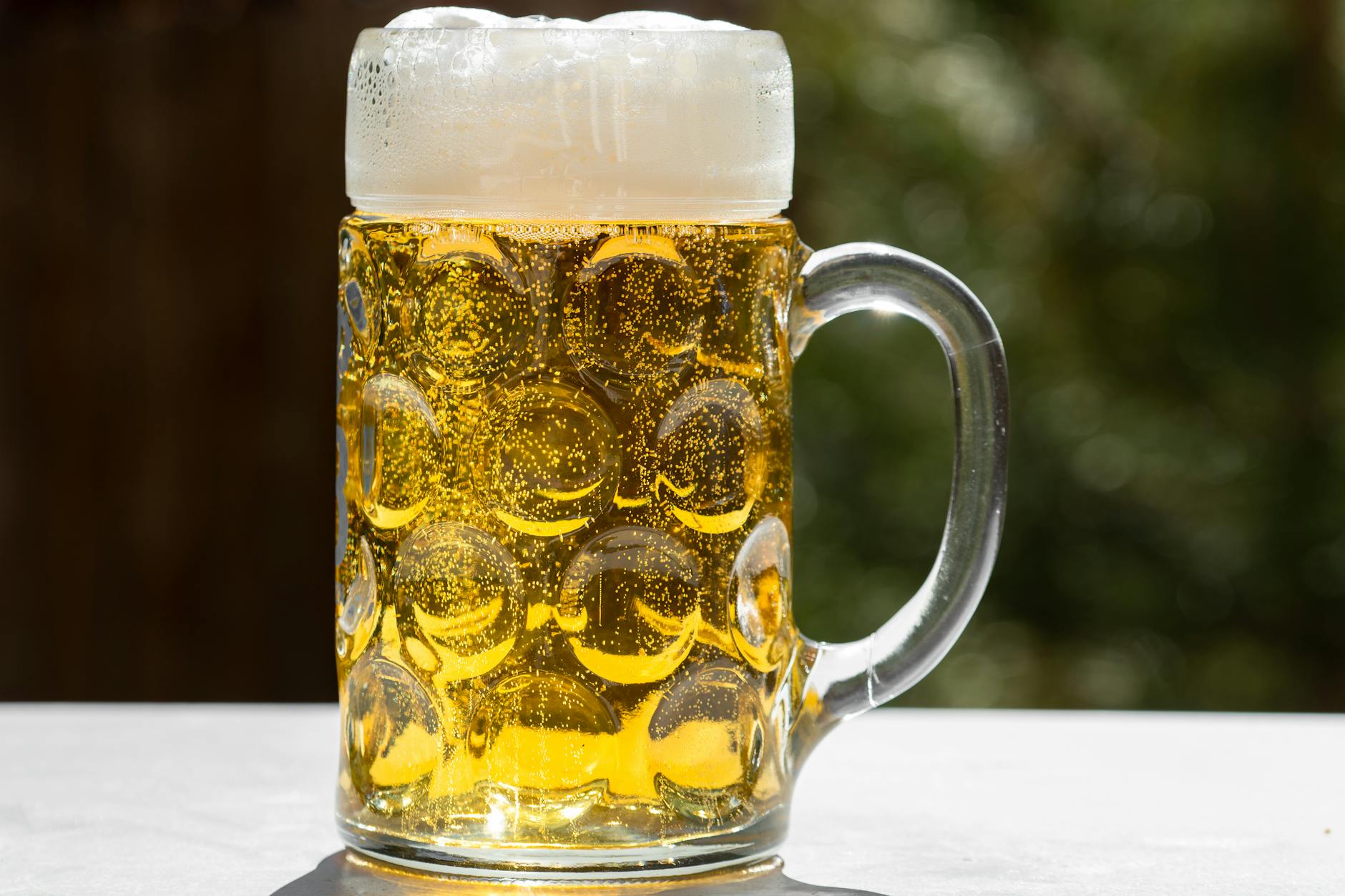
A surprising chapter of Munich beer history began underground. Before mechanical refrigeration, breweries could only produce bottom-fermented lager in winter and had to find ways to keep it cold through the summer. From the early 1800s, Munich brewers dug deep cellars along the gravel terraces of the River Isar, packed them with winter ice cut from frozen lakes, and stored their casks below. To keep the surface temperatures down, they covered the cellars with thick gravel and planted broad-leafed, shallow-rooted chestnut trees overhead. The chestnuts cast deep shade without sending roots into the vaults.
Munich citizens noticed the shadiest, coolest spots in summer were precisely the brewery cellars. They began bringing picnic blankets, sausages and pretzels and sitting under the trees. Inn-keepers complained that the brewers were stealing their customers, and in 1812 King Maximilian I Joseph issued the famous Beer Garden Ordinance: brewers could pour beer from their cellars but could not sell food. Munich locals were free to bring their own.
That ordinance shaped the Munich beer garden forever. At a traditional biergarten — Augustiner-Keller, Hirschgarten, Chinesischer Turm — you are still legally entitled to spread your own Brotzeit on the bare-wood tables, so long as you buy your beer from the brewery. White tablecloths mean a restaurant section where food orders are required; bare benches under the chestnuts mean help yourself.
For our full guide to where to drink under the trees in summer, see our piece on the best beer gardens in Munich.
Beer and Politics: The Bürgerbräukeller Putsch
Munich’s beer halls have always been places of political life — long tables, loud voices, plenty of drink, and a captive audience. That made them, at one of the most fragile moments in 20th-century history, scenes of attempted revolution. On the evening of 8 November 1923, Adolf Hitler and around 600 Sturmabteilung paramilitaries surrounded the Bürgerbräukeller, where Gustav Ritter von Kahr — the Minister-President of Bavaria — was addressing a crowd of three thousand. Hitler entered, fired a pistol shot into the ceiling, and declared that the national revolution had begun.
The next morning the Nazis tried to march on the Bavarian War Ministry. State police opened fire near the Feldherrnhalle; sixteen Nazis and four police were killed. Hitler was sentenced to Landsberg Prison, where he dictated Mein Kampf. The Bürgerbräukeller was demolished in 1979; the Gasteig cultural centre, the Hilton Munich City hotel and the GEMA headquarters now stand on the site. Under National Socialism the brewing industry was consolidated and harnessed to propaganda. After 1945, the Hofbräuhaus reopened in 1958 as a deliberate symbol of returning civic normality — the beer hall restored as a place of communal joy, not demagoguery.
Munich Brewery History in the Modern Era (1990-Present)
The most recent chapter of Munich beer history is one of consolidation, identity, and the slow rise of craft. Of the six historic breweries:
- Augustiner remains the only fully independent brewery — 51% held by the Edith Haberland Wagner Foundation, deliberately ring-fenced against corporate takeover. This is why locals love it most: drinking Augustiner is a quiet act of civic loyalty.
- Hofbräu is owned by the Free State of Bavaria — state-owned, state-run, taxed back to the public purse.
- Spaten and Löwenbräu and Franziskaner are owned today by AB InBev, the world’s largest brewing conglomerate.
- Paulaner and Hacker-Pschorr are part of the Paulaner Brauerei Gruppe, with the Dutch Heineken group as a major shareholder alongside the Schörghuber family.
Despite their multinational ownership, all six breweries still brew within the Munich city limits, still observe the Reinheitsgebot, and still bear their original recipes and identities. The deep continuity of Munich brewery history is preserved more by the Reinheitsgebot and the Münchener Bier PGI than by who signs the cheques.
Munich Craft Beer: Small but Spirited
Around 2010 a slow craft beer wave reached Munich. The Reinheitsgebot made experimentation harder than in Berlin — Munich brewers had to find creativity within barley, hops, water and yeast. A handful of small breweries have built loyal followings: Tilmans Biere (founded 2014, reinterpreting German styles with modern hop profiles), Crew Republic (the biggest Bavarian craft brewery, strong IPAs and stouts), Camba Bavaria (Bavarian malt traditions blended with international styles), and Frittmadl. The craft scene is small compared with the Big Six but growing.
Where to Experience Munich Beer History Today
Nearly every chapter of Munich beer culture is still standing — and still pouring. Here is where to trace eight centuries through your glass.
- Hofbräuhaus am Platzl — The royal court brewery’s beer hall, with a small free history museum upstairs.
- Augustiner Stammhaus on Neuhauser Straße — The original Augustiner restaurant, steps from Karlsplatz, pouring since 1328.
- Augustiner-Keller — The brewery’s beer garden under 100 chestnut trees, beer from wooden kegs.
- Paulaner Bräuhaus on Kapuzinerplatz — Order Salvator with the brewing tank visible in the dining room.
- Nockherberg — Site of Paulaner’s Starkbierzeit. Salvatorfest tickets sell out months ahead.
- Bayerisches Bier Museum — Purpose-built museum of Bavarian brewing history with tastings.
- Spaten brewery tour — The technological cradle of modern lager, including the Linde refrigeration legacy.
- Weihenstephan — Just outside Munich in Freising — the world’s oldest brewery (1040), with Bräustüberl and tours.
For a deeper architectural and historical tour of the city itself, our history of Munich piece and the broader Munich history and architecture guide set the urban context. To translate beer history into where to actually drink, see our pieces on the best Munich beer halls and breweries and the best beer gardens in Munich. And no Munich beer experience is complete without the food — see our traditional Bavarian food guide.
For what to eat alongside the beer, and where, our Munich food and beer guide covers the dishes, beer halls, beer gardens and markets in one place.
Frequently Asked Questions About Munich Beer History
What is the oldest brewery in Munich?
Augustiner-Bräu, founded in 1328 inside the Augustinian friary, is the oldest brewery in Munich proper. Note that Weihenstephan, licensed in 1040 just outside Munich in Freising, is older — and claims to be the oldest continuously operating brewery in the world — but it sits outside Munich’s city limits. Within Munich, Augustiner is the elder.
What is the Reinheitsgebot?
The Reinheitsgebot is the Bavarian Beer Purity Law, proclaimed in 1516 by Duke Wilhelm IV in Ingolstadt. It originally permitted only water, barley and hops in beer; yeast was added once microbiology revealed its role. Munich already had its own purity law from 1487. The Reinheitsgebot was extended to all of Germany in 1906. Since a 1987 EU ruling it no longer bars imported beers, but every Munich brewery still voluntarily brews to its standard.
Did monks invent Munich beer?
Effectively, yes. Bavarian monasteries — Augustinian, Paulan, Franciscan, Benedictine — were the dominant brewers from the 8th to the 16th century. They needed clean drinks and “liquid bread” for Lenten fasts and refined the craft over centuries. Several of Munich’s most famous breweries (Augustiner, Paulaner, Franziskaner) carry their monastic founders’ names to this day.
When did Oktoberfest beer start?
The first Oktoberfest in 1810 was a horse race, not a beer festival. Beer was first sold on the festival grounds in 1818. The brass bands, tents and global fame all built up over the following two centuries.
How many breweries are in Munich today?
Munich has six historic, Oktoberfest-eligible breweries — Augustiner, Hofbräu, Hacker-Pschorr, Löwenbräu, Paulaner and Spaten — plus a growing handful of small craft breweries such as Tilmans, Crew Republic, Camba Bavaria and Frittmadl. The six historic breweries account for the overwhelming majority of beer produced and consumed in the city.
Why are Munich beer gardens under chestnut trees?
Because of refrigeration — or rather, the lack of it. In the early 1800s, Munich brewers dug deep cellars to store summer beer on winter ice, and planted chestnut trees over the cellars to keep them cool. The shallow roots did not damage the vaults; the broad leaves shaded the ground. Munich citizens loved the shade so much they began drinking under the trees. The 1812 Beer Garden Ordinance from King Maximilian I Joseph let brewers serve beer there but not food — which is why traditional Munich beer gardens still let you bring your own picnic today.
Is the Hofbräuhaus really 400 years old?
The Hofbräuhaus brewery was founded in 1589, so its brewing tradition is well over 400 years old. The building you visit today on the Platzl is largely from 1897, with substantial rebuilding after Second World War bomb damage in 1958. The recipes, the lineage and the role as Munich’s royal beer hall stretch back continuously to Duke Wilhelm V.
Raising the Last Maß: Why Munich Beer History Still Matters
What makes Munich beer history unusually alive is its continuity. Few cities anywhere can claim that the beer poured in their oldest pub is brewed to the same monastic recipe under the same legal standard their dukes set 500 years ago. The Augustiner you sip today links straight to the Augustinian friars of 1328. The Hofbräu Original is poured in the same vaulted hall King Ludwig I opened to the public in 1828. The Salvator at the Nockherberg comes from the Lenten kettle of 1634. The Helles at lunch was perfected at Spaten in 1872. The chestnut shade over your beer-garden table goes back to a king’s compromise of 1812. This is a living craft, defended by Bavarian law and EU regulation — but kept alive most powerfully by the daily preferences of a city that still drinks roughly 130 litres of beer per person per year.
Ready to put theory into practice? Continue exploring with our complete Oktoberfest beer guide, our best Munich beer halls and breweries, and the city’s finest beer gardens. For wider context, dive into the history of Munich itself, the broader Munich history and architecture overview, and the food that belongs beside every Maß in our traditional Bavarian food guide. Prost — and zum Wohl on every glass that follows.