Starkbierfest: Munich’s Strong Beer Season
Munich's fifth season: three weeks of 7.9% doppelbock in late February and March, the monks who invented it as liquid bread, and the televised night the Bavarian government gets insulted to its face.
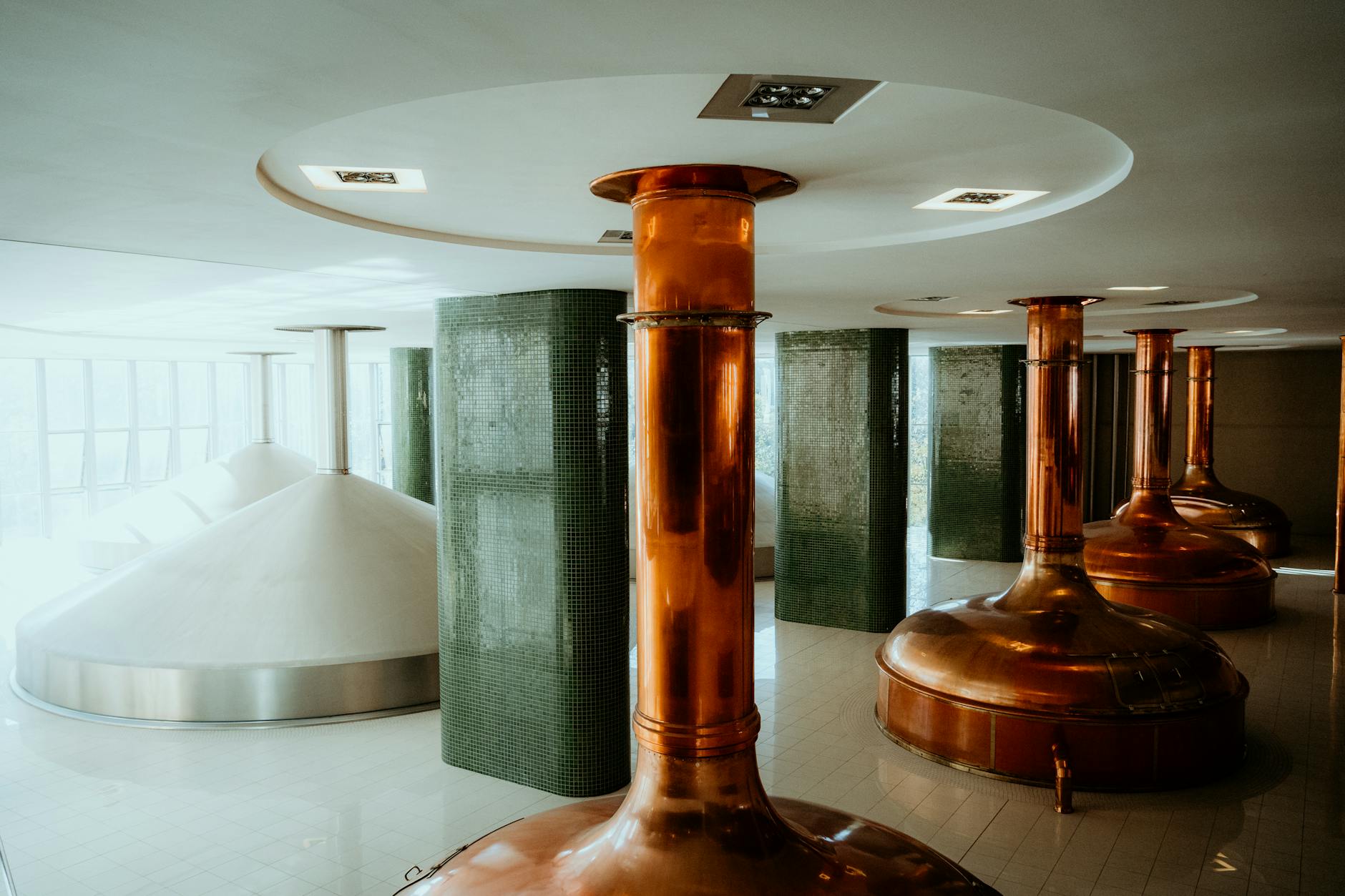
Munich has a fifth season, it runs for about three weeks in late February and March, the beer is 7.9% and served by the litre, and almost no visitor has heard of it. Locals call it the Starkbierzeit — the strong beer time — and it is the closest thing this city has to a festival kept for itself.
It began as a monastic loophole. Paulaner friars, forbidden solid food during Lent, brewed a beer strong enough to live on and called it liquid bread. Four hundred years later the descendant of that beer is drunk in beer halls across the city, and on one televised evening at the Nockherberg the Bavarian political class sits in a hall and is insulted to its face for two hours by a comedian dressed as a monk.
Here are the 2027 dates, what the beers actually are, which events you can get into and which you cannot, and a warning about the alcohol that is not a joke.
Starkbierzeit at a glance
TOKEN_HERO| Dates 2027 | 26 February – 21 March 2027 |
| What it is | Munich’s Lenten strong-beer season — the fünfte Jahreszeit |
| The beer | Doppelbock, around 7.9% ABV, dark, malty, sweetish |
| The original | Salvator, Paulaner — the beer the style is named after |
| The big venue | Nockherberg (Paulaner’s Salvatorkeller), in the Au |
| Running since | 1861 at the Nockherberg; the beer since the 1600s |
| The famous night | The Salvator-Probe and the Derblecken — invitation only, televised |
| Can a visitor go? | Yes — to the public festival nights, not to the Anstich |
| Other venues | Löwenbräukeller (Triumphator) and beer halls across the city |
| Entry | Free to walk in; reserve a table for a weekend evening |
| Crowd | Overwhelmingly local. This is the point. |
| Warning | A litre of 7.9% beer is roughly two and a half pints of wine-strength lager |
Liquid bread: where the beer came from
In 1627 a community of Paulaner friars arrived in Munich from Italy, invited by the austere and devout Duke Maximilian I. By 1634 they had a monastery brewery going in the Au, on the slope above the Isar that is still called the Nockherberg.
The problem they were solving was Lent. Church doctrine restricted the friars to a liquid diet for forty days, and forty days of liquid is a great deal easier if the liquid contains most of a meal. So they brewed strong, dark, heavily malted beer — flüssiges Brot, liquid bread — with enough residual sugar and body to sustain a working man through a fast.
They called it Sankt-Vater-Bier, Holy Father Beer. Bavarian mouths wore that down to Salvator — which happens also to be Latin for Saviour, a coincidence nobody in the order seems to have minded.
The style as we know it arrives in 1774, when a monastery brewmaster called Valentin Stephan Still — known in the order as Brother Barnabas — produced a Salvator that was double strong. Doppelbock. That recipe is the ancestor of every doppelbock brewed anywhere in the world, and the modern commercial Salvator still comes in at 7.9% ABV.
The wider story of how Munich came to brew the way it does — the Reinheitsgebot, the six royal breweries, the cellars dug into the gravel along the Isar — is in our Munich beer history guide.
The “-ator” beers
TOKEN_KESSELEvery major Munich brewery makes a doppelbock for the season, and by long convention every one of them names it with an -ator ending, in deference to the original. It is the only naming scheme in brewing that reads like a list of Roman emperors.
| Beer | Brewery | Note |
|---|---|---|
| Salvator | Paulaner | The original, ~7.9%. Drunk at the Nockherberg. |
| Maximator | Augustiner | The connoisseur’s pick for a great many Münchners |
| Triumphator | Löwenbräu | The Löwenbräukeller’s own Starkbierfest beer |
| Optimator | Spaten | Widely exported; you may have met this one already |
| Animator | Hacker-Pschorr | Lighter in body than most |
| Delicator | Hofbräu | Served at the Hofbräuhaus during the season |
What they taste like: dark brown to near-black, heavy on toasted and caramelised malt, low bitterness, a definite sweetness, and a warmth that arrives about ten minutes after the first mouthful. If you have only drunk Munich helles, this is a different drink in the same glass — closer to a strong dark ale than to the pale lager the city is known for. Our Oktoberfest beer guide covers the Märzen at the other end of the calendar.
The Nockherberg, and the night Bavaria insults itself
Paulaner’s Salvatorkeller stands on the Nockherberg in the Au, above the Isar, and it has hosted the season’s central festival since 1861. The festival proper runs about eight days.
It opens with the Salvator-Probe — the Salvator tasting — and this is the part that has no equivalent anywhere else. The Bavarian minister-president, the mayor of Munich, party leaders, senior industrialists and assorted celebrities are seated at tables in the hall. A cabaret performer takes the stage in the habit of a Lenten preacher and delivers a Fastenpredigt, a mock Lenten sermon.
The performance is called Derblecken, a dialect word meaning something close to “to lick clean” and used to mean a public, ritualised mockery. The preacher goes through the assembled politicians one at a time, naming them, describing their failures, and doing it while they sit in front of him with a litre of Salvator and no right of reply. They are expected to laugh. Whether they are laughing is the subject of national commentary the following morning, because the whole thing is broadcast live on Bavarian television.
After the sermon comes the Singspiel, a satirical musical play in which actors impersonate the same politicians, generally with greater cruelty and better tunes.
The role of the preacher has changed hands over the decades. It was traditionally performed as Bruder Barnabas — the doppelbock brewmaster himself; for several years the comedian Luise Kinseher played a figure called Mama Bavaria instead; and since 2023 the comedian Maxi Schafroth has performed it, back in the Barnabas habit. Check who is doing it in any given year, because it changes.
You cannot get a ticket to this. The Salvator-Probe is an invitation-only event for a few hundred people and the invitations do not reach the public. Watch it on television with a bottle of Salvator like most of Bavaria does, and go to the Nockherberg on one of the ordinary festival nights afterwards.
Which Starkbierfeste you can actually attend
TOKEN_HALLThis is the good news. The televised evening is closed, but the season itself is wide open and free to walk into.
- The Nockherberg, on a public festival night. The Salvatorkeller runs the festival for around eight days after the Anstich, with bands, food and Salvator by the Maß. Reserve for a Friday or Saturday; midweek you can generally walk in.
- The Löwenbräukeller at Stiglmaierplatz runs its own Starkbierfest with Triumphator and — this is the draw — the same brass bands that play the Oktoberfest tents. It is the most Wiesn-like of the strong-beer events.
- The Augustiner-Keller and the other big beer halls all put their doppelbock on tap for the season without making a festival of it. This is the cheapest and calmest way in: turn up on an ordinary evening and order a Maximator.
- The Hofbräuhaus serves Delicator during the season. Go at lunchtime rather than eight in the evening — see our Hofbräuhaus guide for why.
Insider tip: the single best evening of the Starkbierzeit for a visitor is a Tuesday or Wednesday at the Nockherberg. The hall is full of Münchners rather than tour groups, you will get a bench without booking, the band plays, and nobody is performing Bavarian-ness at you. In a city that has industrialised its own folklore quite thoroughly for September, that is worth a great deal.
Getting to the Nockherberg: it is on Hochstraße in the Au, up the slope from the Isar, and it is a walk of fifteen to twenty minutes from the Deutsches Museum or a short tram ride from the centre. Our Au and Isarvorstadt guide covers the quarter, and the U-Bahn and S-Bahn guide the transport. A Zone M day ticket at €10.10 covers everything, and the group ticket covers up to five people for roughly double that.
Bock, doppelbock and the goat
A small piece of etymology that Munich is fond of, and which connects this festival to the Hofbräuhaus five minutes from Marienplatz.
In 1612 the ducal brewery brought in a master brewer from Einbeck, in Lower Saxony, to make the strong beer the court wanted — Einbeck being at the time the most famous brewing town in Germany. Munich dialect took “Ainpöck” and flattened it, over a few decades of use, into “Bock”. That is where the beer style’s name comes from: not from anything about goats, but from a Saxon town filtered through a Bavarian accent.
The goat came afterwards. Bock also means a billy goat in German, and brewers being brewers, the label illustrators could not resist. A great many bock and doppelbock labels carry a goat that has nothing whatsoever to do with the beer’s origin.
So the sequence runs: a Saxon strong beer arrives in Munich in 1612 and becomes Bock; Paulaner friars brew a doubled version for Lent and, in 1774, Brother Barnabas gets the recipe right; and four centuries later the whole city drinks the result for three weeks every spring. It is a tidy piece of history for a drink this heavy. You can trace the first half of it at the Hofbräuhaus and the second on the Nockherberg, about twenty minutes apart on foot.
An evening at the Nockherberg, hour by hour
| Time | What to do |
|---|---|
| 17:30 | Walk up from the Isar through the Au. The Nockherberg is a genuine hill and the view back over the river is worth the climb. |
| 18:00 | Into the Salvatorkeller. Find a bench. Do not wait to be seated. |
| 18:15 | Order food first. Schweinshaxe or Schweinsbraten. Then the beer. |
| 18:45 | The first Halbe of Salvator. Notice that it does not taste strong. |
| 19:30 | The band starts. Volume increases. So does the singing. |
| 20:00 | The second Halbe, and a bottle of water alongside it. |
| 21:30 | Stop. Genuinely. You have had a litre and a half of 7.9% beer. |
| 22:00 | Walk back down the hill. The cold air is part of the experience. |
If you are staying centrally, the walk from Marienplatz to the Nockherberg takes about twenty-five minutes across the Isar and up through the Au, and it is a pleasant one in either direction. Our where to stay in Munich guide covers the neighbourhoods, and the Munich walking guide the routes.
A serious word about the alcohol
This is the section that matters most and the one that reads like a joke until it does not.
A Maß of Salvator is a litre of 7.9% beer. That is roughly the alcohol content of a bottle and a third of wine, in one glass, drunk in an hour, by someone sitting down in a warm room after a large plate of pork. Oktoberfest beer, by comparison, is around 6% and people fall over at that too.
Three practical rules:
- Order a Halbe. A half-litre is entirely normal for doppelbock and nobody will think anything of it. This is not Oktoberfest and there is no social pressure towards the litre.
- Eat first, properly. Not a pretzel — a meal.
- Drink water alongside it. Tap water is not generally served in Bavarian beer halls; order a bottle of Wasser and expect to pay for it.
The doppelbock’s sweetness hides its strength completely. It does not taste like a strong drink and it arrives like one, about forty minutes late. Every Münchner has a Starkbierzeit story and most of them involve somebody’s cousin and a taxi.
What to eat with it
Doppelbock is a winter beer and the food that goes with it is winter food, which is to say the heaviest end of a cuisine that was never light to begin with.
Schweinshaxe — roast pork knuckle with crackling and a dumpling — is the correct order and the malt in the beer cuts the fat properly. Schweinsbraten with dark gravy and a Semmelknödel does the same job with less theatre. Obatzda and a pretzel works if you want to keep drinking rather than eating. Our traditional Bavarian food guide explains each of them, and the best restaurants in Munich covers where to eat before or after.
Vegetarians will find Käsespätzle on every Starkbier menu and not a great deal else. See vegetarian and vegan Munich for the alternatives.
Where it sits in the Munich year
Starkbierzeit occupies an odd and useful slot. It falls inside Lent, after Fasching — the Bavarian carnival, which ends on Ash Wednesday — and before the Frühlingsfest opens the outdoor season in mid-April.
The dates move because Lent moves. 2027 runs 26 February to 21 March, but a year with an early Easter pulls the whole thing forward and a late one pushes it into April. Confirm the current year’s dates before booking anything.
For a visitor, late February and March are the cheapest weeks in Munich’s hotel year and the emptiest in its museums. The trade-off is weather — grey, cold, and short on daylight — and the fact that the beer gardens are shut. Set against that you get a genuine local festival, €1 Sundays at the state museums, and an Alps day trip with snow still on the mountains. Our guides to the best time to visit Munich and the Munich winter guide weigh it up, and the events calendar shows what else falls in the same weeks.
Compare it with the Frühlingsfest six weeks later: that one is a funfair with two tents on the Theresienwiese and beer at Oktoberfest prices; this one is a beer hall in March with a stronger drink and no rides. Both are far better value than September, and both are attended overwhelmingly by people who live here.
Frequently Asked Questions
When is Starkbierfest Munich 2027?
The Starkbierzeit runs 26 February to 21 March 2027. The Nockherberg’s own festival occupies about eight days within that, opening with the invitation-only Salvator-Probe. Dates shift each year because they follow Lent.
Can tourists go to the Nockherberg?
Yes — to the public festival nights, which are free to enter and open to anyone. You cannot attend the opening Salvator-Probe with the Derblecken and the Singspiel; that is invitation-only and televised. Reserve a table for a Friday or Saturday evening; midweek you can walk in.
How strong is Starkbier?
Around 7.9% ABV for Paulaner’s Salvator, with the other doppelbocks in the same territory. A litre glass therefore holds roughly the alcohol of a bottle and a third of wine. Order a half-litre unless you have a firm plan and a short walk home.
What does Derblecken mean?
A Bavarian dialect word for a ritualised public mocking. At the Nockherberg it means a performer in a monk’s habit delivers a satirical Lenten sermon that takes apart the politicians sitting in front of him, by name, while they are obliged to sit and take it. It is a genuine institution of Bavarian public life, not a tourist show.
Which strong beer should I try?
Salvator if you want the original and the history. Maximator from Augustiner if you want the one a lot of Münchners would actually choose. Triumphator if you are at the Löwenbräukeller, because that is what they pour. The differences are real but modest; the choice of venue matters more than the choice of beer.
Is it as good as Oktoberfest?
It is a different thing and, for some visitors, a better one. There are no rides, no costumes to speak of, no international crowd and no reservation scramble — just a beer hall in March full of local people drinking a strong dark beer with a band playing. If what you liked about the idea of Oktoberfest was the room rather than the spectacle, this is the version with the room and none of the queue.
Do I need to book?
For a Friday or Saturday at the Nockherberg or the Löwenbräukeller, yes. For a weekday evening, or for any of the beer halls simply serving doppelbock without a festival attached, no. Entry itself is free everywhere.
What should I wear?
Ordinary warm clothes. Tracht appears at the Nockherberg but far less than at Oktoberfest, and nobody dresses up for a beer hall in March. Bring a proper coat — the halls are hot and the walk to the tram at midnight in a Munich March is not.
Where to go next
The Munich events calendar maps the whole year, from Fasching through Starkbierzeit and the Frühlingsfest to Oktoberfest and the Christmas markets, and Munich festivals and events covers the smaller ones. For the drinking itself, start with the food and beer guide and the roundup of Munich beer halls and breweries — in March the beer gardens are shut and the halls are where the city goes.
Related Guides
- Munich Events Calendar: What’s On Month by Month — the cluster hub
- Munich Frühlingsfest: The Spring Oktoberfest — April demand spike, thin SERP, direct Oktoberfest-cluster synergy
- Fasching and Easter in Munich — February to April gap with a distinctive Bavarian tradition angle