Munich to Venice and Northern Italy
The direct Munich to Venice train takes about seven hours over the Brenner from €53.99. Here is how to book it, the alternatives, the Nightjet's 2027 break and where to stop on the way.
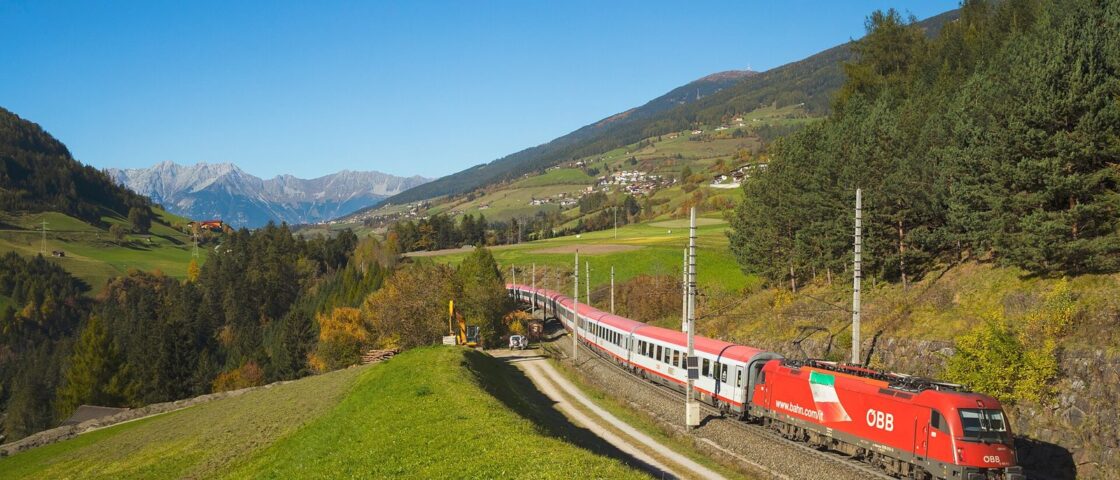
Yes, there is a direct Munich to Venice train: up to two Railjet trains a day run from München Hauptbahnhof over the Brenner Pass to Venezia Santa Lucia, on the Grand Canal, in about seven hours, with Deutsche Bahn saver fares from €53.99. The sample direct train on 16 November 2026 leaves Munich at 11:23 and arrives in Venice at 18:25; times change from 13 December.
That is the answer for most people, and it is a good one. Seven hours sounds long until you remember what is outside the window: the Inn valley, Innsbruck, the climb to the Brenner, the vineyards and castles of South Tyrol, the Adige gorge down to Verona, and finally the causeway across the lagoon. Door to door, it is not much slower than flying, and it is a far better day.
Below: the direct trains and how to get the cheap fares, connections via Verona when the direct trains do not suit, the night train and its long 2027 break, the bus and the car, the places worth stopping on the way, and what to know when you step out of the station in Venice.
Munich to Venice at a glance
| Option | Journey time | From | Verdict |
|---|---|---|---|
| Direct Railjet | about 7 hours | €53.99 (DB saver fare) | The best way to go |
| Train with a change (usually Verona) | 7–8 hours | Varies | Fine when the direct trains are full or badly timed |
| Nightjet sleeper | Overnight | Check nightjet.com | Good, but not running 7 Feb–early July 2027 |
| FlixBus | from 7h10 | Often cheapest booked early | Only if price is everything |
| Car | Depends on Brenner traffic | Tolls, vignette, fuel, parking | Only if you are touring northern Italy |
The direct Munich to Venice train
The direct trains are Railjets, the fast ÖBB trains that carry international passengers across the Brenner. Deutsche Bahn’s route page lists up to two direct trains a day between Munich and Venice (the number can vary at weekends and on holidays), with the fastest taking 7 hours 2 minutes. A sample run on 16 November 2026: dep. München Hbf 11:23, arr. Venezia Santa Lucia 18:25.
The route runs south-east out of Munich to Rosenheim, crosses into Austria at Kufstein, follows the Inn valley to Innsbruck, then climbs over the Brenner Pass into Italy. On the Italian side it drops through Bolzano and Trento down the Adige valley to Verona Porta Nuova, then crosses the flat Veneto to Venice, calling at Venezia Mestre on the mainland before the final run over the lagoon causeway. The direct trains go all the way to Santa Lucia, so there is no need to change.
Now the honest part. The first four hours, from the Inn valley over the pass to the end of the Adige gorge, are among the best scenery on any European train. The last two, across the Po plain from Verona, are flat, suburban and forgettable. Bring a book for the end. Railjets have a restaurant car and a quiet zone, and second class is perfectly comfortable for seven hours. First class buys you more space and, if you reserve, a seat of your own on a busy Friday.
Insider tip: reserve a seat. On a normal train ticket a reservation is optional, but the Brenner trains fill up in summer, at Easter and on Italian and German holiday weekends, and seven hours standing in a vestibule is nobody’s idea of a holiday.
The journey, stage by stage
Knowing what is coming makes seven hours go much faster, so here is the route in four acts.
Munich to Kufstein. The first hour is Bavarian farmland and the edge of the Alps rising ahead. After Rosenheim the line picks up the river Inn and follows it into the mountains, and just across the Austrian border the fortress of Kufstein appears on its rock above the town. This is the part of the trip to have a coffee and settle in.
The Inn valley to Innsbruck. The valley floor is wide and green, with villages, churches and the high limestone walls of the Karwendel along the north side. Innsbruck arrives with the Nordkette range rearing straight up behind the city. Many passengers get off here; more get on, heading for Italy.
Over the Brenner. South of Innsbruck the line starts to climb in earnest up the Sill valley, passing beneath the tall piers of the Europabrücke, which carries the motorway, and threading through Matrei and Steinach towards the pass. The top is a slightly bleak border station, a reminder that this has been one of the main routes across the Alps since the Romans. Then the train begins the long descent into Italy, down the Eisack valley past the great fortress at Franzensfeste.
South Tyrol and the Adige. This is the most beautiful hour. Vineyards climb the slopes, castles sit on spurs above the valley, and at Bolzano the signs turn bilingual, German and Italian. Beyond Trento the valley narrows between steep rock walls before opening out onto the plain at Verona. From there it is a fast, flat run across the Veneto towards the lagoon, and the moment the train crosses the long causeway with water on both sides is the real start of your holiday.
Going the other way: Venice to Munich
Everything above works in reverse, with two differences worth knowing. First, board at Santa Lucia rather than Mestre if you can: the train starts there, so you have your pick of the luggage racks before the Mestre crowd gets on. Second, the scenery comes at the end rather than the beginning, which means the dull hour across the plain is out of the way first and the mountains fill the afternoon. Buy food for the journey before you leave Venice, where the station has supermarkets and bars; the restaurant car is handy but no bargain. And if your train is late into Munich, the S-Bahn and U-Bahn from Hauptbahnhof run late into the night.
The timetable changes on 13 December 2026
Most European railways change their timetables every December, and the 2027 timetable starts on 13 December 2026. Departure times, and sometimes the number of direct trains, can change. If you are travelling after that date, check your train on bahn.de or oebb.at before you book, rather than relying on the times above.
Engineering works on the Brenner line, in Austria or Italy, also sometimes replace trains with buses for a stretch or force diversions. Check the ÖBB and Trenitalia construction pages in the week you travel, and if your ticket shows a “replacement bus” leg, allow extra time.
Tickets and fares
Both Deutsche Bahn and ÖBB sell Munich–Venice tickets, and prices are dynamic: cheap saver fares go on sale months ahead and disappear as trains fill. Deutsche Bahn’s route page gave these lowest saver fares for November 2026 dates:
| From Munich to | Fastest direct | Saver fare from | Direct trains a day |
|---|---|---|---|
| Bolzano | 4h04 | €47.99 | up to 5 |
| Verona Porta Nuova | 5h36 | €44.99 | see bahn.de |
| Bologna Centrale | 6h45 | €44.99 | up to 3 |
| Venezia Santa Lucia | 7h02 | €53.99 | up to 2 |
Some practical rules:
- Book early. The saver fares above are the floor, not the norm. A ticket bought the week before will cost several times as much.
- Compare DB and ÖBB. They sell the same trains and their fares do not always match. ÖBB calls its saver fare Sparschiene.
- Saver fares are tied to the train. Miss it and the ticket is usually lost; flexible fares cost more but let you take any train that day.
- Rail passes: Check with your pass provider whether Interrail or Eurail passes cover these trains and what reservation rules apply, especially in summer.
Getting to Hauptbahnhof is covered in our guide to getting around Munich, and our guide to travel from Munich sets Venice alongside the other big rail journeys from the city.
Changing trains: via Verona and elsewhere
With only two direct trains a day, plenty of travellers take a train with a change. Deutsche Bahn shows about twelve connections a day between Munich and Venice in total, from an early train at 08:06 to a last departure at 23:51. A typical indirect journey uses a Railjet as far as Verona, then a regional train for the last two hours or so to Venice; one sample on 16 November 2026 left Munich at 07:23 and reached Venice at 14:52.
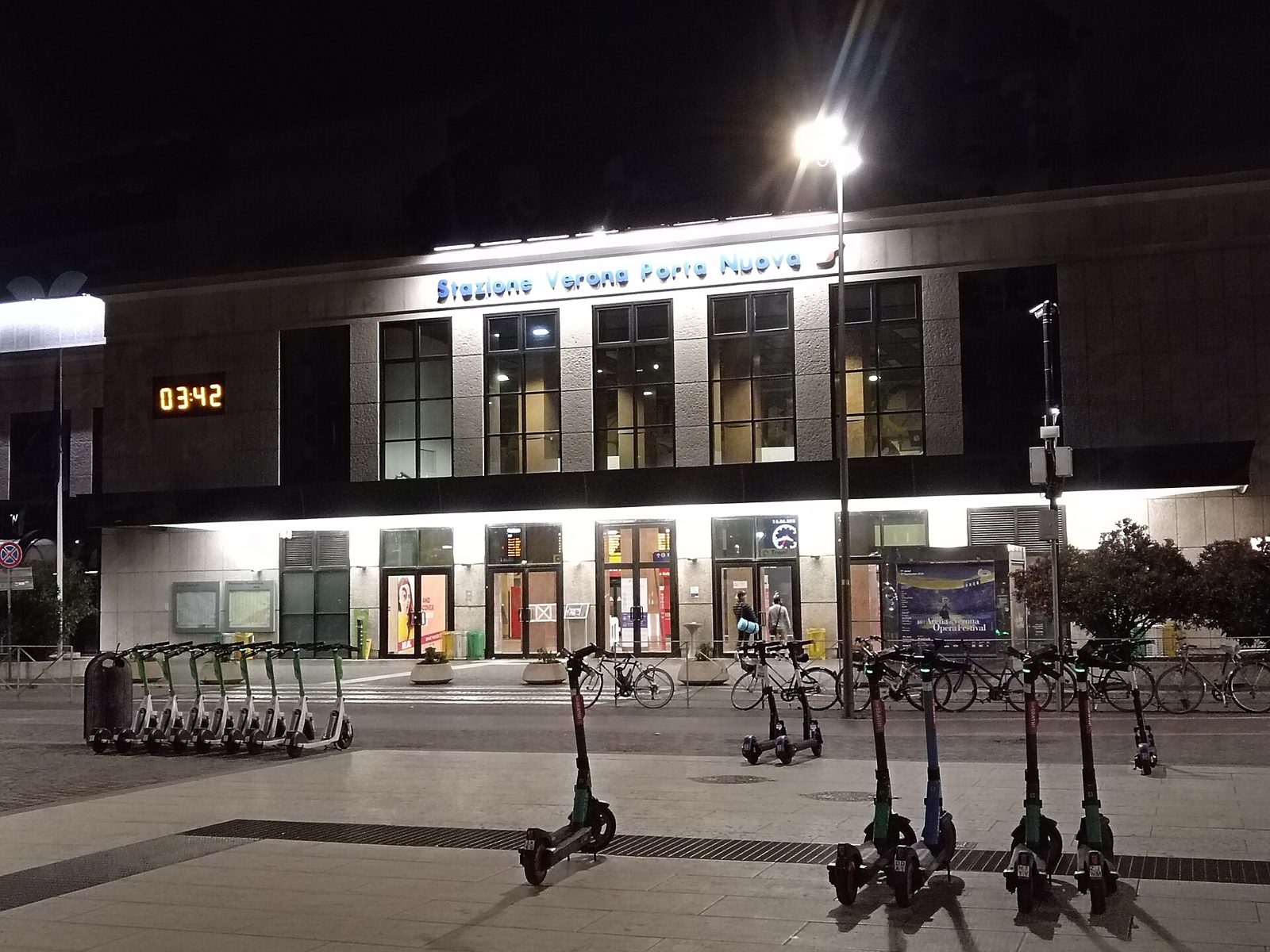
The change at Verona Porta Nuova is easy — one large station, clear boards, and frequent trains on to Venice — but give yourself a sensible margin. Brenner trains can lose time on the climb, and a missed connection on a cheap ticket bought from two different railways is a headache. If you buy the whole journey as one ticket from DB or ÖBB, your connection is protected.
The night train to Venice
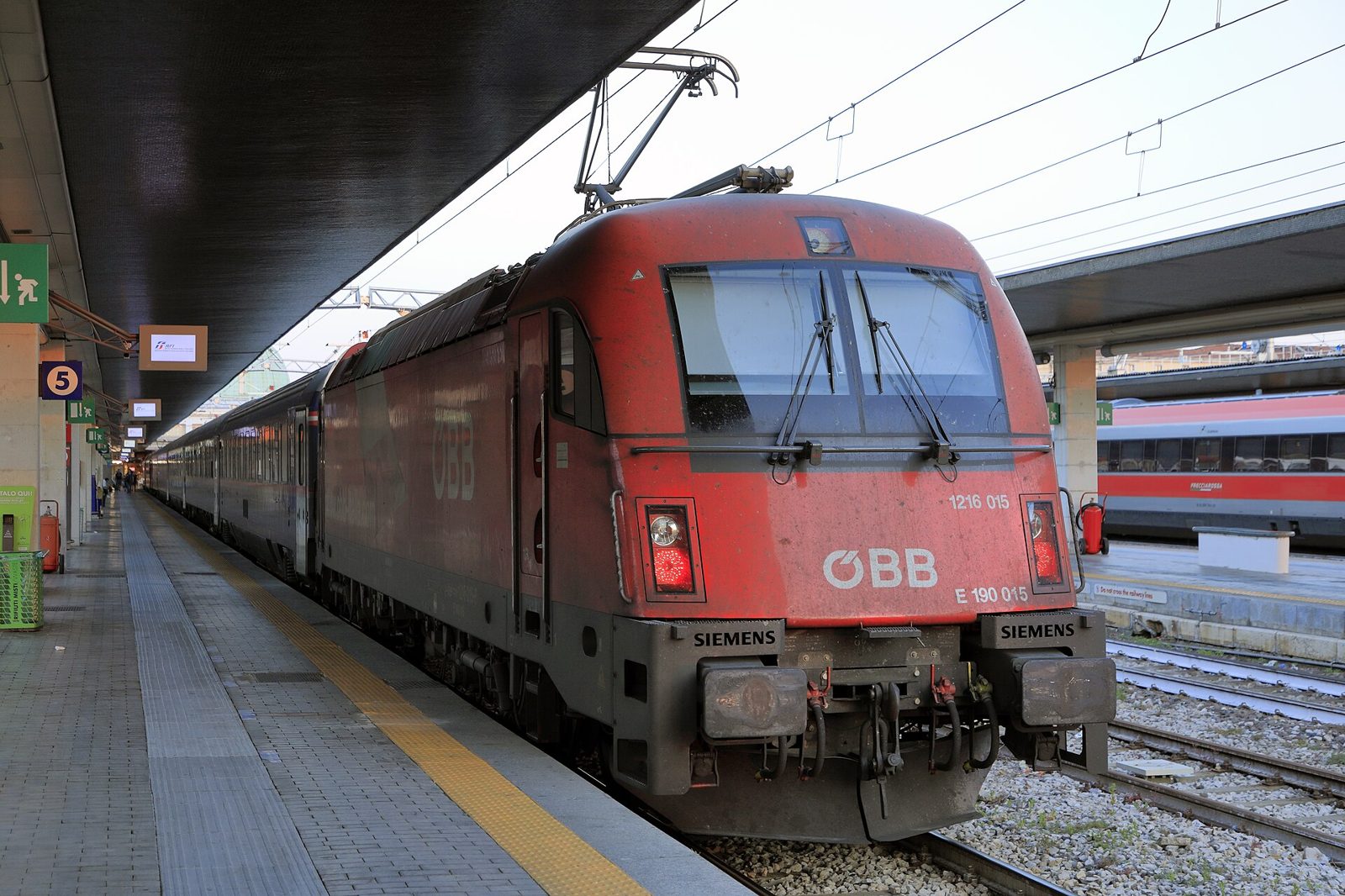
ÖBB’s Nightjet sleeper service links Munich and Venice overnight, with a choice of seats, couchettes and sleeping cars. Its appeal is simple: you go to bed in Munich and wake up in Italy, saving a day and a hotel night.
The big caveat for 2027 is construction. According to Nightjet’s own announcement for the 2027 timetable, the Stuttgart–Venice Nightjet, which serves Munich, will not run from 7 February to 9/10 July 2027. The Munich–Rome Nightjet is also suspended from 7 February to 4/5 May 2027, then runs only as far as Bologna until 28/29 August 2027. Tickets for 2027 are already on sale, up to 360 days ahead.
Departure times and fares for your date are on nightjet.com. Our view: the Nightjet is a good choice in either direction if you are short of time or simply like sleepers, but the daytime Railjet is the better journey. The whole point of the Brenner is the view, and you will sleep through it.
By bus or car
FlixBus runs Munich–Venice coaches, with the fastest journey listed at 7 hours 10 minutes — no quicker than the train, and a good deal less comfortable. The buses stop in Mestre, on the mainland, rather than in Venice itself; FlixBus notes that its Venice station stop is not served from 7 October to 31 December 2026. Booked well ahead, the coach is often the cheapest way to make the trip, and that is the only reason to choose it.
Driving makes sense only if Venice is one stop on a longer tour of northern Italy. The route is the Brenner motorway through Austria and Italy, which means an Austrian motorway vignette, a separate toll for the Brenner section in Austria, and Italian motorway tolls south of the pass. Summer Saturdays bring long queues at the Brenner. And at the end you cannot drive into Venice: cars stop at the edge of the city, and parking there is neither cheap nor plentiful. Check current vignette and toll prices with the Austrian motorway operator ASFINAG before you go. Our guide to driving in Munich covers the German side.
Breaking the journey: Innsbruck, Bolzano, Verona and beyond
The Brenner line is lined with places that deserve more than a glimpse from the window, and on a flexible ticket you can turn a seven-hour journey into a two- or three-day trip.
Innsbruck
Less than two hours from Munich, the Tyrolean capital has the Golden Roof, a compact old town and cable cars that climb from the city to more than 2,200 metres. It is the obvious first night if you want to split the journey. Our Munich to Innsbruck guide has the details.
Bolzano
About four hours from Munich, with up to five direct trains a day, Bolzano is the capital of South Tyrol: an Italian city that still speaks German, with arcaded streets, a fruit market and the Dolomites on the horizon. Its unmissable sight is the South Tyrol Museum of Archaeology, home of Ötzi, the 5,300-year-old iceman found in the Alps in 1991. It is open Tuesday to Sunday 10:00–18:00 (last entry 17:30; daily in July and August), and a ticket costs €13. It is normally shut on Mondays outside July and August.
Verona
Five and a half hours from Munich, Verona is where the mountains end and Italy proper begins: the Roman Arena, the Piazza delle Erbe, the river Adige looping round the old town. It is also where you change if your train does not run through to Venice, so stopping overnight costs nothing in convenience. Of the three, it is the stop most worth adding.
Vicenza and Padua
Between Verona and Venice the railway crosses the Veneto through two cities that most travellers rush past. Vicenza is Andrea Palladio’s city, full of the villas and palaces that influenced country houses from England to Virginia. Padua has one of Europe’s oldest universities, arcaded streets, and Giotto’s frescoes in the Scrovegni Chapel, for which you need to book a timed entry in advance. Either works as a half-day stop on a flexible ticket, or as a day trip from Venice on Italy’s frequent regional trains, which are a fraction of the price of hotels in Venice itself.
Insider tip: some travellers base themselves in Padua or Mestre and go into Venice by train each day to save on hotels. It does save money, but you give up the best part of Venice, which is the evening, when the day-trippers have gone and the lanes go quiet. If you can afford even one night in the historic city, take it.
For a longer Italian loop, direct Railjets also run from Munich to Bologna (up to three a day, fastest 6h45), from where Florence and the rest of Italy’s high-speed network are close.
Arriving in Venice
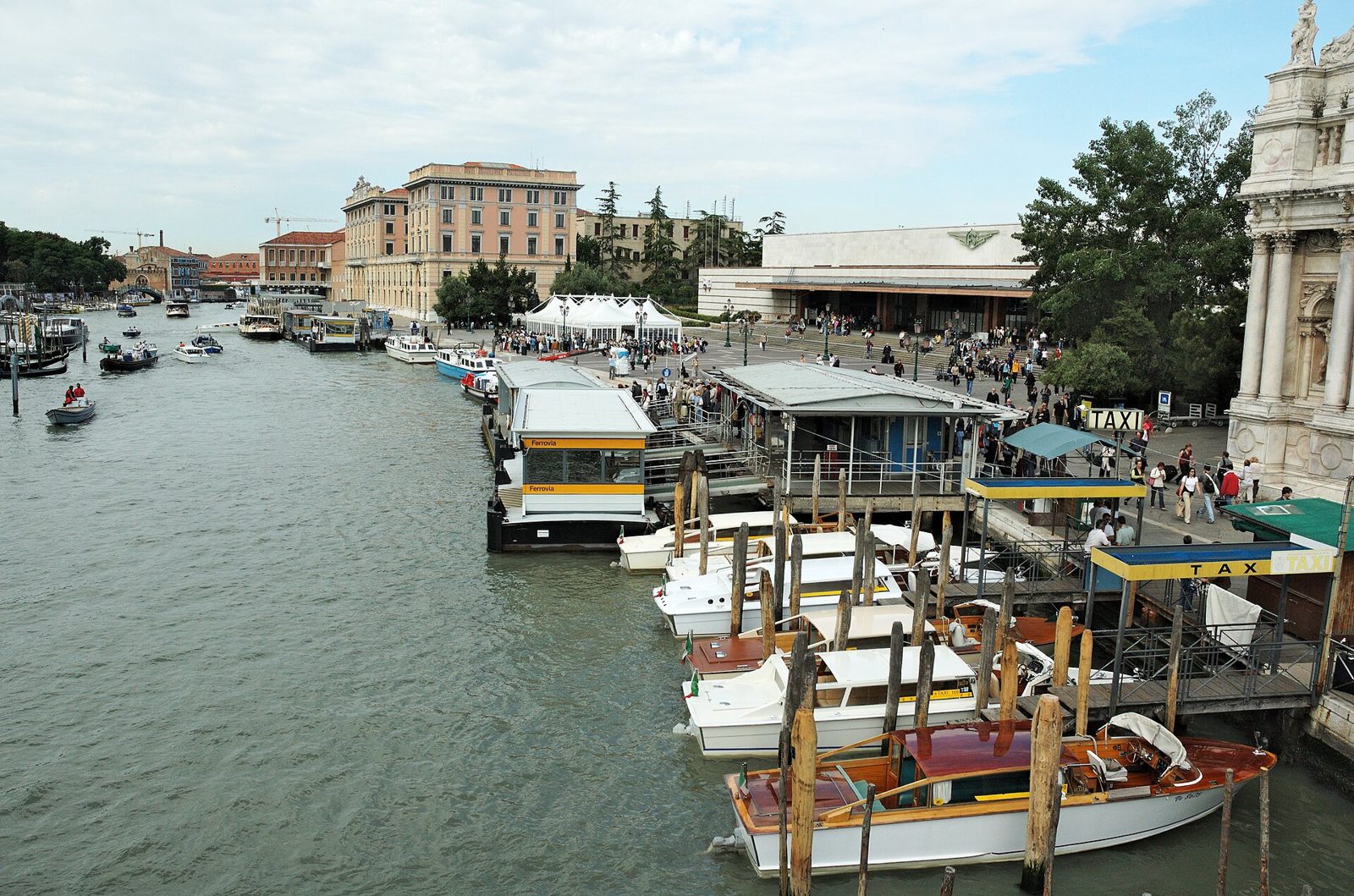
Two stations in Venice catch first-timers out. Venezia Mestre is on the mainland: a transport hub in an ordinary modern town. Venezia Santa Lucia is the terminus in the historic city itself, at the top of the Grand Canal. Unless your hotel is in Mestre, stay on the train until Santa Lucia. You step out of the station onto the steps above the Grand Canal, which is one of the great arrivals in Europe.
From there, you walk or take the vaporetto, the water bus run by ACTV, from the Ferrovia stop right outside the station. Single tickets are expensive by Italian standards, so if you will use the boats more than a couple of times, a 24-hour or multi-day travel card usually works out cheaper; check current prices on ACTV’s website. Venice has no cars and many bridges with steps, so pack a bag you can carry.
The access fee: Venice charges day-trippers an access fee on selected days, and staying overnight in the city changes how it applies to you. Rules, prices and the calendar of days are set each year by the city, so check the official access-fee site, cda.ve.it, before you travel and register if you need to.
Which option should you choose?
| If you… | Choose |
|---|---|
| Want the simplest, most scenic trip | The direct Railjet, seat reserved |
| Need to arrive by early afternoon | An early train with a change in Verona |
| Want to save a day and a hotel night | The Nightjet (outside its 2027 break) |
| Are on the tightest budget | FlixBus, booked early |
| Have time to spare | Stop a night in Bolzano or Verona |
| Are touring northern Italy by car anyway | Drive, and leave the car outside Venice |
For other cities by rail from Munich, see Munich to Vienna, Munich to Prague and a day trip to Salzburg.
Frequently Asked Questions
Is there a direct train from Munich to Venice?
Yes. Deutsche Bahn lists up to two direct Railjet trains a day from München Hbf to Venezia Santa Lucia, taking about seven hours. Check bahn.de or oebb.at for times after the timetable change on 13 December 2026.
How long is the train from Munich to Venice?
About seven hours on the direct train; the fastest is listed at 7 hours 2 minutes. Journeys with a change, usually in Verona, take a little longer.
How much is the train from Munich to Venice?
Deutsche Bahn’s saver fares start at €53.99 one way, booked in advance. Prices rise as the train fills, so book early, and compare DB and ÖBB, which sell the same trains.
Is the Munich to Venice train scenic?
Very, for the first four hours: the Inn valley, Innsbruck, the Brenner Pass, South Tyrol and the Adige valley. The final stretch across the Veneto plain from Verona is flat. Travel by day if you can.
Is there a night train from Munich to Venice?
Yes, ÖBB’s Nightjet, with seats, couchettes and sleepers. It will not run from 7 February to 9/10 July 2027 because of construction work. Times and fares are on nightjet.com.
Should I get off at Venezia Mestre or Santa Lucia?
Santa Lucia, unless your hotel is in Mestre. Mestre is on the mainland; Santa Lucia is in the historic city on the Grand Canal, with vaporetto stops right outside.
Can I do Venice as a day trip from Munich?
Not sensibly. With about seven hours each way, you would spend fourteen hours on trains for a few hours in Venice. Stay at least two nights, or break the journey in Verona or Bolzano.
Can I use Interrail or Eurail on the Munich to Venice train?
Check with your pass provider whether Interrail or Eurail passes cover these trains. Reservation rules and fees change, so check them with your pass provider or with DB or ÖBB when you plan, and reserve early in summer.
More journeys from Munich
Venice is the most romantic of the long rail trips from Munich, but not the only one: Munich to Berlin covers the fast run north, and if you are arriving first, getting to Munich and the airport to the city sort out the start of the trip. For the cost of the Munich end, see what a Munich trip costs.
Photo Credits
Featured image: Eurocity bei Matrei am Brenner by Liberaler Humanist, CC BY-SA 3.0, via Wikimedia Commons.
Verona Porta Nuova: Verona Porta Nuova railway station in 2024.03 by CAPTAIN RAJU, CC0, via Wikimedia Commons.
ÖBB locomotive at Venice: L08 278 Bf Venezia Santa Lucia, 1216 015 by Falk2, CC BY-SA 4.0, via Wikimedia Commons.
Grand Canal at Santa Lucia: Canal-Grande-Santa-Lucia-20050524-004 by Gary Houston, CC0, via Wikimedia Commons.