Oktoberfest Beer Guide: The Six Breweries and Their Festbier
Complete Oktoberfest beer guide. The 6 breweries, their Festbier, ABV, price, where to drink, ordering tips.
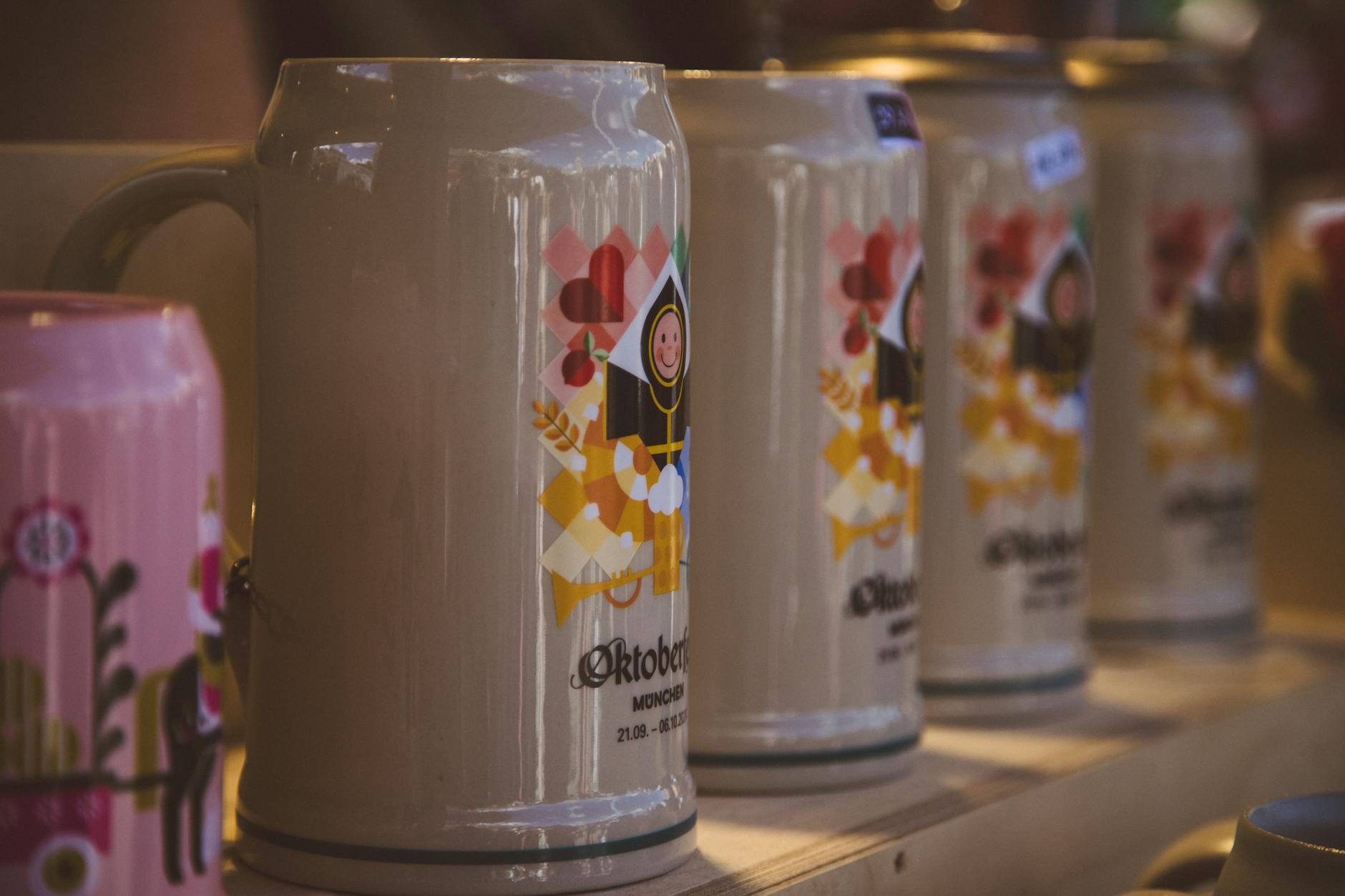
Oktoberfest beer is one of the most tightly regulated beverages in the world. Only six Munich breweries are allowed to brew it, it must be produced within Munich city limits, and it can only be called Oktoberfestbier under the EU’s Protected Geographical Indication (PGI) granted in 2022. Each Maß you lift at the Wiesn — that’s the one-liter glass stein, no halves — was brewed in March, lagered until September, and conforms to the Bavarian Reinheitsgebot of 1516. This Oktoberfest beer guide walks you through the six breweries, what makes their Festbier different, which tent pours which brand, what to expect for €14.80–€15.90 a Maß in 2026, and how to order, toast and pace yourself like a Müncher.
Oktoberfest Beer at a Glance (2026)
| Fact | 2026 Detail |
|---|---|
| Number of breweries permitted | 6 (Augustiner, Hofbräu, Hacker-Pschorr, Löwenbräu, Paulaner, Spaten) |
| Festbier ABV range | 5.8% – 6.4% |
| Maß price (1 liter) | €14.80 – €15.90 depending on tent; €15.61 average |
| Oide Wiesn Maß | €14.80 in the Museumszelt — the cheapest on the grounds |
| Annual volume served | ~7 million liters across 16 days |
| Where it must be brewed | Within Munich city limits |
| Legal framework | Münchner Reinheitsgebot + Oktoberfestbier PGI (2022) |
| Beer style | Festbier — golden, slightly maltier and stronger than Helles |
| Brewed | March, lagered until late September |
| Standard serving size | 1 liter (Maß) — no half-liter pours in the big tents |
Why Only Six Breweries Brew Oktoberfest Beer
Only beer brewed within Munich’s old city boundary by one of six historic breweries can legally be called Oktoberfestbier and served inside the Theresienwiese tents. This rule is twofold: it is a city of Munich licensing requirement for the Wiesn itself, and since 28 October 2022 it is also an EU Protected Geographical Indication (PGI). The PGI sits alongside the older Münchener Bier PGI (registered 1998), which already required Munich’s six breweries to brew in accordance with the Münchner Reinheitsgebot — the local Munich purity law that pre-dates the famous Bavarian one. The result: no other brewery in Germany or the world can put “Oktoberfestbier” on a label, however good its Märzen.
The six breweries are Augustiner-Bräu, Hofbräu München, Hacker-Pschorr, Löwenbräu, Paulaner and Spaten-Franziskaner. Two are now owned by AB InBev (Spaten and Löwenbräu), two share a holding company partly owned by Heineken (Paulaner and Hacker-Pschorr), one is state-owned by Bavaria (Hofbräu), and one remains family-controlled and independent (Augustiner). For locals, the ownership shake-ups of the last twenty years are a sore point — but the recipes and the brewmasters’ loyalties remain stubbornly Munich.
For the eight centuries of brewing behind the six Wiesn breweries, read our Munich beer history guide.
The Six Munich Breweries with Oktoberfest Rights
1. Augustiner-Bräu
- Founded: 1328, by Augustinian monks — Munich’s oldest brewery
- Location: Landsberger Straße, still inside the old west of the city
- Ownership: Privately held; partly controlled by the Edith Haberland-Wagner Foundation. Fiercely independent — the only one of the six free of corporate parent ownership
- Festbier ABV 2026: ~6.0%
- Taste profile: Famously clean, soft, lightly malty, smooth carbonation. Wiesn locals overwhelmingly rate Augustiner the best Oktoberfest beer year after year
- Oktoberfest tents: Augustiner-Festhalle, Fischer-Vroni
- Wood kegs: Augustiner is the only brewery still serving Oktoberfest beer exclusively from 200-liter wooden barrels (“Hirschen”) — a tradition kept since 1987. The mouthfeel is rounder, the carbonation lower
- Year-round in Munich: Augustiner-Stammhaus (Neuhauserstraße), Augustiner Klosterwirt, Augustiner-Keller (huge beer garden near Hauptbahnhof), Augustiner Bräustuben
2. Hofbräu München (HB)
- Founded: 1589 by Duke Wilhelm V as the royal court brewery
- Location: Hofbräu Brewery on Hofbräuallee, modern facility in Riem
- Ownership: State-owned, operated by the Free State of Bavaria — the only state-owned brewery in the six
- Festbier ABV 2026: ~6.3% (one of the strongest)
- Taste profile: Bold, hop-forward, slightly bitterer finish than the rest. Tourists love it; locals consider it the brashest
- Oktoberfest tent: Hofbräu-Festzelt — the loudest, most international tent on the Wiesn, with a standing dance area in front of the band
- Year-round in Munich: Hofbräuhaus (Platzl 9 — the world-famous beer hall), Hofbräukeller (Wiener Platz, Haidhausen), Hofbräuhaus Festsaal
3. Hacker-Pschorr
- Founded: Hacker traces to 1417; merged with Pschorr in 1972 after centuries of family ties. Joseph Pschorr (m. Maria Theresia Hacker) built it into Munich’s biggest brewery in the 19th century
- Location: Now brewed at the Paulaner site in Langwied
- Ownership: Part of the Paulaner Brauerei Gruppe (Schörghuber Group with Heineken minority since 2016)
- Festbier ABV 2026: ~5.8–6.0%
- Taste profile: Slightly fuller, gently sweet, balanced malt — historically marketed as “Himmel der Bayern” (Heaven of the Bavarians)
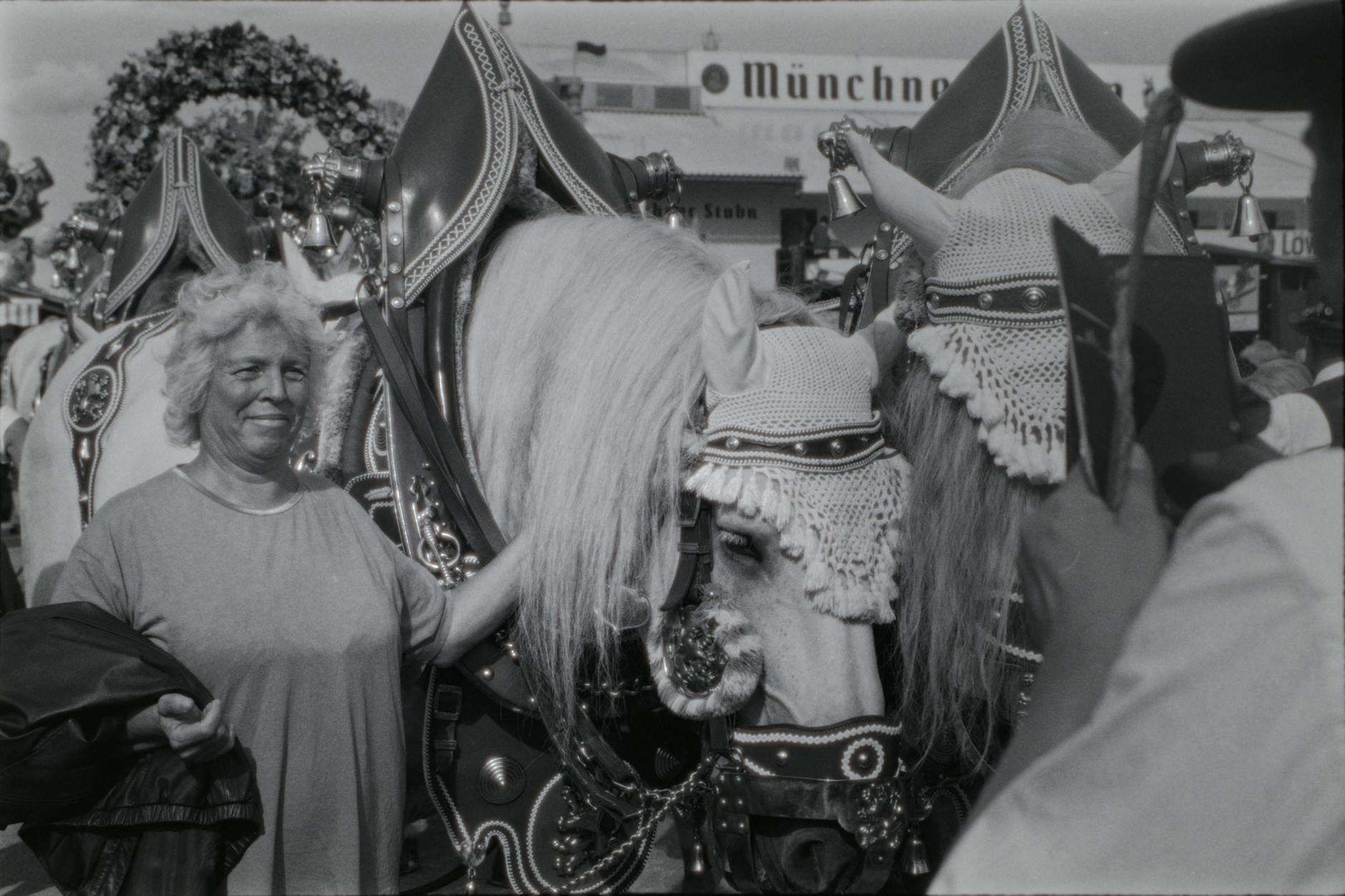
- Oktoberfest tents: Hacker-Festzelt (“Himmel der Bayern”), Bräurosl (also known as Pschorr-Festzelt)
- Year-round in Munich: Hacker-Pschorr Bräuhaus (Theresienhöhe), Der Pschorr (Viktualienmarkt), Hacker-Brücke beer garden
4. Löwenbräu
- Founded: First documented 1383, with the lion logo from at least 1746
- Location: Nymphenburger Straße (production now shared with Spaten at the joint Marsstraße / outer-Munich plant)
- Ownership: Owned by AB InBev since the 2003 Spaten-Löwenbräu group acquisition by Interbrew, which then merged into InBev (2004) and AB InBev (2008). Controversial among locals who view both Löwenbräu and Spaten as “sold out” to the world’s largest brewer
- Festbier ABV 2026: ~6.1%
- Taste profile: Crisp, slightly hop-bittered, dependable but rarely a local favorite for Wiesn
- Oktoberfest tents: Löwenbräu-Festzelt (with the giant mechanical roaring lion), Schützen-Festzelt
- Year-round in Munich: Löwenbräukeller (Nymphenburger Straße/Stiglmaierplatz), Löwengrube
5. Paulaner
- Founded: 1634 by Paulaner monks of the Order of St Francis of Paola — the youngest of the six
- Location: Modern brewery in Langwied (operating since 2016); the original Nockherberg site remains the historic home
- Ownership: Schörghuber family group, with Heineken holding 49.9% since 2016. Paulaner also controls Hacker-Pschorr
- Festbier ABV 2026: ~6.0%
- Taste profile: Often described as the most “balanced” Festbier — neither too crisp nor too sweet, mid-malt, mid-hop. Paulaner is also the originator of the Salvator Doppelbock and a leading Hefe-Weißbier
- Oktoberfest tents: Paulaner-Festzelt (“Winzerer Fähndl” — with the rotating Paulaner-Maß sign), Käfer Wiesn-Schänke (also serves Paulaner), Armbrustschützen-Festzelt, Münchner Stubn
- Year-round in Munich: Paulaner am Nockherberg (huge beer garden, Au-Haidhausen), Paulaner Bräuhaus, Paulaner Wirtshaus locations city-wide
6. Spaten-Franziskaner
- Founded: 1397 (Spaten) — long history with the Sedlmayr family; Spaten brewer Gabriel Sedlmayr II is credited with developing the original Märzen / Oktoberfestbier style in 1841
- Location: Marsstraße brewery in Munich (joint Spaten-Löwenbräu site)
- Ownership: AB InBev (since 2003/2004), grouped with Löwenbräu
- Festbier ABV 2026: ~5.9%
- Taste profile: Classic, slightly drier, traditional Munich style — historically the benchmark Festbier
- Oktoberfest tents: Schottenhamel (the ceremonial opening tent — the Mayor taps the first keg here at noon on Day 1, shouting “O’zapft is!”), Ochsenbraterei (whole ox on the spit), Marstall
- Year-round in Munich: Spatenhaus an der Oper (Max-Joseph-Platz) — Spaten’s gourmet flagship. The original Spaten-Bräu Stammhaus on Marsstraße has been closed to the public; Andechser am Dom (Frauenplatz) is the easiest casual place to find Spaten on tap
What Is Festbier? The Oktoberfest Beer Style Explained
The modern Oktoberfest beer is technically a Festbier — a pale golden lager, slightly stronger and slightly maltier than a Helles, but lighter and cleaner than the older amber Märzen it replaced in the tents in the 1990s. Where Helles sits around 4.9–5.2% ABV, Festbier comes in at 5.8–6.4%. The color is light gold rather than the copper of a Märzen. The hop bill is delicate, the malt is fragrant Munich Pilsner, and the finish is dry enough that a liter still goes down easily.
Strictly speaking, Festbier is closer to a strong Helles in recipe than a separate style. The distinction is really the designation: the beer is brewed in March, cold-lagered for six months, and released only for Oktoberfest. Each brewery’s Festbier is a one-off seasonal cousin of its everyday Helles, scaled up in malt and alcohol — a beer literally and legally for the Wiesn.
Which Tent Serves Which Oktoberfest Beer
| Brewery | Big tents | Notable feature |
|---|---|---|
| Augustiner | Augustiner-Festhalle, Fischer-Vroni | Only tent with all-wooden barrels |
| Hofbräu | Hofbräu-Festzelt | Standing dance area in front of band |
| Hacker-Pschorr | Hacker-Festzelt, Bräurosl | “Heaven of the Bavarians” ceiling |
| Löwenbräu | Löwenbräu-Festzelt, Schützen-Festzelt | Mechanical roaring lion above entrance |
| Paulaner | Paulaner-Festzelt (Winzerer Fähndl), Käfer Wiesn-Schänke, Armbrustschützen-Festzelt | Rotating Maß sign visible across the Wiesn |
| Spaten | Schottenhamel, Ochsenbraterei, Marstall | Mayor taps first keg at Schottenhamel |
Wood Kegs vs Stainless Steel
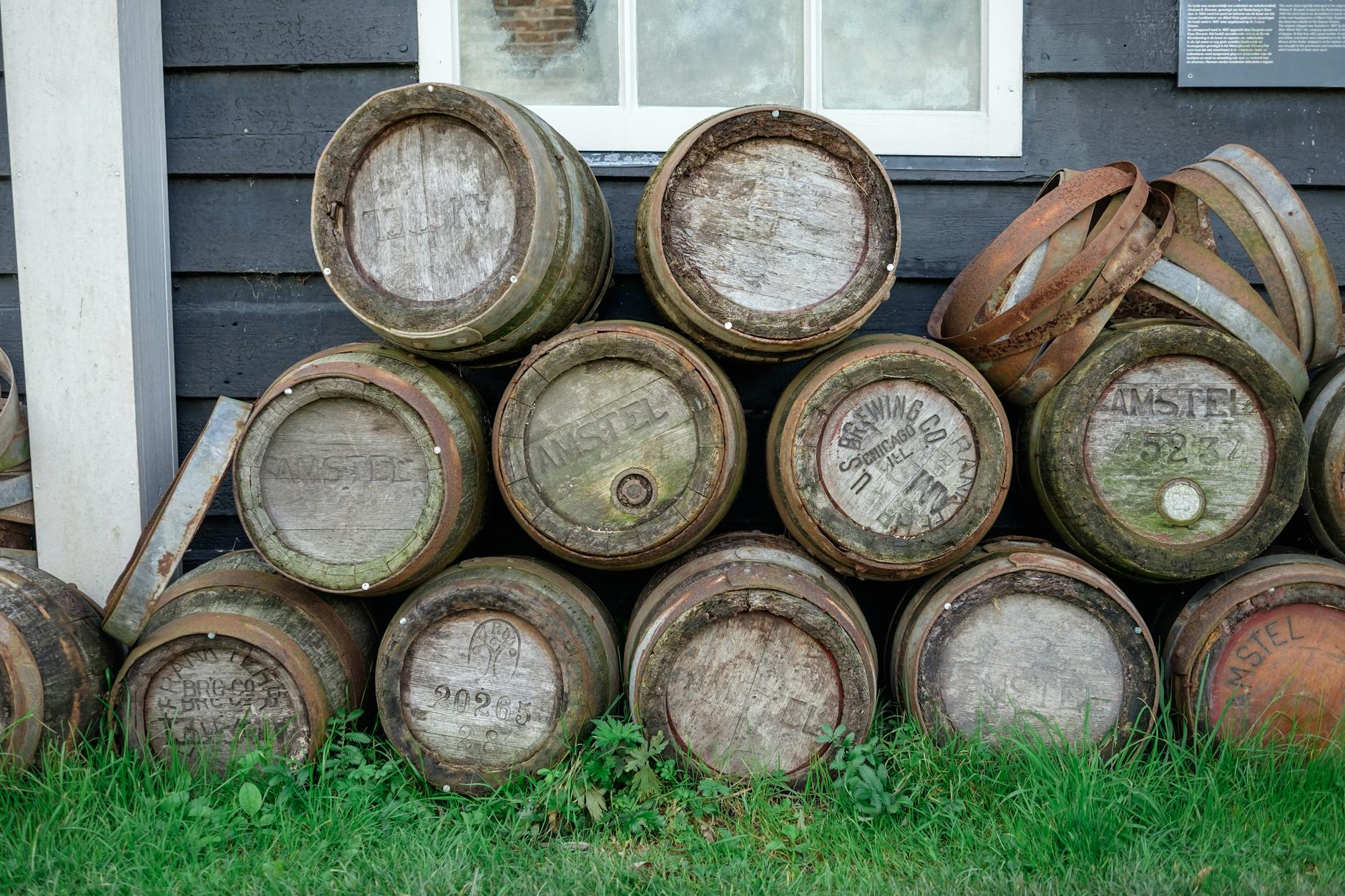
One detail divides Augustiner from the other five: only Augustiner still serves its Oktoberfest beer from 200-liter wooden barrels — the “Hirschen” — at the Festhalle. Since 1987, Augustiner has been the only brewery on the Wiesn still tapping wood exclusively. The other five long ago switched to pressurized stainless steel kegs for hygiene and consistency.
The difference matters. Wood-tapped Festbier has less dissolved CO2, a softer mouthfeel, and a slightly milder finish — locals describe it as more drinkable, which is why the Augustiner-Festhalle is the connoisseur’s choice for daytime drinking. Watch for the “Holzfass-Anstich” — the wooden-keg tapping ceremony — when a fresh “Hirschen” is rolled into place and the bung is hammered home in two strokes. If the tap-master gets it in one, the regulars applaud.
How to Order Oktoberfest Beer
- You must be seated at a table to be served. Standing-only is for outdoor benches and a few tent corners.
- To order, say “Eine Maß, bitte” — stress the “Eine” so it doesn’t sound like “Ein Maß” (which would still be understood). Plural is “Zwei Maß, bitte” — note Maß doesn’t pluralize.
- The Maß is one liter. There are no half-liter pours of Festbier inside the big tents. Wheat beer (Weißbier) is served in a 0.5-liter glass at most.
- Your server (Bedienung) takes the order at the table and brings the Maß directly. Cash tip 10% rounded up to whole euros, into the server’s hand.
- 2026 prices: €14.80–€15.90 per Maß depending on tent, averaging €15.61. Armbrustschützen, Bräurosl and Löwenbräu top the list at €15.90; Käfer Wiesn-Schänke sits with the majority at €15.80; the Oide Wiesn’s Museumszelt is cheapest at €14.80. Kufflers Weinzelt pours no Maß of Festbier at all — it is a wine tent.
- Most large tents now accept card payment. Outdoor stalls are often cash-only.
How to Hold and Toast a Maß
A full Maß weighs about 2.3 kilos. The technique matters because dropping one means glass shards and a wet table.
- Hold by the handle, thumb on top of the handle or wrapped around it. Never grip the body of the glass — your hand warms the beer.
- Two hands for the full lift. Even seasoned locals use a second hand under the base for the heavy first sips.
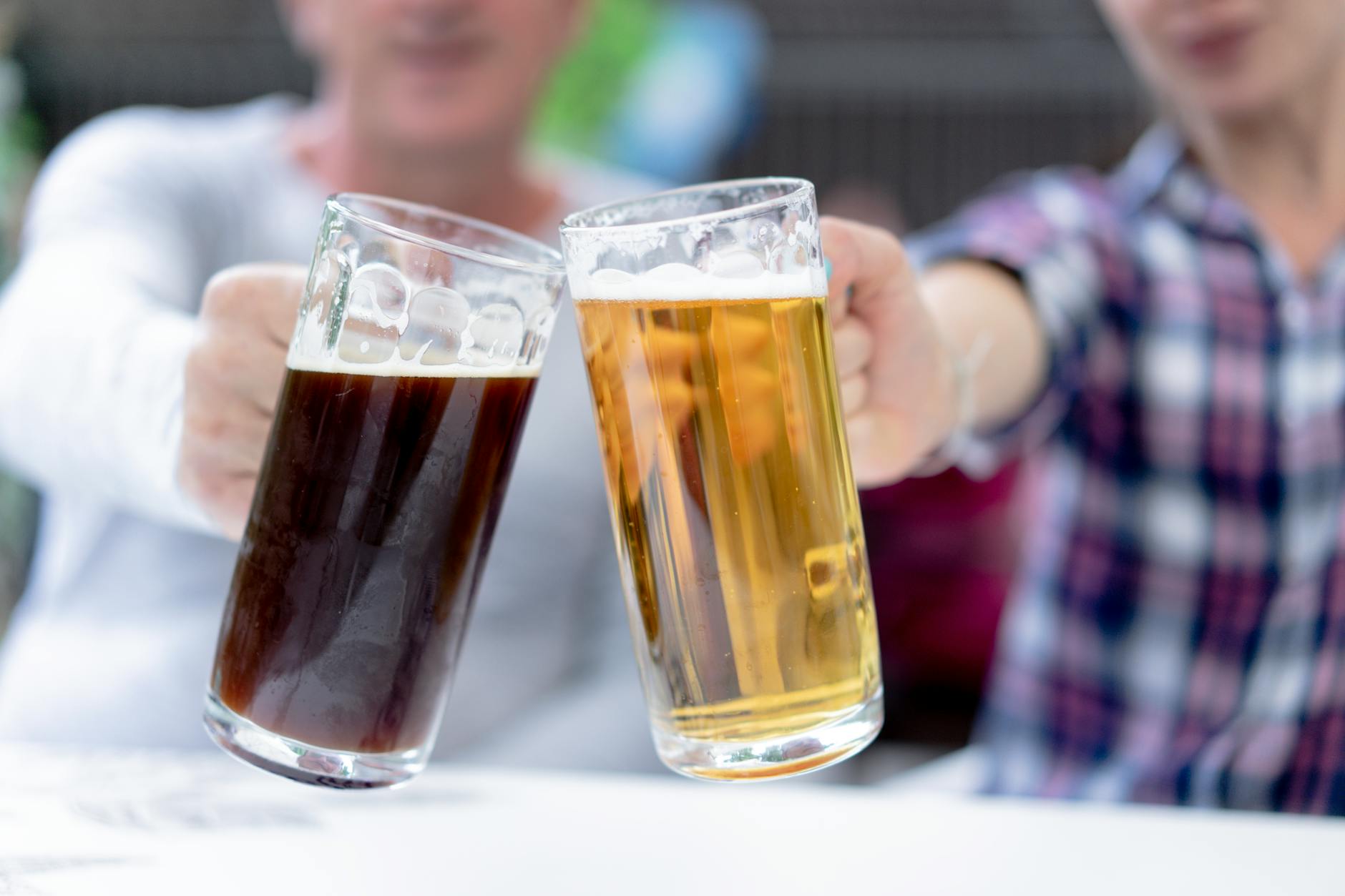
- Toast: “Prost!” — clink at the base of the glass (the thickest part), not the rim. Eye contact with every individual you clink — Bavarians take this seriously. Skipping eye contact is said to bring seven years of bad sex (an old Munich joke that everyone repeats).
- Touch the glass briefly to the table after clinking, then drink at least a small sip before setting it down. Drinking nothing after a toast is rude.
- Ein Prosit der Gemütlichkeit plays roughly every 20 minutes from the band — that’s a cue for everyone to stand, raise their Maß, and toast. Singing along is encouraged.
Alcohol Content and Pacing
Do the math before the third round. A Maß at 6.0% ABV contains roughly 60 ml of pure alcohol — about the equivalent of four standard US 12-oz beers at 5%, or four medium-strength glasses of wine. Two Maß is already a substantial session. Three Maß is the threshold at which most non-Bavarians are visibly drunk. Beyond three Maß, the risk of becoming a “Bierleiche” (literally “beer corpse” — someone face-down at the table or being escorted out by security) rises sharply.
- Eat before you start. A pretzel and Obatzda, a Hendl, or a Brez’n with Weißwurst at breakfast all slow absorption.
- Water between Maß. Tap water is free; ask for “ein Glas Leitungswasser” — some tents charge for bottled.
- Pace at ~1 Maß per hour at most if you want to be standing for the evening.
- The proverb: “Bier vor Wein, das laß sein” — beer before wine, leave it be. (Many locals dispute the validity, but the saying lives.) The reverse — wine first, then beer — is supposedly safer.
- Hangover prevention: water with each Maß, a heavy salty breakfast the next morning (the Bavarian fix: Weißwurst, Brez’n and a Weißbier — “Konterbier”).
Alternatives to Festbier at Oktoberfest
- Radler — a Maß of Festbier cut 50/50 with clear lemonade. Lower ABV (~3%), refreshing in midday sun, no shame in ordering one. Half the calories too.
- Russe (Russ’n) — Weißbier (wheat beer) cut with lemonade. Lighter, fizzier; served in 0.5-liter glasses.
- Weißbier (Weizen / Hefe-Weizen) — wheat beer, served in tall 0.5-liter glasses. Paulaner and Hacker-Pschorr are leading wheat brewers; available in most tents but ABV similar to Festbier.
- Alcohol-free Festbier — most breweries now produce a non-alcoholic Oktoberfest version (e.g. Paulaner Weißbier alkoholfrei, Hofbräu Pure & Frei). Ask for “alkoholfrei”.
- Spezi — half cola, half orange Fanta, the Bavarian soft-drink classic.
- Almdudler — Austrian alpine-herb soda. Available in most tents.
- Apfelschorle — apple juice with sparkling water — the kid’s order and the driver’s order.
- Coffee, tea, soft drinks — all available; no judgment.
- Wine — head to the Weinzelt (see below).
The Weinzelt and Other Non-Beer Spaces
If you don’t drink beer at all, the Kuffler’s Weinzelt (the Wine Tent) is the Oktoberfest answer. It serves over 15 German wines by the glass and bottle, sparkling Sekt, and — in a Wiesn-only concession — Paulaner Hefe-Weißbier until 9 pm. After 9 pm it’s strictly wine and sparkling. The atmosphere is more cocktail-party than beer-hall and reservations are competitive.
For an upscale beer experience, the Käfer Wiesn-Schänke is the gourmet wing of the festival, with smaller tables, fine glassware, game and fish dishes, and Paulaner Festbier and Weißbier on tap. The Bierpalast wing inside the Paulaner-Festzelt is similarly a step-up dining environment.
Local Verdicts: Which Brewery’s Beer Is Best?
Ask ten Müncheners and you’ll get ten opinions, but the loose consensus on Oktoberfest beer is:
- Augustiner — cleanest, softest, generally rated the best Wiesn beer year over year. Wood kegs help.
- Paulaner — most balanced, the safe bet for any palate.
- Hacker-Pschorr — gently sweeter, comforting.
- Hofbräu — boldest, most hop-forward; loved by tourists, divisive among locals.
- Spaten — classic, slightly drier; a traditionalist’s pick.
- Löwenbräu — fine but rarely a Munich first choice; locals associate AB InBev ownership with a perceived dip in character.
The Reinheitsgebot — Why Oktoberfest Beer Tastes the Way It Does
The Bavarian Reinheitsgebot (Beer Purity Law) was decreed in 1516 by Dukes Wilhelm IV and Ludwig X of Bavaria at the Estates’ assembly in Ingolstadt. It stipulated that beer could be brewed only from three ingredients: water, barley and hops. Yeast was added to the list in 1906, after Louis Pasteur’s work made its role in fermentation understood (brewers had been using it for centuries without naming it). Munich’s own purity law — the Münchner Reinheitsgebot — actually pre-dates the Bavarian one, going back to 1487, and it remains the framework under which the six Oktoberfest breweries operate.
The practical effect: no rice, no corn, no chemical preservatives, no flavor adjuncts. The clean, slightly bready, malt-forward character of every Festbier at the Wiesn is a direct consequence of this five-hundred-year-old rule. It’s also why German beer typically tastes more cereal-forward than American or Belgian beer.
A Short History of Oktoberfest Beer
The first Oktoberfest was on 12 October 1810 — a horse race held to celebrate the wedding of Crown Prince Ludwig (later King Ludwig I) and Princess Therese of Saxe-Hildburghausen on the meadow now bearing her name (the Theresienwiese, or Wiesn). The race repeated annually. By the 1820s, beer stands had appeared. By 1881, the first wooden beer halls were built. The original Wiesn beer was a Märzen — a stronger, darker, copper-colored lager brewed in March and lagered until autumn — perfected by Gabriel Sedlmayr II of Spaten in 1841.
From the 1990s the breweries shifted from Märzen to a lighter, golden Festbier, recognizing that tourists and Müncheners alike wanted something more easily drinkable by the liter. The Märzen survives — it’s still the German style most American breweries imitate as “Oktoberfest” — but at the Wiesn itself, golden Festbier has reigned for three decades.
Where to Drink Each Brewery’s Beer Year-Round in Munich
- Augustiner: Augustiner-Stammhaus (Neuhauserstraße 27, pedestrian zone), Augustiner Klosterwirt (Augustinerstraße), Augustiner-Keller (huge beer garden near Hauptbahnhof, 5,000 seats), Augustiner Bräustuben (Landsberger Straße — beside the brewery itself, the Müncheners’ favorite)
- Hofbräu: Hofbräuhaus am Platzl (the world-famous main hall), Hofbräukeller (Wiener Platz in Haidhausen — local-favorite beer garden), Hofbräuhaus Festsaal upstairs
- Hacker-Pschorr: Hacker-Pschorr Bräuhaus (Theresienhöhe), Der Pschorr (at the Viktualienmarkt)
- Löwenbräu: Löwenbräukeller (Nymphenburger Straße/Stiglmaierplatz — historic beer hall with garden), Löwengrube
- Paulaner: Paulaner am Nockherberg (Au-Haidhausen — voted Munich’s most beautiful beer garden multiple years running), Paulaner Bräuhaus (Kapuzinerplatz), various Paulaner-branded Wirtshäuser citywide
- Spaten: Spatenhaus an der Oper (Max-Joseph-Platz — Spaten’s gourmet flagship). The original Spaten Stammhaus on Marsstraße has long been closed to the public. Andechser am Dom (Frauenplatz) is the easiest casual place to find Spaten alongside Andechser.
A Taste-Comparison Strategy
The best way to learn the difference between the six Oktoberfest beers is not at the Wiesn — it’s at the breweries’ Stammhäuser year-round. Each brewery’s regular Helles is the closest year-round cousin to its Festbier. Spend one weekend hitting the Augustiner-Keller, the Hofbräuhaus, the Paulaner am Nockherberg and the Löwenbräukeller and you’ll know your own preference before you ever set foot in a tent. Order a half-liter (“ein Helles, bitte”) at each — that’s the standard pour outside the Wiesn — and pay attention to mouthfeel and aftertaste rather than the headline taste.
Buying Oktoberfest Beer to Take Home
All six breweries bottle their Festbier seasonally — from late August through October you’ll find it in any Edeka, Rewe or Getränkemarkt in Munich, usually €1.40–€2.20 a half-liter bottle (plus €0.08 deposit). Crates of 20×0.5L run €18–€28. The Oktoberfest tents themselves don’t sell takeaway beer, but you can buy a souvenir Maßkrug (stoneware mug) at the official Oktoberfest shops on the Wiesn — €15–€40 depending on style. Stealing a tent Maß is technically theft and security checks bags at exits, although the rule is often loosely enforced.
Oktoberfest Beer FAQs
What’s the strongest Oktoberfest beer?
Hofbräu Oktoberfestbier at ~6.3% ABV is consistently the strongest. Löwenbräu (~6.1%) is second. The full range across the six is 5.8–6.4%.
Are all six breweries served at every Oktoberfest?
Yes. Every Oktoberfest features all six, each in their assigned tents. Each tent pours one Festbier only — you can’t order Augustiner inside the Hofbräu tent. To sample multiple breweries you need to move between tents.
Can I buy a souvenir Maßkrug?
Yes — at the official Oktoberfest souvenir shops on the Wiesn or at any large Munich department store (Galeria, Loden-Frey). Prices run €15 for a plain glass Maß and up to €40+ for an annual collector’s stoneware Maßkrug.
Is there non-alcoholic beer at Oktoberfest?
Yes. Most tents serve at least one non-alcoholic Festbier or Weißbier. Ask for “alkoholfrei”. Paulaner, Hofbräu and Erdinger all produce alcohol-free wheat beers widely available at the Wiesn.
Cash or card at the tents?
Both. Most large tents accept card (debit and credit) in 2026. Cash is still appreciated for tips, and outdoor food stalls are often cash-only. Bring €100–€150 cash per person per day as backup.
Can I drink Oktoberfest beer outside the festival?
Yes — for about six weeks. Each brewery’s bottled Festbier is sold in Munich supermarkets from late August through mid-October. Outside that window you’ll find Helles, Märzen, Weißbier and Dunkel year-round at all the same breweries’ Wirtshäuser.
Plan Your Oktoberfest
This Oktoberfest beer guide is part of our complete Munich Oktoberfest guide. For tent-by-tent atmosphere and reservations, see our Oktoberfest beer tents deep-dive. New to the Wiesn? Start with our first-timer tips. For what to eat with your Maß, see the Oktoberfest food guide. To explore Munich’s brewery culture year-round, our best beer gardens guide and traditional Bavarian food guide are the next steps. Prost!