German Phrases for Munich Tourists: Essential Words & Bavarian Dialect
Essential German phrases for Munich tourists. Greetings, restaurant orders, directions, beer hall etiquette + Bavarian dialect.

German phrases Munich tourists actually need fit into a tighter list than any phrasebook will admit. Around 200 words and short sentences will get you through every restaurant, U-Bahn ticket machine, Hofbräuhaus table, hotel desk and pharmacy in the city — and around 30 of them will go even further, because Munich speaks two Germans at once. Hochdeutsch (standard German) is what you’ll see on signs, hear in the train station announcements, and read on every menu. Boarisch (Bavarian dialect) is what your waiter, taxi driver, market stallholder and the older couple at the next table will reflexively use among themselves. You don’t need to master either. You need to recognise both, deploy a polite handful, and pronounce them well enough that the locals reward your effort. That’s what this guide is for.
The honest news first: English is widely spoken in Munich. Roughly 90 percent of people under 40 will switch into it the moment you smile and look uncertain. So why bother with German phrases for Munich at all? Because the moment you open with a clean “Grüß Gott” or end with a warm “Dankeschön,” the temperature of every interaction shifts. Service gets friendlier. Locals start chatting. You’re a guest instead of a tourist. That tiny effort is the single highest-return investment in your trip.
German Phrases Munich Quick-Facts
| Question | Answer |
|---|---|
| Most useful single word | Bitte (please / you’re welcome / here you go / sorry?) |
| Essential greeting | Grüß Gott (formal Bavarian hello, used all day) |
| English fluency in Munich | Around 90% of under-40s speak workable English; older generations less reliably |
| Hardest sounds for English speakers | Ü, Ö, and the two CH sounds (Buch vs ich) |
| Standard German vs dialect | Everyone in Munich speaks Hochdeutsch; Bavarian (Boarisch) is the local flavour |
| Universal Bavarian word | Servus (hello and goodbye, informal) |
| Beer-hall toast | Prost! (clink at the base of the mug, eye contact required) |
| Sign-off in shops | Schönen Tag noch (have a nice day) |
| Polite default address | Sie (formal you); switch to du only when invited |
| How many phrases you really need | About 30 will cover 90% of situations |
Why German Phrases Munich Visitors Learn Are Worth the Effort
Bavaria is a polite culture. Greetings are not optional — walking into a small shop, a doctor’s waiting room or a beer-hall table without a “Grüß Gott” or at least a “Servus” reads as cold. Saying goodbye matters just as much. Munich rewards the traveller who learns ten greetings and farewells more than the one who memorises 100 nouns. The useful German phrases below are ordered by how often you’ll actually deploy them — greet, please, thank, order, ask, pay, farewell — not by phrasebook category.
A second reason: pronunciation matters more than vocabulary. A clean “Danke” with the right vowel earns more goodwill than a mangled five-word sentence. Spend ten minutes practising the umlauts (ä, ö, ü) and the two CH sounds before you arrive, and the rest follows naturally. This is one of the friendliest cities in Europe for a tourist who tries.
The 50 Essential German Phrases Munich Tourists Use Most
Each phrase below shows the English meaning, the standard German (Hochdeutsch), the Bavarian variant where it exists, a phonetic pronunciation in capitalised English syllables, and a note on when to use it. Stress the capitalised syllable.
Greetings, Please and Thank You
- Hello — Hallo / Grüß Gott / Servus — HAH-loh / GREUSS-gott / SAIR-voos. Grüß Gott is the formal Bavarian default used all day until evening; Servus is the universal friendly option among locals and acquaintances.
- Good morning — Guten Morgen — GOO-ten MOR-gen. Used until around 10am; in cafes you’ll hear “Morgen” on its own.
- Good day — Guten Tag — GOO-ten TAHK. Standard German default; in Munich, Grüß Gott is more common in person.
- Good evening — Guten Abend — GOO-ten AH-bent. From around 6pm onwards.
- Goodbye — Auf Wiedersehen / Tschüss / Pfiat di — owf VEE-der-zayn / CHOOSS / PFEE-aht dee. Auf Wiedersehen is formal; Tschüss is friendly and universal; Pfiat di is informal Bavarian.
- Goodnight — Gute Nacht — GOO-tuh NAHKT. End of evening only.
- Please — Bitte — BIT-uh. The single most useful word in German. Also means “you’re welcome,” “here you go,” and as a question “pardon?”
- Thank you — Danke / Vielen Dank / Dankeschön — DAHN-kuh / FEE-len DAHNK / DAHN-kuh-SHURN. Danke is everyday; Vielen Dank is warmer; Dankeschön is the lovely Munich-friendly version.
- You’re welcome — Bitte / Gerne — BIT-uh / GAIR-nuh. Bitte handles most cases; Gerne (“gladly”) is friendlier.
- Excuse me / Sorry — Entschuldigung — ent-SHOOL-dee-goong. Use for any minor bump, getting attention, or apologising. Crucially, this is the correct word — not the English “sorry” that many tourists default to.
- Yes — Ja — YAH. Often softened to “Ja, klar” (yes of course) or “Genau” (exactly).
- No — Nein — NINE. Often softened with “Nein, danke” (no thank you).
Essential Questions for Travellers
- Do you speak English? — Sprechen Sie Englisch? — SHPREH-khen zee ENG-lish? Almost always answered with “Ja, ein bisschen” (yes, a little). Open with this rather than launching into English — it reads as polite, not lazy.
- I don’t speak German — Ich spreche kein Deutsch — ish SHPREH-khuh kine DOYTCH. Or softer: “Ich spreche nur ein bisschen Deutsch” (I only speak a little German).
- I don’t understand — Ich verstehe nicht — ish fer-SHTAY-uh NIKHT.
- Can you help me? — Können Sie mir helfen? — KER-nen zee meer HEL-fen?
- Where is…? — Wo ist…? — voh IST. The most useful question stem — “Wo ist die Toilette?”, “Wo ist der Bahnhof?”, “Wo ist Marienplatz?”
- How much does it cost? — Was kostet das? / Wie viel? — vahs KOS-tet dahs? / vee FEEL? Wie viel is shorter and works at any market stall.
- The bill, please — Die Rechnung, bitte — dee REKH-noong, BIT-uh. Or the punchier Bavarian beer-hall version: “Zahlen, bitte” (TSAH-len BIT-uh, literally “pay, please”).
Restaurant and Beer-Hall Phrases
- A table for two — Einen Tisch für zwei, bitte — EYE-nen TISH foor TSVY, BIT-uh.
- The menu, please — Die Speisekarte, bitte — dee SHPY-zuh-kar-tuh, BIT-uh.
- I’d like… — Ich hätte gern… — ish HET-uh GAIRN. The polite default for ordering anything.
- One Maß — Eine Maß, bitte — EYE-nuh MAHSS, BIT-uh. The litre stein of beer. Note the short “a” sound, not “mass” as in English.
- One coffee — Einen Kaffee, bitte — EYE-nen KAH-fay, BIT-uh.
- Water, still or sparkling — Stilles Wasser / Wasser mit Kohlensäure — SHTIL-es VAH-ser / VAH-ser mit KOH-len-zoy-ruh. Bavarians default to sparkling; specify “stilles” if you want flat water. Tap water is “Leitungswasser.”
- Vegetarian — Vegetarisch — veh-geh-TAH-rish.
- Vegan — Vegan — VAY-gahn (German pronounces it differently from English).
- Without meat — Ohne Fleisch — OH-nuh FLYSH.
- With nuts — Mit Nüssen — mit NOO-sen. Or to check for allergies: “Sind hier Nüsse drin?”
- Cheers! — Prost! — PROHST. Look every drinker in the eye, clink at the base of the mug (not the rim), and say it. Skipping eye contact is the cardinal Bavarian sin.
- To your health — Zum Wohl — tsoom VOHL. Slightly more formal version of Prost, common with wine.
- Excellent — Ausgezeichnet — OWS-guh-tsykh-net. The compliment that makes any cook beam.
- Enjoy your meal — Guten Appetit / Mahlzeit — GOO-ten ah-puh-TEET / MAHL-tsite. Mahlzeit is the Bavarian everyday version, used as a greeting around lunchtime.
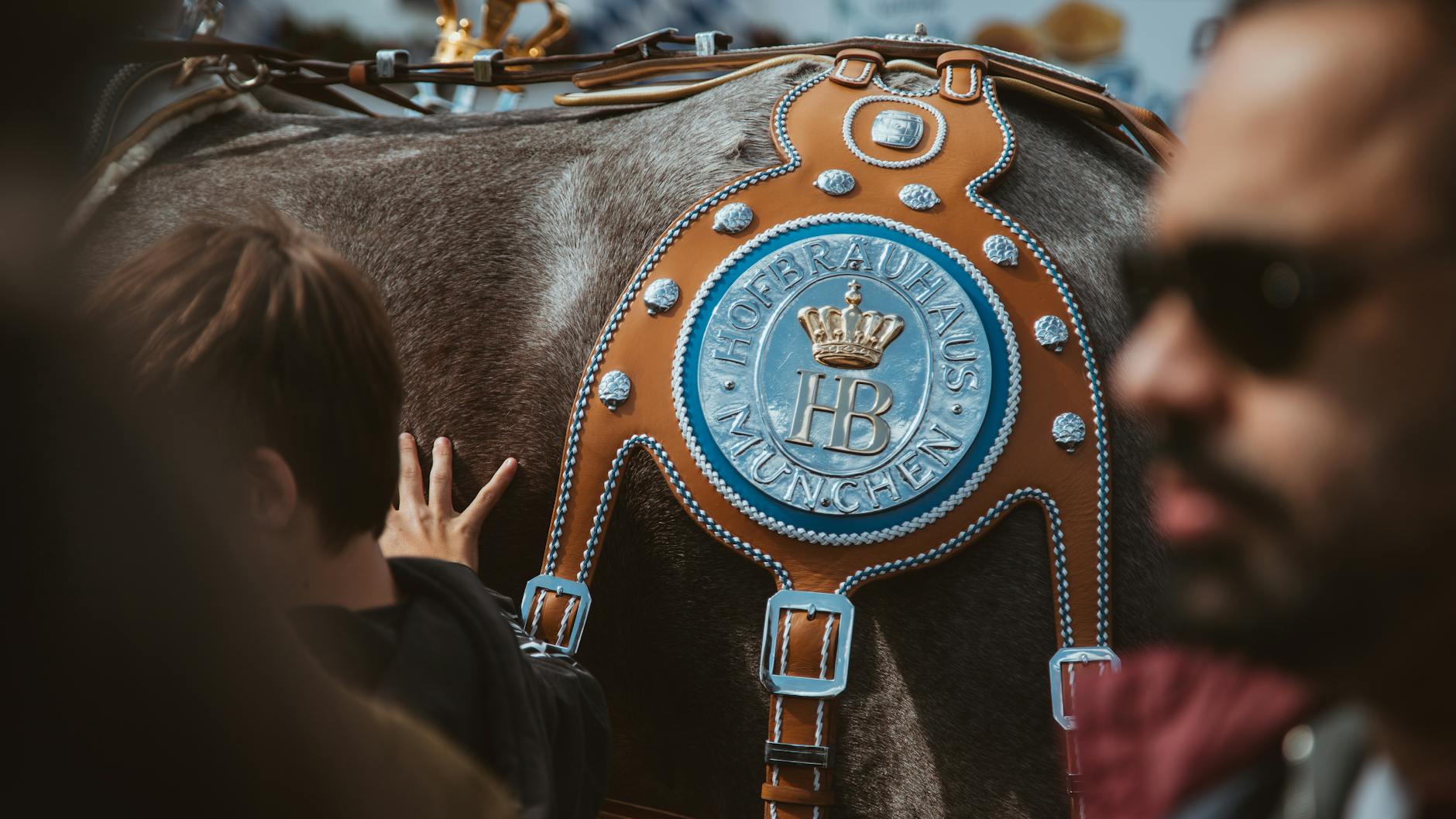
Getting Around: Directions and Transit
- Where is the bathroom? — Wo ist die Toilette? — voh ist dee toy-LET-uh. Or simply ask for “das WC” (dahs VAY-tsay).
- Train station — Bahnhof — BAHN-hohf. Munich’s main is the Hauptbahnhof (HOWPT-bahn-hohf).
- Right / left / straight ahead — Rechts / Links / Geradeaus — REKHTS / LINKS / guh-RAH-duh-OWS.
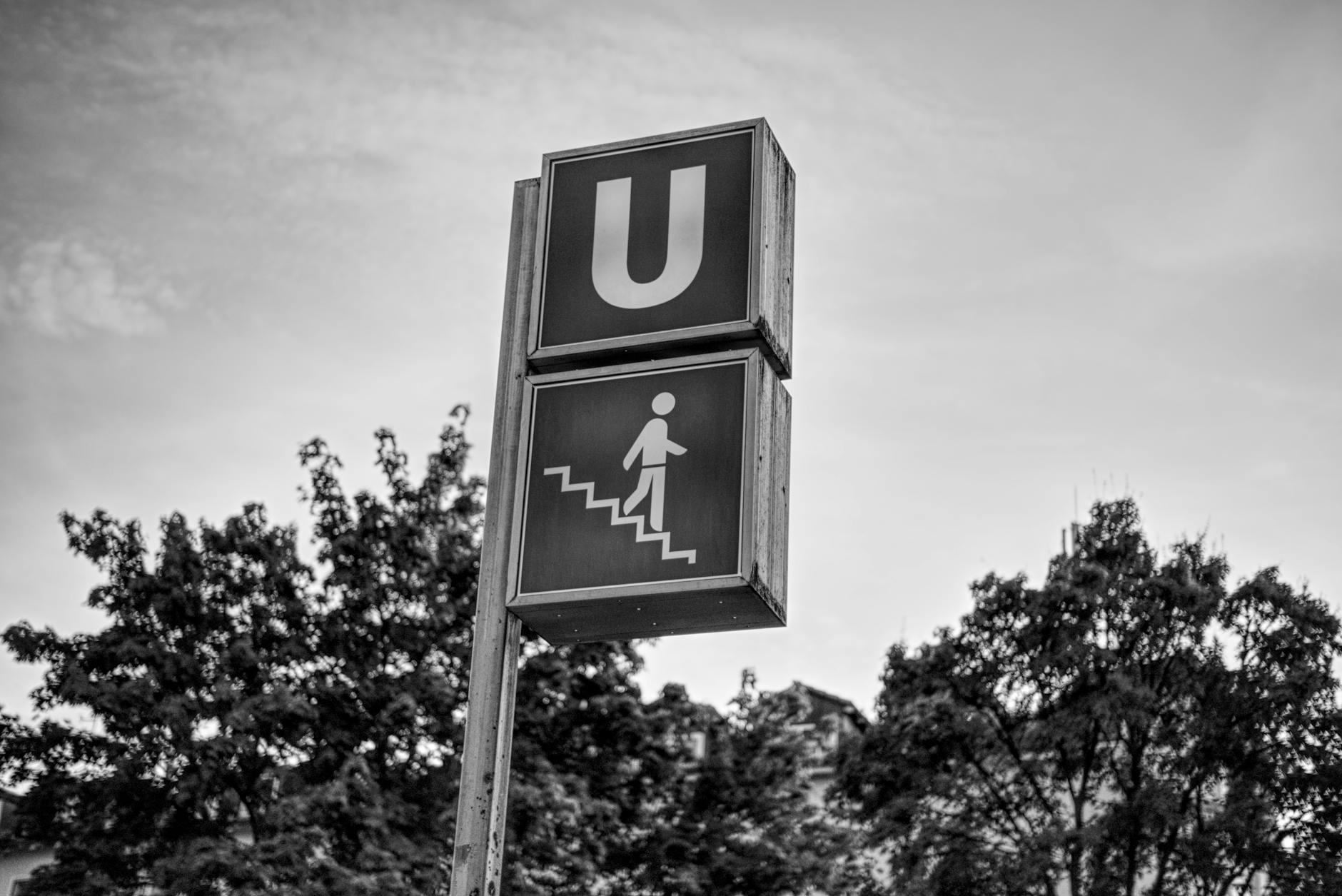
- U-Bahn / S-Bahn — OO-bahn / ESS-bahn. The underground and suburban rail networks; the abbreviations are the same in German and English.
- Bus stop — Bushaltestelle — BOOS-hahl-tuh-shtel-uh.
- Where can I buy a ticket? — Wo kann ich ein Ticket kaufen? — voh kahn ish ine TIK-et KOW-fen?
- One ticket to… — Ein Ticket nach… — ine TIK-et NAHKH. Nach is used with city names; for stations or zones you’ll see “nach Marienplatz,” “nach Salzburg.”
Shopping and Paying
- How much? — Wie viel? — vee FEEL? Quick version for markets and small shops.
- Too expensive — Zu teuer — tsoo TOY-er. Useful at flea markets and the Auer Dult, less so in regular shops where haggling isn’t a thing.
- Cash — Bargeld — BAHR-gelt. Germany remains stubbornly cash-friendly; carry some.
- Card — Karte — KAR-tuh. Ask first: “Kann ich mit Karte zahlen?” (can I pay by card?). Many small businesses still take cash only.
- Receipt — Quittung / Beleg — KVIT-toong / buh-LAYK. Useful if you’re claiming VAT back or just keeping records.
Emergencies
- Help! — Hilfe! — HIL-fuh.
- Call the police — Rufen Sie die Polizei — ROO-fen zee dee poh-lee-TSY. The non-emergency police number is 110.
- I need a doctor — Ich brauche einen Arzt — ish BROW-khuh EYE-nen ARTST.
- I’m lost — Ich habe mich verlaufen — ish HAH-buh mish fer-LOW-fen.
- Pharmacy — Apotheke — ah-poh-TAY-kuh. Look for the green cross.
- Hospital — Krankenhaus — KRAHN-ken-house. Emergency number for ambulances is 112.
Bavarian Dialect Phrases (Boarisch) for Munich
Boarisch (Bavarian) is not a heavily accented version of standard German — it’s a separate dialect family with different words, swallowed consonants, simplified grammar, and centuries of stubborn pride behind it. You won’t learn to speak it on a city break, and you don’t need to. What you do need is to recognise the handful of Bavarian dialect phrases that Munich locals use reflexively, so you understand them when they fly past, and to deploy maybe four or five yourself for instant warmth.
- Servus — SAIR-voos. Universal Bavarian greeting AND farewell. Like Italian “ciao.” Probably the single most useful Bavarian word for a visitor.
- Pfiat di / Pfiat eich / Pfiat Gott — PFEE-aht dee / PFEE-aht aysh / PFEE-aht gott. Goodbye, informal singular / informal plural / formal. Literally “may God protect you.”
- Wia geht’s? — VEE-uh GAYTS. How are you? The Bavarian version of “Wie geht’s?”
- Bassd scho — BASST SHO. “That’s fine” / “all good.” The Bavarian shrug. Multipurpose response.
- I mog di — ee MOAG dee. I like you. Affectionate, used among friends.
- Schmarrn — SHMAHRN. Nonsense, rubbish. Also a delicious sweet pancake dish (Kaiserschmarrn).
- Madl — MAH-dl. Girl, young woman. Like calling someone “lass.”
- Bua — BOO-ah. Boy, young man.
- Brez’n — BRETSN. Pretzel. The Bavarian pronunciation drops the second “e” from Hochdeutsch “Brezel” and adds an “n”.
- Weißwurscht — VICE-vorsht. White sausage — the Bavarian breakfast classic.
- Knödel — KER-nudl. Dumpling. Comes in bread, potato, semolina and liver versions.
- Wiesn — VEEZN. The Oktoberfest grounds. Locals always call the festival “die Wiesn,” never “Oktoberfest.”
- Habedeere — HAH-buh-dee-ruh. An old-school Bavarian “hello / I have the honour” used by older waiters and traditional Wirtshäuser.
- Hawi des? / Hawe di gern — HAH-vee des / HAH-vuh dee gairn. “Have you got that?” / “I like you a lot.” Highly local.
- Sauwetter — ZOW-vet-er. Terrible weather. Literally “pig weather.” Sau (pig) prefixes many Bavarian intensifiers.
- Sauguad — ZOW-gwat. Really good. Same prefix, positive direction.
- Mei Liaba! — my LEE-ah-buh. Literally “my dear” — an exclamation of surprise or amazement, like “oh my goodness!”
- Geh weida — gay VY-da. Get out of here / you’re kidding. Used with friendly disbelief.
- Oa Hoiwe — oh-ah HOY-vuh. A half-litre beer. The smaller alternative to a Maß.
- O’zapft is — OH-tsahpft iss. “It is tapped.” The cry the Mayor of Munich shouts at the opening of Oktoberfest the moment the first keg is tapped.
- Gell? — GELL. A sentence-ending tag like “right?” or “isn’t it?” Bavarians sprinkle it everywhere.
Five Bavarian dialect phrases worth actually deploying: Servus on arrival, Grüß Gott when entering a shop, Prost at the table, Bassd scho as a relaxed agreement, and Pfiat di when you leave. That’s it. Any more and you risk sounding like a parody.
German Pronunciation Tips That Make Everything Easier
German pronunciation tips boil down to a dozen rules. Learn these and you can read aloud almost any German word correctly — spelling is far more phonetic than English. The hardest sounds for English speakers are the umlauts and the two CH sounds; everything else falls into place quickly.
The Umlauts: Ä, Ö, Ü
- ä sounds like the “e” in “set” or “bet.” Open and short. Example: Mädchen (girl) = MED-shen.
- ö sounds like the “u” in “fur” or the French “eu” in “peur.” Round your lips while saying “eh.” Example: schön (beautiful) = shurn.
- ü is the trickiest. Say “ee” (as in “feet”) while rounding your lips into a small “o.” If you can pronounce French “tu” you already have it. Example: für (for) = fyoor.
Consonants That Behave Differently
- ß (Es-zett) = simply a double “ss.” Straße (street) = SHTRAH-suh.
- z = “ts.” Zwei (two) = TSVY.
- w = English “v.” Wasser = VAH-ser.
- v = English “f.” Vater (father) = FAH-ter. (V says its English-V only in foreign loan words.)
- j = English “y.” Ja = YAH.
- r = rolled softly at the back of the throat, almost like a soft French R. Don’t try to roll it on the tip of your tongue.
Consonant Clusters at the Start of Words
- st- at the start of a word = “sht.” Stadt (city) = SHTAHT. Straße (street) = SHTRAH-suh.
- sp- at the start of a word = “shp.” Sprechen (to speak) = SHPREH-khen.
- pf- = a single sound, lips popping. Pfiat di = PFEE-aht.
- kn- = both letters pronounced. Knödel = KER-nudl.
The Two CH Sounds
- Hard CH (after a, o, u): a throaty, scraping sound from the back of the throat, like clearing it gently. Buch (book) = BOOKH. Nacht (night) = NAHKHT.
- Soft CH (after e, i, ä, ö, ü): a hissier sound made by forcing air over the tongue, similar to a strong English “h” in “huge.” Ich (I) = ISH. München (Munich) = MEUN-shen.
If you can only practise one thing before you fly: learn to say München properly. It is the test pronunciation. MEUN-shen, with a soft hissing CH at the end. Not “mu-NICK,” not “myew-nick.” Locals will smile.
Vowel Combinations
- ei = “eye.” Wein (wine) = VINE.
- ie = “ee.” Bier (beer) = BEER.
- eu / äu = “oy.” Deutsch (German) = DOYTSH. Bayern = BY-ern.
- au = “ow.” Haus (house) = HOUSE.
Common Mistakes Tourists Make With Basic German
Basic German tourists tend to trip on the same handful of issues. None are catastrophic; all are easy to fix.
- Using “Ja” too forcefully. A flat, loud “Ja!” sounds aggressive. Soften with “Genau” (exactly), “Ja, klar” (yes, of course), or “Stimmt” (that’s right). Bavarians especially favour these softer agreements.
- Saying “Sorry” in English. Use Entschuldigung. Tourists who say “sorry” in English when bumping into someone get a polite but slightly distant response; switching to Entschuldigung instantly warms it up.
- Confusing Bitte’s many meanings. Bitte means “please,” “you’re welcome,” “here you go,” “after you” and (rising tone) “pardon?” If you’re confused by what a Bitte is responding to, just smile and nod.
- Touching the wallet too early. In Germany people generally pay individually at restaurants — the waiter will go round the table asking “Zusammen oder getrennt?” (together or separate?). Splitting bills is standard, not awkward.
- First-name basis too soon. Default to Sie (formal you) and Herr/Frau plus surname. Even friendly acquaintances may stay on Sie for weeks or months until someone offers du (the informal you). Wait to be invited.
- Tipping wrong. Round up or add 5–10 percent, and tell the server the total you want to pay as you hand them the cash — don’t leave coins on the table after they’ve walked away.
- Hauling out Google Translate mid-sentence. Better to memorise ten phrases cold than to flap a phone at the waiter. A confident “Ich hätte gern…” beats a phone screen every time.
- Skipping eye contact at Prost. The single biggest German social faux pas. When you toast, look every person in the eye, one by one. Folklore says skipping eye contact brings seven years of bad luck (and bad sex). Locals will hold your gaze hard the first time to see if you know.
- Pronouncing München as “Munich.” Locals love to hear the real name, said properly. Try MEUN-shen.
- Saying “Oktoberfest” to locals. Munich residents call it “die Wiesn.” Saying Oktoberfest marks you as a tourist; saying Wiesn marks you as someone who’s done their homework.
Etiquette Phrases and Forms of Address
German for travelers is as much about register as vocabulary. Bavaria leans formal-but-warm: Sie until invited otherwise, full greetings on entry, full farewells on exit. The phrases below are the polish layer that turns competent German into proper German.
- Grüß Gott — the formal Bavarian default. Literally “greet God.” Used by everyone, religious or not, all day until evening. The proper Munich opener.
- Servus — universal informal greeting and farewell. Fine with peers, friends, younger staff. Not for the bank manager.
- Sie — formal you. Default for adults you don’t know. Used with surnames: “Können Sie mir helfen, Herr Schmidt?”
- Du — informal you. Used with friends, children, animals, and (informally) within companies. Wait to be invited — an older Bavarian offering “wir können uns duzen” is a small ceremony.
- Herr / Frau — Mr / Ms / Mrs. Combine with surname. Title-bearers add the title: Herr Doktor, Frau Professor.
- Direct eye contact at Prost. Not negotiable.
- Greet on entering small spaces. Shops, doctor’s waiting rooms, hairdressers, lifts — a clear “Grüß Gott” on entry is normal. Silent walking-in reads as rude.
- Schönen Tag noch — have a nice day. The standard friendly sign-off in shops and at the bakery counter.
- Auf Wiederschauen — literally “until we see again.” The Bavarian-flavoured farewell at small shops and traditional cafes, slightly warmer than Auf Wiedersehen.
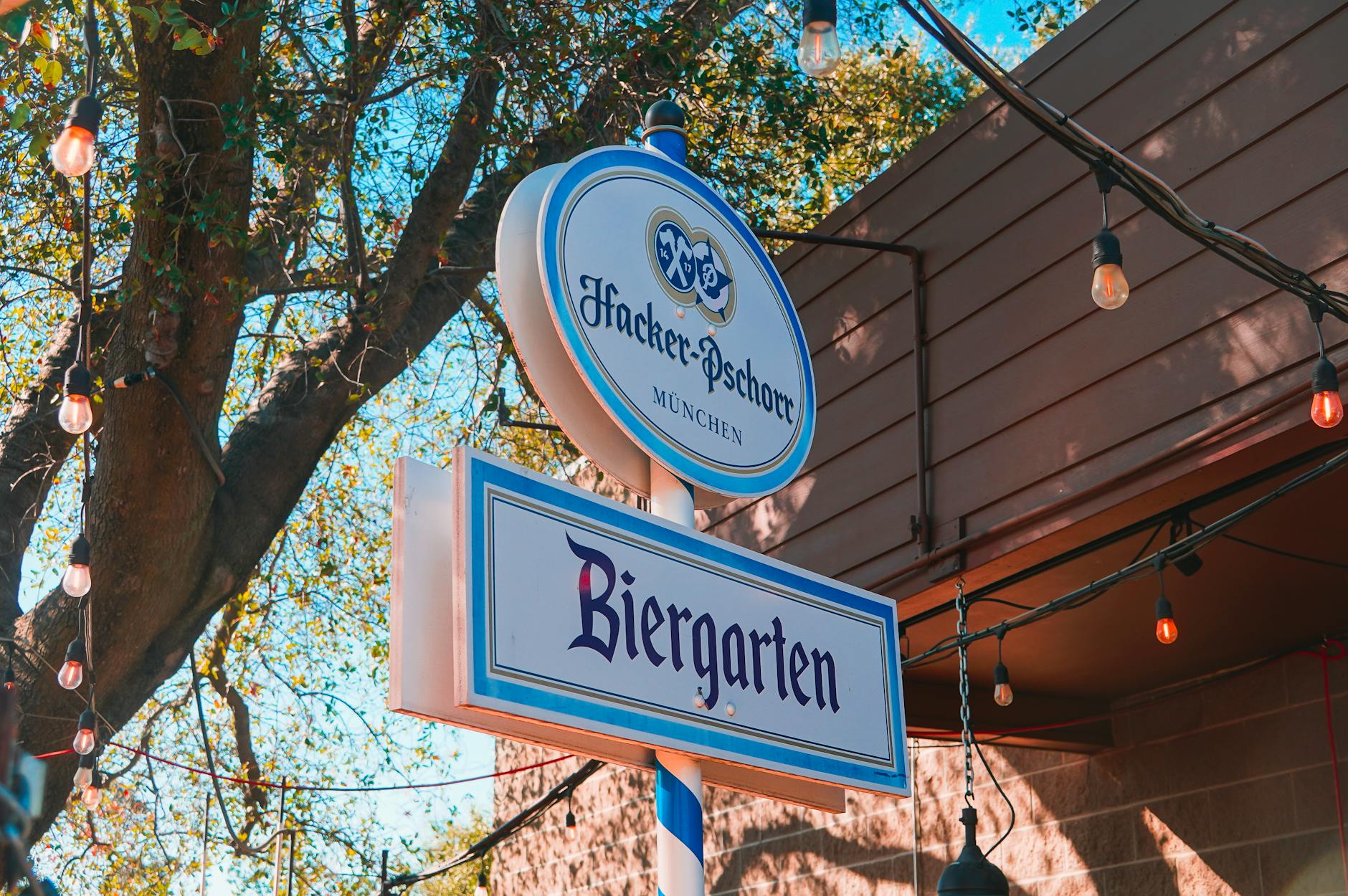
Cultural Context: Hochdeutsch, Boarisch and Munich’s Other Languages
Munich is one of the most linguistically layered cities in Germany. Every local switches fluently between Hochdeutsch (standard German — the school and TV language) and Boarisch (Bavarian dialect) depending on context. Add the city’s large Italian, Turkish, Croatian, Greek and Polish communities, plus the international expat scene around BMW, Siemens and the universities, and you have a city where English is everyday for younger residents and Italian or Turkish is everyday for many older residents in particular neighbourhoods.
- Hochdeutsch (standard German). Everyone in Munich speaks this fluently. It’s what’s on signs, ticket machines, menus, and station announcements. If you’ve learned German from any textbook, this is what you’ve learned.
- Boarisch (Bavarian). A separate dialect group, not a regional accent. Used among locals, in beer halls, in traditional Wirtshäuser, on rural Bavaria’s TV channels, and as the warm-mode default among friends. Visitors hear it constantly without needing to speak it.
- English. Working competence is near-universal among under-40s in central Munich; close to native level among university and tech-industry residents. Older Bavarians are less reliable; a few words of German open doors that English alone won’t.
- Italian, Turkish, Croatian, Greek. Major heritage languages. You’ll see Italian on a quarter of Munich’s pizza-place chalkboards and Turkish in the markets around the Hauptbahnhof.
Bavarian Compared to Other German Dialects
- Boarisch (Bavarian). Munich and rural Bavaria. Soft consonants, swallowed vowels, distinct vocabulary. Closely related to Austrian German.
- Schwäbisch (Swabian). Stuttgart and southwestern Germany. Sing-song rhythm, “sch” sounds where standard has “s.”
- Berlinerisch. Berlin. Sharper, faster, swaps “ich” for “icke” and “g” for “j.”
- Plattdeutsch (Low German). Northern Germany, near the Dutch border. Closer to Dutch than to Hochdeutsch; almost a separate language.
German Phrases for Specific Munich Situations
At the Oktoberfest Tent
- Eine Maß, bitte — one litre of beer, please.
- Eine Brez’n, bitte — one big soft pretzel, please.
- Prost! — cheers, with eye contact.
- Wo ist die Toilette? — where’s the loo? Vital question by hour three.
- Zahlen, bitte — the bill, please. Hand the server cash with a tip pre-calculated; round up to the next 5 or 10 euros.
- Trinkgeld — tip. Hand it directly to the server, don’t leave it on the table.
- Ein Hendl, bitte — one roast chicken, please. The signature Wiesn food.
- O’zapft is! — “it is tapped!” The festival opening cry. You don’t say it — the Mayor does. But you’ll hear it repeated all day.
At the Hotel
- Reservierung — reservation. “Ich habe eine Reservierung auf den Namen Smith.”
- Frühstück — breakfast. “Wann ist Frühstück?” (when is breakfast?).
- Schlüssel — key. “Ich habe meinen Schlüssel verloren” = I’ve lost my key.
- Aufzug — lift / elevator.
- WLAN — Wi-Fi, pronounced “VEH-lahn.” “Was ist das WLAN-Passwort?”
- Auschecken — to check out. “Bis wann muss ich auschecken?” = when must I check out by?
- Gepäck — luggage. “Können Sie mein Gepäck aufbewahren?” = can you store my luggage?
In a Cafe or Bakery
- Kaffee — coffee.
- Tee — tea.
- Milch — milk.
- Zucker — sugar.
- Kuchen — cake.
- Torte — layered cake. Different from Kuchen.
- Brötchen / Semmel — bread roll. Semmel is the Bavarian word; Brötchen is standard German. In Munich bakeries you’ll see both.
- Zum Mitnehmen — to take away.
- Hier essen — to eat in.
Bavarian Food Vocabulary
- Weißwurst — white veal sausage, eaten before noon with sweet mustard and a pretzel.
- Leberkäs — Bavarian meatloaf, served warm in a roll.
- Schweinshaxe — crispy roast pork knuckle.
- Schweinebraten — classic roast pork with crackling.
- Schnitzel — breaded veal or pork cutlet.
- Spanferkel — suckling pig.
- Knödel — bread or potato dumpling. Often served as a side.
- Spätzle — egg noodle dumplings (more Swabian, but everywhere in Munich).
- Sauerkraut — pickled cabbage.
- Rotkohl — red cabbage.
- Kartoffelsalat — potato salad, Bavarian-style with broth.
- Obatzda — spiced cheese spread for pretzels.
- Brez’n — pretzel.
- Hendl — roast chicken.
- Steckerlfisch — whole fish grilled on a stick.
- Kaiserschmarrn — shredded sweet pancake with stewed plums.
- Apfelstrudel — apple strudel.
- Dampfnudel — steamed sweet dumpling with vanilla sauce.
- Radi — salted white radish, the beer-garden classic.
- Wurstsalat — sliced sausage salad.
- Bier — beer.
- Hell — pale lager (literally “light”).
- Dunkel — dark lager.
- Weißbier / Weiße — wheat beer.
- Radler — beer mixed with lemonade.
- Russ’n — wheat beer with lemonade (Bavarian version of Radler).
- Schorle — juice mixed with sparkling water.
- Spezi — cola mixed with orange soda. Bavarian classic.
- Weißwein / Rotwein — white wine / red wine.
- Schnaps — a small spirit, often digestive, often free at the end of a meal.
Numbers, Days and Filler Words
Numbers 1–20
Numbers come up at every till, ticket machine, market stall and restaurant. The first twenty cover almost everything; beyond twenty, German strings them backwards (einundzwanzig = one-and-twenty = 21), which feels odd at first but quickly becomes intuitive.
- 1 — eins — INES
- 2 — zwei — TSVY
- 3 — drei — DRY
- 4 — vier — FEER
- 5 — fünf — FOONF
- 6 — sechs — ZEKS
- 7 — sieben — ZEE-ben
- 8 — acht — AHKHT
- 9 — neun — NOYN
- 10 — zehn — TSAYN
- 11 — elf — ELF
- 12 — zwölf — TSVURLF
- 13 — dreizehn — DRY-tsayn
- 14 — vierzehn — FEER-tsayn
- 15 — fünfzehn — FOONF-tsayn
- 16 — sechzehn — ZEKH-tsayn
- 17 — siebzehn — ZEEP-tsayn
- 18 — achtzehn — AHKH-tsayn
- 19 — neunzehn — NOYN-tsayn
- 20 — zwanzig — TSVAHN-tsikh
Days of the Week
- Montag — Monday
- Dienstag — Tuesday
- Mittwoch — Wednesday
- Donnerstag — Thursday
- Freitag — Friday
- Samstag / Sonnabend — Saturday (Samstag is standard in Bavaria)
- Sonntag — Sunday. Most shops close, by law.
Polite Filler Words That Make You Sound Local
- Genau — exactly. Used constantly to agree.
- Vielleicht — perhaps. Softens disagreement.
- Schon — already / indeed. A particle that emphasises.
- Eigentlich — actually. Useful for nuance: “Eigentlich ja, aber…”
- Sicher — sure / certainly.
- Klar — clear / of course. Friendly affirmative.
- Doch — an untranslatable particle for contradiction. If someone says “you don’t want coffee” and you do, you reply “Doch!”
- Halt / eben — “just,” resigned filler. “Das ist halt so” = that’s just how it is.
- Mal — a softener that turns commands into requests. “Komm mal her” is much friendlier than “Komm her.”
Useful Apps for German Pronunciation Tips and Translation
You will use translation apps in Munich, even after learning the German phrases above. Get them set up before you fly — the offline language packs are essential because mobile data on the U-Bahn underground sections is patchy.
- Google Translate. The universal default. Download the German offline pack (about 50MB). The camera mode reads menus and signs in real time, the conversation mode handles back-and-forth, and the saved phrasebook is useful for the ten or twenty sentences you want to reach instantly.
- DeepL. Better at idiomatic German than Google Translate. Worth keeping as a second app for nuanced sentences.
- Duolingo. Free, gamified, good for the basic 200 phrases that cover 90 percent of travel situations. Start the German tree six weeks before your trip and you’ll arrive functional.
- Memrise. Strong on real-spoken German with native-speaker video clips. Has dedicated Bavarian dialect phrases packs.
- Pimsleur German. Audio-only course that drills pronunciation hard — the gold standard if you want to sound right rather than just be understood.
- SayHi. Microsoft’s conversation translator, sometimes faster than Google Translate at back-and-forth speech.
- Forvo. A pronunciation dictionary — type a word, hear native speakers say it. Useful for German pronunciation tips on specific tricky words.
Little Munich Traditions Built Around Language
- Always greet on entering small spaces. Bakeries, butcher shops, doctor’s waiting rooms, hairdressers, small boutiques, even shared lifts — a clear “Grüß Gott” on entry and “Schönen Tag noch” on exit. Walking past silently is read as cold.
- Always say “Mahlzeit” at noon. Around 11:30am to 1pm, Mahlzeit replaces hello in workplaces, canteens and beer gardens. Literally “mealtime,” it functions as “hello and enjoy your lunch.”
- Always farewell at small shops. Auf Wiederschauen (literally “until we see again”) is the Bavarian-flavoured farewell at small traditional shops, slightly warmer than the standard Auf Wiedersehen.
- Always Prost properly. Eye contact, base-of-mug clink, separate greeting for each person at the table on the first round.
- Always count change. Not rude in Bavaria; expected. The cashier counts visibly into your palm and gives you a moment to verify.
- Always carry a few small coins. Public toilets often charge 50 cents to a euro. Tip the server in cash even if you paid the bill by card.
Tips for Learning Useful German Phrases Before You Fly
- Six weeks out. Start the Duolingo German tree, 10 minutes a day. By departure you’ll know the basic 200 words.
- Four weeks out. Add a Pimsleur or Memrise audio pack on the commute. Aim for confident pronunciation of greetings, please, thank you, and ordering.
- Two weeks out. Practise numbers 1–100 (or at least 1–20) and the days of the week. Memorise “Ich hätte gern…” and rotate it through five typical Munich orders.
- One week out. Download Google Translate German offline pack and DeepL. Make a paper or notes-app cheat sheet of your ten most useful phrases.
- Day before. Practise saying München, Grüß Gott, Dankeschön, and Eine Maß, bitte out loud. These four will define your first day.
- On arrival. Use German first in every interaction; switch to English only when waved through. The locals will love you for trying.
Frequently Asked Questions: German Phrases Munich
Do I need to speak German in Munich?
No — English will get you through every hotel, restaurant, museum, taxi and ticket machine in Munich. Around 90 percent of people under 40 speak workable English, and signs at major sites are multilingual. But knowing 20 to 30 German phrases (greetings, please, thank you, ordering, asking directions) transforms the warmth of every interaction. Bavaria is a polite culture; effort is rewarded with friendliness. The investment is small and the return is huge.
What is the single most useful German phrase for Munich?
Bitte. It means please, you’re welcome, here you go, after you, and (rising tone) pardon? No other word stretches across so many situations. Closely followed by Grüß Gott as the universal Bavarian greeting and Dankeschön as the warm thank-you. Master those three and you have the polite framework for every conversation in the city.
Should I learn Bavarian dialect or standard German?
Standard German (Hochdeutsch) is the right base — every Munich resident speaks it fluently, all signs and announcements use it, and any phrasebook or app teaches it. Add a handful of Bavarian dialect phrases as decoration: Servus, Grüß Gott, Brez’n, Wiesn, Pfiat di. Together these mark you as a respectful visitor who’s done their homework. Trying to speak full Bavarian as a tourist crosses into parody.
What are the hardest German sounds for English speakers?
The two umlauts ö and ü, and the two CH sounds. Ü is “ee” with rounded lips (like French “tu”); ö is “eh” with rounded lips. The hard CH (after a, o, u as in Buch) is a throaty scrape from the back; the soft CH (after e, i as in ich, München) is a hissier sound across the tongue. Practise saying München properly — MEUN-shen — before you fly. It’s the test that signals you’ve tried.
Which translation app works best for German in Munich?
Google Translate for everyday use — download the German offline pack for U-Bahn and patchy-data moments. DeepL for nuanced sentences where the meaning matters (medical, contracts, complex bookings). Forvo for hearing native pronunciation of any specific word. Pimsleur or Memrise for serious pre-trip preparation. The single biggest tip: don’t flap a phone in the middle of a conversation — memorise ten phrases cold and the apps become a backstop rather than a crutch.
What’s the proper way to toast in a Munich beer hall?
Make eye contact with every person at the table, one by one, as you clink mugs. Clink at the base, not the rim — the heavy bottom of a Maß is the strongest point and the safest clink. Say “Prost!” clearly. Then take a real sip before setting the mug down. Folklore says skipping eye contact brings seven years of bad luck; whether or not anyone believes it, locals will hold your gaze hard the first time, so meet it.
Do Bavarians prefer to be addressed formally or informally?
Formally, by default. Use Sie (formal you) with anyone you don’t know personally, and Herr/Frau plus surname. Even in friendly contexts — the bakery counter, the taxi, the front desk — the polite default is Sie. First-name basis and du come only when explicitly invited (“wir können uns duzen” or simply “ich bin Anna”). Among younger Munich residents in casual contexts — cafes, bars, hostels — du is more common. When in doubt, Sie is always safe.
Building the Rest of Your Munich Trip
You don’t need to be fluent. You need to be polite. Ten well-pronounced phrases — Grüß Gott, Bitte, Dankeschön, Eine Maß bitte, Prost, Entschuldigung, Auf Wiedersehen, Wo ist die Toilette, Die Rechnung bitte, and a confident Servus — will carry you through almost every situation in Munich. Add a couple of Bavarian dialect phrases and a soft “Schönen Tag noch” on the way out of the bakery, and the city opens up.
Plan the rest of your visit with our broader planning Munich trip hub, sharpen the practical basics with our Munich travel tips, get oriented to the local customs in our Bavarian traditions guide, stay safe with our Munich safety guide, and prep for the festival with our Oktoberfest first-timer tips. The German phrases Munich travellers learn make every other part of the trip warmer — the language is the door, and the door is wide open if you knock politely.