Munich Accessibility & Senior Travel: Wheelchair, Mobility & Easy-Pace Guide
Complete Munich accessibility guide. Wheelchair routes, senior-friendly hotels, transit lifts, accessible attractions.

Munich accessibility is, quietly, one of the city’s strongest features. Germany’s third-largest city has spent two decades fitting lifts to underground stations, smoothing Altstadt cobbles, low-flooring its trams, and rebuilding museum entrances around ramps rather than steps. The result is a destination where a wheelchair user, a slow walker recovering from surgery, a senior travelling with a folding cane, or a parent pushing a buggy can move through nearly the whole core without rerouting. It is not perfect — a couple of palaces have grand staircases that no engineer can disguise, and the occasional broken lift can ruin an afternoon — but it is consistent. This guide walks you through transit, attractions, hotels, restaurants, rental gear, medical fallback, and the senior-paced rhythm that turns a tiring trip into a slow, enjoyable one.
Munich Accessibility at a Glance
| Feature | Status in Munich |
|---|---|
| U-Bahn stations | 100+ stations, around 85–95% step-free with lifts; remaining few being upgraded |
| S-Bahn stations | All major stations step-free; over 80% of all 150 MVV stops accessible |
| Trams & buses | Low-floor, level boarding, designated wheelchair spaces |
| Altstadt pavements | Smoothed cobbles in pedestrian zone, generally flat, curb cuts everywhere |
| Tactile guidance | Yes — Hauptbahnhof, major U-Bahn platforms, key crossings |
| Wheelchair taxi | Available from SBS Fahrdienst and similar — from around €60 for short trips |
| Live lift status | MVV app, S-Bahn control centre +49 89 1308 1055, U-Bahn line +49 89 21 91 33 33 |
| Accessible Munich map | Free from Munich Tourism, plus the official muenchen-barrierefrei.de portal |
| Free transit for disabled | Yes with valid German Schwerbehindertenausweis + token |
| Wheelchair rental | SBS, von Schlieben, Cloud of Goods, Rolli mobil — hotel delivery available |
Why Munich Accessibility Works Better Than Most European Capitals
Three structural reasons. First, the city is flat — Munich sits on a gravel plain that the Isar carved out of the Alpine foothills, so you rarely face the cobbled hills that punish Lisbon, Edinburgh, or Prague. Second, the postwar rebuild let planners design transit and pavements around level access from the start; the U-Bahn was built between 1971 and the present with lifts retrofitted aggressively after 2000. Third, Bavaria’s strong public-sector culture funds maintenance: broken lifts get fixed, ramps get cleared, and the muenchen-barrierefrei.de portal is kept current by the city, not crowd-sourced. For most disabled access Munich questions, the answer is “yes, with a tiny detour” rather than “sorry, that’s not possible.”
The caveats are real but narrow. A few historic churches have no lift to the upper galleries. The Residenz has rooms you can only see by climbing. Some smaller beer halls have stair-only upper floors. Outdoor markets and beer gardens are gravel or cobbled. The Alps and palace excursions need a bit more planning. None of these break a trip; they just shape it.
Transit: Munich Accessibility on the U-Bahn, S-Bahn, Tram and Bus
Public transport is the single biggest reason wheelchair Munich travel works. The MVV (Munich’s transport network) treats step-free access as a baseline rather than a feature.
U-Bahn (Underground)
All of Munich’s roughly 100 U-Bahn stations now offer barrier-free platform access via lifts or ramps, with the small remaining handful being upgraded. Trains are level-boarding at most platforms; the gap between platform and train is small enough that an electric wheelchair or scooter rolls straight on. Each carriage has at least one designated wheelchair space marked with a blue pictogram, usually opposite the door. Marienplatz, Odeonsplatz, Sendlinger Tor, Hauptbahnhof and Karlsplatz (Stachus) are all fully step-free hubs.
S-Bahn (Suburban Rail)
Over 80% of the 150 S-Bahn stations are accessible, and on the main central tunnel line (the Stammstrecke) every stop is step-free: Hauptbahnhof, Karlsplatz, Marienplatz, Isartor, Rosenheimer Platz, Hackerbrücke, Hirschgarten and Ostbahnhof. For changes between S-Bahn lines, the MVV recommends Hirschgarten, Hackerbrücke, Karlsplatz, Isartor and Rosenheimer Platz as the smoothest transfer points. Suburban branch stations vary — check the line you need on the MVV barrier-free map before you go. Where there’s a step between platform and train, S-Bahn staff will fetch a portable ramp; press the blue help button on the platform or ask staff in advance at Hauptbahnhof.
Trams and Buses
Munich’s tram and bus fleets are fully low-floor: you roll on, no ramp needed, no lifting required. Each vehicle has a clearly marked wheelchair bay, often shared with prams. Stops have raised kerbs at platform height. Of the city’s 148 tram stops, 126 are fully accessible; the rest get you on the vehicle thanks to the bus or tram’s own kneel function. Night trams run on the same low-floor stock.
Live Lift Status — the MVV App
Download the MVV app before you arrive. The barrier-free layer shows in real time which station lifts are working, which are out of service, and routes you around any broken ones. For U-Bahn lift status by phone, call +49 89 21 91 33 33; for S-Bahn, +49 89 1308 1055. If you can’t reach a phone in advance, the platform call buttons connect straight to a control-room operator who can dispatch a ramp or arrange staff assistance at your destination station.
Hauptbahnhof Help Desk
Deutsche Bahn runs a Mobility Service Centre at Munich Hauptbahnhof that pre-arranges boarding assistance for long-distance trains: book at least 24 hours in advance through the Mobilitätsservice line (+49 30 65 21 28 88) or the bahn.de portal. Staff bring portable ramps and accompany you between platforms. The Hauptbahnhof itself is step-free throughout, with accessible toilets near the main hall.
Disability Card Discounts
Holders of a valid German Schwerbehindertenausweis (severely disabled person’s card) with the “Wertmarke” (token) ride MVV trains, trams and buses for free. The token costs €91 a year or €46 for six months as of 2026. An accompanying person rides free when the card carries the “B” mark. Foreign equivalents are not automatically accepted, but some travellers report success carrying their national disability ID with a German translation; ask at the MVV service centre at Hauptbahnhof. Seniors over 65 get a separate Deutsche Bahn discount fare for long-distance trains (Super-Sparpreis Senioren) from around €15.99.
Walking Munich: Pavements, Cobbles and Easy Routes
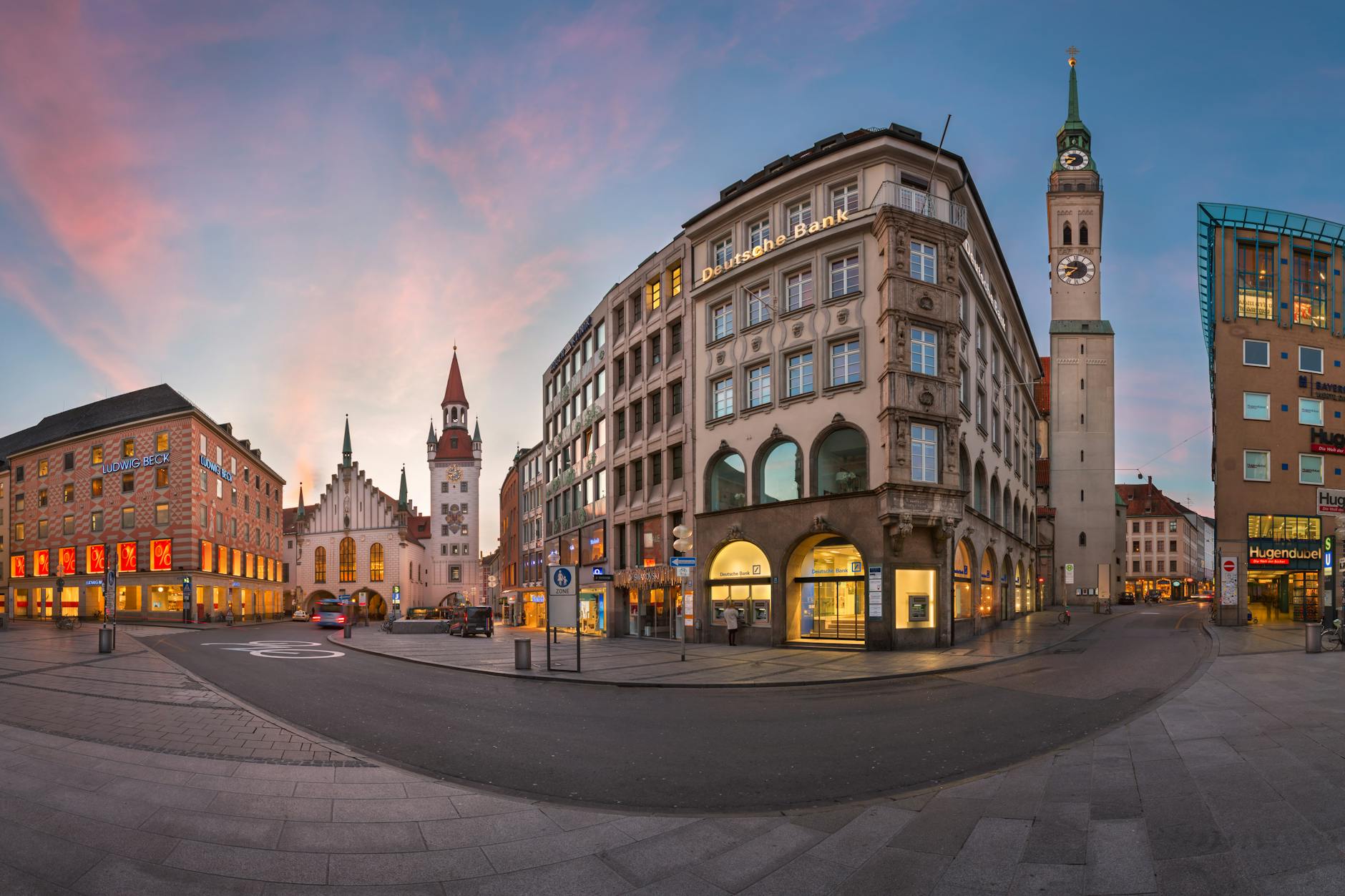
The Altstadt is more walkable than its medieval reputation suggests. Yes, the historic cobbles are technically still there in places, but the pedestrian zone between Karlsplatz, Marienplatz and Isartor has been resurfaced with smoothed granite slabs that handle wheelchair casters and walker tips without rattling. Curb cuts are universal at crossings.
- Marienplatz: entirely step-free, smooth surface, plenty of benches around the perimeter. The Glockenspiel performances at 11am, noon and (March–October) 5pm are visible from anywhere in the square.
- Frauenkirche (Cathedral): step-free main entrance with no door threshold; nave is flat. The towers have no public lift, so the famous panorama is sadly off-limits.
- Hofgarten: flat, gravel-and-paved arcades, benches every 50 metres. A favourite senior loop.
- Englischer Garten: the southern half (Chinese Tower, Monopteros, Kleinhesseloher See) has paved or hard-packed paths; cycle routes are also wheelchair-friendly. Northern half (Hirschau, Aumeister) has more gravel and roots.
- Olympiapark: mostly flat tarmac promenades; the Olympic hill itself has steeper grass paths but a paved switchback route exists from the south side.
- Viktualienmarkt: flat granite, fully navigable; stalls have low counters.
- Maximiliansanlagen and the Lehel river bluff: the only mildly steep sections in central Munich — the slope down to the Isar from Maximilianstraße is noticeable. Take the lift in the Bayerischer Landtag area or detour via the Praterinsel bridge instead.
- Schwabing back-streets: charming but uneven older pavements; main shopping streets (Leopoldstraße) are fully smooth.
Wheelchair-Friendly Attractions
Most of Munich’s headline sights are accessible. The exceptions are old tower stairs, a few historic palace upper floors, and a couple of tiny Baroque churches where space is the issue rather than policy.
Excellent Accessibility
- Deutsches Museum. Most exhibits accessible, lifts to every floor, a dedicated wheelchair route map, free loan wheelchairs and walkers at the information desk, accessible WCs, and disabled parking at the Boschbrücke and Ludwigsbrücke. The museum is renovating in phases through 2028, so a few halls are intermittently closed — check the daily map at the entrance.
- Pinakothek der Moderne. Purpose-built modern architecture, fully step-free, lifts to all floors, accessible WCs, dedicated quiet hour for autistic and sensory-sensitive visitors.
- Alte Pinakothek. Four lifts, all exhibition areas barrier-free, cafe and shop accessible, light folding chairs and two loan wheelchairs available. A few historic doorways are tight for wide chairs.
- Neue Pinakothek & Lenbachhaus. Lenbachhaus is excellent — new wing, full lift access, generous gallery spacing. Neue Pinakothek is closed for renovation; its collection rotates through the Schäck-Galerie nearby, which is accessible.
- BMW Welt and BMW Museum. Modern complex, no thresholds, multiple lifts including the spiral museum’s central core, dedicated accessible parking. One of the easiest attractions to navigate in any wheelchair.
- Hellabrunn Zoo. Paved, mostly flat paths throughout 40 hectares, accessible WCs, free loan wheelchairs at the entrance (deposit required).
- Marienplatz and the Neues Rathaus. Step-free square; the New Town Hall tower has a lift up to the viewing platform.
- Olympiapark and Olympia Tower. Tower has a high-speed lift to the 190-metre observation deck. Park promenades are flat.
- Allianz Arena. Stadium tours include accessible routes; designated wheelchair seating in the bowl bookable in advance.
- Nymphenburg Palace. Ground floor and main rooms accessible by lift and ramp at the side entrance; ask at the ticket office for the accessible route.
- Bavarian National Museum and Haus der Kunst. Both step-free with lifts.
Partial Accessibility
- Residenz. All courtyards (Königsbau-Hof, Apothekenhof, Brunnenhof, Kaiserhof) are step-free and worth walking through for free. The Residenz Museum and the Treasury (Schatzkammer) have multiple staircases and are not fully barrier-free, though the palace administration arranges individual guided routes for wheelchair users on request — book in advance via residenz-muenchen.de. The Cuvilliés Theatre has very limited wheelchair access (a few designated spaces) and the Court Garden (Hofgarten) is fully accessible.
- Asamkirche. One of Munich’s most ornate small Baroque churches but only 22 metres wide with a narrow stepped threshold; manageable for a slim wheelchair with one helper but tight.
- St Peter’s (Alter Peter) tower. 306 steps, no lift, not accessible. The church itself at ground level is step-free.
- Frauenkirche tower. No public lift to the top — the famous panorama is off-limits for now. Cathedral interior at ground level is accessible.
- Some smaller churches (Heiliggeistkirche, Bürgersaal upper chapel). Stepped entrances or upper galleries; ground floor often accessible.
Accessible Hotels in Munich
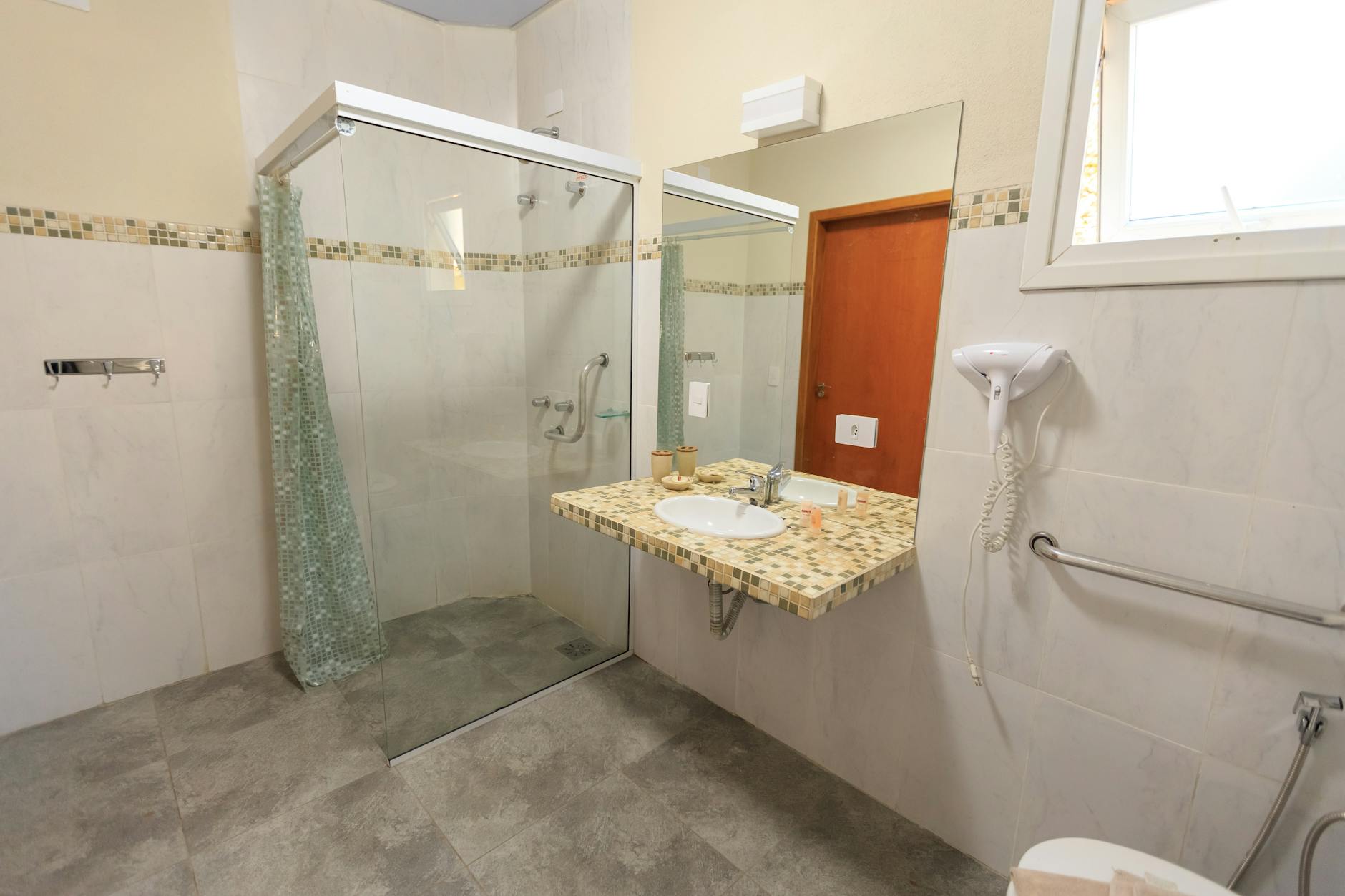
Mobility Munich starts with a properly accessible room. International chains apply their global accessibility standards in Munich; boutique and family-run hotels vary widely. The single most important rule: book by phone or email after the website booking, confirming exact features — door width, threshold height, roll-in or step-in shower, grab bars, bed height, turning radius. Photos help.
Reliable Chain Options
- Hilton Munich Park, Hilton Munich City. Step-free rooms with roll-in showers, grab bars, lowered fittings; lifts to all floors.
- Marriott Munich City Center, Munich Marriott Hotel. Accessible rooms to US ADA-influenced standards, roll-in showers in most.
- NH Munich Deutscher Kaiser, NH Munich Messe. Reliable accessible rooms; lift access; near Hauptbahnhof in the case of Deutscher Kaiser.
- Adina Apartment Hotels (Frankfurter Ring, Westend). Modern accessible apartments with kitchenette, useful for longer stays.
- WunderLocke (Sendling). Award-winning aparthotel with accessible studios, lift access, pool with hoist (verify currently).
- Motel One Munich-Hauptbahnhof / Sendlinger Tor. Budget-friendly, modern, with accessible rooms; small but well-fitted.
Senior-Friendly Luxury
- Hotel Vier Jahreszeiten Kempinski. Old-school grand hotel on Maximilianstraße with large rooms, full lift access, attentive staff, accessible bathrooms in selected suites. The doorman fetches taxis instantly — useful when your legs are tired.
- The Charles Hotel. Rocco Forte property near the Old Botanical Garden; large rooms, spa with pool, generous accessible rooms.
- Bayerischer Hof. Iconic central hotel with multiple accessible rooms and a spa; some rooms have step-in showers rather than roll-in, so specify.
- Sofitel Munich Bayerpost. Beside Hauptbahnhof, modern, several accessible rooms, lifts everywhere.
- Mövenpick Hotel Munich Airport. Useful base for tired travellers arriving with mobility needs — covered walkway to the terminal, smooth check-in, accessible rooms.
- Hotel Königshof. Historic grand hotel currently being rebuilt as of 2026 — check current opening status before booking.
Eating Out: Accessible Restaurants, Beer Halls and Cafes
Most modern Munich restaurants opened in the last two decades are level-entry. Older Wirtshäuser (traditional taverns) and Altstadt cafes are mixed — many have one small step at the door and tight tables. Beer halls vary widely. A short list of what works:
- Hofbräuhaus. Step-free entry to the main ground-floor Schwemme hall and accessible toilets via a lift (80 cm door); upper floors and the Festsaal are stairs only. A 6 cm step leads to the first-floor terrace. Comfortable for a wheelchair; ask staff for a table near the door.
- Augustiner Stammhaus and Augustiner Bräustuben. Both have step-free ground floors. The Stammhaus’s vaulted Muschelsaal is accessible; the upstairs Arkaden room is stairs only.
- Löwenbräukeller. Step-free entry to the main hall.
- Paulaner am Nockherberg. Step-free entry; large beer garden on gravel which is doable with a robust chair.
- Hirschgarten beer garden. Mostly flat gravel; firmer paths around the central restaurant.
- Wirtshaus in der Au. Modern, step-free, accessible WC.
- Mural Farmhouse (Werksviertel). Industrial-modern, fully accessible.
- Cafe Luitpold, Cafe Reitschule. Both have step-free main floors.
- Tantris, Käfer-Schenke. Higher-end options with accessible entrances; phone ahead to reserve a suitable table.
Smaller traditional cafes (Frischhut Schmalznudel, the alleys around Viktualienmarkt) often have a 5–15 cm step at the door. Staff will usually help if asked.
Accessible Tours and Hop-on Hop-off Buses
- Munich Walking Tours and Sage Traveling. Both offer wheelchair-accessible city tours that pre-check kerb cuts, accessible toilets, and seating breaks along the route.
- SBS Driving Service. Run by a wheelchair user, with high-roof taxis, ramped vans, and customisable city tours.
- Hop-on hop-off buses (Gray Line, Sightseeing München). Most double-deckers have a wheelchair lift at the rear and a designated lower-deck space — phone the operator the day before to confirm a lift-equipped vehicle. A relaxing way to cover the city without walking everywhere.
- Private guided tours. Most independent Munich guides will tailor a route to senior pace or wheelchair access; tell them at booking that you need extra benches, frequent coffee stops, or step-free routes.
- Audio guides at museums. Almost all major museums have audio guides in English at no or modest cost — a kinder pace than a fast-moving live tour.
Shopping
Department stores (Galeria Kaufhof at Marienplatz, Oberpollinger on Neuhauser Straße, Ludwig Beck) are fully accessible with multiple lifts and accessible WCs. Hirmer (men) and Lodenfrey (Bavarian wear) are step-free at the main entrance. The covered Viktualienmarkt is mostly accessible — the central beer garden has firm paths; outer rows can be uneven. Outdoor markets (Auer Dult, the Christmas markets) are cobbled but doable with help; arrive early to avoid crowds.
Accessible Toilets — Where to Find Them
Munich’s accessible WC coverage is good. Most major museums have at least one Behindertentoilette near the cloakroom or main lift. The German Euro-key system (Euroschlüssel) unlocks many automated accessible WCs across the city; you can buy one in advance from CBF Darmstadt for around €25 or borrow one from larger tourist offices.
- Hauptbahnhof: accessible WCs near the main hall (McClean facilities) and beside the DB Lounge.
- Marienplatz: accessible WC inside the U-Bahn station near the tourist information; another in the Galeria Kaufhof.
- Viktualienmarkt: accessible WC at the market office building.
- English Garden: accessible WC at the Chinesischer Turm beer garden and at the Seehaus.
- Olympiapark: accessible WCs at the Tower and visitor centre.
- Public WC chains: McClean and Werner Sauter facilities at major hubs — clean, paid (around €1), and almost always step-free.
Medical and Pharmacy Backup
- Emergency: 112 (ambulance and fire) and 110 (police). Operators speak English.
- 24-hour pharmacies: Munich runs a rotating night-pharmacy roster; the nearest open option is posted on every pharmacy door, on apotheken.de, or call 22833 from a German phone. Bahnhof Apotheke inside Hauptbahnhof’s main hall covers most evenings.
- English-speaking doctors: the US Consulate and major insurance company lists are a good starting point; the practice MedCenter Bogenhausen, Klinikum Schwabing International Office, and Internationale Apotheke (Elisenstraße near Hauptbahnhof) all serve English-speaking patients.
- Hospitals: Klinikum Großhadern (LMU, west of city) and Klinikum rechts der Isar (TUM, east of city) are the two major teaching hospitals with full emergency services and English-speaking staff.
- Dental emergencies: Zahnklinik der LMU (Goethestraße) and a rotating weekend dental on-call service.
Hearing, Vision and Cognitive Accessibility
Hearing Aids and Induction Loops
The Munich Philharmonic at the Gasteig HP8 (temporary venue during the Gasteig renovation) and the Bayerische Staatsoper at the Nationaltheater both run induction loops in marked seating sections; ask at the box office. The new concert hall in the Werksviertel, due to open in stages, will be loop-equipped throughout. Several cinemas (Mathaeser, Cinema Filmtheater) offer hearing-loop or descriptive-audio screenings for certain films — check listings.
Visual Impairment
- Tactile maps and platform guidance are standard at Hauptbahnhof and the central U-Bahn hubs.
- Audio guides are available in English at the Deutsches Museum, Pinakotheken, BMW Museum, Residenz, and most other major sites.
- Braille menus are rare in restaurants but some chains and hotels supply them on request.
- Guide dogs are welcome at virtually every attraction, hotel, restaurant and on all transit; bring vaccination paperwork as a precaution.
- The Bayerischer Blinden- und Sehbehindertenbund offers visitor support and local resources.
Cognitive, Autism and Sensory Needs
- Hauptbahnhof has a quiet room (Ruheraum) near the DB Lounge for travellers needing a low-stimulation break.
- Pinakothek der Moderne runs a dedicated quiet hour roughly monthly — check the website for current dates — with reduced lighting and limited admissions.
- Several museums offer reduced-sensation tours and pre-visit social stories; the Deutsches Museum is particularly active here.
- For travellers with dementia, the city’s “Demenz-freundliches München” programme trains shops and cafes around safe interactions; the muenchen.de site lists participants.
Senior Travel Munich: Pace, Itineraries and Energy Management
The biggest accessibility problem in Munich is not stairs — it’s overscheduling. Three sights a day is the natural ceiling for senior travel Munich rhythm; two sights plus a long lunch and a slow afternoon is better. Build the trip around benches and coffee.
A 3-Day Senior-Paced Itinerary
- Day 1 — Altstadt easy loop. Late breakfast at Cafe Luitpold. Tram or U-Bahn one stop to Marienplatz for the 11am Glockenspiel. Slow walk via Frauenkirche to the Residenz courtyards (free) and Hofgarten. Lunch at Spatenhaus or Augustiner Stammhaus. Optional afternoon Pinakothek der Moderne or Bavarian National Museum, finishing with coffee in the museum cafe. Hotel by 5pm.
- Day 2 — museum and park. Morning at the Deutsches Museum (book a wheelchair on arrival; allow 2 hours, not 5). Lunch at the museum cafe or step out to one of the Isar-side spots. Afternoon hop-on hop-off bus around the city ring — sit upstairs if you can manage the steps, downstairs accessible space if not. Sunset cocktail in the hotel bar.
- Day 3 — relaxed Schloss and beer garden. Tram 17 from Karlsplatz to Nymphenburg Palace (step-free side entrance, request from staff). Tour ground-floor rooms only. Lunch at Schlosswirtschaft Schwaige beside the palace. Slow afternoon at the Hirschgarten or the Chinesischer Turm beer garden in the English Garden. Early dinner at the Hofbräuhaus ground floor.
Pace Tips
- Hit major sights at opening (9–10am) or after 3pm; midday is busiest.
- Build in a real lunch break, sit down, eat properly — Bavarian food is heavier than light Mediterranean fare and works best at a slow pace.
- Cafes are everywhere; treat them as the rest stations they are.
- Skip the towers. The view from the Olympiaturm is better than from any Altstadt church spire and the lift is fast.
- Use the U-Bahn even for short hops; six minutes saved is six minutes of energy for later.
- Pack one short umbrella and a light layer — Munich’s weather flips quickly.
Wheelchair, Walker and Scooter Rental in Munich
If you can’t or don’t want to fly with your own chair, rental in Munich is straightforward. Most rental companies will deliver to your hotel and collect at the end of the trip; book at least three days in advance, more for electric scooters.
- SBS Fahrdienst. Manual wheelchairs delivered and collected within the city, hire-purchase available, plus accessible taxis. The most experienced operator for tourists.
- von Schlieben. Sanitätshaus near Stachus (Sonnenstraße 17) renting wheelchairs, rollators, electric scooters and shower chairs.
- Rolli mobil. Wheelchair rentals from Leopoldstraße 208 in Schwabing, including pickup of broken equipment.
- Cloud of Goods. Online booking with guaranteed delivery to your hotel.
- MeinHilfsmittel.de. Aggregator listing rollators, wheelchairs and other aids across Germany.
- Munich Airport. Free loan wheelchairs at the information desks in the departure areas and at the main information desk in the Munich Airport Center.
Day Trips: Accessibility in Bavaria Beyond Munich
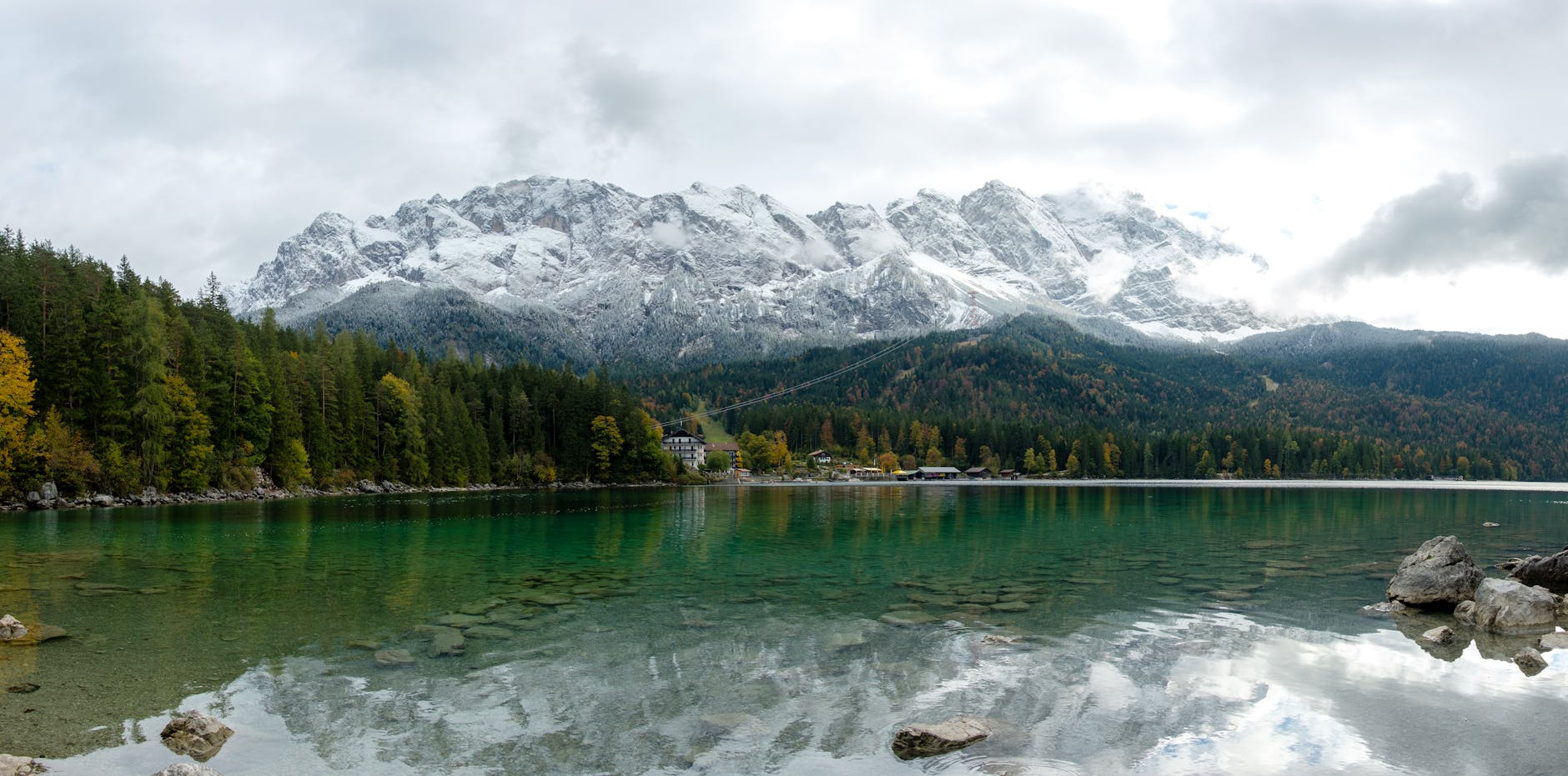
- Garmisch-Partenkirchen & Eibsee. The Zugspitze cable car is fully accessible: lift to the base station, level boarding into the cabin, accessible viewing platform at the summit (with caveat that high altitude can affect mobility). The Eibsee shoreline path is mostly hard-packed gravel and flat.
- Neuschwanstein. Partial accessibility — ground-floor rooms and the courtyard can be visited with a guide, but the upper royal apartments involve stairs. Shuttle bus accessible; the path from bus stop to castle is steep. Plan for help.
- Linderhof Palace. Partial accessibility on the ground floor.
- Schloss Herrenchiemsee. Boat to the island is accessible; horse-drawn carriage from pier to palace can take a wheelchair; ground floor of the palace is partially accessible.
- Salzburg. Day trip by accessible ICE train; Old Town is hilly but Mirabell Gardens and the Mozart-house ground floors are accessible.
- Dachau Concentration Camp Memorial. Fully accessible — ramps, lifts in the main building, paved paths throughout the grounds.
- Bavarian Palace Pass (Mehrtagesticket). Covers many palaces and gardens for 14 days; partial accessibility varies by site. The Bavarian Palace Administration publishes detailed accessibility notes on schloesser.bayern.de.
Assistive Tech and Useful Apps
- MVV App. Real-time lift status, barrier-free routing, ticket purchase. Essential.
- Wheelmap.org. Crowd-sourced accessibility ratings for venues across Germany; coverage in Munich is excellent.
- Google Maps with accessibility filter. Toggles wheelchair-accessible places and routes.
- DB Navigator. Long-distance Deutsche Bahn timetables, integrated mobility-service booking, station accessibility info.
- muenchen-barrierefrei.de. Official Munich accessibility portal with detailed venue accessibility audits.
- Apotheken Notdienst app. Finds the nearest 24-hour pharmacy.
Weather, Seasons and Surfaces
- Summer (June–August). Best for accessibility — long daylight, dry pavements, beer gardens at full pace, fewer surprise puddles. Heat can be tiring; hydrate.
- Spring and autumn. Mild, low crowds, easy pace. The shoulder seasons are objectively the best months for senior travel Munich.
- Winter (December–February). Ice patches make pavements unpredictable; the Christmas markets are gorgeous but crowded and partly cobbled. The city de-ices main routes but side streets can be slippery. Bring grip-soled shoes; wheelchair users may want winter tyres.
- Spring slush. Late February to mid-March can be the worst combination of melted-and-refrozen pavements; pick another month if you can.
Travel Insurance and EU Health Cards
EU and EEA residents with a European Health Insurance Card (EHIC) get state-funded emergency care in Germany on the same terms as locals. UK residents use the GHIC. Travellers from outside the EU should carry full travel insurance with medical evacuation cover — Bavarian hospital costs for non-residents can be high. If you’re flying with a powered wheelchair, take out a separate equipment insurance rider and photograph your chair (including the serial number on the frame) before check-in. Lufthansa, the dominant carrier at Munich Airport, has a well-rated special-needs desk; book assistance at least 48 hours before departure.
Helpful German Vocabulary
| English | German |
|---|---|
| Accessible toilet | Behindertentoilette |
| Disability ID card | Behindertenausweis / Schwerbehindertenausweis |
| Wheelchair | Rollstuhl |
| Lift / elevator | Aufzug |
| Step-free | Stufenfrei / barrierefrei |
| Ramp | Rampe |
| Walking aid / rollator | Gehhilfe / Rollator |
| Help, please | Hilfe, bitte |
| Is this seat free? | Ist hier frei? |
| Where is the lift? | Wo ist der Aufzug? |
| I need assistance to board | Ich brauche Hilfe beim Einsteigen |
Frequently Asked Questions: Munich Accessibility
Is Munich wheelchair-friendly?
Yes — consistently more so than most European capitals. The city is flat, the pedestrian zones are smoothed, the U-Bahn, S-Bahn, tram and bus networks are predominantly step-free, and almost all major museums have lifts and accessible WCs. The exceptions are tower-top viewpoints, a few palace upper floors and some Baroque churches with stepped thresholds. Most travellers find they can do 80 to 90 percent of a standard Munich itinerary without changing plans.
Is Munich public transit accessible?
Yes. All Munich tram and bus vehicles are low-floor with designated wheelchair spaces. All 100 U-Bahn stations offer step-free platform access. Over 80% of S-Bahn stations are accessible, including every stop on the central tunnel line. The MVV app shows live lift status. Holders of the German Schwerbehindertenausweis with a Wertmarke ride free; an accompanying person is also free when the card carries the “B” mark.
What is the best accessible hotel in Munich?
For mainstream reliability with full accessible-room features (roll-in shower, grab bars, lowered fittings), the Hilton Munich Park and the Munich Marriott Hotel are the safest bookings. For luxury with attentive staff, the Hotel Vier Jahreszeiten Kempinski and The Charles Hotel are excellent. For long stays with a kitchenette, Adina and WunderLocke are good aparthotel options. Always phone or email to confirm specific features after booking online — doorway widths and threshold heights vary even within a single hotel.
Are tactile maps and audio guides available?
Yes. Tactile transit maps and platform guidance are standard at Hauptbahnhof and the major U-Bahn hubs. Audio guides in English are available at the Deutsches Museum, Pinakothek der Moderne, Alte Pinakothek, Lenbachhaus, BMW Museum, Residenz, Nymphenburg Palace and most other major attractions, often free with admission or at modest cost. Guide dogs are welcomed everywhere, including on public transport.
What pace tips work best for seniors visiting Munich?
Plan two real sights a day, not five, with a proper sit-down lunch between them. Use the U-Bahn even for short hops to save legs. Avoid the historic tower climbs — the Olympiaturm has a fast lift and a better view. Build the day around cafes (they are everywhere and welcome lingering). Visit major museums right at opening when you have most energy. Avoid mid-February to mid-March for icy pavements. Hop-on hop-off buses are an underrated option for covering the city without walking everywhere.
How do I find a wheelchair-accessible taxi in Munich?
SBS Fahrdienst is the most experienced operator, with high-roof vans and ramped vehicles; book in advance via sbsfahrdienst.de or by phone. Standard Munich taxis can usually accommodate folded manual wheelchairs but not powered chairs. Fares for an adapted vehicle start around €60 for short city trips; airport transfers run higher.
Is Oktoberfest accessible?
Partially. The Theresienwiese site itself is flat and smooth; the big tents have designated wheelchair seating that must be reserved months in advance directly with the tent operator. The crowds are intense, especially on weekends, so weekday afternoons during the first week are calmer and easier. Accessible WCs are available throughout the site. The Oktoberfest organisers publish an annual accessibility page with the latest details.
Building the Rest of Your Munich Trip
Munich rewards travellers who slow down. The city’s accessibility infrastructure exists to remove friction, not to rush you through faster — the more time you take, the more the place opens up. Use the U-Bahn rather than the legs, sit in cafes rather than power through, pick two sights a day, and let the third afternoon be a long Hofgarten coffee.
Plan the rest of your visit with our broader planning Munich trip hub, polish your basics with our Munich travel tips, decode the transit system with our Munich U-Bahn and S-Bahn guide, check the latest on personal safety in our Munich safety guide, plan slower itineraries with the kids using our Munich with kids guide, and pick your travel window with our best time to visit Munich guide. Munich accessibility is at its best when you treat the city as a slow-paced friend rather than a checklist — the more relaxed your plan, the more relaxed your trip.