Where to Buy Dirndl and Lederhosen in Munich
Where to buy dirndl and lederhosen in Munich. Best Trachten shops, what to pay, how to spot quality and rental options.

Want to buy dirndl Munich? Or proper lederhosen that don’t look like a polyester costume from a Halloween shop? Munich is the world’s best place to buy authentic Bavarian Tracht (traditional clothing), but the gap between a tourist-trap fake and a real heirloom piece is wider than most visitors realize. This guide breaks down the legitimate Munich Trachten houses, what to expect at each, how to spot a quality piece, current 2026 prices, what to wear with what, and how to combine traditional and contemporary cuts.
Dirndl and Lederhosen Quick Reference
| Garment | Material | Quality Tier | Price Range |
|---|---|---|---|
| Dirndl (cheap costume) | Polyester / cheap cotton | Avoid | €40 to €120 |
| Dirndl (entry quality) | Cotton with synthetic details | Decent for one season | €120 to €250 |
| Dirndl (mid-range, authentic) | Linen and cotton, hand-finished details | Lasts years | €250 to €600 |
| Dirndl (premium artisan) | Silk, embroidered linen, hand-stitched | Heirloom | €600 to €2,500 |
| Lederhosen (cheap costume) | Faux leather or thin split leather | Avoid | €60 to €150 |
| Lederhosen (entry quality) | Cowhide | OK for occasional wear | €150 to €350 |
| Lederhosen (mid-range) | Deer or goat leather, hand-embroidered | Lasts decades | €350 to €1,200 |
| Lederhosen (premium) | Vintage deer leather, hand-tooled | Heirloom | €1,200 to €5,000 |
The Difference Between a Costume and a Tracht
Visitors often don’t realize the difference until they see authentic Tracht next to a costume version. A real dirndl uses traditional fabric (linen, cotton, sometimes silk), has specific cuts that follow regional traditions, includes a fitted bodice with proper hand-finished details, comes with a coordinating blouse (Bluse) and apron (Schürze), and shows real workmanship in seams, buttons, and trim. A real lederhosen pair uses goat, deer, or proper cowhide leather (no faux or split leather), features hand-embroidered Bavarian motifs, includes authentic stag horn buttons or wooden buttons, and comes in three standard lengths: short (Kniebund — knee-length is unusual), mid-thigh (the classic), or long (full-length, more conservative).
Beyond price, the difference shows in how the garment ages. A cheap costume polyester dirndl loses its shape after the first wash and looks slightly ridiculous after a year. A €400 linen dirndl from Lodenfrey gets better with every season — the fabric softens, the bodice molds to your shape, and the apron color set can be updated each year. The same logic applies to lederhosen: deer-leather pairs become more beautiful as they develop a patina over a decade of wear. This is craftsmanship, not just dressing up.
Best Munich Shops to Buy Dirndl and Lederhosen
Lodenfrey
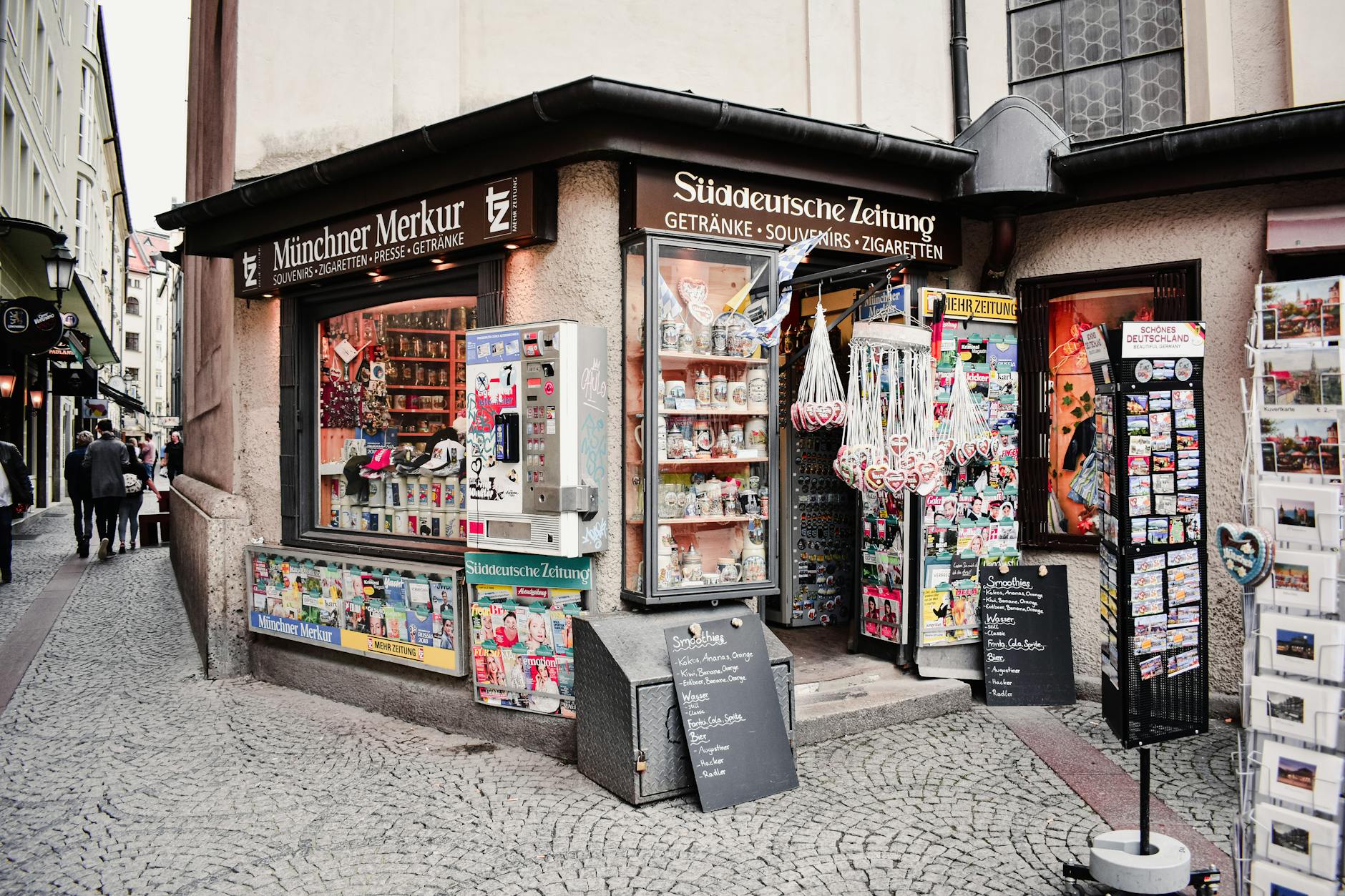
On Maffeistraße in the old town. Munich’s most respected Tracht house and one of the world’s finest. Lodenfrey makes much of its own dirndl line in Bavaria and stocks every major maker. Custom alterations included free with most purchases. Staff speak excellent English. Three floors: women’s Tracht on the second, men’s on the third, accessories on the ground floor. Price range: dirndls €350 to €1,500; lederhosen €450 to €1,800. The flagship of authentic Munich Tracht shopping.
Angermaier Trachten
Three central Munich locations and the biggest pop-up store at Oktoberfest. Broader price range than Lodenfrey — entry-level under €200, premium pieces past €1,000. The Theresienstraße flagship has the widest selection. Stocks contemporary ‘modern Tracht’ styles alongside classic cuts. A good choice for visitors who want quality without the Lodenfrey premium.
Loden-Plankl
On Kaufingerstraße. 200-year family business with deep roots in Bavarian loden (boiled wool) craftsmanship. Strong on outerwear (loden coats, jackets) in addition to traditional Tracht. The Tracht floor is smaller than Lodenfrey but well-curated. Excellent if you want to combine a Tracht purchase with a serious loden coat for cold weather.
Trachten Werner
A traditional artisan house on Buttermelcherstraße in the old town. Smaller, more old-school than the major chains. Hand-finished dirndls and lederhosen with serious artisan workmanship. Owner Werner has been in business for over 40 years; conversations with him about Bavarian craft traditions are part of the visit. Best for visitors who value provenance over selection.
Sportalm Kitzbühel
Austrian luxury Tracht with a flagship on Maximilianstraße. Statement dirndls aimed at serious wedding and Wiesn occasions. Higher price point, more fashion-forward, fewer quiet traditional options. Best for buyers who want a Tracht with contemporary flair.
Lola Paltinger
A boutique on Maximilianstraße specializing in custom-designed dirndls. Each piece is essentially bespoke. Designer Lola Paltinger has built Munich’s most innovative Tracht business by combining traditional cuts with bold fabrics — silk brocades, designer prints, contemporary aprons. Price reflects: most dirndls €800 to €3,000+. For buyers who treat their dirndl as fashion-statement art.
Steindl München
On Rosental near Marienplatz. Multi-brand Tracht boutique with strong children’s selection. Solid mid-range option with good staff. Friendly to first-time buyers who don’t know exactly what they want.
Hirmer Tracht Floor
Europe’s largest men’s department store, on Kaufingerstraße, has an entire floor devoted to traditional men’s clothing. Lederhosen, traditional shirts (Trachtenhemd), loden jackets, and accessories. Strong mid-range to premium offering with excellent staff alterations.
How to Spot Quality
Quality Markers in a Dirndl
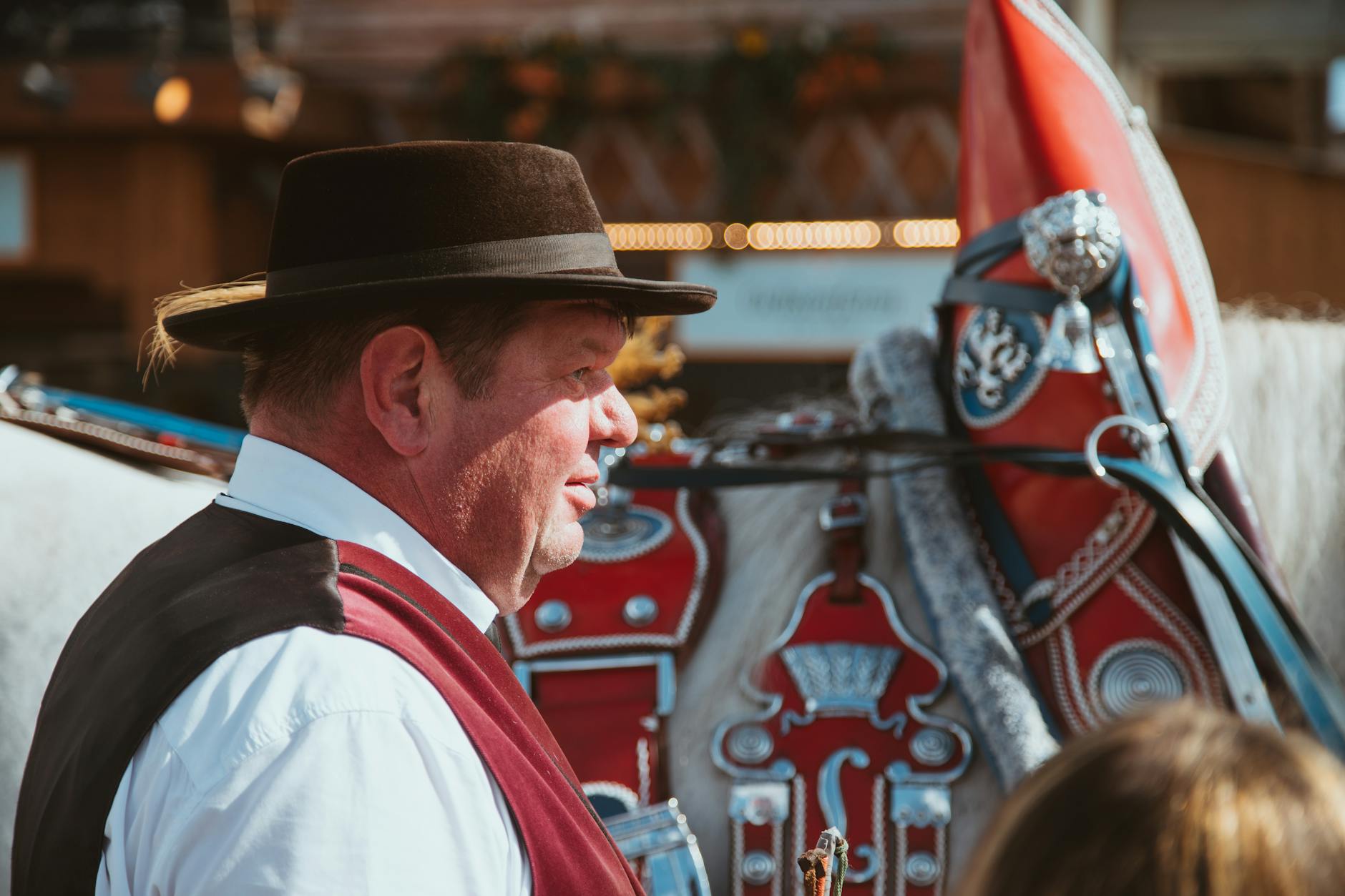
- Fabric: linen, cotton, or silk — never polyester for a serious dirndl.
- Bodice construction: lined, with stays or boning for support, hand-finished seams.
- Buttons: pewter, wood, or hand-painted ceramic — not plastic.
- Bluse (blouse): cotton or linen, often with lace or embroidered details.
- Apron: matching or contrasting fabric, well-tied, hemmed properly.
- Skirt length: traditionally below the knee; mid-calf or longer for serious occasions.
- Regional details: ribbon trim, embroidered motifs, traditional silver brooches.
- Country of manufacture: ‘Made in Bavaria’ or ‘Made in Germany’ — Italian or Eastern European production is acceptable for mid-range; Asian production is a red flag at premium price points.
Quality Markers in Lederhosen
- Leather type: goat (cheap-end real), deer (the gold standard), or cowhide (acceptable; goes stiffer than deer).
- Leather origin: Bavarian or Austrian leather is preferred for quality.
- Embroidery: hand-embroidered Bavarian motifs (oak leaves, edelweiss, deer) on the front flap.
- Suspenders (Hosenträger): typically separate; horsehair-stitched or hand-embroidered.
- Buttons: stag horn or hand-carved wood — not plastic or stamped metal.
- Pockets: at least one knife pocket on the front flap.
- Fit: snug at the waist; hem just above the knee (Kniebund) or mid-thigh (classic Wiesn style).
- Origin label: ‘Made in Bavaria’ or ‘Made in Austria’ for serious pieces.
Accessories: What Goes With What
A complete Tracht outfit involves more than just the dirndl or lederhosen. Skip these and your look reads as costume; include them and it reads as authentic.
For Dirndl Outfits
- Bluse: traditional white cotton or linen blouse, often with puff sleeves or lace.
- Schürze (apron): knotted on the front (single/married marker — see below).
- Trachten shoes: low-heeled pumps, ankle boots, or traditional Goiserer leather shoes.
- Trachten jewelry: silver brooch (Trachten-Spange) or coral necklace.
- Optional: Loden cardigan or jacket for cooler evenings.
The apron knot has traditional meaning: left = single, right = taken (married, engaged, or in a relationship), front-center = virgin, back-center = widow or server. Many young Bavarians treat this as flirty-traditional; some treat it as deeply meaningful. Either way, knowing the rule is part of the language of the dirndl.
For Lederhosen Outfits
- Trachtenhemd: traditional cotton shirt, usually checkered or solid, with horn buttons.
- Suspenders (Hosenträger): H-style or X-style; often hand-embroidered.
- Wadenwärmer / Loferl: knee-high traditional socks, often hand-knitted.
- Haferl shoes: traditional low Bavarian leather shoes with rubber sole.
- Optional: Trachten hat (Tirolerhut or Gamsbart hat), waistcoat (Janker or Weste).
Renting vs. Buying
For a single Oktoberfest visit, renting can make sense — rental runs €60 to €150 for a complete outfit for the festival period. The major rental operators (Bavarian Outfitters, Eichholzer, Angermaier) all rent and rent-with-option-to-buy. The math: a €450 mid-range purchase pays back if you’ll wear the outfit at three Oktoberfests; a €120 polyester costume from a discount shop is essentially renting at twice the price.
Long-term Bavarian residents and visitors planning multiple festivals overwhelmingly buy rather than rent. Buying a good piece becomes part of the experience — fittings, conversations with shop owners, choosing fabric and details. Many Bavarians own three or four dirndls or pairs of lederhosen for different occasions across a lifetime.
Best Time to Buy
- Off-season (January–March) — Best selection, full sizes available, and many shops offer 10 to 30 percent discounts on previous year’s stock.
- Pre-Wiesn (June and July) — Current season’s new arrivals, full sizes, no discounts.
- During Oktoberfest — Smaller sizes sell out; pop-up shops do a heavy trade but quality and selection at flagship stores remain best.
- Post-Oktoberfest (mid-October) — Sales begin on this year’s remaining stock, often 20 to 40 percent off.
- Christmas season (December) — Wedding and family gift season; stocks tend to thin.
Shopping Itinerary: A Half Day of Tracht Buying
- 10:00 — Begin at Lodenfrey on Maffeistraße. Establish price benchmark and try several styles.
- 11:30 — Walk to Loden-Plankl on Kaufingerstraße for the loden coat selection.
- 12:30 — Lunch at Augustinerkeller or Bratwurstherzl nearby.
- 14:00 — Trachten Werner on Buttermelcherstraße for artisan workmanship.
- 15:00 — Angermaier on Theresienstraße for broader mid-range comparison.
- 16:30 — Final decision and alterations at chosen shop.
- Coffee and reflection — at Café Frischhut with the famous Auszogne doughnut.
Sustainability and Second-Hand Tracht
Authentic Tracht is genuinely sustainable — pieces are designed to last decades and second-hand markets thrive. A few options:
- Resales Maximilianstraße and Garhammer Outlet sell pre-owned designer Tracht.
- eBay Kleinanzeigen (the German classifieds) has a strong Tracht section; prices typically 40 to 70 percent below retail.
- Pop-up second-hand Wiesn markets open every August in Munich; check the Wiesn-Markt or Oktoberfest tourist office.
- Vintage Trachten from the 1950s–70s are increasingly collectible; small antique shops in Schwabing carry them.
Frequently Asked Questions
Can foreigners wear Tracht without being disrespectful?
Yes, with one caveat: wear it well. Bavarians appreciate visitors who wear authentic, well-fitted Tracht and treat it with respect. The disrespect is in cheap costume polyester worn ironically. Buying or renting a real piece signals you understand the tradition; locals will universally welcome it.
Can I get my purchase altered before flying home?
Most flagship Tracht stores include free alterations on a 3 to 7 day turnaround. Major chains can sometimes complete same-day alterations on simpler adjustments. Plan to be in Munich for at least 3 to 4 days after purchase if alterations are needed; many travelers buy on day 1 or 2 of their trip.
Are children’s sizes available?
Yes — Lodenfrey, Loden-Plankl, and Steindl all have children’s sections. Children’s Tracht runs €120 to €350 for a complete outfit. Many Bavarian families build children’s wardrobes over multiple years and pass items between siblings.
Can I return Tracht if I change my mind?
Unworn pieces in original condition can typically be returned or exchanged within 14 days. Altered pieces cannot be returned. Custom orders (Lola Paltinger, fully-bespoke Trachten Werner work) are final sale.
Can I get Tracht with tax-free shopping refunds?
Yes — non-EU residents can claim VAT back on purchases over €50.01 per receipt. Most major Tracht houses handle the paperwork. Bring it to Munich Airport customs for validation.
Regional Variations in Bavarian Tracht
What looks like one unified ‘Bavarian costume’ to outsiders is actually a patchwork of regional traditions. Munich-area Tracht (Münchner Tracht) is the most internationally recognized, but each Bavarian region — and even individual valleys — has distinctive details. Worth knowing if you want to look authentic:
- Münchner / Upper Bavarian — the standard ‘Wiesn’ look: dirndl with knee-length skirt, lederhosen short or mid-thigh, traditional embroidery in green, brown, and red.
- Miesbacher — from the Tegernsee area; deeper colors, longer dirndls, heavier silver jewelry.
- Salzburger / Berchtesgaden — slightly different cuts; alpine motifs in embroidery.
- Schwarzwald — Black Forest variants with the famous Bollenhut (red pom-pom hat); not really Bavarian.
- Tegernseer — a distinct dirndl style still worn at the Tegernsee around Munich; tighter bodice, longer apron.
- Niederbayern — lower Bavarian style with more elaborate embroidery on lederhosen.
Most visitors don’t need to worry about regional accuracy. Most authentic Münchner Tracht works for any Bavarian event, and the shop staff will guide you to a piece that fits the occasion.
Tracht Care: Looking After Your Investment
Cleaning
Dirndls in linen or cotton can be hand-washed cold or gently machine-washed; air-dry on a hanger. Silk dirndls require dry cleaning. Lederhosen should never be machine-washed — wipe with a damp cloth, leather conditioner once or twice a year, store dry and on a hanger to maintain shape.
Storage
Hang dirndls on padded hangers in a breathable garment bag. Store lederhosen in a cool dry place; don’t fold for long periods. Authentic Tracht from quality houses can last 30+ years with proper care; many Bavarian families have great-grandparents’ pieces still in active use.
Alterations
Most Trachten houses include free initial alterations and charge €20 to €60 for later modifications. As your body changes over years, alterations keep the piece wearable. If you outgrow a piece beyond alteration, the second-hand market is strong — pieces hold value well.
Tracht for Specific Occasions
| Occasion | Recommended Tracht | Don’t |
|---|---|---|
| Oktoberfest | Mid-range dirndl or lederhosen | Cheap polyester costume |
| Wedding | Premium dirndl, embroidered Bluse, traditional shoes | Casual modern Tracht |
| Christening or family party | Mid-range dirndl, knee-length | Statement avant-garde piece |
| Beer hall evening (non-festival) | Optional; if worn, casual mid-range | Over-dressed premium |
| Photo shoot | Premium artisan piece | Anything that doesn’t fit perfectly |
| Kids on a family outing | Children’s dirndl or lederhosen | Adult-style fancy |
| Theme party abroad | Mid-range Bavarian-authentic piece | Costume-style cheap version |
Frequently Asked Questions
Can men buy a Trachten outfit if they’re going to Oktoberfest alone?
Yes, absolutely. Men’s Trachten purchase is straightforward at Hirmer or Loden-Plankl. A complete outfit (lederhosen, shirt, suspenders, socks, shoes) runs €350 to €1,000+. The investment pays off if you’ll attend multiple Wiesn or Bavarian weddings.
Are there pregnancy-friendly dirndl options?
Yes — most Trachten houses sell maternity dirndls with adjustable bodice or stretch panels. Prices roughly match regular dirndls. Rental for one-time use is common during pregnancy.
Can I have a dirndl made to measure?
Yes. Lola Paltinger and Trachten Werner both offer made-to-measure service starting at €800 to €1,500. Allow 4 to 8 weeks for production. The result is significantly better than off-the-rack for tall or unusual sizes.
Bringing Tracht Home: Travel and Customs Tips
A bought Tracht piece comes with practical travel considerations. Dirndls fold and pack reasonably well; lederhosen are bulkier and benefit from being worn or carried separately. A few specific tips:
- Air travel: Lederhosen go in checked luggage; dirndls can go in carry-on. Both pack flat with minimal wrinkling.
- Customs: Tracht is treated as ordinary clothing; no special import duties for personal use within reasonable quantities.
- Tax-free shopping: Non-EU visitors can claim VAT back (12 to 19 percent) on purchases over €50.01. Request the form at checkout, present unworn at airport customs.
- Photographing your piece before packing: useful for insurance.
- Garment bags: most Trachten houses provide them free with purchases over €300.
- Shipping: international shipping from major Trachten houses runs €30 to €120, useful for purchases too large for luggage.
First Impressions: What a Trachten Shopping Experience Feels Like
Buying a serious Tracht piece is not like buying off-the-rack fast fashion. Expect a fitting room with a staff member who measures, brings options, and offers honest opinions. The process typically takes 60 to 90 minutes for a complete outfit. You’ll try multiple cuts, colors, and fabrics before deciding. Many Trachten houses serve coffee or sparkling wine during longer fittings, especially at the premium tier. The slowness is part of the experience — these are pieces meant to last, and the staff treat them accordingly. Approach with the same patience you’d bring to buying a tailored suit, and you’ll come away with something you wear with pride.
Common Mistakes First-Time Tracht Buyers Make
- Buying too small: Authentic dirndls fit snugly across the bust but should sit comfortably; squeezing into a size down is uncomfortable for a long Wiesn evening.
- Mixing low-quality blouse with mid-range dirndl: The Bluse is part of the outfit; budget for it accordingly.
- Ignoring the apron color: Aprons can be updated each year; many Bavarians own one dirndl and rotate aprons.
- Skipping the proper shoes: Modern fashion shoes look wrong with Tracht; spend €60 to €120 on traditional shoes.
- Buying lederhosen too long: The classic Wiesn lederhosen ends 5 to 10 cm above the knee; shorter is younger.
- Forgetting suspenders: Lederhosen do not have belts; suspenders are essential.
- Choosing fashion-print fabrics for a first piece: Classic colors (forest green, burgundy, navy blue) date better than seasonal prints.
Can I find vintage or second-hand Tracht?
Yes. The strongest second-hand Tracht markets are eBay Kleinanzeigen (the German classifieds, where prices typically run 40 to 70 percent below retail), the Resales boutiques on Maximilianstraße and Sendlinger Straße, and the pre-Oktoberfest pop-up markets in late August. For vintage pieces from the 1950s through 70s, smaller antique shops in Schwabing and Haidhausen carry occasional finds. Quality varies; check seams, fabric integrity, and any embroidery before buying.
Are there ethical brands worth supporting?
Lodenfrey, Loden-Plankl, and Trachten Werner all produce a significant share of their pieces in Bavaria and Austria with traceable supply chains. Sportalm Kitzbühel is Austrian-made. Smaller artisan operations (Lola Paltinger, individual master craftspeople in the Allgäu region) offer the highest provenance but the highest price. If sustainability matters to you, ask shop staff about country of manufacture before purchasing.
What if my body type doesn’t match standard Trachten cuts?
Trachten houses are accustomed to a wide range of body shapes. Lodenfrey and Hirmer specifically offer plus sizes (up to size 52 women’s, 60 men’s), and the fitting culture means alterations are standard. Lola Paltinger and Trachten Werner both produce custom-made pieces for sizes outside the typical range.
Plan Your Munich Trip
- Munich Shopping Guide — the master overview
- Complete Oktoberfest Guide — what to expect at Wiesn
- What to Wear to Oktoberfest — full outfit guidance
- Best Munich Souvenirs — alternative gift ideas
- Maximilianstrasse Luxury Shopping — Munich’s premium street