Spas and Wellness in Munich: Thermal Baths and Slow Days
The sauna rules nobody tells you, Therme Erding's real prices, an art nouveau bathhouse you can still swim in, and an outdoor pool heated through the snow.
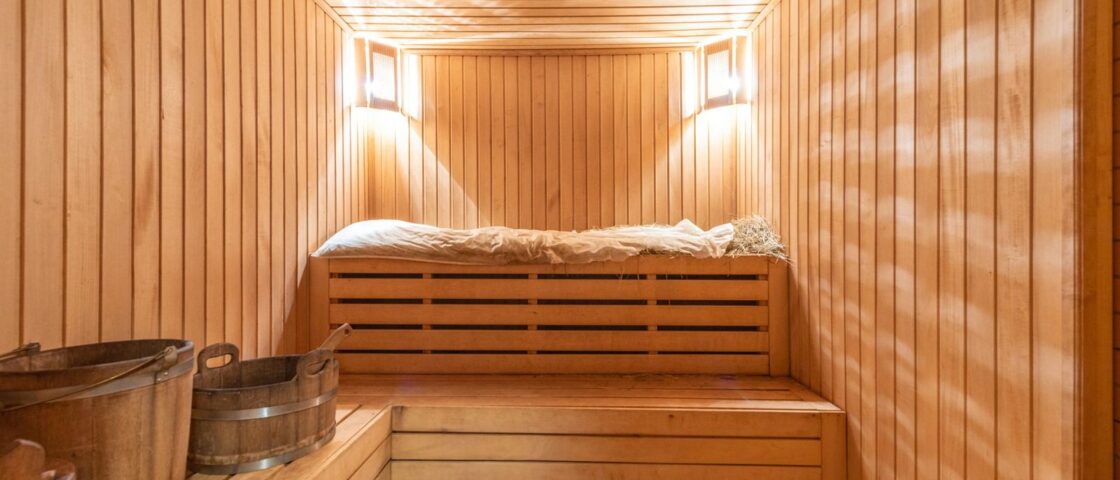
Start with the thing nobody tells visitors: in a German sauna you do not wear a swimming costume. Not in the sauna itself. You take it off, you sit on a towel, and the room is mixed. This is normal, it is not negotiable, and it is the single most common reason a first Munich spa visit goes awkwardly.
With that established: Munich is unusually good at this. The city has an art nouveau bathhouse you can still swim in, an outdoor pool heated through the winter, thermal spas within an hour that operate at a scale that has to be seen, and Alpine lakes for the people who would rather be cold. A Munich spa day is one of the better wet-weather answers in a city that gets around 130 wet days a year.
This guide covers the thermal spas, the historic city baths, the hotel wellness floors and the free options, with prices as they stand in September 2026 and honest notes on which are worth the money.
Munich spa options at a glance
TOKEN_HERO| Where | What it is | Cost | Best for |
|---|---|---|---|
| Therme Erding | Vast thermal complex, 30 km north-east | From €22 (early, 2h) to €69 (weekend sauna day) | A full day; families; the sauna world |
| Müller’sches Volksbad | Art nouveau public bathhouse on the Isar | Public-baths pricing | Architecture and a proper swim |
| Dantebad | Outdoor pool heated all winter | Public-baths pricing | Swimming outside in the snow |
| Hotel spa day passes | Pool, sauna, treatments in a city hotel | Varies widely; not cheap | Central location, no travel |
| Alpine lakes | Cold-water swimming, 40–65 min out | Free | Summer, and the hardy in winter |
| The Isar | River swimming at the Flaucher | Free | A hot afternoon, with care |
The sauna rules, properly explained
Get this right and everything else is easy. The German-speaking sauna tradition has firm conventions and locals will correct you, politely but immediately, if you break them.
- No costumes in the sauna. Textiles hold moisture and bacteria and are considered unhygienic. You go in naked, wrapped in or sitting on a towel. In the pools outside the sauna area, costumes are normal.
- Sit or lie on your towel. No part of you should touch the wood directly, feet included. This is the rule people care most about.
- Shower before you go in, and dry off. Wet skin does not sweat properly.
- Mixed is the default. Most saunas are mixed-gender. Many spas run women-only days or have a separate women’s area — check the timetable if that matters to you.
- Silence. Conversation in a sauna cabin is quiet at most. It is not a social room.
- Do not walk in during an Aufguss. This is the ritual where an attendant pours water and essential oils on the stones and circulates the heat with a towel. The door stays shut for its duration, generally ten to fifteen minutes. Turning up halfway through and opening the door is the cardinal sin.
- Cool down properly. Cold plunge or cold shower, then rest, then repeat. Three rounds is the standard pattern. Skipping the cold part is missing the point.
Insider tip: the Aufguss is the thing to plan around. Sessions are on a posted timetable, they are the busiest and best part of the day, and a good Aufgussmeister turns fifteen minutes of heat into a performance. Arrive at the cabin five minutes before the listed time. If you have never done one, start with a milder scheduled session rather than the hottest one on the board.
Note also that the sauna areas frequently have a minimum age of 16 — this is the case at Therme Erding — which shapes any family plan.
Therme Erding: the big one
About 30 km north-east of the city, Therme Erding bills itself as the largest thermal spa in the world, and while superlatives of that kind deserve scepticism, the scale is genuinely difficult to convey. It is several distinct worlds under palm trees and glass: a thermal pool complex, a wave pool, 28 water slides in the Galaxy section, and a large sauna and Vital area that is a separate, adults-only proposition.
What it costs
| Ticket | Weekday | Weekend / holiday |
|---|---|---|
| Therme & Vital Oasis — 1 day | €52 | €59 |
| Therme & Vital Oasis — 4 hours | €37 | €44 |
| Therme & Vital Oasis — 2 hours | €25 | €32 |
| Vital & Sauna (16+) — 1 day | €62 | €69 |
| Vital & Sauna (16+) — 4 hours | €47 | €54 |
| Early Swimmer — 2 hours, Mon–Fri before noon | €22 | — |
Opening hours run roughly 10:00 to 23:00 on weekdays, 09:00 to midnight on Saturdays and 09:00 to 23:00 on Sundays.
The honest verdict
Therme Erding is not a serene experience and it does not try to be. At weekends it is loud, full of families, and the queues for the slides are long. If your idea of a spa is quiet and candlelit, a Saturday here will disappoint you badly at €59 a head.
Go on a weekday. Better still, use the Early Swimmer ticket at €22 for two hours before noon, which is the cheapest way into the place by a wide margin and lands you there when it is close to empty. If you want the calm version, buy the Vital & Sauna ticket and stay in the adults-only side, which is a different building in character and where the €10 premium earns itself back immediately.
The 2-hour and 4-hour tickets are the value sweet spot for most people. A full day at a thermal spa sounds appealing and is, in practice, about three hours more than anyone actually wants.
Getting there
It is about 30 minutes by car from Munich on the A92, with a large multi-storey car park on site. By public transport it takes longer and involves a change to a bus at the Erding end — build in an hour each way and check the return bus times before you go in, because the spa is open far later than the connecting services run.
TOKEN_THERMEMüller’sches Volksbad: the beautiful one
On the Isar, opposite the Deutsches Museum, sits a public swimming bath opened in 1901 that is one of the finest interiors in Munich and is still, remarkably, an ordinary municipal pool that anyone can walk into for the price of a swim.
The Müller’sches Volksbad was built as a gift to the city and designed with the conviction that working people deserved beautiful architecture. It has a barrel-vaulted hall, stucco, wrought iron, and a Roman-Irish steam bath. Swimming lengths under that ceiling is a genuinely different experience from swimming lengths anywhere else.
This is the recommendation of this guide for anyone with limited time. It is central, it is inexpensive, it takes ninety minutes, and it is architecturally more interesting than most of the paid attractions in the city. Bring a padlock for the lockers or expect to pay a deposit for one.
Insider tip: go on a weekday morning. Lane swimming at 08:00 with the light coming through the high windows is the version of this building worth having; a Saturday afternoon is a busy public pool with excellent plasterwork.
The Dantebad and swimming outdoors in winter
Munich’s municipal pools include something unusual: the Dantebad, an outdoor pool heated through the entire winter. You swim outside, in warm water, with cold air on your face and, on the right day, snow settling on the deck around you.
It is one of the genuine pleasures of a Munich winter and it costs the price of a public swim. The steam coming off the water in January is the whole point. Go at dusk.
The wider municipal network covers the city well and is the cheapest wellness in Munich by a distance — a fraction of what a hotel spa or a thermal complex charges. For a family, it is frequently the better choice; our Munich with kids guide covers the pools that suit children. The Munich winter guide has more on the cold-season options.
The Bavarian spa towns, and what “Bad” means
You will notice that a great many Bavarian towns begin with Bad — Bad Tölz, Bad Wörishofen, Bad Aibling, Bad Reichenhall. This is not decoration. It is a protected designation, granted by the state, marking a town with a recognised healing spring, climate or peat deposit and the medical infrastructure to use it. A town can lose it.
The German spa tradition is genuinely medical in origin, and the culture that grew out of it explains the country’s saunas, its thermal complexes and its willingness to treat three hours of bathing as a reasonable thing to do on a Tuesday.
Bad Wörishofen and Kneipp
About 80 km west of Munich in the Unterallgäu, Bad Wörishofen is where Sebastian Kneipp developed the water cure that carries his name in the nineteenth century, and the town has been organised around it ever since. Kneipp therapy is a system of cold-water treading, alternating temperatures, herbs and exercise, and you will meet its shallow water-treading basins — the ones with the handrail, where you walk through cold water lifting your knees like a stork — in parks across Bavaria and in Munich itself.
The town has its own station, so it is reachable without a car, and the modern Therme, opened in 2004, is roughly a fifteen-minute walk from the platform.
Bad Aibling and the moor
About 60 km south-east, Bad Aibling is Bavaria’s oldest moor spa, and it pairs thermal water with peat. A moor bath — being lowered into warm, dense, dark peat — is an unusual sensation and an acquired taste, and it is the local speciality rather than a tourist novelty. It is reached by rail via Rosenheim.
Honest note: these are working spa towns, not resorts. They are quiet, the clientele skews older, and the atmosphere is closer to a health facility than a holiday. That is a recommendation if you want the real thing and a warning if you were expecting Therme Erding with better scenery.
The sauna types you will meet
A large German sauna area is not one room. Signs are usually in German only, and knowing which door to open saves a lot of trial and error.
| Name | Roughly | What it is |
|---|---|---|
| Finnische Sauna | 80–100°C, very dry | The classic. Hottest room in the building; where the Aufguss happens. |
| Biosauna / Sanarium | 50–60°C, some humidity | Gentler, often with coloured light. Start here if you are new to it. |
| Dampfbad | ~45°C, saturated | Steam room. Easier on the breathing, harder to sit out for long. |
| Kelo / Erdsauna | Very hot | Log-built or partly underground. Usually the connoisseur’s room. |
| Salzgrotte | Warm, dry | Salt chamber. Restful; medical claims about it are thin. |
| Ruheraum | Room temperature | The rest room. Silent, and the part people wrongly skip. |
Insider tip: the Ruheraum is not an afterthought. The pattern is heat, cold, then twenty minutes lying down, and the rest is where the effect actually happens. Doing three hot rounds back to back with no rest between them will leave you tired rather than restored, which is why visitors often conclude the sauna did nothing for them.
Hotel spas and day passes
Munich’s upper-tier hotels have serious wellness floors, and several sell day passes to non-residents. This is the option to consider when you want a pool, a sauna and a treatment without leaving the centre, and when you would rather pay for calm than for water slides.
What you are buying is quiet, proximity and a robe. What you are not buying is scale — a hotel pool is a pool, not a thermal landscape, and the price per hour is considerably higher than Therme Erding’s. Prices vary too widely between properties and seasons to quote usefully; ring ahead, because availability for non-residents is often capped and sometimes withdrawn entirely at busy periods.
Two practical notes. Day passes frequently exclude treatments, which are booked and paid separately and should be reserved days ahead. And some spa floors are adults-only, which is worth checking if you are travelling as a family. Our luxury hotels in Munich guide covers which properties have the better facilities, and boutique hotels in Munich the smaller ones.
Cold water: lakes and the Isar
The free half of Munich wellness, and for a lot of people the better half.
The Starnberger See is about 40 minutes on the S6 and the Ammersee about 50 on the S8 — both with proper lidos, changing facilities and lakeside cafés. In summer this is what Munich does at the weekend, and the trains out on a hot Saturday are full of people carrying towels. See our lakes near Munich guide for which shore to aim for.
The Isar itself, around the Flaucher south of the centre, is where the city swims without leaving it. The water is cold even in August and the current is stronger than it looks — stay near the bank, avoid the days after heavy rain, and keep well clear of weirs.
Winter swimming has a real following here. If you want to try it, the sensible route is a spa with a cold plunge rather than an unsupervised lake in February, where the risk is not the discomfort but the cold-shock response.
TOKEN_LAKETreatments, and how booking works
Massage and treatments in Germany split into two categories that look similar on a price list and are not.
Wellness massage is what a spa sells — relaxing, oil-based, no medical claim. Physiotherapie and medizinische Massage are regulated medical services delivered by licensed practitioners, frequently in the same building at a spa town, and they are aimed at an actual complaint. If you have a bad back rather than a stiff weekend, the second is what you want, and asking for it by name will get you taken seriously.
- Book ahead. Several days for a weekend slot, and more in December and over Oktoberfest. Walking in and asking is how you end up with whatever nobody wanted.
- Treatments are almost never included in a spa day ticket or a hotel day pass. They are a separate charge on top.
- Arrive fifteen minutes early and shower first — this is expected rather than optional.
- Tipping is modest, in the region of ten per cent, and cash is easiest.
- Language. English is generally fine in Munich and at the big thermal complexes, and less reliable in the smaller spa towns. Learn the word for the body part that hurts.
The traditional local treatments worth trying over a generic aromatherapy massage: a moor pack (warm peat, heavy and oddly comforting), a hay bath (Heubad, Alpine herbs and steam, a South Tyrolean import), and a proper Kneipp circuit of alternating hot and cold water. These are the local traditions rather than imports, and they are what these places actually do well.
Wellness without spending much
Thermal spas are expensive and largely optional. Munich’s cheap and free wellness is genuinely good, and for a short trip it is frequently the better answer.
| Option | Cost | Why it works |
|---|---|---|
| Municipal pools | A few euros | Including the Volksbad and the Dantebad — the two most interesting swims in the city |
| The Isar at the Flaucher | Free | River swimming and gravel banks twenty minutes from the centre |
| English Garden | Free | 5 km of park; the Kleinhesseloher See; lying on the grass is a recognised local activity |
| Kneipp basins in city parks | Free | Cold-water treading, no booking, five minutes is enough |
| Lake day on the S-Bahn | Transport only | Starnberger See or Ammersee with a group day ticket |
| Early Swimmer at Therme Erding | €22 | The cheapest route into the big thermal spa |
For a pair or a group, note that the day ticket arithmetic matters as much here as anywhere: a group day ticket out to the lakes costs barely more than two singles. Our Munich on a budget guide works through the combinations, and budget transport in Munich covers the zones.
Building a wellness day into a Munich trip
The mistake is treating the spa as a fixed booking. Treat it as your weather contingency instead.
| Situation | Do this | Time needed |
|---|---|---|
| A washed-out afternoon | Müller’sches Volksbad | 90 minutes, central |
| A full rainy day | Therme Erding, weekday 4-hour ticket | 6–7 hours door to door |
| A cold, clear winter evening | Dantebad, outdoors, at dusk | 90 minutes |
| Recovering from Oktoberfest | Sauna, three rounds, plenty of water | Half a day |
| A hot summer Saturday | Starnberger See or Ammersee | Full day |
| A last morning before a flight | Hotel spa day pass | 2–3 hours, no travel |
On a three-day trip, do not give a whole day to Therme Erding — you will have seen very little of Munich, and the city itself is the reason you came. Take the Volksbad for ninety minutes instead. On a week-long trip, a weekday at the thermal spa is a good use of the fifth day, when city fatigue has set in. Our Munich itineraries guide sets out how the days should be balanced.
Couples looking for the slower version of a Munich trip will find more in our romantic things to do in Munich guide.
When the spas are busy
Timing changes the experience here more than the choice of venue does. The same building at €52 on a Wednesday morning and €59 on a Saturday afternoon is two entirely different days out.
- Weekday mornings are the quietest window, everywhere, all year. This is what the discounted early tickets exist to fill, and it is the single best piece of advice in this guide.
- Saturday afternoons are the worst, particularly in the family areas and on the slides.
- Rain fills the thermal spas. A wet Sunday in Munich sends several thousand people to exactly the same places you were thinking of. If the forecast is bad, go early or accept the crowd.
- School holidays transform the family sections. Bavarian holiday dates are published well ahead and are worth a glance if you want quiet.
- The sauna areas stay calm even when the pools are heaving, because of the 16+ minimum age and the quiet convention. On a busy Saturday, the sauna upgrade is what buys you the day you wanted.
- Winter is the season. Thermal spas are better in January than in July, when the lakes are the obvious competition and the outdoor pools are open.
One more scheduling note: Sunday is not a shopping day in Germany, which makes it a natural spa day and pushes the crowds up accordingly. If your itinerary has a spare Monday, use that instead — the museums are shut, the spas are empty, and the two facts fit together neatly.
What is not worth the money
- A weekend day ticket at Therme Erding, at €59. Same water, three times the people, and the slide queues eat the afternoon. Go midweek or go early.
- A full day ticket anywhere. Almost nobody wants eight hours in a thermal spa. The 4-hour ticket is the honest length of the experience and saves €15.
- A hotel spa pass when you have half a day. If you have the time to travel, the thermal spas offer far more per euro. The hotel option is for when you do not.
- Treatments booked on arrival. The good slots go days ahead; what is left on the day is the 11:00 gap nobody wanted.
- Bringing a swimming costume into the sauna. It is not a saving, it is a mistake, and you will be asked to remove it.
What to bring
- Two towels — one to sit on in the sauna, one to dry with. Most spas hire them, at a price that will annoy you.
- Flip-flops. Worn everywhere except inside the sauna cabin itself.
- A padlock for public-baths lockers.
- A bathrobe if you own a packable one; hire otherwise. You will spend more time in the rest areas than in the water.
- A refillable bottle. Three sauna rounds dehydrate you more than people expect.
- A card. Most spas run a wristband system where you charge food and drinks and settle on the way out.
Frequently Asked Questions
Do you have to be naked in a German sauna?
In the sauna cabin itself, yes — swimming costumes are considered unhygienic and are not worn. You use a towel to sit on and to wrap up in between rounds. In the swimming pools and thermal areas outside the sauna, costumes are normal and expected. Most saunas are mixed-gender, and many spas run women-only sessions or areas if that is preferable.
How much does Therme Erding cost?
A weekday day ticket for the Therme and Vital Oasis is €52, rising to €59 at weekends and on holidays. The adults-only Vital & Sauna ticket is €62 on a weekday and €69 at a weekend. Shorter tickets are much better value: four hours is €37 midweek, and the Early Swimmer two-hour ticket before noon on weekdays is €22.
Is there a spa in central Munich?
Yes. The Müller’sches Volksbad, an art nouveau public bathhouse on the Isar opposite the Deutsches Museum, is central, inexpensive and architecturally remarkable, with a Roman-Irish steam bath alongside the pools. Several city hotels also sell spa day passes to non-residents, at considerably higher prices, and are worth ringing ahead about.
Can children go to Munich’s spas?
To the thermal and pool areas, yes — Therme Erding is very much set up for families, with a wave pool and 28 slides, and under-fours go free. The sauna areas have a minimum age of 16, so an adults-only sauna afternoon and a family day are two different trips. Munich’s municipal pools are the cheaper family option.
What is an Aufguss?
A scheduled ritual in which a sauna attendant pours scented water on the hot stones and uses a towel to circulate the steam around the room, usually over ten to fifteen minutes and often in stages of increasing intensity. It is the highlight of a German sauna visit. The door stays closed throughout, so arrive a few minutes before the posted time or wait for the next one.
How do I get to Therme Erding from Munich?
It is roughly 30 km north-east of the city and about 30 minutes by car on the A92, with a large car park on site. By public transport, allow about an hour each way with a bus connection at the Erding end. Check the last return bus before you go in — the spa stays open far later than the connecting services run.
Can you swim outdoors in Munich in winter?
Yes — the Dantebad keeps an outdoor pool heated right through the winter, so you can swim outside in the snow for the price of an ordinary public swim. It is one of the best things about a Munich winter. Lake and river swimming in winter is a different proposition and should not be attempted without experience of cold water.
What should I take to a German spa?
Two towels, flip-flops, a bathrobe if you have one, a padlock for public-pool lockers and a refillable water bottle. Most thermal spas issue a wristband that you charge food and drinks to and settle when you leave, so you do not need cash inside.
Where to go next
If the weather has driven you indoors, our Munich winter guide covers the rest of the cold-season options. For the lakes and the mountains behind them, see the Bavarian Alps from Munich. And if the spa day is the recovery half of a heavier trip, day trips from Munich has the alternatives for the days either side.
Every Guide in This Cluster
- Therme Erding: Europe’s Largest Thermal Spa Day Trip — Big untargeted term with genuine transport complexity we can solve better than anyone
- Munich’s Historic Baths: Müller’sches Volksbad and Dantebad — Architecture and wellness crossover; links to the history pillar
- German Sauna Etiquette: What Visitors Need to Know — High-anxiety query about the nudity rules, with strong dwell time and link potential