Bad Tölz, Bad Wiessee and Bavaria’s Spa Towns
Five Bavarian spa towns you can reach by train from Munich: painted Bad Tölz, the iodine-sulphur baths of Bad Wiessee, Alpine brine in Bad Reichenhall, moor in Bad Aibling and the Kneipp cure in Bad Wörishofen.
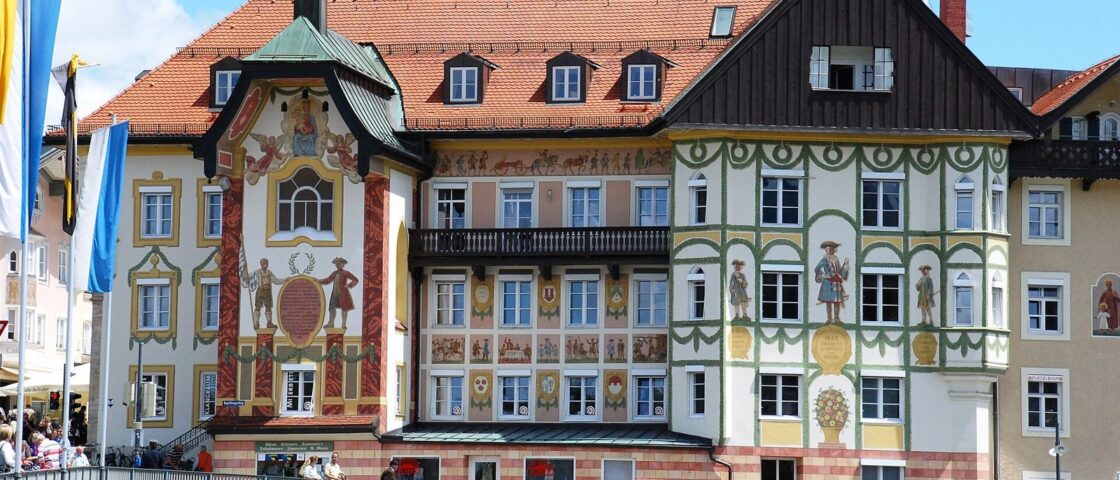
Three of the Bavarian spa towns worth a day out of Munich are Bad Tölz for its painted old town and the Isar, Bad Wiessee for the Tegernsee and its iodine-sulphur baths, and Bad Reichenhall for Alpine salt water. All three are reachable by regional train, with Bad Tölz and the Tegernsee about an hour away, and the train journey to all three is covered by the Bayern-Ticket.
Bavarian spa towns are not resorts in the Mediterranean sense, and it helps to know that before you go. They are quiet, orderly, slightly old-fashioned places built around a Kurpark, a pump room and a set of medical baths, with a clientele that skews well past retirement age and an evening scene that ends around the time the Kurhaus concert finishes. That is exactly their appeal. After three days of Munich beer halls, a morning in warm brine and an afternoon by a lake is the best reset the region offers.
This guide explains what the “Bad” in the name means, then takes the five spa towns that work best from Munich one by one: what the water is, what it costs, how to get there and whether it is worth the trip. For the city’s own pools and saunas, start with our Munich spas and wellness guide.
Bavarian spa towns at a glance
| Town | From Munich | The water | Spa entry from | Best for |
|---|---|---|---|---|
| Bad Tölz | About 1 hour, BRB train | Iodine springs (historic) | — | The old town, the Isar, the Blomberg |
| Bad Wiessee | About 1h15–1h30, train to Tegernsee then bus or boat | Iodine-sulphur springs | €39 for 170 minutes in the healingSPA | A lake day with a proper medical bath |
| Bad Reichenhall | About 2 hours, change at Freilassing | Alpine salt brine | €27 for 3 hours in the RupertusTherme | Warm salt pools; pairs with Berchtesgaden or Salzburg |
| Bad Aibling | Regional train with a change, via Holzkirchen or Rosenheim | Thermal water and moor (peat) | €18 for a 2-hour weekday morning ticket | A good-value thermal bath |
| Bad Wörishofen | Regional train with a change; check the DB timetable | Cold water — the Kneipp cure | Public Kneipp basins around the town | The birthplace of Kneipp therapy |
What “Bad” means, and what a Kur is
In Germany “Bad” in front of a place name is not decoration. It is a protected designation, granted by the state to towns that meet standards for their natural remedy — a mineral spring, brine, peat or climate — and for the medical facilities that use it. Bavaria grades its spa towns further: a Heilbad has a medically recognised spring, a Moorheilbad uses peat, a Kneippheilbad practises the cold-water cure, and a Heilklimatischer Kurort is recognised for its air.
The economic engine behind all this was the Kur: a stay of several weeks, often paid for by health insurance, combining baths, walks, massages and a strict timetable. Fewer Germans are sent on a three-week Kur than a generation ago, and many spa towns have reinvented themselves around day-visitor thermal baths and wellness hotels. You will still see the old structure everywhere — the Kurpark, the Kurhaus, the colonnade, the Trinkhalle where patients sipped mineral water — and you will pay a small Kurbeitrag or tourist tax in some places, usually added to the entry ticket.
One thing surprises almost every visitor: German saunas are textile-free. Swimming costumes are for the pools; in the sauna you sit on a towel and nothing else, and most sauna areas are mixed. Our guide to German sauna etiquette explains the rules before you find out the awkward way.
Bad Tölz: the prettiest town, and a walk rather than a soak
Bad Tölz sits on the Isar where the river leaves the mountains, about an hour south of Munich, and it is the most attractive town in this guide. The reason to go is the Marktstraße, a broad, steep street of painted merchants’ houses running down to the river bridge. Tölz received market rights in 1331, grew rich on the salt road and the Isar rafting trade, and its burghers spent the money on façades. Walk it from the top down, then cross the river.
The spa came later. Iodine springs were found on the Sauersberg in 1846, a spa company followed, the railway arrived in 1874 and Tölz became “Bad” in 1899. The spa quarter on the west bank of the Isar still has the feel of that era — villas, the Kurhaus, a Kurpark with long gravel paths.
Here is the unflattering part. If you are coming to bathe, Tölz is the weakest of the five. Its big leisure pool, the Alpamare, closed in 2015, and the town’s iodine water is now used for medical treatments rather than a public thermal bath on the scale of Erding or Bad Reichenhall. Treat Tölz as a town-and-mountain day and do your soaking elsewhere.
What to do in Bad Tölz
- The Marktstraße. Painted façades, Lüftlmalerei, cafés with terraces and plenty of people-watching on a sunny Saturday.
- The Kalvarienberg and the Leonhardikapelle. A short, steep climb above the old town to a pilgrimage church and a small chapel with a view over the roofs to the Alps.
- The Blomberg (1,248 m). Tölz’s home mountain. The round walk is about 7.6 km with just over 500 m of ascent; there is a chairlift for the lazy. Details are in our hiking near Munich guide.
- The Isar. Gravel banks, turquoise water and a riverside path that is the right place for the afternoon.
The Leonhardifahrt on 6 November
If you are in Munich in early November, this is the day to go. Every year on St Leonhard’s day, 6 November — a Friday in 2026 — Tölz holds one of Bavaria’s best-known Leonhardifahrt processions: a procession of decorated, horse-drawn wagons carrying people in traditional dress up the Kalvarienberg to the Leonhardikapelle, where horses and riders are blessed. It starts in the morning, it is free to watch and it draws big crowds. The tradition is recognised as intangible cultural heritage. Arrive early, dress for cold, and check the timings on the town’s official site before you set off.
Getting to Bad Tölz
The Bayerische Regiobahn (BRB) runs from München Hauptbahnhof to Bad Tölz in about an hour, on the line to Lenggries. Insider tip: the train leaves Munich as one three-part set that splits on the way — the front portion goes to Bayrischzell, the middle to Lenggries via Bad Tölz, and the rear to Tegernsee. Check the destination on the carriage before you sit down, or you will arrive in the wrong valley.
Bad Wiessee: the Tegernsee and an iodine-sulphur bath
Bad Wiessee lies on the western shore of the Tegernsee, the lake that wealthy Munich has used as its weekend garden for a century and a half. The town’s reason for being is underground: two springs, named Adrianus and Königin Wilhelmina, which the Jod-Schwefelbad describes as the strongest iodine-sulphur springs in Germany. The Dutch names are a clue to the story. The water was struck in 1909 by the Dutch engineer Adriaan Stoop, who was drilling for oil and found something less profitable and more useful.
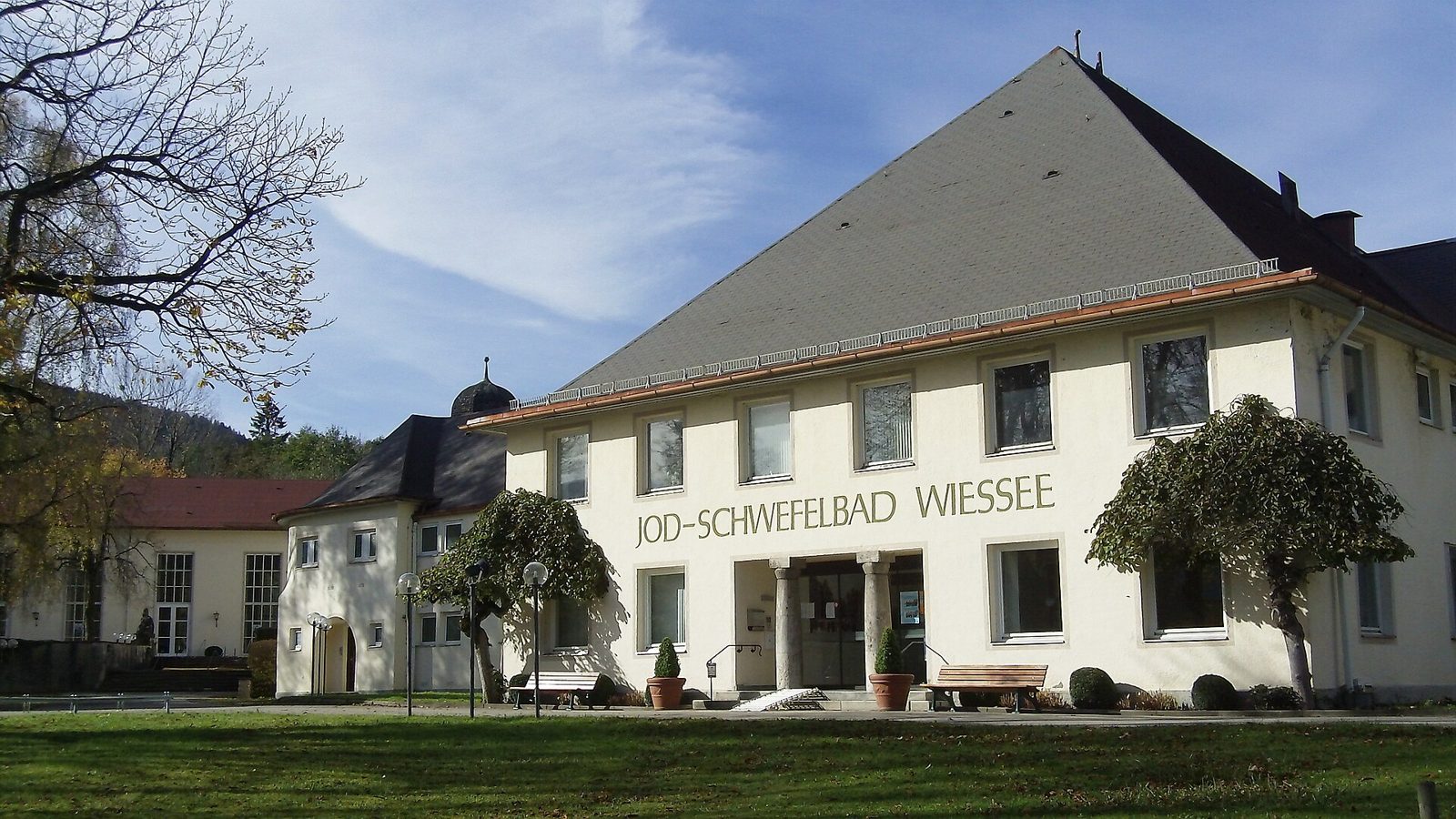
The Jod-Schwefelbad: what you can book
This is a medical bath, not a leisure pool, and the price list reads accordingly. Prices valid from December 2025:
| Treatment | Length | Price |
|---|---|---|
| Iodine-sulphur tub bath (Jodschwefel-Wannenbad) | 50 min | €75 |
| Iodine-sulphur whey bath (Molkebad) | 50 min | €90 |
| Iodine-sulphur inhalation | 15 min | €24 |
| healingSPA access, online booking only | 170 min | €39, €49 or €59 depending on category |
| Extra full-body massage on the day of a healingSPA visit (reserve by phone) | Same day | €89, on top of the healingSPA ticket |
Bathing hours are Monday to Friday 09:00–19:00, and Saturdays and public holidays 09:00–18:00, at Wilhelminastraße 4. Be warned about the smell: sulphur water smells of eggs, faintly or less faintly depending on your nose, and it can cling to your hair for the rest of the day. That is part of the experience, and it is why this is not where you bring a date.
For most visitors the best plan is the healingSPA slot: under three hours of pools and rest rooms, booked online, followed by lunch by the lake. The single tub bath is a curiosity worth doing once if you are interested in how a Kur actually works; the multi-session packages are for people following a doctor’s advice.
Making a day of the Tegernsee
Bad Wiessee on its own is a pleasant, rather sleepy lakeside town. The Tegernsee as a whole is one of the best day trips from Munich. Combine the bath with the Bräustüberl in the former monastery at Tegernsee town, across the water, where the ducal brewery still serves its beer in a vaulted hall; with the Wallberg above Rottach-Egern for the view; or with a walk along the shore. Our guide to the lakes near Munich compares the Tegernsee with the Starnberger See, the Ammersee and the Chiemsee.
Getting to Bad Wiessee
There is no station in Bad Wiessee itself. Take the BRB from München Hauptbahnhof towards Tegernsee — about 65 minutes, in the rear portion of the train — and continue by bus around the lake, or by lake boat across from Tegernsee. The boats run a different timetable outside summer, so check the Bayerische Seenschifffahrt timetable for the day you travel. Allow about an hour and a half door to door.
Bad Reichenhall: Alpine salt and the best thermal bath of the five
Bad Reichenhall, in the far south-east corner of Bavaria next to the Austrian border, was built on salt. Brine has been drawn from beneath the town for centuries, and salt made it rich. The spa grew out of the same brine: warm salt water for bathing, salt mist for breathing.
You can breathe it for free in the Kurpark, where the Gradierwerk — a long timber wall packed with brushwood — has brine trickling down it so that the air around it is fine, salty and faintly sea-like. Sit on a bench alongside it for twenty minutes. It costs nothing, and on a warm day it is pleasant.
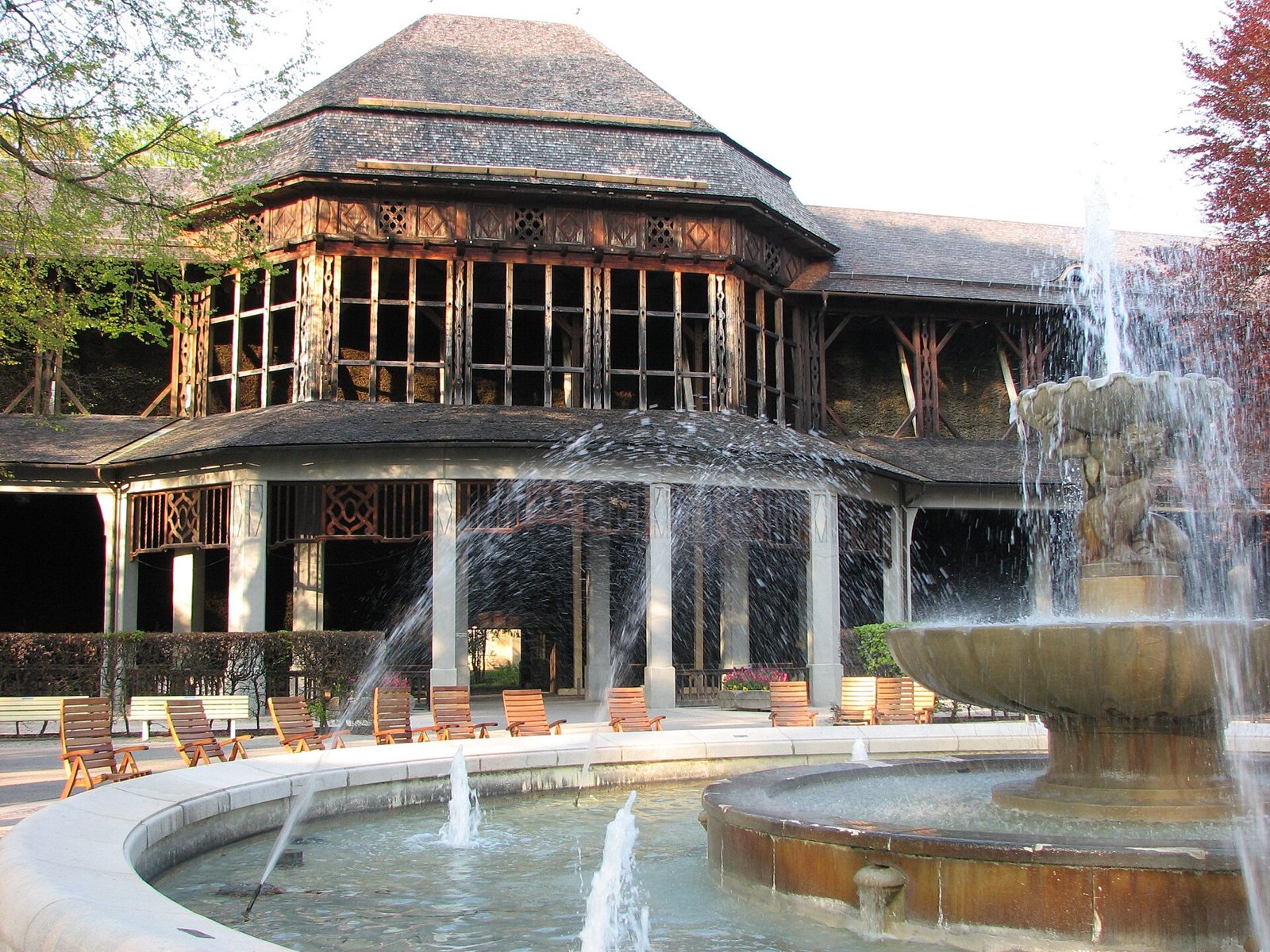
The RupertusTherme
This is the main event, and the best day-visitor thermal bath of the five towns. The pools use AlpenSole, the local Alpine brine, and the set piece is an underground floating pool with about 12 per cent salt, warm enough (33–35 °C) to lie in for as long as you like. There is a separate sauna landscape for over-16s, a family bath with a sports pool and a children’s slide, and a bistro.
| Ticket | 3 hours | Day |
|---|---|---|
| ThermenLandschaft (brine pools, including the family bath; from age 4) | €27 | €39 |
| Therme + SaunaLandschaft (16+) | €35 | €47 |
The Therme and sauna open daily 10:00–22:00, at Friedrich-Ebert-Allee 21. On 24, 25 and 31 December they close at 15:00. The family bath keeps shorter hours — from 14:00 on weekdays outside the school holidays — so check before you bring children on a weekday morning. The baths also have occasional revision days with a late opening, so check the RupertusTherme’s hours page for your date.
Getting to Bad Reichenhall, and what to pair it with
Take the regional express from München Hauptbahnhof towards Salzburg and change at Freilassing for the local train to Bad Reichenhall. Allow about two hours each way. That makes Reichenhall a long day for the spa alone, so pair it: Berchtesgaden and the Königssee are further down the same line, and Salzburg is a short hop from Freilassing. Better still, stay a night — the town is calm and the RupertusTherme is open until 22:00.
While you are there, the Predigtstuhlbahn, a cable car opened in 1928, climbs from the edge of town to a viewpoint above the Saalach valley, and the Alte Saline, the old salt works, explains how the brine was pumped and boiled. Check the operators’ sites for opening days before you go.
Bad Aibling: moor, domes and a good-value thermal bath
Bad Aibling, in the Mangfall valley near Rosenheim, is Bavaria’s oldest moor spa: the town’s medical tradition is built on peat, used warm as packs and baths for joints and muscles. For a day visitor the draw is the Therme Bad Aibling, a striking building of linked domes, with thermal pools, a sauna landscape and a moor area in the sauna.
| Ticket (adult) | Therme | Therme + Sauna |
|---|---|---|
| Early ticket, Mon–Fri, entry 10:00–12:00, valid 2 hours | €18 | €24 |
| 4 hours | €28 | €34 |
| Day | €33 | €39 |
| Evening ticket (entry from 19:00 Mon–Thu and Sun, 19:30 Fri and Sat) | €24 | €30 |
The weekday early ticket at €18 is good value. The town itself is pleasant rather than memorable; come for the bath. The journey needs a change; the journey planner will offer either Rosenheim or Holzkirchen, so check which on the day.
Bad Wörishofen: where the Kneipp cure began
Bad Wörishofen, about 80 km west of Munich in the Unterallgäu, is the home of the Kneipp cure, the water therapy developed by the priest Sebastian Kneipp in the 19th century. The idea is simple and brutally effective: short, sharp exposure to cold water — wading knee-deep through a cold basin, cold affusions on the arms and legs — to stimulate circulation. Kneipp basins are now standard in German parks and hotels, and Bad Wörishofen has public ones around the town. Take your shoes off, wade through, step out when your legs start to ache, and feel your feet glow for the next half hour.
The town also has a modern Therme, opened in 2004. Bad Wörishofen has its own station, reached from Munich with a change at Buchloe. It is the most specialised trip in this guide: interesting if the history of German health culture appeals, a long way to go for a swim if it does not.
Two more worth knowing: Bad Endorf and Bad Kohlgrub
Bad Endorf, near the Chiemsee, has the Chiemgau Thermen, a thermal bath fed by iodine-rich water, and sits on the main line from Munich towards Salzburg. It combines easily with a day at the Chiemsee and Herrenchiemsee. Bad Kohlgrub, in the Ammergau Alps near Oberammergau, is a small moor spa and one of the highest-lying spa villages in Bavaria; it is a retreat rather than a day trip. Check each spa’s own site for current prices and hours before you go.
Which spa town should you choose?
- One day, best all-round: Bad Wiessee and the Tegernsee. A lake, a mountain, a brewery and a medical bath an hour and a bit from Munich.
- Best town to walk around: Bad Tölz — and on 6 November, the Leonhardifahrt makes it the one to pick.
- Best warm water: Bad Reichenhall’s RupertusTherme, ideally with a night in town.
- Good-value thermal bath: Bad Aibling on a weekday morning.
- For the curious: Bad Wörishofen and the Kneipp cure.
- If you just want a huge thermal pool and slides: skip the spa towns and go to Therme Erding, which is closer, bigger and on the S-Bahn — but louder, busier and nothing like a Kur.
And if you would rather not leave the city at all, Munich has its own grand old bath: the Müller’sches Volksbad, a 1901 Jugendstil swimming hall with a Roman-Irish sauna, a ten-minute walk from the Deutsches Museum. Our guide to Munich’s historic baths covers it.
Tickets, timing and practical tips
- Bayern-Ticket. One day of unlimited regional trains across Bavaria for €34 for one person, €44 for two and €74 for five, second class, including the BRB and the trains to Freilassing and Bad Reichenhall. It is valid on weekdays from 09:00 and from midnight at weekends and on holidays, and it is not valid on ICE or IC trains.
- Deutschlandticket. If you already hold one (€63 a month in 2026, €66.80 from January 2027), it covers the regional trains in this guide.
- Book the medical treatments. The Jod-Schwefelbad’s healingSPA is online booking only; for the RupertusTherme and Therme Bad Aibling, check each site for ticket booking on busy days.
- Bring two towels and flip-flops, or budget for renting them; a bathrobe makes the sauna areas far more comfortable.
- Weekdays are calmer. Thermal baths fill with families at weekends and in the Bavarian school holidays.
- Autumn and winter suit spa towns best. Warm salt water in the dark, snow on the mountains and an empty Kurpark is the point; in July the lakes are the better swim.
For more train-friendly ideas, our guide to day trips from Munich by train covers the routes, and the Bavarian Alps from Munich covers the mountains behind every one of these towns.
Frequently Asked Questions
What is the best spa town near Munich?
For a single day, Bad Wiessee on the Tegernsee, because it combines a medical bath with one of the best lakes in Bavaria. For the best thermal pools, Bad Reichenhall’s RupertusTherme. For the prettiest town, Bad Tölz.
What does “Bad” mean in German town names?
It means the town is an officially recognised spa, with a natural remedy such as a mineral spring, brine, peat or a healthy climate, and the medical facilities to use it. The title is protected and granted by the state.
Can you visit Bad Tölz as a day trip from Munich?
Easily. The BRB train takes about an hour from München Hauptbahnhof; ride in the portion marked for Lenggries. The Bayern-Ticket covers it.
Is there a thermal bath in Bad Tölz?
Not a large public one. The Alpamare leisure pool closed in 2015. For thermal pools, choose Bad Reichenhall, Bad Aibling or Therme Erding.
How much is the Jod-Schwefelbad in Bad Wiessee?
A 170-minute healingSPA slot costs €39, €49 or €59 depending on category and must be booked online. A 50-minute iodine-sulphur tub bath is €75.
Are swimsuits allowed in German spa saunas?
No. Saunas are textile-free; you sit on a towel. Swimsuits are worn in the thermal pools. Most sauna areas are mixed, and many have a minimum age of 14 or 16.
Is the Bayern-Ticket valid to Bad Reichenhall?
Yes. The regional train to Freilassing and the local train on to Bad Reichenhall are both covered. It is valid from 09:00 on weekdays.
When is the Leonhardifahrt in Bad Tölz?
On 6 November, St Leonhard’s day, every year. In 2026 that is a Friday. The procession starts in the morning; check the timings on the town’s site.
More wellness and day trips from Munich
The Munich spas and wellness guide is the hub for everything warm and wet in and around the city, from Therme Erding to the Müller’sches Volksbad. For the lakes these towns sit on, see lakes near Munich; for the wider list of excursions, the best day trips from Munich.
Prices, hours and timetables checked in October 2026 against each spa’s own site, the BRB and Deutsche Bahn.
Photo Credits
Marktstraße, Bad Tölz: Bad Tölz Marktstraße 2 Marienstift by Rudolph Buch, Public domain, via Wikimedia Commons. Jod-Schwefelbad: Bad Wiessee Jod-Schwefelbad 1 by Stefan Meister, CC BY-SA 4.0, via Wikimedia Commons. Gradierwerk: Gradierwerk’RH by Gakuro, CC BY-SA 3.0, via Wikimedia Commons.
Related Guides
- Spas and Wellness in Munich: Thermal Baths and Slow Days — the cluster hub
- Therme Erding: Europe’s Largest Thermal Spa Day Trip — Big untargeted term with genuine transport complexity we can solve better than anyone
- Munich’s Historic Baths: Müller’sches Volksbad and Dantebad — Architecture and wellness crossover; links to the history pillar
- German Sauna Etiquette: What Visitors Need to Know — High-anxiety query about the nudity rules, with strong dwell time and link potential