Munich SIM Card and WiFi: Stay Connected (2026)
Best Munich SIM cards, eSIMs, and WiFi options. Operator comparison, prepaid plans, public WiFi and coverage in the Bavarian Alps.
Munich SIM card options have multiplied dramatically since the EU’s free-roaming rules took effect in 2017. Visitors from within the EU often don’t need a German SIM at all — your home plan likely works in Germany at no extra cost. For travelers from outside the EU, German prepaid SIMs and eSIMs deliver 5G data at competitive prices. Free WiFi is increasingly common in Munich — most cafés, all major train stations, and many public transit lines provide free wireless. This guide covers everything: when you need a German SIM, the best operators, eSIM options, public WiFi, mobile coverage in the Bavarian Alps, and practical setup tips for staying connected in Munich and beyond.
Munich SIM Card and WiFi at a Glance
| Option | Best For | Approximate Cost |
|---|---|---|
| EU citizen’s home SIM (free roaming) | EU travelers | €0 extra |
| German prepaid SIM (Vodafone, Telekom, O2) | Non-EU stays under 30 days | €15-€30 |
| German eSIM (Telekom, Vodafone) | Travelers with eSIM-capable phones | €15-€30 |
| International eSIM (Airalo, Holafly) | Cross-Europe travelers | €10-€40 |
| Pocket WiFi rental | Heavy users; multi-device | €5-€10/day |
| WhatsApp + free WiFi | Casual users | €0 |
| Public WiFi (Munich’s Hauptbahnhof, cafés) | Brief connections | €0 |
Do You Even Need a German SIM?
If You’re from the EU
Probably not. The EU’s free-roaming regulation means your home SIM (from France, Italy, Spain, Netherlands, etc.) works in Germany at the same cost as at home. Most major EU mobile plans include unlimited or generous data allowances usable across the EU. Check your specific plan’s terms before traveling. If your plan has a ‘fair use’ data cap (common with very cheap plans), buying a German SIM might still make sense for heavy users.
If You’re from the UK (Post-Brexit)
Maybe. UK SIMs no longer automatically include EU roaming under EU regulations, but many major UK providers (O2, Three, BT) still include EU data in their plans voluntarily. Confirm your plan’s terms; if EU roaming costs extra, a German prepaid SIM saves money.
If You’re from Outside Europe
Almost certainly yes for stays over 3 days. International roaming charges from US, Canadian, Asian, or Australian carriers run €3 to €10 per day for limited data; €40 to €150 for unlimited. A German prepaid SIM at €15 to €30 covers data for the entire visit. For travelers visiting multiple European countries, an international eSIM (Airalo, Holafly) provides cross-country coverage.
Best German Mobile Operators
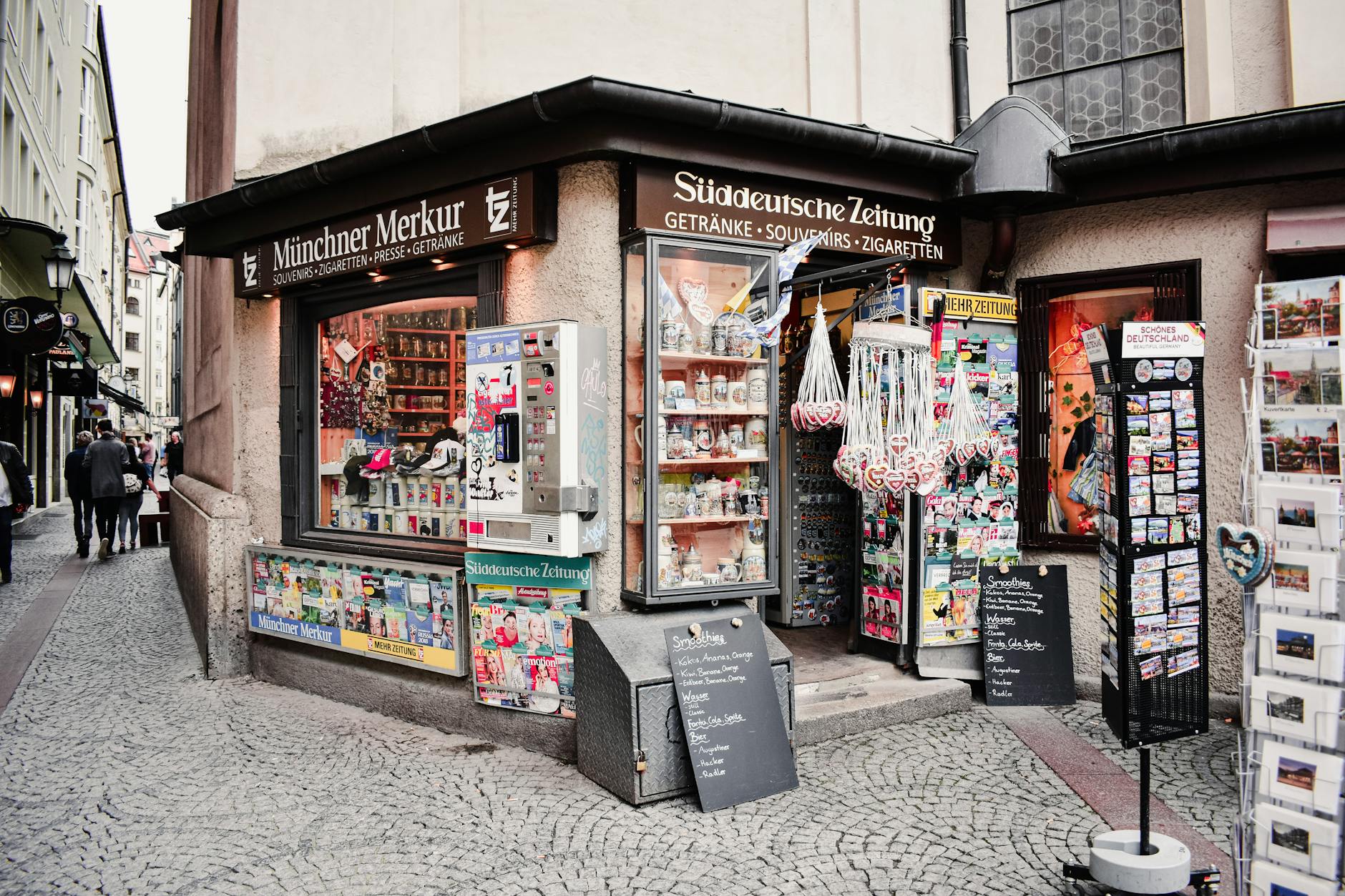
Telekom (Deutsche Telekom)
Germany’s largest carrier; best coverage especially in rural Bavaria and the Alps. Prepaid ‘MagentaMobil’ SIMs available at Telekom Shops citywide. Tourist-oriented packages: €15 for 5 GB / 4 weeks; €25 for 15 GB / 4 weeks; €30 for 30 GB / 4 weeks. Most reliable for travelers heading to the Bavarian Alps for skiing or hiking. Coverage in major German cities is excellent.
Vodafone
Second-largest carrier; widely available; competitive prepaid options. ‘CallYa’ prepaid SIMs: €15 for 6 GB / 4 weeks; €25 for 15 GB; €30 for 30 GB. Coverage strong in major cities including Munich; slightly weaker than Telekom in remote Alpine areas. Vodafone Shops accept walk-in tourist customers.
O2 (Telefónica)
Third-largest carrier; competitive pricing and increasingly good coverage. ‘O2 Free’ prepaid: €15 for 4 GB; €25 for 12 GB; €30 for 30 GB. Coverage strongest in cities; weaker in rural areas. Best value for budget-conscious city travelers.
Discount Operators (Aldi Talk, Lidl Connect, Congstar)
- Aldi Talk — Operates on Vodafone network. Cheap prepaid; €12 for 6 GB / 4 weeks.
- Lidl Connect — Vodafone network; similar to Aldi Talk.
- Congstar — Telekom-owned discount brand; competitive prepaid plans.
- Premium Mobile — Aldi-Lidl alternatives; €10-€20 for moderate data.
- BlauNet — Online-only discount on Telefónica network.
- SIMon Mobile — Vodafone discount brand.
eSIM Options for Munich Travelers
eSIMs are increasingly the easiest option for travelers — install before you arrive, activate immediately on landing, no SIM-card shopping needed. Major options:
- Airalo — Most popular international eSIM. Germany packages from $5 USD for 1 GB to $40 USD for 20 GB. Activate via app instantly.
- Holafly — Unlimited data plans; Europe-wide eSIM at $40-€80 for 7 days, $60-€90 for 15 days.
- Saily — NordVPN’s eSIM service; Germany plans from $10 USD.
- Nomad — Multi-country eSIM operator; competitive Germany pricing.
- Telekom eSIM — Official Telekom prepaid eSIM, available online for €15-€30.
- Vodafone eSIM — Official Vodafone prepaid eSIM, same pricing as physical SIM.
- O2 eSIM — Similar to Vodafone’s eSIM offering.
eSIM requires an eSIM-capable phone (most iPhones since 2018; Android handsets since 2020). Check your phone’s compatibility before relying on eSIM. Older phones still need physical SIMs.
Where to Buy a SIM Card in Munich
- Telekom Shop Marienplatz — Largest central store.
- Vodafone Shop Stachus — Central retail location.
- O2 Shop Marienplatz — Walking distance from main square.
- Munich Airport (MUC) tourist shops — Convenient on arrival; sometimes higher prices.
- Munich Hauptbahnhof shops — Multiple options at the train station.
- Saturn and MediaMarkt — Major electronics chains carrying multiple operators.
- Aldi and Lidl supermarkets — Carry Aldi Talk and Lidl Connect prepaid SIMs.
- Tobacconists (Tabakladen) — Smaller shops occasionally carry prepaid SIMs.
German SIM Card Registration Rules
German law requires all SIM cards (prepaid and contract) to be registered to a specific person. The activation process requires:
- Valid passport or other government-issued photo ID.
- Activation at the shop with your ID; or
- Online activation via the operator’s app, including ID scan and selfie verification.
- German address sometimes requested — your hotel address works.
- Activation typically takes 5 to 30 minutes; full data service available shortly after.
- Tourist activation is straightforward — operators are accustomed to international travelers.
Free Public WiFi in Munich
- Munich Hauptbahnhof — Free WiFi throughout the station and underground passages.
- Munich Airport (MUC) — Free WiFi in all terminals.
- U-Bahn and S-Bahn stations — Free WiFi at most major stations.
- Trams and buses — Some MVG vehicles have WiFi (still being rolled out).
- Most cafés — Free WiFi with a purchase; many ask for an email signup.
- Public libraries (Stadtbibliothek) — Free WiFi during opening hours.
- BMW Welt — Free WiFi throughout.
- Department stores — Galeria Kaufhof, Oberpollinger, Ludwig Beck offer free WiFi.
- Tourist Information Office at Marienplatz — Free WiFi.
- Major tourist sites — Most museums and visitor centres now offer free WiFi.
Public WiFi networks in Munich are generally secure but use a VPN for sensitive activities (banking, work) when on shared networks. Most chain hotels offer free reliable in-room WiFi at no extra charge.
Mobile Coverage in Munich and Beyond
Munich proper has excellent 4G LTE and 5G coverage across all three major operators. Rural Bavaria varies:
- Munich city — 5G universally; LTE everywhere.
- Bavarian suburbs and small towns — Good LTE; some 5G.
- Bavarian Alps (ski resorts) — LTE in main areas; spotty on remote slopes.
- Highway rest stops — Reliable LTE on the A8/A9.
- Day-trip destinations (Salzburg, Nuremberg, Chiemsee) — Excellent coverage.
- Hiking trails in the Alps — Limited or no coverage on remote routes; download maps offline.
- Border areas with Austria, Czech Republic — EU roaming applies seamlessly to most plans.
Practical Mobile Setup Tips
- Buy your SIM/eSIM before leaving home if possible — Online ordering ahead of arrival saves time.
- Activate at the airport if you bought online; you’ll have service immediately.
- Download Google Maps offline for Munich and Bavarian destinations before relying on cellular.
- Disable mobile data roaming on your home SIM to avoid surprise charges; rely on the German SIM instead.
- Carry your SIM-ejection tool if your phone uses physical SIMs.
- Keep your original home SIM card safely stored; you’ll need it after returning home.
- Charge your phone fully before activation; some processes drain battery.
- Save your SIM PIN and PUK codes — Useful for troubleshooting.
- Use Free WiFi calling at home over WhatsApp/Signal/Facetime to save data.
- Check your plan’s tethering allowance if you’ll use the phone as a hotspot.
Sample Setups by Visit Length
Weekend Trip (2-3 days)
Free WiFi at the airport, hotel, and cafés. International eSIM at €5-€10 for limited backup data. No physical SIM needed.
Week-Long Trip (5-7 days)
International eSIM at €15-€25 for 5-10 GB OR Vodafone/O2 prepaid SIM at €15. Use free WiFi when possible; cellular for navigation and translation.
Two-Week+ Trip
Telekom or Vodafone prepaid SIM at €25-€30 for 15-30 GB. Activate at a Munich Shop on arrival; valid 4 weeks. Use German SIM for all data, free WiFi for backup.
Multi-Month Stay
Open a contract with O2 or Vodafone (€20-€40/month) if eligible. Some operators offer flexible ‘flex’ or ‘free’ contracts cancellable monthly. Online operators (Premium Mobile, BlauNet) often offer the lowest contract prices for longer stays.
Specific Operator Tariff Plans for 2026
| Operator/Plan | Data Allowance | Validity | Price |
|---|---|---|---|
| Telekom MagentaMobil Prepaid S | 5 GB + EU roaming | 4 weeks | €15 |
| Telekom MagentaMobil Prepaid M | 15 GB + EU roaming | 4 weeks | €25 |
| Telekom MagentaMobil Prepaid L | 30 GB + EU roaming | 4 weeks | €30 |
| Vodafone CallYa S | 6 GB | 4 weeks | €15 |
| Vodafone CallYa M | 15 GB | 4 weeks | €25 |
| Vodafone CallYa Allnet | 30 GB | 4 weeks | €30 |
| O2 Free S | 4 GB | 4 weeks | €15 |
| O2 Free M | 12 GB | 4 weeks | €25 |
| O2 Free Allnet | 30 GB + Unlimited calls/SMS | 4 weeks | €30 |
| Aldi Talk Prepaid (online) | 6 GB | 4 weeks | €12 |
| Congstar Prepaid (Telekom network) | 10 GB | 4 weeks | €20 |
| Airalo Germany 7 GB eSIM | 7 GB | 30 days | ~$15 USD |
| Holafly Europe Unlimited | Unlimited | 10 days | ~$60 USD |
All major operators include 5G access in their prepaid plans. EU roaming is included with major German operators. Pricing fluctuates slightly with promotions; check current rates at operator websites or at major German electronics retailers (Saturn, MediaMarkt) before deciding.
Comparing eSIM vs Physical SIM
| Feature | Physical SIM | eSIM |
|---|---|---|
| Setup time | 5-30 min in shop or self-activation | 5 minutes via app |
| Phone compatibility | All phones | Requires eSIM-capable phone (~2018+) |
| Multiple lines | Single SIM slot only | Often multiple eSIMs supported |
| Lost/damaged risk | Possible | Software-only; can’t lose |
| Sharing/transferring | Easy: pop in another phone | Bound to one device |
| Local availability | Need to find a shop | Buy online from anywhere |
| Speed | Same as eSIM (network dependent) | Same as physical SIM |
| Best for tourists | Spontaneous in-Munich purchase | Pre-trip purchase, easier setup |
WiFi at Major Munich Destinations
- Munich Hauptbahnhof: Free, broad coverage, fast
- Munich Airport: Free, terminal-wide
- Major hotels: Free, usually fast
- McDonald’s, Starbucks, Burger King: Free with purchase
- Public libraries: Free with brief signup
- BMW Welt: Free, fast, no signup required
- Pinakothek der Moderne: Free for visitors
- Marienplatz Tourist Information: Free; useful first stop
- Most Munich cafés: Free, requires email signup
- Trams and buses: Limited; check the MVG app for current service
Mobile Coverage Realities for Specific Activities
- City walking: Excellent coverage; 5G throughout central Munich.
- Public transit: Most U-Bahn and S-Bahn stations have coverage; underground tunnels less reliable.
- Mountain biking and hiking: Patchy in remote Bavarian Alps; download offline maps.
- Ski resorts: Reliable at base stations; sometimes spotty on remote slopes.
- Driving on the autobahn: Reliable LTE coverage; good for navigation.
- Salzburg and Austria: EU roaming applies; no extra charges.
- Czech border areas: EU roaming applies; coverage may flicker between operators at the border.
- Cross-Alps day trips: Italian and Swiss coverage handled through EU roaming.
Activation Tips by Operator
Telekom Activation
At a Telekom Shop: bring your passport; activation takes 10 to 30 minutes; SIM works immediately. Online activation via the Telekom Mobil app: download the app, scan your ID, complete verification, activate the SIM. Takes about 10 minutes total. Telekom Shops are at Marienplatz, Hauptbahnhof, and Olympia Einkaufszentrum among others.
Vodafone Activation
Similar to Telekom — passport at the shop or app activation. Vodafone Shops include Stachus and the Hauptbahnhof. Vodafone CallYa app supports self-activation with ID scan.
O2 Activation
O2 Shops accept walk-ins with passport. O2 app supports self-activation; sometimes activation takes longer than Telekom or Vodafone (up to 24 hours in rare cases).
Discount Operators
Aldi Talk and Lidl Connect: buy at the supermarket; activate via website or app with passport. Activation usually 30 minutes to 2 hours. Cheap but slightly less polished customer experience than the major operators.
WhatsApp and Other Free Communication
Most international communication in Germany happens via WhatsApp; locals universally use it. With free WiFi or any data plan, WhatsApp Voice and Video Calls work seamlessly. Other widely used services:
- WhatsApp — Dominant in Germany; free calls and messages.
- Signal — Privacy-focused alternative.
- Telegram — Smaller user base in Germany but reliable.
- iMessage — Apple users continue to use it.
- Skype — Less popular than 5 years ago.
- FaceTime — Apple-only; reliable for international video.
- Microsoft Teams / Zoom — For business; widely used.
- Google Meet — Free; works well.
- Discord and Slack — For specific communities.
VPN Recommendations for Munich Travel
A VPN protects sensitive data on public WiFi and lets you access geo-restricted content from your home country. Major options:
- NordVPN — Most popular; reliable speeds; integrates with Saily eSIM.
- ExpressVPN — Easy setup; reliable speeds.
- Surfshark — Unlimited devices; competitive pricing.
- Mullvad — Privacy-focused; flat €5/month pricing.
- ProtonVPN — Free tier available; Swiss-based; privacy-focused.
- 1.1.1.1 + WARP from Cloudflare — Free; mostly secures DNS.
Subscription costs €3 to €10 per month. Set up before traveling; use on every public WiFi connection. VPN traffic from Germany works seamlessly with German websites and German operators.
Frequently Asked Questions
Is the EU’s free roaming reliable?
Yes for travelers from EU countries with standard plans. The ‘Roam Like Home’ regulation guarantees you can use your home plan in any EU country at no extra cost. Watch for ‘fair use’ policies on very cheap plans — these may throttle or charge for excessive use abroad. Confirm with your home carrier before traveling.
Can I buy a SIM at Munich Airport?
Yes. Munich Airport has multiple convenience stores selling prepaid SIMs from Vodafone, Telekom, O2, and discount operators. Convenient on arrival but prices may be slightly higher than central Munich shops. Activation typically happens via the operator’s app.
Is German WiFi safe?
Generally yes for public WiFi at major venues (airports, train stations, hotels, cafés). For sensitive activities like online banking, use a VPN even on trusted networks. Most public WiFi requires a brief signup (email address) and accepts the operator’s terms.
What’s the data speed in Munich?
5G in central Munich delivers download speeds of 200 to 1,000 Mbps under good conditions. LTE delivers 50 to 300 Mbps. Faster than most U.S. or Asian mobile networks. Streaming video, video calls, and large downloads work seamlessly.
Are there 5G phones I need to worry about?
Modern smartphones (most made since 2020) support 5G. Slightly older phones (2018-2019) typically support LTE but not 5G; you’ll get LTE service in Munich. Older phones (pre-2018) sometimes lack the bands German networks use; check your phone’s compatibility before traveling.
Should I get a German SIM or just rely on WiFi?
Depends on usage. For map navigation, translation apps, and emergency calling, even a small German SIM (€15) provides peace of mind. For travelers content to use WiFi at hotels and cafés, no SIM is necessary. Most travelers find a basic SIM worth the €15 to €25 investment for a multi-day trip.
Can I use my US phone in Germany?
Yes for modern unlocked smartphones. Most phones since 2018 support the LTE and 5G bands German networks use. Older phones or US-network-locked devices may not work; check your phone’s specifications before traveling. AT&T, Verizon, and T-Mobile US offer roaming plans (typically $10-$15/day) but these are expensive compared to German prepaid SIMs.
How do I receive SMS on a German SIM?
Standard SMS service is included with most German prepaid plans. Tourists rarely use SMS; WhatsApp, Signal, and Telegram dominate. SMS-based two-factor authentication (banks, Google) works on German SIMs but may need re-enrollment if your home account uses your home phone number.
Can I get a refund on unused prepaid credit?
Not typically. German prepaid SIMs are pay-as-you-go; unused balance expires after 12 to 24 months but is not refunded. Buy only the plan you need.
Are there any ‘free SIM’ offers for tourists?
Occasionally. Vodafone has run ‘free travel SIM’ promotions distributed at Munich Airport (limited data, designed to advertise their paid plans). Watch for these at the arrivals hall; the SIM itself is free but data quickly limited. Used as a stopgap, useful; as a primary plan, inadequate.
Can I use my home country’s mobile hotspot via tethering?
Yes if your plan supports tethering. Most modern US/UK/Canadian plans include tethering; check yours. Tethering doesn’t change roaming costs — you still pay per MB or per day. For heavy use, a local German SIM is dramatically cheaper than home-network tethering.
What if I lose my phone in Munich?
Report to police immediately (110). Use Find My iPhone or Google Find My Device to track or wipe remotely. Contact your home carrier to disable the home SIM. Buy a replacement at Saturn or MediaMarkt (€100 to €500 for basic smartphones). Pre-trip backup of phone numbers and credentials makes recovery faster.
Should I install Lifelock or similar identity protection?
If you’re carrying multiple credit cards and important documents through busy Munich tourist areas, identity protection makes sense. For most short trips, basic awareness (carry minimal documents, monitor accounts) plus your home country’s standard fraud protection is sufficient. The German banking system is highly fraud-protected by default.
Final connectivity advice for Munich?
For most travelers, eSIM activated before leaving home gives the smoothest arrival experience. Free WiFi at the airport, Hauptbahnhof, hotels, and cafés handles most casual needs. A €15-€25 German prepaid SIM at any electronics chain provides backup data for navigation and apps. Use a VPN on public WiFi for sensitive activities. With these layers, you’ll stay connected for €15-€40 over a typical Munich trip.
Plan Your Munich Trip
- Munich Trip Planning Guide — master overview
- Munich Visa Requirements — entry essentials
- Munich Airport to City Centre — first-day logistics
- Getting to Munich — flight, train, bus options
- Munich Safety Guide — including emergency contacts