Munich Hidden Gems: 25 Secret Spots Most Tourists Miss
25 Munich hidden gems most tourists miss. Secret gardens, hidden museums, local cafes, lesser-known landmarks.
The best Munich hidden gems are not really hidden — they are simply unbothered. They sit one tram stop past the crowd, behind an unmarked door on a busy shopping street, up a staircase you have to know to climb, inside a courtyard tourists walk straight past on their way to Marienplatz. Munich rewards anyone who slows down and looks sideways: a Baroque jewel-box church squeezed between two townhouses, a beer garden run by a former royal hunting lodge, a tea house on an island in the Eisbach, a rooftop café that hides inside a university. This guide gathers 25 of the city’s best secret spots Munich locals actually use — with addresses, the nearest U-Bahn, what makes each one a hidden Munich find, when to go, and why it earns the detour. Pack curiosity. Leave the checklist at the hotel.
Munich Hidden Gems at a Glance
| Category | Pick | Why it’s hidden |
|---|---|---|
| Best hidden neighborhood | Westend (Schwanthalerhöhe) | Working-class roots, brewery lanes, zero tour buses |
| Oldest hidden site | Alter Hof courtyard | 13th-century imperial residence, tucked behind an archway |
| Free hidden gem | NS-Dokumentationszentrum Learning Center | Free entry, deep research library, no queue |
| Hidden viewpoint | Olympiaberg at sunrise | WW2-rubble hill, Alps on a clear day, often empty before 8am |
| Hidden green space | Hirschau meadow + Aumeister | Northern English Garden — locals only |
| Hidden museum | Münchner Kaiserburg (Alter Hof) | Tiny imperial-history room most visitors miss |
| Most surprising | Japanese Tea House Kanshoan | Real Urasenke tea ceremonies, on an Eisbach island |
25 Munich Hidden Gems Worth the Detour
What follows is not a ranked list — it’s a personal map. Some entries cost nothing and take ten minutes. Others reward a half-day of wandering. All of them feel like Munich is letting you in on a private conversation.
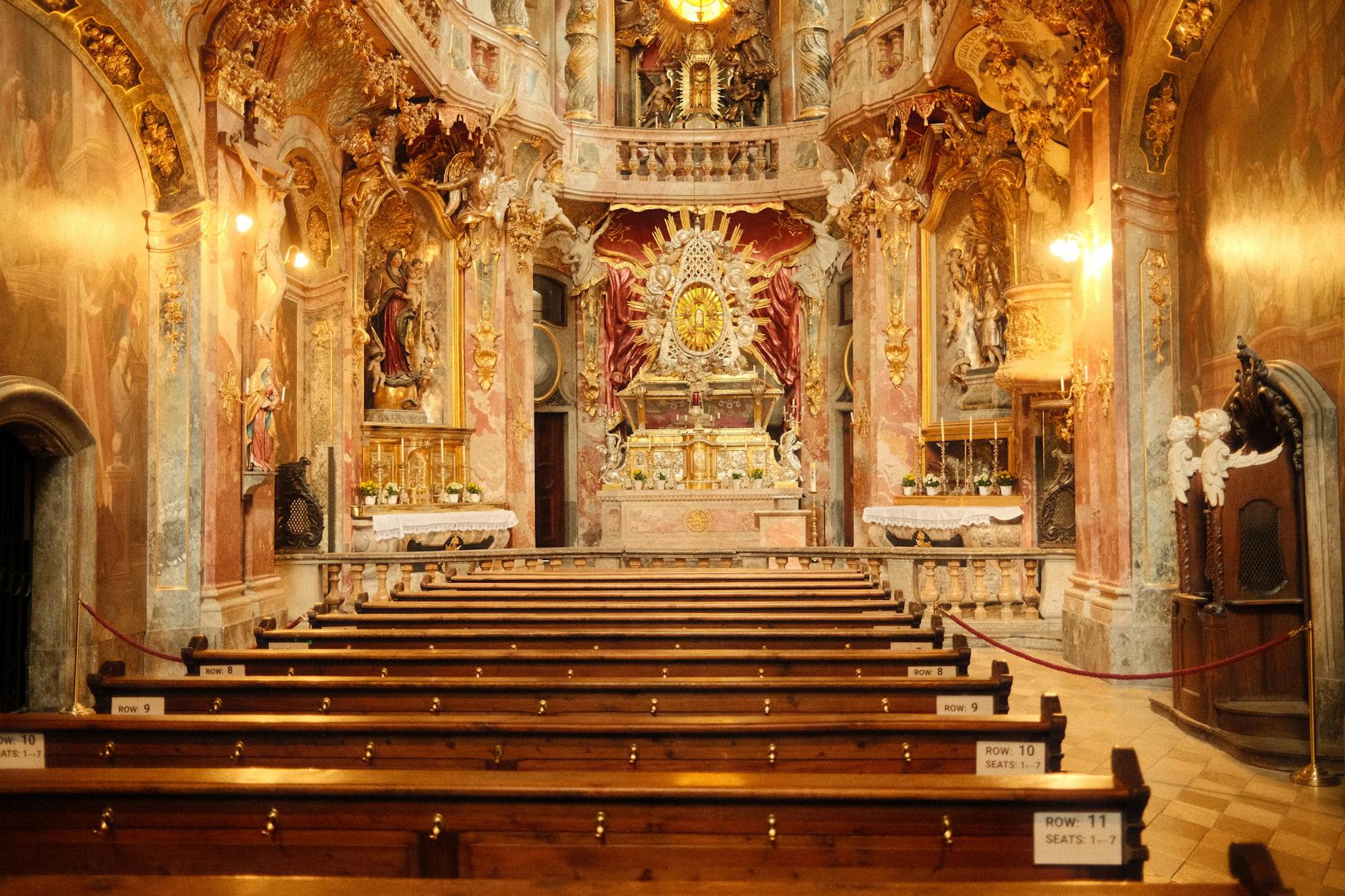
1. Asamkirche — the Baroque Behind an Unmarked Door
Address: Sendlinger Straße 32 · U-Bahn: Sendlinger Tor (U1/U2/U3/U6) · Best time: weekday mornings, 9–11am.
You’ll walk past it three times before you notice. The Asam brothers built this 22-metre-wide church between 1733 and 1746 as their private chapel, wedged between their own house and the one next door. Push the door and the contrast slaps you: gold, marble, frescoed cherubs, twisted columns, a ceiling that seems to dissolve upward. It’s one of the most ornate small Baroque interiors in Germany and the textbook example of why some of the best Munich hidden gems wear plain facades.
2. Bavaria Statue & Ruhmeshalle
Address: Theresienhöhe 16 · U-Bahn: Theresienwiese (U4/U5) · Best time: April–October, late afternoon.
Everyone photographs the Theresienwiese during Oktoberfest. Almost no one climbs the 18.5-metre bronze giantess standing guard over it. A narrow spiral staircase inside Bavaria leads up 126 steps to a viewing bench inside her head, with peepholes giving you a near-secret panorama over the festival meadow and the city beyond. The Hall of Fame behind her — Leo von Klenze’s columned Ruhmeshalle — is usually yours to wander alone.
3. Olympiaberg at Sunrise
Address: Olympiapark, Spiridon-Louis-Ring · U-Bahn: Olympiazentrum (U3) · Best time: 30 minutes before sunrise.
The hill is rubble — literally. Munich built it from the bombed remains of the city between 1948 and 1957, then crowned it with grass and a wooden cross. Climb it at first light and you stand above the Olympic stadium with the Alps glittering on the southern horizon. Joggers, a couple of photographers, sometimes a confused fox. You will not be in anyone’s way.
4. Friedensengel at Sunset
Address: Prinzregentenstraße / Maximiliansanlagen · U-Bahn: Lehel (U4/U5) or tram 18 to Friedensengel · Best time: 45 minutes before sunset.
The 38-metre column at the eastern end of Prinzregentenstraße celebrates the 25 years of peace after 1871, topped with a gilded Nike copy in 24-karat leaf. The terrace below catches the last orange light pouring up the Isar. It draws a small crowd at dusk — never the mob of Marienplatz, and somehow always quieter than its golden glow suggests it should be.
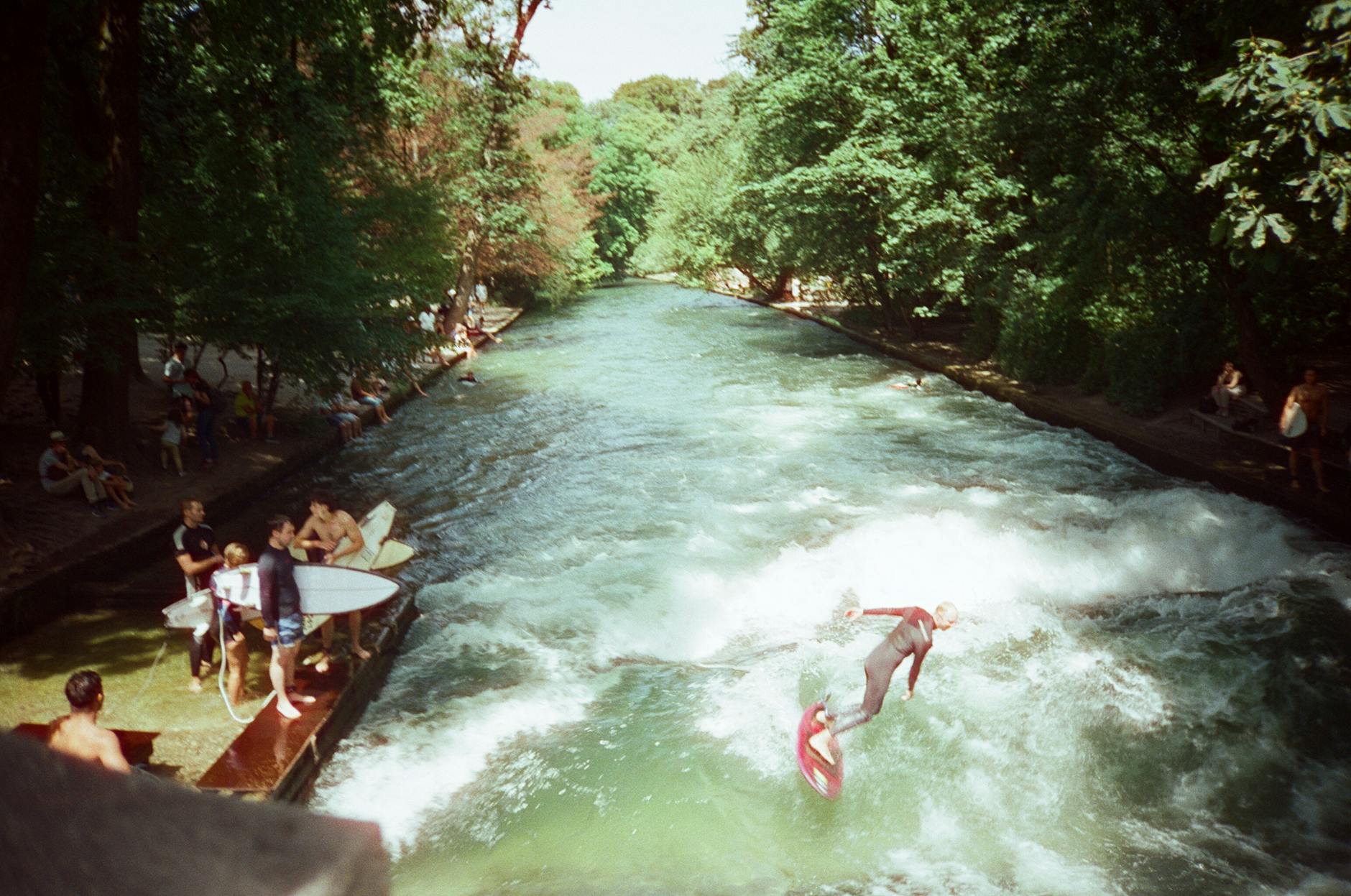
5. Eisbach Wave & Schwabinger Bach
Address: Eisbachbrücke, Prinzregentenstraße · U-Bahn: Lehel (U4/U5) · Best time: golden hour, year-round.
The standing wave at the southern edge of the English Garden has been surfed for 40-plus years; the city only made it official in 2010. Status can change — periodic closures hit in 2025, surfing has resumed under tighter rules in 2026, always check before you go — but watching is free and constant. Walk five minutes north and the Schwabinger Bach branches off, with smaller waves you can wade in and meadows where locals swim, drink, and disappear from the world.
6. The Hofgarten’s Lost Tower
Address: Hofgarten, Residenzstraße 1 · U-Bahn: Odeonsplatz (U3/U4/U5/U6) · Best time: spring mornings.
Walk the arcades of the Italian Renaissance Hofgarten and you brush past fragments of a far older Munich — a chunk of medieval city wall, the squat remnant locals call the “Hexenturm,” and the Diana Pavilion at the centre with its goddess-topped fountain. Bring a coffee, sit on a bench, watch the chess players. The most central garden in Munich is also, somehow, one of its most overlooked.
7. Hidden Courtyards — Alter Hof & Buttermelcherstraße
Address: Alter Hof 1; Buttermelcherstraße, Glockenbachviertel · U-Bahn: Marienplatz / Fraunhoferstraße · Best time: any weekday, lunchtime.
The Alter Hof was the first permanent imperial residence in the Holy Roman Empire — Ludwig the Bavarian’s medieval seat — and you reach its quiet courtyard through an archway just behind Marienplatz that most tourists never notice. The wooden oriel of the “Affenturm” tower juts above. A tiny free museum, the Münchner Kaiserburg, sits inside. Further south, the cobbled courtyards off Buttermelcherstraße host workshops and one or two unmarked bars that feel like a secret kept by the building itself.
8. Pasinger Fabrik
Address: August-Exter-Straße 1, Pasing · S-Bahn: Pasing · Best time: evening events.
A former factory in Munich’s western suburbs, the Pasinger Fabrik is now a buzzing cultural compound — theatre, gallery, graffiti workshops with veteran writer Loomit, Munich’s smallest opera, jazz nights, weekend flea markets. It’s a 20-minute S-Bahn ride and a different city when you arrive: looser, scruffier, ten years younger than the Altstadt.
9. Kunst- & Künstlerhaus Bogenhausen
Address: Ismaninger Straße area, Bogenhausen · U-Bahn: Prinzregentenplatz (U4) · Best time: exhibition openings (check muenchen.de).
Bogenhausen is Munich’s elegant eastern hill suburb — villas, embassies, Thomas Mann’s old neighbourhood. Hidden among them are small artist-run spaces, the Villa Stuck museum complex, and rotating studios that open for the city’s annual Tag der offenen Tür. Stroll the back-streets between Prinzregentenstraße and the Isar bluff for a slow afternoon of doorbell-only galleries.
10. Werksviertel-Mitte Street Art & Riesenrad
Address: Atelierstraße, Ostbahnhof · U-Bahn / S-Bahn: Ostbahnhof · Best time: Thursday–Sunday afternoons.
The old Pfanni potato-dumpling factory has mutated into a creative quarter of shipping-container shops, vertical farms, mural-coated facades, techno clubs, and a permanent 78-metre Ferris wheel (“Umadum”) that gives you skyline views without queueing for a tower. Wander factory yards, follow the paste-ups, eat at the container restaurants. This is Munich most visitors don’t know exists.
11. Aumeister Beer Garden — the Locals’ Secret
Address: Sondermeierstraße 1 · U-Bahn: Studentenstadt (U6), then 15-minute walk · Best time: May–September weekday afternoons.
At the very northern tip of the English Garden, a former royal hunting lodge built around 1810 still pours beer under enormous chestnut trees. It’s reachable by bike, a long walk, or one bus, which is exactly why coach tours never make it. Order a Maß, a half chicken, a pretzel; sit with families and pensioners; understand why locals smile when they say “Englischer Garten” and you assume they mean the south.
12. Hirschau Beer Garden & Meadow
Address: Gysslingstraße 15 · U-Bahn: Dietlindenstraße (U6) · Best time: summer Sundays.
The Hirschau sits between the Chinesischer Turm crowds and the Aumeister calm — large enough to absorb a busy day, far enough north that most travellers never go. Bring a frisbee, a book, or rent a paddleboat at the nearby boat dock; the surrounding meadow is one of the city’s favourite picnic spots and a true off the beaten path Munich classic.
13. Forstenrieder Park Forest
Address: Forstenrieder Park, southwest of the city · S-Bahn: Buchenhain (S7) · Best time: autumn weekday mornings.
An old hunting forest, larger than the entire city centre, threaded with deer-grazed meadows and quiet bike paths. You can pedal for hours under beech canopies, picnic by a hidden chapel, and spot fallow deer at dusk. Most Munich residents have heard of it; few visitors ever see it.
14. Münchner Stadtmuseum’s Archive Collections
Address: St.-Jakobs-Platz 1 · U-Bahn: Marienplatz / Sendlinger Tor · Best time: by appointment (check current renovation schedule).
The Munich City Museum holds enormous photography and costume archives, plus the Moriskentänzer figures by Erasmus Grasser — medieval dancing dwarves that look like they escaped a fever dream. Even as the building rolls through long-term renovation, partial exhibitions and study-room visits remain a researcher’s secret pocket of the city’s past.
15. NS-Dokumentationszentrum Library
Address: Max-Mannheimer-Platz 1 · U-Bahn: Königsplatz (U2) · Best time: Tuesday–Friday, 10am–5pm.
The Documentation Center on the site of the former “Brown House” is essential for understanding Munich. Most visitors do the main exhibition. The truly lesser known Munich move is the free Learning Center upstairs: 22 research terminals, an open-shelf library, and the Library of Burned Books on permanent loan from Augsburg. Quiet, sobering, and one of the most generous research rooms in the country.
16. The Hexenhäusl in the English Garden
Address: Near Mönchsweg, Englischer Garten · U-Bahn: Universität (U3/U6) · Best time: winter mornings (snow on the roof).
Tucked off a footpath in the wooded section of the English Garden stands a tiny gardener’s cottage so Hansel-and-Gretel-looking that locals call it the “Hexenhäusl” — witch’s house. Steep pitched roof, dark timbers, smoke from the chimney on cold mornings. You won’t find it on the official map; that’s the point.
17. Kleinhesseloher See Rowing Boats
Address: Kleinhesseloher See, Englischer Garten · U-Bahn: Münchner Freiheit (U3/U6) · Best time: April–October weekday afternoons.
An artificial lake from 1804 with three duck-claimed islands, rowboats and pedal boats for hire by the Seehaus beer garden, and a stretch of water small enough to drift the whole circumference in 20 minutes. Most visitors think of the English Garden as a place to walk through. This is one of the rare places it asks you to sit still on its surface.
18. Olympic Walk of Stars
Address: Olympiapark, lakeside promenade · U-Bahn: Olympiazentrum (U3) · Best time: after an Olympiastadion concert visit.
Hand-prints and signatures of stars who have played the Olympiastadion — from Bowie to Beyoncé, plus generations of German pop — line the lake-edge promenade. A quietly nerdy detour for music fans, ten minutes from the Olympiaturm.
19. Geheimes Hofkellerei — the Royal Wine Cellar
Address: Residenzstraße / Marstallplatz · U-Bahn: Odeonsplatz · Best time: guided-tour days only.
Beneath the Residenz, the former Wittelsbach “secret” court cellar still stores rare bottles. Public access is limited and event-driven — the Bavarian palace administration occasionally opens parts of it for tastings and Open Monument Day visits. If you spot one on the calendar, book immediately; it remains one of the city’s most genuinely insider Munich insider tips.
20. Munich Kunsthandwerksmesse (Autumn Craft Fair)
Address: Haus der Kunst, Prinzregentenstraße 1 · U-Bahn: Lehel · Best time: early December, daily.
For 11 days each winter, Germany’s oldest applied-arts fair fills the Haus der Kunst with 90+ juried makers — ceramicists, jewellers, weavers, glass-blowers, bookbinders. No Christmas-market kitsch, no factory souvenirs. A serious craft destination that almost no Christmas-market visitor knows is happening on the same street.
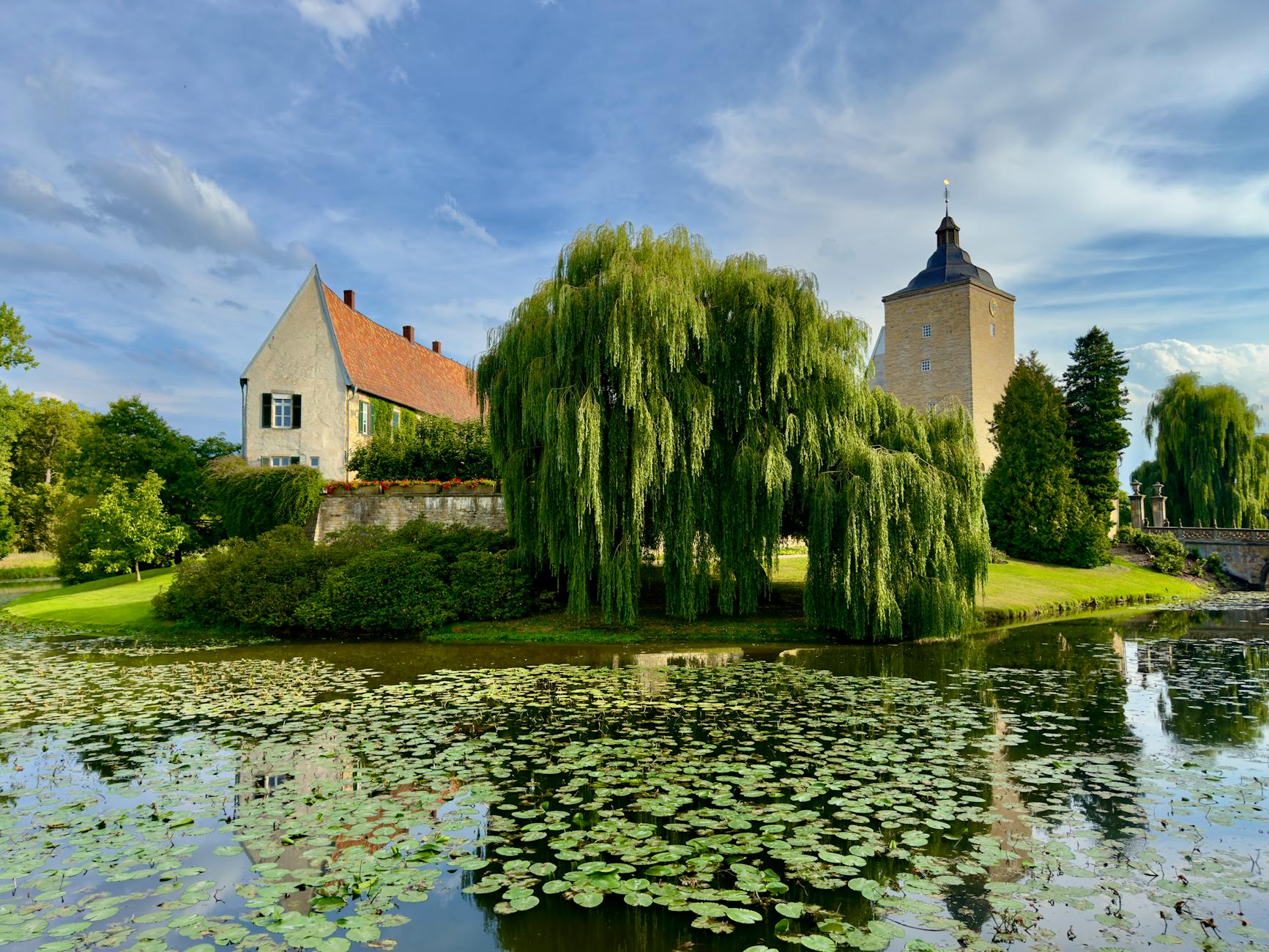
21. Schloss Blutenburg
Address: Seldweg 15, Obermenzing · S-Bahn: Obermenzing then bus 73/76 · Best time: spring weekends.
A small moated Wittelsbach castle on the river Würm, first mentioned in 1432, expanded by the art-loving Duke Sigismund who retired here in 1467 to live among “beautiful women and white doves.” The late-Gothic chapel still has its original medieval fittings. Today the castle houses the International Youth Library — the world’s largest collection of children’s literature — with regular free exhibitions. Almost no day-tripper makes it out here. Their loss.
22. Bayerischer Rundfunk “Funkhaus”
Address: Rundfunkplatz 1 · U-Bahn: Stiglmaierplatz (U1/U7) · Best time: daylight hours; book a guided tour for interiors.
Bavaria’s public broadcaster occupies a sprawling 1930s Funkhaus with a striking restrained-modernist exterior — one of the cleanest pieces of Bauhaus-adjacent architecture in central Munich. Walk the perimeter, peek into the marble lobby through the glass, and listen for a brass band rehearsing somewhere upstairs.
23. Café im Vorhoelzer Forum — the Rooftop Inside a University
Address: Arcisstraße 21, TUM Architecture Faculty, 5th floor · U-Bahn: Theresienstraße (U2) · Best time: clear-sky afternoons (verify current public hours).
Climb to the top of the TUM architecture building and you step onto a 270-degree terrace looking across Maxvorstadt towards the Alps. Access has fluctuated lately — mostly internal in 2025, partially reopened in 2026 with student-run drinks service — so check before you go. When it’s open, this is the best secret rooftop in central Munich, period.
24. Neighborhood Maibaums
Address: Viktualienmarkt, Pasing, Allach, Untergiesing & dozens more · Best time: May 1st morning — year-round to spot them.
Every quarter has its own decorated Maibaum — the blue-and-white striped Bavarian maypole hung with guild emblems — raised on May 1st with brass bands, beer, and the occasional ransom drama (rival villages steal each other’s poles for the ritual price of a barrel of beer). Hunt for the local maypoles in residential squares; each tells you what trades made that neighbourhood.
25. Japanese Tea House Kanshoan
Address: Englischer Garten, island in the Eisbach behind Haus der Kunst · U-Bahn: Lehel · Best time: April–October, on demonstration days (usually 2nd & 4th weekend of the month).
A gift from the Urasenke school in Kyoto for the 1972 Olympics, this small wooden teahouse sits on its own island. It is often closed; that is part of the magic. When open, Urasenke-trained practitioners host genuine tea ceremonies — a bowl of matcha, a small sweet, an hour of slowness. Check the Englischer Garten Verein calendar before you go.
Hidden Neighborhoods to Wander
If the 25 spots above are individual gems, these are the settings that hold them. Each is a tram or 15-minute walk from the centre, and each rewards aimless wandering more than any checklist.
- Westend (Schwanthalerhöhe). Munich’s original working-class quarter, the densest in the city, with the Augustiner brewery anchoring it. Cobbled side-streets, tiny Greek and Turkish bakeries, courtyard cafés like Marais, and a tight neighbourhood feel that exists nowhere else.
- Au. The riverside Au below Marienplatz used to be poor relations; now its narrow lanes, the Mariahilfplatz (home to the Auer Dult flea fair three times a year), and the Wirtshaus in der Au are local-bringing-out-of-town-parents territory.
- Untergiesing. South across the Isar, slowly gentrifying but still scruffy at the edges. Wander Birkenau and the streets behind Tegernseer Landstraße for craft beer bars and old-school wirtshäuser.
- Sendling. Big-village Munich, with the Sendlinger Mordweihnacht church, the Westpark on its western edge, and old workshops still operating between newer cafés.
- Lehel back-streets. Wedged between the Altstadt and the Isar, Lehel is short on tourist sights and long on quiet streets, antique shops, and Schwabing-quality bistros at half the noise.
Hidden Routes — Walks That Avoid Marienplatz
You can spend three days in Munich without setting foot in the main square. Three favourite quiet routes:
- Isar river walk south to north. Start at the Flaucher gravel islands, walk upriver past the Deutsches Museum and the Maximiliansanlagen, end at the Friedensengel at sunset. 6–8 km of trees, weirs, swimmers, and almost no Altstadt.
- Kunstareal slow loop. Königsplatz → NS-Dokumentationszentrum → Pinakothek der Moderne courtyard → Café Vorhoelzer rooftop → Türkenstraße cafés. Half a day of art and back-streets.
- English Garden north end. Skip the Chinese Tower. From Münchner Freiheit walk straight up the eastern paths through the Hirschau to the Aumeister. Half a day. You’ll see a different park.
Want guided walks that already filter out the crowds? Browse our curated Munich walking tours — several focus on Lehel, Au, and the Kunstareal.
Hidden Cafés
The biggest mistake visitors make is queueing for the same three Altstadt coffee houses. The actual neighbourhood cafés are cheaper, prettier, and lived-in:
- Café Marais (Parkstraße 2, Westend) — coffee in a 1920s textile shop where every chair, lampshade, and cake plate is for sale.
- Liebling (Holzstraße, Glockenbachviertel) — tiny, all-day, the kind of place locals adopt as a second living room.
- Café Lotti (Schleißheimerstraße 13) — pastel walls, vintage chandeliers, a dreamy breakfast that nobody photographs anywhere near as often as it deserves.
- Café im Vorhoelzer Forum — see #23.
- Stenz in Au, Café Frischhut for Schmalznudeln, Spatzl in Westend — the rest of the rabbit hole is in our full best cafés in Munich guide.
Hidden Viewpoints
Forget the queue at the Frauenkirche. These four panoramas are cleaner, cheaper, or both:
- Alter Peter tower. St Peter’s, two minutes from Marienplatz. 306 steps, no lift, €5 for adults (€2 for ages 6–18) — and the best straight-on view of the Frauenkirche and Neues Rathaus you will ever get.
- Olympiaturm. Munich’s 291-metre TV tower has been closed since 1 June 2024 and is expected to reopen during 2027. Until it does, the free Olympiaberg beside it is the best view over the park.
- TUM Vorhoelzer Forum. The rooftop terrace — #23.
- Hochzeitsturm (“Wedding Tower”) Olympiapark. Smaller, free, gives you a different angle on the tent roofs — check current opening hours, it’s seasonal.
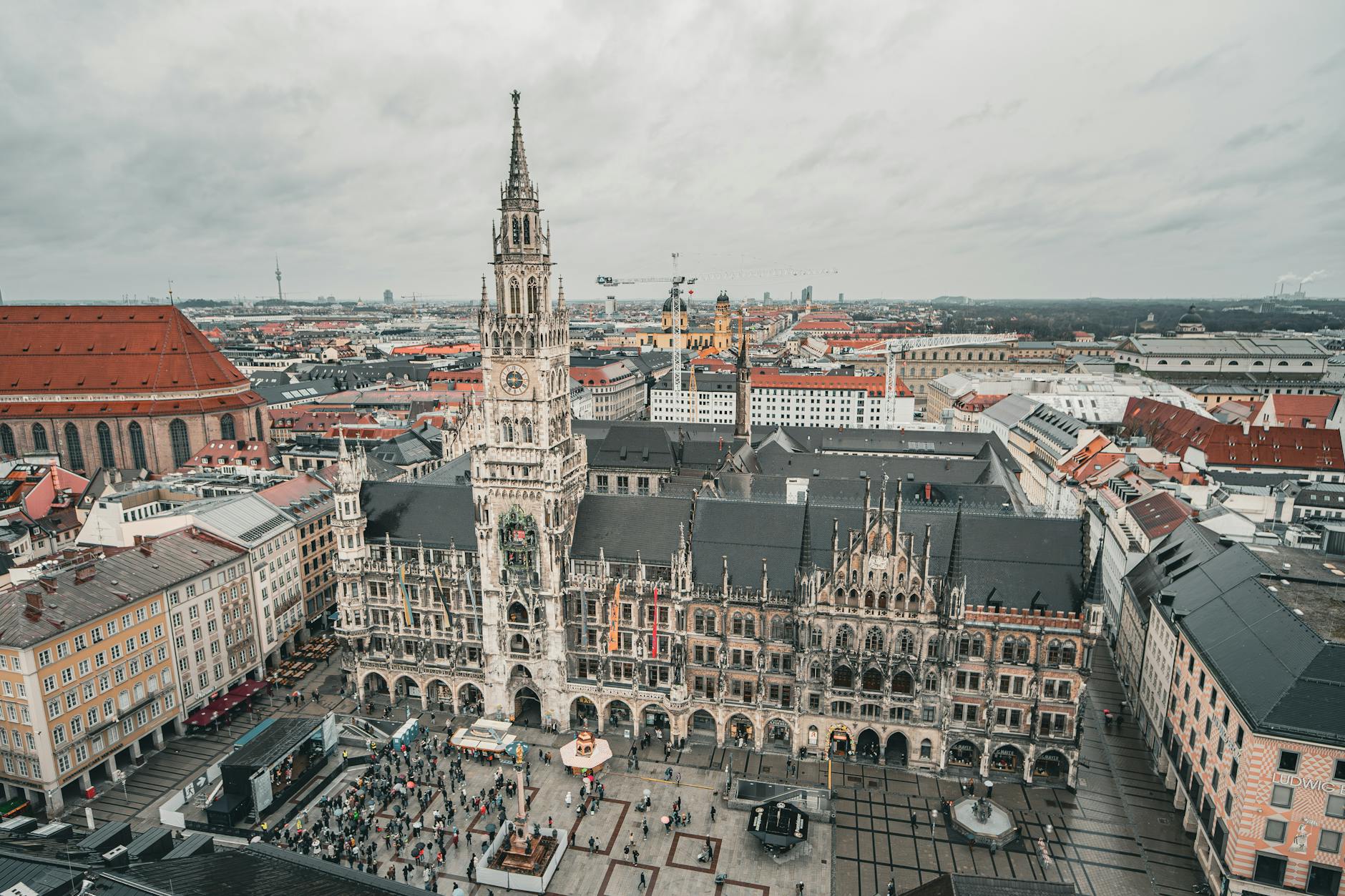
The better-known towers and terraces are ranked in our guide to Munich viewpoints and photo spots.
The Best Time to Visit Hidden Spots
Timing changes everything. A hidden gem at 4pm on a Saturday in July is not hidden — it’s just slightly less famous. The rules of thumb that actually work:
- Early morning, weekdays. 7–9am buys you the Asamkirche, Hofgarten, Olympiaberg, and Friedensengel essentially alone.
- Tuesday–Thursday afternoons. Museums and beer gardens drop to their quietest. Aumeister at 3pm on a Wednesday is the platonic ideal of a Bavarian afternoon.
- Off-shoulder seasons. Late April, all of October, and the first half of November are Munich at half-volume.
- Avoid Sundays for hidden cafés — many shut. Use Sundays for parks and outdoor sights instead.
Hidden Food Spots
Skip the Hofbräuhaus and you free up budget and stomach space for the actual local map. Wirtshaus in der Au for honest Schweinshaxe; Augustiner Bräustuben for the original brewery hall without the tourist tax; Münchner Suppenküche at Viktualienmarkt for a quick standing lunch of goulash soup; Mural Farmhouse in the Werksviertel for new-Bavarian tasting menus that almost no guidebook lists. Our things to do in Munich hub links out to the full restaurant and street-food guides.
Hidden Events
Munich’s official calendar is dominated by three giants — Oktoberfest, Christmas markets, Tollwood. The hidden layer beneath is where locals actually go:
- Tollwood off-programme. Beyond the festival’s big-tent concerts sit free yoga, fringe theatre, food-justice workshops, and pop-up debates — almost all in German, but the experience is universal.
- Bürgerfeste. Every Munich district throws a summer street fair — the Westend Streetlife on Landsberger Straße, Streetlife on Leopoldstraße in September, Sendlinger Sommer. Block parties at city scale.
- Auer Dult. Three nine-day flea-and-folk fairs a year at Mariahilfplatz in the Au — vintage, ceramics, fairground rides. Almost zero tourists.
- Lange Nacht der Museen. One night each October, more than 100 museums and venues stay open from 6pm until 1am for a single combined ticket. The bus-shuttle between them is its own party.
- Corpus Christi procession. June, the Old Town turns medieval — carpets of flowers, candles, brass bands. Very local, almost no tourists know.
FAQs: Munich Hidden Gems
What is Munich’s most truly secret spot?
The Japanese Tea House Kanshoan on its Eisbach island, when a real ceremony is running, is the best combination of small footprint, low awareness, and high payoff. Runner-up: the courtyard of the Alter Hof at lunchtime, with the Münchner Kaiserburg’s free exhibition. Both are five minutes from the most photographed corners of the city, and almost nobody you see at Marienplatz will ever step inside either.
What is the best hidden view of Munich?
Olympiaberg at sunrise — on a clear morning you’ll see the Alps in pink, the Olympiaturm catching first light, and Munich waking up below. For an Altstadt view without queues, Alter Peter beats every alternative. For a rooftop café feel, aim for the TUM Vorhoelzer Forum terrace if it’s open during your visit.
Where are Munich’s hidden cafés?
Look outside the Altstadt. The Westend (Café Marais), Maxvorstadt (Café Lotti, Vorhoelzer Forum), Glockenbachviertel (Liebling, Stenz), and Schwabing back-streets are where locals drink coffee. The big-name Altstadt coffee houses are fine but oversubscribed; ten minutes’ walk in any direction buys you a quieter, prettier table. For a curated list, see our best cafés in Munich guide.
What are the best hidden free things to do in Munich?
The NS-Dokumentationszentrum (free entry, full Learning Center), the Hofgarten with its arcades, the Alter Hof courtyard, Olympiaberg, the Werksviertel street-art walk, the Pinakothek der Moderne courtyard, and any English Garden walk are all free. Add the €1 Pinakothek Sundays and most cultural visits cost nothing.
Which Munich hidden gems are best for kids?
Kleinhesseloher See rowboats; the International Youth Library at Schloss Blutenburg; the Werksviertel’s container village with the Riesenrad; Hirschau meadow for picnics; the deer enclosure beside Hirschgarten; and any Maibaum brass-band morning on May 1st. The Forstenrieder Park is a winner for kids who like real-deer-in-real-forest moments.
Is the Eisbach surfing wave still open in 2026?
After a temporary closure in late 2025, surfing on the Eisbachwelle has been officially permitted again under tighter rules in 2026. Conditions can change at short notice — signs at the wave and the city’s official channels are the authoritative source. Watching from the bridge is always allowed and remains one of the city’s best free spectator sports.
Make the City Yours
The Munich hidden gems on this map share one quality: they reward repeat visits and slow attention. Climb Olympiaberg twice — once at dawn, once at dusk — and you’ll feel a city you cannot see from a sightseeing bus. Sit in the Aumeister beer garden for three hours on a Tuesday and you’ll overhear a Bavarian afternoon. Push the door of the Asamkirche on the way to dinner and you’ll carry a square metre of gold leaf in your head for the rest of the trip.
Build the rest of your itinerary from our things to do in Munich hub, dig deeper into the city’s bigger sights in our Munich landmarks guide, choose your base from our best neighborhoods in Munich, walk it slowly with one of the Munich walking tours, and refuel at the city’s best cafés in Munich. The longer you spend here, the smaller and stranger and more personal the map becomes — which is, in the end, what hidden actually means.