Munich Food & Beer Guide: Bavarian Culinary Experience
Complete Munich food and beer guide. Traditional Bavarian dishes, beer gardens, beer halls, breweries, Viktualienmarkt, and the best restaurants by budget.
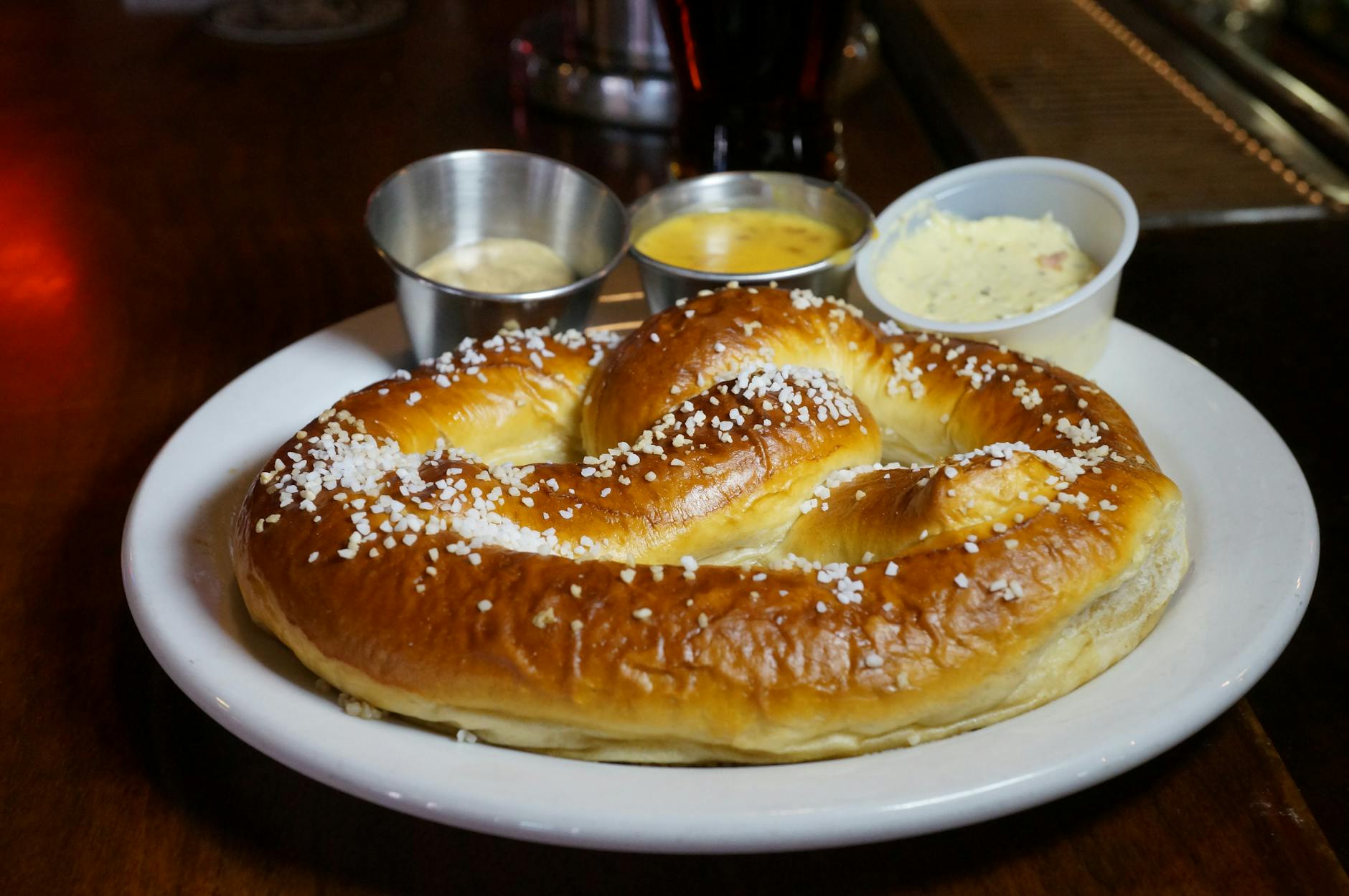
Munich’s culinary culture is one of Europe’s most satisfying — hearty, rooted, unapologetically regional, and built around centuries-old traditions that most of the city still observes daily. From the pre-noon Weißwurst breakfast to the communal benches of a chestnut-shaded beer garden to the Michelin-starred modern Bavarian reinvention down the street, eating and drinking in Munich is one of the single best reasons to visit. This complete Munich food guide walks you through every dish you need to try, every style of restaurant worth knowing, and the beer culture that shapes the whole city — with links to our specialist guides whenever you want to go deeper.
Bavaria’s cuisine is often stereotyped as nothing but sausage and beer. Spend even a few days eating your way through Munich and you’ll quickly realize that’s like describing French food as “bread and cheese.” There’s craftsmanship in every pretzel shape, ritual behind every sausage order, and a genuinely sophisticated regional culinary tradition hiding inside what looks at first like simple peasant food. The best Bavarian cooking is peasant cooking — in the same elevated way that Italian nonna cooking is peasant cooking.
Munich’s Must-Try Dishes at a Glance
If you only have a few meals in Munich, spend them well. This is the shortlist locals would actually send you to order — what each dish is, the best kind of place to find it, and roughly what you will pay. Read it first, then dive into the full descriptions below; nearly every restaurant in our best restaurants in Munich roundup serves at least half of this list.
| Dish | What it is | Where to try it | Rough price |
|---|---|---|---|
| Weißwurst | Poached veal-and-pork breakfast sausage, eaten before noon with sweet mustard and a pretzel | A traditional Wirtshaus or the Viktualienmarkt stalls, mornings only | €6–€9 (pair of two) |
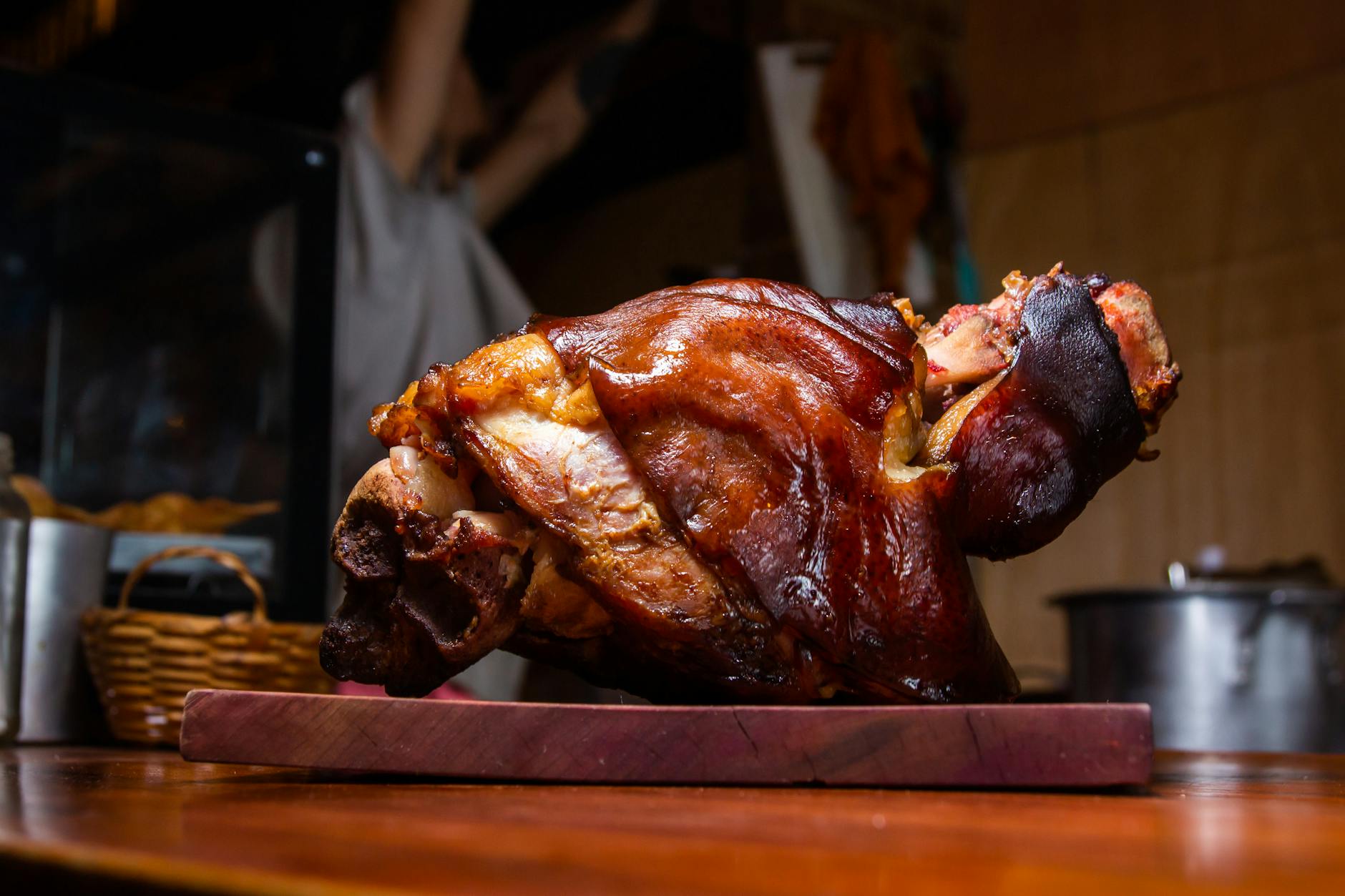
| Schweinshaxe | Roasted pork knuckle with shattering crackling, dumpling, and dark gravy | Beer halls — Hofbräuhaus, Augustiner | €16–€22 |
| Schweinsbraten | Slow-roasted pork shoulder in dark-beer gravy with a Knödel | Any Bavarian Wirtshaus or beer garden | €13–€18 |
| Obatzda | Spiced soft-cheese spread with paprika and onion, served with pretzels | Beer gardens, as a Brotzeit snack | €5–€8 |
| Leberkäse | Baked meatloaf-style “liver cheese,” sliced hot into a Semmel roll | Butcher counters and Imbiss stands | €3–€5 in a roll |
| Brezn (pretzel) | The giant soft Bavarian pretzel, fresh and lightly salted | Bakeries everywhere; free-floating in beer gardens | €1.50–€3 |
| Käsespätzle | Soft egg noodles baked with cheese and crispy onions — the Bavarian mac and cheese | Wirtshäuser; the go-to vegetarian main | €10–€14 |
| Apfelstrudel | Warm apple strudel with vanilla sauce or cream | Cafés and beer halls, for dessert | €5–€8 |
The Essential Bavarian Dishes You Need to Try
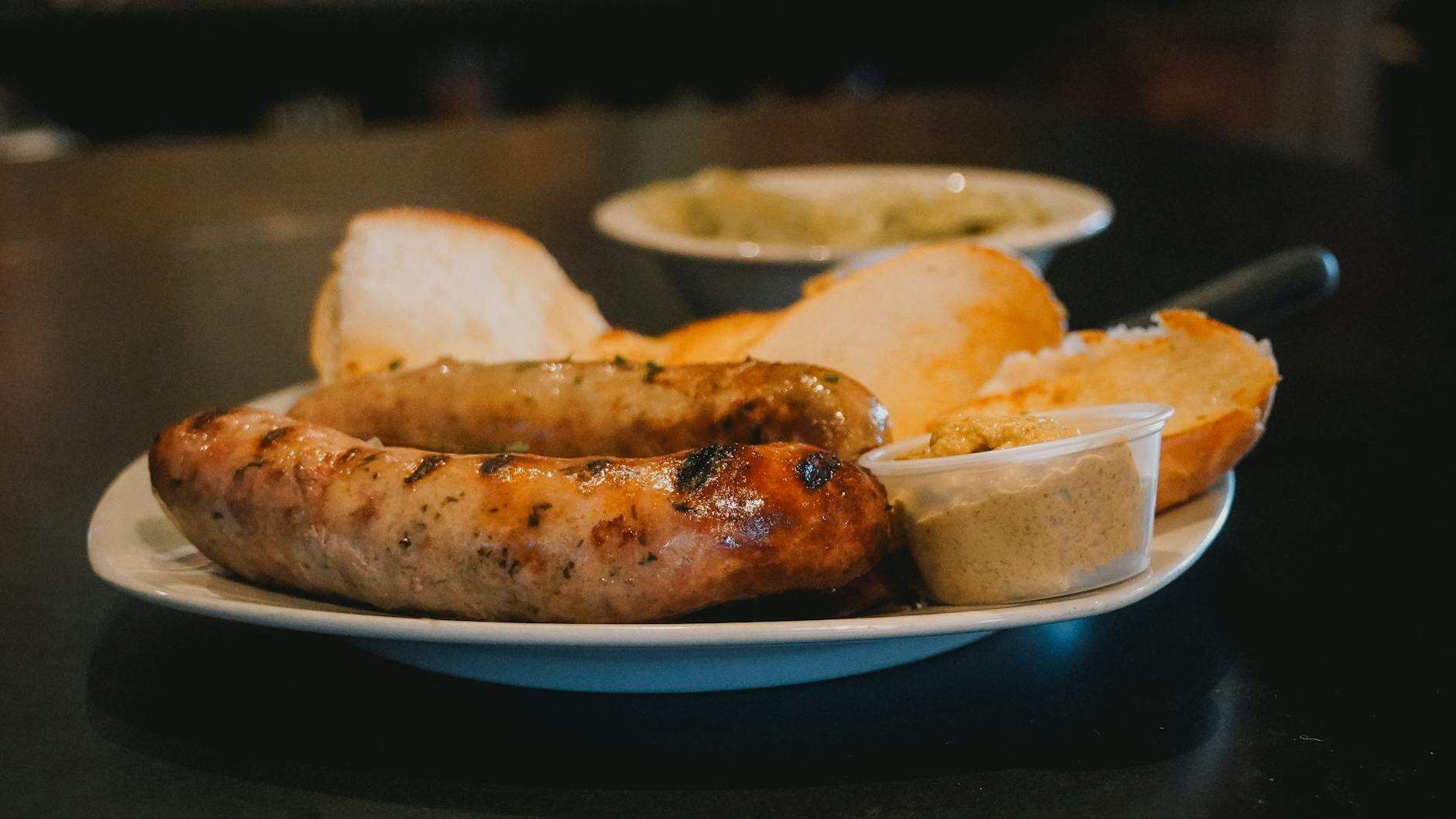
Weißwurst is the undisputed symbol of Munich breakfast. These delicate white veal sausages are poached gently in hot water (never boiled, never grilled), served in a porcelain bowl of the same water, and eaten with sweet Bavarian mustard (Weißwurstsenf) and a fresh soft pretzel. Tradition says they must be eaten before the noon bells ring, a rule that dates to the pre-refrigeration era when the unsmoked veal would spoil by lunchtime. Locals still observe this rule, and ordering Weißwurst after noon is mildly scandalous. The correct way to eat them is to slice the sausage lengthwise and scoop the meat out of the casing; chewing the casing is a dead giveaway you’re a tourist.
Schweinshaxe is Bavaria’s answer to the question “what if you roasted a pork knuckle until its skin shattered like glass?” A properly prepared Schweinshaxe has a crackling golden crust, meltingly tender meat underneath, and is served with red cabbage, a potato dumpling (Knödel), and a dark beer-based gravy. The dish is enormous, often a kilogram of pork, and is traditionally shared or served as the centerpiece of a celebratory meal.
Schweinsbraten (roast pork) is Schweinshaxe’s less showy but arguably more refined cousin — slow-roasted pork shoulder with the same crackling skin, carved into slices, and served with dumpling, cabbage, and gravy. It’s the dish locals actually order more often. Leberkäse, despite literally translating to “liver cheese,” contains neither. It’s a finely ground baked meatloaf of pork and beef, served either sliced warm as a main with potato salad and a fried egg, or slapped into a bread roll as Leberkässemmel — Munich’s quintessential lunch-on-the-go.
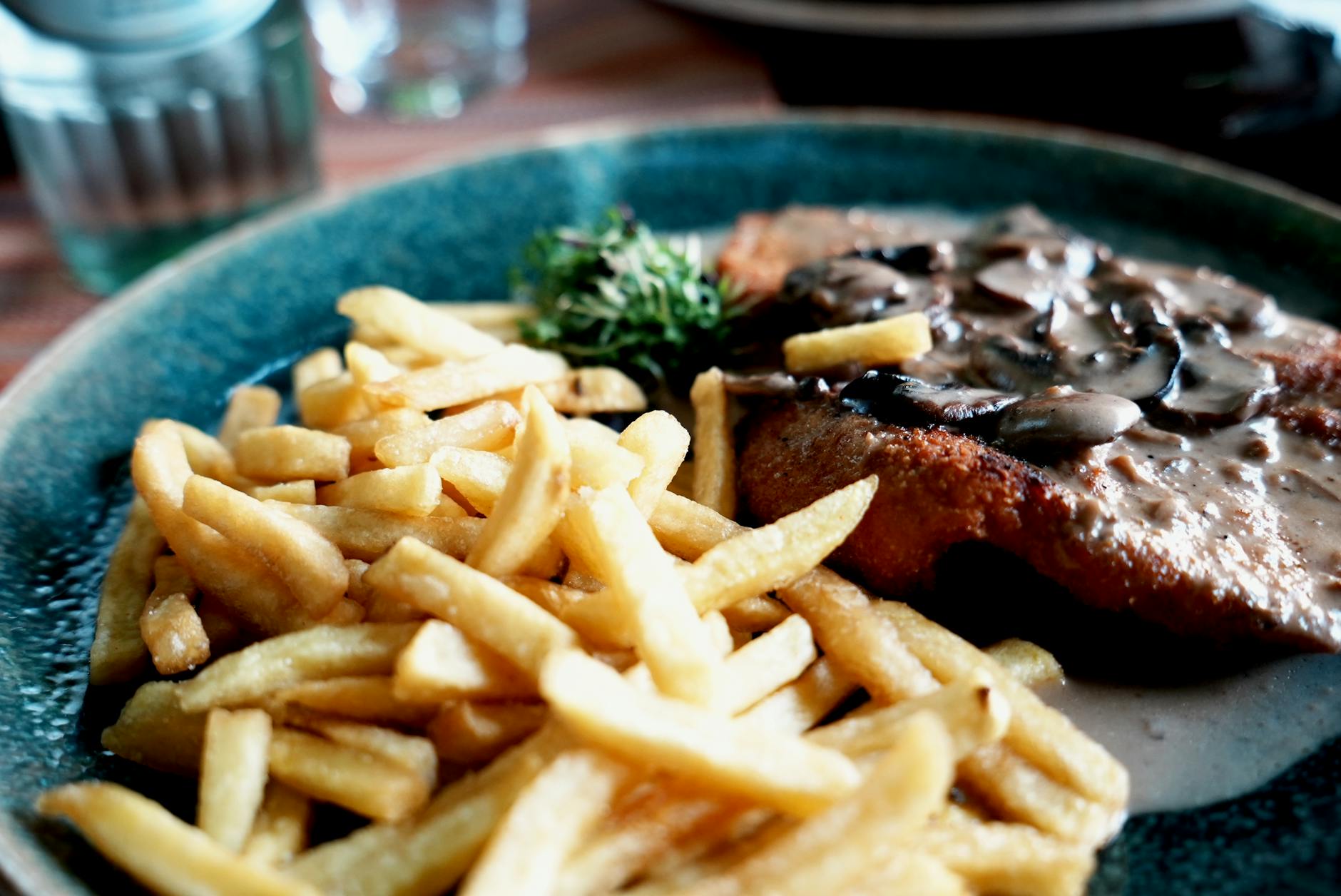
Käsespätzle is Bavaria’s mac and cheese: hand-made egg noodles tossed with aged Bergkäse, topped with deeply caramelized fried onions. Comfort food at its platonic ideal. Obatzda, the beer-garden cheese spread, blends ripe Camembert with butter, paprika, and onions — it arrives in a small bowl with radishes, butter pretzels, and a cold beer, and constitutes one of the great summer meals anywhere in Europe. Schnitzel — the breaded, pan-fried veal or pork cutlet — is technically Austrian, but you’ll find exceptional versions across Munich.
For desserts, don’t miss Kaiserschmarrn (torn-up caramelized pancake dusted with powdered sugar, served with plum or apple compote — technically Austrian, beloved here), Apfelstrudel (apple strudel, always with vanilla sauce or ice cream), and Dampfnudel (steamed yeast dumpling bathed in vanilla sauce). For a complete rundown of every classic dish with local tasting-room recommendations, see our traditional Bavarian food guide.
Munich’s Beer Culture: Six Breweries and a 500-Year Purity Law
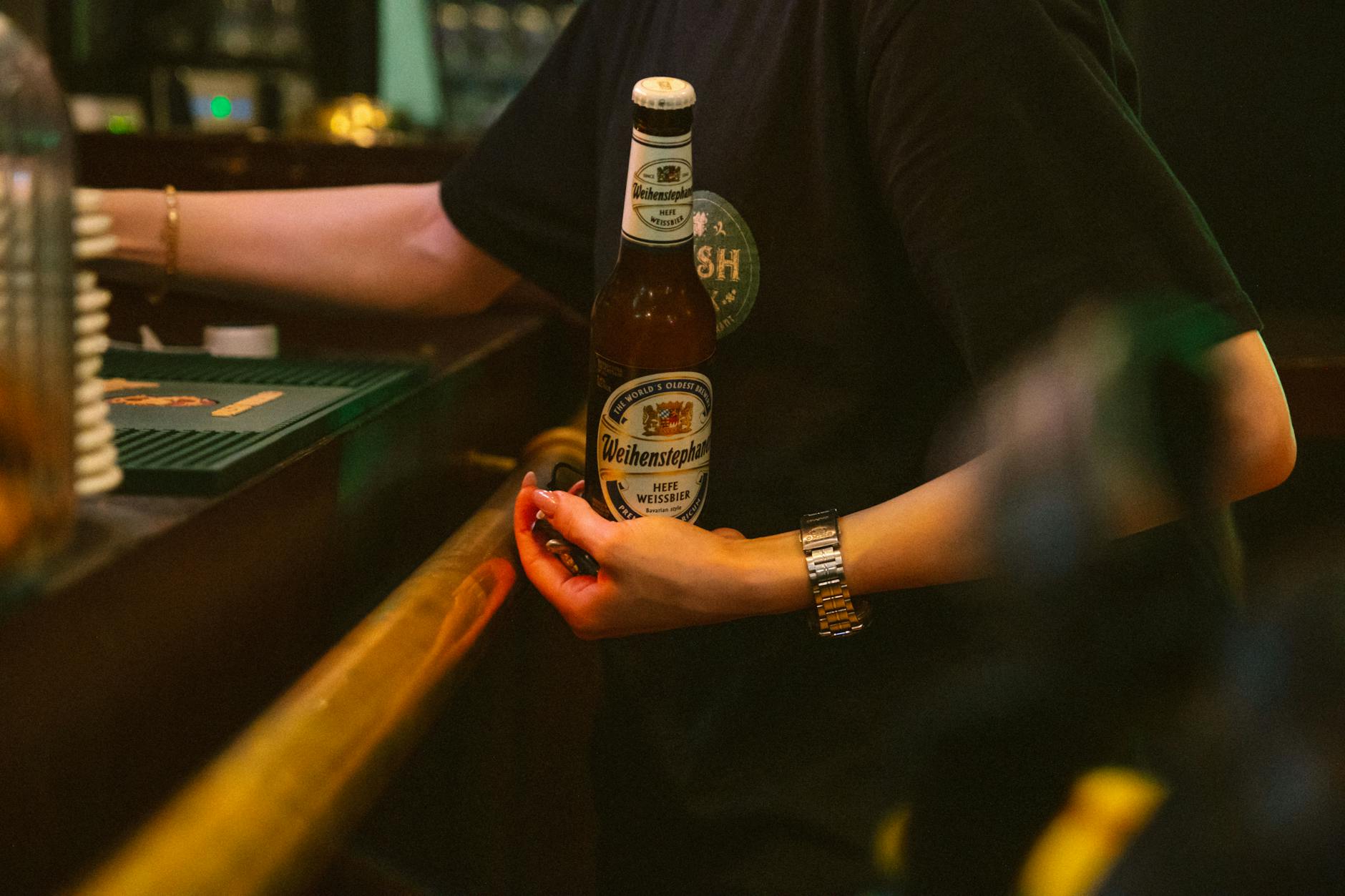
Munich is one of the world’s great beer cities, and that is not hyperbole. The Bavarian Reinheitsgebot (Purity Law) dates from 1516 and dictates that beer may contain only four ingredients: water, barley, hops, and yeast. It’s the oldest food-quality regulation still in effect anywhere, and its legacy shapes the clean, uncluttered character of Munich beer to this day.
Six breweries are legally allowed to serve beer at Oktoberfest and effectively dominate the city’s beer culture: Augustiner (the oldest and most beloved by locals, family-owned and still brewed in the original city-center location), Hofbräu (the royal Bavarian brewery, now state-owned, famous internationally through the Hofbräuhaus), Hacker-Pschorr, Löwenbräu, Paulaner, and Spaten. Each has a slightly different style profile, and locals have strong, lifelong loyalties.
The classic Munich beer styles worth knowing: Helles (a pale lager, Munich’s everyday beer — crisp, malty, around 5% ABV), Weißbier (wheat beer, cloudy, with distinctive banana and clove notes from the specific yeast strain — perfect with Weißwurst), Märzen (the stronger, maltier amber lager brewed for Oktoberfest), Dunkel (a dark lager with toasted malt notes), and Bock (a strong seasonal lager, often brewed for holy festivals like the late-winter Starkbierfest). At a beer garden, a one-liter mug is a Maß; at a bar, a half-liter is standard. For the six-brewery deep dive, see our Munich beer halls and breweries guide.
Beer Gardens: Munich’s Unique Outdoor Tradition
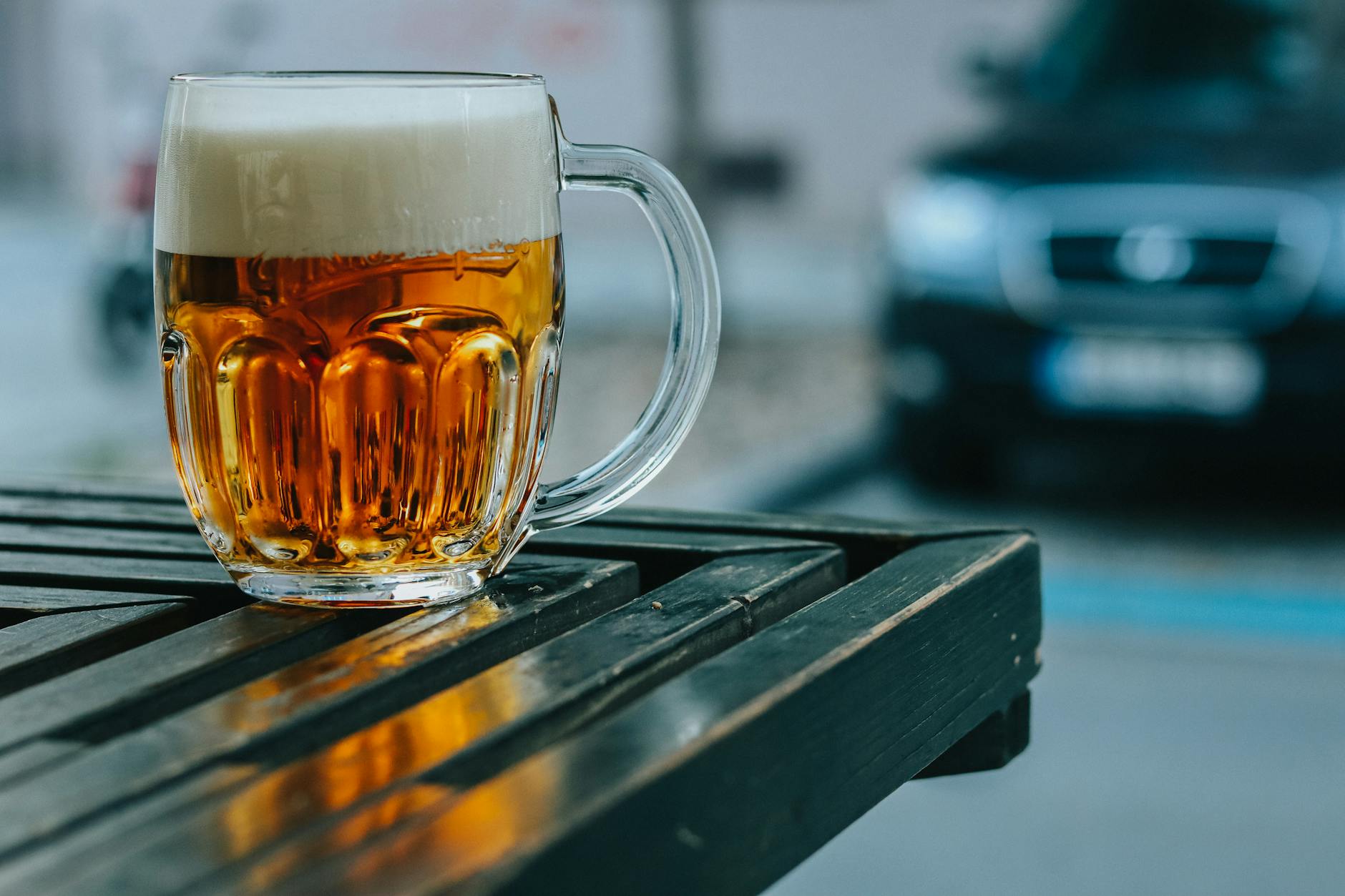
The beer garden is Munich’s signature social institution. Their 19th-century origin is wonderfully practical: brewers needed to keep their cellars cool, so they planted chestnut trees above their underground storage rooms for shade, then started serving beer in the shade itself. The tradition grew into a legal right, codified in Bavarian law: in a proper beer garden, you are permitted to bring your own food, as long as you buy your drinks from the garden.
This “bring your own Brotzeit” tradition is fundamental to the beer garden experience. Locals pack picnic baskets with fresh pretzels, radishes, Obatzda, cured meats, hard-boiled eggs, and slices of Leberkäse, spread them across the long wooden tables, and settle in for hours. It’s one of the best-value ways to eat well in Munich — a proper family-sized Brotzeit costs maybe €15 at the market, and you pair it with €5 half-liters of world-class beer.
The essential beer gardens: the Augustiner-Keller near the Hauptbahnhof for beer-from-the-barrel purists, the Hirschgarten next to Nymphenburg for its 8,000 seats and resident fallow deer, the Chinese Tower in the English Garden for live Blasmusik brass bands, the Seehaus for the romantic lakeside setting, the Hofbräukeller in Haidhausen for a local alternative to the Hofbräuhaus, and the Flaucher for the most rustic, river-adjacent feel. For a full ranked list with seasonality, food tips, and best times to visit, see our best beer gardens in Munich guide.
Munich’s Traditional Beer Halls
The indoor counterpart to the beer garden is the Bierhalle — the traditional Munich beer hall, usually attached to one of the six major breweries. These are cavernous, wood-paneled rooms filled with long shared tables, where a live oompah band plays several nights a week and Maßkrüge (beer mugs) slam on the tables in rhythm to “Ein Prosit.”
The Hofbräuhaus on Platzl is the most famous, and yes, it is touristy — but it’s also genuinely spectacular, has been serving beer since 1589, and on a good night remains a genuine slice of Bavarian hospitality. Locals also frequent it, especially the upstairs festival hall on weekends. Alternatives with more local character include the Augustiner Bräustuben in Westend, the Paulaner am Nockherberg in Au, the Löwenbräukeller at Stiglmaierplatz, and Zum Spöckmeier near Marienplatz for a Weißwurst frühstück experience that’s been running for decades.
Beer halls change character once the sun goes down. Our guide to Munich beer halls at night covers live Volksmusik, table-sharing etiquette and which halls stay genuinely lively past 10pm.
Viktualienmarkt: The Heart of Munich Food
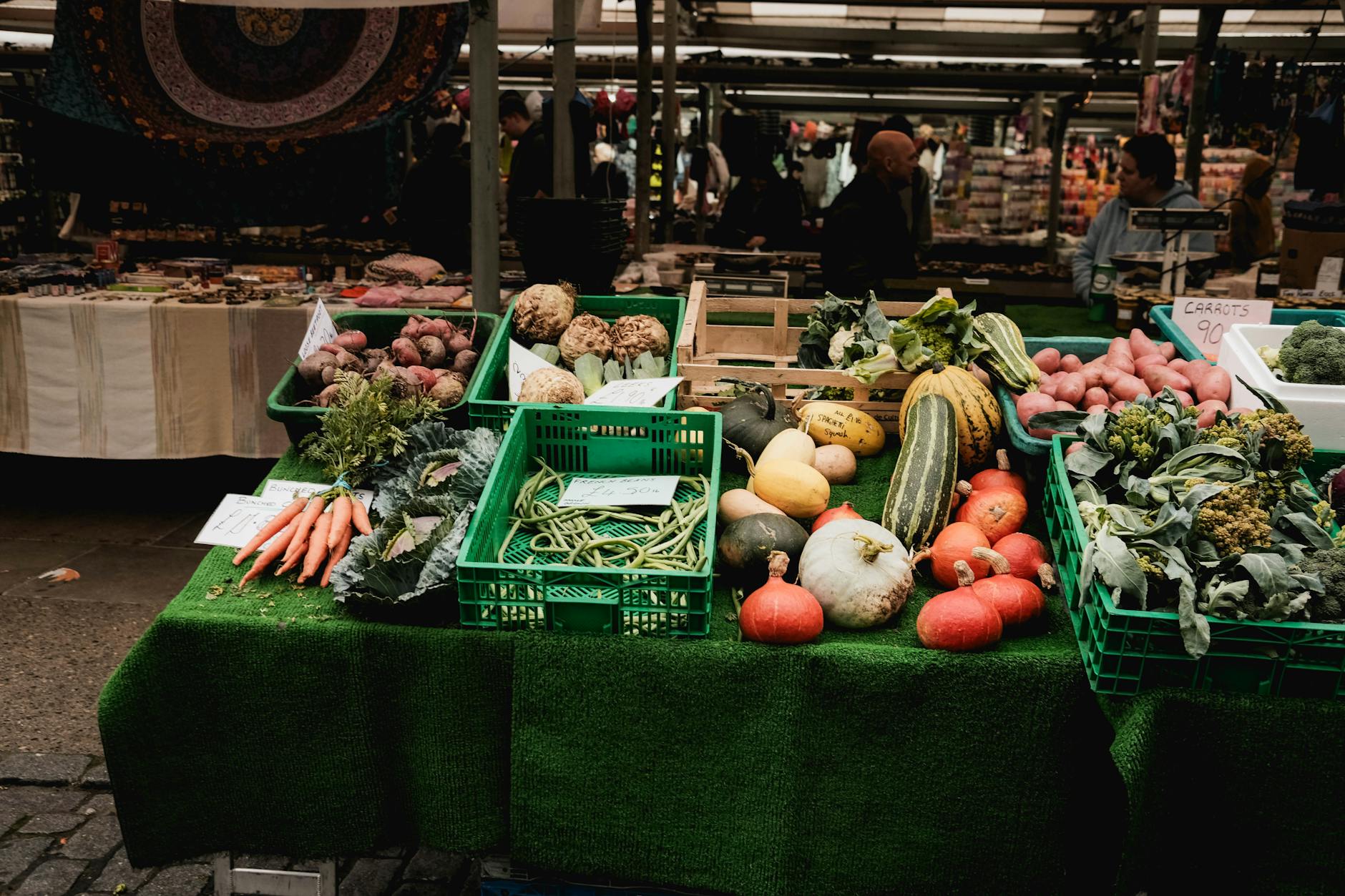
Just south of Marienplatz, the Viktualienmarkt has been Munich’s permanent open-air food market since 1807. Its 100+ stalls sell fresh produce, cheese, sausage, fish, flowers, spices, handmade truffle chocolates, honey, mustards, and a dozen kinds of freshly baked bread. In the middle sits the market’s own beer garden, which uniquely rotates its featured brewery every six weeks or so among the six Munich breweries — meaning the beer you drink here depends on the calendar.
The best way to experience Viktualienmarkt is to wander, graze, and assemble a picnic. Pick up Obatzda and a pretzel from the deli counters, a whole smoked trout from the fish stall, fresh strawberries in season, and a wedge of aged Bergkäse. Sit at the beer garden, order your Maß, spread out your finds, and have one of the best casual lunches of your life. Monday through Saturday is the market’s full-service window; Sundays the market is closed (including the beer garden). For the full stall-by-stall guide and what to order at each, see our dedicated Viktualienmarkt guide.
Where to Eat: Munich’s Best Restaurants by Budget
Traditional Bavarian (€€-€€€)
For honest, high-quality Bavarian cooking, the gold standard is Wirtshaus in der Au in Haidhausen, a historic tavern open since 1901 and famous for its Knödel (the restaurant even publishes its own dumpling cookbook). Zum Dürnbräu, tucked away just off Platzl, has been serving classic Bavarian food since 1487 — reading the menu feels like flipping through centuries of local tradition. Augustiner Klosterwirt next to the Frauenkirche is a reliably excellent central option, and the Spatenhaus an der Oper across from the National Theatre pairs upscale Bavarian classics with pre-theater timing.
Michelin-Starred and Modern Bavarian (€€€€)
Munich has quietly become one of Germany’s most decorated fine dining cities. Atelier at the Bayerischer Hof holds two Michelin stars. Tantris, the legendary temple of French-influenced Bavarian cuisine, has been a two-star fixture for decades. Schwarzreiter at the Kempinski, The Cloud by Kaefer, and Alois at Dallmayr are all excellent, and reservations 4-6 weeks ahead are recommended for any of them.
Mid-Range Neighborhood Gems (€€)
Munich’s best mid-range eating happens outside the Altstadt. In Glockenbachviertel, try Ella for modern vegetable-forward cooking or Prado for casual Italian done well. In Haidhausen, Gandl and Vinaiolo are reliable neighborhood favorites. In Maxvorstadt, Schmock offers refined Israeli cuisine, and the area around Türkenstraße is packed with affordable international options. Our best restaurants in Munich guide ranks 30+ standouts across neighborhoods and budgets.
Budget (€)
Munich is full of under-€15 lunch options. Viktualienmarkt stalls, Vincenz Murr and Richard butcher counters (grab a Leberkässemmel for €4), Turkish and Vietnamese places in Westend, the Ruffini café bakery in Schwabing, and the university cafeterias of TUM and LMU, which are open to the public and serve honest €6-€8 three-course lunches.
Brotzeit: The Art of the Bavarian Snack
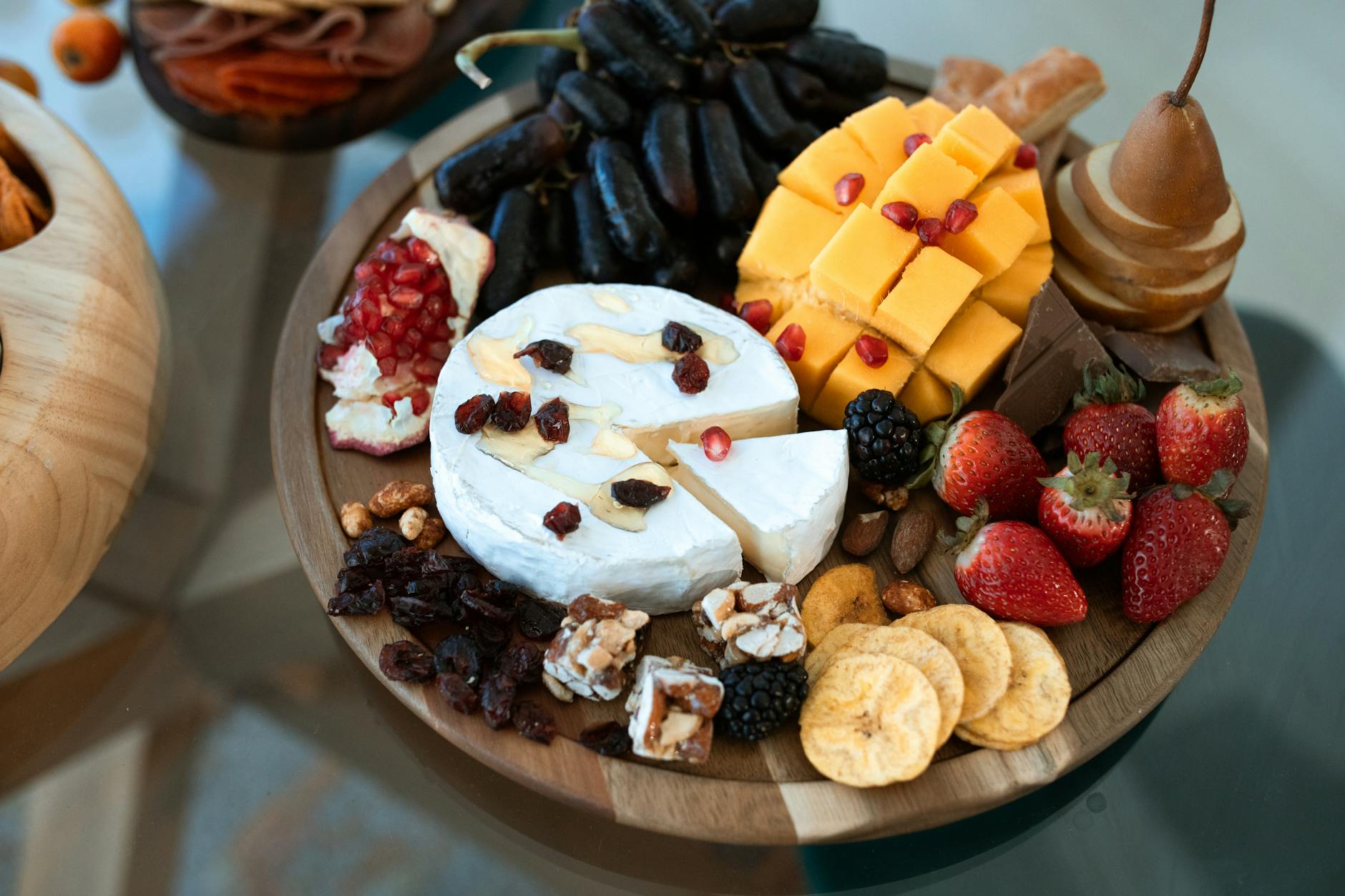
Brotzeit literally translates as “bread time,” and it’s one of the most charming Bavarian concepts. It’s a light meal or snack served in the late morning or late afternoon — typically a wooden board arranged with thin-sliced cured meats (Schinken, Landjäger), aged cheeses, Obatzda, radishes, butter, bread, and pretzels. It’s eaten slowly, often with beer, often with friends, and is not a meal in the American sense — it’s closer to an aperitivo or a ploughman’s lunch, and understanding it is key to understanding how Bavarians eat.
Almost every beer garden serves a Brotzeit board, and at Viktualienmarkt you can assemble a better one yourself from the butchers and cheese counters for about €15-€20 for two people. For travelers trying to eat like locals on a budget, mastering Brotzeit is a superpower.
Deeper Dive: Bavarian Ingredients and Regional Specialties
Understanding Bavarian food means understanding its ingredients — and most visitors are surprised by how distinctive and regional they are. Bavarian veal comes primarily from the Alpine pastures south of Munich, and it’s the key to a proper Weißwurst. Bavarian beef from the same Alpine foothills produces the classic Tafelspitz and Zwiebelrostbraten. Regional cheeses include Bergkäse (aged Alpine cheese, nutty and firm), Weißlacker (a pungent smear-ripened cheese that has been made in the same Allgäu village since 1874), and Romadur (a semi-soft ripened cheese often compared to Limburger). Few visitors seek these out; those who do always leave Munich more impressed by Bavarian dairy than they expected.
Potatoes are fundamental — Bavarian potato salad (Kartoffelsalat) is made with broth, oil, and vinegar rather than mayonnaise, and eating it properly warm with a slice of Leberkäse is a revelation. Potato dumplings (Knödel) come in countless regional variations: Semmelknödel (from dried bread), Kartoffelknödel (from cooked potato), and the magnificent Leberknödel (liver dumplings) that appear in clear beef broth. Horseradish — freshly grated, sharp enough to bring tears — is the condiment of choice for boiled beef, smoked fish, and sausage platters.
Finally, bread. Bavaria produces some of the best bread in Germany, which is saying something. The classic rye-based Bauernbrot (farmer’s bread) has a dense, sour crumb and keeps for a week. The Pretzel (Brezn in Bavarian dialect) is its own ritual — baked fresh twice a day at every proper bakery, with a shiny lye-dipped crust and a soft interior ideal for butter or mustard. A pretzel eaten warm within an hour of its baking is a genuinely different food from one eaten cold at the end of the day; if you buy one from a good bakery in the morning, treat it as breakfast.
Coffee Culture and Cafés
Munich’s café culture leans more Viennese than Italian. The grand coffeehouses — Tambosi on Odeonsplatz, Schumann’s, and the historic Café Luitpold — serve properly made espresso, pastries, and cold drinks in settings that invite lingering. For third-wave specialty coffee, visit Man Versus Machine, Mahlefitz, and Standl 20, which are among the city’s best. For traditional cake and coffee, Cafe Frischhut next to Viktualienmarkt is legendary for its Schmalznudeln (a traditional Bavarian doughnut). See our best cafés in Munich guide for more.
Vegetarian, Vegan, and Dietary Options
Traditional Bavarian cooking is famously meat-heavy, but Munich’s contemporary dining scene has caught up beautifully. Vegetarian and vegan options are plentiful, especially in Glockenbachviertel, Haidhausen, and Maxvorstadt. Max Pett, Munich’s first fully vegan restaurant, remains a stalwart. Prinz Myshkin near Hauptbahnhof has been serving upscale vegetarian cuisine since 1986. Veganista, Bodhi, and Vegelangelo (vegan Italian) are all worth a visit.
Even at traditional Bavarian restaurants, you can usually find Käsespätzle, Obatzda, potato salad, Bavarian dumplings with mushroom sauce, and Kaiserschmarrn — all vegetarian and genuinely regional. Gluten-free options exist but are less common at classic beer halls; Italian and Vietnamese restaurants tend to handle dietary restrictions more flexibly. Our vegetarian and vegan restaurants guide goes deeper.
Street Food and On-the-Go Bites
Munich’s street food scene is a mix of old and new. The traditional side is dominated by butcher-counter snacks: Leberkässemmel (warm meatloaf in a bread roll), freshly boiled sausages, and Brezen (pretzels) pulled from the oven all morning. The Elisenbrezn pretzel chain does a respectable quick pretzel; the Rischart bakery chain does better.
Modern street food lives at the Viktualienmarkt, at the Bahnwärter Thiel cultural space in Sendling, and at seasonal markets. The Turkish-origin Döner Kebab is Munich’s true street food king, with Westend and Hauptbahnhof home to some of the best in Germany. See our Munich street food guide for more ideas and specific stall picks.
If your hunger arrives after the kitchens close, late night eats in Munich maps the doner counters, Turkish grills and station bakeries that serve past midnight.
International Cuisine in Munich
Munich’s international food scene is far better than its reputation suggests. Thanks to the city’s demographic history, Italian food here is exceptional — several of the best trattorias outside Italy operate in Glockenbachviertel and Haidhausen, often run by families who migrated from the Alto Adige region. Turkish cuisine is abundant and authentic, especially around Westend, with Döner stands, Lahmacun bakeries, and family restaurants like Kismet that serve Ottoman home cooking at surprisingly low prices.
Vietnamese and East Asian food has boomed in the past decade. Mun, Little Wolf, Xu Noodle Bar, and Oi Asia Ramen all represent a new generation of confident, carefully-executed Asian cooking. For Middle Eastern, Schmock in Maxvorstadt is widely regarded as the best Israeli restaurant in the city. And for a fun, affordable international dining experience, the Eataly food hall in the Schrannenhalle just off Viktualienmarkt collects Italian restaurants under one roof.
Food Tours and Culinary Experiences
If you want to dive deeper into Munich’s culinary culture with an expert guide, food tours are one of the best ways to do it. Eat the World runs well-reviewed small-group tours focused on specific neighborhoods. Bavarian Beer and Food Tours combines a brewery visit with a Bavarian dinner. Viktualienmarkt tasting tours are compact, affordable, and run by several operators — ideal for travelers short on time.
For an even deeper experience, consider a brewery tour of one of the six Oktoberfest breweries (Paulaner, Hofbräu, and Augustiner all run visitor programs), a Weißwurst-making workshop, or a traditional dumpling-rolling class. Munich’s Tourismus Amt publishes a rotating calendar of seasonal food events worth checking. See our Munich food tours guide for vetted operator recommendations.
Where to Buy Bavarian Food to Take Home
Bavarian food makes some of the best travel souvenirs — it’s distinctive, meaningful, and almost impossible to find outside the region. The best place to shop is Viktualienmarkt, where specialist counters carry vacuum-packed Weißwurst (which survive the flight home), traditional sweet mustards, pickled items, and aged cheeses. Dallmayr, Munich’s legendary food emporium near Marienplatz, is a two-floor wonderland of Bavarian and international delicacies — go even if you don’t buy, just to see it.
For beer, most of the six Munich breweries sell branded merchandise and beer steins through their visitor centers. For sausage and cured meats, the butchers at Vincenz Murr and Richard can vacuum-pack for travel. For schnapps and spirits, Bavarian plum brandy (Zwetschgenwasser), Enzian (gentian root schnapps), and various Alpine herbal liqueurs make excellent gifts. Check your home country’s customs rules before committing to meat or dairy products.
Seasonal Foods and Festivals
Bavarian food follows the seasons more faithfully than most modern cuisines. In spring, expect Spargel (white asparagus) to dominate every menu from April through late June — always served with Hollandaise, boiled potatoes, and either Schnitzel or ham. Summer brings Weißwurst breakfasts in beer gardens, cold Obatzda platters, and the Starkbierfest (strong beer festival) which actually happens in March as the post-Lenten tradition.
Autumn is game season — Wildbraten (roast game, especially venison and wild boar) appears on every traditional menu, alongside chanterelles and chestnuts. Oktoberfest dominates late September and early October. Winter brings Christkindlmarkt season, when Glühwein (mulled wine), roasted chestnuts, Lebkuchen (spiced gingerbread), and sweet potato pancakes fill every market square. Fasching (carnival) in February features Krapfen (jelly-filled doughnuts).
Heading to the Wiesn? Our Oktoberfest food guide covers what to eat in which tent, what it costs and where the cheaper stalls are.
A Full Day of Eating in Munich
If you’d like a template for a genuinely great food day in Munich, here’s one that hits classic Bavarian, market culture, beer, and a modern dinner — all at reasonable cost and without overbooking.
9:30 a.m. — Weißwurst breakfast. Head to Zum Spöckmeier, the Weisses Bräuhaus, or the Gaststätte Fraunhofer. Order one pair of Weißwurst, a pretzel, sweet mustard, and a small Weißbier (yes, at 9:30 — it’s tradition). Take your time. You’re eating a 170-year-old Munich ritual; rushing it misses the point.
11:30 a.m. — Graze Viktualienmarkt. Pick up a slice of Obatzda, a wedge of Bergkäse, some radishes, a jar of good mustard, and a freshly smoked trout. Sit in the market’s beer garden with a Maß of whichever brewery is in rotation. This is the best cheap lunch in Munich.
3 p.m. — Coffee and cake. Walk to Café Luitpold or Café Frischhut for a proper Kaffee und Kuchen pause. Try the Prinzregententorte or a fresh Schmalznudel. Sit by the window, watch Munich walk by, and let the lunch beer wear off.
6 p.m. — Aperitivo in Glockenbachviertel. The area around Gärtnerplatz fills with locals at this hour. Grab a wine or an Aperol Spritz at Bar Centrale or Gärtnerplatz, have a small plate of something, and people-watch until dinner.
8 p.m. — Dinner. For a classic: Wirtshaus in der Au for Bavarian dumplings. For modern: Schwarzreiter, Schmock, or Alois at Dallmayr. For casual Italian: Ella or Prado. End with a digestif of Bavarian plum schnapps. You’ve eaten Munich properly.
Beer Styles to Order in Munich (and How to Ask for Them)
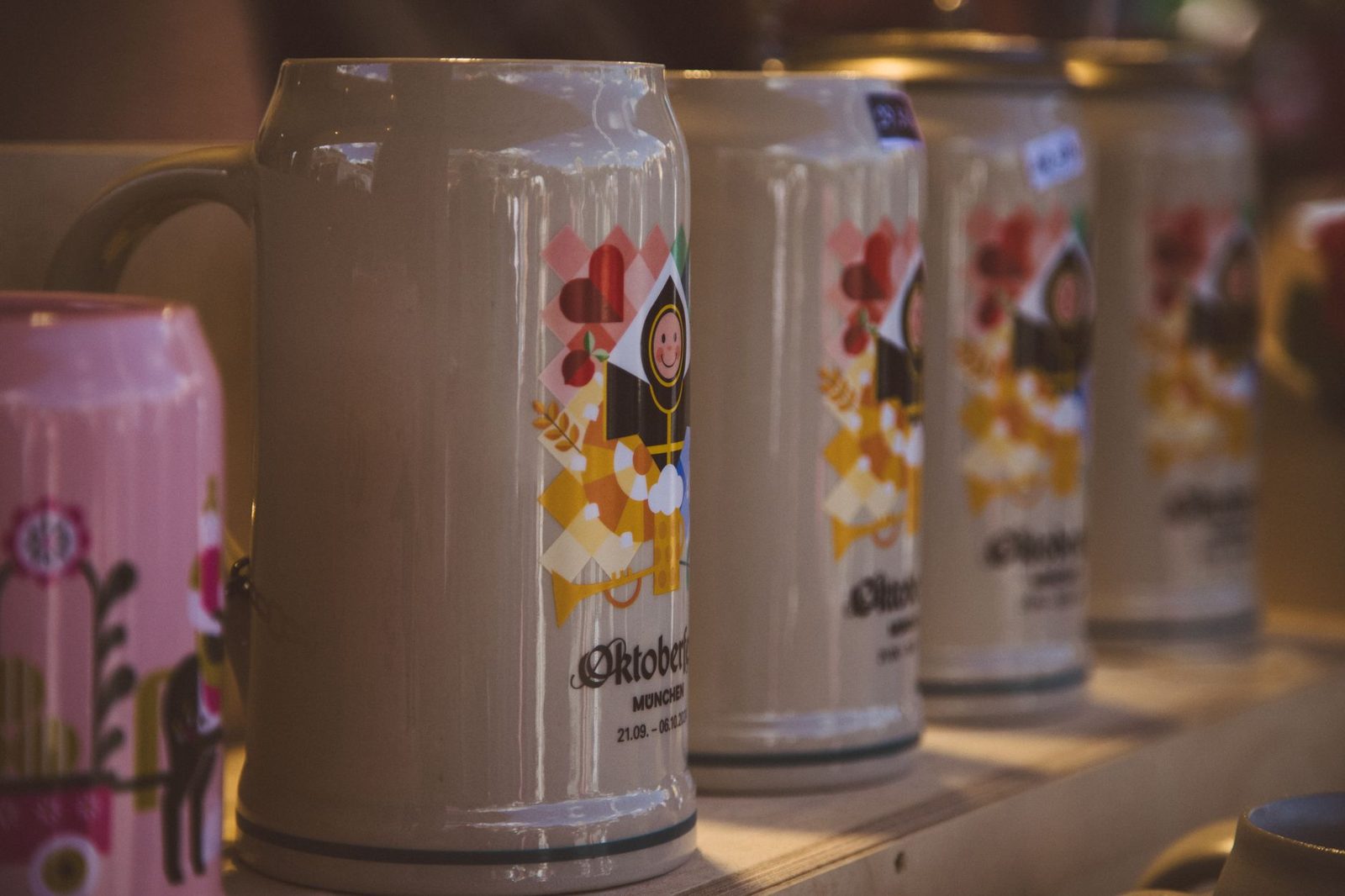
Walk into a Munich beer hall and the menu can be deceptively short — sometimes a single beer on tap — because the city drinks by style, not by brand. Knowing the handful of styles below means you order with confidence instead of pointing. When in doubt, hold up a finger and say “ein Helles, bitte,” and you will get the right thing.
Helles is the everyday Munich lager and the safest default: golden, malt-forward, gently hopped, and made to be drunk by the liter rather than sipped. It is what most locals order without thinking, and what fills the Maß at every beer garden. If you ask for “a beer” and nothing else, this is usually what arrives.
Weissbier (also called Weizen or Hefeweizen) is the cloudy wheat beer with a tall foamy head and notes of banana and clove from the yeast. It is the traditional partner to Weißwurst and the classic Bavarian breakfast or mid-morning beer. Order it hell (pale) or dunkel (dark), and never with a lemon slice — that is a German-pub habit Munich purists frown on. Watch the bartender’s slow, two-stage pour into the tall curved glass; it is part of the ritual.
Dunkel is the dark lager that predates Helles — malty, bready, and faintly chocolatey, but far lighter on the palate than its color suggests. Radler mixes Helles half-and-half with lemonade for a lower-alcohol, thirst-quenching summer drink, supposedly invented to keep thirsty cyclists upright. And in autumn, Festbier (the stronger, deeper-gold lager poured at Oktoberfest) appears around the city — richer and a notch boozier than everyday Helles, so pace yourself. To drink any of these where they taste best, see our guides to Munich’s best beer gardens and the historic beer halls and breweries.
Eating Etiquette: What to Know Before You Sit Down
A few cultural notes that will smooth your Munich dining experience. Shared tables are normal in beer gardens and beer halls — strangers will join you, and you should join others when tables are full. Greet your table neighbors with “Grüß Gott” or “Servus” on arrival. Toasting before drinking is customary; always make eye contact during the clink. Tipping is modest — round up to the nearest euro or add 5-10% for good service. Hand the tip directly to your server when they bring the bill rather than leaving it on the table.
Reservations are a good idea at popular restaurants, especially on weekends. Traditional beer halls generally don’t take reservations for the main hall but do for upstairs rooms. Paying is done at the table — ask for “die Rechnung, bitte” when you’re ready. Splitting checks is fine and common; servers are used to calculating individual tabs. Cash is still widely preferred at beer gardens and small restaurants; cards are fine almost everywhere else.
Frequently Asked Questions
What is Munich’s signature dish?
Weißwurst is arguably the most iconic Munich dish — traditional white veal sausage eaten before noon with sweet mustard and a pretzel. Schweinshaxe (crispy pork knuckle) is the other strong contender, especially at dinner.
Can I bring my own food to Munich beer gardens?
Yes, in self-service sections of traditional beer gardens. It’s a centuries-old legal tradition. You must buy your drinks from the beer garden, but food is welcome. This doesn’t apply to served sections (where waitstaff bring your order) or at privately operated garden restaurants.
How much does a beer cost in Munich?
In a traditional beer garden, a Maß (one liter) of Helles runs €10-€12. A half-liter at a bar is typically €4.50-€6. Oktoberfest beer is €14.80-€15.90 per Maß in 2026. Craft beer bars charge €5-€8 for a 0.3L specialty pour.
Do Munich restaurants speak English?
In the Altstadt and most tourist-facing restaurants, yes. At neighborhood beer halls and small family-run taverns, service may be German-only, though menus often have English translations. A few German phrases (“Ein Helles bitte,” “Die Rechnung bitte”) go a long way.
What’s a good budget for food in Munich?
Budget travelers can eat well on €25-€35 per day using markets, butcher counters, and beer garden self-service. Mid-range dining runs €50-€90 per day with sit-down lunches and dinners. Fine dining and cocktails push easily past €150 per day.
Is the Hofbräuhaus worth visiting?
Yes, especially for first-time visitors. Despite its tourist reputation, it’s a genuinely historic institution with real Bavarian atmosphere, especially upstairs on weekends. Just manage expectations: the food is solid rather than spectacular, and you’ll share tables with visitors from around the world.
Do you tip at restaurants in Munich?
Yes, but modestly. Service is included in the menu price by law, so tipping is a top-up for good service rather than a calculated percentage. The local habit is to round up — add roughly 5 to 10 percent — and to tell the server the total you want to pay as you hand over the money, rather than leaving coins on the table. If your bill is €27, saying “make it €30” is perfectly normal. In beer gardens and at counters you simply round to the nearest euro. Cards are increasingly accepted, but plenty of traditional Wirtshäuser and market stalls are still cash-only, so carry some notes.
Where can I try Weisswurst, and is the noon rule real?
The rule is real, if no longer strictly enforced. Tradition holds that Weißwurst should be eaten before the midday bells because the unsmoked veal once spoiled by lunchtime, and many traditional spots still stop serving it around noon. For the authentic experience, head to an old-school Wirtshaus or the stalls around the Viktualienmarkt in the morning, order a pair with sweet mustard and a pretzel, and slice the sausage open to scoop the meat from the casing rather than eating the skin. Pair it with a Weissbier and you have the quintessential Munich breakfast. Our full traditional Bavarian food guide covers the other dishes worth seeking out.
Is Munich a good city for families and picky eaters?
Very. Bavarian cooking is hearty and unfussy, so children tend to do well with sausages, Leberkäse in a roll, schnitzel, pretzels, and Käsespätzle (the local mac and cheese), and most beer gardens and Wirtshäuser are relaxed, often with play areas. Beer gardens are especially easy because you can bring your own food, spread out at a shared table, and let kids roam. For specific recommendations and high-chair-friendly spots, see our guide to family restaurants in Munich, and for keeping costs down, our cheap eats roundup points to filling meals under €10.
Eat Your Way Through Munich
Munich rewards travelers who treat meals as destinations rather than refueling stops. Plan an afternoon around a beer garden Brotzeit. Make time for a slow Weißwurst breakfast. Book a traditional Bavarian dinner. Spend an hour wandering Viktualienmarkt with no agenda beyond grazing. Take a food tour. Drink Augustiner from a wooden keg at least once.
Pair this pillar with our things to do in Munich guide for your daily itinerary and our accommodation guide to find hotels within walking distance of Munich’s best eating. Food is the thread that ties the rest of a Munich trip together — the conversations at shared beer-garden tables, the ritual of a shared Brotzeit in the afternoon sun, the simple satisfaction of a perfect pretzel with cold Augustiner on a warm evening. These are the moments that stay with you, and they’re exactly what Munich does best. Guten Appetit, and enjoy your table.
A final piece of advice: eat with curiosity rather than a checklist. The best Munich meals aren’t the ones you planned three months in advance from a ranked list — they’re the ones you stumbled into because a side street smelled amazing, or the ones where the older couple beside you insisted you try their Obatzda, or the ones where a waiter told you “you look like you want the Hax’n,” and you didn’t know what Hax’n was but you ordered it anyway, and it changed how you think about Bavarian food forever. Those stories come from saying yes. Say yes in Munich, and you’ll eat brilliantly.
Where to Go Next
This pillar is your starting point. From here, follow the threads that most interest you. Beer-first travelers should click through to our best beer gardens guide and our beer halls and breweries guide for a deeper dive into Bavarian beer culture. Restaurant-focused travelers will find our best restaurants guide and the traditional Bavarian food guide indispensable for planning specific meals. Market lovers should make straight for the Viktualienmarkt guide. Vegetarians and vegans should go to our vegetarian and vegan guide. Budget eaters, plan around our street food guide. Coffee-first travelers shouldn’t miss our best cafés guide. And if you want someone else to do the planning, book a tour through our Munich food tours guide.
Munich is a city that rewards eaters who take their time. The best meals aren’t the most expensive, the most famous, or the most photographed. They’re the ones where the kitchen cares, the hospitality is genuine, the ingredients are what the season offers, and you left the table half an hour after you meant to because the conversation kept flowing. That’s what Bavarian food is, at its best — warm, generous, unhurried, and rooted in centuries of genuine local pride. Treat it with the attention it deserves, and it will pay you back many times over across every meal you eat here. Combine this food pillar with our Oktoberfest guide if you’re visiting in September, and you’ll have Munich’s entire eating and drinking year covered. Whatever dates you choose, come hungry, come curious, and plan to skip exactly one meal each day so that you have room for two proper Bavarian feasts in the same twenty-four hours. You’ll understand exactly why this city’s food culture keeps people coming back for decades once you leave — and you’ll almost certainly be planning your return trip before your flight home has even landed. That’s the real measure of a great food city, and Munich meets it without even trying. Start with one excellent Bavarian lunch, follow it with a long afternoon in a beer garden, end with a Brotzeit at sunset — and you’ll have the outline of almost every great Munich eating day that’s ever happened. The dishes are simple, the ingredients are honest, the hospitality is warm. Everything else that makes a meal memorable here is just the specific strangers who happen to be at your shared table on the specific day you visit. Lean into that randomness. It’s Munich’s single best feature — the one food-writing guides like this one can point you toward but can never quite capture. Come find it for yourself. You won’t regret a single calorie, a single glass, or a single shared joke across a beer-garden bench. Prost, and Guten Appetit — we’ll see you at the next table.
Further Official Resources
For real-time updates, pricing, and booking details beyond this guide, we recommend cross-referencing with the official Munich tourist board, the Viktualienmarkt official website, Bavarian cuisine on Wikipedia. These authoritative sources maintain current information and are the original primary sources for much of the data used throughout this guide.
We update this Munich food guide guide regularly to reflect seasonal changes, new venues, and reader feedback — bookmark it and check back before your trip. For related planning, explore the rest of our Munich travel guides linked throughout this article.