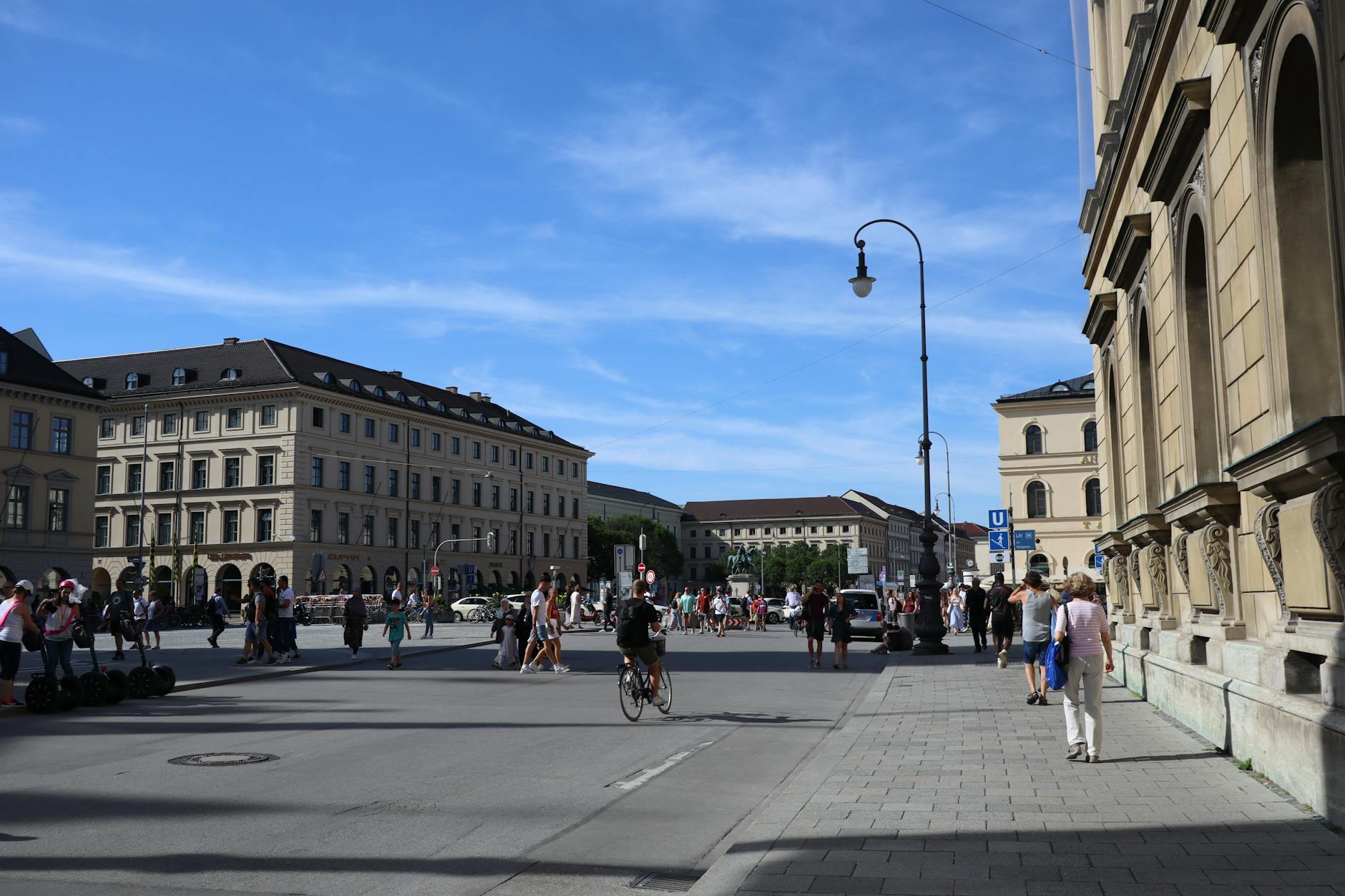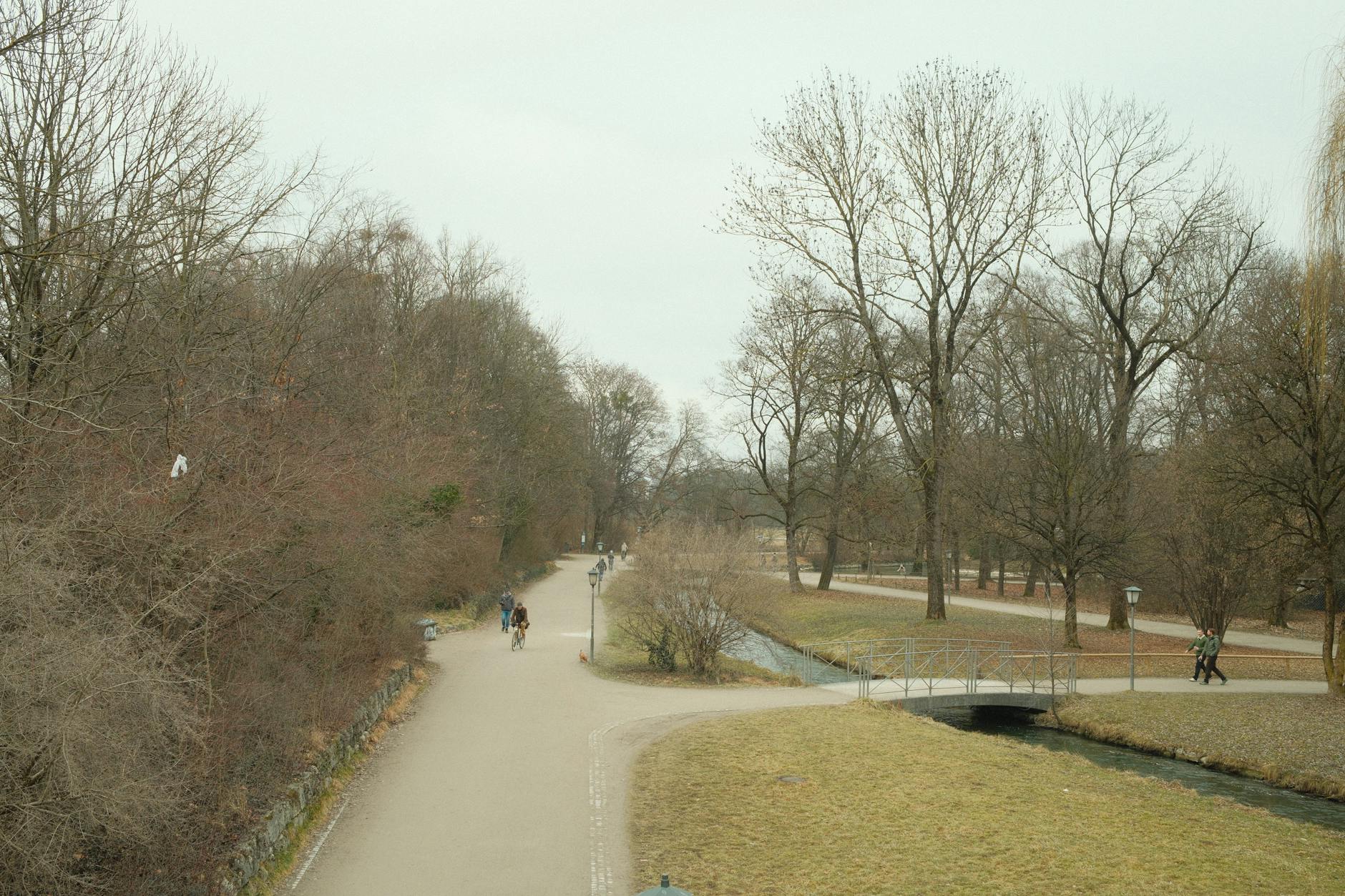
If you only do one thing actively in Munich, make it a bike ride. Cycling Munich is genuinely the fastest, cheapest, and most enjoyable way to see the city — and it has been engineered to feel that way. Munich has more than 1,200 km of dedicated bike paths, mostly flat terrain along the Isar river, a relaxed traffic culture that gives cyclists priority on marked paths, and a public bikeshare system you can unlock in under a minute. Locals use bikes for everything from commuting to grocery runs to weekend escapes to Alpine lakes. This complete 2026 guide covers every bike rental option (with current prices), the eight best routes in and around the city, the rules you have to follow, and the tricks locals use to chain together train + bike for day trips.
Cycling in Munich: Quick Facts
| Bikeshare (MVG Rad) cost | 8 cents/min, max €12/day |
| Day rental (rental shop) | €15–€20 per day for a city bike |
| E-bike rental | €30–€45 per day; Lime e-bikes ~€0.25/min after €1 unlock |
| Best season | Late April to early October |
| Helmet law | Not legally required (recommended) |
| Drunk-cycling limit | 1.6‰ BAC (criminal); 0.3‰ if visibly impaired |
| Mandatory equipment | Two independent brakes, bell, white front + red rear lights, reflectors |
| Bike on S-Bahn | Allowed with €3.60 day pass (free for kids under 6); restrictions Mon–Fri 06:00–09:00 and 16:00–18:00 |
| Bike paths total | ~1,200 km within Munich |
| Top route | Isar Radweg (Isar cycle path) |
Why Munich Is One of Europe's Best Cycling Cities
Three things make Munich exceptional for visiting cyclists. First, the city is almost completely flat — you'll hit small rises around Olympiapark and the Isar bluffs, but nothing that requires gears or fitness. Second, the 1,200+ km of marked bike paths form a continuous network: separate lanes alongside major roads, dedicated trails through every park, and one of Europe's most scenic river-bike paths along the Isar. Third, drivers and pedestrians genuinely respect bike infrastructure here. Cars yield at marked crossings; pedestrians stay off the red-coloured bike paths (mostly). You can ride from the Hauptbahnhof to the English Garden, through Olympiapark, out to Nymphenburg, and back without sharing space with a single car for more than 100 metres at a time.
Add to that the English Garden's 5.5-km traffic-free corridor, the Isar's beach-lined paths south to the Alps, and the easy onward connections by train to Starnberger See and Ammersee, and Munich becomes a cycling destination in its own right — not just a city that happens to allow bikes.
Bike Rental in Munich: Every Option Compared
| Option | Cost (2026) | Best For | How to Use |
|---|---|---|---|
| MVG Rad (public bikeshare) | 8 cents/min, €12/day cap | Short hops, one-way rides | MVGO app, scan + unlock |
| Donkey Republic | From ~€14/day; memberships from €9/month | 24h+ rentals, app users | Donkey Republic app |
| Mike's Bike Tours rental | €18–€25/day (city bike) | Tourists near Marienplatz | Walk in, ID + deposit |
| Radius Tours rental | €15–€20/day | Hauptbahnhof arrivals | Inside the train station |
| Munich Bike Rental | €17/day; e-bikes €35/day | E-bikes, kids' bikes, trailers | Walk-in or pre-book online |
| Lime e-bikes | €1 unlock + ~€0.25/min | One-way urban hops | Lime app |
| TIER e-bikes | ~€1 unlock + €0.20–€0.28/min | Spontaneous rides | TIER (Dott) app |
| Hotel rental | €0–€20/day | Guests of mid/upper hotels | Ask at reception |
| Long-term (Listnride etc.) | From €60/week | 1+ week stays | Online booking, delivery |
MVG Rad: The Local Bikeshare
MVG Rad is Munich's official public bikeshare run by the transit authority. Bright blue bikes are stationed near every U-Bahn and S-Bahn stop, and you can pick up or drop off at any official station within the city's inner area (the "MVG Rad zone"). It is the cheapest way for tourists to make short trips — perfect for a 30-minute hop from your hotel to a beer garden or museum.
How to Use MVG Rad in Five Steps
- Download the MVGO app (iOS or Android) and create an account with email + credit card. Verification can take 10–15 minutes, so do this before you arrive at a station.
- Open the bike map in the app to find bikes near you. Each available bike shows a battery icon (if e-bike) and a unique number.
- Scan the QR code on the rear wheel of the bike or type the bike number into the app. The rear-wheel lock pops open automatically.
- Ride and pay 8 cents per minute. Your trip caps at €12 per 24 hours no matter how long you keep the bike. Students and IsarCard subscribers get the first 30 minutes free, then a discounted rate.
- Return at any MVG Rad station — flip the rear-wheel lever down until it clicks, and the app confirms the ride has ended. Drop a bike at an official station (not just on the street) and you can earn up to 10 free minutes on your next ride.
One catch: if you leave the bike outside the marked "return zone" (which covers most of central Munich and the inner ring), you pay an extra fee. The app shows the zone in green; stay inside it for free returns.
Donkey Republic: Best for 24h+ Rentals
Donkey Republic's orange bikes work in over 60 European cities, so if you already have the app you can ride straight off the plane. In Munich, they're typically pricier than MVG Rad per minute but much cheaper if you keep a bike for a full day or more. A 24-hour rental runs roughly €14–€18. The bikes are heavier than rental-shop city bikes but solid and easy to lock anywhere — the rear lock doubles as the rental lock, so you can pause your ride at a beer garden without ending the booking.
Traditional Rental Shops: Mike's, Radius, Munich Bike Rental
If you want a quality city bike for a half-day to a week and don't want to mess with apps, walk into a rental shop. Mike's Bike Tours (Bräuhausstrasse, behind the Hofbräuhaus), Radius Tours (inside Munich Hauptbahnhof), and Munich Bike Rental all rent lightweight aluminium city bikes from around €15–€20 per day. They include a lock, a map, and a helmet on request. You'll need a passport or driving licence and a credit-card deposit (typically €100–€200). E-bikes from these shops are €30–€45 per day. Kids' bikes, child seats, trailers, and tandems are usually available with one day's notice.
E-bike Munich: Lime, TIER, and Shop E-Bikes
If you want an e-bike Munich for a longer route — Starnberg, Ammersee, or the Würmtal — pre-book one from Munich Bike Rental, Velocerental, or Listnride. Expect €30–€45 per day for a quality Bosch or Shimano motor and a full battery good for ~80 km. For short urban hops, the dockless Lime and TIER e-bikes (the same brands that run e-scooters) are scattered around the city; unlock in the app for around €1 and pay ~€0.20–€0.28 per minute. Be aware: as of 2026 e-scooter and pedelec users face stricter drunk-driving rules than ordinary cyclists.
Hotel Bikes and Long-Term Rentals
Many mid- and upper-tier Munich hotels (including most Marriott, NH, Hilton, and the Bayerischer Hof) lend bikes free to guests — ask at reception. For longer stays, peer-to-peer platforms like Listnride let you rent quality road bikes, gravel bikes, mountain bikes, or e-bikes by the week, often with delivery to your hotel.
The 8 Best Munich Cycling Routes
1. Isar Radweg — The Isar Cycle Path
- Distance: 10–150 km depending on how far you go
- Difficulty: Flat, easy
- Highlights: River beaches, gravel banks, Hellabrunn Zoo, Flaucher beer garden
The Isar cycle path is the route every Munich local recommends first. The full Isar Radweg runs 299 km from the Tyrolean Alps to Deggendorf on the Danube; Munich sits roughly in the middle, so you can ride it about 150 km in either direction with the river always next to you. For a perfect day, head south from the Deutsches Museum on the right-bank gravel path: in 6 km you reach the Flaucher river beach and beer garden, in 12 km the Hinterbrühler See lake, and in 30 km the Großhesseloher Brücke bridge and Schäftlarn monastery. Turn around or hop a train back from Wolfratshausen. Northbound takes you through 6 km of riverside greenway out to Garching and onwards to Freising.
2. Englischer Garten Loop
- Distance: 12 km loop
- Difficulty: Flat, very easy
- Highlights: Eisbach surfers, Chinesischer Turm, Kleinhesseloher See, Aumeister
Start at Odeonsplatz, enter the Hofgarten, then ride 5.5 km up the English Garden's central bike path to the Aumeister beer garden at the northern tip. Loop back along the eastern bank of the Eisbach stream for variety. Stop at the Monopteros for the city's best free skyline view, then beer-garden lunch at the Chinesischer Turm. The whole loop takes ~90 minutes including stops. For more on the park see our parks and gardens guide.
3. Old Town Circuit
- Distance: 6–8 km
- Difficulty: Easy with some pedestrian-zone walking
- Highlights: Marienplatz, Viktualienmarkt, Frauenkirche, Residenz, Hofgarten
The old town has many Fußgängerzonen (pedestrian zones) where cycling is forbidden between 11:00 and 20:00 — you have to dismount and push. Outside those hours and along the ring road (Maxburgstraße, Sonnenstraße, Sendlinger Straße, Tal, Hofgraben, Maximilianstraße) you can ride freely. A nice loop: start at the Hauptbahnhof, ride Sonnenstraße to Sendlinger Tor, push through Sendlinger Straße (or detour around it via Hackenstraße), see the Asamkirche, ride past the Viktualienmarkt, up Hofgraben to the Residenz, along Brienner Straße to Königsplatz, and back via the museum quarter.
4. Olympiapark + Nymphenburg Loop
- Distance: 20–25 km
- Difficulty: Easy
- Highlights: Olympiaberg view, BMW Welt, Schloss Nymphenburg, canal paths
From central Munich, ride up Schleißheimer Straße or through Schwabing to Olympiapark (about 5 km from Marienplatz). Tour the Olympic complex on the wide internal paths, climb Olympiaberg by bike to the summit for the city's best panorama, then continue west via the Nymphenburg-Biedersteiner-Kanal — a beautiful straight canal path lined with chestnut trees — to Schloss Nymphenburg. Loop the palace gardens, then return through Neuhausen via Rotkreuzplatz. Allow 2–3 hours plus stops.
5. Starnberger See — Out and Back Day Ride
- Distance: 80 km round trip, or 40 km one-way + train back
- Difficulty: Moderate (distance, no climbs)
- Highlights: Alpine views, lakeside beer gardens, Rose Island ferry
The classic Munich cycling route south. Ride the marked Munich-Starnberg cycle route (~40 km via Großhadern, Forstenrieder Park, and Gauting) for a half-day. The Forstenrieder Park forest section is shaded and serene. At Starnberg, refuel at a lakeside café and either loop the whole lake (50 km around) or train back to Munich on the S6 from Starnberg. With an e-bike, the loop around the lake is realistic in a day. Train option: skip the inbound ride by taking the S6 with your bike to Starnberg (~35 min) and ride the lake from there.
6. Ammersee Day Ride
- Distance: 46 km loop around the lake (90 km from Munich)
- Difficulty: Moderate
- Highlights: Andechs monastery, Herrsching lakeside, Dießen pottery village
Less crowded than Starnberg, Ammersee is the better choice for a relaxed day. Take the S8 with your bike from Munich to Herrsching (~50 min), then ride the 46-km lakeside loop almost entirely on dedicated bike path. Climb 4 km up to Kloster Andechs monastery (the "holy mountain") for arguably Bavaria's best beer and roast pork — or stay flat and visit the pottery shops of Dießen. If you skip Andechs the ride is genuinely easy on a city bike.
7. Munich to Schliersee (Train + Bike)
- Distance: 25 km lake loop + ride to nearby Tegernsee for ~50 km total
- Difficulty: Moderate (some hills near Schliersee)
- Highlights: Alpine lake views, traditional villages, Tegernsee monastery brewery
For the most dramatic scenery, train down to the Alps and ride. Take the BRB regional train from Munich Hauptbahnhof to Schliersee station (~55 min) with a Bayern-Ticket. Loop Schliersee lake (8 km), then ride 14 km via Hausham to Tegernsee with the Wallberg peak as backdrop. Lunch at the Bräustüberl Tegernsee monastery brewery on the lake, then train back. More options in our Bavarian Alps day-trips guide.
8. Würmtal — The Local's Secret Route
- Distance: 25 km (Starnberg to Pasing)
- Difficulty: Easy on shaded gravel paths
- Highlights: Forest cycling, almost no tourists, Schloss Blutenburg
Take the S6 with your bike to Starnberg, then follow the Würm river back to Munich along the Würmtal valley. The path is gravel, shaded, and almost entirely off-road through Forstenrieder Park and meadowland — perfect on hot summer days. You end at Schloss Blutenburg, a small 15th-century castle with a children's-book library, then ride 5 km back to central Munich. Few visitors know this route; it's the Sunday-morning local favourite.
Train + Bike: Day Trips with Your Bicycle
Combining train and bike is what makes Munich the cycling base it is. Here's the system you need to know.
- S-Bahn (city + suburban trains): Bikes need a €3.60 Fahrrad-Tageskarte (bike day pass) on top of your own ticket. Restricted hours: Monday–Friday 06:00–09:00 and 16:00–18:00, no bikes allowed. (As of 2026, S-Bahn Munich has suspended these blackouts — check the MVV website before you travel.)
- U-Bahn (subway): Same rules — bike day pass plus rush-hour blackouts.
- Regional trains (BRB, BOB, Meridian): Bikes need the Fahrrad-Tageskarte Bayern (Bavarian bike day pass) — €6 per bike, valid until 03:00 the following day on all regional trains and within the MVV. No blackout hours.
- Buses and trams: No bikes (folding bikes allowed as luggage).
- Kids under 6: Free bike transport.
For one-way rides — like cycling out to Starnberg and training back — the €6 Bavarian bike pass covers your return on the S-Bahn. For more on tickets see our Munich travel passes guide.
Guided Bike Tours Munich
If you want an English-speaking guide who knows the back streets and beer-garden secrets, bike tours Munich are a solid investment for your first day in the city.
| Tour | Duration | Price | Highlights |
|---|---|---|---|
| Mike's Classic Bike Tour | 3.5–4 hours | €36–€45 | Old town + English Garden + Chinese Tower beer garden |
| Mike's Mini Tour | 2.5 hours | From €33 | Shorter version, ends with beer-garden stop |
| Radius Tours Bike Tour | 3 hours | ~€30 | Starts at Hauptbahnhof, classic city highlights |
| GetYourGuide Olympic Park + Nymphenburg | 4 hours | €39–€49 | English Garden + Olympic Park + Schloss Nymphenburg |
| Munich Bike Rental Private Tour | Custom | From €120 | Private guide, custom route |
Mike's Bike Tours has run the same lively English-language city tour since 1995 and remains a backpacker favourite — full of bad jokes, beer, and surprisingly good history. Radius Tours is more sober and historically focused. Booking in advance is wise from June to August; in shoulder seasons you can usually just turn up.
German Cycling Rules — What You Must Know
- Helmets are not legally required for adults or kids (recommended, especially for kids and e-bike riders).
- Drunk cycling: At 1.6‰ blood alcohol you commit a criminal offence (loss of driving licence, 3 points, mandatory medical-psychological assessment). Between 0.3 and 1.6‰ you can be fined if you're visibly impaired or cause an accident. For context: 1.6‰ is roughly four large beers on an empty stomach.
- E-scooters and pedelecs over 25 km/h follow car rules: 0.5‰ limit (lowered in 2026), licence needed for fast e-bikes.
- Use the bike path where one exists. Marked red paths or blue bike-lane signs (round, white bike on blue background) make use mandatory. Riding in the road next to a mandatory bike path is a €20–€35 fine.
- Signal your turns with your arm. Failing to signal is a small but enforceable fine.
- No sidewalk riding for anyone over 10 (kids 8–10 may use the sidewalk; an accompanying adult must ride in the road or bike path). Fine: €55–€100.
- Lights are mandatory after dark — white front, red rear, plus reflectors on pedals and wheels. No lights at night = €20 fine.
- A bell is mandatory. Every bike sold or rented in Germany must have one.
- Two independent brakes are required by law (front and rear).
- Phones: same rule as drivers — holding a phone while cycling is a €55 fine.
- Running red lights: €60 minimum, more if a pedestrian is endangered.
Where You Cannot Cycle
Most of central Munich's pedestrian zones are off-limits during the day. The big ones: Kaufingerstraße, Neuhauser Straße, Weinstraße, Theatinerstraße, and Sendlinger Straße — all between Karlsplatz, Marienplatz, and Odeonsplatz. From 20:00 to 10:00 (or 11:00 in some) you can cycle through; otherwise you must dismount. Signs with a bike crossed out mean walk. The Viktualienmarkt is bike-prohibited at all times. Inside the English Garden, you must stick to marked bike paths — not the gravel walking trails.
Bike Vs Pedestrians
On shared paths (a single sign showing bike and pedestrian together), give way to pedestrians and pass slowly. On separated paths with a dividing line, stay strictly on the bike side — tourists often wander into bike lanes and locals ring their bells aggressively. Don't take it personally; ring back if needed and pass left.
Bike Theft and Locking Up
Bike theft in Munich is real — over 5,000 bikes vanish from the city each year. Tourists with rental bikes are obvious targets. Three rules:
- Use a proper lock. Cable locks are useless. A U-lock or heavy folding lock from Abus (made in Germany) or Kryptonite is what locals use. Most rental shops include one; check it's a U-lock, not a cable.
- Lock the frame through a fixed object — not just the wheel. Bike racks near U-Bahn stations are best. Quick-release wheels need a secondary cable through both.
- Don't leave it overnight outside if you can avoid it. Most hotels have a bike room; ask.
If your bike is stolen, report it to the police (online at the Bavarian police portal) within 24 hours — rental shops usually need a police report number to claim insurance and to release you from liability. MVG Rad and Donkey Republic include theft insurance, but you still must report it.
Winter Cycling in Munich
Yes, locals cycle through winter — it's flatter and shorter than walking, and the bike paths get plowed faster than the sidewalks. If you visit December–February and still want to ride:
- Wear layers: thermal base, windproof jacket, gloves, a buff or balaclava. Pace warms you up fast.
- Studded or knobbly tyres: rental shops may have winter tyres — ask. Avoid ice on cobblestones (Tal, Maximilianstraße).
- Lights on always: Munich winter days are short (dusk at 16:30 in December).
- Skip the Isar gravel: it gets icy and unpaved. Stick to the paved paths around the English Garden or the Olympiapark.
Safety and Accidents
Munich is one of Germany's safer cycling cities, but accidents do happen — usually at intersections, with right-turning cars not seeing cyclists in the bike lane. Practical safety tips:
- Make eye contact with drivers at junctions before crossing.
- Watch for opening car doors on Maximilianstraße and other parked-car streets.
- Tram tracks can grab thin tyres — cross at right angles.
- If you have an accident: dial 110 (police) or 112 (ambulance). Stay at the scene; exchange details with the other party; photograph everything. EU citizens have an EU emergency number 112. Travel insurance with bike cover is worth checking.
E-Scooters as an Alternative
TIER, Lime, and Voi e-scooters are everywhere in Munich. They cost roughly €1 unlock + €0.20–€0.28 per minute — about the same as e-bikes from the same providers. Pros: no pedalling, easy to park, intuitive. Cons: stricter alcohol rules (0.5‰ limit lowered in 2026), banned on sidewalks, can be unstable on cobblestones, and you must be 14+. Bikes win for distance and views; e-scooters win for short hops in the city centre when you're tired. Both follow the same path rules.
Bike-Friendly Itineraries
Half-Day Sampler
Rent an MVG Rad bike at Marienplatz, ride to the Hofgarten, along the Isar to the Deutsches Museum, then up the English Garden to the Chinesischer Turm for lunch. Return down the western side of the park. 12 km, 3 hours.
Full Tourist Day
Day rental from Mike's Bike Tours. Old town circuit (8 km), then Olympiapark + Nymphenburg loop (20 km). Lunch at the Hirschgarten beer garden between them. ~30 km, full day.
Big Day Out
E-bike from Munich Bike Rental. Train + bike to Herrsching at Ammersee with Bayern-Ticket, ride the lake loop including Andechs monastery (50 km, with one big climb made easy by the e-bike motor), train back. Full day, ~60 km riding.
Cycling is one of many ways to get outside here — see our guide to outdoor activities in Munich for the rest.
Frequently Asked Questions
Is a helmet required for cycling in Munich?
No. Germany has no helmet law for ordinary bicycles, e-scooters, or pedelecs under 25 km/h. Rental shops carry helmets on request — we recommend wearing one in city traffic, especially for kids and on e-bikes. Only fast e-bikes (S-pedelecs over 25 km/h) legally require a helmet.
Can I cycle in Munich's pedestrian areas?
Mostly no. The main pedestrian zones (Kaufinger-, Neuhauser-, Sendlinger-, Weinstraße) prohibit cycling from 10:00 or 11:00 until 20:00. Outside those hours and early mornings you may cycle. You must always dismount and push through the Viktualienmarkt. Signs with a crossed-out bike mean walk only.
What's the best month to cycle in Munich?
Late May through early October. June and September are the best balance of long days, warm weather, and lower tourist crowds. April and October are great for shoulder-season rides with autumn colours or spring bloom. December–February is for locals only — expect ice, cold, and short daylight.
Are Munich's bike lanes safe?
Generally very safe by European standards. The 1,200 km of dedicated bike paths are well-marked and physically separated from cars on most major streets. Watch right-turning cars at intersections (the leading cause of crashes), opening car doors, and tram tracks. Avoid riding distracted; bikeshare bikes are heavier and stop slower than you might expect.
Can I take a bike on the U-Bahn or S-Bahn in Munich?
Yes, both. You need a Fahrrad-Tageskarte (bike day pass): €3.60 for MVV (Munich U-Bahn and S-Bahn) or €6 for the Fahrrad-Tageskarte Bayern (all-Bavarian, including all regional trains and MVV). Rush-hour blackouts apply Monday–Friday 06:00–09:00 and 16:00–18:00 — though Munich's S-Bahn currently suspends these blackouts. Buses and trams do not allow bikes. Folding bikes count as luggage and ride free anytime.
How much does it cost to rent a bike in Munich for a day?
Expect €15–€20 per day for a quality city bike from a rental shop (Mike's, Radius, Munich Bike Rental). E-bikes cost €30–€45 per day. MVG Rad bikeshare caps at €12 per 24 hours but is less comfortable for long rides. Donkey Republic runs €14–€18 for a 24-hour rental via app.
Is the Isar cycle path suitable for beginners?
Yes. The Isar Radweg is flat, traffic-free, and well-marked. The section through Munich (~6 km each way) is paved; sections further south are gravel but easy. Choose whatever distance feels right — the path is the same easy quality for hundreds of kilometres.
Bike-Friendly Munich: Wrap-Up
The best way to know Munich is to spend a day on a bike. Rent an MVG Rad bike for a short loop, hire a city bike for the day to tackle the Isar, or grab an e-bike for an Ammersee adventure — either way you'll see more of the city and burn off a few of those beer-garden Maß along the way. Combine cycling with the U-Bahn and regional trains to extend your range, follow the rules around bike paths and pedestrian zones, and lock your bike like you mean it.
This cycling guide is part of our broader Getting Around Munich guide. For other transport options see our Munich U-Bahn and S-Bahn guide and the Munich travel passes guide. To extend your cycling beyond the city, see our Bavarian Alps day-trips guide. For the cyclist's favourite green spaces in the city, see our Munich parks and gardens guide. And from the airport on a bike? See our Munich Airport to city guide — the airport S-Bahn allows bikes outside rush hour.