Dachau Memorial Day Trip from Munich
Plan a respectful day trip to Dachau Memorial from Munich. Transport, tours, what to expect, hours, photography rules.
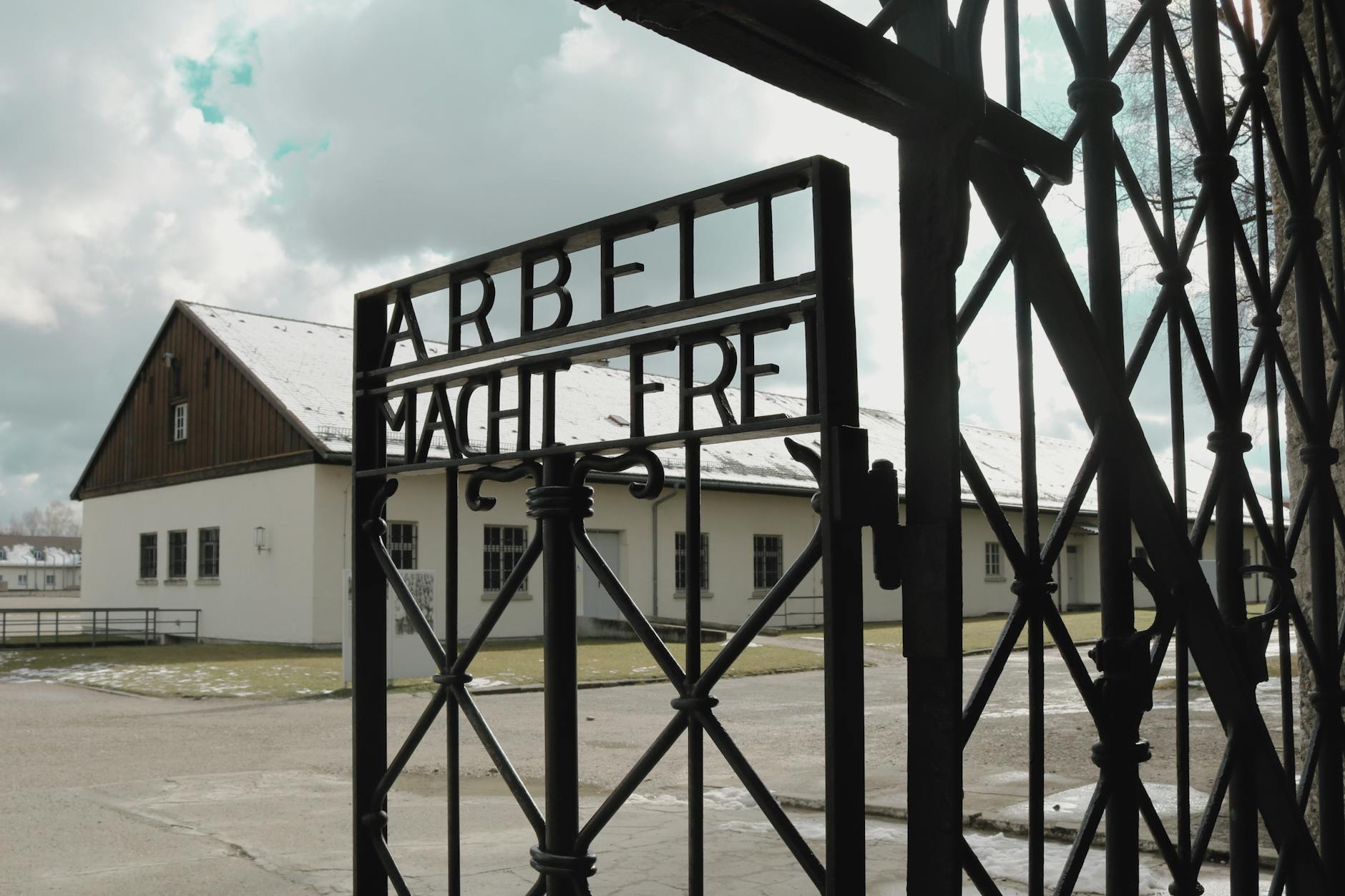
A Dachau memorial visit is not a tourist outing. It is an act of remembrance at the site of the first Nazi concentration camp, opened on 22 March 1933 and used as the model for the entire camp system that followed. Roughly 200,000 people from across Europe were imprisoned here between 1933 and 1945, and more than 41,500 were murdered. Today the KZ-Gedenkstaette Dachau (Dachau Concentration Camp Memorial Site) is a place of mourning, education, and warning, sitting about 25 minutes north of Munich by S-Bahn. This guide explains how to travel there responsibly from the city, what to expect on the grounds, the rules the Memorial asks visitors to observe, and how to give the site the time and seriousness it requires.
Quick facts for your visit
The information below is drawn from the official Memorial Site (kz-gedenkstaette-dachau.de) and reflects standing practice for 2026. Hours and conditions can change for commemorative ceremonies or weather, so always confirm on the official site before travelling.
| Detail | Information |
|---|---|
| Official name | KZ-Gedenkstaette Dachau (Dachau Concentration Camp Memorial Site) |
| Address | Alte Roemerstrasse 75, 85221 Dachau, Bavaria, Germany |
| Distance from Munich | Approximately 16 km (10 mi) northwest of Munich city centre |
| Opening hours | Daily, 9:00 to 17:00 (former crematorium area closes 16:30) |
| Closed | 24 December (Christmas Eve) |
| Admission | Free of charge; no prior booking required |
| Audio guide | Approximately 4.50 EUR (available in multiple languages) |
| Public English guided tour | 4 EUR; daily at 11:00 and 13:00; about 2.5 hours; buy on arrival |
| Public German guided tour | 4 EUR; daily at 12:00; about 2.5 hours; buy on arrival |
| From Munich Hauptbahnhof | S2 S-Bahn (direction Petershausen) to Dachau station, then bus 726 to KZ-Gedenkstaette |
| Total travel time | Around 30 to 40 minutes door to door |
| Ticket zone | MVV Zones M and 1; a single-day Tageskarte covers the full trip |
| Recommended visit duration | 3 to 5 hours; a full half-day is realistic |
| Minimum recommended age | 13+; guided tours and education programmes are 13 and over |
| Photography | Permitted for private, non-commercial use without tripod; not in the former crematorium |
| Documentary film | 22-minute film screened throughout the day in several languages |
A short history of Dachau as the first Nazi camp
Dachau was opened on 22 March 1933, only weeks after Adolf Hitler became Chancellor of Germany. Heinrich Himmler, then police president of Munich, announced it publicly as a camp for political prisoners. The site was an abandoned munitions factory on the edge of the small Bavarian town of Dachau, chosen for its rail access and its proximity to Munich, where the Nazi party had been founded a decade earlier.
The first prisoners were communists, social democrats, trade unionists, and other political opponents of the new regime. Within months the camp’s commandant, Theodor Eicke, had drawn up a code of punishments and a system of guard companies that would be exported across the SS camp network. When Eicke became Inspector of Concentration Camps in 1934, Dachau became the training ground for the men who would later run Buchenwald, Sachsenhausen, Auschwitz, and the rest. Survivors and historians describe Dachau as the camp where the methods of the entire system were rehearsed.
Over the twelve years that followed, the prisoner population expanded to include Jews, Sinti and Roma, Jehovah’s Witnesses, gay men, clergy, Soviet prisoners of war, and resistance fighters and civilians from every country Germany occupied. After the November 1938 pogroms (Kristallnacht), more than 10,000 Jewish men were brought to Dachau. The camp ran more than 140 subcamps across southern Germany and Austria, many supplying forced labour to armaments factories. By 1945 the main camp was massively overcrowded; a typhus epidemic killed thousands in the final months.
On 29 April 1945, soldiers of the United States Seventh Army liberated the camp. They found roughly 32,000 surviving prisoners and dozens of train wagons containing the bodies of people who had died on transports from other camps. The Memorial Site was established at the initiative of survivors in 1965, and the permanent exhibition was substantially redesigned in 2003. The Memorial is funded by the German federal government and the State of Bavaria and is administered by the Bavarian Memorial Foundation.

Why visit: the “Never Again” mission
The Dachau Memorial exists because the survivors who returned to the site in the 1950s and 1960s insisted that the place must not be erased. Their slogan, inscribed in five languages on the International Monument, is simple: “Never Again.” The Memorial’s purpose is not commemoration for its own sake. It is historical education aimed at the present and the future. Standing on the Appellplatz where prisoners were counted for hours in any weather, walking the ground between the former barracks and the crematorium, reading the names and faces and biographies in the permanent exhibition, is a way of refusing the comfort of distance from this history.
For many visitors from outside Germany, a Dachau concentration camp tour is the first physical encounter with a place where the Holocaust and Nazi terror happened. For Germans and Austrians it is often a school trip, a confirmation in person of what textbooks describe. For descendants of survivors and victims it is something else again. The Memorial’s guidance for visitors is built around one idea: this is a cemetery and a place of mourning, and the conduct of every visitor should reflect that.
How to get to Dachau from Munich, step by step
The simplest route to the Memorial from central Munich uses the S-Bahn and a local bus. The whole journey covers MVV (Munich transit) Zones M and 1, so a single zone-spanning ticket covers both legs in both directions. The total travel time from Munich Hauptbahnhof to the Memorial entrance is around 30 to 40 minutes.
- Buy the right ticket. The most economical option for most visitors is the MVV Single Tageskarte (single day ticket) covering Zones M+1, at €11.70, or the Gruppen Tageskarte (group day ticket for up to five adults) at €21.20. The Deutschland-Ticket monthly pass is also valid. Buy from the blue MVV machines at any S-Bahn station or the MVV/DB Navigator apps. If you already hold a Munich City Card or CityTourCard for the M+1 zone, the trip is included.
- Board the S2. From Munich Hauptbahnhof, Marienplatz, Karlsplatz (Stachus), Rosenheimer Platz or any other central S-Bahn stop, take the S2 in the direction of Petershausen or Altomuenster. The S2 runs every 20 minutes most of the day. Trains share the central tunnel with other lines, so check the platform display for “S2” and “Petershausen.”
- Get off at Dachau Bahnhof. The ride from Hauptbahnhof takes about 21 minutes. Dachau station is a major suburban stop with clear signage.
- Find bus 726 outside the station. Walk out of the main exit; the bus stops are directly in front of you. Bus 726 (direction Saubachsiedlung) stops here and is signposted for the KZ-Gedenkstaette. It departs roughly every 20 minutes; the journey takes about 7 minutes.
- Alight at “KZ-Gedenkstaette.” The driver announces the stop and most passengers will be heading the same way. From the bus stop it is a short signed walk to the visitor centre.
Returning to Munich is the same trip in reverse. Buses 726 stop at the Memorial roughly every 20 minutes; check the printed timetable at the bus shelter before you start your visit so you can pace your return without rushing. If you miss a connection, the next train to Munich is rarely more than 20 minutes away. For background on the wider transit network see our guide to the Munich U-Bahn and S-Bahn and our overview of Munich travel passes and transit tickets.
Driving or cycling to Dachau
The Memorial has a paid car park on Alte Roemerstrasse. From Munich the drive takes 25 to 40 minutes depending on traffic, via the A8 and B304. Parking fees apply by the day. Coaches drop off near the entrance. Cycling from central Munich along the Wuermtal and field paths is possible for fit riders (around 20 km each way), though bikes are not allowed on the Memorial grounds; secure stands are provided at the entrance.
Guided tour, audio guide, or self-guided: choosing how to visit
The Memorial is large, partly outdoors, and historically complex. How much you understand depends on how you choose to engage with it. There are three main options.
1. Public guided tour by Memorial-licensed guides (4 EUR)
Tours led by guides licensed by the Memorial’s own Education Department run daily in English (11:00 and 13:00) and German (12:00). They cost 4 EUR per person, last about 2.5 hours, and cover the main historical sites on the grounds plus an introduction to the permanent exhibition. The number of participants is capped at 30. Tickets must be bought in person at the visitor centre at least 45 minutes before the start; reservations are not possible. These tours are intended for visitors aged 13 and above. For most independent travellers this is the most rigorous and respectful option, because the guides have been trained and accredited by the Memorial itself.
2. Audio guide (around 4.50 EUR)
If a public tour time does not fit your schedule, or if you prefer to move at your own pace, the audio guide is the best alternative. It is available in many languages at the visitor centre and includes both an overview tour and longer thematic tracks (testimony from survivors, biographical detail on individual prisoners). Plan around 2 to 3 hours of listening if you cover the main locations.
3. Self-guided with the free brochure and information panels
The Memorial provides free site brochures in multiple languages and detailed information panels at every key location. A self-guided visit is meaningful and respectful, but you will absorb less context than with a guide or audio. If you choose this route, build in time for the documentary film at the visitor centre and read the introductory panels in the permanent exhibition before walking the grounds.
Third-party tours from Munich
Several Munich-based operators (Radius Tours, Sandemans, City Wonders, GetYourGuide partners, among others) run group Dachau concentration camp tour options departing from central Munich. These typically meet near Hauptbahnhof, travel together by S-Bahn, and cost in the range of 30 to 45 EUR including transit. Their guides must hold a Memorial Site licence to lead educational tours on the grounds, so check that the operator explicitly states this. The advantage is logistics handled for you and a single English-speaking guide for the whole day; the disadvantage is the cost and a fixed pace.
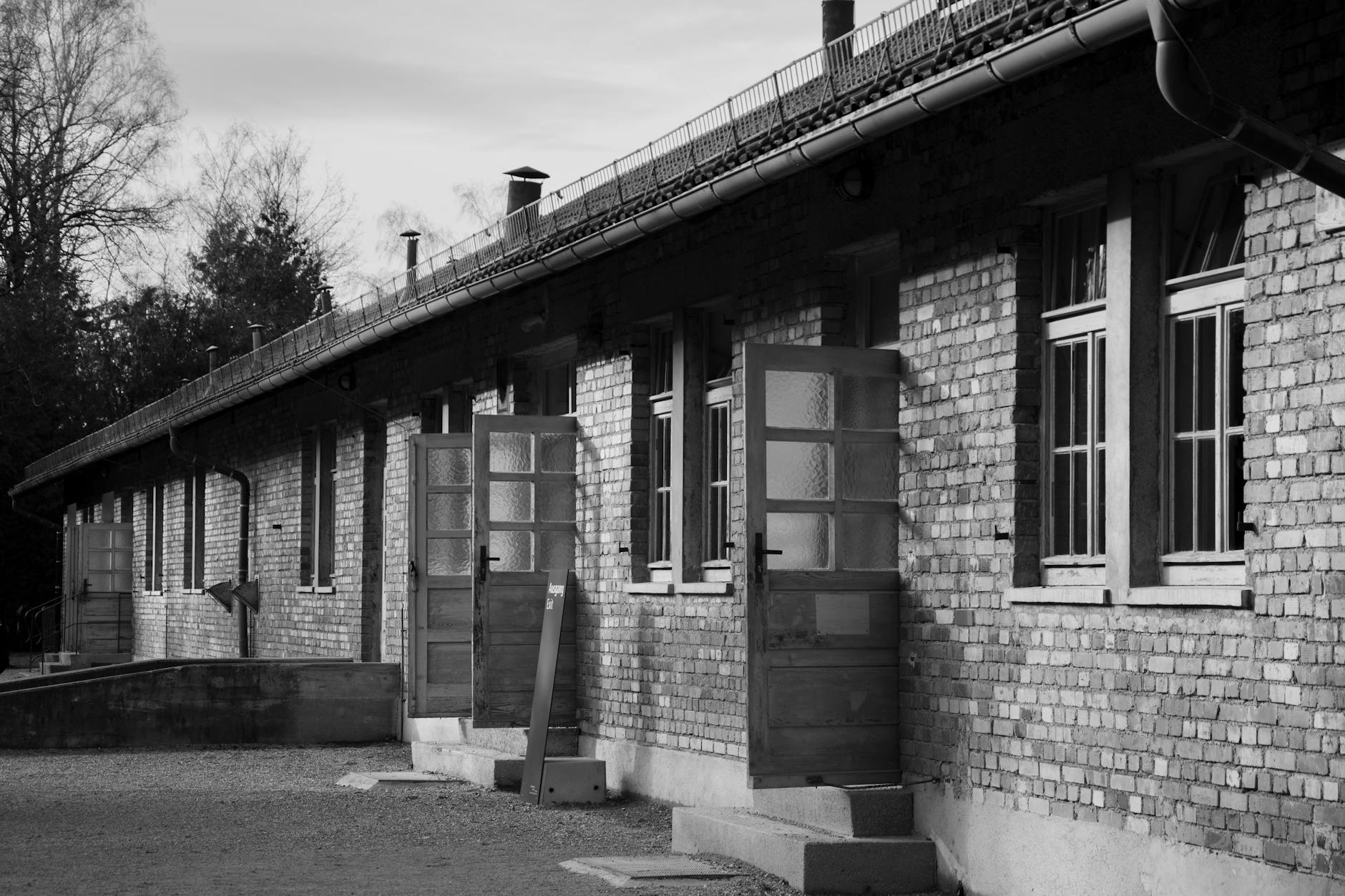
What to see on the grounds
The Memorial covers the original prisoners’ camp area plus the surrounding SS site (much of which now houses Bavarian police facilities and is not open to the public). The buildings and traces you can see today are a mixture of preserved originals, reconstructions, and post-war memorials. The following are the locations most visitors include.
Visitor centre and bookshop
The visitor centre sits just outside the historic camp grounds, beyond the car park. This is where you buy audio guides and tour tickets, collect free brochures, watch the 22-minute documentary film (shown throughout the day in English, German, French, Italian, Spanish and other languages), and use the toilets, lockers and small cafe. The bookshop carries a serious selection of memoirs, scholarship, and survivor testimony in several languages.
The Jourhaus gate and “Arbeit Macht Frei”
The path from the visitor centre crosses the former camp road and arrives at the Jourhaus, the SS guardhouse through which every prisoner entered. Its wrought-iron gate bears the slogan “Arbeit Macht Frei” (“Work Sets You Free”), the cynical inscription used at several camps. The original gate was stolen in 2014; a faithful reconstruction has been in place since 2017. Pause here before walking through; many visitors find this the first emotionally weighted moment of the visit.
Roll-call Square (Appellplatz)
Beyond the Jourhaus opens the vast gravelled square where prisoners were counted twice a day, often for hours, in all weathers. At the centre stands Nandor Glid’s International Monument, unveiled in 1968: an elongated bronze frieze of skeletal figures caught in barbed wire. Behind it the inscription “Never Again” appears in Yiddish, French, English, German, and Russian. To the side, the wall-mounted Memorial of the Unknown Concentration Camp Prisoner reads “To Honour the Dead, To Warn the Living.”
The maintenance building and permanent exhibition
The long former maintenance building on the south side of the Appellplatz now houses the main permanent exhibition. Opened in its current form in 2003, the exhibition follows the camp’s history chronologically and uses photographs, documents, personal possessions, and survivor testimony to trace individual stories alongside the larger structure. Plan at least 90 minutes if you want to read the exhibition rather than walk past it; two hours is more realistic. The former camp prison (“the Bunker”) is attached to this building.
The Bunker (camp prison)
The Bunker was the camp’s prison-within-a-prison, where the SS held and tortured prisoners they wished to single out. Its long corridor and individual cells are preserved. An exhibition along the corridor documents prominent inmates, the use of “standing cells,” and the methods of interrogation. This is one of the quieter, more intense parts of the visit.
The reconstructed barracks and camp street
Across the Appellplatz, two of the original 34 prisoner barracks have been reconstructed to show how the buildings looked at different periods of the camp’s history. Inside, the bunks, washrooms, and latrines convey the densities prisoners endured, especially in the camp’s final overcrowded years. Beyond them the long, poplar-lined camp street stretches almost half a kilometre, with the foundations of the remaining 32 barracks marked by low rectangles in concrete and gravel. Walking the length of the street, and counting the empty rectangles, is among the most powerful elements of a self-guided visit.
Religious memorials
At the far end of the camp street stand four memorials built by religious communities in the decades after liberation: the Catholic Mortal Agony of Christ Chapel (1960), the Jewish Memorial (1967), the Protestant Church of Reconciliation (1967), and the Russian-Orthodox Resurrection of Our Lord Chapel (1995). Just beyond, accessible through a side gate, lies the Carmelite Convent of the Precious Blood, founded in 1964 by Carmelite nuns who chose to live in prayer on the edge of the former camp. Each memorial is distinct in style and tone; they make a quiet final sequence before the path turns toward the crematorium.
The crematorium area
A small wooden bridge crosses the former camp boundary into a quiet wooded area. Here stand the two crematoria. Barrack X, built in 1942, contains four ovens and an attached gas chamber, disguised as a shower room, which the SS used for individual murders though never for systematic mass killing on the scale of the death camps in occupied Poland. The older crematorium is a small brick building from 1940. Around them are mass graves and ash burial sites, marked with simple stones in several languages. The crematorium area closes at 16:30; filming and photography of the interior of the former crematorium are not permitted.
Suggested visiting order
One sensible sequence is: visitor centre and documentary film; permanent exhibition in the maintenance building (with the Bunker corridor); through the Jourhaus to the Appellplatz and International Monument; reconstructed barracks; full length of the camp street; religious memorials and convent; crematorium area; return along the camp street and back to the visitor centre. This order moves from historical context to physical site to the places of greatest weight, and brings you out near the bus stop at the end.
How much time you need
The Memorial itself recommends a half day. In practice, a thorough visit takes between 3.5 and 5 hours on the grounds, plus around 1.5 hours of round-trip travel from central Munich. Allow longer if you join a 2.5-hour guided tour and then continue independently in the permanent exhibition afterwards. A rushed two-hour visit will leave most of the exhibition unread and the religious memorials and crematorium area underexplored; if your day cannot include at least three hours on site, consider rescheduling.
Photography rules and ethics
The Memorial permits non-commercial photography and filming of the outdoor grounds and exhibition areas, without tripods, for private use. It does not permit photography or filming inside the former crematorium. Drones are forbidden anywhere on the site. Photographing guided tours, Memorial staff, or other visitors without consent is not permitted. Journalistic or commercial filming requires prior accreditation through the press office.
Beyond the rules, there is a question of judgement. A photograph of the Jourhaus gate or the International Monument can be a serious record of your visit. Posed selfies, smiling group photos in front of the crematorium, light-hearted captions, jumping shots, or content framed for social-media engagement are not. Several memorial sites in Europe have publicly asked visitors to stop this kind of behaviour; the Dachau Memorial’s guidelines refer to the dignity of the site and the people commemorated here. A simple test: would the photograph be appropriate at a cemetery for someone you knew? If not, do not take it.
What to wear and what to bring
The Memorial is not a formal site, and there is no enforced dress code. The Memorial does ask, however, that visitors dress in a way that reflects the dignity of a place of remembrance. In practice this means modest, plain clothing rather than swimwear, very short shorts, beachwear, or clothing carrying provocative slogans or political imagery. Items displaying any far-right or extremist symbols are prohibited under both Memorial rules and German law.
- Closed-toe, comfortable walking shoes. The grounds are gravel and the perimeter walk is around 2 km.
- Layers: much of the visit is outdoors, and the camp street is exposed to wind, sun, and rain alike.
- A rain jacket or compact umbrella in spring and autumn.
- Water and a small snack for between the visitor centre and the grounds (eating and drinking are not permitted in the historic areas).
- A printed or downloaded MVV ticket or pass.
- Tissues, in honesty. Many visitors find moments of the visit emotionally heavy.
Leave large bags and luggage in Munich; the Memorial has only a small number of lockers at the visitor centre and asks travellers to use the lockers at Munich Hauptbahnhof instead. Dogs are not allowed on the grounds, with the exception of guide dogs. Bicycles must be left at the stands by the entrance.
Visiting respectfully: conduct on the grounds
The Memorial publishes detailed guidelines for visitors. The principles behind them are straightforward.
- Keep your voice low. Loud conversation, phone calls played on speaker, and group banter are out of place.
- Silence or mute phones in the exhibition rooms and at memorials.
- Do not touch original objects, exhibition cases, or built fabric.
- Do not eat, drink, smoke, or consume alcohol on the historic grounds.
- Do not climb on monuments, foundations, or the perimeter walls.
- Follow staff instructions, especially in the crematorium area and during ceremonies.
- If you are visiting with a group, brief everyone before you arrive on what kind of place this is.
Accessibility
The Memorial is largely accessible to wheelchair users. The main paths are paved or compacted gravel, and the visitor centre, permanent exhibition, and most outdoor locations can be reached on the level or with ramps. Accessible toilets are available at the visitor centre. A limited number of wheelchairs can be borrowed free of charge, and accessible parking spaces are available in the car park. Bus 726 is accessible. The former crematorium has steps in some sections; staff can advise on alternative routes. Audio guides include versions for visitors with limited mobility and there are offers for blind, visually impaired, deaf, and hard-of-hearing visitors. Detailed accessibility information is available on the Memorial’s website.
Visiting with children and teenagers
The Memorial’s own guidance is clear: there is no dedicated programme for children, some content is not appropriate for under-13s, and the Education Department’s tours and seminars are for visitors aged 13 and above. Many families and schools prefer to wait until 14 or older, particularly if children have not yet studied the Second World War or the Holocaust in school. Younger children who have read about Anne Frank or learned about the war at home can sometimes engage with a careful, abbreviated visit alongside their parents, but should not be left to wander the exhibitions alone, and should not be brought to the crematorium without preparation.
If you are bringing teenagers, prepare them in advance. Read a short overview of the camp’s history together, watch a brief documentary, talk about what they may feel. Plan a quiet activity for the evening rather than a busy schedule. The Memorial sells age-appropriate books in the visitor centre, and the Education Department publishes guidance for parents and teachers on its website.

Eating before or after your visit
The Memorial has a small cafe near the visitor centre serving simple hot and cold drinks, soup, sandwiches, and cake. It is designed as a quiet rest stop, not a destination. Eating is not permitted on the historic grounds. Many visitors prefer not to eat on site at all and instead bring water and a small snack and have a proper meal in Dachau town or back in Munich afterwards.
Dachau town has cafes and restaurants near the station and around the Altstadt; bus 726 runs past several of them on the way to and from the Memorial. Avoid choosing a noisy, festive beer hall in central Munich immediately after the visit; many visitors find the contrast jarring. A quiet cafe near your accommodation, or a long walk through the English Garden, suits the day better.
Combining Dachau with other Munich activities
The most important guidance is also the simplest: do not pair the Memorial with a celebratory activity on the same day. A Dachau visit and a beer-hall evening, or Dachau and Oktoberfest, or Dachau and a stag party, sit badly together. Many guides recommend treating the Memorial as the only major item on its day, with low-key activities (a quiet walk, an early dinner, reading or writing about what you saw) in the evening.
If you want to deepen the historical context of the visit, the natural companions are educational rather than festive: the Munich WWII history and memorials guide covers the rise of National Socialism in Munich, sites like the NS-Dokumentationszentrum, Koenigsplatz, the former Buergerbraeukeller, and the White Rose memorial at LMU. Our broader history of Munich places the city’s twelve-year Nazi chapter in the longer Bavarian story. Pair Dachau with a half-day at the NS-Dokumentationszentrum the day before, not the same day.
Dachau the town: a short note
The town of Dachau is older than its grim 20th-century history. Its hilltop Altstadt has been continuously inhabited for over a millennium, and the Dachau Palace (Schloss Dachau) is a 16th-century Renaissance summer residence of the Wittelsbach dukes, surrounded by formal gardens that draw a quiet local crowd in summer. A 19th-century artists’ colony established Dachau as a centre of Bavarian plein-air landscape painting; the Dachau Picture Gallery (Gemaeldegalerie) preserves work from this period. Many visitors do not realise the town exists as anything other than the Memorial. If you are interested, a brief visit to the Altstadt and palace gardens can be added on the way back to the S-Bahn, but this is optional and not a substitute for time at the Memorial itself.
When to visit
The Memorial is open every day except 24 December. The busiest periods are summer school holidays (mid-July to mid-September), European spring-break weeks, and large public holidays. School groups dominate weekday mornings during term time. For a quieter experience, aim for a weekday outside school holidays, arriving at opening (9:00) or in early afternoon after the morning school groups have left. Late October to March often brings cold, wet, and grey conditions; some visitors feel these match the weight of the site, others find them physically demanding. Bring layered, weather-appropriate clothing in any season.
The Memorial holds annual commemorations on the anniversary of liberation (last Sunday in April or early May) and around the International Holocaust Remembrance Day (27 January). Parts of the site may be closed to general visitors during these ceremonies; check the official events calendar if you plan to visit on those dates.
Common visitor mistakes to avoid
- Buying the wrong ticket. A standard MVV single ticket for Zone M alone does not cover Dachau. Make sure you have an M+1 day ticket or equivalent.
- Not allowing enough time. A two-hour visit cannot do justice to the site. Plan a full half-day on the grounds.
- Bringing large luggage. Lockers at the Memorial are limited; leave bags at Munich Hauptbahnhof.
- Treating it as another sight. Loud group chatter, selfies, picnics, and casual photography are out of place. Behave as you would in a cemetery.
- Pairing with festive activities. Do not schedule a beer-hall evening or theme-park visit on the same day.
- Bringing very young children. Under-13 is the Memorial’s threshold for educational programmes, and most parents find 14+ a more appropriate minimum.
- Skipping the documentary film. The 22-minute documentary at the visitor centre is essential context, especially if you are visiting independently.
- Underestimating distances. The camp street is around 400 metres long; expect to walk 3 to 5 km in total over the course of the visit.
Frequently asked questions
Is the Dachau Memorial open on Mondays?
Yes. The Dachau Concentration Camp Memorial Site is open every day of the year except 24 December (Christmas Eve), from 9:00 to 17:00. This includes Mondays. The former crematorium area closes at 16:30. Always check the official site for any seasonal exceptions or closures around ceremonies.
How long does a Dachau memorial visit take?
Plan a minimum of 3 hours on the grounds and 4 to 5 hours for a thorough visit. With round-trip transport from central Munich, allow 6 to 7 hours in total. A guided tour alone is around 2.5 hours; most visitors then spend additional time in the permanent exhibition.
Can children visit the Dachau Memorial?
The Memorial does not have a dedicated programme for children, and its educational tours are for visitors aged 13 and above. Some content may not be appropriate for under-13s. Many families wait until 14 or older. Younger children should only visit accompanied by parents who have prepared them in advance, and should be kept close on the grounds.
Is a guided tour required?
No. Entry is free and self-guided visits are entirely possible using the free brochure and the information panels installed throughout the site. However, a Memorial-licensed guided tour (4 EUR, English daily at 11:00 and 13:00) or an audio guide (around 4.50 EUR) significantly deepens understanding of the site’s history.
Is photography allowed at Dachau?
Private, non-commercial photography is permitted in outdoor areas and the exhibition spaces, without a tripod. Filming and photography are not allowed inside the former crematorium. Drones are not permitted anywhere. Photographing other visitors, tour guides, or staff without consent is prohibited. The Memorial asks that any photographs respect the dignity of the site; posed selfies and similar shots are inappropriate.
Is there an entrance fee for the Dachau Memorial?
Entry to the Memorial is free of charge, including access to the grounds, the permanent exhibition, and the documentary film. There are small charges for optional services such as audio guides (around 4.50 EUR) and Memorial-licensed guided tours (4 EUR). Parking in the on-site car park is paid.
Do I need a separate ticket for the bus from Dachau station?
No. The S2 from Munich and bus 726 from Dachau station are both covered by a single MVV ticket spanning Zones M+1 (or by the Deutschland-Ticket and other valid passes). A Single Tageskarte for M+1 is the simplest option for an independent day trip; a Gruppen Tageskarte covers up to five travellers and is excellent value for groups.
Can I get there from Munich without joining a tour?
Yes, easily. Take the S2 S-Bahn (direction Petershausen) from any central Munich S-Bahn station to Dachau, then bus 726 from outside Dachau station to the KZ-Gedenkstaette stop. The whole journey takes 30 to 40 minutes. Buying a Memorial-licensed guided tour ticket on arrival (4 EUR) gives you the educational depth of a tour without paying for a Munich-based operator’s transit package.
A final word
The Dachau Memorial is one of the most demanding places a traveller can visit in Bavaria, and one of the most necessary. The site asks that visitors arrive prepared, behave with the gravity owed to a cemetery and to the more than 41,500 people murdered here, and leave with the responsibility of remembering. “Never Again” is not a slogan from another era. It is a charge to the people who walk these grounds today. If you intend to take a day trip from Munich, take this one seriously; the Memorial, the survivors who built it, and the people it commemorates deserve nothing less.
For other day trips and longer reading, see our overview of day trips from Munich, the very different but historically connected Salzburg day trip, and the rural Bavarian alternative of a Neuschwanstein Castle day trip. To extend the historical thread of a Dachau visit, continue with the Munich WWII history guide and our wider history of Munich.