Salzburg Day Trip from Munich
Complete 2026 guide to a Salzburg day trip from Munich — train timetables, Bayern-Ticket savings, perfect itinerary, top sights, Sound of Music locations, and practical tips.
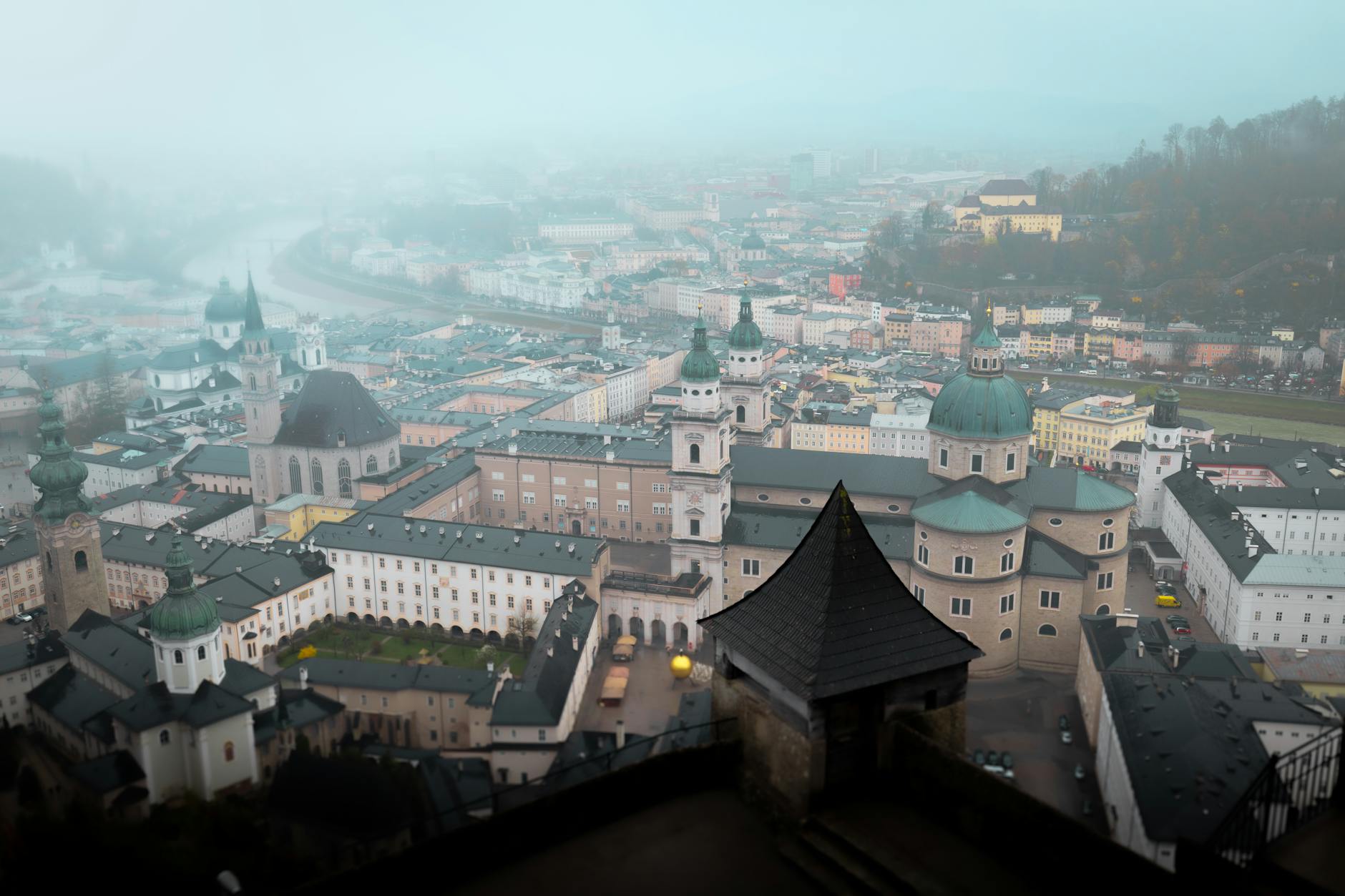
A Salzburg day trip from Munich is one of the easiest and most rewarding excursions you can do — a 90-minute train ride drops you in the UNESCO World Heritage Old Town of Mozart’s birthplace, with Hohensalzburg Fortress towering above you, the Salzach river running through the middle, and most of the major Sound of Music film locations within walking distance. With the right train and a clear plan, you can leave Munich at 8 a.m., visit Mozart’s birthplace, walk the historic Getreidegasse, climb up to the fortress, see the Mirabell Gardens, eat strudel at a 200-year-old café, and be back in Munich for dinner. This complete Salzburg day trip Munich guide covers every train option, ticket pricing for 2026, the perfect itinerary, top attractions, dining, and practical border-crossing tips.
Salzburg Day Trip Essentials
| Detail | Information |
|---|---|
| Distance from Munich | ~145 km east |
| Travel time (fast train) | 1 h 30 min – 1 h 50 min |
| Travel time (regional) | 1 h 50 min – 2 h 10 min |
| Border crossing | Yes — Munich is in Germany, Salzburg in Austria (no passport check inside Schengen) |
| Cheapest train ticket (2026) | €17.99 super saver (DB) |
| Bayern-Ticket (group of up to 5) | €34 first person + €10 each additional, max 5 = €74 |
| Cheapest day trip total | ~€35–€60 per adult |
| Currency | Both use the Euro |
| Best time of year | May, June, September, December |
| Recommended departure | 07:00–08:00 from Munich Hbf |
| Last train back | Around 22:00–23:00 from Salzburg Hbf |
Three Ways to Get from Munich to Salzburg
Option 1: Bayern-Ticket (Best for Day Trips)
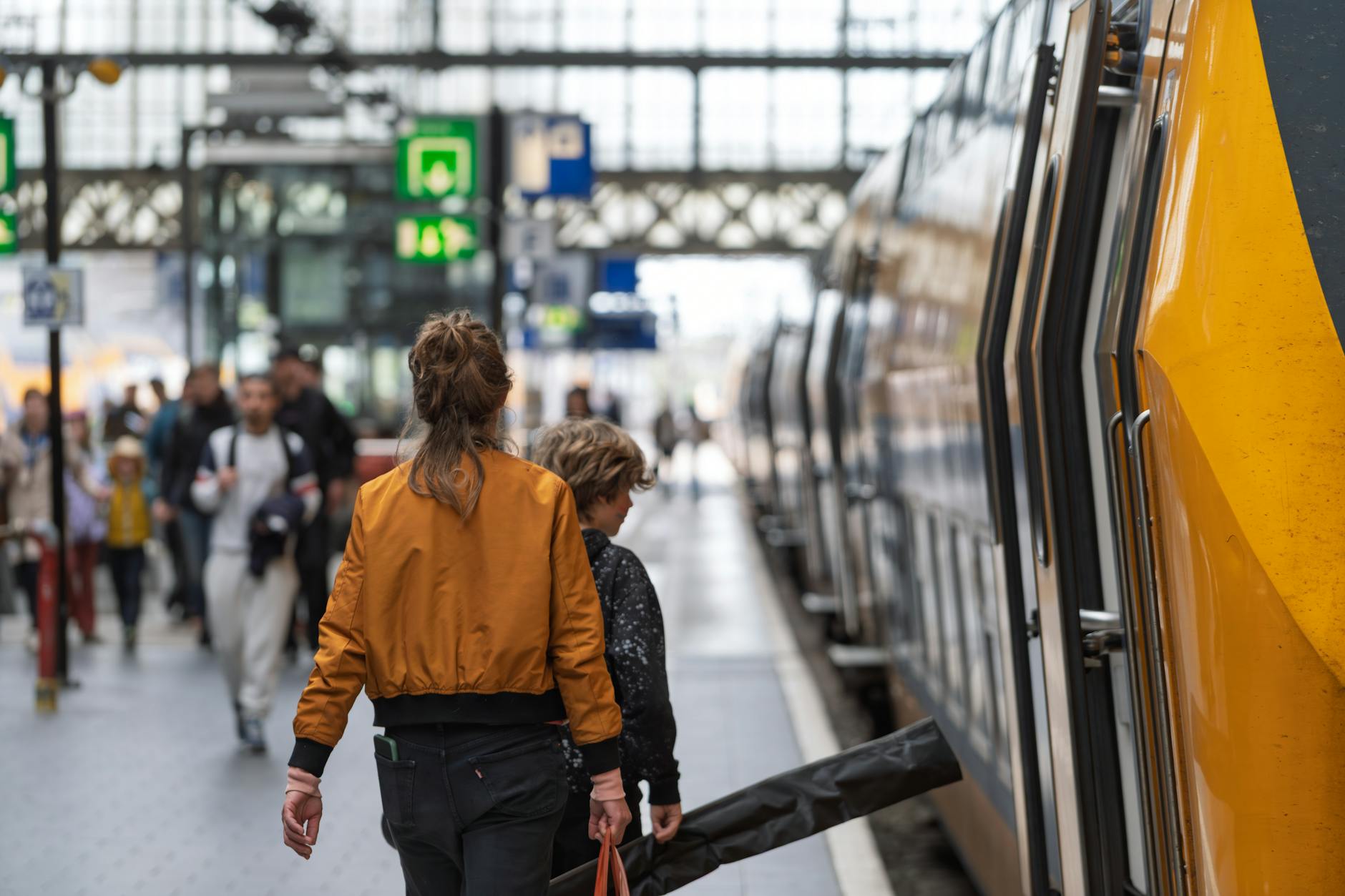
The Bayern-Ticket is the cheapest and most flexible option for a Salzburg day trip. €34 first person + €10 per additional traveller (max 5 = €74 for a group of five). It covers all regional trains and Munich/Salzburg public transit on the day of travel — including the Meridian train that runs between Munich and Salzburg every two hours.
- Validity: Weekdays from 09:00; weekends and German holidays all day
- Trains: Meridian (operated by BRB) and DB regional trains. Not valid on EuroCity (EC), Railjet, or ICE
- Travel time on Meridian: 1 h 50 min – 2 h 10 min, hourly to two-hourly
- Buy at: Munich Hbf vending machines (German/English), DB Navigator app, or station counter
- Cross-border note: The Bayern-Ticket is a German ticket, but it explicitly includes the route to/from Salzburg as a bilateral exception — you don’t need an Austrian ticket
- Group rate: 5 people for €74 = €14.80 per person round-trip — Munich’s best deal
Option 2: DB Sparpreis (Faster, Sometimes Cheaper Solo)
Deutsche Bahn’s Super Sparpreis tickets on the EuroCity (EC) and Railjet trains take just 1 h 30 min – 1 h 50 min — about 30 minutes faster than the regional. Prices start at €17.99 if you book 60+ days ahead. For solo travelers, this often beats the Bayern-Ticket by €5–€10 and saves you 30 minutes.
- Travel time: 1 h 30 min – 1 h 50 min one way
- Frequency: Every 1–2 hours throughout the day
- Round-trip: Two separate Sparpreis tickets typically €36–€50 total
- Buy at: bahn.de, DB Navigator app, or Munich Hbf
- Booking strategy: Book at least 14 days ahead for the best Sparpreis deals
Option 3: Organized Tour
Multiple Munich-based companies offer organized Salzburg day trips with comfortable coach travel, an English-speaking guide, and (often) a stop at the Sound of Music filming locations. Typical price: €55–€95 per adult in 2026.
- Pros: No logistics, English commentary, often includes Sound of Music tour, social atmosphere
- Cons: Less flexibility, longer day (typically 11 hours), no time to explore solo
- Top operators: Gray Line, Radius Tours, Bus2Alps, Salzburg Panorama
The Perfect 1-Day Salzburg Itinerary from Munich
| Time | Activity |
|---|---|
| 07:14 | Meridian train Munich Hbf → Salzburg Hbf |
| 09:08 | Arrive Salzburg — walk to old town (~15 min) or bus to Mirabellplatz |
| 09:30 | Mirabell Gardens + Pegasus Fountain (Sound of Music) |
| 10:15 | Cross the Makartsteg pedestrian bridge over the Salzach |
| 10:30 | Mozart’s Birthplace on Getreidegasse 9 (€12.50) |
| 11:30 | Walk Getreidegasse to Domplatz |
| 12:00 | Lunch in the old town (Stiftsbäckerei St. Peter for bread; Stiftskeller St. Peter for sit-down) |
| 13:15 | Funicular up to Hohensalzburg Fortress (~€16 round-trip incl. fortress) |
| 14:30 | Tour the fortress + viewpoint terrace |
| 15:30 | Walk back down via Mönchsberg path |
| 16:00 | DomQuartier (cathedral + Residenz) for €13 |
| 17:30 | Café Tomaselli for a Sachertorte (Salzburg’s oldest café, 1700) |
| 18:30 | Walk back to Salzburg Hbf |
| 19:09 | Train back to Munich |
| 21:00 | Arrive Munich Hbf |
Top Things to Do in Salzburg
1. Hohensalzburg Fortress
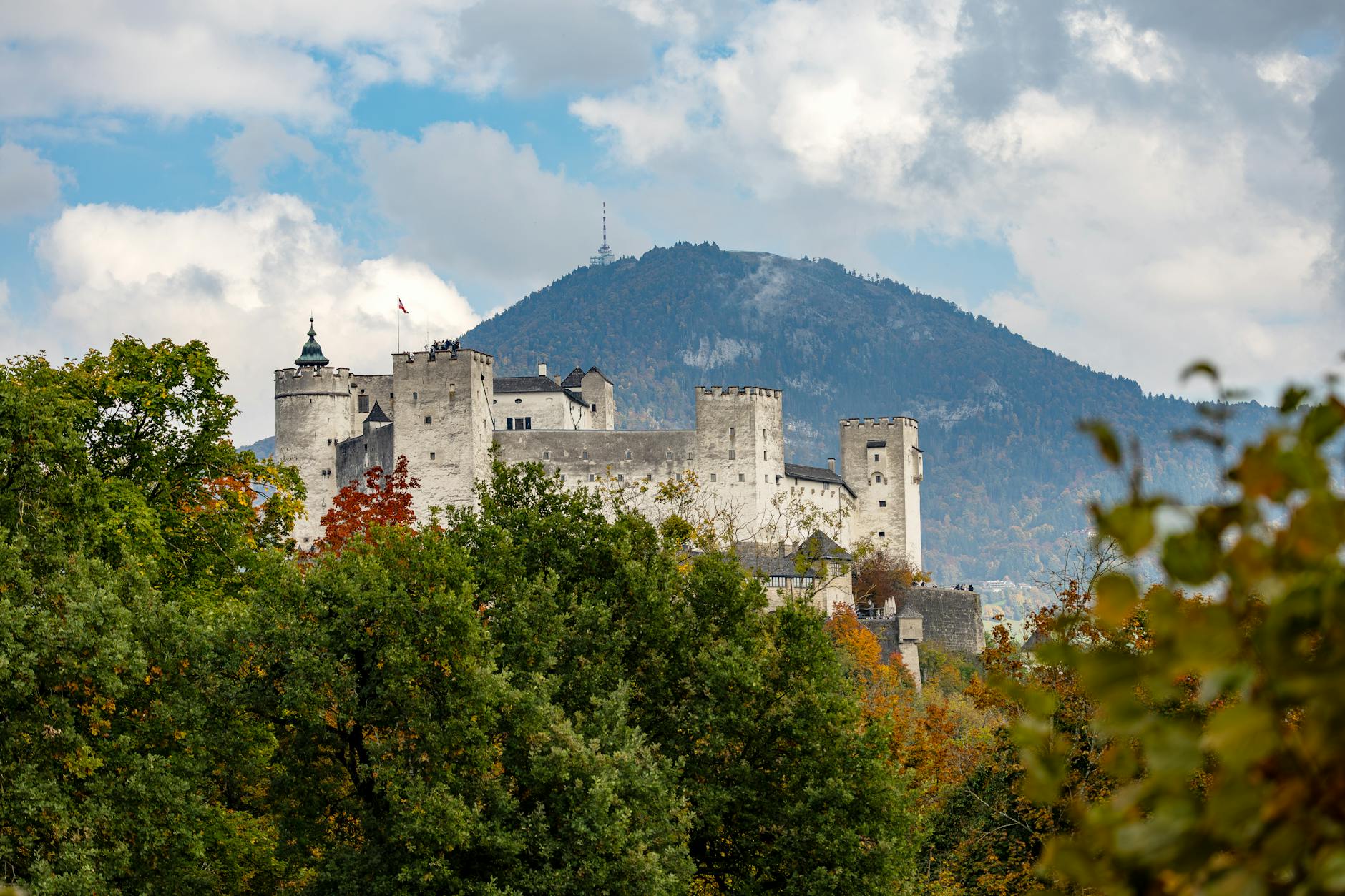
The 11th-century cliff-top Hohensalzburg Festung is one of the largest and best-preserved medieval fortresses in Europe. The funicular (Festungsbahn, ~€16 round-trip including fortress entry) takes you up the 120-meter rock in 60 seconds; the alternative is a 15-minute uphill walk. Inside: medieval state apartments, a small marionette museum, the famous Golden Hall, and a 360° terrace view that may be Austria’s most photographed.
2. Mirabell Gardens and Schloss Mirabell
Free, open dawn to dusk, and arguably the prettiest formal Baroque garden in Austria. The Pegasus Fountain and the Rose Hill steps are the iconic Sound of Music spots — Maria and the children sing “Do-Re-Mi” here. Schloss Mirabell itself is mostly closed to tourists (it’s the Salzburg city government), but the Marmorsaal (Marble Hall) inside is one of the most beautiful concert halls in Europe and hosts free organ recitals on summer Sundays.
3. Mozart’s Birthplace (Getreidegasse 9)
Wolfgang Amadeus Mozart was born in this small yellow house on January 27, 1756 — the third floor was the family apartment. Today the museum displays Mozart’s childhood violin, his hair lock, original family portraits, and reconstructed period rooms. €12.50; 45 minutes to tour. Combine with Mozart’s Wohnhaus (residence, €12) for the full experience.
4. Getreidegasse and the Old Town
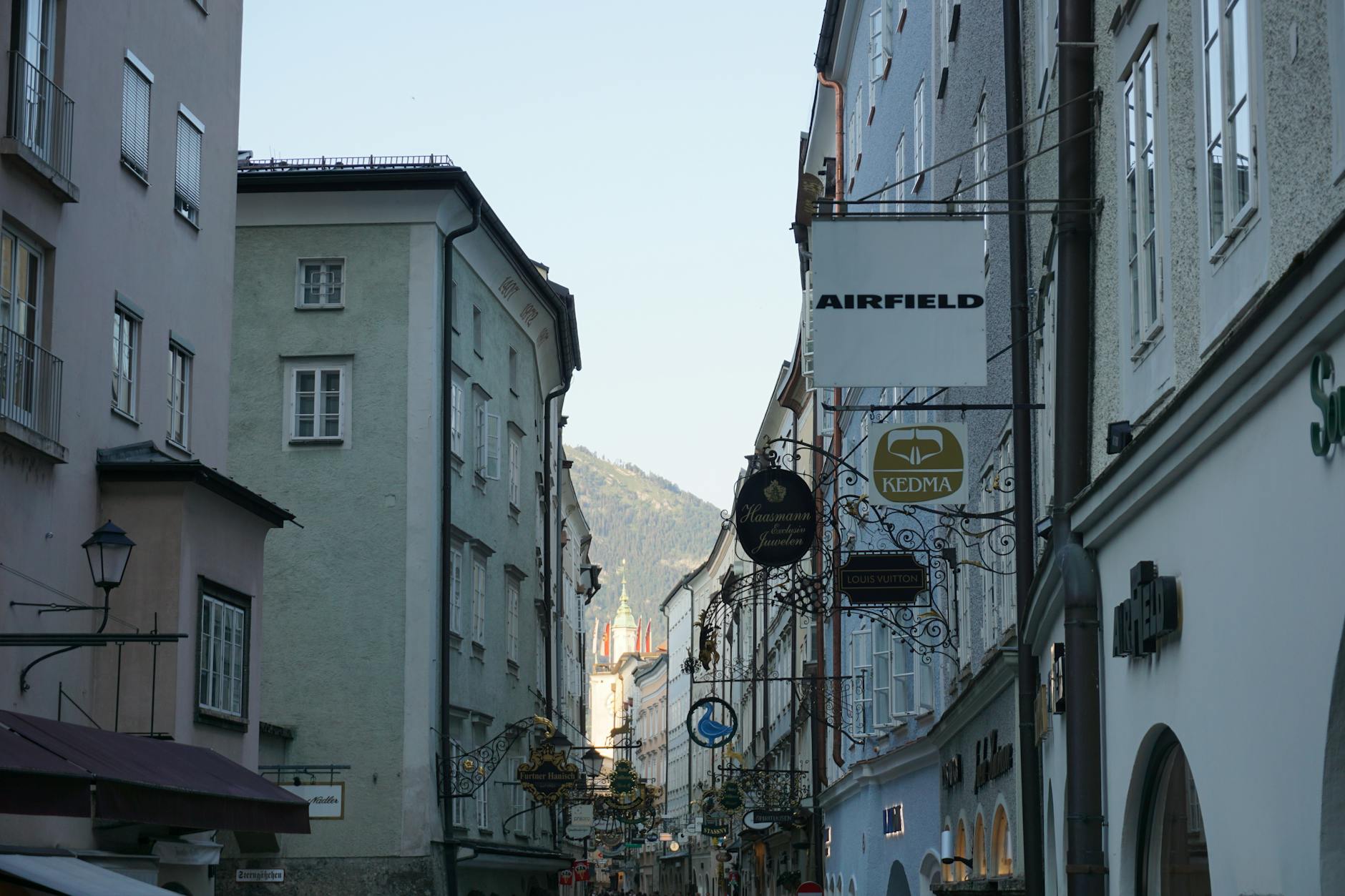
Salzburg’s most famous street — a narrow medieval lane with iron-craft trade signs hanging out of every doorway (each sign represents what the shop sells, designed for an illiterate medieval public). Even McDonald’s has its own iron sign. Walk slowly, look up, and detour into the side passages — many lead to unexpected courtyards and craft workshops.
5. Salzburg Cathedral (Salzburger Dom)
The 17th-century Italian-Baroque cathedral on Domplatz, where Mozart was baptized. Free to enter. The interior is white-and-gold elegance with frescoed cupolas. The crypt contains the tombs of Salzburg’s Prince-Archbishops.
6. DomQuartier
A combined ticket to five connected attractions on Domplatz: the Cathedral Museum, the Residenz state apartments, the Salzburg Museum, the Long Gallery, and the Cathedral Crypt. €13 adult — exceptional value if you have 2 hours.
7. Mozartplatz and Residenzplatz
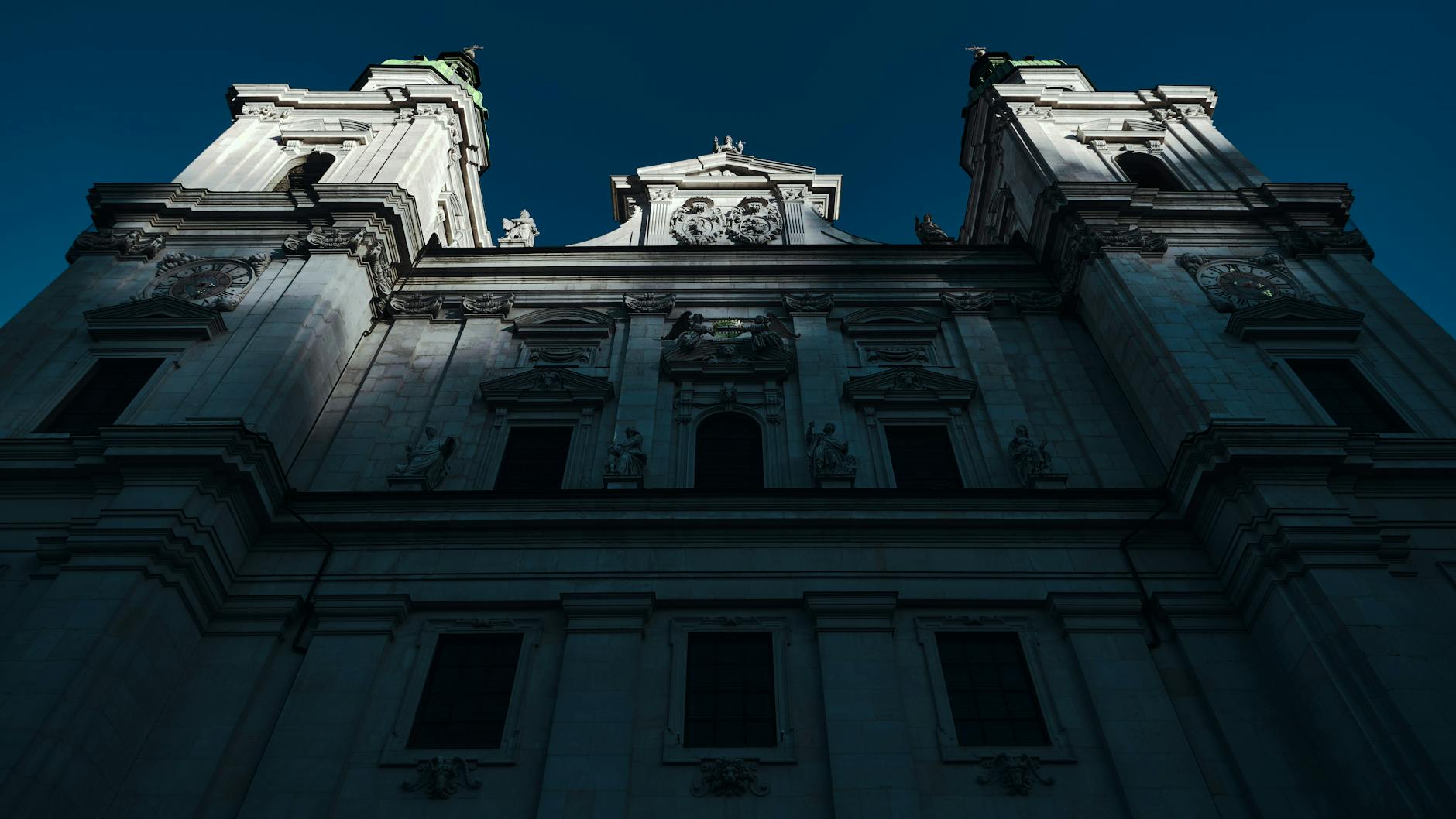
The connected central squares — Mozartplatz with its 1842 Mozart statue, and Residenzplatz with the largest Baroque fountain in Central Europe. The Residenz palace was the seat of the Archbishop-Princes who ruled Salzburg until 1816.
8. St. Peter’s Abbey and Cemetery
Founded in 696 — one of the oldest functioning monasteries in the German-speaking world. The small medieval cemetery (Petersfriedhof) is famously beautiful and was used as a film location in The Sound of Music (the family hides among the iron crosses). The on-site bakery (Stiftsbäckerei St. Peter) is the oldest still-operating bakery in Europe — buy a sourdough loaf to bring home.
9. The Salzach River and Makartsteg Bridge
The Salzach river bisects the city — old town on the south bank, modern town on the north. The Makartsteg pedestrian bridge is now Salzburg’s love-lock bridge. Both sides have lovely riverside walks and excellent photo angles back at the fortress.
10. Hellbrunn Palace and the Trick Fountains
4 km south of the city, accessible by bus 25 (~30 min from Mirabellplatz). The 17th-century Archbishop’s summer residence has a famous “trick fountain” garden — hidden water jets that surprise visitors at carefully chosen moments. The Sound of Music gazebo is also here. €13.50 entry; 90 minutes. Best on a hot summer afternoon when getting wet is welcome.
Sound of Music Filming Locations
Salzburg is intensely tied to the 1965 film of The Sound of Music. Several locations are easily walkable in a day:
- Mirabell Gardens — the “Do-Re-Mi” finale (free)
- Schloss Leopoldskron — the von Trapp family home exterior; private hotel, view from across the lake
- St. Peter’s Cemetery — the family hides here at the end of the film
- Felsenreitschule (Rock Riding School) — the festival hall where the family performs
- Nonnberg Abbey — where Maria sings “How Do You Solve a Problem Like Maria?”
- Hellbrunn Gazebo — “I Am Sixteen Going on Seventeen”
- Mondsee Cathedral — Maria and the Captain marry here (40 min east of Salzburg by bus; not feasible on a day trip)
Tip: If Sound of Music is your priority, book the Original Sound of Music Tour by Salzburg Panorama Tours — €60, 4 hours, leaves Mirabellplatz at 09:15 daily. Most logistically efficient way to see all the locations on a day trip. 2026 update: a new Sound of Music Museum opens in September 2026 — the first dedicated museum to the film and the real von Trapp story.
Where to Eat in Salzburg
Sit-Down Restaurants
- Stiftskeller St. Peter — Europe’s oldest restaurant (since 803 AD!); €25–€40 for traditional Austrian
- Esszimmer — modern fine dining, 1 Michelin star; €110+ tasting menu
- K&K Restaurant am Waagplatz — refined traditional Austrian; €25–€35
- Triangel — bistro near Festspielhaus; modern Austrian; €18–€32
Casual / Quick
- Bosna Grill on Getreidegasse — Salzburg’s beloved sausage-in-a-bun specialty; €5
- Stiftsbäckerei St. Peter — Europe’s oldest bakery; sandwiches and bread €4–€8
- Wagnermayer Konditorei — best apple strudel in town
- Café 220 Grad — third-wave coffee specialists
- Café Tomaselli on Alter Markt — Salzburg’s oldest café (1700); Sachertorte €6.50
Markets and Picnic
Grünmarkt on Universitätsplatz (Mon–Sat) — fresh produce, cheese, meat, sausages. Buy a picnic and take it up the Mönchsberg path for spectacular fortress-and-river views.
Practical Tips
- Border crossing: Munich is in Germany; Salzburg in Austria. Both inside Schengen — no passport check, no immigration form. EU citizens can travel with national ID; non-EU travelers should still carry passport
- Currency: Both use Euros — no exchange needed
- Mobile data: If you have an EU SIM, roaming is free between Germany and Austria. Non-EU SIM cards may charge extra in Austria — check your plan
- Salzburg Card: 24-hour pass €30 covers most major attractions + public transit + funicular. Worth it if you’ll do 3+ paid attractions
- Walking distances: The Old Town is compact — 10–15 minutes between any two attractions
- Toilets in the Hbf and old town museums are free; in restaurants and cafés patrons only
- Tipping: Round up 5–10% in restaurants
- Languages: German/Austrian primary; almost everyone in tourism speaks excellent English
- Best photo spots: Mönchsberg viewpoint, Hohensalzburg terrace, Mirabell Gardens looking up at the fortress
- Avoid: Saturday in summer; the old town is jammed with tour groups
Combining Salzburg with Other Stops
- Berchtesgaden + Eagle’s Nest — 30 min south of Salzburg by bus; combines well with Salzburg if you have 2 days
- Hallstatt — 70 min east of Salzburg; the picture-postcard lakeside village. Possible as a long day from Munich but tight
- Lake Königssee — 35 min south of Salzburg; one of Europe’s deepest alpine lakes, accessible by boat only
- Werfen Eisriesenwelt — the world’s largest ice cave; 40 min south of Salzburg
If lakes and palaces appeal more than a second city, Chiemsee and Herrenchiemsee is an easier train ride and works well as a slower alternative.
If Salzburg is a stop on a longer route rather than a day trip, our guide to travelling on from Munich covers the onward connections.
Frequently Asked Questions
Is a Salzburg day trip from Munich worth it?
Yes, emphatically. The journey is fast (90 min – 2 hours), the Old Town is compact and walkable, the major sights all fit in one day, and the Bayern-Ticket makes it remarkably affordable. Most travelers list it as one of their favorite day trips from Munich.
How much is the train from Munich to Salzburg?
From €17.99 on DB Sparpreis (booked ahead, fast train) to €34 for a Bayern-Ticket (€10 per additional traveler, slower regional train). Round-trip on the regional Meridian: ~€18–€34 per person depending on group size.
Do I need a passport for the Munich-Salzburg trip?
EU citizens: a national ID is sufficient. Non-EU citizens: bring your passport, but no immigration check is performed because both countries are in the Schengen Zone. There are sometimes spot border checks; carry your passport just in case.
How long does the Munich to Salzburg train take?
EuroCity / Railjet (fastest): 1 h 30 min – 1 h 50 min. Meridian regional (slower, but cheaper with Bayern-Ticket): 1 h 50 min – 2 h 10 min. Both run hourly to two-hourly throughout the day.
Can I see the Sound of Music locations in one day?
The walkable city locations (Mirabell, St. Peter’s Cemetery, Felsenreitschule, Schloss Leopoldskron exterior) — yes. For the full set including Hellbrunn Gazebo and Mondsee, take an organized 4-hour Sound of Music tour and skip independent sightseeing.
What’s the best time to visit Salzburg from Munich?
May, June, and September for comfortable weather and lighter crowds. Late November–December for the famous Salzburg Christmas markets. Avoid July–August Saturdays — the Old Town becomes very crowded with tour groups.
Salzburg’s Mozart Heritage in Depth
Wolfgang Amadeus Mozart was born in Salzburg on January 27, 1756, in the small yellow building at Getreidegasse 9 (now Mozart’s Birthplace museum). The Mozart family lived in the third-floor apartment for 26 years, until Wolfgang’s father Leopold moved them to the larger Mozart Wohnhaus on Makartplatz in 1773. Both buildings survived WWII bombing and are preserved as museums today. The Birthplace contains Mozart’s childhood violin, his early-childhood clavichord, family portraits, and the original Mozart family Bible. The Wohnhaus shows the family’s larger second residence with reconstructions of Leopold Mozart’s office, the dining room, and Wolfgang’s bedroom — also displaying contemporary musical scores including unfinished works.
The Mozart Foundation has operated since 1841, preserving the family heritage and managing both museums. They publish scholarly editions of Mozart’s works, sponsor the Mozarteum University, and operate the annual Salzburg Festival (since 1920) — Europe’s most prestigious music festival, held each July-August. The festival’s six weeks of operatic and orchestral performances draw global audiences; tickets sell out 12+ months in advance. Mozart performances anchor the festival but contemporary classical music, jazz, and theatre also feature. Mozart-themed activities include the daily Mozart concerts at Mirabell Palace’s Marble Hall (€35 evening tickets, year-round), the Mozart Dinner Concert at the historic Stiftskeller St. Peter (combined dinner + Mozart works performance, €72), and the famous Salzburger Marionettentheater’s Mozart-opera puppet shows.
Day Trip vs Overnight — The Real Comparison
A 1-day visit to Salzburg from Munich works for the main highlights, but a 2-day overnight stay opens entirely different aspects of the city. The day trip covers: Mozart’s Birthplace (45 min), Hohensalzburg Fortress (1.5 h including funicular), Mirabell Gardens (45 min), Getreidegasse walking (1 h), and one substantial meal. This is enough for an excellent introduction. The 2-day overnight adds: a Sound of Music tour at Salzburg Panorama (4 hours), the DomQuartier museums (Cathedral Museum + Residenz + Salzburg Museum, 3 hours), the new Sound of Music Museum (opening September 2026), Hellbrunn Palace and the trick fountains (3 hours), the Salzkammergut lakes drive (full day with car), and time to soak in the small-city atmosphere that’s impossible to feel during a rushed day trip.
Overnight accommodation in Salzburg ranges from €80 hostel beds (YoHo International Backpackers, A&O Salzburg) to €200 mid-range hotels (Hotel Krone 1512, Hotel Stein) to €500+ luxury (Hotel Sacher Salzburg, Schloss Mönchstein). The Hotel Sacher Salzburg, sister to the famous Sacher Wien, opened on Schwarzstraße in 1865 and remains the city’s most storied luxury hotel. The Old Town has limited budget options because of preservation requirements; better-value hotels cluster on the modern bank of the Salzach river or in the suburbs. For travelers extending from Munich, the Bayern-Ticket explicitly covers Salzburg as a bilateral exception — €34 single + €10 each additional traveler — making the train journey remarkably affordable even with overnight stays.
Salzburg Through the Seasons
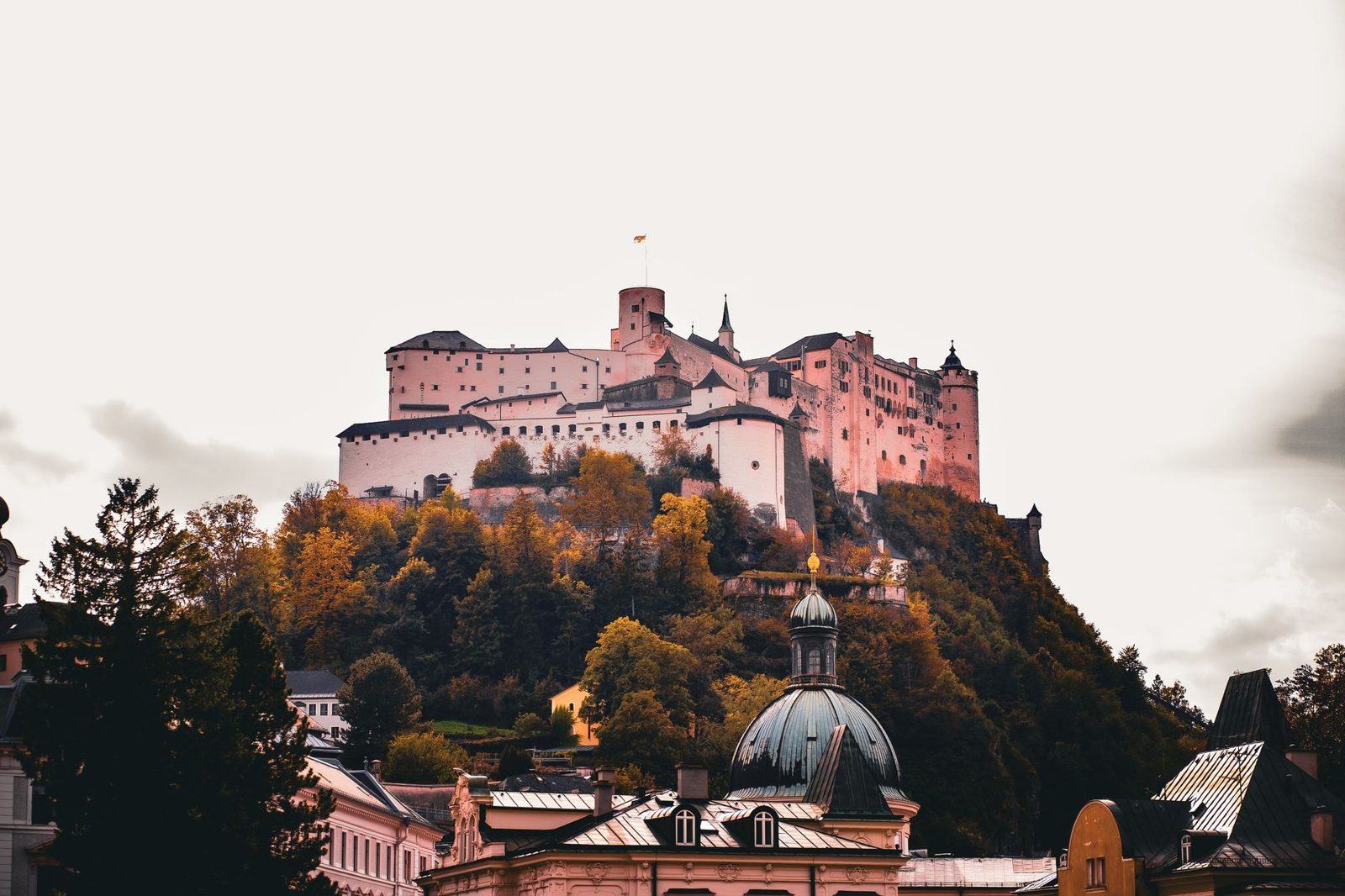
The Salzburg you get depends heavily on the month you pick it. From the last week of November to Christmas, the Christkindlmarkt on the Domplatz and Residenzplatz — one of the oldest Advent markets in the German-speaking world — wraps the cathedral squares in Glühwein steam and roasted-chestnut smoke, and the early Alpine dark makes the fortress glow on its rock. It is the most atmospheric time to come, though trains fill with day-trippers, so travel early. If you love that scene, weigh it against the markets back home using our Munich Christmas markets guide and do one city each day.
The other date to know is the Salzburger Festspiele, the festival that runs from late July to the end of August and has dominated the city’s summer since 1920. Hermann’s “Jedermann” plays on an open-air stage right on the Domplatz, hotel rooms vanish, and prices climb — none of which matters much for a day trip, but the old town will be shoulder-to-shoulder and the good lunch tables need booking. The sweet spots for a calmer visit are May–June and September, when the Mirabell gardens are in flower or the light goes golden and the crowds thin. Cross-reference the weather and crowd notes in our best time to visit Munich guide, since the same Alpine fronts hit both cities within a day.
Is the Salzburg Card Worth It on a Day Trip?
Salzburg sells a Salzburg Card (24, 48, or 72 hours) that bundles free entry to nearly every sight, the Festungsbahn funicular up to the fortress, the Untersberg cable car, the Hellbrunn fountains, the Mönchsberg lift, a Salzach river cruise, and all public transport. For a single packed day it only pays off if you genuinely hit three or more big-ticket items — but day-trippers often do exactly that. Here is the rough maths for a typical 2026 itinerary (always confirm current prices, which dip in winter and rise in summer):
| Item | Pay separately (approx.) | Covered by 24h card? |
|---|---|---|
| Hohensalzburg + Festungsbahn funicular | ~€16 | Yes |
| Untersberg cable car (return) | ~€30 | Yes |
| DomQuartier museum | ~€13 | Yes |
| Salzach river cruise | ~€18 | Yes |
| Public transport (buses) | ~€7 | Yes |
| Total a-la-carte | ~€84 | 24h card ≈ €30 |
The card makes no sense if your plan is the free version of Salzburg — wandering the Getreidegasse, sitting in the cathedral, climbing the free side of the Mönchsberg, and photographing the river. For that day, save your euros for a Mozartkugel and a coffee at Café Tomaselli. Note that the Bayern-Ticket and other regional passes only cover your German train as far as the border logic allows, so the Salzburg Card is a separate, city-only purchase you buy on arrival.
Beyond the Old Town: Half-Day Add-Ons
If you have stamina or you have wisely upgraded to an overnight, Salzburg is the gateway to a cluster of detours the old town crowds never reach. The Untersberg cable car, fifteen minutes south on bus 25, lifts you to 1,776m for an Alpine panorama that on a clear day stretches back toward the Salzkammergut lakes — the mountain of the Charlemagne sleeping-king legend, and a quick fix of altitude. Plane and motorsport fans should detour to Hangar-7 by the airport, Red Bull’s glass-and-steel hangar of vintage aircraft and Formula 1 cars, which is free to walk through.
Cross back into Germany and you reach Berchtesgaden in about 40 minutes by bus or train — the Königssee fjord-lake, the working salt mine you tour on a wooden slide and underground raft, and (mid-May to October) the Eagle’s Nest perched at 1,834m. These pair far better with a night in Salzburg than a single Munich day, and our guide to the Bavarian Alps day trips shows how to thread them together. For more ways to spend a free day out of the city, the full day trips from Munich pillar ranks Salzburg against the castles, lakes, and memorials within easy reach.
Plan the Rest of Your Munich Trip
This Salzburg day trip guide is part of our deeper Munich day trips guide. For other day trips, see our Neuschwanstein guide. For the rest of your Munich trip, see our things to do guide, our where to stay guide, our transport guide, and our trip planner.