Vintage and Flea Markets
Munich's 2026 vintage and flea market guide — Auer Dult, Echinger Antikmarkt, Glockenbach vintage clothing, antique furniture and more. Dates, locations, what to expect, prices.

Munich has a thriving secondary-market culture worth exploring — from the centuries-old Auer Dult folk fair (three editions per year) to dozens of regular flea markets, vintage clothing shops, antique furniture houses, and second-hand book stores. The famous Bavarian build-quality of mid-century furniture, traditional craftwork, and pre-war textiles makes Munich’s vintage market particularly rewarding. This complete 2026 Munich flea market and vintage shopping guide covers the major regular markets, the best vintage shops by neighborhood, what to look for, prices to expect, and the timing details that determine your finds.
Munich’s Major Flea Markets at a Glance
| Market | When | Location | Style | Best Items |
|---|---|---|---|---|
| Auer Dult Spring | Late April – early May | Mariahilfplatz (Au) | Folk fair + flea | Bavarian antiques, crafts |
| Auer Dult Summer (Jakobidult) | Late July | Mariahilfplatz (Au) | Folk fair + flea | Same as spring |
| Auer Dult Winter (Kirchweihdult) | Late October | Mariahilfplatz (Au) | Folk fair + flea | Same as spring |
| Echinger Antikmarkt | First Sunday monthly | Eching nördlich München | Antiques + collectibles | Furniture, ceramics, art |
| Olympia-Flohmarkt | Several Sundays/year | Olympiapark | General flea | Mixed items |
| Flohmarkt am Riemer Park | Saturdays April-October | Riemer Park | Suburban general | Mixed items |
| Antik- & Trödelmarkt Pasing | Selected Sundays | Pasing | Antiques + folk | Bavarian collectibles |
| Riemer Antik- & Sammlermarkt | First Sunday monthly | Riem | Antiques + collecting | Specialty items |
Auer Dult — Munich’s Oldest Folk-Fair-Flea-Market
The Auer Dult on Mariahilfplatz in the Au is Munich’s most important folk market — running three times a year since approximately 1310 (over 700 years of continuous operation). The market combines a folk fair, flea market, household-goods market, and Bavarian food festival into one event spread across nine days each spring (April-May), summer (late July), and autumn (late October). Roughly 300 stalls fill the square and surrounding streets — antiques and collectibles dominate the inner ring; household goods and pottery fill the outer rings; food and beer stalls scatter throughout. The festival opens with a traditional Maypole-style erection ceremony (or its equivalent) and closes with a procession.
For visitors, Auer Dult is the single best opportunity to find genuinely interesting Bavarian flea-market items. Stalls sell vintage Lederhosen, antique beer steins (often from estate sales), Bavarian books and prints, 19th-century farm tools, Krippe figurines, religious art, traditional textiles, and household pottery. Prices reflect Munich’s relative wealth — expect €30 for a mid-quality stein, €200 for vintage Lederhosen, €500+ for antique Krippe sets. Bargaining is acceptable and expected (start at 60-70% of asking price). Cash strongly preferred. The 2026 dates: Spring Auer Dult April 25 – May 3; Jakobidult July 25 – August 2; Kirchweihdult October 17-25.
Echinger Antikmarkt — North Munich’s Antique Mecca
The Echinger Antikmarkt at Eching (just north of Munich, S-Bahn S1 station Eching) runs the first Sunday of each month with roughly 400 stalls — making it one of Bavaria’s largest regular antique markets. The focus is more specialized than Auer Dult: serious antique furniture, ceramics, glass, art, vintage instruments, jewelry, and decorative objects. Vendors include both private sellers (estate liquidations, family heirlooms) and professional antique dealers. Prices reflect more serious goods: €200-€2,000 for furniture pieces, €100-€500 for antique ceramics, €50-€500 for vintage silver. Bargaining is expected. The market opens 06:00 (serious collectors arrive at dawn for first picks) and runs until 16:00. S-Bahn S1 from Marienplatz to Eching is 35 minutes.
Munich’s Vintage Clothing Shops
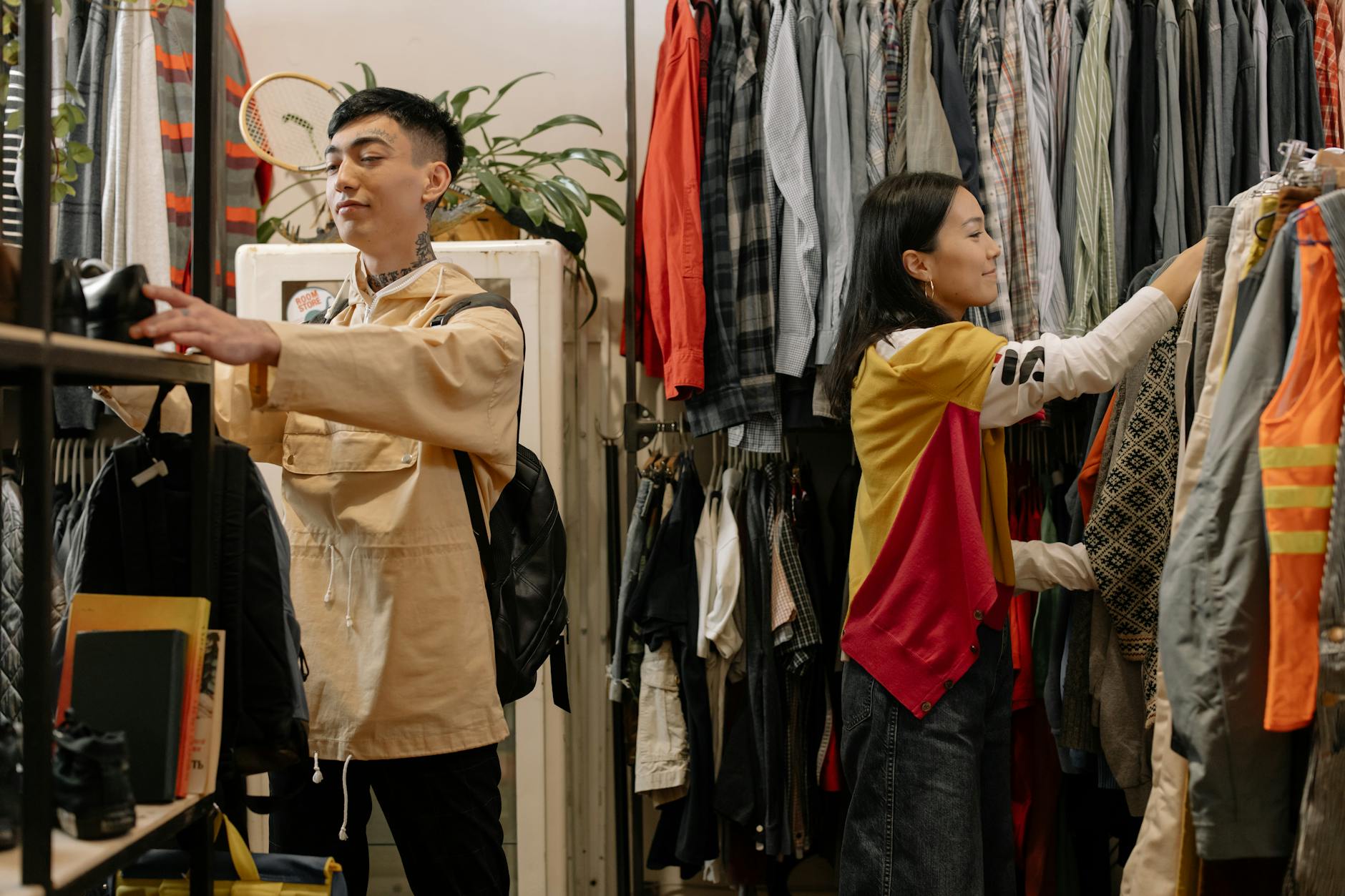
Munich’s vintage clothing scene concentrates in the Glockenbachviertel and Schwabing. Munich’s relative wealth means good quality vintage clothing is more abundant here than in many cities — middle-class Münchners often dispose of high-quality clothes that end up in the secondhand market in excellent condition.
Top Vintage Clothing Shops
- Holy Fashion on Reichenbachstraße in Glockenbach — curated vintage; designer pieces; €30-€200 typical items
- Garments on Hans-Sachs-Straße — Munich’s best curated vintage; €40-€300
- Apartment Sechzehn on Reichenbachstraße — design-driven vintage; €30-€200
- Mode für Männer on Müllerstraße — men’s vintage focus
- Kostümverleih Breuer — vintage and costume rental
- 2nd Life on Hohenzollernstraße in Schwabing — affordable vintage; €15-€80
- Stuff on Schellingstraße — student-oriented; cheaper vintage
- Various small shops on Müllerstraße and Hans-Sachs-Straße — wander to discover
Antique Furniture and Decorative Arts
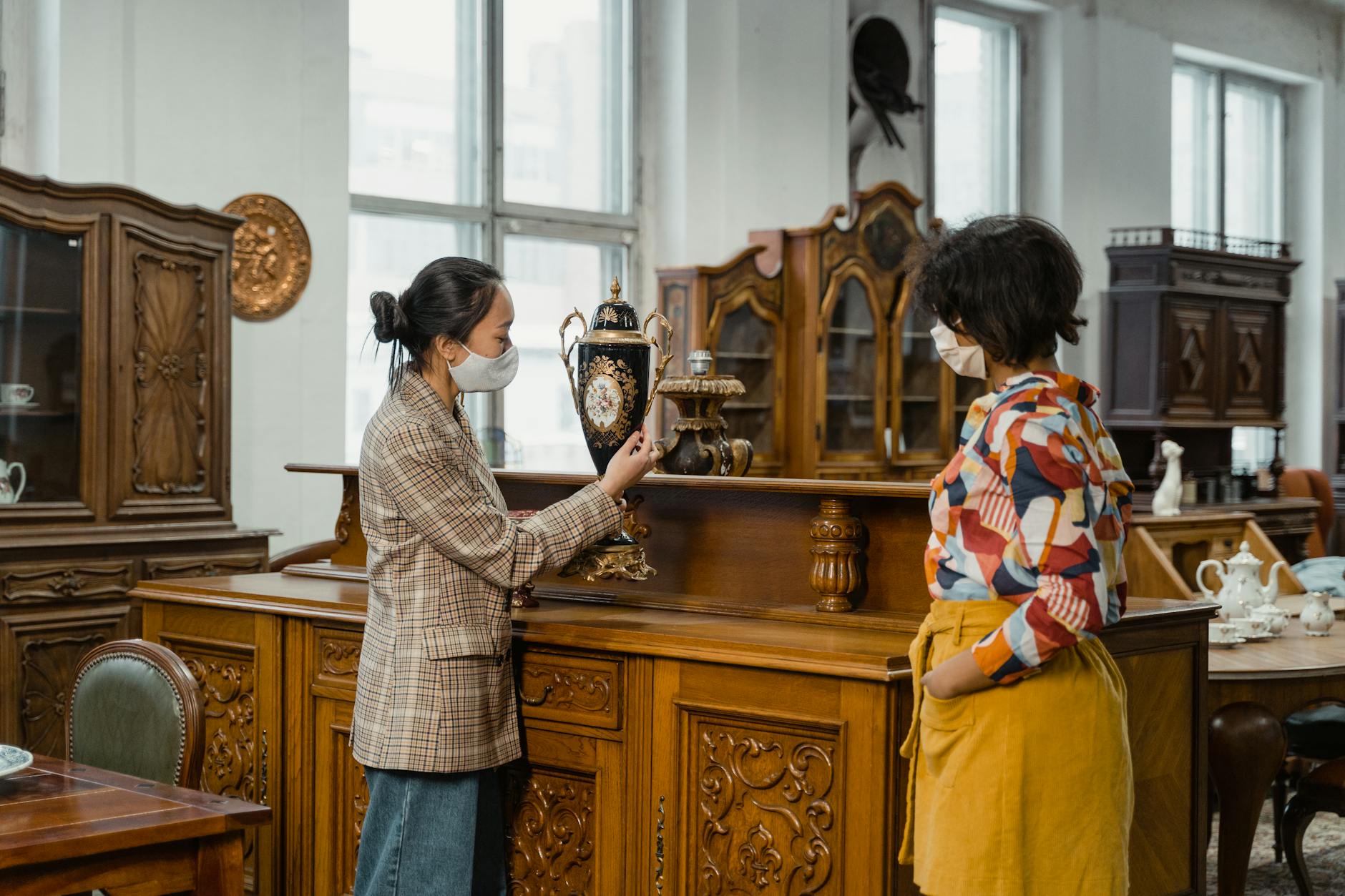
Munich has Germany’s most refined antique furniture market — partly because Bavaria’s wealth has preserved more high-quality 19th-century pieces, and partly because Munich’s design culture appreciates the craftsmanship. The major antique houses sell high-end pieces (Biedermeier furniture, Bavarian peasant chests, Vienna-style chairs); the Echinger Antikmarkt and smaller flea markets sell more modest pieces.
Major Antique Houses
- Antichita Lombardi on Schwanthaler Straße — Italian antique furniture
- Antiquitäten Robert Eichinger — Bavarian antiques, traditional pieces
- Galerie Schwitter — modern design + selected antiques
- Antiquariat Geyer on Lenbachplatz — antique books and prints
- Schauer & Söhne — silver and tableware
- Various smaller dealers in Schwabing and Lehel
Vintage Furniture and Mid-Century Modern
- Wohnform on Klenzestraße — mid-century modern Bavarian and Scandinavian
- Vinyl & Vintage on Schellingstraße — Münchner mid-century pieces
- Used Design on Türkenstraße — vintage German design
- Various estate sales — check Munich estate-sale listings (Erbe.de, Versteigerung-Munich.de)
Vintage Books and Records
- Antiquariat Reichmann — academic and antique books in Maxvorstadt
- Hugendubel on Marienplatz — major bookstore (not vintage but second-hand section)
- Various antiquarian bookshops on Türkenstraße
- Optimal Records on Klenzestraße — vinyl records, jazz and rock focus
- Plattenmarkt on Westenrieder Straße — vintage vinyl
- Munich Music Memorabilia shops — band T-shirts, posters, ephemera
Day Trips for Antique Hunters
Beyond Munich proper, several Bavarian towns within day-trip range have particularly strong antique scenes:
- Augsburg — 30 minutes by train; multiple antique houses
- Regensburg — 1.5 hours by train; medieval old town with many antique shops
- Nuremberg — 1 hour by train; famous antique markets and toy collectibles
- Bayreuth — 2 hours; smaller Bayreuth Flohmarkt twice yearly
- Eching — see above; the major regular antique market
How to Buy at Munich Markets
Bargaining Etiquette
- Always bargain at flea markets — starting at 60-70% of asking price is normal
- Bargain less at established antique shops — 5-10% off the marked price is typical maximum
- Cash strongly preferred — bring €100-€500 cash for shopping days
- Bring exact change when possible — vendors appreciate not making change for €50 bills on small purchases
- Move on if negotiations fail — sometimes vendors will call you back with a better price
- Multiple-item discounts are standard — buying 2-3 items from one vendor gets 15-25% off the combined price
Authenticating Antiques
- Stamps and marks on the bottom of ceramics, silver, and glass usually identify maker and date
- Bavarian beer steins: hand-painted pieces have artist signatures on the base
- Antique chairs and furniture: look for original hardware, wear patterns consistent with age, and joinery techniques (mortise-and-tenon, dovetails) appropriate to the period
- Vintage Lederhosen: deer leather is softer and more expensive than goat or cow; hand-stitching distinguishes premium pieces
- Old prints and posters: look for signs of age (foxing, slight yellowing, period typography) versus reproduction
Shipping and Logistics
- Most antique shops can arrange international shipping for larger pieces — €50-€200 typically
- For flea-market purchases: bring a foldable bag; smaller items fit in checked luggage
- VAT refund applies to non-EU visitors on purchases over €50.01 — bring passport and ask for the form
- Customs documentation: antique items typically need to declare value at home customs; antiques over 100 years old often qualify for reduced or zero duty
Munich’s Weekend and Night Flea Markets
The Auer Dult and the Echinger Antikmarkt are the connoisseurs’ markets, but Munich’s bread-and-butter flea culture happens on ordinary weekends — and at one spectacular once-a-year blowout. These are the open-air Flohmärkte where locals actually hunt, and where prices start low and drop further by mid-afternoon.
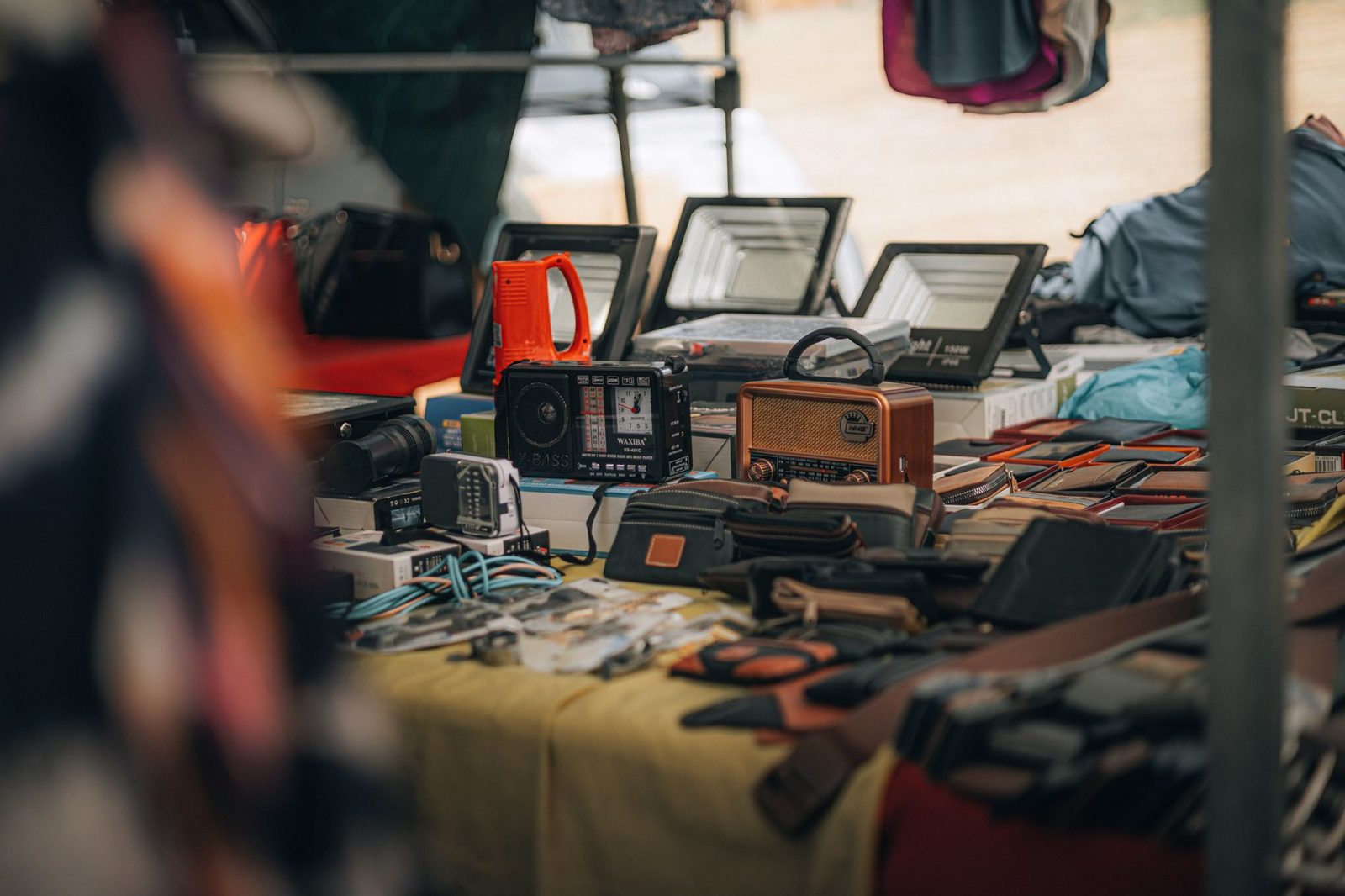
The most dependable is the Flohmarkt at the Olympiapark, which spreads across a 35,000-square-metre slab of tarmac beside the park on Fridays and Saturdays, roughly 7am to 4pm. Private sellers and semi-professionals lay out everything from snowboards and bicycles to enamelware and the odd antique chest of drawers, and the prices are gentler than any bricks-and-mortar shop in town. One catch worth checking before you ride out to U3 Olympiazentrum: it doesn’t run when a big concert or event takes over the park.
Once a year, in April, the city stages the Riesenflohmarkt — the “Giant Flea Market” — on the Theresienwiese, the Oktoberfest ground itself. With room for up to 2,500 stalls across seemingly endless gravel aisles, it is comfortably Munich’s largest: a single Saturday (18 April in 2026) when half the city appears to be selling the other half its old belongings. Come at opening with cash, a sturdy tote and no real hope of finding your way back to where you started.
For something with a soundtrack, the Midnightbazar is Munich’s best-known night flea market — relaunched in 2025 with a permanent home, blending design and vintage stalls with street food, drinks and DJs on Friday and Saturday evenings, roughly 6pm to midnight. Twice a year it goes big: into the cavernous Zenith hall in early January and out around the Olympiasee lake in August. It’s as much a night out as a shopping trip. Browsing any of these costs nothing, which lands them neatly in our guide to free things to do in Munich.
A Year-Round Flea Market Calendar
Munich’s market calendar is firmly seasonal, and lining your visit up with the right week pays off. Here’s the rough shape of the flea-market year.
| When | What’s on | Where |
|---|---|---|
| Most Fri & Sat (Apr–Oct) | Olympiapark Flohmarkt | Olympiapark (U3) |
| One Saturday in April | Riesenflohmarkt (the giant one) | Theresienwiese |
| Late Apr–early May | Auer Dult — Maidult | Mariahilfplatz, Au |
| Late Jul–early Aug | Auer Dult — Jakobidult | Mariahilfplatz, Au |
| Mid–late October | Auer Dult — Kirchweihdult | Mariahilfplatz, Au |
| Fri & Sat evenings | Midnightbazar (night market) | Permanent home; Zenith in Jan, Olympiasee in Aug |
The three Auer Dults remain the soul of that calendar — nine days each on the Mariahilfplatz in the Au, open daily 10am to 8pm — and we cover their history and rhythm in detail above. If you’re building part of a trip around the markets, our guide to the best time to visit Munich and the wider Munich neighbourhoods map help you slot a market morning into the rest of the day without backtracking across the city.
What to Hunt For: Munich’s Signature Finds
Anywhere on earth sells generic bric-a-brac; the reason to hunt in Munich specifically is the Bavarian material. Train your eye on these and a flea-market morning starts paying for the flight home.
Beer steins and Oktoberfest memorabilia are the obvious prize — old salt-glazed Maßkrüge, pewter-lidded steins, and the collectible annual Wiesn souvenir mugs the tents issue each year are the most portable, most unmistakably Munich thing you can carry home. Nymphenburg and Rosenthal porcelain surface regularly: the white-and-gold of the royal Nymphenburg manufactory and Rosenthal’s clean mid-century designs turn up at both the Antikmarkt and the Auer Dult. Trachten — secondhand dirndls, lederhosen and grey-green loden Janker jackets — are far better made than the Oktoberfest-shop versions and a fraction of the price if you’re willing to dig through the rails. Round it out with carved alpine Nativity figures and folk woodwork, and the enamel signs, old beer trays and Bavarian postcards that the graphic-design crowd hoards.
Most of these double as the city’s best keepsakes. Our guide to the best Munich souvenirs sorts the genuine from the tourist-trap, while the broader Munich shopping guide places the flea markets within the whole retail picture — from the luxury houses of Maximilianstraße to the independent boutiques and the reborn Elisabethmarkt over in Schwabing.
Frequently Asked Questions
What is the best flea market in Munich?
The Auer Dult on Mariahilfplatz is Munich’s best and most beloved flea market — running three times annually (late April-May, late July, late October) for 9 days each time. The Echinger Antikmarkt first Sunday monthly is the major regular antique market.
When is the Auer Dult in 2026?
Spring Auer Dult: April 25 – May 3, 2026. Summer (Jakobidult): July 25 – August 2, 2026. Autumn (Kirchweihdult): October 17 – October 25, 2026. Each runs 9 days.
Where can I buy vintage clothing in Munich?
The Glockenbachviertel has the highest concentration of curated vintage shops — Holy Fashion, Garments, Apartment Sechzehn on Reichenbachstraße and surrounding streets. Schwabing has 2nd Life and other student-oriented vintage. Müllerstraße has multiple smaller shops.
Should I bargain at Munich flea markets?
Yes — bargaining is expected at flea markets. Start at 60-70% of asking price; vendors typically meet around 75-85% of original ask. Cash preferred. At established antique shops, expect 5-10% maximum off the marked price.
Are antiques from Munich expensive?
Yes — Munich’s relative wealth means antique prices reflect a discerning market. Mid-quality Bavarian antiques run €100-€500 at flea markets; high-quality pieces run €500-€2,000+; museum-quality items €5,000+. The Echinger Antikmarkt offers the best ratio of quality to cost; the Auer Dult is more variable but covers a wider price range.
Auer Dult — A Deeper History
The Auer Dult on Mariahilfplatz traces directly to a 14th-century market originally held in the Auer Vorstadt (the Au neighborhood, then a small village outside Munich’s medieval walls). Bavarian Duke Ludwig IV granted the market rights in 1310; the market grew under successive Bavarian rulers, becoming an important regional gathering point. The current Mariahilfplatz location dates to the 1810s, when Munich’s expanding boundaries required relocating the market. The three-times-yearly tradition (Maidult in spring, Jakobidult in summer, Kirchweihdult in autumn) reflects the medieval pattern of major regional markets tied to religious feast days — Mary Day, Saint James Day, and the dedication festival of the local church. The market’s distinctive combination of folk fair, household goods, antiques, and Bavarian food festival creates an atmosphere that few European markets still maintain at this scale. The opening ceremony — a procession from the church to the market square, blessing of the market, and (in the spring edition) the erection of a Maypole-style market emblem — preserves elements of medieval market culture that are mostly extinct elsewhere.
Auer Dult’s antiques and collectibles section deserves the focused attention of serious shoppers. The inner-ring stalls are reserved for established antique dealers; outer-ring stalls for casual sellers and household-goods vendors. Within the antique section, look for: antique Bavarian beer steins (Anton Reiff, Hutschenreuther, Mettlach are quality marks), vintage Lederhosen from estate sales, antique Krippe figurines by Wessely and other Bavarian carvers, old Bavarian books and prints (Bavarian peasant scenes are valuable), vintage Bavarian textiles (Loden coats, embroidered linens), religious art (Bavarian wayside crucifixes, painted votives), vintage farming and craft tools (Bavarian agricultural equipment from the 1800s), Bavarian glass and ceramics from Bohemian and German makers. Quality dealers will provide provenance information when asked. The best time to find serious antiques is the first day of each Dult (when dealers display their newest acquisitions); the last day (when desperate-to-clear-stock dealers slash prices) is best for opportunistic bargains.
Reading the Auer Dult Atmosphere
The Auer Dult has a specific atmosphere unique to traditional Bavarian markets. The fairground end (carnival rides, games, food stalls) feels carnival-festive — popular with families and casual visitors. The household-goods sections (kitchen tools, fabric, hardware) attract Bavarian housekeepers stocking up at lower prices. The pottery and ceramics sections are particularly characterful — many vendors are direct artisans selling their own work. The antique section is quieter, more serious, populated by collectors. The food sections combine traditional Bavarian (Schweinsbraten, Bratwurst, fresh Brez’n, sweet doughnuts) with vendors offering Italian, Turkish, and other international foods. The mood is unmistakably Bavarian, with the Bavarian flag flying everywhere, oompah music playing from outdoor stages, and weather permitting, Münchners drinking beer outdoors at communal tables in the afternoon. Local-language Bavarian dialect is heavily used; vendors switch to High German when speaking with tourists. Cash is preferred everywhere; bargaining is expected at antique stalls (start at 70% of asking price); polite cash payment is normal at food and craft stalls.
Munich’s Best Antiquarian Bookshops
Munich’s antique book scene is internationally respected. Antiquariat Reichmann on Türkenstraße specializes in Bavarian history, German literature, and scholarly publications — books from 1600-1950. Antiquariat Geyer on Lenbachplatz handles antique books, prints, maps, and graphics; the specialty is Bavarian and Bohemian historical materials. Eichinger Antikbücher on Reichenbachstraße in Glockenbach focuses on 19th-20th century German literature and Bavarian regional history. Hugendubel Antiquariat in Marienplatz operates a second-hand section within the larger Hugendubel bookstore; convenient location for casual browsers. Optimal Records on Klenzestraße specializes in vinyl records but also handles vintage music books and posters. Stuttgarter Antiquariat on Hesseloher Straße in Schwabing is a smaller specialty shop. Most antique bookshops will accept payment for shipping international purchases — packing is excellent, costs typically €15-€50.
Day-Trip Antique Hunting Beyond Munich
For serious antique hunters, several day trips from Munich expand the search. Augsburg (30 minutes by train) has multiple antique houses concentrated in the Maximilianstraße area; smaller scale than Munich but excellent quality. Regensburg (1.5 hours by train) — the medieval Old Town has 20+ antique dealers concentrated in a compact area; particularly strong for medieval and religious art. Nuremberg (1 hour by train) — famous for antique toys, Christmas decorations, and Bavarian-Franconian collectibles; the city’s antique sector dates to the 1500s. Bayreuth (2 hours) — smaller scene but Wagner-era memorabilia is unique to Bayreuth dealers. Salzburg, Austria (1.5 hours by train; covered by Bayern-Ticket as bilateral exception) has Austrian-Bavarian-overlap antiques; the Mirabellplatz area concentrates dealers. For each destination, the Bayern-Ticket provides cost-effective access at €34 first person + €10 each additional traveler.
Specific 2026 Christmas Market Highlights
For visitors planning specific 2026 Munich Christmas market experiences, certain attractions are worth knowing about. The Marienplatz balcony Advent concerts run every evening at 17:30 from late November through December 23 — brass ensembles, choirs, alphorn players, and Advent musicians performing from the Rathaus balcony for 25 minutes free. The Pink Christmas Market opening party (typically the first Friday of the market run) brings DJs and drag performances to Stephansplatz. The Mittelaltermarkt Knight’s Tournament on weekends features mock combat, archery demonstrations, and falconry. The Tollwood Winter Festival’s New Year’s Eve party (December 31) is one of Munich’s largest organized public NYE events — pre-bookable. The Auer Dult Winter (Kirchweihdult) runs nine days in October (17-25 October in 2026, 16-24 October in 2027) and finishes well before the Christmas markets open, so treat it as the folk-fair warm-up to the season. Schloss Nymphenburg’s Christmas market runs only on weekends (Friday-Sunday); plan around those dates. The Englischer Garten Christmas Market typically runs the second half of Advent (December 1-23). The Marienplatz Christkindlmarkt runs 20 November to 24 December 2026.
Plan Your Munich Shopping
This flea markets guide is part of our deeper Munich shopping guide. For luxury shopping see our Maximilianstraße guide. For souvenirs see our Munich souvenirs guide.